

Note: This article contains affiliate links. If you click on these links and make a purchase, I may earn a small commission at no extra cost to you. This helps support my research and content. Read my full affiliate disclosure here.
If you grow hibiscus in pots, borders, or a mixed shrub bed, the right organic fertilizer makes a visible difference in flower size, frequency, and leaf vigor. Hibiscus plants respond well to regular feeding that supplies phosphorus for blooms, nitrogen for leafy growth, and steady micronutrients that prevent yellowing. This guide covers six carefully shortlisted organic fertilizers for hibiscus that suit container growers and in-ground plantings alike. We evaluated options based on nutrient profile, application method, release rate, and gardener-friendly handling. Read on to find the feeding approach that fits your planting situation and maintenance style.
Top Picks at a Glance
| Best Overall The best all-around choice for most situations | Nelson Plant Food NutriStar Hibiscus Granular Fertilizer (10-4-12) |  |
| Best Quality Built to a higher standard if you want something more solid | Espoma Organic Palm-Tone 4-1-5 Organic Fertilizer for Palms, Hibiscus & Tropical Plants, 4 lb. |  |
| Best Value The sweet spot between price and what you get | Jobe's Organics Granular Rose & Flower Fertilizer, 16 lb |  |
| Best Budget The cheapest option that still gets the job done reliably | Dr. Earth Exotic Blend Minis 5-4-6 Palm, Tropical & Hibiscus Organic Fertilizer (16 oz) |  |
| Highest Rated A top-rated pick with lots of positive feedback | MicroLife Palms & Tropical Granular Organic Fertilizer (4-2-4), 7 lb |  |
| Most Popular A crowd favorite that many people choose with confidence | Jobe's Organics Granular Rose & Flower Fertilizer, 4 lb |  |
Nelson Plant Food NutriStar Hibiscus Granular Fertilizer (10-4-12)

| Item Form | Granules |
|---|---|
| Application Method | Sprinkle granules around the base of the plant |
| Target Species | Hibiscus |
| Mixing Ratio | 10-4-12 |
Nelson NutriStar Hibiscus is a granular, slow‑release plant food designed for monthly feeding of hibiscus and other tropical flowering plants both indoors and out. It is applied by sprinkling granules around the plant base and works with soil biology to release nutrients over time, reducing the need for frequent liquid feeding. The 10-4-12 N‑P‑K mix, fortified with calcium, iron, and magnesium, targets stronger roots, better foliage and more abundant blooms, and the higher potassium helps flower production. Its consistency makes it easy to use in hanging baskets, pots, and garden beds. Because it is medium coverage and slow release, you get sustained nutrition rather than quick bursts, but that also means it is not a fast corrective for severe nutrient deficiencies. The product is straightforward to use for routine maintenance and best suited to growers who want a low‑maintenance monthly feed to keep tropical flowering plants healthy and blooming through the season.
Best for: Buyers who want a low‑maintenance, month‑to‑month fertilizer to encourage bigger blooms and healthier tropical plants without frequent liquid feeding.
Less Ideal for: Growers needing an immediate corrective treatment for nutrient deficiencies or those managing very large landscapes who need bulk coverage planning.
- Slow‑release granular formula for once‑a‑month feeding
- 10-4-12 N‑P‑K balance with added calcium, iron, and magnesium
- Suitable for indoor and outdoor use including hanging baskets and potted plants
- Easy granular application that works with soil biology for extended feeding
- Not formulated for rapid correction of acute nutrient deficiencies
- Coverage described as medium so larger plantings may need multiple applications or larger package sizes
Verdict: Use this slow‑release granular formula for simple, monthly maintenance that boosts blooms and root health in hibiscus and other tropical flowering plants.
Espoma Organic Palm-Tone 4-1-5 Organic Fertilizer for Palms, Hibiscus & Tropical Plants, 4 lb.

| Item Form | Granules |
|---|---|
| Specific Uses For Product | Plant Food |
| Coverage | Palm, hibiscus, and tropical plants |
| Mixing Ratio | 4:1:5 |
Espoma Palm-Tone is a ready-to-use granular organic fertilizer designed for palms, hibiscus, and other tropical plants. You apply it by sprinkling the granules around the plant drip line and watering in; recommended frequency is roughly every three months for established palms and monthly for tropicals during the growing season. The 4-1-5 N-P-K profile with 5% calcium and Espoma’s Bio-tone microbial formula aims to support steady growth, stronger stems, and improved flowering without synthetic additives. Its organic composition and certification for organic gardening make it a good match for container growers who prefer natural inputs. Limitations to note are that it is a moderate-release granular product rather than a fast-acting soluble feed, so visual changes take a few weeks, and application rates must be followed to avoid overfeeding in small pots. For potted palms, pairing this granular feed with regular watering and occasional soluble supplements can keep plants vigorous throughout the season.
Best for: Potted palm and tropical growers who prioritize steady, organic nutrition and want an easy-to-apply granular fertilizer that supports long-term plant health.
Less Ideal for: Growers seeking immediate correction of nutrient deficiencies or those who prefer liquid feeds for frequent, precise dosing should consider a soluble fertilizer instead.
- Formulated specifically for palms and tropicals with a 4-1-5 N-P-K ratio
- Contains 5% calcium to support cell wall strength and reduce tip burn
- Organic granular formula approved for organic gardening and contains microbial Bio-tone enhancement
- Ready-to-use granules that are easy to apply around the root zone
- Granular, moderate-release formula is slower to correct acute nutrient deficiencies than soluble feeds
- Application rates for small pots require care to avoid overfeeding
Verdict: Choose Espoma Palm-Tone when you want a reliable, organic granular fertilizer that delivers steady, palm-focused nutrition for potted tropicals.
Jobe's Organics Granular Rose & Flower Fertilizer, 16 lb

| NPK | 3-4-3 |
|---|---|
| Form | Granules |
| OMRI Listed | Yes |
| Unit Count | 256 Ounce |
This granular rose and flower fertilizer is designed to feed roots slowly over the blooming season to encourage more blooms and healthier shrubs. It is OMRI listed for organic gardening and uses feather meal, bone meal and processed poultry manure to supply nitrogen, phosphate and potash in a balanced 3-4-3 formula, plus added calcium and sulfur. Typical use is simple: measure and apply around the root zone every six weeks during the bloom period, then lightly water to activate. The product is easy to store and applies cleanly compared with liquid feeds or messy composts, and the slow-release granules reduce the chance of burning plants when used as directed. Limitations are that it is not fast-acting for an immediate green-up and the 16 lb size is bulky for small container gardeners. It is best suited to established roses and landscape shrubs that benefit from recurring, low-maintenance feeding rather than quick corrective doses.
Best for: Gardeners who want a low-maintenance organic feed to increase blooms on established roses and flowering shrubs and prefer scheduled, root-targeted applications.
Less Ideal for: People looking for quick corrective feeding or those who only manage a few small potted plants where a smaller, more concentrated product would be more convenient.
- OMRI listed organic formula suitable for certified organic gardens
- Balanced 3-4-3 NPK tailored for blooms and root development
- Slow-release granules reduce risk of fertilizer burn and need less frequent application
- Contains calcium and sulfur which support overall plant health
- Not a rapid-release formula so results appear over weeks rather than days
- 16 lb bag can be bulky for small-space or container gardeners
Verdict: Choose this OMRI-listed slow-release granular if you want a dependable, low-maintenance organic fertilizer that encourages more blooms on roses and flowering shrubs.
Dr. Earth Exotic Blend Minis 5-4-6 Palm, Tropical & Hibiscus Organic Fertilizer (16 oz)

| Item Form | Powder |
|---|---|
| Specific Uses For Product | Gardening |
| Coverage | 15 sq. ft. |
| Target Species | Palm, Tropical and Hibiscus |
| Mixing Ratio | 5:4:6 |
This Dr. Earth Exotic Blend Minis is a 16-ounce, powder-form organic fertilizer made specifically for palms, tropicals and hibiscus. You mix and apply it according to the product directions to feed flowering tropicals and potted hibiscus, and a single package advertises roughly 15 square feet of coverage. The 5-4-6 N-P-K mix favors phosphorus and potassium to support blooms and root health while still supplying nitrogen for vegetative growth. Being an organic, handcrafted formula it avoids synthetic inputs and manure-based contaminants, which is appealing for gardeners who prefer cleaner, natural products. The small size and powdered form make it easy to portion for container plants or small beds, but the limited coverage means you will need multiple packages for larger shrubs or landscapes. Also, instructions and mixing details are minimal on the label, so new users should plan to follow general dilution and application guidelines for organic fertilizers. For hibiscus growers on a budget who want organic feeding for a few plants, this is a practical choice, but it is not sized for large-scale feeding programs.
Best for: Best for home gardeners with one or a few hibiscus plants or small tropical containers who prioritize organic products and low upfront cost.
Less Ideal for: Not a good fit for those managing large hedges, multiple shrubs, or big garden beds who need bulk coverage or a detailed, prescriptive feeding schedule.
- Organic, handcrafted blend suitable for gardeners avoiding synthetic fertilizers
- N-P-K 5-4-6 ratio supports flowering and root development in hibiscus and tropicals
- Powder form and small unit size are easy to measure for containers or small beds
- Limited coverage per package so multiple purchases are needed for larger shrubs or beds
- Product listing provides minimal application/mixing instructions for novice users
Verdict: A small, organic 5-4-6 powder fertilizer that gives budget-minded hibiscus growers an easy, plant-focused option for feeding a few container or small garden specimens.
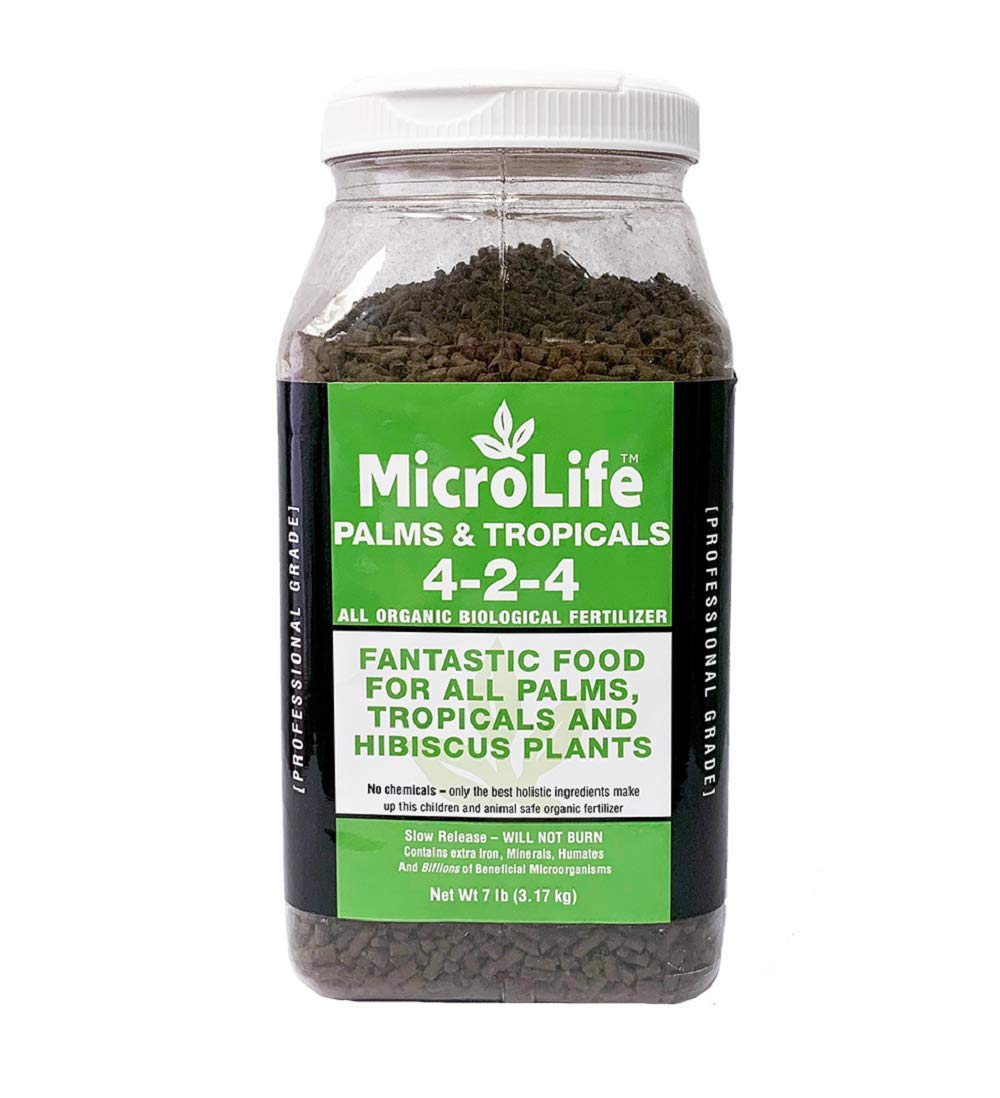
MicroLife Palms & Tropical Granular Organic Fertilizer (4-2-4), 7 lb
| Item Form | Granules |
|---|---|
| Specific Uses For Product | Organic |
| Target Species | Palms, tropicals & hibiscus |
| Mixing Ratio | 1:1:1 |
This granular formula delivers steady nutrition with a 100 percent slow-release profile designed to avoid burning sensitive tropical plants. You apply it to soil around the base of new plantings and as part of annual maintenance; the slow-release granules feed over time so you do not need frequent reapplication. The product includes extra potassium, magnesium, manganese, and iron, which support strong foliage color and stress tolerance in nutrient-hungry tropicals. Its professional-grade concentration means you can expect robust, gradual growth and improved plant resilience rather than a short burst of lush but weak growth. On the downside it is a specialty palm/tropical blend so it is not tailored for every fruiting crop and directions must be followed to get the intended slow-release benefit. Also the granular form requires spreading or incorporation into soil, so it is less convenient than a liquid feed for foliar applications. For gardeners focused on steady, dependable nutrition this fertilizer simplifies seasonal feeding for tropical and hibiscus plantings.
Best for: Buyers who prioritize dependable, low-maintenance nutrition for tropical plants and want a slow, steady feeding program rather than frequent dosing.
Less Ideal for: Growers seeking a fertilizer optimized specifically for pineapple fruit production or those who prefer liquid or foliar feeds for quick correction.
- 100% slow-release granules reduce risk of fertilizer burn and provide sustained feeding
- Includes added potassium, magnesium, manganese and iron to support foliage health and stress tolerance
- Professional-strength formula suited for new plantings and annual maintenance
- Formulated specifically for palms and tropicals so nutrient balance may not match all fruiting crops
- Granular form requires soil application and is not suitable for quick foliar feeding
Verdict: Choose this slow-release tropical fertilizer when you want reliable, low-risk seasonal feeding to maintain healthy foliage and steady growth.
Jobe's Organics Granular Rose & Flower Fertilizer, 4 lb

| Item Form | Granules |
|---|---|
| Specific Uses For Product | Plant Growth,Root Development,Seed Developmen,tSoil Conditioning |
| Target Species | roses, hydrangeas, hibiscus, azaleas, and other flowering shrubs |
| Mixing Ratio | 3-5-3 |
| Unit Count | 64 Ounce |
This granular organic fertilizer is designed for roses, hydrangeas and other flowering shrubs and supplies balanced nutrients in a 3-5-3 NPK formula. It is OMRI listed so it can be used in organic gardens and is supplied as easy-to-scatter granules that you work into the soil or apply around the drip line every six weeks during the blooming season. Key ingredients listed include nitrogen, phosphate, potash and essential secondary nutrients like calcium and magnesium, which help blooms and overall plant vigor. The packaging size and medium coverage make it practical for small to medium beds or several container hydrangeas, and the granular form reduces mess and runoff compared with liquid feeds. Limitations are that the bag is only 4 pounds so larger hydrangea plantings will require frequent repurchase, and the fixed 3-5-3 ratio may not match specialty needs for acid-loving hydrangea color manipulation. Follow the product directions and wear gloves when handling.
Best for: Gardeners who want a straightforward, organically approved granular feed for hydrangeas and other flowering shrubs and prefer simple, scheduled applications during the bloom season.
Less Ideal for: Growers managing large beds or commercial plantings who need bulk fertilizer or gardeners seeking a product specifically formulated to alter hydrangea flower color.
- OMRI listed and suitable for certified organic gardening
- Balanced 3-5-3 NPK tailored to promote flowering and root development
- Granular form is easy to measure and apply with reduced runoff and mess
- Contains secondary nutrients like calcium and magnesium to support plant vigor
- 4 lb bag provides limited coverage for larger gardens
- Fixed NPK ratio limits flexibility for gardeners who need different nutrient balances
Verdict: A small, OMRI-listed granular fertilizer that reliably feeds hydrangeas and other flowering shrubs with a bloom-focused 3-5-3 formula for easy, organic seasonal applications.
Choosing the Right Organic Fertilizer for Hibiscus: Key Factors to Consider
Nutrient Ratio and Bloom Support
Hibiscus benefits from slightly higher phosphorus during bud set and bloom, but plants still need steady nitrogen for vigorous foliage. Look for organic fertilizers that present a clear N-P-K ratio and include phosphorus in forms that are plant accessible. A formula that is too high in nitrogen can produce lush foliage at the expense of flower production, while too little nitrogen can leave leaves pale and stunt growth.
Because organic sources release nutrients more slowly than synthetics, expect feed programs over weeks rather than days. Choosing a product with balanced macro- and secondary nutrients helps support both repeated blooming cycles and overall plant health throughout the season.
Release Behavior and Feeding Frequency
Release rate determines how often you need to reapply fertilizer. Slow-release granulars, composted materials, and most organic pellets provide steady nutrition and reduce the risk of root burn, which is especially important in containers. Liquid organics deliver nutrients quickly but often require more frequent applications.
Consider your maintenance habits: if you prefer low-effort care, a long-lasting granular or timed-release organic product will be more practical. If you like to monitor and tweak feeding during peak bloom, concentrated liquids or water-soluble organics give faster response.
Application Method and Gardener Safety
Ease of measuring, spreading, or diluting matters for everyday use. Granular and pellet products usually broadcast or top-dress, then get watered in. Liquid concentrates need accurate dilution to avoid overfeeding. Some organics come as ready-to-use sprays or tea concentrates which are convenient but may be less economical for large plantings.
Also consider safety around pets and children. Most true organic materials have low acute toxicity, but concentrated manures or bone meal can attract animals. Clear directions and safe storage are important practical concerns.
Suitability for Containers Versus In-Ground
Container-grown hibiscus have smaller root zones and different irrigation patterns than in-ground plants, which changes nutrient dynamics. In pots, soluble nutrients can build up and require periodic leaching, so slow-release formulations calibrated for containers are preferable. In-ground shrubs benefit from mixed-in organic amendments that improve soil structure and microbial activity.
When choosing a fertilizer, clarify whether it is labeled or recommended for containers. The same product can behave differently depending on pot size, media, and watering frequency, so match the release profile to your planting method.
Micronutrients and Trace Elements
Hibiscus can show deficiency symptoms such as interveinal chlorosis when certain micronutrients are lacking. Ingredients like iron, magnesium, manganese, and zinc support healthy green growth and are particularly helpful in alkaline soils where availability is limited. Some organic blends include kelp, rock minerals, or composted inputs that supply a range of trace elements naturally.
Assess whether your soil or potting mix needs additional micronutrient support by observing leaf color and growth. A fertilizer that adds a spectrum of trace elements reduces the need for separate corrective treatments.
Soil Health and Microbial Benefits
Beyond immediate nutrient supply, organic fertilizers often feed soil microbes and improve structure over time. Materials like compost, fish meal, and alfalfa meal encourage biological activity that helps with nutrient cycling and water retention. Healthier soil biology can increase nutrient availability and lead to more resilient hibiscus plants.
If long-term soil improvement is a priority, choose products that list composted organic matter or beneficial amendments. For container growers, look for mixes that combine nutrition with humus-building ingredients to sustain repeated repotting cycles.
Feeding Schedules for Different Planting Situations
Establish a feeding rhythm that matches whether your hibiscus grows in a pot or in the ground. For containers, a lighter, more frequent approach prevents nutrient lockup; use a diluted liquid or a low-rate granular every 4 to 6 weeks depending on release speed. For in-ground shrubs, heavier applications of slow-release organics in spring and midseason feed the root zone over several months.
Adjust timing around bloom cycles. A gentle boost before and during peak flowering supports bud set, while you can taper back in late fall as growth slows. Remember that water and light also drive bloom production, so feeding works best alongside proper irrigation and sun exposure.
- Containers: light doses more often, watch for salt buildup
- In-ground: incorporate slow-release organics into soil annual top-dressing
- Peak bloom: schedule a phosphorus-friendly feed before flowering begins
Mixing Fertilizer with Soil Amendments
Combining a nutrient source with organic matter improves both fertility and structure. For planting or major repotting, blend companion amendments such as composted bark, coconut coir, or well-aged compost with a balanced organic fertilizer so nutrients are available as roots expand.
Avoid mixing concentrated dry fertilizers directly against roots. When top-dressing, distribute evenly and work light mulch over the surface to reduce leaching and support microbial activity that will release nutrients gradually.
- Add compost or humus when repotting to increase water retention
- Top-dress with pellets and water in to start slow-release action
- Break up compacted garden soil before applying to ensure root contact
Troubleshooting Common Nutrient Symptoms
Yellowing leaves, slow growth, and poor blooms are common signals that feeding needs adjusting. Interveinal chlorosis often points to iron or magnesium shortage, while uniformly pale leaves suggest low nitrogen. Poor bud set despite good foliage can indicate insufficient phosphorus or an imbalance caused by overwatering.
Address symptoms by correcting cultural factors first: check soil pH, drainage, and watering regime. Then choose a fertilizer or supplement that targets the observed deficiency. When in doubt, apply a conservative feeding and monitor response for a few weeks before repeating.
- Yellow veins: suspect iron deficiency, consider chelated or organic iron sources
- Pale overall leaves: incremental nitrogen feeding helps
- Few flowers: increase bloom-supporting phosphorus moderately
Organic Options for Different Gardener Preferences
Gardeners who want minimal handling often prefer slow-release granules or coated pellets that you apply a few times per season. Those who like hands-on feeding and quick response choose diluted liquid feeds or compost teas for fast nutrient uptake. If improving long-term soil is the aim, use composted organics and mineral-rich amendments.
Consider odor, storage, and pet safety when selecting a product. Some high-nitrogen organic inputs have a noticeable smell and may require covered storage. Match the product's handling profile to how and where you garden.
- Low-effort: long-lasting granular organics
- Quick response: diluted liquid feeds and teas
- Soil-building: composted materials and mineral blends
Environmental Considerations and Responsible Use
Even organic fertilizers can contribute to runoff if overapplied or used before heavy rain. Apply conservative rates, especially near water features or slopes, and avoid broadcast applications immediately before storms. Mulching and proper soil incorporation reduce surface loss.
For container plants, avoid excessive fertilizer buildup by flushing pots occasionally and repotting periodically. Responsible use protects nearby plants, pollinators, and aquatic systems while still providing strong results for your hibiscus.
- Avoid feeding before forecasted heavy rain
- Use targeted application to minimize runoff
- Flush containers yearly to prevent salt accumulation
How We Chose the Best Organic Fertilizer for Hibiscus
We focused on attributes that matter to gardeners growing hibiscus and excluded highly specialized or synthetic formulations. Selection began with fertilizer types commonly used on flowering shrubs and tropical ornamentals, then filtered for organic or OMRI-compatible ingredient profiles. Key evaluation criteria were nutrient ratio and bloom support, release behavior and longevity, ease and safety of application for containers and beds, and presence of useful secondary components such as kelp, humates, or micronutrients. We excluded blends designed solely for vegetables or lawns and any products relying on synthetic chelates or quick-release salts that can burn tender hibiscus roots. Practical considerations included how simple the feeding schedule is for regular home gardeners and whether the material performs acceptably in both potting mixes and garden soil. Laboratory claims were balanced against common field behavior and gardener reports about plant response and leaf condition.
FAQ
How often should I feed hibiscus with an organic fertilizer?
It depends on the product. Slow-release granular organics typically need reapplying every 8 to 12 weeks, while liquid organics may be used every 2 to 4 weeks at diluted rates. Adjust frequency based on plant response and the specific release behavior of the fertilizer you choose.
Can I use compost as the only fertilizer for hibiscus?
Compost supports soil health and supplies some nutrients, but it may not provide the higher phosphorus or consistent nitrogen levels some hibiscus need for prolific blooming. Compost is best used alongside a targeted organic fertilizer when bloom support is a priority.
Will organic fertilizers prevent yellowing leaves on hibiscus?
Organic fertilizers that include balanced micronutrients can help resolve nutrient-related yellowing over time. However, yellow leaves often stem from cultural issues like overwatering, poor drainage, or pH problems. Diagnose those factors alongside feeding adjustments.
Are liquid organic feeds safe for container hibiscus?
Yes, when diluted according to directions. Liquids provide fast-acting nutrition, which is useful in containers with limited root volume. Take care not to over-concentrate feeds and flush pots occasionally to avoid buildup of soluble salts.
Should I change fertilizer strategy during fall and winter?
Reduce or stop regular feeding as growth slows in cooler months. A final light feeding in late summer can help plants harden off, but persistent high feeding late in the season may encourage tender growth vulnerable to cold.
What role does soil pH play in hibiscus nutrition?
Soil pH affects nutrient availability. Hibiscus prefer slightly acidic to neutral conditions where iron and other micronutrients are more available. If pH is too alkaline, some nutrients become inaccessible regardless of fertilizer application.
Final Verdict
Prioritize a fertilizer that matches your planting situation and maintenance style. For potted hibiscus, choose gentle, container-appropriate formulations with predictable release and modest application rates. For in-ground shrubs, favor slow-release organics that also build soil structure and supply micronutrients over time. Balance bloom-focused nutrition with overall plant health: a product that feeds both flowers and foliage while supporting soil life is usually the best choice. Use the feeding rhythms and troubleshooting tips above to refine feeding and keep hibiscus flowering reliably.
