

Note: This article contains affiliate links. If you click on these links and make a purchase, I may earn a small commission at no extra cost to you. This helps support my research and content. Read my full affiliate disclosure here.
Growing without soil changes how plants access nutrients, and the right organic fertilizer for hydroponics keeps roots healthy while supporting steady growth and yields. You need a formulation that dissolves or mineralizes predictably, avoids clogging drip lines, and supplies complete macro and micronutrients for every growth stage. This guide covers five shortlisted organic options suited to hydroponic use and explains how each was evaluated. We focus on real-garden performance factors like solubility, nutrient balance, root safety, and system compatibility so you can choose the best fit for your setup.
Top Picks at a Glance
| Best Overall The best all-around choice for most situations | Grow Queen Liquid Sea Kelp Fertilizer (Ecklonia maxima), 8 oz |  |
| Best Quality Built to a higher standard if you want something more solid | Nature's Way Soil Organic Hydroponic Nutrient Concentrate, 32 oz |  |
| Best Budget The cheapest option that still gets the job done reliably | True Organic All Purpose Liquid Plant Food (16 fl oz) |  |
| Highest Rated A top-rated pick with lots of positive feedback | FoxFarm Big Bloom Liquid Plant Food, 16 fl oz |  |
| Best Seller A high-volume bestseller chosen again and again | Grow Queen Organic Liquid Indoor Plant Food 5-5-5 with Sea Kelp, 8 oz | 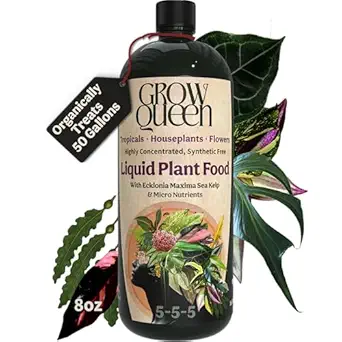 |
Grow Queen Liquid Sea Kelp Fertilizer (Ecklonia maxima), 8 oz

| Item Form | Liquid |
|---|---|
| Specific Uses For Product | Water Propagation |
| Application Method | Water, Foliar Spray |
| Liquid Volume | 8 fluid ounces |
| Mixing Ratio | 1 tablespoon per gallon |
This Grow Queen liquid sea kelp is a concentrated Ecklonia maxima extract intended to support cuttings, houseplants and hydroponic setups with naturally occurring amino acids, polyphenols and sugars. It is typically used as a few drops in propagation jars, mixed at the recommended ratio (1 tablespoon per gallon) for soil drenches or as a light foliar spray every 1 to 4 weeks. Notable features include cold-extracted kelp, clear mixing that keeps propagation jars looking tidy, and a low odor that integrates easily into routine watering. For hydroponic and semi-hydro systems it provides gentle, organic micronutrients rather than primary N-P-K nutrition, so it works best alongside a balancing nutrient program rather than as a complete feed. The bottle is concentrated enough to treat many gallons, which is convenient for a plant shelf and propagation station, but users should plan to pair it with a dedicated hydroponic fertilizer if plants need higher nitrogen or phosphorus for vigorous growth.
Best for: Plant owners who want a gentle, organic kelp supplement for propagation stations and mixed-use feeding routines and who prioritize easy dosing and low odor in indoor or small hydro setups.
Less Ideal for: Growers running large or high-demand hydroponic systems that need a full N-P-K nutrient program or precise macronutrient control should choose a dedicated hydroponic fertilizer instead.
- Cold-extracted Ecklonia maxima kelp provides naturally occurring amino acids and polyphenols
- Low odor and mixes clear, suitable for visible propagation jars
- Versatile application: propagation drops, soil drench or foliar spray
- Concentrated formula treats up to many gallons so a small bottle lasts through multiple uses
- Grade 0-0-1 formulation provides minimal primary N and P so it is not a complete nutrient for hydroponic growth
- Small 8 oz bottle may require frequent repurchase for large hydroponic systems
Verdict: A concentrated, low-odor kelp supplement ideal for propagation and as an organic micronutrient boost in small hydro or mixed watering routines.
Nature's Way Soil Organic Hydroponic Nutrient Concentrate, 32 oz

| Unit Count | 32 Fluid Ounces |
|---|---|
| Item Form | Liquid |
| Specific Uses For Product | Hydroponics |
| Mixing Ratio | 1 Tablespoon per gallon of water |
Nature's Way Soil Organic Hydroponic Nutrient is a liquid concentrate designed for routine feeding in hydroponic systems and soil-grown setups. You mix 1 tablespoon per gallon, so one 32 oz bottle provides many feedings for vegetables, herbs, and lettuce. The formula combines fermented duckweed, kelp, humic and fulvic acids, seaweed extract, and beneficial microbes to support nutrient uptake and encourage steady growth without high salt levels. In practice it is easy to dose for DWC, drip, coco coir, and living soil; the low-salt formulation reduces the risk of root burn and salt buildup in sensitive systems. Practical benefits include a fully water-soluble mix, organic inputs that support soil biology, and a gentle profile suited to frequent applications. Important limitations are that it is a single-part concentrate without distinct vegetative/flowering blends, so growers seeking tuned NPK ratios for specific stages may need additional supplements, and the listed ingredient set includes calcium nitrate which requires mindful use if strict organic certification is needed.
Best for: Growers who prioritize steady, biologically minded performance and want an easy-to-dose organic concentrate for hydroponic systems or living soils.
Less Ideal for: Advanced growers who need stage-specific NPK formulations or those requiring strictly synthetic-free certified inputs for regulated organic programs.
- Concentrated liquid feeds many gallons at 1 tablespoon per gallon making it economical to use
- Organic-derived inputs like fermented duckweed and kelp support balanced growth and nutrient efficiency
- Includes humic and fulvic acids plus beneficial microbes to help nutrient availability and soil biology
- Low-salt, non-burn formulation suitable for sensitive roots and frequent feedings
- Single-part, one-ratio formula not tailored for separate veg and bloom stages
Verdict: A concentrated, low-salt organic nutrient that delivers steady, biologically supportive feedings for performance-focused hydroponic and soil growers.
True Organic All Purpose Liquid Plant Food (16 fl oz)

| Item Form | Liquid |
|---|---|
| Specific Uses For Product | Agriculture, Gardening |
| Coverage | Full |
| Mixing Ratio | 2 fl oz per gallon, every two weeks |
True Organic All Purpose Liquid Plant Food is a ready-to-mix liquid fertilizer intended for regular feeding of vegetables, herbs, flowers and houseplants. You shake and dilute 2 fl oz per gallon of water and soak the soil every two weeks during the growing season, which makes it easy to add into an existing watering routine. The formula uses farm-grade organic inputs such as fish solubles, kelp extract and molasses designed to supply macronutrients and support microbial activity in soil rather than synthetic salts. The bottle size and mixing rate suit small beds, containers or indoor collections where you need frequent light feedings. Because it is concentrated and OMRI listed for organic gardening, it is a good choice for gardeners who prioritize organic inputs. Expect slower, steadier nutrient release compared with fast-release synthetic fertilizers and plan for repeated applications to see sustained results across a season.
Best for: Gardeners who want an easy-to-use, certified organic liquid fertilizer for containers, small beds, or indoor plants and who prefer steady, biology-friendly feeding.
Less Ideal for: Large-scale vegetable plots or landscapers who need bulk, fast-release fertilizers for one-off applications should consider higher-volume or synthetic options.
- OMRI listed and made with organic inputs suitable for organic gardens
- Concentrated liquid formula is easy to mix and apply with a regular watering schedule
- Contains multiple nutrient sources and kelp to support both plants and soil biology
- Made in the USA with farm-grade ingredients and clear mixing instructions
- Smaller 16 fl oz bottle requires frequent repurchasing for larger gardens
Verdict: A concentrated, OMRI-listed liquid fertilizer that makes regular organic feeding simple for containers and small garden plots.
FoxFarm Big Bloom Liquid Plant Food, 16 fl oz

| Item Form | Liquid |
|---|---|
| Specific Uses For Product | Organic |
| Application Method | watering can, sprayer, or drip system |
| Liquid Volume | 16 fluid ounces |
| Mixing Ratio | 4 |
Big Bloom is a concentrated liquid bloom fertilizer aimed at boosting flowers and fruit by supplying readily available organic nutrients. It mixes into water (manufacturer recommends 4 tablespoons per gallon) and can be applied with a watering can, sprayer, hose-end siphon, or through drip systems, so you can feed potted plants, beds, or containers without changing your routine. Notable features are its OMRI listing for organic use and the inclusion of bat guano and earthworm castings, which provide phosphorus and organic matter to encourage blooms and seed set. Because it is liquid and fast-acting, you can expect visible perk-up within a short time after feeding, and it is suitable for regular use at watering times to extend flowering. Limitations to consider are the small 16 fl oz size for larger gardens and the presence of phosphorus, which may be restricted in some locales and requires careful application to avoid runoff.
Best for: Gardeners focused on maximizing blooms and fruit who want an organic, fast-acting feed they can add to routine watering for container and bed-grown flowering plants.
Less Ideal for: Large-scale landscapers or very large perennial beds who need bulk fertilizer solutions or want to avoid phosphorus-based products due to local regulations.
- OMRI-listed organic formula with natural inputs like bat guano and earthworm castings
- Liquid concentrate allows fast nutrient uptake and flexible application methods
- Works with watering cans, sprayers, hose-end siphons, and drip systems for easy integration
- Small 16 fl oz bottle may require frequent repurchasing for larger flower beds
- Contains phosphorus so local restrictions on phosphorus fertilizers may apply
Verdict: Choose Big Bloom when you want an OMRI-listed, easy-to-apply liquid fertilizer that delivers fast organic nutrients to boost flowering and fruiting.
Grow Queen Organic Liquid Indoor Plant Food 5-5-5 with Sea Kelp, 8 oz

| Item Form | Liquid |
|---|---|
| Mixing Ratio | 1:1 |
| Specific Uses For Product | Plant Growth |
| Application Method | Watering |
| Target Species | Plants |
Grow Queen's 8 oz concentrated liquid plant food is a balanced 5-5-5 organic fertilizer designed for regular use on houseplants, tropicals and container gardens. You mix one capful (about 4 ml) per gallon of water and either drench the soil or apply as a foliar mist every one to three weeks, which makes it straightforward to fold into a weekly watering routine. The formula includes Ecklonia maxima sea kelp and trace micronutrients, which help support greener foliage, stronger stems and root development without the burning risk of high-strength synthetic feeds. At the stated dilution the bottle treats up to 50 gallons so it will last a small collection for months. It is also labeled safe for aerated hydroponic systems when reservoirs are changed regularly, though it can form a film in stagnant water so fresh mixes are recommended. The product has an earthy ocean scent from real kelp and excludes perfumes and dyes, but that natural smell may bother some users. Directions are simple and the fertilizer pairs well with slow-release feeds for longer-term nutrition.
Best for: Buyers who want a simple, one-bottle solution to feed a mixed collection of houseplants regularly and prefer organic ingredients and seaweed benefits.
Less Ideal for: Growers who need precision nutrient formulas for specific flowering or high-yield vegetable crops or those who require ready-to-use sprays without mixing.
- Balanced 5-5-5 NPK suitable for general indoor plant feeding
- Concentrated formula stretches up to 50 gallons from an 8 oz bottle
- Contains sea kelp and micronutrients to promote foliage color and root strength
- Safe for regular use at recommended dilution with low burn risk
- Natural kelp scent may be noticeable indoors
- Can form a film in standing water so not ideal for non-aerated reservoirs
Verdict: A concentrated, easy-to-use organic 5-5-5 liquid fertilizer with sea kelp that provides straightforward, all-purpose nutrition for indoor plant collections.
Choosing the Right Organic Fertilizer for Hydroponics: Key Factors to Consider
Solubility and Particle Size
In hydroponics you need nutrients that go into solution cleanly. Fine powders or fully soluble liquids mix quickly and stay suspended without leaving sediment that clogs emitters, filters, or pumps. Even small particulate matter can cause blockages in drip systems and uneven distribution in NFT and raft setups.
Pay attention to how a product dissolves at recommended concentrations and temperature. Some organic sources rely on microbial breakdown or agitation to become available, which can be unpredictable in sterile or highly filtered systems. Choosing formulations with proven solubility reduces maintenance and keeps EC readings stable.
Balanced Macro and Micronutrients
Plants in hydroponics rely entirely on the nutrient solution, so the fertilizer must deliver complete macronutrients (nitrogen, phosphorus, potassium) and essential micronutrients (iron, manganese, zinc, boron, etc.). Deficiencies show quickly in soilless systems and can stunt growth or reduce yields.
Look for clear N-P-K ratios and a list of included micronutrients. Some organic fertilizers supply nitrogen in organic forms that release slowly, which can be fine for certain crops but may need supplementation for fast-growing leafy greens. Consider the crops you grow and whether you need a vegetative or bloom-focused formula.
Root Safety and Microbial Impact
Organic inputs can influence the root microbiome and oxygen availability. Products high in salts or unrefined organics may cause root burn, sliming, or oxygen depletion, especially in recirculating systems. Conversely, formulations designed for hydroponics minimize organic residues and avoid ingredients that promote anaerobic conditions.
If you use beneficial microbes, choose fertilizers compatible with probiotic additions. Some organics support beneficial microbial populations, while others may foster opportunistic bacteria or fungi. Prioritize options that list microbial compatibility and have controlled organic matter levels to preserve root zone oxygen.
System Compatibility and Maintenance
Different hydroponic systems have different sensitivities. Drip and aeroponic systems need very clean solutions to prevent nozzle clogging. Recirculating deep water culture or NFT systems require stable EC and pH because nutrient imbalances spread quickly throughout the reservoir.
Consider the maintenance burden a fertilizer adds: frequency of reservoir changes, filter cleaning, and monitoring needs. Products that require frequent flushing or complex adjustments increase labor; those that maintain stable chemistry reduce day-to-day babysitting.
Ease of Measurement and Mixing
Accurate dosing is essential in hydroponics. Fertilizers with clear concentration guidance, simple mixing ratios, and predictable EC contributions make life easier. Liquid concentrates and fully soluble powders usually mix more predictably than organic slurries or granulated blends that need maceration.
Also evaluate packaging and instructions. Graduated measuring tools, clear dilution tables for vegetative versus flowering phases, and guidance on pH and EC targets save time and reduce errors when adjusting nutrient strength for different crops.
Stability and Storage
Hydroponic gardeners need fertilizers that remain stable between uses. Some organic solutions can biodegrade, separate, or develop odors if stored warm or for long periods. Stability affects shelf life and the likelihood of contamination in your reservoir.
Assess storage recommendations, shelf-life claims, and whether components need refrigeration or airtight containers. Stable formulations minimize waste and reduce the chance of introducing unwanted microbes into the system.
How Organic Nutrients Behave in Soilless Systems
Organic fertilizers behave differently in water than synthetic salts. Many organics contain complex molecules that must solubilize or be mineralized to be plant-available. In a hydroponic reservoir this process is constrained by temperature, oxygen level, and microbial presence, so availability can be slower and less predictable than with synthetic nutrients.
Understanding that difference helps you plan feed schedules and reservoir changes. Expect gentler release patterns from many organics, and be prepared to supplement with quicker-acting sources if plants show rapid demand during heavy growth phases.
- Organic molecules may need microbial action to release nutrients
- Solubility influences how evenly nutrients reach roots
- Monitor plants closely for signs of deficiency and adjust feed strength accordingly
Common Application Methods for Hydroponic Organics
There are several practical ways to use organic fertilizers in hydroponics. Fully soluble liquids and water-soluble powder concentrates are simplest for drip, NFT, and DWC systems because they dissolve cleanly. Some growers use a two-part approach: a base organic feed for steady nutrition plus targeted supplements for rapid demand during flowering.
If you work with microbial inoculants, apply them according to compatibility recommendations and avoid heat or oxidizing agents that kill beneficial organisms. For recirculating systems, maintain good aeration and use mechanical filtration if particulate organics are present.
- Use soluble liquids or fine powders for low-clog risk
- Combine slow-release organics with targeted quick-release supplements as needed
- Ensure strong aeration when adding organic feeds to prevent anaerobic pockets
Managing EC and pH With Organic Feeds
Organic fertilizers can affect electrical conductivity and pH in different ways. Because some organic nitrogen sources are in organic forms, EC may not fully reflect available nitrogen. That means you should watch plant symptoms as well as meter readings and adjust pH and EC based on both observations and published targets for your crop.
Routine reservoir testing and scheduled partial changes help maintain a stable environment. When switching products or mixing multiple organics, introduce the change gradually and track EC drift over several days.
- Monitor both plant appearance and meter readings
- Introduce new feeds gradually and test reservoirs daily until stable
- Adjust pH with non-chlorinated acids or bases that are safe for hydroponic use
Compatibility With Beneficial Microbes
Many hydroponic growers add beneficial bacteria and fungi to support nutrient uptake and disease suppression. Not all organic fertilizers are compatible with these microbes. Look for products formulated to preserve beneficial populations or that explicitly state compatibility with probiotics.
If you rely heavily on microbial amendments, avoid organics with strong antimicrobial additives or high salt content. Instead choose feeds that supply carbon sources and trace elements that support a balanced root microbiome without encouraging pathogens.
- Check product labels for microbe compatibility
- Avoid additives that inhibit beneficial organisms
- Support microbes with oxygenation and temperature control
Adjusting Feeding Schedules for Different Crops
Fast-growing leafy greens require higher nitrogen availability and respond quickly to nutrient changes. Fruiting crops often need a shift toward phosphorus and potassium during bloom and fruit set. Organic fertilizers designed for hydroponics may have separate vegetative and bloom formulations or recommend altered dosing schedules.
Plan feeding cycles around crop demand and stage. When necessary, use supplementary boosters that are soluble and safe for hydroponic use to meet short-term peaks in nutrient demand without destabilizing the entire reservoir.
- Match feed strength to crop growth stage
- Use soluble supplements for short-term nutrient boosts
- Monitor crop response and adjust schedules rather than relying solely on fixed charts
How We Chose the Best Organic Fertilizer for Hydroponics
We shortlisted organic fertilizers that are appropriate for soilless systems and evaluated them against concrete, garden-centered criteria. Key filters included solubility and particle size to reduce line clogging, clear nutrient profiles for balanced feeding across vegetative and flowering stages, and documented safety for root microbiology to avoid root burn or imbalances. We also prioritized products with straightforward mixing instructions and consistent batch-to-batch composition so gardeners can maintain predictable EC and pH. Excluded from consideration were garden amendments meant only for soil application, products requiring composting or long-term mineralization, and any formulations that rely on particulate organics likely to foul pumps or emit strong odors in enclosed systems. We tested specification sheets and manufacturer guidance for clarity, plus practical indicators such as mixing behavior and compatibility with common hydroponic equipment. The final selection favors ease of use, reliable nutrient ratios, system cleanliness, and root health.
FAQ
Can I use standard organic garden fertilizers in a hydroponic system?
Often you cannot use standard soil-based fertilizers directly because they contain particulate matter and need soil microbes to mineralize nutrients. Such products can clog pumps and lines and create anaerobic pockets. Choose formulations specified as soluble or appropriate for soilless systems.
How do I know if an organic hydroponic fertilizer is clogging my system?
Watch for reduced flow from emitters, increased pump strain, or visible sediment in the reservoir. Regularly inspect filters and lines and perform a simple visual check after mixing. If clogging appears, switch to a more soluble formulation and increase mechanical filtration.
Do organic fertilizers change how often I need to change reservoir water?
Usually yes. Organic feeds can alter microbial load and nutrient dynamics, so many growers perform more frequent partial reservoir changes to avoid buildup. The exact frequency depends on system type, crop load, and aeration, but plan on closer monitoring when first switching to organics.
Are beneficial microbes necessary when using organic nutrient solutions?
Beneficial microbes are not strictly necessary but can improve nutrient mineralization and root health in some organic systems. Their usefulness depends on the product formulation and growing conditions. If you add microbes, ensure the fertilizer is labeled compatible to avoid killing beneficial organisms.
Will organic fertilizers supply all micronutrients my plants need?
Some organic hydroponic formulations include a full suite of micronutrients, while others focus on macronutrients and assume supplementation. Check product specifications and be prepared to add micronutrient boosters if you see deficiency symptoms, especially with demanding fruiting crops.
How should I transition from synthetic to organic feeding in hydroponics?
Transition gradually over a week or two by blending mixes or reducing synthetic strength while introducing the organic feed. Monitor plant response, EC, and pH closely and be ready to support with quick-release supplements if plants show signs of deficiency during the changeover.
Final Verdict
Selecting an organic fertilizer for hydroponics means balancing solubility, nutrient completeness, and root safety. Prioritize formulations that dissolve cleanly, list complete macronutrients and micronutrients, and are compatible with your system type and any microbial amendments you use. Expect some tradeoffs between gentle, slower-release organic nutrition and the rapid responsiveness of synthetic salts. Choose a product that matches your crop demands and maintenance tolerance, and adjust feeding and reservoir management to keep roots oxygenated and chemistry stable for best results.
