

Note: This article contains affiliate links. If you click on these links and make a purchase, I may earn a small commission at no extra cost to you. This helps support my research and content. Read my full affiliate disclosure here.
Dealing with fire ants in a lawn or garden means balancing effective mound control with safety for pets, children, and pollinators. The right organic fire ant killer reduces visible activity quickly while avoiding the long-term chemical residues that worry many home gardeners. This guide shortlists five top organic fire ant killers that perform well in typical home landscapes and smaller acreage. We evaluate each option for how fast it suppresses mounds, how safe it is for non-targets, and how easy it is to use, so you can choose an approach that fits your yard and routines.
Top Picks at a Glance
| Best Quality Built to a higher standard if you want something more solid | EcoVenger Ant Killer & Nest Treatment, 32 oz |  |
| Best Budget The cheapest option that still gets the job done reliably | Safer Home Ant & Crawling Insect Killer Diatomaceous Earth (7 oz) |  |
| Highest Rated A top-rated pick with lots of positive feedback | Monterey Spinosad Insecticide, 32 oz (concentrate) |  |
| Most Popular A crowd favorite that many people choose with confidence | Garden Safe Crawling Insect Killer Diatomaceous Earth, 4 lb |  |
| Best Seller A high-volume bestseller chosen again and again | Harris Diatomaceous Earth Crawling Insect Killer, 8 oz |  |
EcoVenger Ant Killer & Nest Treatment, 32 oz

| Unit Count | 32 Fluid Ounces |
|---|---|
| Item Form | Spray |
| Target Species | Odorous House Ants, Fire Ants, Roaches, Fleas, Spiders |
| Active Ingredients | Citronella Oil, Geraniol, Cedarwood oil, Sodium Lauryl Sulfate |
EcoVenger Ant Killer is a plant-extract spray formulated to kill house ants on contact, treat fire ant mounds, and leave a residual barrier that deters re-entry for up to four weeks. You use it like a standard ready-to-use spray: spot-treat visible trails, spray around entry points and saturate mound tops or nest openings to reach the colony. Notable features include a citronella/cedarwood/geraniol active blend, a user-friendly trigger sprayer and claims of university testing and professional use. In practice the product offers fast knockdown for foraging ants and the ability to deliver treatment down tunnels using the spray wand, which helps target queens in mounds. The botanical formulation is marketed as non-staining and safe to use around pets and children when directions are followed, and the light citrus scent dissipates quickly. Limitations are that efficacy details beyond labeled target species rely on manufacturer testing and heavier infestations may need repeated treatments or perimeter work; the nozzle has delicate parts so care is needed when handling.
Best for: Homeowners who prioritize effective, fast-acting ant control but want a pet- and child-friendly botanical option for indoor and outdoor use.
Less Ideal for: People needing an industrial-strength chemical treatment for very large or persistent infestations or those who prefer products supported by multiple independent field trials.
- Kills odorous house ants on contact and eradicates fire ant mounds when applied to the colony
- Botanical active ingredients (citronella, geraniol, cedarwood) offer a lower-toxicity alternative to conventional pesticides
- Provides residual repellency for up to four weeks to help prevent re-entry
- Suitable for indoor and outdoor use and formulated to be non-staining on carpets and fabrics
- Nozzle contains delicate parts that can be damaged and may require careful handling
- Manufacturer efficacy claims are based on internal or cited studies rather than independent third-party field trials
Verdict: A fast-acting, plant-powered ant spray that balances quick colony knockdown with a formulation designed for use around pets and children.
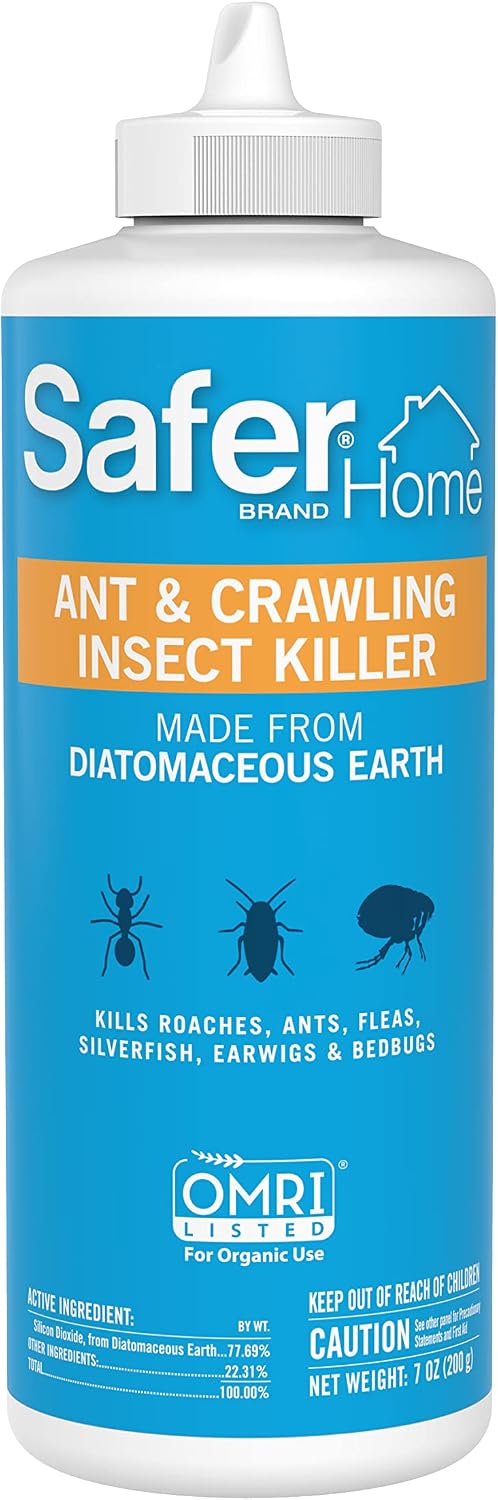
Safer Home Ant & Crawling Insect Killer Diatomaceous Earth (7 oz)
| Item Form | Powder |
|---|---|
| Target Species | Insects |
| Active Ingredients | Silicon Dioxide from Diatomaceous Earth 77.69% |
| Liquid Volume | 7 fluid ounces |
| Specification Met | EPA |
Safer Home Ant & Crawling Insect Killer is a 7 oz diatomaceous earth powder packaged in a puffer bottle for targeted application in cracks, along baseboards, and entry points. It works mechanically rather than chemically: microscopic silica particles abrade insect exoskeletons and desiccate pests that walk through or ingest the powder, with kills typically seen within 48 hours. The puffer makes it easy to place small amounts in tight spaces or to create a perimeter barrier outdoors, and the formula is OMRI listed for use in organic gardening. It is labeled for a broad range of crawling pests including earwigs, ants, roaches, fleas, and silverfish. Important limitations are that it must remain dry to be effective and needs reapplication after rain or watering, and larger infestations may take several days as insects must physically contact the powder. Use carefully to avoid dust inhalation and keep away from areas where fine powder could be spread by airflow.
Best for: Buyers who prioritize low-toxicity, evidence-backed solutions and want a product they can place precisely around the home or garden to control earwigs and other crawling pests.
Less Ideal for: People needing a fast surface spray for flying insects or those who prefer a single-application chemical barrier for heavy indoor infestations.
- Kills a wide range of crawling insects through a non-chemical, mechanical action
- Puffer bottle allows precise placement in cracks, crevices, and around entry points
- OMRI listed and suitable for use in organic gardening
- Effective within 48 hours after insect contact when kept dry
- Must stay dry and requires reapplication after rain or watering to remain effective
- Not an instant knockdown for large, established infestations since insects need to contact the powder
Verdict: A low-toxicity, OMRI-listed diatomaceous earth powder that gives precise, nonchemical control of earwigs and other crawling pests when applied and kept dry.
Monterey Spinosad Insecticide, 32 oz (concentrate)

| Unit Count | 32 Fluid Ounces |
|---|---|
| Item Form | Oil |
| Target Species | Insects |
Monterey Spinosad is a concentrated, spinosad‑based insecticide designed for home garden use to control caterpillars, leafminers, borers, thrips and many other chewing and crawling pests. Mixed into a trigger, backpack, or hose‑end sprayer, it can be applied to ornamentals, vegetables, lawns, citrus and fruit trees; the concentrate format makes it easy to cover larger areas on a schedule. The product is OMRI listed, fast acting, and practically odorless since spinosad is derived from naturally occurring bacteria. Safety directions on the label are clear and recommend protective clothing and thorough washing after handling. Limitations are that it is a broad contact toxin so beneficial insects like bees and predatory insects can be affected if applied during bloom or while pollinators are active, and you must follow label rates and reentry intervals for edible crops. For gardeners who prioritize reliable, organic‑approved control of chewing insects, this concentrate is a practical tool; those wanting an ant‑specific baiting strategy or systemic option will need a different product.
Best for: Gardeners who want a reliable, organic‑approved concentrate to quickly reduce chewing and boring insect populations across vegetables, ornamentals and fruit trees and who are comfortable following label safety and mixing instructions.
Less Ideal for: People seeking a targeted ant bait or a systemic insecticide for soilborne pests or those who need a product safe to spray during active bloom are better off with specialist ant baits or systemic products.
- OMRI listed for use in organic gardening
- Effective against a wide range of chewing and boring insects including caterpillars and leafminers
- Concentrate format works with trigger, backpack, or hose‑end sprayers for flexible coverage
- Fast acting and essentially odorless when applied properly
- Contact action can harm beneficial insects if applied when pollinators are active
- Requires mixing and careful adherence to label instructions for safe use
Verdict: Choose this OMRI‑listed spinosad concentrate when you need dependable, fast control of chewing garden pests across vegetables, ornamentals and fruit trees.
Garden Safe Crawling Insect Killer Diatomaceous Earth, 4 lb

| Item Form | Powder |
|---|---|
| Target Species | Insects |
| Active Ingredients | Silicon Dioxide |
| Specification Met | EPA |
Garden Safe Crawling Insect Killer is a powdered diatomaceous earth formulation intended for outdoor, plant-side use to control crawling pests. It is applied as a thin dust to soil around plants or directly onto insects where the fine granules abrade and absorb oils from exoskeletons, causing dehydration and death. Typical uses include edging vegetable beds, dusting under potted plants, and treating areas where ants, fleas, cockroaches, beetles, and mealybugs are active. The product is labeled for organic gardening and meets EPA specification guidance, so it is a low-chemical option for routine garden pest control. Practical benefits are persistence in dry, calm conditions and a non-spray, hands-on application that targets contact exposures. Important limitations are that it must stay dry to remain effective, can be dusty to apply so ventilation and a mask are advised, and it is not effective against insects that are not contacted by the dust or for wood-destroying beetles and certain ant species listed on the label. Follow label directions and reapply after heavy rain or disturbance for continued protection.
Best for: Gardeners who prefer practical, low-chemical pest control and want a contact-based solution for crawling insects around plants and beds.
Less Ideal for: People seeking a fast-acting, systemic treatment for flying pests or infestations inside structures should consider other control methods.
- Works by physical action so no chemical insecticides are required
- Approved for use in organic gardening and meets EPA specification guidance
- Can be applied directly to soil and plants to target crawling pests
- Long-lasting when kept dry and undisturbed
- Ineffective if the treatment area becomes wet or is washed away
- Creates airborne dust during application so respiratory protection is recommended
Verdict: A practical, organic-friendly diatomaceous earth powder for gardeners who want a non-chemical contact treatment for crawling garden pests.
Harris Diatomaceous Earth Crawling Insect Killer, 8 oz

| EPA registration | No. 3-18 |
|---|---|
| Active ingredient | 100% freshwater diatomaceous earth |
| Intended use | Indoor & outdoor |
This ready-to-use diatomaceous earth product provides a non-chemical way to control ants and other crawling pests around the home. You apply the fine powder in cracks, along baseboards, near entry points, or in crawlspaces using the included puffer tip for targeted placement. The diatomaceous earth works mechanically by abrading insect exoskeletons and causing dehydration, so insects that contact the dust typically die within 48 hours. Because the material is 100% freshwater diatomaceous earth with no additives and is EPA registered, it is a good fit when you want a low-toxicity option usable near people and pets when directions are followed. It stays effective indefinitely as long as it stays dry, making it a convenient barrier treatment in attics, basements, garages, and around foundations. Limitations are that it must remain dry to work and it is a contact-only control method, so heavy infestations or nesting insects may require repeated application or combined methods for faster results.
Best for: Practical households that prioritize low-toxicity, long-lasting ant control and want a simple, targeted treatment they can apply themselves around entry points and inside cracks.
Less Ideal for: People facing severe or widespread infestations who need rapid knockdown or prefer liquid chemical treatments should consider professional services or a different product.
- 100% freshwater diatomaceous earth with no additives for a non-chemical control option
- Built-in puffer tip allows precise application into cracks and crevices
- Remains effective indefinitely when kept dry, providing long-lasting barrier protection
- Mechanically kills a wide range of crawling insects including ants, roaches, fleas, and bed bugs
- Only effective on insects that contact the powder and must stay dry to work
- Not a fast-acting spray alternative for large, established infestations
Verdict: Choose this product if you want a low-toxicity, long-lasting mechanical barrier to control ants and other crawling insects around the home.
Choosing the Right Organic Fire Ant Killer: Key Factors to Consider
Mode of Action and Application Method
How the product works determines whether you are likely to stop an active mound quickly or need multiple follow-ups. Contact treatments often knock down visible workers fast but may not reach the queen deep in the nest. Baits rely on worker foraging to carry toxicants back to the colony and can produce longer-lasting control if accepted by ants. Mound drenches are applied directly to the nest and can reach interior chambers when used in sufficient volume.
Choosing between bait, contact spray, or drench affects timing, labor, and the chance of re-infestation. Baits usually take longer to show results but can eliminate colonies with lower non-target exposure. Contact options give faster visible results but may require repeat treatments and careful placement to avoid harming beneficial insects.
Active Ingredients and Environmental Persistence
Different organic-approved active ingredients vary in how long they remain biologically active in soil and on surfaces. Look for ingredients known for rapid breakdown and minimal soil accumulation when protecting pollinators and soil life is a priority. Even organic-designated compounds can have differing persistence, so read labels for residual information and reentry intervals.
Environmental persistence also affects where you can safely apply a product. Short-residual options are preferable near flower beds, vegetable gardens, or water features. If you need longer-term suppression in open turf, consider how residual activity will interact with non-target exposure and whether spot treatments or timed reapplications make more sense.
Safety for People, Pets, and Beneficial Insects
Homeowners often choose organic options to reduce risks to children, pets, and pollinators. Even so, proper application and awareness of labeled precautions matter. Some organic actives are low in mammalian toxicity but can still be harmful to bees if applied to blooming plants or when foraging is active.
Check label guidance on pet and child reentry times, restrictions near edible gardens, and steps to protect pollinators. Application timing, such as treating in the evening when bees are less active, can lower non-target impacts. Also factor in whether the product requires containment or special protective equipment during mixing and application.
Speed of Control Versus Long-Term Suppression
Rapid visible reduction in worker numbers is reassuring, but the key to long-term control is addressing the colony structure. Fast-acting contact products can provide immediate relief from stings but might leave the queen untouched, allowing the colony to rebound. Baits and follow-up treatments that reach the heart of the nest are more likely to provide lasting suppression, though they require patience and correct application.
Decide whether you need immediate knockdown for safety reasons or sustained colony control across the season. Often a combined strategy works best: an initial contact treatment for immediate hazard reduction followed by baiting to interrupt reproduction and reinfestation.
Lawn and Landscape Compatibility
Where you apply treatments matters. Some formulations are safe for turf grass but not for flower beds or vegetable plots, while others are suited to spot treatments around foundations. Consider mounting locations of patios, playgrounds, and pet areas so you can place treatments without disturbing daily use.
Also consider whether your yard has many flowering plants or is a pollinator habitat. If so, choose products and application times that minimize exposure. For large properties, ease of treating multiple mounds and the availability of concentrated formats for dilution can influence product selection.
When to Use Baits Versus Direct Treatments
Baits are most effective when you can observe foraging activity and when ants are actively collecting food. They are slower but target the colony through worker-mediated transfer, making them a good choice for long-term suppression. Use baits when mounds are numerous and spread across turf, or when you want to limit surface residues.
Direct treatments like mound drenches or contact sprays give faster visible reduction in worker numbers and are appropriate when stings or heavy surface traffic create immediate hazards. Apply drenches carefully and use the volume specified to ensure penetration into nest galleries.
- Use bait when ants are foraging and weather is stable.
- Choose drenches for immediate hazard reduction at high-traffic sites.
- Combine methods when quick knockdown and colony elimination are both desired.
Timing Applications to Protect Pollinators
Avoid treating flowering plants and apply products in the evening or early morning when bees are less active. For baits, place stations away from blooms and monitor acceptance before broad application.
For liquid or spray applications, keep wind and drift in mind to prevent product from contacting flowers. If treating turf near garden beds, block off flowered areas temporarily and rinse any accidental contact according to label directions.
- Treat in low-bee-activity windows like dusk or dawn.
- Spot-treat away from blooms and edible plants.
- Monitor bait uptake before expanding coverage.
Protecting Children and Pets During Treatment
Plan applications when children and pets will be away from treated areas until reentry times have passed. Even low-toxicity options can be physically irritating to skin or eyes, or may leave residues that are unpleasant for pets.
Use clear signage or temporary barriers around recently treated mounds and follow label guidance for how long to restrict play or grazing. Consider non-chemical mound control options for high-use play areas where any restriction is impractical.
- Keep pets away from fresh treatments until labeled reentry time.
- Rinse pet paws if they contact treated turf before the area is officially safe.
- Use barriers to prevent accidental disturbance of recently treated mounds.
Integrated Yard Practices to Reduce Reinfestation
Reducing conditions that favor fire ants lowers the need for repeated treatments. Manage thatch and excessive moisture in turf, repair bare patches that attract colonizing queens, and avoid overfertilizing since dense, lush grass can support larger ant populations.
Keep mulch layers tidy and avoid piling organic debris against foundations. When mowing, remove grass clippings that can shelter foraging workers. Consider targeted soil moisture management in prone areas, because ants prefer certain soil textures and moisture regimes for nest building.
- Repair bare spots and reduce moisture where practical.
- Keep mulch and debris away from foundations and play areas.
- Use cultural controls to complement chemical or organic treatments.
Application Tools and Practical Tips
Invest in a simple hand spreader for granular baits to ensure even placement and avoid overapplication. For liquid drenches, a watering-can style applicator with a narrow spout helps direct flow into mound openings. Sprays are easiest with a pump sprayer equipped with a fan nozzle for turf treatments.
Measure volumes carefully and follow label dilution rates. Small errors in concentration can make a product less effective or increase non-target risk. Keep a log of treatment dates, weather conditions, and outcomes so you can refine timing and method for your property.
- Use a spreader for even bait distribution.
- Direct drenches into nest openings with controlled water volume.
- Record treatments to track efficacy and plan reapplications.
How We Chose the Best Organic Fire Ant Killer
We prioritized products and approaches that deliver reliable suppression in home landscapes while minimizing risk to people, pets, and beneficial insects. Our filters favored options with documented active ingredients recognized for low residual toxicity, clear application instructions for lawns and around foundations, and adaptable formats like baits, mound drenches, or contact sprays that gardeners commonly use. We assessed efficacy indicators such as how quickly treated mounds show reduced activity, the ability to reach the queen or colony, and whether repeat treatments are typically required. Safety considerations were central: we looked for formulations with low toxicity to bees and other pollinators when used according to label directions, and for products with clear reentry or pet-safety guidance. Ease of use was another screen, including how easy a product is to apply accurately, whether it requires special equipment, and how straightforward disposal is. We excluded broad-spectrum, long-residual insecticides and any options labeled for agricultural or commercial use that are inappropriate for residential settings. The final list focuses on solutions that balance speed, targeted control, and minimal environmental persistence.
FAQ
Are organic fire ant killers safe for bees?
Many organic options have lower toxicity to bees than conventional broad-spectrum insecticides, but safety depends on application timing and placement. Avoid applying to open blooms and treat in low-bee-activity windows such as dusk to reduce risk.
How long until a colony is eliminated with baiting?
Baiting timelines vary and often take several days to a few weeks to significantly reduce mound activity because workers must carry bait back and distribute it. Weather, bait acceptance, and colony size all influence how quickly you see results.
Can I use organic treatments around vegetable beds?
Some organic formulations are labeled safe for use near edible crops when applied according to directions, but you should check label restrictions and reentry intervals. Spot treatments placed away from food-bearing plants and avoiding application during bloom are prudent steps.
Will a quick-contact drench prevent reinfestation?
A contact drench reduces surface worker numbers quickly but does not always reach the queen or all satellite chambers, so reinfestation is possible. Follow-up monitoring and complementary baiting or cultural practices improve long-term control.
How many applications are usually needed each season?
The number of applications depends on infestation severity, product type, and local conditions. Some gardeners treat once in spring and again in late summer, while others focus on spot treatments as new mounds appear. Monitor activity and apply follow-ups as needed.
Final Verdict
Choosing an organic fire ant control approach means balancing immediate hazard reduction with long-term colony suppression and protection of pollinators and pets. Prioritize methods that match your need for speed, the layout of your yard, and the presence of flowered plants or edible gardens. For many homeowners, a combined strategy yields the best results: use targeted contact or drench treatments when rapid knockdown is required and follow with baiting or cultural changes to reduce reinfestation. Focus on application timing, label directions, and practical yard maintenance to keep ant populations manageable without unnecessary risks.
