

Note: This article contains affiliate links. If you click on these links and make a purchase, I may earn a small commission at no extra cost to you. This helps support my research and content. Read my full affiliate disclosure here.
Picking the right outdoor herb planter changes how much fresh basil, thyme, and cilantro you can harvest from a small patio or balcony. The right planter controls soil volume, drainage, and root space so plants stay productive through heat spells and wet weather. This guide covers seven shortlisted Outdoor Herb Planters that suit limited outdoor spaces and varied climates. We evaluated options across drainage, material longevity, ease of planting and maintenance, and portability to help you choose the planter type that fits your routine and site. Read on for practical guidance and our editorial approach before the product list.
Top Picks at a Glance
| Best Overall The best all-around choice for most situations | FOYUEE Elevated Mobile Raised Garden Bed with Wheels and Shelf |  |
| Best Quality Built to a higher standard if you want something more solid | Keter Urban Bloomer 12.7 Gallon Elevated Raised Garden Bed |  |
| Best Value The sweet spot between price and what you get | LEETOLLA 31.6" Elevated Raised Garden Bed with Wheels and Storage Shelf |  |
| Best Budget The cheapest option that still gets the job done reliably | Roixeeds 6-Tier Stackable Vertical Garden Planter |  |
| Highest Rated A top-rated pick with lots of positive feedback | BIVODA HDPE Elevated Raised Garden Bed Planter Box |  |
| Most Popular A crowd favorite that many people choose with confidence | Veradek Pure Series Tall Tapered Outdoor Planter with Removable Shelf (2-pack) |  |
| Best Seller A high-volume bestseller chosen again and again | Land Guard Galvanized Oval Raised Garden Bed Kit (4×2×1 ft) |  |
FOYUEE Elevated Mobile Raised Garden Bed with Wheels and Shelf

| Capacity | 2.5 cubic feet |
|---|---|
| Material Type | Metal |
| Finish Types | Powder Coated |
| Mounting Type | Floor Standing |
| Indoor Outdoor Usage | Outdoor |
This FOYUEE elevated raised bed is a mobile planter built for productive container gardening without bending or kneeling. The powder-coated galvanized steel box sits at a standing height and includes a handle plus 6-inch all-terrain wheels so you can roll a full bed around a patio or balcony to follow sun or clear space for events. The planting box is wider than many compact planters, holds several cubic feet of soil, and has molded drainage channels plus a central drain to reduce waterlogging and protect roots. A lower shelf gives handy storage for tools and pots. Construction is heavy-duty enough to support substantial loads, and the rust-resistant finish makes it practical for outdoor seasons. Expect assembly and some metal hardware alignment during setup, and the steel construction makes it heavier to move before wheels are fitted. It is best used for herbs, salad greens, and shallow-rooted vegetables in small outdoor spaces rather than deep-root vegetables that need more soil depth.
Best for: Gardeners who prioritize durability and high performance in a compact, accessible planter and want to maximize yield from a patio, balcony, or small backyard while avoiding frequent bending.
Less Ideal for: Those who need very deep soil for root vegetables or who prefer ultra-lightweight, portable fabric or plastic planters for frequent long-distance moves.
- Sturdy galvanized steel with outdoor-grade powder coating resists rust and supports heavy loads.
- Built-in wheels and handle let you reposition a fully planted bed without lifting.
- Integrated drainage channels and a central drain reduce overwatering and improve root health.
- Wider planting area and a lower storage shelf increase usable space for plants and tools.
- Not suitable for deep-rooted crops because planting box depth is limited.
- Steel construction adds weight before wheels are attached, making initial placement harder.
Verdict: Choose this elevated, wheeled galvanized-steel planter when you want a heavy-duty, rust-resistant mobile bed that boosts productivity and saves your back.
Keter Urban Bloomer 12.7 Gallon Elevated Raised Garden Bed

| Capacity | 22.4 gallons |
|---|---|
| Material Type | Resin |
| Other Special Features | Fade Resistant |
| Mounting Type | Floor Standing |
| Indoor Outdoor Usage | Outdoor |
The Keter Urban Bloomer is an elevated raised garden bed built for simple, low-maintenance herb and small-vegetable gardening on patios, balconies, or decks. It uses a built-in reservoir and water gauge to reduce watering frequency and help prevent overwatering and root rot, while a manual drainage tap allows you to empty the reservoir for indoor moves or heavy rain. The included seed sprouting tray makes starting seedlings neater, and the resin, wood-look finish is UV protected so it resists fading and rot better than real wood. Assembly is straightforward and the rectangular, floor-standing form fits alongside outdoor furniture. Because it is a single-piece plastic/resin planter, it is lightweight and weatherproof but will not provide the insulating or aesthetic qualities of natural wood or heavier materials. Capacity is limited compared with large raised beds, so it is best for herbs, salad greens, and a few compact vegetables rather than large crops.
Best for: Gardeners who want a practical, low-effort elevated planter for growing herbs and small salad greens on a balcony or patio and who prioritize easy watering management and low maintenance.
Less Ideal for: People planning to grow large vegetables, heavy production beds, or who want the look and thermal benefits of natural wood or metal raised beds.
- Self-watering reservoir with visible water gauge helps maintain consistent moisture and prevents overwatering
- Manual drainage tap makes it easy to drain excess water and move the planter indoors without leaks
- UV-protected resin construction resists fading, rot, and rust for low outdoor maintenance
- Included seed sprouting tray simplifies starting seedlings and transplanting into the bed
- Relatively small soil capacity limits the number and size of plants compared with full-size raised beds
- Resin construction lacks the natural insulation and aesthetic of wood or heavier materials
Verdict: If you want a compact, low-maintenance elevated planter that simplifies watering and seed starting for herbs and small veggies, this is a practical choice.
LEETOLLA 31.6" Elevated Raised Garden Bed with Wheels and Storage Shelf

| Capacity | 2.5 cubic feet |
|---|---|
| Number of Levels | 2 |
| Material Type | Iron |
| Indoor Outdoor Usage | Indoor, Outdoor |
| Other Special Features of the Product | 2 universal wheels + 2 stabilizing feet, 5 drainage holes + 2 cross-lines, Handle Bar, Storage Shelf |
This LEETOLLA elevated raised bed lifts container gardening to waist height so you can plant, water, and harvest without kneeling. It is built from painted iron with a powder-coat finish, includes two all-terrain wheels and an ergonomic handle for moving the filled bed, and has a lower shelf for tools or extra pots. The planting area holds about 2.5 cubic feet of soil and features five drainage holes plus cross-channels to help prevent waterlogging. Assembly is straightforward with the included hardware and takes roughly 30 to 45 minutes with two people. Practical benefits include reduced back strain, mobility to follow sun patterns or shelter plants from storms, and tidy storage on the attached shelf. Limitations are the metal construction, which will require touch-up care over time to avoid surface rust in very wet or coastal conditions, and the relatively narrow planting depth compared with deep beds, so very large root crops may be less suitable. The unit fits small balconies and patios but is best for mixed vegetables, herbs, and compact varieties rather than large, heavy crops.
Best for: Buyers who want comfortable, low-effort vegetable or herb gardening on a balcony, patio, or small yard and prioritize mobility and ease of use over maximal soil depth.
Less Ideal for: Gardeners seeking very deep beds for large root vegetables or those who prefer untreated wood or plastic planters that do not require metal maintenance.
- Elevated height reduces bending and kneeling for easier planting and harvesting
- Two large wheels and a handle let you reposition the bed to follow sun or avoid bad weather
- Built-in drainage holes and cross-channels reduce risk of overwatering
- Lower storage shelf keeps small tools and supplies handy
- Powder-coated iron construction for sturdier, decorative outdoor use
- Metal finish can require periodic touch-up to prevent corrosion in very wet or salty environments
- Planting depth is modest so very deep-rooted crops may be limited
Verdict: A mobile, waist-height metal raised bed that makes growing herbs and compact vegetables easier by cutting bending and letting you move plants to the best light.
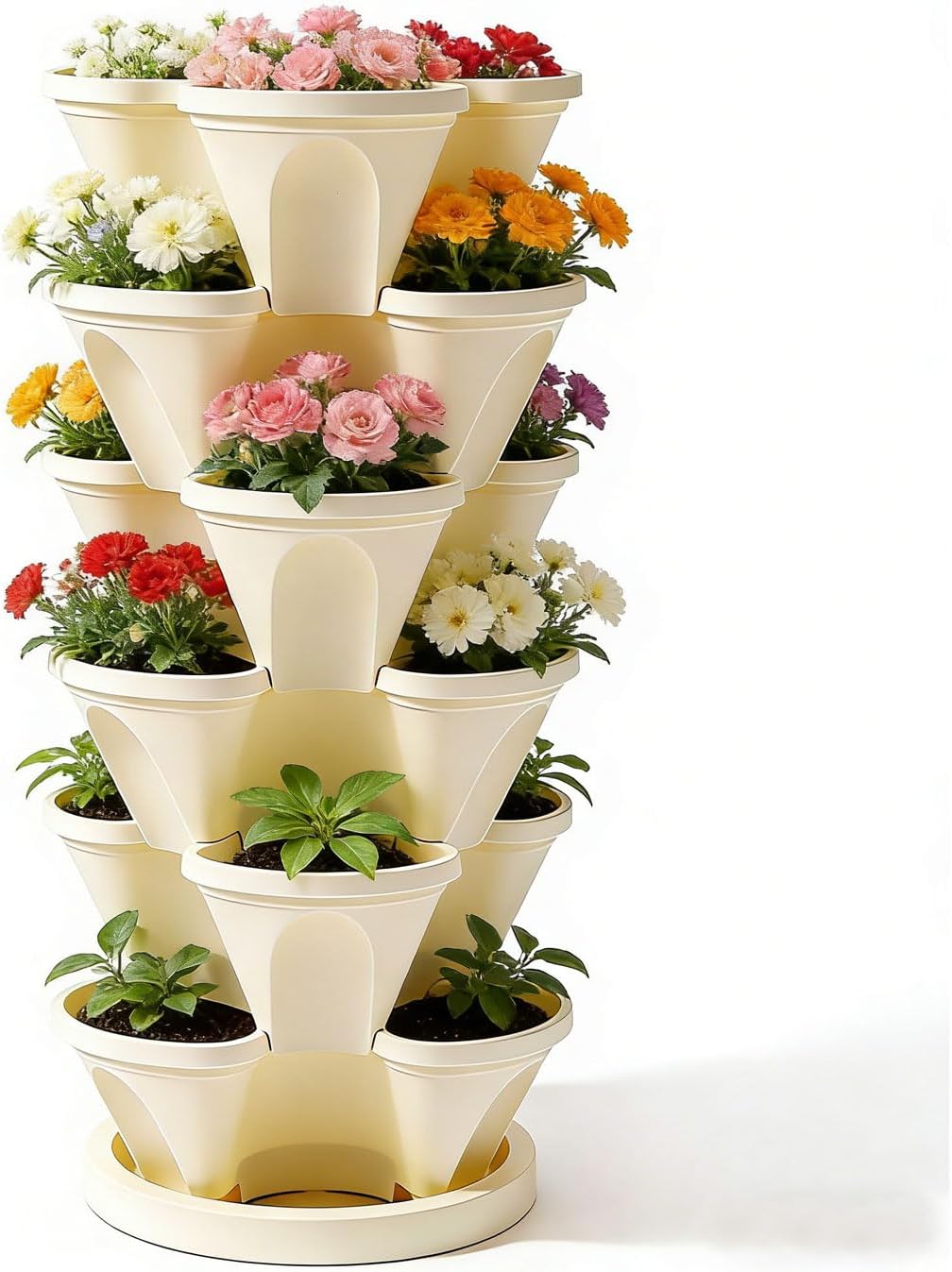
Roixeeds 6-Tier Stackable Vertical Garden Planter
| Number of Levels | 6 |
|---|---|
| Material Type | Plastic |
| Indoor Outdoor Usage | Outdoor |
| Other Special Features | Adjustable Height, Stackable |
This Roixeeds 6-tier stackable vertical planter is a simple, no-tools solution for creating a compact strawberry or herb garden on a balcony, patio, or small yard. The tiers snap together with an interlocking design, so setup is fast and the unit is easy to move or reconfigure. Each level includes a built-in drainage path that channels excess water downward, helping prevent waterlogged roots and keeping moisture more consistent across tiers. Made of plastic, the planter is lightweight and simple to clean, and its vertical footprint lets you grow several plants in the space one pot would occupy. Important limitations are the modest planting volume per tier and the lightweight plastic construction, which can be less durable in very hot sun or heavy winds compared with thicker resin or ceramic alternatives. For reliability-minded gardeners this planter performs well for small fruits and herbs if you monitor watering and anchor or shelter it in exposed locations.
Best for: Gardeners who need a reliable, space-saving solution for growing strawberries or herbs on a balcony or small patio and prefer an easy-assembly, low-maintenance planter.
Less Ideal for: Those who need large single-plant containers or who require heavy-duty materials for permanent exposed installations should consider sturdier, larger alternatives.
- Stackable interlocking tiers for quick assembly and flexible configuration
- Built-in drainage system that directs excess water to lower layers
- Lightweight plastic makes it easy to move and clean
- Six planting levels maximize vertical growing space for strawberries and herbs
- Individual tier planting volume is limited so larger-rooted vegetables may be constrained
- Plastic construction may degrade faster than heavier materials under prolonged sun exposure
Verdict: Choose this planter when you want a dependable, easy-to-assemble vertical solution to grow multiple strawberries or herbs in a small outdoor space.
BIVODA HDPE Elevated Raised Garden Bed Planter Box

| Material Type | High Density Polyethylene (HDPE) |
|---|---|
| Capacity | 10 gallons |
| Features | Drainage Hole, Fade Resistant, Rot Resistant, Rust Resistant, Weather Resistant |
| Mounting Type | Floor Standing |
This BIVODA raised garden bed is an elevated HDPE planter built for low-maintenance outdoor growing of herbs, seedlings and small vegetables. It assembles quickly with pre-inserted nuts and stainless steel screws and sits on legs to raise plants off the ground, which helps reduce pest damage and improves working height. The HDPE construction resists rot, rust and fading so it tolerates sun, rain, salt spray and cold without painting or regular upkeep. Drainage holes and a reinforced bottom keep soil from becoming waterlogged and add structural support for filled media. The unit holds about 10 gallons and is compact enough for patios, balconies or narrow garden beds. Limitations are its modest planting volume and footprint, so it suits small herb plots or companion planting rather than larger vegetable varieties that need deep root space. Buyers should also plan for assembly and a stable, level spot since the planter is freestanding on legs.
Best for: For gardeners who prioritize a reliable, low-maintenance outdoor planter for herbs and small edibles and want a weatherproof, long-lasting option that reduces ground pests and upkeep.
Less Ideal for: Not a good fit for growers needing deep or high-volume beds for larger vegetables or for landscapers looking to cover large planting areas with one unit.
- Durable HDPE construction resists rot, rust and fading for low maintenance outdoor use
- 304-grade stainless steel screws reduce corrosion risk in wet or coastal climates
- Elevated design raises plants off the ground to deter small pests and ease harvesting
- Integrated drainage holes and reinforced bottom prevent waterlogging and improve support
- Relatively small capacity (10 gallons) limits planting to herbs, seedlings or compact vegetables
- Not suitable for deep-rooted or large single plants due to shallow planting depth
Verdict: Buy this planter if you want a durable, weatherproof elevated bed that reliably grows herbs and small vegetables with minimal upkeep.
Veradek Pure Series Tall Tapered Outdoor Planter with Removable Shelf (2-pack)

| Capacity | 73.6 liters |
|---|---|
| Number of Pieces | 2 |
| Material Type | Polypropylene Plastic |
| Other Special Features | UV Resistant, Weather Resistant |
| Mounting Type | Floor Standing |
The Veradek Pure Series tall taper planters are designed to deliver durable, low-maintenance container planting for patios, entrances, and balconies. Made from molded polypropylene, the pots are lightweight yet impact resistant and treated for UV and weather exposure so they hold up through sun and colder conditions without cracking or heavy fading. Each set includes a removable insert shelf so you can either fill the body with soil for deep-rooted plantings or use the insert for shallower plant mixes and easier repotting; the insert also offers an optional drainage hole. At 30 inches tall these planters create height and presence for elevated displays of perennials, small shrubs, or dramatic succulents. The single-wall construction keeps them easy to move compared with heavy ceramic or metal alternatives but means they do not offer the insulating mass of heavier materials, so soil can warm and cool faster. For gardeners who prioritize robust, weatherproof planters that are simple to manage, these deliver strong real-world performance with a modern profile.
Best for: Gardeners who want durable, low-maintenance planters that create height and impact while remaining easy to move and manage, especially for patio, balcony, or entryway displays.
Less Ideal for: People seeking heavy, decorative materials with built-in insulation or those who prefer natural stone or ceramic aesthetics for formal garden designs.
- UV and weather resistant finish designed to resist fading and cracking
- Lightweight polypropylene construction makes placement and relocation easy
- Removable insert shelf gives flexibility for deep fills or contained inserts
- Tall 30 inch profile provides strong vertical presence for elevated plantings
- Single-wall plastic lacks the thermal mass of ceramic or stone, so root temperatures fluctuate more
- Not insulated; may need protection in extreme freeze-thaw conditions
Verdict: A weatherproof, lightweight pair of tall planters that deliver reliable, low-maintenance performance and strong vertical presence for outdoor container gardens.
Land Guard Galvanized Oval Raised Garden Bed Kit (4×2×1 ft)

| Material Type | Metal |
|---|---|
| Finish Types | Double-layer galvanized |
| Capacity | 7.14 cubic feet |
| Mounting Type | Floor Standing |
This Land Guard raised garden bed is a simple, durable option for planting vegetables, herbs, or mixed annuals in a compact outdoor space. The kit arrives as flat panels that assemble into an oval planter about 4 by 2 feet and 1 foot deep, and setup is straightforward so you can fill and plant in minutes. Its double-layer galvanized steel construction and wave-shaped panels are intended to resist corrosion and add rigidity, and the manufacturer states thicker panels at stress points to reduce deformation. An open base design lets excess water drain and helps avoid root rot if placed on soil or lawn. Practical benefits include low maintenance, a tidy planted border that keeps soil contained, and a metal finish that lasts longer than untreated steel. Limitations are the shallow depth for deep-rooted crops and the likelihood the metal will warm quickly in hot sun, which may require more frequent watering or shade management. It is best used as a portable, long-lasting planter for raised-bed style container gardening rather than a full replacement for deeper in-ground beds.
Best for: Gardeners who want a quick-to-assemble, durable raised planter to grow vegetables or herbs in small outdoor spaces and who prioritize evidence of longevity over decorative complexity.
Less Ideal for: Growers who need deep soil for large root crops, or those looking for insulated or fully enclosed beds to control soil temperature and moisture long-term.
- Galvanized double-layer steel resists corrosion for multi-season outdoor use
- Oval, interlocking panel design assembles quickly with included tools
- Open base allows natural drainage to reduce standing water and root rot
- Compact footprint fits small patios, balconies, and tight garden beds
- Only 12 inches deep which limits planting of larger, deep-rooted vegetables or shrubs
- Metal surface can heat up in full sun and increase watering needs
Verdict: A tough, easy-to-assemble galvanized oval raised bed that gives small-space gardeners a durable, low-maintenance container for vegetables and herbs.
Choosing the Right Outdoor Herb Planter: Key Factors to Consider
Drainage and Water Management
Herbs are sensitive to waterlogged soil, so drainage is a primary concern when choosing a planter. Look for obvious drainage holes, raised feet, or built-in reservoirs that separate roots from excess moisture. Good drainage reduces root rot risk and allows you to water more confidently during hot weather. If a planter lacks sufficient drainage you will need to punch holes or add an inner liner that permits excess water to escape.
Drainage also affects how frequently you must water. Shallow, well-drained planters dry out faster and need more frequent attention, while deep containers retain moisture longer. Consider your watering schedule and local rainfall when deciding how much drainage you want.
Material and Weather Resistance
The planter material determines how it will age outdoors. Terracotta breathes well but can crack in freeze-thaw climates unless moved indoors. Plastics resist breakage and are lightweight, but lower-quality plastics can become brittle and fade under intense sun. Metals offer a modern look and long life if they are rust-resistant or powder-coated; otherwise they risk corrosion over time.
Think about sun exposure, winter temperatures, and whether you will leave the planter outside year-round. Durable materials reduce the need for replacements and protect soil structure and root health across seasons.
Size, Soil Volume, and Root Space
Herbs vary in root habits. Compact herbs like chives and common thyme need shallow soil, while larger herbs such as rosemary and mint develop deeper and wider roots. Choose a planter that provides enough soil volume for the mature size of the herbs you intend to grow. A planter that is too shallow will dry quickly and limit nutrient availability.
Soil volume also affects fertilization and repotting frequency. Planters with more root space buffer nutrients and moisture better, which is helpful if you cannot water daily. In small patios, balance soil volume against available floor or railing space to avoid overcrowding.
Access for Planting, Harvesting, and Maintenance
Practical access speeds routine tasks like pruning, harvesting, and pest checks. A planter with a comfortable rim height or side openings reduces the need to bend or reach awkwardly. Wide-top planters make it easier to plant several herbs together and trim crowded stems.
Maintenance features such as removable liners, accessible drain plugs, or wide soil access simplify annual refreshes and soil amends. Consider how often you will re-pot, top-dress, or check for pests when selecting a design.
Portability and Weight Management
Being able to move a planter matters for seasonal placement, shifting light, and protecting plants from storms. Lightweight materials and built-in handles make relocation easier, especially on balconies or upper-story patios. However, very light planters can tip in strong wind when empty or when housing tall herbs.
If you need to move planters full of soil, look for designs with caster-compatible bases or manageable weight when filled. Portability also affects winter storage and the ability to reposition plants for more sun during short seasons.
Pest Prevention and Soil Health
Planter design influences pest access and soil ecosystem health. Raised edges, tight-fitting lids for self-watering models, and solid walls can deter crawling pests and slugs. Conversely, open slatted designs or low rims may allow easier entry for insects. Consider how frequently you inspect plants and whether you prefer designs that make pest control physically easier.
Soil health matters because small planters deplete nutrients faster than in-ground beds. Choose a planter that allows for straightforward soil replacement or top-dressing. Good ventilation around the container and the ability to mix compost or slow-release fertilizer into the potting mix will maintain productive herbs longer.
Planter Shapes That Fit Tight Spaces
Rectangular troughs and railing planters make the most of narrow balconies because they spread root space horizontally without taking up deep floor area. Round pots are versatile for corners or grouping but can waste linear space when you need multiple herb varieties side by side.
Consider vertical options when floor space is minimal. Stacked planters and tiered systems let you grow several herbs in the footprint of one large pot, but keep an eye on lower plants for light deprivation.
- Troughs use linear space efficiently for multiple plants.
- Round pots work well for single specimens or centerpieces.
- Stacked or tiered systems increase plant count without expanding floor area.
Soil Mix and Fertility for Container Herbs
A high-quality, well-draining potting mix is critical for container herbs. Blends with compost, perlite or pumice, and a light-watering-retentive component help balance moisture and aeration. Avoid using garden soil alone because it compacts and drains poorly in containers.
Plan on feeding container herbs more regularly than in-ground specimens. Slow-release granular fertilizer at planting and light liquid feeds during the growing season maintain leaf flavor and vigor in limited soil volumes.
- Use a light, airy potting mix with good drainage.
- Top dress or feed regularly to replenish nutrients in small volumes.
Placement, Light, and Microclimates
Most culinary herbs need at least 4 to 6 hours of direct sun. Observe your patio or balcony to find the sunniest stretches and place planters where herbs will get morning sun or full-day exposure depending on the species. East-facing spots suit many herbs that dislike late-afternoon heat.
Microclimates around buildings and railings can create warmer or cooler pockets. Move planters to buffered areas on hot days or closer to walls on cool nights to protect sensitive herbs. Portable planters make this easy.
- Aim for 4 to 6 hours of direct sun for most herbs.
- Use microclimates to extend season or protect from heat.
Watering Practices for Container Herb Gardens
Containers dry faster than garden beds, so establish a consistent watering routine. Check soil moisture with your finger or a probe rather than relying on a schedule alone. Early morning watering reduces disease risk and helps plants cope with midday heat.
Self-watering planters and water reservoirs can reduce daily watering needs, but they still require monitoring to prevent salt buildup and root crowding. Ensure reservoirs have a monitoring port or overflow to avoid long-term saturation.
- Test soil moisture directly before watering.
- Consider self-watering options if you cannot water daily.
Seasonal Care and Winter Considerations
Planters left outside in cold climates face freeze-thaw stress. Move vulnerable pots to sheltered spots or bring them indoors if frost threatens. Even if planters survive, potting mix can compact and become less hospitable to roots after a hard winter, so refresh soil before spring.
Prune back perennial herbs in late season and trim annuals for a final harvest. Lighter planters are easier to store and protect during winter months; heavier stone or ceramic pots may be better left in place if moving them is not practical.
- Protect or store vulnerable planters during hard freezes.
- Refresh soil and check roots in early spring before new growth.
How We Chose the Best Outdoor Herb Planter
We focused on attributes that matter for growing culinary herbs outdoors in constrained spaces. Primary evaluation criteria included drainage performance, material durability, soil volume and root space, ease of access for planting and harvesting, and portability for seasonal moves. Drainage performance tested how easily excess water exits the container and whether designs reduce waterlogging risk. Material durability considered UV resistance, rot or corrosion potential, and how the material behaves in freeze-thaw cycles. Soil volume and root space assessed whether the planter gives shallow-rooted herbs enough room without wasting horizontal space. Ease of access looked at rim height, side openings, and whether the design makes trimming and watering straightforward. Portability examined weight, handles, and whether planters can be moved full of soil. We excluded very large garden beds, permanent in-ground structures, and planters that require specialized installation. We also filtered out options that lack basic drainage or use materials known to fail quickly outdoors. The remaining picks represent a balance of practical design, longevity, and straightforward care needs for herb-focused outdoor growing. These criteria align with the scorecard metrics used in product summaries.
FAQ
How deep should an outdoor herb planter be?
Depth depends on the herbs you plan to grow. Most common culinary herbs do well in 6 to 10 inches of soil, but larger shrubs like rosemary benefit from deeper containers. Choose depth based on the mature root habit of your plants.
Can I grow multiple herbs in one planter?
Yes, grouping compatible herbs in the same planter works if they have similar water and light needs. Keep spacing in mind to avoid overcrowding and select a container with enough soil volume so roots do not become crowded quickly.
Are self-watering planters good for herbs?
Self-watering planters can be helpful when you cannot water daily because they buffer moisture swings. They still require monitoring for salt buildup and periodic checks to ensure roots are not sitting in stagnant water.
What potting mix is best for outdoor herb planters?
A light, well-draining potting mix with organic matter and a gritty component like perlite or pumice is ideal. Avoid heavy or compacted garden soil, which can suffocate roots and hold too much water.
How often should I fertilize herbs in containers?
Container herbs typically need more frequent feeding than in-ground plants. Use a slow-release fertilizer at planting and supplement with light liquid feeds every few weeks during the growing season, depending on plant vigor.
Final Verdict
Choose an outdoor herb planter that matches the size and root needs of the herbs you want to grow while fitting your space and maintenance habits. Prioritize good drainage and a material suited to your climate, then balance soil volume against portability so you can move pots for light or protection. Tradeoffs are inevitable: lightweight planters are easy to move but may dry faster, while heavier options hold moisture but are harder to reposition. Focus on the evaluation criteria discussed to pick a planter that supports steady harvests and low hassle throughout the season.
