

Note: This article contains affiliate links. If you click on these links and make a purchase, I may earn a small commission at no extra cost to you. This helps support my research and content. Read my full affiliate disclosure here.
If rodents are chewing wiring, burrowing under porches, or raiding garden beds, the right outdoor rodent trap makes detection and removal far easier. Outdoor traps behave differently than indoor models because they must survive rain, sun, dirt, and animal interference while still triggering reliably. This guide covers seven shortlisted outdoor rodent traps chosen for dependable capture, rugged construction, and safe field use. We evaluate each option against practical gardener concerns like weather resistance and baiting reliability so you can pick a trap suited to your yard or small farm. Read on for the criteria that mattered and guidance to match a trap to your situation.
Top Picks at a Glance
| Best Overall The best all-around choice for most situations | Redtop Rat Bait Station Outdoor, Tamper-Resistant 2-Pack (Key Included) |  |
| Best Quality Built to a higher standard if you want something more solid | Tomcat Outpost Lockable Rat Bait Station, Set of 6 |  |
| Best Value The sweet spot between price and what you get | TRATPER Dual-Entry Covered Rat and Chipmunk Trap (2-Pack) |  |
| Best Budget The cheapest option that still gets the job done reliably | Tomcat Rat Snap Trap (1 rat-size trap) |  |
| Highest Rated A top-rated pick with lots of positive feedback | AyaChuu 5-Gallon Bucket Flip-Lid Mouse Trap Kit (4-Pack) |  |
| Most Popular A crowd favorite that many people choose with confidence | Tomcat Mouse Killer Disposable Child & Dog Resistant Bait Stations (2-Pack) |  |
| Best Seller A high-volume bestseller chosen again and again | UCatch Dual-Entry Tunnel Rat Trap (2-Pack) |  |
Redtop Rat Bait Station Outdoor, Tamper-Resistant 2-Pack (Key Included)

| Target Species | Chipmunk, Mouse, Rat, Squirrel |
|---|---|
| Power Source | Hand_powered |
| Unit Count | 2 Count |
| Number of Pieces | 2 |
This two-pack of Redtop outdoor bait stations provides a simple, durable way to deploy rodent bait around garages, sheds, barns, patios, and other perimeters. Each station features a locking lid with a key and dual locking points to reduce accidental access, plus vertical holders and horizontal rods so you can mount bait blocks or arrange bait for the target species. The weather-resistant housing helps keep bait dry and cleaner than loose placement, and the compact, low-profile design is suitable for placing along foundations or in sheltered exterior locations. Setup and servicing are straightforward: unlock, load the bait on the rods or holders, then close and lock. Important limitations are that bait is not included and stations must be placed within recommended distances from buildings to avoid contamination risks, so placement planning is needed. For heavier commercial needs you may prefer larger or multiple stations, but for residential and small-farm perimeter control these boxes make securing bait safer and neater than open placement.
Best for: Buyers who want a practical, safer way to place rodent bait around homes, sheds, and small farms and who prioritize controlled access and weather protection.
Less Ideal for: People needing very large-scale commercial baiting or bait stations with integrated monitoring features should consider heavier-duty professional systems.
- Tamper-resistant locking lid with included key improves safety and controlled access.
- Vertical holders and horizontal rods allow flexible bait mounting and organized placement.
- Weather-resistant construction protects bait from rain and debris for outdoor use.
- Two-pack provides coverage for multiple sites or staggered placement around a property.
- Bait is not included so additional purchase and correct bait selection are required.
- Not sized for very large commercial operations where higher-capacity stations may be needed.
Verdict: Use these tamper-resistant, weather-resistant stations to securely deploy bait around residential and small-farm buildings for cleaner, more controlled rodent management.
Tomcat Outpost Lockable Rat Bait Station, Set of 6

| Target Species | Mouse, Rat |
|---|---|
| Number of Pieces | 6 |
| Material Type | Plastic |
| Unit Count | 1 Count |
The Tomcat Outpost bait station kit gives homeowners and property managers a professional-style way to secure bait and monitor rodents outdoors. Each black plastic station is lockable with a single key and EPA Tier 1 tamper-resistant rated to keep children, pets, and non-target animals away from bait. The interior holds either multiple 1 oz bait chunx or a snap trap, and the low-profile form mounts vertically or horizontally so you can place it along walls, fence lines, or inside tight spaces. Durable construction and a removable tray simplify cleaning and replacement of bait. Because the stations are weather-resistant and used by pros, they are well suited for repeated outdoor deployments around homes, farms, or storage buildings. Note that bait and traps are sold separately and you will need a key to open locked units, and the plastic build is functional rather than heavy-duty metal for extreme vandalism resistance.
Best for: Best for homeowners or property managers who need a professional, repeatable outdoor baiting solution and prioritize secure, tamper-resistant placement around buildings and perimeter areas.
Less Ideal for: Not a good fit for users who need a concealed indoor monitoring system or those wanting heavy metal stations for high-vandalism locations.
- Lockable, tamper-resistant design that meets EPA Tier 1 standards for child and pet safety
- Configurable mounting vertically or horizontally for flexible placement
- Interior holds multiple 1 oz bait chunx or a rat snap trap for versatile pest control
- Removable tray for easier cleaning and bait replacement
- Durable weather-resistant plastic suitable for outdoor use
- Bait and snap traps are not included so additional purchases are required
- Plastic construction is less vandal-resistant than metal alternatives
Verdict: Choose these lockable Outpost stations when you want a professional, tamper-resistant outdoor baiting system that keeps bait secure and weather-protected.
TRATPER Dual-Entry Covered Rat and Chipmunk Trap (2-Pack)

| Target Species | Rat, Chipmunk, Large Mouse, Large Mice |
|---|---|
| Unit Count | 2 Count |
| Material | ABS plastic |
| Maximum Range | 10 feet |
The TRATPER dual-entry covered trap is a heavy-duty, reusable tunnel-style snap trap meant to keep children and pets away from the strike mechanism while targeting rats, chipmunks, and large mice. You set bait inside the tunnel, push the lever to arm the sensitive trigger pad, and place the trap where vermin activity is seen; the enclosed design reduces accidental triggering and hides caught animals. Constructed from ABS plastic, the unit is washable and designed for repeated outdoor or indoor use, and the locking mechanism is hands-free so no hooks or wires are needed. Practical benefits include a covered housing that improves safety around households with pets, a responsive trigger for quick kills, and a form factor that works well along runways or near structures. Limitations are that plastic construction can become brittle over many seasons in extreme sun and cold, and larger aggressive rodents may sometimes avoid a covered tunnel compared with bait stations that use heavier materials. Also handle with gloves to avoid transferring scent that can reduce effectiveness.
Best for: Buyers who want a practical, safer outdoor trap that can be reused season after season and placed along runways, foundations, or near refuse where rodents are active.
Less Ideal for: People needing a heavy professional-grade metal trap for very large rats or for permanent outdoor stations in extreme climates should consider sturdier alternatives.
- Covered tunnel keeps children and pets away from the trigger
- Dual-entry design increases chance of capture by allowing approach from either direction
- Reusable, washable ABS plastic construction for repeated outdoor or indoor use
- Simple hands-free set and automatic locking mechanism with no hooks or wires
- Plastic body may degrade after prolonged exposure to sun and freezing temperatures
- May be less intimidating to larger rodents compared with metal or heavier-duty traps
Verdict: A user-friendly, reusable covered tunnel trap that balances safety and effectiveness for homeowners managing outdoor rats and chipmunks.
Tomcat Rat Snap Trap (1 rat-size trap)

| Unit Count | 1 Count |
|---|---|
| Target Species | Rat |
| Power Source | manual |
| Material Type | Plastic |
The Tomcat Rat Snap Trap is a mechanical rat trap built for recurring indoor use in basements, garages, storage areas, and other covered spots where rats travel. It uses a powerful snap mechanism and patented interlocking teeth to hold captured rodents, and a removable bait cup that lets you bait or service the trap without arming it. The trap sets easily by hand or foot and is made of high-impact plastic with rust-resistant metal parts so it can be reused. Practical benefits include a no-touch disposal tab and an easy-view indicator that helps confirm a catch without handling the carcass. Because it is manual and non-toxic, it is a good option around households that prefer chemical-free control. Limitations are that it requires correct placement perpendicular to walls and periodic checking, and it is not a hands-off solution for heavy infestations where multiple traps or professional measures may be needed.
Best for: Buyers who want a reliable, chemical-free indoor trap they can reuse and maintain themselves, and who value visible, no-touch handling when a catch occurs.
Less Ideal for: People seeking a fully hands-off or large-scale solution for heavy infestations should consider multi-trap strategies or professional services instead.
- Powerful snap with interlocking teeth to reduce escapes
- Removable bait cup allows baiting without setting
- Reusable construction with rust-resistant metal parts
- Easy one-motion set by hand or foot and built-in disposal tab
- Requires correct placement and regular checking to be effective
- Single trap unit is not sufficient for large or severe infestations
Verdict: A simple, reusable mechanical rat trap that delivers effective, chemical-free indoor control when placed and checked correctly.
AyaChuu 5-Gallon Bucket Flip-Lid Mouse Trap Kit (4-Pack)

| Unit Count | 4 Count |
|---|---|
| Power Source | manual |
| Manufacturer | AyaChuu |
This kit converts a standard 5-gallon bucket into a reusable flip-lid rodent trap that catches mice and rats without poisons or snap mechanisms. Installation is straightforward: mount the flip-lid mechanism and ramp on a bucket (bucket not included), add a smear of bait on the lid, and place the ramp against walls or entry points. The lightweight lid and gravity-driven reset make captures fast and allow multiple catches before emptying, which is useful for heavy infestations outdoors. Notable features include the sensitive flip-lid, reusable construction, and simple manual power source that requires no batteries. The humane live-capture approach reduces odor and safety concerns around children and pets compared with lethal methods. Important limitations are that you must supply a compatible 5-gallon bucket and set up multiple kits for broad coverage; success also depends on bait choice and proper placement, and very large rodents may be harder to contain depending on bucket strength. For someone who values reliable, low-maintenance outdoor control, this kit is a practical, long-term option.
Best for: Buyers who need a dependable, low-maintenance outdoor rodent solution and prefer reusable, non-chemical methods for ongoing infestations.
Less Ideal for: People seeking a self-contained, instant-use trap without sourcing a bucket or those who prefer lethal control methods for single, isolated rodents.
- Reusable flip-lid mechanism for repeated catches without replacing parts
- Gravity-triggered design is manual and needs no batteries or power
- High-capacity when paired with a 5-gallon bucket, reducing emptying frequency
- Humane live-capture reduces odor and avoids poisons around people and pets
- 5-gallon bucket is not included so you must provide a compatible bucket
- Effectiveness depends on proper bait choice and placement which can require trial and error
Verdict: A reliable, reusable flip-lid kit for turning a 5-gallon bucket into a high-capacity, humane outdoor rat and mouse trap.
Tomcat Mouse Killer Disposable Child & Dog Resistant Bait Stations (2-Pack)

| Unit Count | 2 Count |
|---|---|
| Target Species | Mouse |
| Item Type Name | for Indoor/Outdoor Use |
| Included Components | Rodent Trap |
Tomcat Mouse Killer disposable stations come ready to use with a preloaded bait block inside a clear-lidded, tamper-resistant housing. You place the small stations where mice travel—along walls, in corners, behind appliances, or near burrows—and the bait attracts and kills mice that feed and leave the station. The clear lid makes it easy to check bait levels and the weather-resistant, child- and dog-resistant design lets you use them in garages, attics, and other semi-exposed spots without worrying about pets or kids accessing the poison. Because each unit is disposable and pre-baited there is no handling of loose bait, which simplifies setup and disposal. The package contains two stations, so this is best for spot treatment rather than an ongoing multi-station program. If you need broader or longer-term control you will want larger packs or a refillable system, but for quick targeted indoor use these stations are simple and effective.
Best for: Buyers who want a low-cost, low-effort spot treatment to quickly address a small indoor mouse problem and who prioritize safety and ease of use over long-term coverage.
Less Ideal for: Homes with heavy or widespread infestations or users who prefer reusable refillable systems for ongoing control should look at larger multi-station or refillable options.
- Ready-to-use pre-baited stations require no handling of loose poison
- Child- and dog-resistant housing reduces accidental access risk
- Clear lid lets you monitor bait without opening the station
- Weather-resistant design suitable for garage and attic placement
- Only two disposable stations in the box so coverage is limited for larger infestations
Verdict: A simple, safety-focused two-station kit that lets budget-minded buyers set and monitor pre-baited mouse poison with almost no setup.
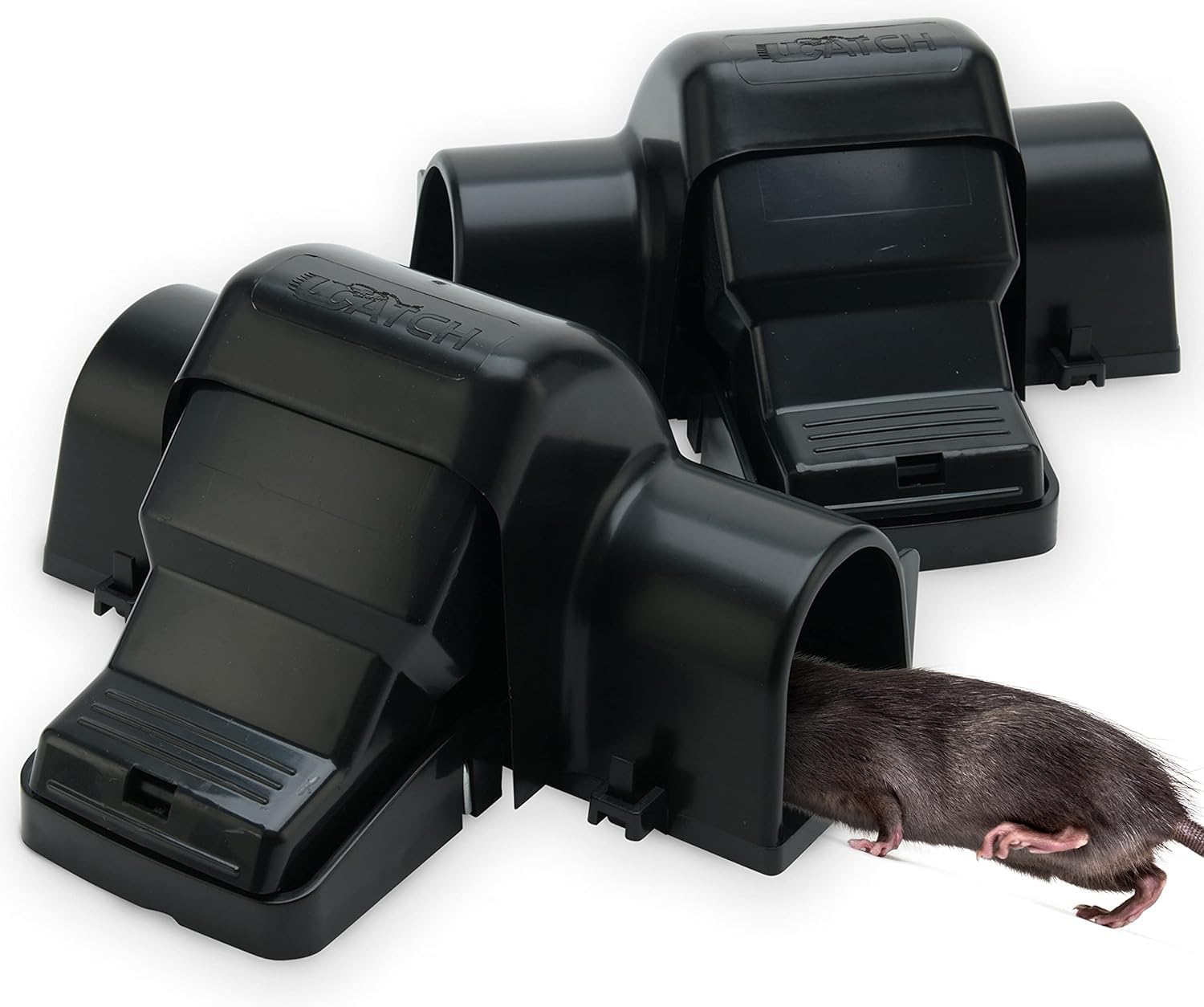
UCatch Dual-Entry Tunnel Rat Trap (2-Pack)
| Unit Count | 2 Count |
|---|---|
| Target Species | Rat, Mouse, Chipmunk, Squirrel |
| Power Source | Manual |
| Material Type | Premium ABS plastic |
The UCatch dual-entry tunnel rat trap is a manual snap trap sold as a two-pack and built to be used both inside the home and around outdoor structures. Its tunneled, dual-entry design lets rodents enter from either side, increasing the chance they trigger the powerful jaws, and the enclosed mechanism keeps fingers and pet noses away during setting and disposal. Typical use is simple: bait the cup, press the lever to set, place in runways or along walls, then remove and wash the reusable plastic housing after a catch. The practical benefits are straightforward for homeowners who want a low-fuss, no-chemicals solution: it is reusable, easy to set without touching the strike area, and targets rats, mice, chipmunks, and squirrels. Important limits are that it is a manual snap device so it requires correct placement and periodic checking, and like all snap traps it can pose a safety risk to curious pets or children if not positioned carefully out of reach.
Best for: Homeowners who prioritize a simple, low-chemical and low-contact way to stop rodents and who want a straightforward reusable trap they can place in known runways.
Less Ideal for: People who need a completely hands-off electronic or remote-monitoring system or those who cannot safely place traps out of reach of non-targets.
- Dual-entry tunnel increases likelihood of capture compared with single-entry traps
- Enclosed design keeps the strike mechanism out of reach for safer hands-free setting and disposal
- Reusable ABS plastic housing that can be washed and redeployed
- Works for a range of small mammals including rats, mice, chipmunks, and squirrels
- Requires manual setting and regular checking which may not suit buyers wanting fully automated or remote solutions
- Not suitable for households that cannot keep traps out of reach of children or pets
Verdict: A practical, reusable dual-entry snap trap that gives risk-averse homeowners a safer hands-free option for trapping common rodents.
Choosing the Right Outdoor Rodent Trap: Key Factors to Consider
Weather Resistance and Materials
Traps used outdoors face sun, rain, freezing temperatures, and mud. Materials that resist corrosion and deformation, such as galvanized or powder‑coated metals and heavy-duty plastics, hold up longer and stay functional through wet seasons.
A trap with sealed moving parts or a protective overhang can prevent moisture from fouling the trigger mechanism. Consider whether the design sheds water, allows drainage, and avoids crevices that collect debris; those details determine how reliably the trap will fire after exposure to the elements.
Trigger Sensitivity and Closure Reliability
A reliable trigger is the heart of any effective trap. Outdoors you need a trigger that is sensitive enough to pick up small nudges from target rodents but not so loose that wind, leaves, or rain cause false trips.
Closures and latches should engage cleanly every time. Look for mechanisms that do not rely on thin wires or corrodible springs. A sturdy pan, paddle, or lever with a protected pivot point reduces misfires and increases the chance of a successful capture when the trap is placed in the field.
Protection Against Non‑Target Animals
Outdoor placements increase the chance that pets, birds, or beneficial wildlife encounter traps. Designs that shield the bait and trigger inside a tunnel, box, or narrow entrance can prevent access by larger animals and reduce accidental captures.
If you have household pets or frequent wildlife, choose traps that allow mounting or anchoring and that include access-limited entries. Some trap styles permit locking covers or placement inside purpose-built protective housings to keep non-targets out while letting target rodents in.
Ease of Setting, Monitoring, and Servicing
You will be checking and rebaiting traps regularly in an outdoor program. Traps that are simple to arm, quick to check, and easy to empty make the routine less unpleasant and reduce handling time.
Consider whether the trap can be operated safely with gloved hands, whether it allows visual inspection without full exposure, and how straightforward cleaning is after a capture. Tools like quick-release latches, clear inspection windows, or removable catch trays speed maintenance in the field.
Baiting Versatility and Attractants
Different rodent species and local feeding preferences affect bait choice. Traps that accept a range of baits-peanut butter, nut meats, seeds, or small pieces of produce-are more versatile across seasons and settings.
Some designs include built-in bait cups or secure bait pins to keep attractants in place through rain and animal interference. The ability to position bait near the trigger without fouling the mechanism is important for maximizing capture rates.
Placement, Anchoring, and Security
How you place and secure a trap outdoors determines much of its effectiveness. Anchoring prevents larger animals from dragging traps away and reduces accidental displacement from wind or runoff.
Look for options that offer tie‑off points, ground stakes, or that fit inside protective boxes. Also consider ergonomic placement: traps should sit along rodent runways, close to burrow entrances, or under cover where rodents feel safe. A trap that accommodates secure mounting will stay in position and catch more animals over time.
Best Places to Put Outdoor Rodent Traps
Placement plays a bigger role outdoors than inside. Put traps along walls, fence lines, and near burrow entrances where droppings or tracks indicate activity. Place traps so rodents travel with cover between hiding places and the trap entrance; the more natural the runway, the better the success rate.
- Position traps perpendicular to the run for a higher chance of triggering.
- Set traps close to foundation edges, decking, or garden shed perimeters where rodents travel at night.
- Avoid open lawn exposures where wind, birds, or cats can interfere.
Humane Considerations and Local Rules
Some gardeners prefer live-capture options while others prioritize instant dispatch. Check local regulations and humane guidelines before selecting a trap style. Live traps require a plan for relocation or release that complies with local wildlife laws, and humane dispatch may be required by ordinance or best practice.
- Live-capture traps need regular checks, typically every few hours during activity periods.
- Dispatch methods should minimize suffering; if you are not prepared to handle that, consider alternatives designed for quick results.
Maintaining Traps in Outdoor Conditions
Routine maintenance extends the life and reliability of outdoor traps. After exposure to rain or mud, rinse and dry metal parts and apply a light protective coating if appropriate. Replace corroded springs or latches promptly to avoid misfires.
Keep spare baiting pins, simple tools, and protective gloves with your trap kit to reduce time in the field and maintain safe handling habits.
- Inspect triggers and hinges weekly during active seasons.
- Store unused traps in a dry place and lubricate pivot points annually.
Integrating Trapping with Garden Sanitation
Traps work best as part of an integrated approach. Remove food sources like fallen fruit, secure compost, and seal obvious entry points to structures. Reducing attractants lowers pressure on traps and improves long‑term control.
Traps near vegetable beds should be monitored carefully to avoid accidental captures of desirable animals. Use targeted placement and protective housings to isolate the trapping zone.
- Clear debris and long grass to reduce cover for rodents near traps.
- Combine trapping with habitat modification for a durable solution.
How We Chose the Best Outdoor Rodent Trap
We prioritized features and real-world performance that matter for outdoor rodent control. Our selection process focused on durability in outdoor conditions, mechanical reliability of the trigger and closure, humane capture or secure kill options depending on trap style, and protection against non-target animals. We also weighed ease of setting and servicing, bait versatility, and how well traps resist rust, moisture, and dirt. Excluded items included indoor-only designs, traps lacking a weatherproofing strategy, and novelty items with unproven mechanisms. We favored traps whose materials and construction suit repeated outdoor use and that offer clear instructions for safe placement. Final picks passed checks for robust latching or sealing, baiting flexibility, and designs that minimize accidental access by pets and wildlife.
FAQ
How often should I check outdoor rodent traps?
Check traps at least once daily when rodents are active and more often for live-capture units, which should be inspected every few hours if possible. Frequent checks reduce stress on captured animals and limit disease exposure.
Can I use the same baits outdoors as I do inside?
Often yes, but outdoor conditions change bait performance. Sticky baits like peanut butter usually work well, while fresh produce can spoil quickly. Secure bait with pins or cups so wind and rain do not wash it away.
Are live-capture traps safe for relocation?
Relocation rules vary by jurisdiction. Even when allowed, relocating rodents can spread disease and often fails because animals return or do not survive in unfamiliar territory. Check local regulations before planning relocation.
Will weather ruin trigger mechanisms?
Exposure to moisture and dirt can impair triggers over time. Choose traps with protected pivots, water-shedding designs, or corrosion-resistant materials and perform regular maintenance to keep mechanisms reliable.
How do I prevent pets from getting into outdoor traps?
Use traps with narrow entrance tunnels or place traps inside secured boxes or under coverings. Anchoring and locking features also help keep curious pets from accessing bait or trapped animals.
Final Verdict
Prioritize durability and reliable triggering when choosing an outdoor rodent trap. Weather-resistant materials, protected trigger mechanisms, and features that limit non-target access make the biggest difference in real-world use. Consider how you will deploy and maintain traps on your property, and match baiting options and anchoring methods to your site. Balance humane goals, local rules, and practicality. Focus on traps you can service regularly and secure against pets and wildlife to achieve steady results over time.
