

Note: This article contains affiliate links. If you click on these links and make a purchase, I may earn a small commission at no extra cost to you. This helps support my research and content. Read my full affiliate disclosure here.
If you grow sundews, pitchers, or other bog-loving species, the growing medium determines how well roots take up water and nutrients. Peat moss is the go-to component for most carnivorous plant mixes because it holds moisture, stays acidic, and suppresses excess minerals that harm these species. This guide shortlists six top peat moss options suited for carnivorous plants in pots, trays, or terrariums and explains the practical traits that matter in a working collection. You will find picks that emphasize moisture retention, low soluble salts, and consistent acidity. We evaluated each option against garden-ready criteria so you can pick the right peat for repotting, propagation, or long-term culture. Read on for the factors that matter and how to match a peat to your plants and growing setup.
Top Picks at a Glance
| Best Overall The best all-around choice for most situations | Perfect Plants Carnivorous Plant Soil, 4 qt |  |
| Best Quality Built to a higher standard if you want something more solid | Hoffman Canadian Sphagnum Peat Moss, 18 Quart |  |
| Best Budget The cheapest option that still gets the job done reliably | Doter Organic Sphagnum Peat Moss (1 qt) |  |
| Highest Rated A top-rated pick with lots of positive feedback | Gardenera Premium Natural Sphagnum Peat Moss (1 Quart) |  |
| Most Popular A crowd favorite that many people choose with confidence | Legigo Natural Sphagnum Moss (4 qt) |  |
| Best Seller A high-volume bestseller chosen again and again | Sukh Sphagnum Moss for Reptiles, 5 oz |  |
Perfect Plants Carnivorous Plant Soil, 4 qt

| Unit Count | 128 Fluid Ounces |
|---|---|
| Item Type Name | Carnivorous Plant Soil 4qt |
| Item Highlight | Organic sphagnum peat moss and perlite blend |
| Manufacturer | Perfect Plants |
This 4-quart blend from Perfect Plants is a simple, no-fuss growing medium made for Venus flytraps, sundews, pitcher plants and other carnivores. The mix pairs organic sphagnum peat moss with perlite to create and maintain the low pH and consistent moisture these species need, and the resealable heavy-duty bag helps keep unused mix fresh between uses. Typical use is potting or repotting small to medium carnivorous plants and top-dressing containers where water retention and aeration matter. Practical benefits include a ready-made acidity-friendly substrate so you do not need to blend your own peat and perlite ratios, good water management that reduces standing water while keeping the root zone damp, and small volume suitable for a few pots or individual plants. Limitations are the small 4-quart size if you have many plants and the peat-based formula, which requires mindful sourcing for sustainability-minded gardeners. Also, this product is a growing medium only and contains no added fertilizer, so you will still need to follow species-appropriate feeding routines.
Best for: Gardeners who want a convenient, ready-made acidic substrate for a small collection of carnivorous plants and prefer a plug-and-play solution rather than mixing their own medium.
Less Ideal for: Large growers with many pots or growers seeking peat-free, eco-focused mixes should consider bulk options or alternative substrates.
- Pre-mixed peat moss and perlite creates the low pH and moisture retention carnivorous plants prefer
- Resealable heavy-duty bag preserves freshness between uses
- Small 4-quart volume is convenient for potting a few plants or repotting individual specimens
- Made in the USA by a nursery-focused brand
- Only 4 quarts, so multiple purchases needed for larger collections
- Peat-based mix may concern gardeners looking for peat-free or more sustainable substrates
- Contains no added nutrients or fertilizer for ongoing feeding needs
Verdict: Buy this if you want an easy, ready-to-use acidic peat and perlite mix that simplifies potting or repotting a small number of carnivorous plants.
Hoffman Canadian Sphagnum Peat Moss, 18 Quart

| Volume | 18 quarts |
|---|---|
| Ingredients | peat moss |
| Unit Count | 1 Count |
This Hoffman Canadian sphagnum peat moss is a coarse New Brunswick grade that performs as a moisture-retentive base for soilless mixes. It is typically used straight for carnivorous plant substrates or blended with perlite or vermiculite to tune drainage and aeration. The product’s coarse texture and high water-holding capacity make it easy to keep consistently damp without becoming waterlogged, which benefits bog plants that need low nutrients and steady moisture. Practical advantages include a clean, fibrous structure that mixes uniformly and holds nutrient-poor conditions favored by many carnivores. Limitations are that peat is acidic and very low in nutrients, so it should be rinsed only if needed and never used as a sole fertilizer source; it also compresses over time and is not a renewable material, so expect occasional repotting to refresh substrate. For growers focused on reliable moisture control and straightforward mixing for specialized plant media, this peat moss is a dependable component.
Best for: Growers who prioritize consistent moisture control and need a neutral, low-nutrient base to build custom carnivorous plant mixes.
Less Ideal for: Gardeners looking for an all-in-one potting soil that supplies nutrients or those who prefer sustainable alternatives like coir or peat-free mixes.
- Coarse New Brunswick grade provides fibrous texture that mixes well with perlite or vermiculite
- High water-holding capacity helps maintain the consistently damp conditions carnivorous plants prefer
- Clean, single-ingredient product with no added fertilizers or amendments
- Sold in a manageable 18 quart size that is easy to handle for potting and repotting
- Very low in nutrients so additional feeding or nutrient-free water regimen is required
- Compresses over time and may require periodic repotting to refresh substrate
- Peat is not a renewable resource, which may concern environmentally minded growers
Verdict: A dependable, coarse Canadian peat moss for building moisture-retentive, nutrient-poor mixes ideal for carnivorous plants.
Doter Organic Sphagnum Peat Moss (1 qt)

| Brand Name | Doter |
|---|---|
| Unit Count | 32 Ounce |
| Volume | 1 quarts |
| Style Name | Peat Moss |
This Doter peat moss is a basic, no-frills sphagnum peat sold in a resealable 1-quart pouch that works well as a moisture-retentive, acidic amendment. It is typically used by mixing into potting media or creating bespoke substrates for acid-loving and carnivorous plants where high water retention and low pH are desired. Notable features include strong moisture-holding capacity, a naturally acidic pH range around 3.5 to 6, and packaging that reseals for storage. In practice it helps keep mixes airy and prevents compaction when combined with perlite or vermiculite, and it provides a reliably damp environment for seed starting and sundew or pitcher plant cultures. Limitations are its small 1-quart volume, which means frequent repurchasing for larger projects, and the inherent environmental concerns around peat harvesting. Also avoid using it alone for long-term potting since it lacks nutrients and will need supplementation depending on plant needs.
Best for: Gardeners setting up or maintaining carnivorous plant mixes or small-scale seed starting who want an inexpensive acidic medium and appreciate a resealable package.
Less Ideal for: Large-scale growers or those wanting a complete, nutrient-rich potting mix should choose bulk peat or formulated substrates instead.
- Good water retention for seed starting and moisture-loving plants
- Naturally acidic pH suitable for carnivorous and other acid-loving species
- Resealable heavy-duty pouch for tidy storage between uses
- Helps reduce compaction when mixed into potting media
- Small 1-quart volume requires multiple bags for larger collections or beds
- Contains no added nutrients so you must amend for long-term plant feeding
Verdict: A compact, budget-friendly sphagnum peat option that gives carnivorous plants the damp, acidic substrate they need in small-scale setups.
Gardenera Premium Natural Sphagnum Peat Moss (1 Quart)

| Brand Name | Gardenera |
|---|---|
| Unit Count | 32 Ounce |
| Item Type Name | PEAT MOSS |
| Volume | 1 quarts |
Gardenera Premium Natural Sphagnum Peat Moss is a straightforward, no-frills medium for carnivorous plants and other bog or terrarium species. It is pure sphagnum peat, sold in a small 1-quart bag, and is typically used either alone or mixed with perlite and sand to create the low-nutrient, consistently moist substrate carnivores prefer. The peat holds water well and increases pore space in containers so roots avoid compaction, which helps maintain the damp but airy conditions many pitcher plants and sundews need. Notable features are its advertised 100% natural composition and suitability for indoor or outdoor use. Important limitations are the small volume provided — you will likely need multiple bags for several pots or repotting — and the usual caution about handling peat dust, which can irritate eyes and skin and should be used in a ventilated area. For growers who prioritize a simple, reliable peat base, this product performs the essential functions without extras.
Best for: Growers who want a dependable, pure peat base for building carnivorous plant mixes and who value predictable moisture retention and simplicity in their potting media.
Less Ideal for: Gardeners who need large volumes for beds or heavy mixed potting soils or who prefer peat-free, sustainable alternatives for bog plants.
- 100% natural sphagnum peat suitable as a low-nutrient base for carnivorous and bog plants
- Good water retention that helps maintain consistently moist substrate
- Fine texture that increases container pore space and reduces root compaction
- Sold in a small 1-quart bag so multiple purchases are required for several plants
- Can produce dust that may irritate eyes, skin, or airways if handled without protection
Verdict: A compact, reliable bag of pure sphagnum peat moss that provides the consistent, moisture-retentive substrate carnivorous plants require.
Legigo Natural Sphagnum Moss (4 qt)

| Brand Name | Legigo |
|---|---|
| Unit Count | 3 Ounce |
| Volume | 4 quarts |
| Material | Natural Sphagnum Moss |
| Style Name | Natural, organic |
This Legigo sphagnum moss is a lightweight, natural growing medium designed to hold moisture while keeping roots airy — traits carnivorous plant growers need. The package contains about 4 quarts (roughly 3–4 ounces compressed) of long-fiber dry moss that expands after soaking; hobbyists typically rehydrate and fluff it before using as a top dressing, pot lining, or component of carnivorous plant mixes. Key strengths are its strong water retention with gradual release, clean sifted fibers with few twigs or debris, and versatility for terrariums and reptile substrates. Practical benefits include reduced watering frequency for moisture-loving plants and an attractive natural layer for hanging baskets or display pots. Important limitations are the small net fill for repeat repotting of multiple plants and the need to soak thoroughly once dry because dry moss can be slow to reabsorb water. Buyers should also handle it to avoid dust inhalation and follow simple rinsing steps if replacing old root-bound moss.
Best for: Growers who prioritize healthy root aeration and steady moisture for orchids and carnivorous plants and want a clean, natural medium for single-plant repots or terrariums.
Less Ideal for: Large-scale growers, nurseries, or anyone needing bulk quantities for many repots should choose larger commercial-sized sphagnum or alternative substrates.
- Good water retention while remaining airy for roots
- Clean long fibers with minimal debris suitable for sensitive plants
- Useful for multiple uses: pot lining, terrarium substrate, and reptile bedding
- Pack expands when soaked so a little goes further for single repots
- Small unit count means frequent repurchases for collectors or multiple plants
- Dry moss can be slow to re-wet after it fully dries
Verdict: A clean, small-format sphagnum moss pack that gives carnivorous plant growers the moisture retention and aeration needed for healthy roots in single repots and terrariums.
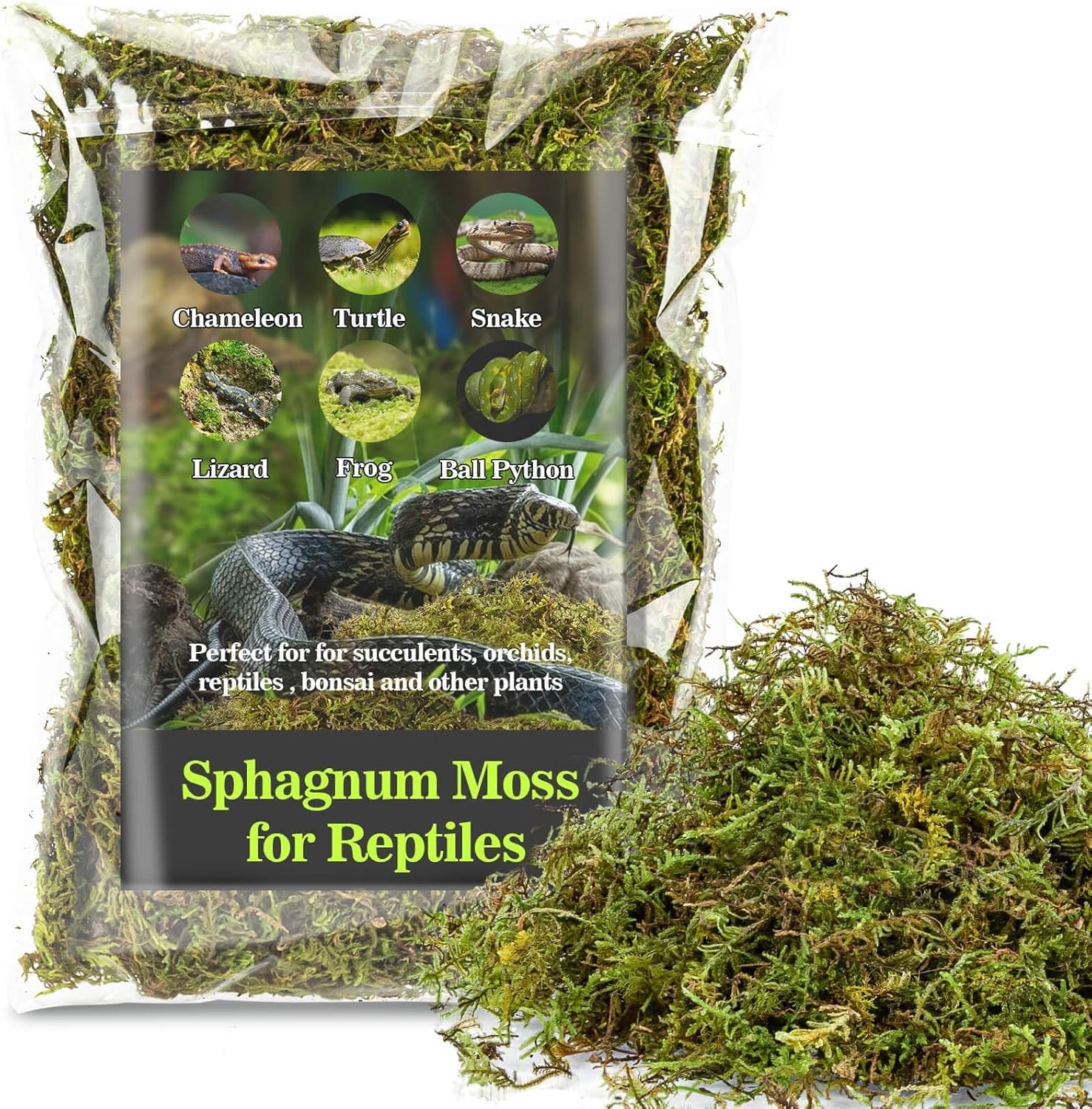
Sukh Sphagnum Moss for Reptiles, 5 oz
| Item model number | H-Re-SphagnumMoss-112 |
|---|---|
| Manufacturer | H-Re-SphagnumMoss |
| Date First Available | October 16, 2023 |
| Size | 5 Ounces |
This 5-ounce bag of Sukh sphagnum moss is a simple, moisture-retentive substrate for terrariums and plants that need consistently high humidity. It is typically used as a top layer or mixed into substrate for humidity-loving reptiles, amphibians, or as a rooting and moisture-retention medium for orchids and other carnivorous or epiphytic plants. The long fibers absorb and hold water well, helping stabilize humidity between waterings and offering a soft surface for hiding and egg-laying in animal enclosures. For plant use it can be tucked around roots or used to line pots and hanging baskets to reduce dry spots. The pack is small and easy to store, but because it is not intended to be the sole bulk substrate it works best blended with other media for drainage and aeration. Buyers should plan routine maintenance to keep the moss clean and not overly wet, and the small package size means multiple bags are needed for larger projects or long-term potting mixes.
Best for: Buyers who prioritize a reliable, easy-to-use humidity aid for small terrariums, orchids, or carnivorous plants and who prefer low-risk, straightforward maintenance.
Less Ideal for: Gardeners needing large volumes for potting mixes, full bedding replacements, or users who want a drainage-capable primary substrate.
- High water absorption and long-lasting moisture retention for stable humidity
- Soft, natural fibers that encourage hiding, burrowing, and nesting behaviors
- Versatile for terrariums, orchid/rooting applications, and decorative uses
- Small 5 oz package limits coverage for larger pots or multiple enclosures
- Not suitable as a standalone bulk substrate because it lacks drainage and structure
Verdict: An easy, small-quantity sphagnum moss that reliably holds moisture to help maintain humidity for carnivorous plants and small terrariums.
Choosing the Right Peat Moss for Carnivorous Plants: Key Factors to Consider
Water Retention and Drainage Balance
Carnivorous plants need a medium that holds water without becoming waterlogged. Peat moss varies from fibrous long-fiber types that allow more air to finely milled sphagnum-style material that holds more moisture. Think about how often you want to water and how much passive drainage your pots provide.
If you let pots sit in shallow trays, choose peat with moderate drainage so roots are wet but not deprived of oxygen. For plants in terrariums or high-humidity enclosures, a higher-holding peat can reduce the need for daily misting while still preserving the oxygen needed at the root zone.
Acidity and pH Stability
Most carnivorous species prefer an acidic substrate, usually a pH in the low-to-mid acidic range. Peat moss naturally trends acidic, but processing and source can shift initial pH and how stable it remains over time. A peat that maintains a steady low pH reduces the need for corrective amendments and keeps nutrient availability similar to native bog conditions.
Avoid peats with unknown or variable pH if you maintain sensitive collections. If you use municipal water with higher alkalinity, acidity stability in your peat becomes even more critical because irrigation can gradually raise substrate pH.
Low Soluble Salts and Additive-Free Composition
Carnivorous plants are adapted to nutrient-poor bogs and can be harmed by elevated soluble salts or fertilizers in potting mixes. Peat should be free from added nutrients, wetting agents, or conditioners that leave residual salts. Check that the material is labeled as horticultural peat or sphagnum peat with no fertilizer or lime added.
Even naturally low-salt products can acquire salts from storage or handling, so consider rinsing or pre-soaking when in doubt. Consistently low electrical conductivity in the medium helps prevent root burn, poor trap development, and long-term decline.
Texture, Fiber Length, and Root Penetration
Texture affects how easily roots grow through the medium and how the mix compacts over time. Long-fiber peat tends to retain structure and resist compaction, which helps roots access oxygen and prevents dense wet layers that exclude air. Finely milled peat can compact faster and hold more water, which is sometimes helpful for seedling trays or propagation but less desirable for mature plants that need freer drainage.
Consider how often you repot and whether you want a stable long-term substrate versus something you will refresh frequently. For many growers, a blend that includes some long fibers offers the best balance of root-friendly structure and moisture retention.
Consistency, Cleanliness, and Handling
Commercial peat varies in dust level, debris content, and how evenly processed batches are. A clean, consistent peat is easier to work with when filling pots, mixing with other components, and weighing for propagation trays. Dusty peat can be irritating during handling and may require wetting before use.
Look for horticultural-grade labeling and consider products that report being rinsed or graded. Consistency across multiple bales or bags matters if you plan to stockpile medium for a collection, because variability can change watering frequency and pH management over time.
Sourcing and Sustainability Considerations
Peat is a nonrenewable resource on human time scales, and sourcing affects both environmental impact and product characteristics. Some providers describe extraction methods or work with restoration programs that rehabilitate harvested bogs; others offer partially composted alternatives or sphagnum substitutes.
While sustainability does not change immediate horticultural traits, many growers weigh long-term availability and ethical sourcing when building a collection. If sourcing matters to you, look for supplier transparency and consider how often you will need fresh peat versus reusing or refreshing existing mixes.
Preparing Peat for Potting and Propagation
Conditioning peat before you pot reduces dust, evens moisture, and reveals hidden salts. Break compressed bales apart and slowly rehydrate by soaking in a clean container until water drains freely through the material. Squeeze or drain excess water so the peat is moist but not dripping before packing pots.
For seed sowing or delicate cuttings, sieve the peat to remove coarse fragments and produce a finer texture. When mixing with sand or perlite, blend thoroughly so watering behavior is uniform across the pot or tray. Proper preparation makes later watering and pH testing more predictable.
- Soak compressed peat fully, then drain until just moist
- Sieve for propagation to achieve a fine seed-bed texture
- Mix consistently with any perlite or silica sand to avoid layering
Mix Ratios and Common Blends for Carnivores
Many growers use peat as the majority component in mixes for pitcher plants and sundews, often blended with inert materials to adjust drainage. Common additions include silica sand or horticultural perlite to create air pockets and prevent compaction. For bog plants that prefer wetter conditions, increase peat fraction; for larger species that need more oxygenated roots, raise the inert component.
Adjust ratios based on pot size, container drainage, and local humidity. Smaller pots dry faster and may benefit from higher peat content to reduce watering frequency, while deep pots require more drainage to avoid anaerobic pockets at the bottom.
- Typical starting blends: 70% peat + 30% inert for general use
- Use finer peat or higher peat content for seed trays and propagation
- Increase inert fraction for large rhizomatous species or long-term containers
Watering Practices with Peat-Based Mixes
Water management is the most common cause of culture problems. Use rainwater, distilled water, or low-mineral water when possible because irrigation chemistry interacts with peat acidity and salt buildup. Allow the surface to show slight drying between waterings if your species prefers less-saturated conditions, but never let true bog species fully dry out.
If you keep pots in trays, keep the water level shallow and change standing water periodically to prevent stagnation. Monitor how quickly your chosen peat loses moisture and adjust watering schedules rather than changing the peat itself frequently.
- Prefer low-mineral water to protect peat acidity
- Change tray water regularly to prevent stagnation
- Tailor watering frequency to pot size and peat retention
Long-Term Care and Repotting Intervals
Peat decomposes and compacts over time, gradually lowering aeration. Plan to refresh or repot bog plants every 1 to 3 years depending on peat texture and plant growth rate. Repotting gives an opportunity to check root health, adjust mix composition, and refresh pH.
Watch for signs that the medium is breaking down: slow drainage, darker compressed soil, or poor trap performance in carnivorous plants. When repotting, reclaim healthy root balls and replace the remainder with fresh peat blend to maintain culture stability.
- Expect to repot most peat-based containers every 1-3 years
- Replace degraded peat rather than continually adding on top
- Use repotting as a chance to inspect roots and refresh pH
Alternatives and Complements to Straight Peat
Some growers blend peat with alternatives like long-fiber sphagnum, coir, or inert sands to tweak water behavior and environmental footprint. Long-fiber sphagnum adds structure and can reduce compaction; coir holds water differently and may require careful salt checks. Substitute materials change pH interactions, so test mixes before committing them to sensitive species.
If you prefer to minimize peat use, trial small batches with a mix of peat and sustainable alternatives. Observe moisture hold, pH drift, and plant responses over a full growing season before making larger changes.
- Long-fiber sphagnum improves aeration when mixed with peat
- Coir retains water but can have higher salts; pre-rinse if used
- Test alternative blends in small batches before wide adoption
How We Chose the Best Peat Moss for Carnivorous Plants
We evaluated peat moss based on garden-relevant specifications that predict how each product performs for carnivorous plants. Key evaluation criteria included water retention characteristics, measured as how long a medium stays evenly moist without becoming soggy; acidity stability, meaning the peat keeps a low and consistent pH suited to bog species; and soluble salt content, since high salts damage sensitive roots and inhibit carnivorous plant health. We also assessed physical texture and fiber structure to judge root penetration and aeration, plus consistency and processing (fine chopped versus long fiber) for predictable potting mixes. We prioritized peat sources that demonstrate low nutrient content and minimal processing additives. Products with added fertilizers, wetting agents, or perlite blends were excluded from consideration unless the peat component was available separately. We focused on horticultural-grade materials sold as straight peat moss suitable for repotting and propagation. Laboratory-level testing data were considered when available, along with manufacturer specs related to pH and electrical conductivity. Practical gardener feedback about handling, dust control, and rehydration behavior also influenced the selections.
FAQ
Can I use regular potting soil for carnivorous plants instead of peat?
Usually not. Regular potting mixes contain fertilizers and higher nutrient levels that harm bog-adapted species. Peat-based or inert mixes that remain low in soluble nutrients are generally recommended for healthy carnivorous plant culture.
How often should I water pots filled with peat moss for carnivorous plants?
It depends on pot size, peat texture, and local humidity. Many growers water trays every few days to maintain moist conditions, while smaller pots may need daily attention. Use low-mineral water and monitor surface moisture rather than following a strict calendar.
Is it necessary to rinse peat moss before use?
Rinsing is not required for most horticultural-grade peat, but soaking compressed bales to rehydrate and reduce dust is standard practice. If you suspect elevated salts from storage, a light soak and drain can reveal excessive conductivity before potting.
Will peat moss change the pH of my irrigation water?
Peat influences substrate pH more than water pH. While irrigation water chemistry interacts with peat over time, peat itself helps establish acidic conditions in the root zone. Using low-mineral water helps maintain that acidity longer.
How do I tell when peat has broken down and needs replacement?
Signs include slower drainage, compacted dark substrate, and reduced vigor in plants. If roots struggle to penetrate or traps decline in performance, it is time to repot and replace degraded peat with a refreshed mix.
Final Verdict
Peat moss remains the most reliable base for most carnivorous plant mixes because it balances moisture retention with low nutrient levels and natural acidity. Prioritize a horticultural-grade peat with stable pH, low soluble salts, and a texture that matches your watering habits and pot sizes. Expect to refresh or repot periodically as peat compacts, and tailor blends with inert materials to adjust drainage and aeration. Focus on water chemistry, texture, and consistency when choosing peat. Those tradeoffs will determine whether your carnivores thrive in propagation, small pots, or larger containers, and they make it easier to maintain healthy traps and vigorous growth over time.
