

Note: This article contains affiliate links. If you click on these links and make a purchase, I may earn a small commission at no extra cost to you. This helps support my research and content. Read my full affiliate disclosure here.
Choosing the right perlite makes a tangible difference in container-grown plants, cuttings and seed starting. Perlite changes how potting mixes hold water, how quickly roots access oxygen, and how easy mixes are to handle when repotting or propagating. This guide searches the market for the best perlite for plants and shortlists seven reliable options. We evaluate particle size distribution, purity and dust control, packing and handling, and how well each product performs in common garden tasks like seed starting, container mixes, and soil amendment. Read on to find a perlite type that suits your gardening style and the plants you grow.
Top Picks at a Glance
| Best Overall The best all-around choice for most situations | Back to the Roots Organic Perlite, 8 Quart |  |
| Best Quality Built to a higher standard if you want something more solid | Perlite Supreme Coarse Horticultural Perlite, 4 cu ft |  |
| Best Value The sweet spot between price and what you get | Legigo Horticultural Perlite, 20 Quart Soil Amendment |  |
| Best Budget The cheapest option that still gets the job done reliably | POLIUMB Organic Horticultural Perlite 1 qt |  |
| Highest Rated A top-rated pick with lots of positive feedback | PVP Industries Coarse Perlite Soil Additive, 4 cu ft (2-Pack) |  |
| Most Popular A crowd favorite that many people choose with confidence | Miracle-Gro Perlite, 8 qt. (2-Pack) |  |
| Best Seller A high-volume bestseller chosen again and again | PVP Industries Organic Horticultural Perlite, 102 qt (4 cu ft) |  |
Back to the Roots Organic Perlite, 8 Quart

| Item Type | Perlite |
|---|---|
| Unit Count | 297 Ounce |
| Volume | 8 quarts |
Back to the Roots Organic Perlite is a straightforward soil amendment that lightens potting mixes and improves drainage and aeration for seedlings, houseplants, and garden containers. You typically mix it into potting soil or seed-starting mixes to reduce compaction, speed root oxygenation, and help prevent overwatering-related problems like root rot. The product is labeled horticultural grade and comes in an 8 quart volume that is convenient for re-potting and small garden projects. Practical benefits include better moisture balance in containers, improved root development for transplants and seedlings, and an easy-to-handle granular texture that blends well with coir or compost. It is made in the USA and recommended for both indoor and outdoor use, though users should wear gloves and avoid inhaling dust when handling. The bag size suits routine gardening tasks but may require multiple bags for larger beds or heavy mixing ratios, and it does not provide nutrients so it must be used alongside a potting medium or fertilizer.
Best for: Gardeners who want a reliable, easy-to-use amendment to improve drainage and root health in pots and seed starts and who prioritize balanced, general-purpose performance over specialty mixes.
Less Ideal for: People looking for a complete potting soil that supplies nutrients or those needing bulk amendment for large landscape beds should consider premixed soils or larger volume products instead.
- Improves soil aeration and drainage to reduce risk of root rot
- Lightweight granular texture mixes easily into potting media
- Suitable for seed starting, repotting, and container gardening
- Made in the USA and labeled organic horticultural grade
- Adds no nutrients so fertilizer or enriched potting mix is still required
- 8 quart bag is small for large gardens and may require multiple purchases
Verdict: A dependable small-bag perlite that reliably improves aeration and drainage in seed starts and container mixes.
Perlite Supreme Coarse Horticultural Perlite, 4 cu ft

| Item Highlight | Coarse Perlite for Potting, Seed Starting, Propagation & Soil Aeration |
|---|---|
| Unit Count | 3834.69 Ounce |
| Included Components | Perlite Supreme |
| OMRI Listed | Yes |
This coarse-grade perlite is a bulk horticultural amendment aimed at improving soil aeration, drainage, and moisture balance for container plants, seed starting, propagation and hydroponic mixes. Gardeners typically blend it into potting mixes or use it as a top dressing to reduce compaction and speed drying after watering. Notable features include large particle size for excellent airflow, sterile volcanic-based material that is pH neutral and non-toxic, and OMRI listing for organic use. The 4 cubic foot bag supplies enough material for repeated potting and repotting sessions or for filling multiple containers, so it suits people who work with many plants or larger pots. Because the particles are coarse, it performs best when mixed with finer substrates rather than used alone, and it may float or wash out in very shallow trays without anchoring. Expect a clean, long-lasting amendment that does not alter soil chemistry but requires storage space and occasional dust control when handling.
Best for: Experienced growers and performance-minded gardeners who need a large supply of a sterile, coarse amendment to improve aeration and drainage in repotting, propagation, and hydroponic mixes.
Less Ideal for: Casual or first-time plant owners who want a ready-to-use potting medium or who have only a few small pots to amend.
- Large coarse particles promote strong root aeration and fast drainage
- Sterile, pH neutral volcanic material that will not alter soil chemistry
- OMRI listed suitable for organic gardening
- Bulk 4 cubic foot bag provides material for many potting and propagation tasks
- Coarse grade is not ideal as a sole growing medium and needs to be mixed with finer substrates
- Requires storage space and can produce dust while pouring
Verdict: Buy this coarse 4 cu ft perlite if you need a large, sterile organic-approved amendment to reliably boost aeration and drainage for high-performance potting and propagation.
Legigo Horticultural Perlite, 20 Quart Soil Amendment

| Unit Count | 640 Ounce |
|---|---|
| Volume | 20 quarts |
| Material | Perlite |
| Item Type Name | soil-and-soil-amendments |
Legigo Horticultural Perlite is a coarse, pH-neutral volcanic amendment supplied in a resealable 20-quart pouch for home gardeners. It is typically mixed into potting mixes for succulents, cacti, orchids, carnivorous plants and general houseplants to increase porosity, reduce compaction and speed drainage. The coarse granules resist breaking down, so the soil stays loose longer and roots get better air access. The bag is resealable for tidy storage and the product is described as free of chemical additives, making it suitable for organic growing and use in soilless or hydroponic setups. Practical benefits include lighter potting mixes that put less stress on containers and improved root development from more consistent moisture and oxygen balance. Limitations are inherent to perlite: it does not provide nutrients or water retention beyond its porous structure, so it must be combined with an appropriate potting medium and fertilizer plan. Also fine dust can be irritating during handling so gloves and a mask are advisable when filling pots.
Best for: Buyers who want to optimize potting mixes for healthier root growth and lower watering issues in container and indoor gardening, especially those mixing their own soil blends.
Less Ideal for: Gardeners who only need ready-to-use potting soil or want a product that supplies nutrients and moisture-retaining components without additional mixing.
- Improves soil aeration and drainage when mixed into potting media
- Coarse, long-lasting granules that resist compaction and powdering
- Resealable heavy-duty pouch for convenient storage
- pH neutral and described as free from chemical additives, suitable for organic use
- Provides no nutrients so must be combined with fertile potting mix or fertilizer
- Fine dust can be produced during handling and may require a mask or gloves
Verdict: A practical, resealable 20-quart perlite bag that reliably improves aeration and drainage for custom potting mixes.
POLIUMB Organic Horticultural Perlite 1 qt

| Brand Name | POLIUMB |
|---|---|
| Unit Count | 32 Ounce |
| Item Type Name | soil-and-soil-amendments |
| Volume | 1 quarts |
This POLIUMB perlite is a straightforward, no-frills soil amendment for gardeners who need better drainage and root aeration. It is lightweight, pH neutral volcanic perlite sold in a resealable 1 quart pouch that keeps the media clean between uses. Gardeners typically mix it into potting soil at about a 1:3 ratio to loosen compacted mixes, speed drainage for succulents and orchids, or use it alone for propagation and seed starting. The product advertises good water retention relative to its weight while still allowing excess moisture to drain, which reduces root rot risk in container plants. The pouch is convenient for small projects and indoor repotting, but the 1 quart volume is small for larger garden beds or multiple large pots, so frequent replacement or buying multiple bags will be necessary for bigger jobs. Safety guidance to avoid inhaling dust is included, so use a mask when handling dry perlite.
Best for: Buyers looking for an affordable, small-quantity amendment to improve drainage and aeration for indoor plants, succulents, and small outdoor containers.
Less Ideal for: Gardeners who need large volumes for raised beds or extensive outdoor landscaping should choose bulk packaging instead.
- Improves soil aeration and drainage when mixed into potting media
- pH neutral and resistant to compaction for long-lasting structure
- Resealable pouch keeps product clean and easy to store between uses
- Suitable for diverse uses including succulents, orchids, seed starting, and hydroponics
- Small 1 quart volume may be insufficient for larger gardens or many pots
Verdict: A handy, resealable 1 quart bag of pH-neutral perlite that keeps potting mixes airy and drains excess moisture for small-scale gardening and indoor repotting.
PVP Industries Coarse Perlite Soil Additive, 4 cu ft (2-Pack)
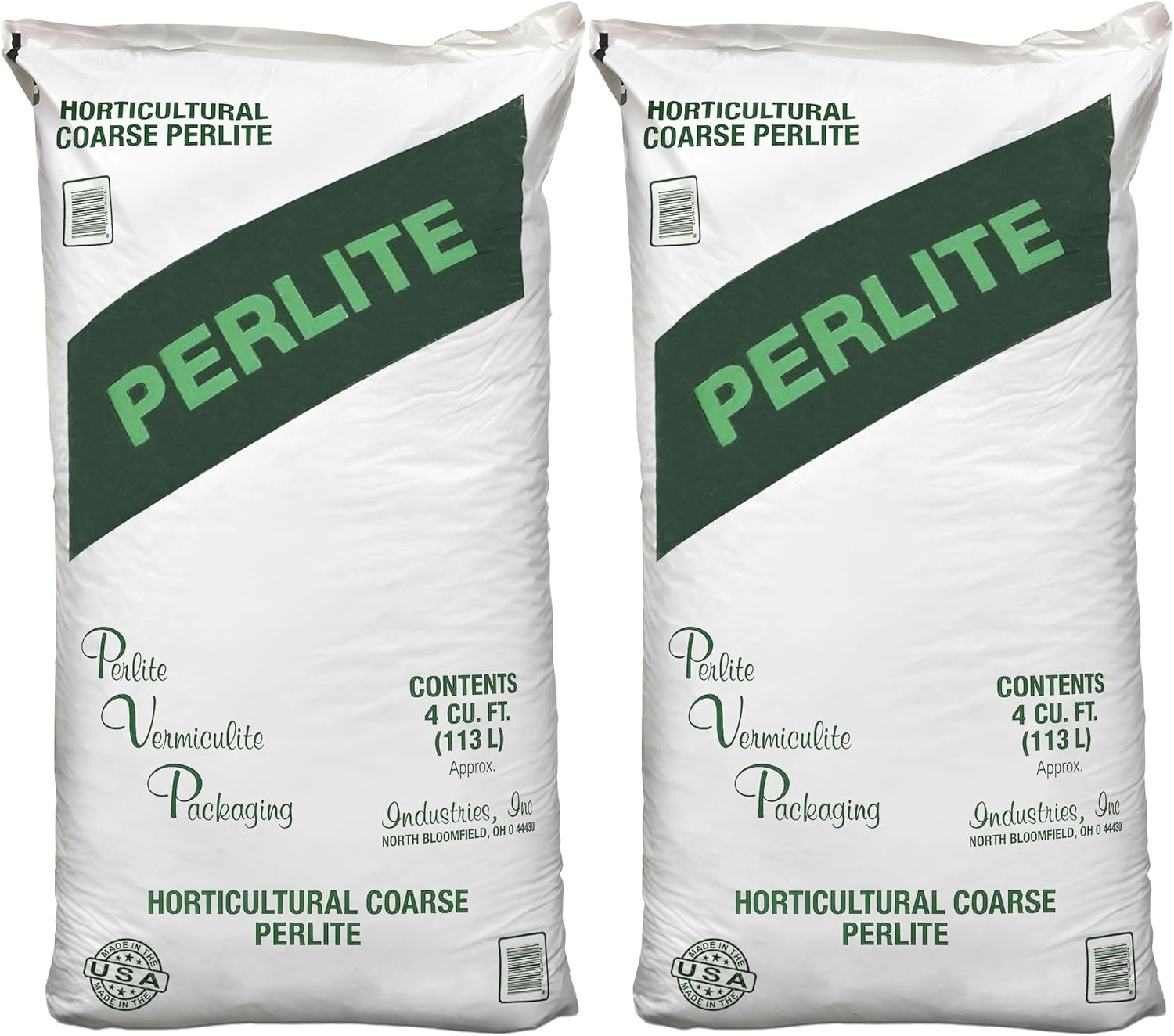
| Unit Count | 3840 Ounce |
|---|---|
| Number of Packs | 2 |
| Item Type Name | Horticultural Coarse Perlite – 4 Cubic Feet |
| Item Highlight | Sterile pH Neutral Growing Media for Drainage, Aeration, Hydroponics, Seed Starting, Cuttings & Greenhouse Use |
This PVP Industries coarse perlite is a straightforward, no-frills soil amendment for gardeners who need dependable drainage and aeration across multiple pots or beds. It is sterile, pH neutral, lightweight, and inert, so you can mix it into potting soil, compost, or use it in hydroponic media and seed-starting mixes without worrying about contaminants. Typical use is to blend at about 20 to 30 percent perlite into mixes to improve root oxygenation and prevent waterlogged soil, or to add to propagation mixes for better cutting success. The product comes in large 4 cu ft bags sold as a two-pack, which suits repeated seasonal use or larger projects like greenhouse benches and many container plants. Important limitations are the dusty nature of perlite, so a mask and gloves are recommended when handling, and it does not retain nutrients or moisture like vermiculite does, so it should be combined with organic matter for fertility and water-holding. For gardeners seeking a simple, effective way to boost drainage, this delivers consistent, professional-grade perlite.
Best for: Gardeners and greenhouse operators who prioritize consistent, contamination-free amendments and need enough material to treat many pots or beds across seasons.
Less Ideal for: People who want a single amendment that increases moisture retention and fertility on its own or those with very small-scale needs who prefer smaller packages.
- Sterile and pH neutral so it will not introduce pathogens or alter soil acidity
- Coarse grade improves drainage and root aeration when mixed into potting media
- Large 4 cu ft bags in a two-pack supply enough material for multiple pots or greenhouse use
- Lightweight and inert, suitable for hydroponics, seed starting, and propagation mixes
- Produces dust during handling, requiring gloves and a dust mask
- Does not hold nutrients or significant moisture on its own, so must be combined with compost or amendments
Verdict: Buy this if you need large quantities of sterile, coarse perlite to reliably improve drainage and aeration across many containers or a greenhouse.
Miracle-Gro Perlite, 8 qt. (2-Pack)

| Item Type Name | Perlite |
|---|---|
| Number of Packs | 2 |
| Volume | 8 quarts |
| Style Name | Potting |
| Included Components | Soil |
Miracle-Gro Perlite is a coarse, lightweight amendment you mix into potting soil to improve drainage, reduce compaction, and keep roots airy. Typical use is blending one part perlite with three parts potting mix for most houseplants or a 50/50 mix for succulents and cacti; it can also be used alone to root cuttings or to store bulbs dry. Notable features are the two 8-quart bags in the bundle and that the perlite is enriched with Miracle-Gro plant food, which may give new plants a small nutrient boost when mixed into potting media. In practice it makes repotting easier because soils stay loose and water drains faster, lowering the risk of overwatering. Limitations are standard for perlite: it is dusty when poured and can irritate eyes and airways if inhaled, so mask and eye protection are advisable during handling. Also, perlite does not retain nutrients or moisture like peat or coco coir, so you will still need a fertilizing schedule for long-term container growth.
Best for: Buyers who want a reliable, widely used amendment to make potting mixes lighter and reduce overwatering problems for container plants; good for gardeners who value proven products with broad user adoption.
Less Ideal for: Growers who need a moisture-retentive medium or want an organic, soil-less mix that holds water without additional fertilizers should consider alternatives.
- Improves soil aeration and drainage to reduce compaction and root rot risk
- Sold as two 8-quart bags, convenient for multiple repots or a small collection
- Enriched with Miracle-Gro plant food for a modest initial nutrient boost
- Versatile uses including mixing into potting soil, rooting cuttings, and bulb storage
- Produces dust during handling which can irritate eyes and respiratory system
- Does not retain moisture or nutrients on its own and requires pairing with potting mix and fertilization
Verdict: A dependable perlite blend in two 8-quart bags that reliably lightens potting mixes and improves drainage for healthier container roots.
PVP Industries Organic Horticultural Perlite, 102 qt (4 cu ft)

| Brand Name | PVP Industries, Inc |
|---|---|
| Item Type Name | Horticultural Coarse Perlite – 4 Cubic Feet |
| Item Highlight | Lightweight growing media for indoor plants, outdoor gardening, potting mix, and seed starting |
| Volume | 1 gallons |
PVP Industries organic horticultural perlite is a clean, sterile mineral amendment intended to lighten potting mixes and improve drainage and aeration. Gardeners typically mix it into potting soil at around 25 percent to reduce compaction and help prevent waterlogged roots, or use it alone for seed germination, cuttings, and certain hydroponic setups. Notable features include a pH-neutral, non-toxic composition and a coarse texture that creates stable air pockets in soil. In practice this means easier watering management, quicker root development in young plants, and reduced risk of root rot in containers. Because it is lightweight and does not decompose it stays effective over multiple seasons when mixed into media. The main limitation is that perlite holds less water than vermiculite, so mixes for very thirsty plants will need additional moisture-retaining components or more frequent watering. Also, dust can be an irritant during handling so dampening or wearing a mask is advisable for sensitive users.
Best for: Buyers who prioritize reliable, low-maintenance soil amendments that reduce overwatering risk and support healthy root development in common container and indoor gardening situations.
Less Ideal for: Gardeners who need a high-moisture medium for very thirsty plants or who prefer an amendment that increases long-term water retention on its own.
- Clean, sterile and pH neutral mineral that will not decay over time
- Coarse texture improves drainage and aeration in potting mixes and containers
- Lightweight bulk volume makes it easy to handle and mix into soil
- Versatile for seed starting, cuttings, and hydroponic media
- Lower water retention compared with vermiculite, so mixtures may need added moisture-holding ingredients
- Can create dust when unpacked which may irritate lungs or eyes if not handled carefully
Verdict: A dependable, sterile perlite for gardeners who want a low-risk, effective way to improve drainage and root health in potting mixes.
Choosing the Right Perlite for Plants: Key Factors to Consider
Particle Size and Grade
Particle size determines how much water drains and how much air the mix retains. Coarser grades create larger pore spaces that speed drainage and are better for succulents, cacti, and fast-draining container recipes. Finer grades are useful for seed starting and small cuttings because they hold a little more moisture while still improving aeration.
Consistent grading matters more than a single size label. Wide variation in particle size in a single bag can leave you with some pots that dry too fast and others that stay soggy. Check packaging or product specs for grade ranges and choose the texture that fits your plants and climate.
Purity and Salt Content
Perlite should be largely inert and free from clay, dust, or high soluble-salt residues that can stress young roots. High salt content will show up as poor germination, leaf scorch, or slow growth in sensitive seedlings and cuttings. Purity also affects longevity; cleaner perlite will not break down or bind with potting mixes as quickly.
Look for products labeled as horticultural grade or screened for impurities. When possible, prefer suppliers that report soluble salt measurements or offer rinsed perlite if your water is high in minerals.
Dust Control and Handling Safety
Freshly opened perlite can be dusty, and fine particles irritate eyes, nose, and lungs. Dust also clings to clothing and makes mixing a mess. Dust control measures like pre-washing, coating, or particle screening reduce airborne fines and make potting up cleaner.
Consider how you will handle the material. If you work indoors or have respiratory sensitivities, choose low-dust options or mix outdoors with a mask. Good packaging that allows controlled pouring and resealing also helps keep dust contained between uses.
Moisture Content and Packaging
Perlite is lightweight, so packaging and moisture at delivery affect how easy it is to move and store. Some bags show slight dampness from storage; while a little moisture can reduce dust, very wet material can clump and will need drying before use. Packaging that is resealable or available in smaller bag sizes helps prevent waste and keeps material clean.
For gardeners who use perlite seasonally, choose packaging that is weatherproof and easy to store in a shed or garage. Bulk tubs or smaller retail bags suit different usage patterns, so match packaging size to how much you use annually.
Performance in Common Garden Tasks
Perlite serves multiple roles: seed starting medium component, propagation aid for cuttings, amendment to improve container drainage, and lightening heavy garden soils. The best perlite for plants performs predictably in these tasks without introducing nuisances like floating to the surface under heavy watering or breaking down into fines over time.
Think about the primary uses in your garden and select a grade and packaging that align with those tasks. For example, frequent propagators often prefer finer, cleaner grades, while container gardeners growing large pots may favor coarse perlite for long-term drainage.
Best Uses by Garden Situation
Different garden settings call for different perlite choices. In seed trays and propagation flats, a finer perlite helps hold enough moisture for germination while maintaining oxygen around developing roots. For large patio containers and bonsai, coarser grades assist with fast drainage and reduce the risk of waterlogging. When improving heavy garden soil, coarse perlite helps prevent compaction but using too much can reduce the soil's ability to retain water between waterings.
- Seed starting and propagation: fine grades that mix well with peat or compost.
- Large containers and succulents: coarse grades for rapid drainage.
- Soil amendment: mix moderate amounts with heavy clay to break structure without creating a hydrophobic mix.
How to Mix Perlite Into Potting Media
Aim for simple, repeatable ratios rather than guesswork. For general-purpose potting mixes, start with 10 to 30 percent perlite by volume depending on plant water needs. Seed mixes often use 30 to 50 percent fine perlite blended with peat or coconut coir to keep the surface light and moist. Succulent and cactus mixes commonly contain 30 to 60 percent coarse perlite paired with gritty aggregates for maximum drainage.
When combining perlite with other ingredients, fold gently to avoid crushing the particles. Avoid shaking bags vigorously near open containers to limit dust. If a mix feels too airy or dries too fast, reduce the perlite proportion or add a portion of moisture-retaining material.
- General potting mix: 10-30% perlite by volume.
- Seed starting: 30-50% fine perlite with coir or peat.
- Succulents/cacti: 30-60% coarse perlite with grit or sand.
Storing and Reusing Perlite
Perlite is inert and can often be reused if it remains clean and free of pest or disease contamination. After removing potting mix, rinse perlite and let it dry completely before storing in a sealed container. Discard any perlite that shows signs of fungal growth, persistent residues, or heavy organic matter that cannot be removed.
Store dry perlite in a cool, dry place away from strong sunlight and pests. For long-term projects, label containers with grade and purchase date so you can track what is suitable for seed starting versus soil amendment.
- Reuse after thorough rinsing and drying when free of contaminants.
- Label and separate grades for consistent use in future mixes.
Safety and Environmental Notes
Perlite mining and processing have environmental footprints, and handling precautions are sensible. Use a dust mask or respirator if you are creating dust during bag opening or mixing. Protect eyes with safety glasses and work in well-ventilated areas. Avoid washing large quantities of perlite down drains; strain and dispose of solids with green waste if necessary.
When disposing of perlite that contains soil or roots, compost only if decomposition is minimal and free of pathogens. Otherwise discard with yard waste. Consider buying recycled or lower-packaging options if minimizing single-use plastic and shipping weight is a priority.
- Use personal protection when handling dusty material.
- Dispose of contaminated perlite with yard waste rather than composting if pathogens are suspected.
How We Chose the Best Perlite for Plants
We selected perlite options based on criteria that directly affect how the material performs in real garden and container situations. Particle size distribution matters because it controls drainage rate and how much air space a mix retains. Purity and contamination screening were essential to avoid fines, clay, or saline residues that can harm seedlings and sensitive houseplants. Dust control and particle coating influence handling safety and how cleanly the product mixes with soil or compost. Bulk packaging, moisture content at delivery, and ease of storage affect whether a gardener can use the product cleanly and without repeated exposure to dusty bags. Finally, suitability for common tasks-seed starting, propagation, mixing with potting soil, and garden bed amendment-was checked. We excluded any blends that contain perlite mixed with other inert ingredients where perlite percentage was not clearly specified. Also excluded were products with inadequate labeling about particle grading or purity. Our short list emphasizes items that offered transparent specs, predictable particle grades, and practical packaging for backyard and indoor gardeners.
FAQ
What grade of perlite is best for seed starting?
Finer horticultural grades are usually best for seed starting because they retain enough moisture for germination while improving aeration. Look for products labeled for propagation or seed mix use, and avoid coarse grades that dry out tiny seeds too quickly.
Can I use perlite in outdoor garden beds?
Yes. Perlite can loosen heavy clay soils and improve drainage, but use it sparingly. Large amounts in in-ground beds can increase drainage too much in dry climates, so mix it with compost and organic matter to balance water retention.
How much perlite should I add to potting mix for succulents?
Succulents typically need 30 to 60 percent perlite by volume in a gritty mix, often combined with coarse sand or crushed rock. Adjust toward the higher end in cooler, wetter climates to prevent root rot.
Is perlite reusable after potting up plants?
Perlite can be reused if it is free of disease, pests, and heavy organic residues. Rinse thoroughly, let dry, and sort by grade. Discard any material that is heavily soiled or shows fungal growth.
Does perlite affect soil pH?
Perlite is chemically inert and has minimal effect on soil pH. If potting mixes shift pH after adding perlite, investigate other ingredients or water quality as the likely causes.
Final Verdict
Perlite is a simple but powerful tool for gardeners who need predictable drainage and improved root aeration. Prioritize particle size and purity for the tasks you do most: fine grades for seed starting and propagation, coarse grades for container drainage and heavy-soil amendment. Balance dust control and packaging convenience against how often you use perlite so handling is safe and tidy. Ultimately choose a perlite that matches your garden tasks and storage needs. Focus on consistent grading, low dust, and clear packaging information to get reliable performance season after season.
