

Note: This article contains affiliate links. If you click on these links and make a purchase, I may earn a small commission at no extra cost to you. This helps support my research and content. Read my full affiliate disclosure here.
Getting fertilizer right makes a visible difference with philodendrons. The right feeding routine improves leaf size, color, and the plant's ability to recover from stress without forcing excessive, leggy growth. This guide covers seven vetted options tailored to philodendron care, from concentrated liquids to gentle slow-release formats. We shortlisted fertilizers based on nutrient ratios, application ease, and how they behave in typical indoor potting mixes. Below you will find practical notes on each type and the evaluation criteria we used to compare them.
Top Picks at a Glance
| Best Overall The best all-around choice for most situations | Leaves and Soul Professional Philodendron Liquid Fertilizer 3-1-2 Concentrate, 8 oz |  |
| Best Quality Built to a higher standard if you want something more solid | EZ-gro Liquid Philodendron Fertilizer (8 fl oz) – 3-1-2 NPK |  |
| Best Value The sweet spot between price and what you get | TPS Nutrients Philodendron Liquid Fertilizer, 32 oz |  |
| Best Budget The cheapest option that still gets the job done reliably | Gardenera Plant Superfood Spray for Philodendron Plants, 8 oz |  |
| Highest Rated A top-rated pick with lots of positive feedback | Gardenera Philodendron Organic Superfood Concentrate (8 oz) |  |
| Most Popular A crowd favorite that many people choose with confidence | TPS Nutrients Philodendron Liquid Fertilizer, 8 oz |  |
| Best Seller A high-volume bestseller chosen again and again | TPS Nutrients Philodendron Liquid Fertilizer, 1 Gallon |  |
Leaves and Soul Professional Philodendron Liquid Fertilizer 3-1-2 Concentrate, 8 oz

| Item Form | Liquid |
|---|---|
| Application Method | Watering |
| Target Species | Philodendron |
| Mixing Ratio | 1:4 |
| NPK | 3-1-2 |
This concentrated liquid fertilizer is designed specifically for philodendrons and is meant to be diluted and applied with your normal watering routine. The 3-1-2 NPK blend targets foliage growth while supporting roots and overall vigor, and the formula includes micronutrients for more complete feeding. It comes in an 8 oz bottle and mixes at roughly 1 to 4 (about 1–2 teaspoons per 8 cups of water), so a little goes a long way for regular 2–4 week applications during active growth and monthly in cooler months. In practice it is easy to use: shake, measure, dilute, and water the potting medium around the root zone. The liquid format delivers nutrients quickly compared with slow-release pellets and works with common substrates used for philodendrons. Limitations are its small bottle size if you have many plants and the need for careful measuring since the product must never be applied undiluted. For a balanced, philodendron-focused feeding plan this is a straightforward, plant-specific option that integrates easily into routine care.
Best for: Buyers who want a simple, plant-specific liquid feed to support regular philodendron growth and foliage development and who prefer a focused, easy-to-mix concentrate over general-purpose fertilizers.
Less Ideal for: People who prefer long-lasting slow-release pellets or who need very large-volume feeding solutions for many plants at once.
- Philodendron-targeted 3-1-2 NPK formula with added micronutrients to support foliage and root health
- Concentrated liquid that mixes easily with water for quick nutrient delivery
- Clear dilution guidance (1–2 teaspoons per 8 cups) and a regular feeding schedule for active and dormant periods
- Suitable for indoor and outdoor use across common potting media used with philodendrons
- 8 oz bottle may require frequent repurchasing for owners with multiple or large plants
- Must be measured and diluted carefully because the concentrate should never be applied directly
Verdict: A compact, easy-to-use liquid concentrate that gives philodendrons targeted, regular feeding for fuller foliage and healthier roots.
EZ-gro Liquid Philodendron Fertilizer (8 fl oz) – 3-1-2 NPK

| Item Form | Liquid |
|---|---|
| Application Method | Water |
| Target Species | Philodendron |
| Mixing Ratio | 2 tbsp/gallon |
EZ-gro Liquid Philodendron Fertilizer is a concentrated liquid feed made for tropical foliage and indoor philodendrons. It is mixed into watering water at the manufacturer recommended ratio of 2 tablespoons per gallon and applied at each watering, which makes it simple to include in regular care routines. The 3:1:2 NPK ratio emphasizes nitrogen to encourage leaf growth and lush green foliage while supporting root development, and the product description also notes it can help manage media pH when irrigation water is alkaline. In practice this means faster, fuller leaf development for philodendrons grown as houseplants or in warm indoor conditions. The 8 fl oz bottle is easy to store and dissolves readily in water, so dosing is straightforward. Limitations to consider are the small bottle size for larger collections and the single recommended dilution rate, which leaves less flexibility if you want very light or very strong feeding schedules. It is best used by growers who want predictable, foliage-first results with an easy-to-follow application method.
Best for: Buyers who prioritize visible, foliage-focused performance and want a simple, repeatable feeding routine for philodendrons and similar indoor tropicals.
Less Ideal for: People managing large collections who need bulk fertilizer options or growers who prefer granular or slow-release formulations for less frequent feeding.
- 3:1:2 NPK ratio tailored to promote leafy growth in philodendrons and other tropical foliage
- Liquid formula mixes easily with water for feeding at each watering
- Helps manage media pH when using moderate to high alkalinity irrigation water
- Compact 8 fl oz bottle is easy to store and handle
- 8 fl oz volume may require frequent repurchasing for owners with many plants
- Single recommended mixing ratio reduces flexibility for custom feeding strengths
Verdict: Use this liquid 3:1:2 fertilizer when you want an easy, foliage-focused feed that promotes fast, lush growth in philodendrons.
TPS Nutrients Philodendron Liquid Fertilizer, 32 oz

| Item Form | Liquid |
|---|---|
| Specific Uses For Product | Philodendron Plants |
| Unit Count | 32 Fluid Ounces |
| Mixing Ratio | 5-10 drops per 4 ounces of water |
This 32 oz liquid fertilizer from TPS Nutrients is designed for philodendrons and similar tropical houseplants and is meant to be used as a regular feed during the growing season. It mixes at a very low concentration (5 to 10 drops per 4 ounces of water) for routine watering or a slightly stronger dose for foliar misting, and the formula includes kelp plus calcium and magnesium to support glossy leaves and steady root development. In practice it lets you feed container plants on a schedule—every 1 to 2 weeks in spring and summer and monthly in fall and winter—so small collections stay healthy without complicated dosing. The liquid form makes it easy to dilute precisely and apply via watering can or spray bottle, and the ingredient list shows a full complement of macro and micro nutrients. Limitations: it is a specialty product aimed at foliage plants rather than a broad-spectrum, high-nitrogen bloom booster, and users should follow safety directions since it contains concentrated salts and sulfates.
Best for: Ideal for practical plant owners who want a simple, reliable feed program for philodendrons and other tropical foliage without fuss or frequent measurement adjustments.
Less Ideal for: Not the best choice for growers focused on flowering or fertilizing large outdoor beds where high-volume granular products are preferred.
- Formulated specifically for philodendron and tropical foliage to encourage leaf growth
- Kelp-enriched formula with added calcium and magnesium for leaf color and root support
- Low-concentration liquid that is easy to dilute for watering or foliar misting
- Clear dosing schedule for seasonal use simplifies routine feeding
- Not formulated as a high-nitrogen or bloom-focused fertilizer for flowering plants
Verdict: A low-concentration, kelp-enriched liquid feed that makes steady, no-fuss care for philodendrons and tropical foliage easy to maintain.
Gardenera Plant Superfood Spray for Philodendron Plants, 8 oz

| Item Form | Liquid |
|---|---|
| Specific Uses For Product | Philodendron Plants |
| Application Method | Spray |
| Mixing Ratio | 1:0 |
Gardenera Plant Superfood Spray is a ready-to-use liquid supplement made specifically for philodendron care. You apply it as a foliar spray over leaves and stems and the maker recommends using it weekly alongside your normal watering routine. Key ingredients listed include vitamin B1 to support roots and reduce transplant shock, micronutrients such as iron, manganese and zinc for foliage health, plus glucose for a short-term energy boost. In practice this product is convenient for quick nutrient top-ups and is useful after repotting or when leaves look lackluster. Because it is a spray it can be absorbed quickly through foliage, making it easier to integrate into weekly maintenance without changing potting mixes. Limitations are the small 8 ounce size, which means frequent buyers or those with many plants will need replacements more often, and the directions are brief so users who prefer detailed dilution or safety guidance may want additional sources. It is designed specifically for philodendrons rather than as a multi-purpose fertilizer for all houseplants.
Best for: Plant owners who want an easy, targeted foliar supplement to boost philodendron vigor and reduce transplant shock without changing their regular care routine.
Less Ideal for: Gardners managing large collections or looking for a concentrated, long-lasting fertilizer should consider larger-volume or slow-release alternatives.
- Formulated for philodendrons with vitamin B1 to support root development
- Contains iron, manganese and zinc to support healthy, vibrant foliage
- Foliar spray application for fast absorption and easy weekly use
- Includes glucose for an immediate energy boost to stressed plants
- Small 8 oz volume may not last for multiple plants or long-term use
- Limited usage and safety details provided in the product information
Verdict: A simple, philodendron-focused foliar spray that provides quick nutrient and root support in a convenient weekly treatment.
Gardenera Philodendron Organic Superfood Concentrate (8 oz)

| Item Form | Liquid |
|---|---|
| Application Method | Water |
| Target Species | Philodendron |
| Mixing Ratio | 1:128 |
| NPK | 1-0.03-13 |
This 8 oz Gardenera Philodendron Organic Superfood is a concentrated liquid fertilizer intended for routine watering of philodendrons. You mix the concentrate into water at the recommended ratio (1:128 or about 2 tablespoons per gallon) and use it like regular watering to deliver a broad suite of nutrients. The formula lists an NPK of 1-0.03-13 plus 18 vitamins and minerals and biological amendments such as mycorrhizae and humic/fulvic components, which target foliage vigor and root health rather than quick leaf burn. Because it is a concentrate, a small bottle treats many gallons of water, making it convenient for regular maintenance. The product is versatile across media including soil, leca, and hydro setups, and the organic feedstock list suggests slow, sustained nutrient release. Limitations to note are the atypical NPK balance with a high potassium relative to nitrogen and a very low phosphorus value, which may not suit every growth stage, and the product description does not include independent lab analysis or specific feeding schedules beyond the mixing ratio.
Best for: Buyers who prioritize a dependable, maintenance-friendly feed for established philodendrons and want a concentrated organic-style supplement they can add to routine watering.
Less Ideal for: Growers seeking a balanced all-purpose fertilizer for heavy vegetative feeding, rapid growth spurts, or detailed stage-specific nutrient programs should look elsewhere.
- Concentrated formula covers many waterings from a small bottle
- Formulated specifically for philodendrons with targeted nutrients and bio-organisms
- Works in a range of growing media including soil, leca, and hydroponics
- Unusual NPK (1-0.03-13) with very low phosphorus may not support flowering or early-stage root development
- No independent nutrient analysis or detailed feeding schedule provided
Verdict: A small, concentrated organic-style liquid designed to reliably support lush philodendron foliage through regular diluted feedings.
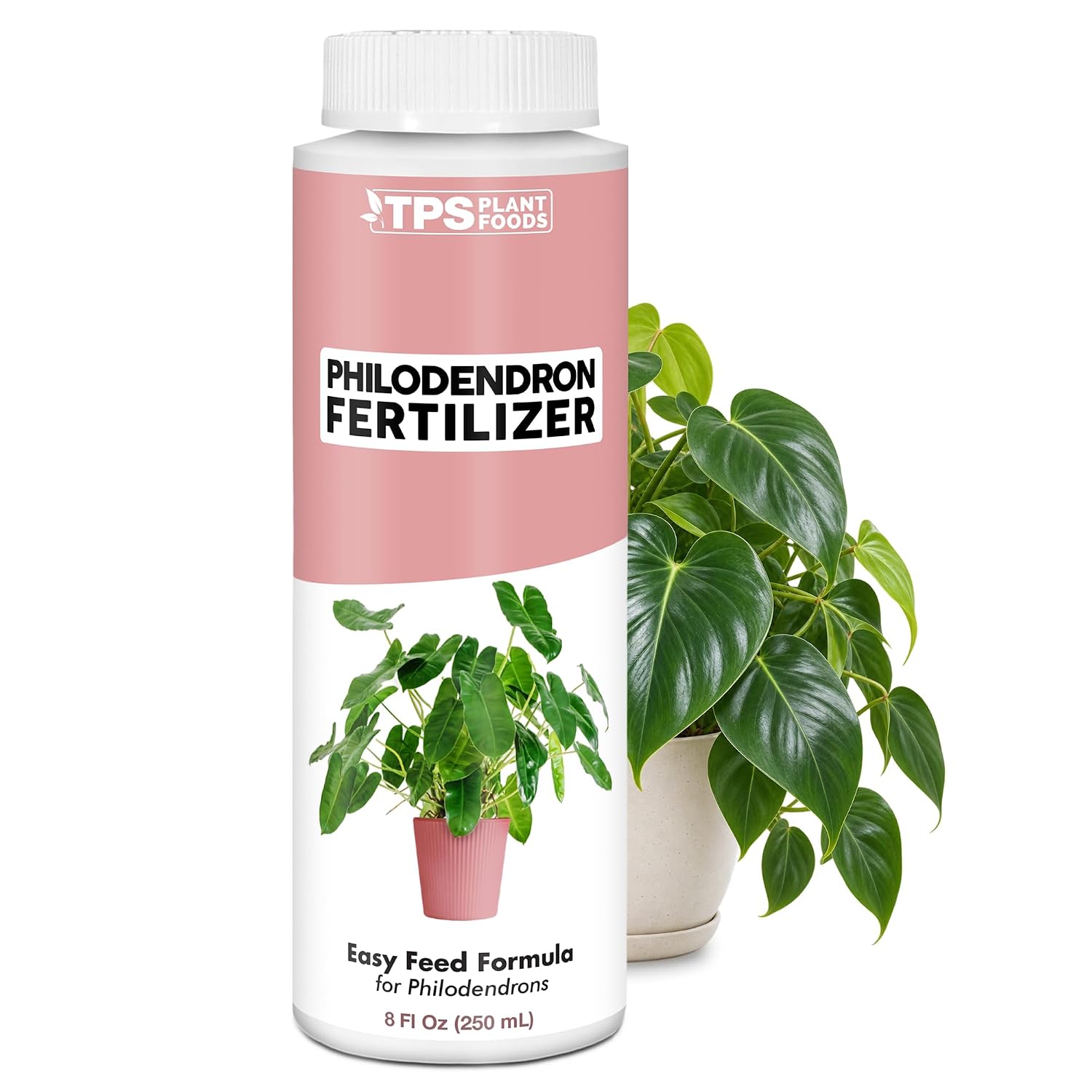
TPS Nutrients Philodendron Liquid Fertilizer, 8 oz
| Item Form | Liquid |
|---|---|
| Application Method | Watering |
| Target Species | Philodendron |
| Mixing Ratio | 1:128 |
| Unit Count | 8 Fluid Ounces |
This liquid fertilizer is formulated specifically for philodendron and similar tropical foliage to promote leaf growth and root strength. It is used by diluting at the stated 1:128 mixing ratio and applying through regular watering, so it fits into a typical indoor houseplant routine. Notable ingredients and claims include added calcium and magnesium plus kelp enrichment, which together support glossy leaf color and steady new growth. The small 8 ounce bottle is convenient for hobbyists or small collections and is easy to store; larger sizes are available if you need more coverage. Because it is a concentrated liquid, a little goes a long way and dosing accuracy matters to avoid overfertilizing. The formulation targets potted indoor plants rather than outdoor beds, and its benefits are most visible on actively growing plants receiving adequate light and water. If you prefer granular or slow-release formats, this product requires more frequent liquid feeding and measuring.
Best for: Plant owners who want a targeted liquid feed for philodendrons and other tropical houseplants and who value a kelp-enriched, nutrient-balanced formula for regular watering routines.
Less Ideal for: Gardeners who prefer granular or slow-release fertilizers or those who want a no-measure, one-time application option.
- Formulated specifically for philodendron and tropical foliage
- Includes calcium, magnesium, and kelp to support leaf color and root health
- Concentrated liquid with a 1:128 mixing ratio so small amounts treat many plants
- Available in multiple sizes beyond the 8 oz bottle for larger collections
- 8 oz bottle may be small for users with many plants
- Requires careful measuring when mixing to avoid overfeeding
Verdict: A concentrated, kelp-enriched liquid fertilizer built for philodendrons that delivers targeted nutrients through regular watering for healthier leaves and roots.
TPS Nutrients Philodendron Liquid Fertilizer, 1 Gallon

| Item Form | Liquid |
|---|---|
| Coverage | Philodendrons and other tropical shade plants |
| Target Species | Philodendron, Tropical Shade Plants |
| Unit Count | 128 Fluid Ounces |
| Mixing Ratio | No mixing required |
This one-gallon liquid fertilizer is made specifically for philodendrons and other tropical shade plants and is intended for regular feeding of potted houseplants. It arrives ready to use with no mixing required, so you can apply it directly at the label rate to encourage faster new growth, deeper glossy leaf color, and steadier root development. The formula notes added calcium and magnesium plus kelp enrichment, which helps support healthy foliage color and reduces common nutrient gaps in indoor container culture. In practice it is convenient for someone maintaining multiple houseplants because the large volume lasts through many feedings. Limitations are that the product is a concentrated plant food in a single ready-to-use format rather than a granular or slow-release option, so monthly scheduling and careful application are needed to avoid overfeeding. The size is bulky for small-space owners or those who prefer single-use bottles, but for routine philodendron care this provides a reliable, plant-focused liquid feed.
Best for: Buyers who want a dependable, plant-specific liquid feed for potted philodendrons and prefer a low-effort product that delivers repeatable results over many feedings.
Less Ideal for: People with only one or two small plants who prefer small bottles or who want a slow-release granular fertilizer that needs less frequent application.
- Formulated specifically for philodendrons and tropical shade plants
- Ready to use with no mixing required for simple application
- Includes calcium, magnesium, and kelp to support leaf color and root health
- Large one-gallon volume lasts through many feedings, good for multiple plants
- Large container can be bulky to store and handle
- Liquid format requires regular dosing rather than providing slow-release nutrition
Verdict: A ready-to-use, plant-focused liquid fertilizer that makes consistent feeding of philodendrons simple and dependable.
Choosing the Right Philodendron Fertilizer: Key Factors to Consider
Nutrient Ratio and Concentration
Philodendrons are foliage-focused houseplants that respond best to balanced nitrogen with moderate phosphorus and potassium. A formula with a slightly higher nitrogen ratio supports leaf size and color, but too much nitrogen can encourage weak, floppy growth. Consider the concentration on the label because highly concentrated products require careful dilution to avoid root burn.
Match the fertilizer concentration and N-P-K ratio to your feeding schedule. If you prefer a weekly weak-feed approach, a lower-concentration liquid fertilizer works well. If you feed less often, a more concentrated or slow-release product may be appropriate.
Delivery Format and Convenience
Fertilizers come as water-soluble liquids, granular slow-release pellets, and water-soluble crystals. Liquids offer immediate availability and are easy to dose for regular feeding. Slow-release granules provide steady nutrition over weeks or months and reduce the need for frequent mixing. Crystalline or powdered forms give control over strength but require complete dissolution to avoid hot spots.
Think about how often you water and how comfortable you are measuring and diluting. If you water irregularly, a slow-release option reduces the risk of missed feedings. If you prefer precise control and quick response, water-soluble liquids are more suitable.
Risk of Salt Build-Up
Salt accumulation from fertilizers can damage roots and show up as white crust on the pot rim or scorched leaf tips. Container-grown philodendrons are especially vulnerable because there is limited soil volume and less leaching from natural rainfall. Products with clear flushing instructions and lower salt index formulations minimize this risk.
Plan for occasional leaching flushes by running water through the potting mix to remove excess salts, and choose fertilizers that recommend conservative dosing for container use to reduce the chance of buildup.
Compatibility with Potting Mix and Water Quality
Some fertilizers interact differently with peat-based, coco coir, or bark mixes. For example, hard water can precipitate certain minerals when combined with specific fertilizer chemistries, reducing nutrient availability. Choose a formula that remains effective in your local water and the potting media you use.
If you use reverse-osmosis or very soft water, you may need a fertilizer with a broader micronutrient package. Conversely, with hard tap water you might select products that avoid rapid mineral precipitation or that supply chelated micronutrients for better uptake.
Frequency and Seasonality of Feeding
Philodendrons have active growth seasons and slower winter periods. Feeding frequency affects how quickly plants use nutrients and how often you must apply fertilizer. A steady low-dose regimen through the growing season encourages consistent leaf production, while reduced or stopped feeding in winter prevents salt stress when growth slows.
Consider whether you want a product that supports a weekly low-dose routine or one that sustains nutrition for months with a single application. The choice determines both maintenance effort and the plant's seasonal vigor.
Choosing Between Liquid and Slow-Release
Liquid fertilizers give a quick nutrient boost and are straightforward to adjust if you notice signs of deficiency or excess. They are ideal for growers who check their plants regularly and prefer to fine-tune strength and frequency.
Slow-release options reduce maintenance by providing a steady nutrient supply. They are convenient for busy plant owners or containers that are hard to reach, but they offer less flexibility if a plant shows stress and you need to change feeding immediately.
- Liquid: fast response, adjustable dosing, good for weekly routines
- Slow-release: low maintenance, steady delivery, less immediate control
How to Read Fertilizer Labels for Indoor Plants
Focus on the N-P-K ratio and look for information about micronutrients and recommended dilution rates for potted plants. Labels that specify rates for container or houseplant use are more reliable than generic garden directions.
Also check for instructions about frequency and leaching. Clear guidance on maximum recommended doses per month helps avoid overfertilization.
- Check N-P-K and micronutrient listings
- Follow container-specific dilution and frequency guidelines
- Watch for notes on salt index or flushing recommendations
Adjusting Feed for Growth Stage and Light
Increase feeding slightly during active spring and summer growth if light levels and watering support that growth. In lower-light winter conditions, reduce frequency or stop feeding to prevent buildup and stress.
Plants in bright, indirect light can use more nutrients because they photosynthesize more and produce new tissue. Conversely, plants in dimmer spots need less fertilizer.
- Active growth: moderate, regular feeding
- Low light or dormancy: cut back or pause feeding
- Observe leaf color and new growth as feeding cues
Watering Practices That Affect Fertilizer Use
How you water influences nutrient availability and salt accumulation. Regular, thorough watering with periodic leaching prevents salt buildup in container mixes. Avoid adding fertilizer to a dry rootball; moist soil spreads nutrients more evenly and reduces risk of root burn.
If you mist foliage regularly, keep fertilizer off the leaves to prevent spotting. Applying fertilizer during a routine watering ensures nutrients reach the root zone efficiently.
- Water thoroughly before or when applying fertilizer unless product specifies otherwise
- Flush pots occasionally to remove excess salts
- Avoid foliar contact with concentrated solutions
Micronutrients and Leaf Health
Beyond N-P-K, iron, magnesium, and trace elements influence leaf color and resilience. Chlorosis or pale new growth can indicate a micronutrient shortfall even when overall N-P-K looks adequate. Look for formulations that include chelated iron or a balanced micronutrient package if you see these signs.
Micronutrient needs can be masked by pH issues in the potting mix, so address soil acidity and water quality as part of nutrient troubleshooting rather than increasing macronutrients alone.
- Chelated micronutrients are more available across pH ranges
- Check new leaf color for subtle micronutrient deficiencies
- Balance pH and nutrient supply together for optimal foliage
How We Chose the Best Philodendron Fertilizer
We focused on nutrients and formats that matter for indoor philodendrons rather than broad-purpose garden fertilizers. Our selection prioritized formulas with balanced nitrogen-phosphorus-potassium ratios suitable for foliage-driven growth, steady micronutrient content, and predictable release patterns appropriate for pot culture. Ease of application and dilution clarity were included as practical filters since many houseplant owners water and feed in the same step. We also considered fertilizer compatibility with common indoor potting mixes and whether a product avoids salt buildup when used at recommended rates. Excluded from consideration were fertilizers formulated exclusively for flowering houseplants where high phosphorus or bloom-promoting additives would encourage unwanted growth patterns in foliage plants. Also excluded were products intended for outdoor soil amendment or heavy garden use that do not translate to container-grown philodendrons. In short, we filtered for nutrient balance, delivery format, dilution clarity, soil-salt management, and compatibility with indoor potting media as the core dimensions that guided our shortlist.
FAQ
How often should I fertilize indoor philodendrons?
Often a weekly weak-feed during active growth works well. Many growers reduce to once a month or pause entirely during winter when growth slows. Adjust frequency based on light, growth rate, and any signs of buildup.
Can I use general houseplant fertilizer on philodendrons?
Usually yes if the product is balanced for foliage plants and has container-specific dilution directions. Avoid bloom-focused formulas that are high in phosphorus, which can shift the plant away from healthy leaf development.
What are signs of overfertilizing a philodendron?
Common signs include brown leaf tips, stunted new growth, and white crust on the soil surface or pot rim. These indicate salt stress and suggest you should flush the potting mix and reduce feeding strength.
Is slow-release fertilizer safe for philodendrons in small pots?
Slow-release can be safe if applied at recommended rates for container size and monitored for salt buildup. In very small pots, consider smaller doses or a liquid schedule to keep better control over nutrient levels.
Do I need to worry about water hardness when fertilizing?
Yes. Hard water can precipitate minerals and reduce nutrient availability from some fertilizers. If you have very hard or soft water, choose a formula suited to your local water or adjust application practices.
Final Verdict
Prioritize a fertilizer that matches your feeding habit and potting conditions. If you want precise control and quick corrective feeding, use a water-soluble liquid at a conservative dilution. If you prefer lower maintenance, choose a slow-release formulation sized for your pot and flush periodically to avoid buildup. Balance nutrient ratio, salt management, and convenience when deciding. Those three tradeoffs determine whether a product will keep your philodendron growing lushly without creating extra maintenance chores.
