

Note: This article contains affiliate links. If you click on these links and make a purchase, I may earn a small commission at no extra cost to you. This helps support my research and content. Read my full affiliate disclosure here.
Choosing the right plant cover matters for gardeners who want to extend the season, shield young transplants, or guard ornamentals and edibles from frost and pests. The wrong cover can trap moisture, smother growth, or fail when a cold snap or pest outbreak arrives. This guide reviews seven top plant covers suitable for a range of garden beds, containers, and small shrubs. We shortlisted options that deliver reliable protection while preserving air flow and light. Below you will find practical notes on durability, fabric weight, ease of use, and how each cover behaves in typical garden conditions. Read on to see the criteria we used to pick these covers and the factors to weigh for your planting situation.
Top Picks at a Glance
| Best Overall The best all-around choice for most situations | MIXC Plant Cover Freeze Protection Drawstring Frost Blanket, 47.2 x 70.8 inches (2 Pack) |  |
| Best Quality Built to a higher standard if you want something more solid | LCHUANG 2-Pack Thickened Winter Plant Covers with Zipper and Drawstring (71" x 63") |  |
| Best Value The sweet spot between price and what you get | GARUTOM Plant Cover Frost Cloth 10 ft x 33 ft (1.1 oz) – Breathable Freeze Protection |  |
| Best Budget The cheapest option that still gets the job done reliably | MAQIHAN 6.5 ft x 13 ft Non-Woven Plant Cover (1 oz/sq) |  |
| Highest Rated A top-rated pick with lots of positive feedback | Dansasy 3-Pack Pop-Up Frost Plant Covers with 24 Metal Stakes (22 x 22 x 22") |  |
| Most Popular A crowd favorite that many people choose with confidence | Burloptuous 40 x 15 ft Natural Jute Burlap Fabric Roll |  |
| Best Seller A high-volume bestseller chosen again and again | MIXC Plant Cover Shrub Jacket with Drawstring (2 Pack) |  |
MIXC Plant Cover Freeze Protection Drawstring Frost Blanket, 47.2 x 70.8 inches (2 Pack)

| Item Weight | 1.21 pounds |
|---|---|
| Manufacturer | MIXC |
| Light Transmission | 40%-60% |
| Fabric Weight | 1.77 oz./sq. yard |
This MIXC plant cover is a lightweight, nonwoven frost blanket sold as a two-pack and designed to protect shrubs, potted plants, and small trees from freezing temperatures and winter precipitation. You slip the cover over the plant and cinch the drawstring at the base for a quick, secure fit; the fabric lets air and moisture pass through so plants remain breathable while receiving about 40 to 60 percent light. Practical features include a sturdy drawstring for faster installation and a fabric weight intended to provide several degrees of freeze protection without crushing stems. The cover also works as a season extender in spring and fall and helps keep birds and insects off during the growing season. Limitations are that the size is best for medium plants and taller specimens may need additional support or a larger cover, and lightweight fabric can flap in strong winds unless anchored. For gardeners seeking a simple, reusable barrier against frost, this is an easy-to-use option with reliable basic protection.
Best for: Gardeners who want a simple, reusable frost barrier to protect shrubs, potted plants, and small trees through cold snaps and to extend the growing season.
Less Ideal for: People who need heavy-duty, insulated protection for large trees or who require rigid covers for very windy exposed sites.
- Nonwoven fabric allows air and moisture exchange while providing frost protection
- Drawstring closure enables quick, secure covering of plants
- Lightweight and soft material that is plant-friendly and reusable
- Works year-round to block frost, snow, hail and deter birds and insects
- Limited to medium-height plants; taller or larger specimens may need bigger covers or support
- Can flap in high winds if not properly anchored
Verdict: A practical, easy-to-use reusable frost blanket that gives medium outdoor plants breathable, season-extending protection with fast drawstring installation.
LCHUANG 2-Pack Thickened Winter Plant Covers with Zipper and Drawstring (71" x 63")

| Fabric weight | 3.2 oz/yd² |
|---|---|
| Material | Non-woven polypropylene |
| Quantity | 2 pack |
| Zipper | Yes |
| Drawstring | Yes |
These LCHUANG plant covers are built for winter protection and practical repeated use. The heavier 3.2 oz/yd² non-woven fabric creates an insulating layer that the brand says supports frost protection down to about 15°F, while the breathable material helps avoid moisture buildup. Each cover uses a zipper to open and close cleanly and a drawstring at the base to trap warmer air and keep the cover secure in wind. Typical use is to drape a single cover over a shrub or small tree, zip it up and cinch the bottom, then remove in milder weather; the covers also serve in spring as barriers against rabbits and insects. The design favors durability and reusability: the fabric resists tearing more than thinner frost cloth and folds for off-season storage. Limitations are size and fit since the 71" x 63" dimension suits small to medium specimens only, and performance at temperatures much lower than the stated protection level will be limited compared with rigid structures or heated covers.
Best for: Buyers who prioritize reliable winter performance and reusable materials for protecting small to medium outdoor plants and want straightforward, secure installation.
Less Ideal for: Gardeners protecting large trees or looking for heavy-duty, active heating solutions should consider larger covers or rigid/ heated options instead.
- Thicker 3.2 oz/yd² non-woven fabric for improved tear resistance and insulation compared with thinner frost cloth
- Zipper and drawstring closures make installation and removal easier and help retain warm air
- Breathable material reduces moisture buildup while still blocking frost, snow, and light precipitation
- Reusable design intended to withstand sun, wind, rain, and snow for multiple seasons
- Single size (71" x 63") limits use to small and medium plants and may not fit larger trees
- Insulation is limited compared with rigid or heated solutions in very low temperatures
Verdict: A performance-focused, reusable two-pack of thick frost covers that delivers straightforward, secure winter protection for small to medium outdoor plants.
GARUTOM Plant Cover Frost Cloth 10 ft x 33 ft (1.1 oz) – Breathable Freeze Protection

| Material weight | 1.1 oz/yd² polypropylene non-woven fabric |
|---|---|
| Light transmission | About 85% of available light |
| Breathable | Yes |
| Permeable | Yes |
This GARUTOM plant cover is a roomy frost blanket made from 1.1 oz/yd² polypropylene non-woven fabric that transmits about 85% of light while providing winter and pest protection. Use it draped loosely over shrubs, raised beds, fruit trees or supported on hoops to create a floating row cover; stones, soil, or staples hold the edges in place. The material is breathable and water-permeable so plants still receive air and moisture, yet it traps enough warmth to reduce frost damage and snow crush. It also blocks insects and birds and reduces UV exposure on hot days, making it useful across seasons for extending the growing window. Because it is thin and lightweight, it is easy to cut to size and store when not in use, but it will require secure anchoring in windy conditions and will not provide the insulation of heavier multi-layer fabrics. For gardeners who want a practical, multipurpose cover to protect beds and small trees without blocking light, this is a convenient option.
Best for: Gardeners who want a practical, multipurpose frost cloth to stretch their growing season and protect beds or small trees without blocking light, and who prefer a lightweight, easy-to-handle solution.
Less Ideal for: Those needing heavy-duty insulation for prolonged deep freezes or commercial growers who require thicker multi-layer row covers and long-term durability.
- Lightweight, breathable fabric that transmits most available light while retaining warmth
- Large 10 ft x 33 ft size can cover raised beds, rows, or multiple small shrubs
- Permeable to water and air so plants continue to receive moisture and ventilation
- Protects against frost, snow, wind, insects, birds, and UV exposure
- Easy to cut to fit custom shapes and easy to store when not in use
- Thin 1.1 oz material offers limited insulating power compared with heavier blankets
- Requires secure anchoring or hoop support in windy conditions
Verdict: A lightweight, easy-to-cut frost cloth that protects plants from frost, pests, and sun while letting light and moisture through, ideal for practical home gardeners extending their season.
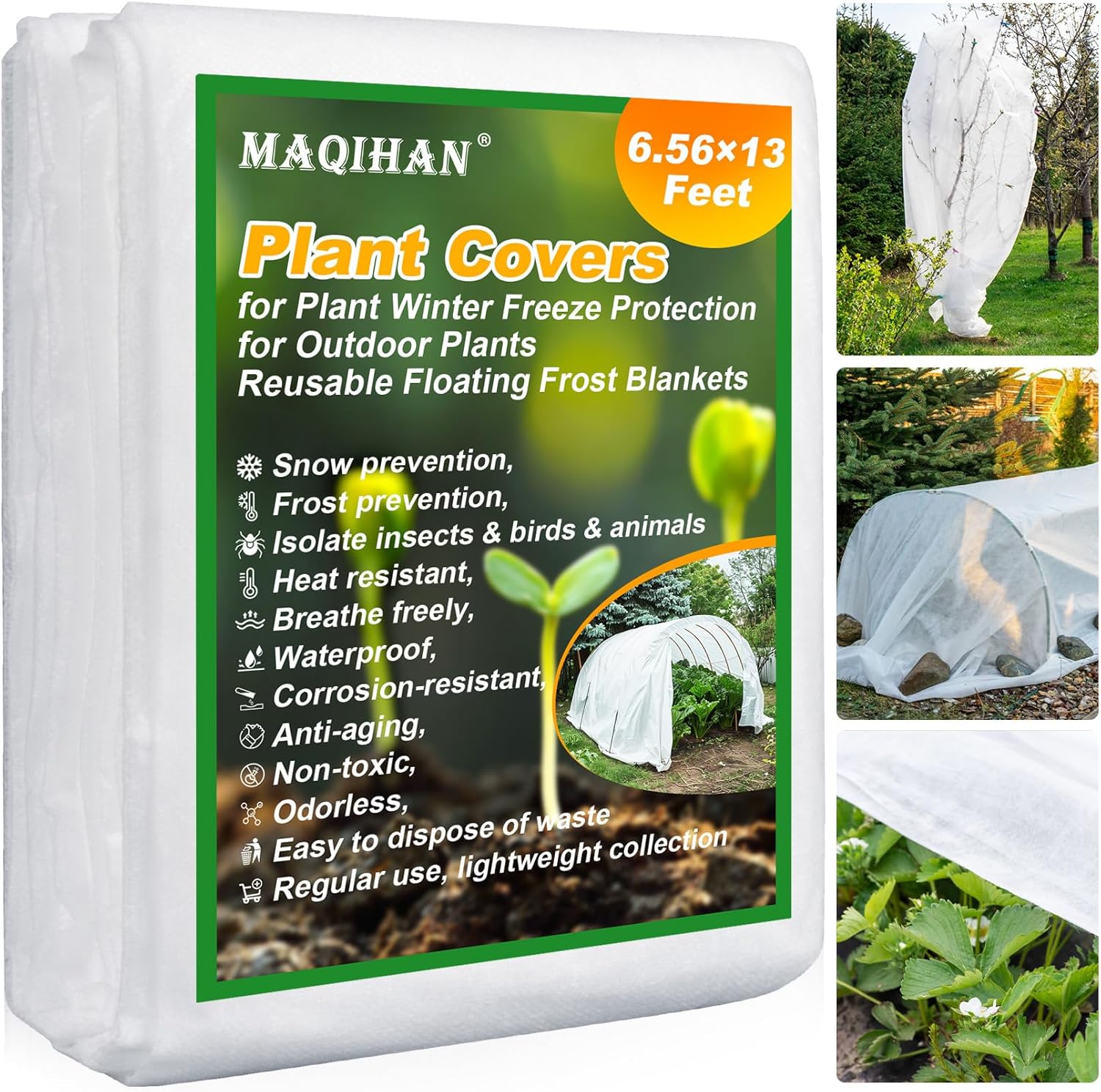
MAQIHAN 6.5 ft x 13 ft Non-Woven Plant Cover (1 oz/sq)
| Material weight | 1 oz/sq non-woven fabric |
|---|---|
| Size | 6.5 ft x 13 ft |
| Reusable | Yes |
| Intended uses | Frost, snow, insect and animal barrier |
This MAQIHAN plant cover is a simple, budget-friendly frost blanket made from 1 oz/sq non-woven fabric sized at about 6.5 by 13 feet. It is designed to be draped over shrubs, rows, or individual containers to provide insulation against frost and wind while still letting sunlight and moisture reach plants. Typical use is to lay it loosely over plants or secure it with hoops, stakes, or clips; it can also be cut to fit smaller areas. The material is lightweight and reusable when dried between uses, so it works well for repeated cold snaps and as a temporary insect or animal barrier. Because it is thin, protection is best for light to moderate frosts and is improved by layering the fabric. The cover is versatile for outdoor and indoor use but offers less structural protection in heavy snow or high winds compared with heavier covers or rigid cloches. Overall it is a practical, no-frills option for seasonal frost protection and general garden coverage when you want something affordable and easy to handle.
Best for: Home gardeners looking for an inexpensive, reusable frost cloth to protect beds, containers, or small shrubs through occasional cold snaps.
Less Ideal for: Growers who need heavy-duty protection for prolonged deep freezes or who require rigid covers for high-wind exposed sites should consider sturdier alternatives.
- Lightweight, easy to handle and cut to custom sizes
- Breathable non-woven fabric lets light and moisture through while reducing frost risk
- Reusable when dried and simple to store between seasons
- Multi-purpose: frost, snow, insect and animal barrier, and sun shield
- Thin 1 oz/sq material offers limited protection in heavy snow or very low temperatures
- No built-in fasteners or structural support included
Verdict: An affordable, reusable frost cloth that gives reliable light-duty protection for beds and containers without adding bulk or complexity.
Dansasy 3-Pack Pop-Up Frost Plant Covers with 24 Metal Stakes (22 x 22 x 22")

| Number of items | 3 |
|---|---|
| Frame Material | Alloy Steel |
| Outer Material | Non-woven Fabric |
| Unit Count | 3 Count |
These Dansasy pop-up plant covers are designed to give dependable winter protection for shrubs, potted plants, vegetables, and flowers. Each cover is a 22" cube of thick non-woven fabric that lets air and moisture pass while trapping warmth around the plant. The pop-up frame makes setup fast and easy and the kit includes 24 upgraded alloy-steel stakes that anchor the tents more securely than thin plastic pegs in windy conditions. Reinforced stitching and extra fabric at stake points reduce tearing at stress areas so the covers can be used repeatedly season after season. Practical benefits include compact storage in the supplied bag and a familiar protective shape that fits small shrubs and medium pots. Limitations are the fixed cube size, which may not fit taller or very wide plants, and the fabric is intended for frost and light snow protection rather than heavy, prolonged snowfall or full cold-room insulation.
Best for: Gardeners who prioritize reliable, reusable winter protection for small shrubs and container plants and want durable, wind-resistant covers that are quick to install.
Less Ideal for: People with large or tall plants that need custom-sized protection or gardeners facing heavy, prolonged winter storms who require rigid cold-frame solutions.
- Thick non-woven fabric retains warmth while allowing air and moisture exchange
- Includes 24 alloy-steel stakes that resist bending and secure covers in wind
- Double reinforced stitching around stake points reduces tearing
- Pop-up design for quick installation and compact storage bag for offseason
- Fixed 22" cube size limits use to small-to-medium shrubs and pots
- Not designed to handle heavy, long-duration snowfall or deep freeze insulation
Verdict: Choose this set if you want a sturdy, easy-to-deploy frost cover kit with metal stakes and reinforced seams for dependable season-after-season protection of small shrubs and potted plants.
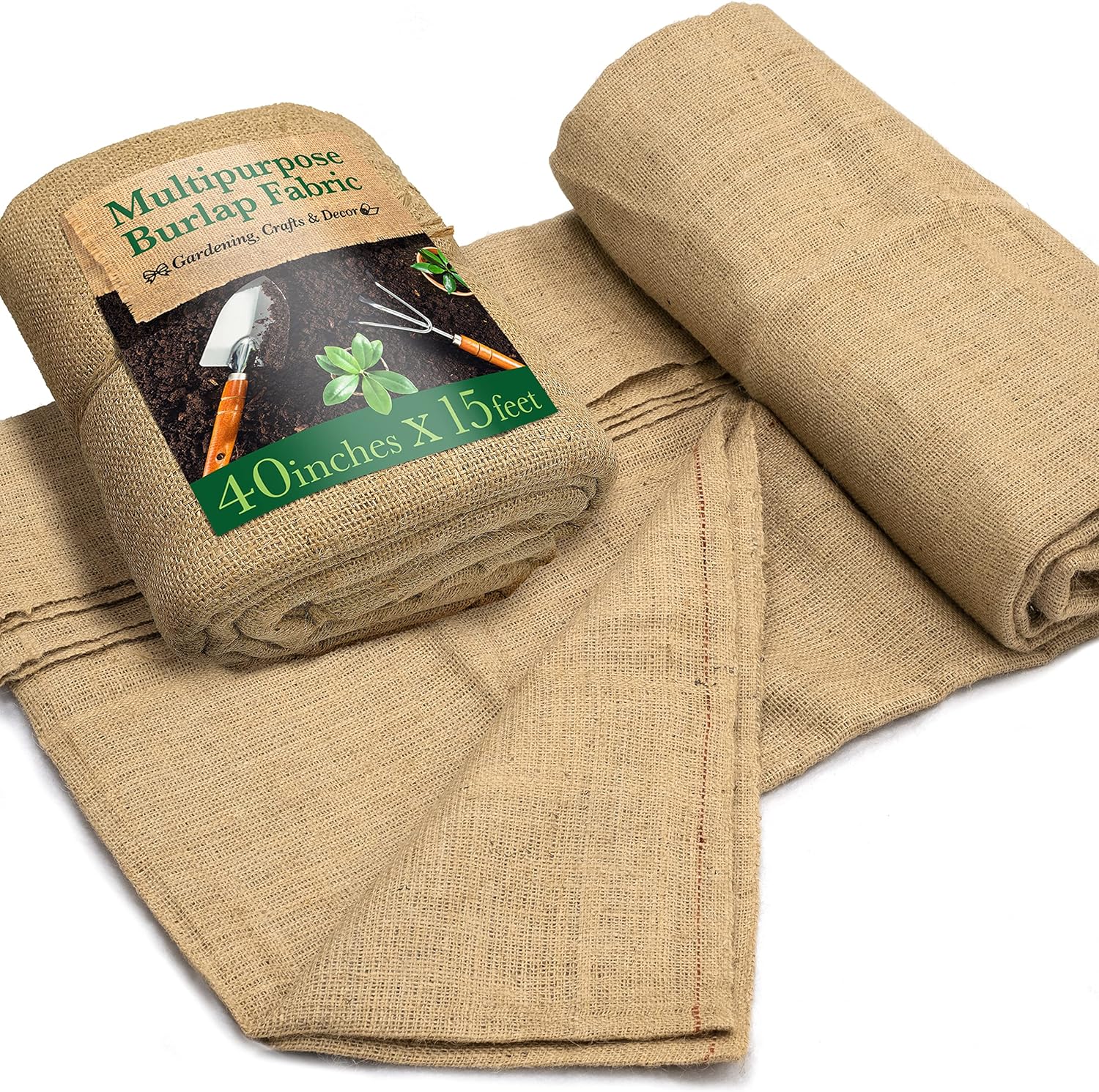
Burloptuous 40 x 15 ft Natural Jute Burlap Fabric Roll
| Material Type | Jute |
|---|---|
| Fabric Type | Burlap |
| Unit Count | 50 Square Feet |
| Item Length | 15 feet |
| Weave Type | Plain |
This Burloptuous burlap roll is a heavy-duty natural jute fabric intended for outdoor plant protection, weed control, and craft or event decor. Typical uses include laying it as a breathable weed barrier beneath mulch, wrapping tree trunks or root balls for winter protection and transplanting, and draping over plants as a light frost cover. The plain weave and high-density jute give it durability in garden settings while remaining biodegradable, so it does not require removal if used as temporary cover. It is cut by the yard in a wide 40 inch width, which makes it easy to cover rows or large pots without many seams. Practical benefits are its natural appearance for farmhouse or wedding decor and its resistance to tearing compared with thin decorative burlap. Limitations are that jute will eventually break down outdoors so it is not a permanent landscape fabric and it can absorb moisture and stain; expect some fraying at cut edges and occasional shedding of fibers when handling.
Best for: Gardeners who want an eco-friendly, breathable plant cover or temporary weed barrier and who prefer products validated by strong customer feedback before buying.
Less Ideal for: Those needing a permanent, waterproof landscape membrane or a synthetic weed barrier designed for decades of use should consider engineered fabrics instead.
- Natural, biodegradable jute suitable for eco-conscious gardeners
- High-density plain weave gives better tear resistance than lightweight burlap
- Wide 40 inch roll covers rows and large pots with fewer seams
- Versatile for plant covers, tree wrap, weed barrier, and event decor
- Will degrade over time outdoors so not suitable as a long-term permanent barrier
- Absorbs moisture and can shed fibers or fray at cut edges
Verdict: Choose this natural jute burlap roll when you want a wide, biodegradable plant cover and temporary weed barrier that balances durability with eco-friendly materials.
MIXC Plant Cover Shrub Jacket with Drawstring (2 Pack)

| Pack size | 2 Pack |
|---|---|
| Light transmission | 40%–60% |
| Fabric weight | 1.77 oz./sq. yard |
This MIXC plant cover is a simple, no-frills frost blanket for protecting medium shrubs, small trees and large potted plants through cold snaps. Made from breathable non-woven fabric it lets light and moisture through while providing an insulating layer that the brand rates at about 3 to 8°F of freeze protection. The built-in drawstring makes it quick to secure around a trunk or pot so you can cover plants fast before a hard night. In practice the lightweight material is easy to fold and store and is gentle on foliage, and the 40 to 60 percent light transmission means you do not need to remove it daily during mild conditions. It also works as an insect and bird barrier during the growing season. Limits: it is a fabric blanket rather than a rigid jacket so it will not hold shape around very large trees and its frost protection is modest, not for extreme freezes. For risk-averse gardeners this provides dependable short-term protection and easy everyday use rather than heavy-duty insulation for severe weather.
Best for: Home gardeners who prioritize protecting shrubs, small fruit trees, and large potted plants through occasional freezes and want a simple, easy-to-deploy cover they can trust.
Less Ideal for: Growers needing heavy-duty insulation for prolonged extreme cold or protection for large mature trees should choose thicker or structured covers instead.
- Breathable non-woven fabric allows air and moisture while reducing frost exposure
- Quick securement with an easy drawstring for fast coverage
- Reusable and lightweight for easy storage and seasonal use
- Reduces light loss with 40–60% light transmittance so plants can remain covered during mild days
- Provides modest freeze protection only (manufacturer suggests about 3–8°F)
- Not structurally supported so unsuitable for large trees or applications needing rigid framing
Verdict: A straightforward, easy-to-use frost blanket that gives cautious gardeners quick and reliable short-term protection for medium plants.
Choosing the Right Plant Cover: Key Factors to Consider
Fabric Weight and Thermal Performance
Fabric weight determines how much frost protection a cover can provide. Lightweight fabrics block light frost and reduce wind chill slightly while allowing good air exchange, which helps prevent fungal issues. Midweight covers offer several degrees of frost protection and are often used for early- and late-season frost events. Heavyweight materials provide the most insulation but can limit light and air movement; they are better for short-term cold snaps than for daily use. Consider the typical low temperatures you expect and choose a fabric weight that matches that risk while keeping plant respiration and light needs in mind.
Breathability and Light Transmission
Covers that let air and sunlight through maintain photosynthesis and reduce humidity buildup under the fabric. Breathable fabrics lower the risk of mildew and rot while still moderating temperature swings. If a cover is opaque or too dense, seedlings and young plants may stretch or suffer from reduced vigor. Check how much diffuse light the fabric transmits and prefer materials that balance light passage with protection. For flowering and fruiting plants, preserving light levels is especially important to avoid setbacks in production.
Durability and UV Resistance
Garden covers are exposed to sun, wind, and abrasion from branches and tools. Fabrics with UV stabilizers last multiple seasons instead of failing after a single summer. Reinforced hems, heavyweight corner points, and sewn-in grommets improve lifespan and make it easier to stake or weight the cover down. Durability matters most if you plan to keep covers in place through lengthy cold stretches or across a growing season. Inferior materials may sag, tear, or degrade, which reduces protection and creates maintenance work.
Fit, Size, and Fastening Options
A well-fitting cover shields plants while minimizing drafts and contact with foliage. Look for designs that match your planting layout: flat blanket-style covers work for beds and groups, while shaped cloches or hoop-supported covers keep material off plants. Fastening options such as ties, built-in weights, grommets for pegs, or elastic hems determine how well a cover resists wind. Poor fastening often results in lifted edges that let cold or pests in, so plan for anchoring methods compatible with your soil type and garden structures.
Ease of Use and Storage
How quickly you can deploy and remove a cover influences how often you will use it. Covers that fold compactly and include storage bags are easier to keep on hand for unexpected frosts. Simple fastenings and lightweight fabrics speed up installation for volunteer helpers or quick overnight protection. Think about who will be handling the covers and whether frequent adjustments will be needed; complicated setups discourage consistent use and may leave plants exposed at critical times.
When to Use Plant Covers During the Season
Use covers for late-spring and early-fall frost protection, to extend the growing season by shielding beds from light freezes. They are also useful for hardening off seedlings during transitional weather and for temporary shelter during sudden cold snaps. In spring, covers can be removed on sunny days and replaced at night to balance growth and protection.
- Nighttime use for frost protection
- Short-term cold snap coverage
- Season extension for early and late crops
How to Anchor Covers in Windy Sites
Wind is the most common reason covers fail. Secure edges with soil, bricks, sandbags, or landscape staples. For larger covers, use grommets at the corners and midpoints to peg the fabric down. Hoop supports or lightweight frames can keep the fabric off tall plants and reduce tear risk in gusts.
- Use soil or sandbags along edges for flexible covers
- Peg large covers through grommets at regular intervals
- Add hoops to prevent foliage contact and tearing
Using Covers With Containers and Raised Beds
Containers and raised beds often cool and warm faster than in-ground soil. For containers, use snug-fitting mini-cloches or fabric secured with elastic hems. For raised beds, a larger blanket-style cover anchored around the perimeter works well. Monitor soil and plant conditions because container roots are more sensitive to temperature swings.
- Snug covers for small pots
- Blankets anchored around raised bed perimeters
- Monitor moisture under covers
Managing Moisture and Airflow Under Covers
Check under covers regularly for condensation, especially on cool mornings. If humidity builds, briefly lift a side to ventilate and reduce fungal risk. Breathable fabrics minimize this issue, but any cover can trap moisture if left sealed for long periods. Proper timing of application and occasional airing preserves plant health.
- Ventilate on warm days to prevent mildew
- Use breathable fabrics to reduce condensation
- Avoid direct contact between fabric and delicate foliage
Storage and Seasonal Care for Fabrics
Clean and dry covers before storing to prevent mold and odors. Fold loosely and keep in a cool, dry place away from direct sunlight. Repair small tears with patches or tape designed for outdoor fabrics to extend usable life. Proper care reduces replacement frequency and keeps performance predictable when needed.
- Dry completely before storage
- Store in breathable bags out of sunlight
- Repair minor damage promptly
How We Chose the Best Plant Cover
We evaluated candidates by focusing on attributes that directly affect plant survival and garden practicality. Key evaluation criteria included fabric weight and thermal performance to judge cold protection, fabric breathability and light transmission to measure how the cover supports photosynthesis and moisture control, construction and durability for season-to-season use, ease of deployment and fit for common garden shapes, and compatibility with beds, containers, and small shrubs. We also considered fastening options and wind resistance because unsecured covers are a frequent failure mode in real gardens. Exclusions: we did not include heavy cold-frames, greenhouse structures, or permanent rigid cloches. Very specialized research-grade fabrics and one-off DIY setups were excluded unless they met practical garden-use requirements. The final list favors covers that balance protection with plant health, rather than those that only maximize insulation at the expense of airflow. Our filters removed any cover that lacked clear material specifications or that offered no practical way to secure it in a typical backyard setting. The result is a selection that gardeners can use immediately, whether protecting seedlings, overwintering perennials, or keeping pests off vegetables.
FAQ
Can I leave plant covers on all season?
You can leave some covers on for extended periods if they are breathable and securely anchored, but prolonged use can reduce light and air to plants. Check regularly and remove or ventilate covers during warm days to avoid stress and disease.
Will a plant cover protect against rodents and larger pests?
Covers can deter many insect pests and some small animals, but larger rodents may still chew through thin fabrics. For rodent protection consider heavier fabrics or combining covers with physical barriers like hardware cloth.
How do I choose the right size cover for mixed plantings?
Select a cover that can be anchored around the entire planting with minimal contact on foliage. If plants vary in height, consider using hoops to lift the fabric or use separate smaller covers so each plant receives appropriate protection.
Is clear plastic a good plant cover option?
Clear plastic traps heat and moisture and can cause scorching or fungal issues if used without ventilation. It is better for short-term emergency use or as part of a structured cloche rather than as a long-term fabric cover.
How often should I check plants under covers?
Inspect covered plants at least once daily during variable weather to monitor temperature, moisture, and pest activity. More frequent checks are wise during heat spells or heavy rain when conditions under the fabric change quickly.
Final Verdict
Prioritize the balance between protection and plant health when choosing a plant cover. Lighter, breathable fabrics are best for routine frost management and regular season use, while heavier materials work for short-term cold events but require careful ventilation. Durable construction and practical fastening options reduce failure in windy conditions and make covers easier to use regularly. Choose a cover that matches your garden layout and typical winter lows, plan how you will anchor and ventilate it, and maintain the fabric between seasons. That approach will give you reliable protection without compromising growth or increasing disease risk.
