

Note: This article contains affiliate links. If you click on these links and make a purchase, I may earn a small commission at no extra cost to you. This helps support my research and content. Read my full affiliate disclosure here.
Cannas are showy, fast-growing perennials that reward regular feeding with bigger flowers and thicker rhizomes. Choosing the right plant food for cannas affects bloom count, foliage health, and how well plants store energy for the next season. In this guide we shortlisted the top options specifically for cannas and evaluated how they perform in real garden conditions. We looked at nutrient ratios, application methods, and how feeding interacts with soil and seasonal growth. Below are the best choices for gardeners seeking stronger blooms and healthier rhizomes, plus guidance on when and how to feed for reliable results.
Top Picks at a Glance
| Best Overall The best all-around choice for most situations | FoxFarm Big Bloom Liquid Plant Food, 16 fl oz |  |
| Best Quality Built to a higher standard if you want something more solid | Cz Garden BloomBiscus Hibiscus Plant Food 10-4-12 (4 lb) |  |
| Best Budget The cheapest option that still gets the job done reliably | Miracle-Gro Water Soluble All Purpose Plant Food, 1.5 lb |  |
| Highest Rated A top-rated pick with lots of positive feedback | Miracle-Gro Water Soluble All Purpose Plant Food, 12.5 lb |  |
| Most Popular A crowd favorite that many people choose with confidence | Miracle-Gro Water Soluble All Purpose Plant Food, 3 lb |  |
FoxFarm Big Bloom Liquid Plant Food, 16 fl oz

| Item Form | Liquid |
|---|---|
| Specific Uses For Product | Organic |
| Application Method | watering can, sprayer, or drip system |
| Liquid Volume | 16 fluid ounces |
| Mixing Ratio | 4 |
Big Bloom is a concentrated liquid bloom fertilizer aimed at boosting flowers and fruit by supplying readily available organic nutrients. It mixes into water (manufacturer recommends 4 tablespoons per gallon) and can be applied with a watering can, sprayer, hose-end siphon, or through drip systems, so you can feed potted plants, beds, or containers without changing your routine. Notable features are its OMRI listing for organic use and the inclusion of bat guano and earthworm castings, which provide phosphorus and organic matter to encourage blooms and seed set. Because it is liquid and fast-acting, you can expect visible perk-up within a short time after feeding, and it is suitable for regular use at watering times to extend flowering. Limitations to consider are the small 16 fl oz size for larger gardens and the presence of phosphorus, which may be restricted in some locales and requires careful application to avoid runoff.
Best for: Gardeners focused on maximizing blooms and fruit who want an organic, fast-acting feed they can add to routine watering for container and bed-grown flowering plants.
Less Ideal for: Large-scale landscapers or very large perennial beds who need bulk fertilizer solutions or want to avoid phosphorus-based products due to local regulations.
- OMRI-listed organic formula with natural inputs like bat guano and earthworm castings
- Liquid concentrate allows fast nutrient uptake and flexible application methods
- Works with watering cans, sprayers, hose-end siphons, and drip systems for easy integration
- Small 16 fl oz bottle may require frequent repurchasing for larger flower beds
- Contains phosphorus so local restrictions on phosphorus fertilizers may apply
Verdict: Choose Big Bloom when you want an OMRI-listed, easy-to-apply liquid fertilizer that delivers fast organic nutrients to boost flowering and fruiting.
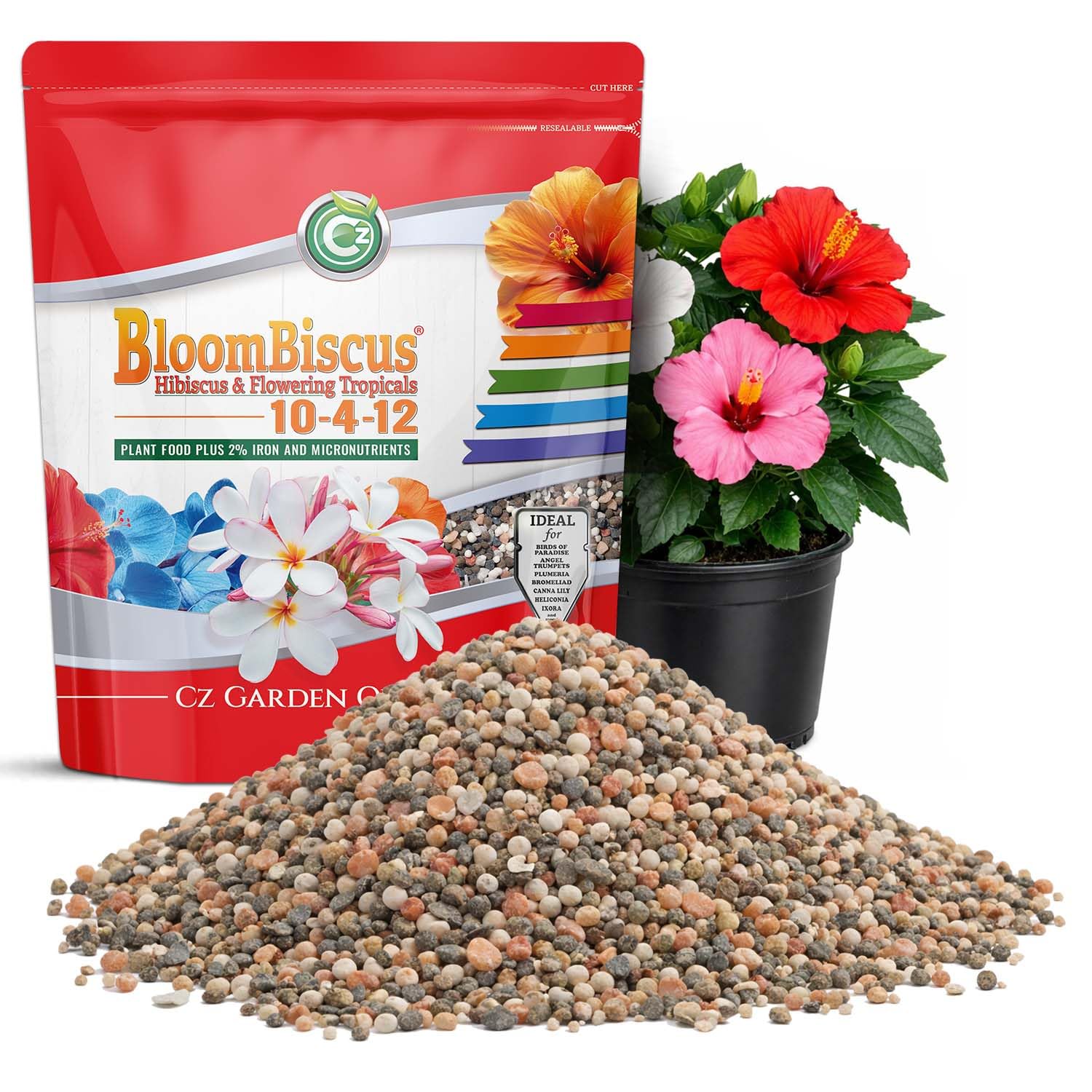
Cz Garden BloomBiscus Hibiscus Plant Food 10-4-12 (4 lb)
| Item Form | Granules |
|---|---|
| Specific Uses For Product | Plant Growth, Root Development, Seed Development, Soil Conditioning |
| Target Species | Flowering Tropicals |
| Unit Count | 64 Ounce |
| Mixing Ratio | 10-4-12 |
This granular BloomBiscus formula is designed to boost blooms and overall vigor in hibiscus and similar tropical flowering plants. It is typically worked into potting mix or applied around the root zone and watered in according to package directions. The 10-4-12 NPK delivers higher potassium for flowering and fruiting while the modest nitrogen supports leaf growth without excessive lushness that can reduce blooms. The added 2% iron and micronutrients help correct common deficiencies that dull flower color. Packaging comes in a resealable pouch for easy pouring and storage. Practical benefits include targeted nutrition for bloom production, broad suitability across many tropical species, and US-made ingredient sourcing. Limitations are that the product is a general granular feed rather than a slow-release or time-release formula so it may require regular reapplication and careful dosing for container-grown plants. Directions are brief on the label so growers who want a feeding schedule may need to follow common hibiscus fertilizing guidelines or consult extension recommendations.
Best for: A gardener focused on getting bigger, more consistent blooms from hibiscus and other tropical flowering plants who prefers a targeted, performance-oriented fertilizer.
Less Ideal for: Those who want a long-term slow-release feed or a liquid program for weekly foliar feeding should consider alternative formulations.
- NPK ratio (10-4-12) concentrated toward flowering and fruiting
- Includes 2% iron plus micronutrients to address common deficiencies
- Resealable heavy-duty pouch for easy pouring and storage
- Formulated specifically for hibiscus and other flowering tropicals
- Not specified as slow-release so it may need more frequent reapplication
Verdict: Choose this 10-4-12 granular with 2% iron when your main goal is stronger, more reliable hibiscus blooms.
Miracle-Gro Water Soluble All Purpose Plant Food, 1.5 lb

| Item Form | Powder |
|---|---|
| Application Method | Watering Can |
| Target Species | For all flowers, vegetables, trees, shrubs and houseplants |
| Mixing Ratio | 24-8-16 |
Miracle-Gro Water Soluble All Purpose Plant Food is a powdered, water-soluble fertilizer formulated to deliver fast nutrition to a broad mix of plants. You mix the powder into a watering can or a garden feeder and apply every 1 to 2 weeks depending on whether plants are indoors or out. The 24-8-16 NPK ratio supplies a strong nitrogen boost for leafy growth along with phosphorus and potassium to support flowering and fruit set. For pepper growers this means it can help produce vigorous plants and encourage fruit development when used at the recommended strengths. Notable features include clear mixing guidance for both indoor and outdoor use and compatibility with container and in-ground plantings. Practical benefits are quick uptake by roots and flexible application options. Important limitations are the high nitrogen proportion, which can favor foliage over fruit if overused, and the need to follow dilution instructions to avoid nutrient burn. This product is best used as a regular boost within a balanced feeding plan rather than the only fertility source for long-term soil health.
Best for: Home gardeners looking for an affordable, easy-to-use boost to support vigorous pepper plant growth and quick results in both containers and garden beds.
Less Ideal for: Growers who want a low-nitrogen or slow-release fertility plan for long-term soil building should consider specialized or organic alternatives.
- Water-soluble powder that feeds plants quickly through the roots
- Clear mixing instructions for indoor and outdoor applications
- Broadly labeled for use on flowers, vegetables, trees, shrubs and houseplants
- Feeds approximately 600 sq. ft. from the 1.5 lb container
- High nitrogen ratio may encourage foliage more than fruit if used too frequently
Verdict: A budget-friendly, fast-acting soluble fertilizer that gives bell pepper plants a regular nitrogen-rich boost to promote vigorous growth and quicker results.
Miracle-Gro Water Soluble All Purpose Plant Food, 12.5 lb

| Item Form | Powder |
|---|---|
| Specific Uses For Product | Plant Food |
| Coverage | general purpose, suitable for various plants |
| Mixing Ratio | 1 tablespoon per gallon of water |
Miracle‑Gro Water Soluble All Purpose is a powder fertilizer designed to dissolve in water and deliver fast nutrients to indoor and outdoor plants. Gardeners mix the recommended scoop with a watering can or use a compatible garden feeder to apply directly to the soil around roots; the product gives routine feedings every 7 to 14 days outdoors or every 2 weeks for houseplants. Notable features include an NPK of 24‑8‑16 for strong vegetative growth, a quoted coverage of about 5,000 sq ft from a 12.5 lb container, and an included scoop with separate measuring ends for indoor and outdoor rates. In practice this means quick uptake for leafy growth and an easy, repeatable dosing routine for reliability across container and in‑ground Clusia specimens. Limitations are that it is a general‑purpose formula rather than a Clusia‑specific mix and frequent applications are required during the growing season, so you will need to follow the label closely to avoid overfeeding.
Best for: Buyers who want a dependable, easy‑to‑measure fertilizer to keep Clusia healthy with consistent, repeatable feedings and straightforward application routines.
Less Ideal for: Growers seeking a slow‑release or custom‑formulated Clusia fertilizer or those who prefer lower‑frequency, hands‑off feeding strategies.
- Fast‑acting water‑soluble formula for near‑instant nutrient availability
- Simple mixing ratios and included scoop make dosing consistent
- Large 12.5 lb container covers a lot of garden area for routine feedings
- Suitable for both container and in‑ground use so it works with potted Clusia and landscape plantings
- General all‑purpose NPK may not match specialized nutrient needs of Clusia at every growth stage
- Requires regular applications during the season rather than a slow‑release schedule
Verdict: A reliable, easy‑to‑mix water‑soluble fertilizer that delivers fast, consistent feedings for Clusia in both pots and landscape settings.
Miracle-Gro Water Soluble All Purpose Plant Food, 3 lb

| Item Form | Powder |
|---|---|
| Application Method | Mix with water in a watering can |
| Fertilizer Analysis (N‑P‑K) | 24-8-16 |
| Unit Count | 48 Ounce |
| Coverage | Feeds approximately 1,200 sq. ft. |
Miracle‑Gro Water Soluble All Purpose Plant Food is a powdered NPK 24‑8‑16 formula that dissolves in water to give plants a quick nutrient boost. You mix measured scoops into a watering can and apply to the soil at the base of plants every 7–14 days for outdoor use or every 14 days for houseplants. Notable features include a high nitrogen content for leafy growth, compatibility with containers and in‑ground beds, and guidance for use with a Miracle‑Gro Garden Feeder for larger areas. In practical terms this is a fast‑acting feed that encourages bigger, greener foliage and works well in regular maintenance of perennials like hostas. Limitations are that it is a fast‑release fertilizer rather than a slow‑release option, so it requires regular reapplication and careful measuring to avoid overfeeding. Also, the 24‑8‑16 balance is geared toward vegetative growth, so it is not optimized if you want to prioritize flowering or bloom boosting.
Best for: Buyers who want a reliable, fast‑acting feed to maintain lush, leafy perennials and container plants and who value proven products with broad user endorsement.
Less Ideal for: Gardeners seeking a single, long‑lasting granular fertilizer or a bloom‑focused formula should consider alternative slow‑release or high‑phosphorus products.
- Water‑soluble powder mixes easily for quick uptake by roots
- High nitrogen formula promotes robust leafy growth ideal for shade plants
- Clear mixing and application instructions for both indoor and outdoor use
- Suitable for containers and in‑ground gardens and compatible with garden feeders
- Requires frequent applications so it is not a low‑maintenance, slow‑release option
- High nitrogen ratio is less suitable when the primary goal is more flowers than foliage
Verdict: A fast‑acting, water‑soluble fertilizer that reliably produces bigger, greener hosta leaves when used as directed.
Choosing the Right Plant Food for Cannas: Key Factors to Consider
Nutrient Ratio and Bloom Support
Cannas respond to a feeding program that encourages heavy flowering while still supporting strong rhizome formation. Look for fertilizer ratios where phosphorus and potassium are sufficient to promote blooms and carbohydrate storage, without an excess of nitrogen that drives only leafy growth. A balanced approach during the active flowering period helps plants convert photosynthate into flowers and rhizome mass.
Timing also matters. Apply a bloom-focused feed as flower spikes begin to form, and reduce high-nitrogen inputs later in the season as the plant shifts energy into the rhizome. Lawn-style high-nitrogen formulations can suppress bloom count and should be avoided if flowers are the priority.
Application Method and Garden Workflow
Plant foods come in granular, water-soluble, and slow-release forms. Granular feeds can be worked into beds or applied as top-dressings around established clumps, offering convenience for in-ground plantings. Water-soluble formulations let you feed on a schedule and see faster visual response, which is useful in containers and when plants need a quick boost. Slow-release options reduce the number of applications but provide less immediate impact on blooming.
Consider how often you visit the garden and whether you prefer a single spring application or regular liquid feeding during bloom. Ease of measuring and applying the product will influence how consistently you can maintain the feeding schedule, and that consistency directly affects Canna performance.
Soil Type and Feeding Behavior
Soil texture, organic matter, and drainage affect nutrient availability. In heavy clay with poor drainage, nutrients can become locked up or leached unpredictably. In light, sandy soils, water-soluble nutrients move more quickly and may require more frequent feeding or higher organic matter content to retain nutrients. Organic amendments such as compost increase nutrient-holding capacity and reduce fertilizer washout.
Testing soil pH and fertility before selecting a feeding plan helps match product choice to site conditions. Some plant foods are formulated to buffer pH effects or include slow-release carriers that perform better across a range of soils.
Micronutrients and Plant Vigor
Beyond N, P, and K, cannas often benefit from trace elements like magnesium, iron, and manganese for deep green foliage and robust growth. Micronutrient deficiencies can reduce flowering even when macronutrients appear adequate. A plant food that includes a suite of trace elements helps maintain overall vigor and supports stress resilience during heat or high humidity.
Chelated forms of micronutrients are more available in a wider pH range, which is useful when soil pH is uncertain. If you grow cannas in containers or in soil with known deficiencies, choose a formula that addresses those specific micronutrients.
Safety for Pollinators and Nearby Plants
Cannas are attractive to pollinators and often sit near other flowering perennials. Choose plant foods with low risk to bees and beneficial insects, especially when applying foliar or bloom-time sprays. Granular and slow-release products that release nutrients into the soil pose less direct contact risk to pollinators than foliar sprays.
Follow label guidance on application timing to avoid peak pollinator activity and rinse off any overspray from blooms. Also consider how runoff might affect neighboring beds or water features and select formulations with minimal potential for nutrient runoff.
Storage, Stability, and Seasonal Use
How you store and reuse plant food affects performance. Water-soluble feeds are best used fresh and stored dry, while slow-release granules keep longer in sealed containers. Stabilized formulations designed for extended use can be handy if you buy in bulk, but check the label for storage recommendations so the product retains its release characteristics.
Seasonal planning matters too. Some gardeners prefer to stop fertilizing late in the season to let cannas harden off and move carbohydrates into rhizomes. Choose products that allow you to taper feeding without leaving residues that interfere with that natural seasonal transition.
When to Start Feeding Cannas
Begin feeding once new shoots are a few inches tall and actively growing. Early-season feeds support rapid leaf expansion and set the stage for later blooming and rhizome development.
Continue a regular feeding schedule through the main bloom period, then taper off several weeks before the first expected frost to encourage storage of carbohydrates in the rhizome. For potted cannas, monitor growth more frequently and adjust feed strength to avoid salt buildup.
- Start feeding in spring when shoots are 2-4 inches tall
- Feed more often during active bloom
- Stop or reduce feeding before dormancy
Feeding Cannas in Containers Vs In-Ground
Containers dry and lose nutrients faster than garden beds, so water-soluble feeds or more frequent low-dose applications work better for potted cannas. Use a balanced liquid feed at half to full strength depending on container size and potting mix.
In-ground plantings benefit from a single spring application of a slow-release or granular bloom-focused fertilizer plus a mid-season liquid boost if flowers lag. Adding organic matter to beds improves nutrient retention and reduces the need for frequent feeding.
- Containers: frequent low-dose liquid feeding
- In-ground: slow-release plus occasional liquid top-up
- Amend beds with compost to improve nutrient holding
Organic Options and Soil-Building Approaches
Organic plant foods, compost teas, and well-rotted manure supply nutrients more slowly and improve soil structure. They reduce the risk of salt buildup and tend to be gentler on beneficial insects. For gardeners focused on long-term soil health, integrating organic feeding with seasonal compost applications supports both blooms and rhizome vigor.
Keep expectations realistic: organic feeds may take longer to show visual results than soluble synthetic feeds, so plan feeding earlier in the season and combine with good soil practices.
- Use compost and aged manure to build soil
- Apply organic liquid feeds earlier to allow time for uptake
- Rotate or supplement organic feeds if flowering is weak
Troubleshooting Poor Flowering
If cannas are producing lush foliage but few flowers, check nutrient balance first. Excessive nitrogen is a common cause and can be corrected by switching to a bloom-focused feed with lower nitrogen and higher phosphorus or by reducing application frequency.
Also assess light exposure, overcrowding, and water. Cannas need bright light and good air circulation for abundant flowering. Dividing overcrowded clumps and ensuring consistent moisture without waterlogging often restores normal bloom rhythms.
- Check NPK balance if foliage is excessive
- Ensure full to partial sun and good airflow
- Divide crowded clumps and correct watering
Mixing and Applying Liquid Feeds Safely
When using water-soluble feeds, dissolve the product according to label instructions and apply evenly around the drip line rather than on the crown. Avoid splashing concentrated solution onto foliage or blooms to reduce burn risk.
Flush containers occasionally to prevent salt accumulation and always store concentrated solutions out of direct sunlight. Use measuring tools to maintain consistent dosing between applications.
- Apply liquid feed around the drip line
- Avoid placing concentrated solution on foliage
- Flush pots periodically to reduce salt buildup
How We Chose the Best Plant Food for Cannas
We focused on criteria that matter for feeding cannas in garden beds, containers, and borders. Our editorial filters prioritized nutrient ratios that support bloom production and rhizome development, ease and flexibility of application, and compatibility with common soil types. We also considered formulation stability and storage, because gardeners need products that hold up through a season without degrading. Evaluation criteria included macronutrient balance to favor flowering and tuber growth, micronutrient presence for overall plant vigor, method of application for convenience and accuracy, and how quickly plants show response to feeding. We excluded products formulated only for lawns or strictly for foliage houseplants, and we omitted treatments that rely solely on non-nutritional additives rather than measurable nutrient delivery. Products were scored by how well they matched these criteria and by practical garden factors such as safety around pollinators, suitability for container culture, and predictable release profiles. The result is a list of dependable plant foods that fit common Canna culture scenarios.
FAQ
How often should I feed cannas during the growing season?
It depends on the product. Slow-release granules typically need one spring application, while liquid feeds are often applied every two to four weeks during active growth. Containers may require more frequent feeding.
Can I use a general-purpose fertilizer on cannas?
General-purpose fertilizers can work, but formulas higher in nitrogen may favor foliage over blooms. For best flowering and rhizome development, choose a feed with balanced phosphorus and potassium relative to nitrogen.
Are organic plant foods effective for cannas?
Yes. Organic options improve soil structure and provide steady nutrient release, though they usually act more slowly than soluble synthetic feeds. Combine organics with good soil amendments for best long-term results.
Will feeding help cannas recover after a pest or disease problem?
Feeding can support recovery by improving vigor, but it will not solve pest or disease issues alone. Address the underlying problem first, then use a gentle feeding plan to help plants rebuild strength.
Should I stop feeding before digging up rhizomes for storage?
Yes. Reduce or stop feeding several weeks before digging to allow plants to translocate sugars into the rhizomes. This helps stored rhizomes endure dormancy and produces healthier shoots the next season.
How does soil pH affect nutrient uptake for cannas?
Soil pH influences availability of many nutrients, especially micronutrients. Cannas tolerate a range of pH, but extremes can limit uptake. Test soil pH if you suspect deficiencies and amend as needed to keep nutrients available.
Final Verdict
Prioritize a feeding approach that supports both abundant flowering and strong rhizome formation. Match nutrient ratios to the growth stage, prefer application methods that fit your garden routine, and address soil health to improve nutrient retention. Plan to taper feeding before dormancy so plants can store energy in the rhizomes. Balancing bloom support with rhizome care and choosing a product that fits your soil and watering patterns will produce the most reliable results. With the right plant food and timing, you can expect bigger displays and healthier overwintering rhizomes.
