

Note: This article contains affiliate links. If you click on these links and make a purchase, I may earn a small commission at no extra cost to you. This helps support my research and content. Read my full affiliate disclosure here.
Picking the right plant food for hydrangeas matters because these shrubs respond quickly to the wrong feed or an inconsistent schedule. Hydrangeas need a balance of nutrients and the right timing to set abundant flowers without excessive leaf growth. This guide covers seven top plant food options for hydrangeas suited to common garden and container situations. We shortlisted options that suit different feeding habits, soil types, and bloom-color goals, then evaluated them on nutrient profile and ease of use. Read on to find the feeding approach that fits your garden and keeps hydrangeas looking their best.
Top Picks at a Glance
| Best Overall The best all-around choice for most situations | Miracle-Gro Water Soluble Plant Food for Azaleas, Camellias & Rhododendrons, 5 lb |  |
| Best Quality Built to a higher standard if you want something more solid | BUILD A SOIL Vegan Bloom Booster Flower Fertilizer, 1 lb |  |
| Best Value The sweet spot between price and what you get | ENVY Acid-Loving Special Water-Soluble Plant Food (Hydrangea, Azalea & Blueberry) |  |
| Best Budget The cheapest option that still gets the job done reliably | RAINFLOW 10-30-20 Blossom Booster Water-Soluble Fertilizer (11.28 oz) |  |
| Highest Rated A top-rated pick with lots of positive feedback | Espoma Organic Holly-Tone 4-3-4 Organic Fertilizer for Acid-Loving Plants, 4 lb. Bag (Pack of 2) |  |
| Most Popular A crowd favorite that many people choose with confidence | Miracle-Gro Water Soluble Bloom Booster Flower Food, 4 lb |  |
| Best Seller A high-volume bestseller chosen again and again | Miracle-Gro Water Soluble Bloom Booster Flower Food, 5.5 lb |  |
Miracle-Gro Water Soluble Plant Food for Azaleas, Camellias & Rhododendrons, 5 lb

| Item Form | Powder |
|---|---|
| Application Method | Watering can or Miracle-Gro Garden Feeder |
| Target Species | Azaleas, Camellias, Rhododendrons, Hydrangeas, Orchids |
| Mixing Ratio | 1:144 (indoor), 1:18 (outdoor) |
This water-soluble Miracle-Gro formula is designed to feed acid-loving shrubs and flowering plants such as azaleas, camellias, rhododendrons and hydrangeas. It comes as a powder you dissolve in a watering can or use with a garden feeder, and the label gives clear mixing rates for indoor and outdoor use so you can dose by plant size and setting. The product is intended for regular feeding every 7 to 14 days during active growth, which makes it useful for encouraging blooms and maintaining green foliage. Practical benefits include easy measuring, broad coverage from a single 5 lb container and compatibility with common watering tools. Because it is water soluble it delivers nutrients quickly but requires more frequent applications than slow-release granular fertilizers. Also it is formulated for acid-loving species, so it is not a one-size-fits-all option for alkaline-loving or general-purpose beds. For gardeners who want straightforward, repeatable feeding for hydrangeas and similar plants, this is a convenient choice; gardeners looking for less frequent feeding or a universal fertilizer may prefer alternatives.
Best for: Gardeners who want a targeted, easy-to-mix fertilizer to keep hydrangeas and other acid-loving shrubs blooming and healthy with regular feedings.
Less Ideal for: People who prefer low-maintenance, infrequent fertilizing or need a single product for mixed beds with plants that do not prefer acidic conditions.
- Formulated specifically for acid-loving flowering shrubs like hydrangeas
- Water-soluble powder that mixes for quick nutrient uptake
- Clear mixing instructions for indoor and outdoor applications
- Large 5 lb container provides wide coverage for multiple feedings
- Requires frequent application (every 7–14 days) when plants are actively growing
- Not suitable as a universal fertilizer for non–acid-loving plants
Verdict: A convenient, water-soluble fertilizer that makes regular feeding of hydrangeas and other acid-loving shrubs simple and effective.
BUILD A SOIL Vegan Bloom Booster Flower Fertilizer, 1 lb

| Item Form | Powder |
|---|---|
| Specific Uses For Product | Plant Growth |
| Target Species | Flowers |
| Mixing Ratio | 1 tsp/gal (living soil); 1-2 tbsp/gal (soilless) |
This vegan bloom booster is a powdered, concentrated plant food designed to increase flower size, color intensity, and bud set on ornamentals such as hydrangeas, roses, hibiscus and other flowering shrubs. It is mixed into water at light rates for living soil and higher rates for soilless or hydroponic systems, so you can use it for routine feedings in beds, containers, and hanging baskets. Notable features include a research-backed, nutrient-rich formula aimed at boosting blooms without overstimulating foliage and a clear mixing guide for small and large applications. In practice it benefits performance-focused gardeners who want fuller, longer-lasting flowering cycles and stronger bloom color. Limitations are that it is a powder that requires measuring and mixing before use and safety precautions—gloves and eye protection—are advised during handling. For large acreage use the package suggests multiple applications per season, so plan supply accordingly if you manage many plants.
Best for: Gardeners focused on maximizing flower performance and color who are willing to follow measured feedings and mix a concentrated powder for beds and containers.
Less Ideal for: Casual gardeners who prefer no-mix, pre-diluted liquids or those unwilling to follow safety precautions during handling.
- Vegan, organic-minded formula tailored to boost flowering performance.
- Concentrated powder with clear mix ratios suitable for living soil and soilless systems.
- Designed to improve bud set, bloom size, and color vibrancy for ornamentals.
- Versatile for use in beds, containers, hanging baskets and small acreage applications.
- Requires measuring and mixing which adds prep time compared with ready-to-use liquids.
- Contains handling precautions so protective gear is recommended during use.
Verdict: Choose this bloom booster if you want a concentrated, vegan fertilizer that reliably increases bloom size and color on hydrangeas and other flowering ornamentals.
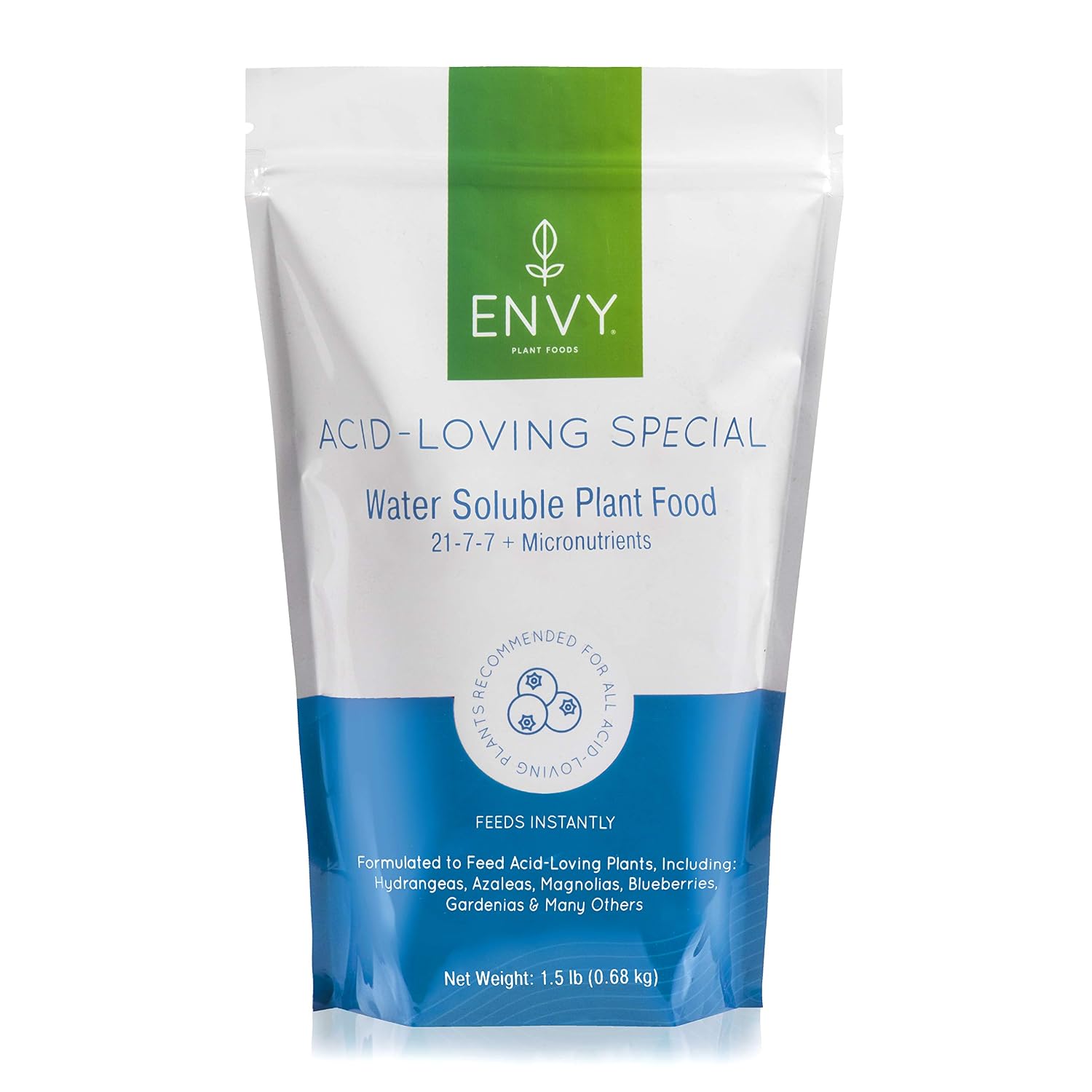
ENVY Acid-Loving Special Water-Soluble Plant Food (Hydrangea, Azalea & Blueberry)
| Item Form | Liquid |
|---|---|
| Application Method | Water Soluble |
| Specific Uses For Product | Plant Food |
| Target Species | Azaleas; Hydrangeas; Magnolias; Gardenias; Camellias; Rhododendrons; Blueberries; Citrus |
| Mixing Ratio | 21:7:7 |
This ENVY Acid-Loving Special is a water-soluble liquid plant food designed to feed acid-loving shrubs and berries. You mix the measured scoop into water using the labeled 21-7-7 ratio and apply it to soil-grown hydrangeas, azaleas, rhododendrons, gardenias and blueberries to encourage greener foliage and stronger blooms. The formula is easy to dissolve and the resealable pouch with included scoop makes repeat dosing simple and low-mess for a seasonal feeding routine. Because it targets acid-loving species, it supplies nutrients tuned to plants that prefer lower pH rather than a one-size-fits-all feed. Limitations to note are the small unit size relative to repeated large-bed use and that it is a general N-P-K blend rather than a specialty bloom booster for dramatic flower size; heavy users will need multiple pouches. For gardeners who want a straightforward, soluble fertilizer to keep hydrangeas healthy and flowering, this is a practical, easy-to-use choice.
Best for: Gardeners who prioritize efficient, repeatable feeding for hydrangeas and other acid-loving shrubs and want an easy-to-mix liquid they can apply on a regular schedule.
Less Ideal for: Large-scale landscapers or growers needing bulk quantities per season or users seeking a specialized high-phosphorus bloom concentrate for show-size flowers.
- Formulated for acid-loving plants commonly used with hydrangeas and azaleas
- 100% water soluble for easy mixing and even application
- Includes measuring scoop and resealable pouch for accurate, low-mess dosing
- Unit is relatively small so frequent gardeners or large beds may need multiple pouches
- Not marketed as a high-phosphorus bloom booster for maximizing flower size
Verdict: A practical, easy-to-mix liquid fertilizer tailored to acid-loving plants that keeps hydrangeas healthy with minimal fuss.
RAINFLOW 10-30-20 Blossom Booster Water-Soluble Fertilizer (11.28 oz)

| Item Form | Granules |
|---|---|
| Application Method | Water-soluble |
| Target Species | Flowers |
| Unit Count | 11.28 Ounce |
The RAINFLOW 10-30-20 Blossom Booster is a small, water-soluble granule fertilizer formulated to encourage bigger, more colorful blooms on hydrangeas and other flowering plants. You mix the measured granules into water and apply as a feed, which dissolves quickly for rapid uptake by roots and foliage. The high phosphorus ratio targets flower production, making it useful during the flowering season for potted hydrangeas, garden beds, and container displays. Blue granules make measuring easier and reduce guesswork when feeding frequently. Because the package is compact at 11.28 ounces, it is convenient for occasional users and small gardens but may require repurchasing sooner for larger plantings. Practical benefits include fast absorption, straightforward mixing, and compatibility with indoor or outdoor use. Important limitations are the small unit size for heavier users and that the formula is focused on bloom stimulation rather than balanced long-term feeding for overall vegetative growth.
Best for: Ideal for home gardeners who want an inexpensive, easy-to-use bloom booster for hydrangeas in pots or small beds and who prioritize visible flower improvement over long-term feeding plans.
Less Ideal for: Not a good choice for landscapers or gardeners with many plants who need bulk fertilizer or a balanced all-season formula for vegetative growth.
- High phosphorus NPK (10-30-20) to encourage stronger and more abundant blooms
- Water-soluble granules dissolve quickly for fast nutrient uptake
- Blue granules help with precise measurement and reduce overfeeding
- Suitable for indoor and outdoor use across potted plants and garden beds
- Small 11.28 oz package may be insufficient for larger gardens or frequent applications
- Not formulated as a balanced all-season feed focused primarily on flowering
Verdict: A compact, budget-friendly water-soluble bloom booster that delivers fast, phosphorus-driven results for hydrangea flowers.
Espoma Organic Holly-Tone 4-3-4 Organic Fertilizer for Acid-Loving Plants, 4 lb. Bag (Pack of 2)

| Item Form | Powder |
|---|---|
| Specific Uses For Product | Organic,Plant Food |
| Application Method | Sprinkle over the root zone and water in |
| Target Species | Acid-loving Plants |
Espoma Holly-Tone is a ready-to-use organic fertilizer designed for acid-loving plants such as hydrangeas, rhododendrons, azaleas and blueberries. You apply it by sprinkling around the root zone and watering it in, typically in spring and fall, and its natural organics break down slowly so nutrients are released over time rather than all at once. Notable features include a 4-3-4 NPK analysis, added sulfur to help maintain soil acidity, and an organic Bio-tone formula aimed at supporting soil biology. For someone who wants steady, reliable feeding without mixing or synthetic inputs, Holly-Tone provides a low-maintenance way to support bloom and foliage on acid-loving shrubs. Limitations to expect are that it is a medium-coverage, slow-acting powder so results are gradual and heavier nutrient corrections or fast greening require supplemental products. Also it is targeted to acid-loving species and is not intended as a general-purpose fertilizer for neutral- or alkaline-loving plants.
Best for: Gardeners who prioritize dependable, low-maintenance feeding for hydrangeas and other acid-loving shrubs and want an organic, slow-release product they can apply by hand in spring and fall.
Less Ideal for: Gardeners seeking fast greening or a broad-spectrum fertilizer for a wide variety of garden plants should consider alternative products better matched to those needs.
- Organic slow-release formula provides steady nutrient supply without repeated applications
- Specifically formulated for acid-loving plants with added sulfur to support soil acidity
- Ready-to-use granular form requires no mixing and is simple to apply around the drip line
- Contains Bio-tone ingredients to support soil biology and long-term plant health
- Medium coverage and slow action mean it is not ideal for rapid nutrient fixes
- Formulation is specific to acid-loving plants and not suited for neutral or alkaline soil species
Verdict: A reliable, ready-to-use organic fertilizer that quietly feeds hydrangeas and other acid-loving shrubs over time.
Miracle-Gro Water Soluble Bloom Booster Flower Food, 4 lb

| Item Form | Powder |
|---|---|
| Application Method | Water Soluble |
| Target Species | flowers |
| Mixing Ratio | 1 tablespoon per gallon |
This Miracle-Gro Bloom Booster is a high-phosphorus, water-soluble flower food designed to encourage more blooms and stronger color in flowering plants. You mix the powder into a watering can (1 tablespoon per gallon for outdoor use) or use it with a Miracle-Gro Garden Feeder to feed containers, window boxes, and in-ground flowering perennials every 7 to 14 days. The 10-52-10 NPK formula delivers an immediate dose of phosphorus to support bud and flower development, and the powder form dissolves quickly for fast uptake. Practical benefits include easy application, flexibility to use by hand or with a hose feeder, and a large 4 lb unit that lasts through multiple feedings. Limitations are that it is a bloom-focused formula so it does not address pH needs or iron deficiency and should be used as directed to avoid overfeeding; also it is specific to flowering plants so other plant types may need different formulations.
Best for: Gardeners who prioritize visible blooms and want an easy-to-use feed for containers and garden beds, and who prefer proven products with wide user adoption.
Less Ideal for: Gardeners looking to address soil acidity, iron chlorosis, or overall balanced nutrition for leafy growth should choose a different formulation matched to those needs.
- High-phosphorus 10-52-10 formula that promotes bud set and more blooms
- Water-soluble powder mixes quickly for fast plant uptake
- Works with a watering can or Miracle-Gro Garden Feeder for flexible application
- Large 4 lb unit provides many feedings across the season
- Targets flowering and color but does not correct soil pH or iron deficiencies
- Requires regular reapplication every 7 to 14 days during the growing season
Verdict: Choose this bloom booster when your priority is noticeably bigger, more colorful flowers from containers and beds with a minimal-effort water-soluble feed.
Miracle-Gro Water Soluble Bloom Booster Flower Food, 5.5 lb

| Item Form | Powder |
|---|---|
| Application Method | Mix with water |
| Target Species | Flower |
| Mixing Ratio | 1:Water |
This Miracle-Gro Bloom Booster is a water-soluble powder designed to encourage more and stronger blooms on flowering plants, including hydrangeas. You mix the powder with water and apply it with a watering can or Garden Feeder every 7 to 14 days during bud set and bloom. Its high-phosphorus formula (10-52-10 NPK) targets flower production, so you should see fuller color and more flowers compared with unfed plants. Practical benefits include quick uptake through root watering, compatibility with both in-ground and container plantings, and a coverage claim large enough for a medium garden. For a risk-averse gardener, the product is easy to dose using the included scoop and established mixing instructions, which reduces guesswork. Limitations are that frequent feeding is required during bloom periods and the concentrated formula means you should follow directions carefully to avoid overfeeding; it also contains soluble salts and micronutrients that some organic gardeners may prefer to avoid.
Best for: Gardeners who prioritize reliably bigger, more colorful blooms on hydrangeas and other flowering plants and want a straightforward, easy-to-follow feeding routine.
Less Ideal for: Growers seeking fully organic or slow-release fertilizer solutions or those who prefer minimal feeding schedules for low-maintenance plantings.
- High phosphorus NPK (10-52-10) formulated specifically to promote blooms
- Water-soluble powder mixes quickly for fast root uptake
- Works for both in-ground beds and container plants
- Includes scoop and clear mixing directions to simplify dosing
- Requires repeat applications every 7 to 14 days during bloom period
- Contains synthetic salts and micronutrients that may not suit organic-only gardeners
Verdict: Use this water‑soluble bloom booster when you want an easy, proven way to increase flower production and color on hydrangeas during the bloom season.
Choosing the Right Plant Food for Hydrangeas: Key Factors to Consider
Nutrient Balance and NPK Ratios
Hydrangeas respond differently to varying nitrogen, phosphorus, and potassium levels. A feed with moderate nitrogen supports healthy foliage without encouraging excessive leaf growth at the expense of flowers. Higher phosphorus relative to nitrogen can support bloom production. Look for clearly listed NPK ratios so you can match the product to your plant goals.
Understanding the NPK label helps you tailor feeding across the season. Early spring benefit from balanced or slightly higher nitrogen to encourage new shoots, while pre-bloom applications with more phosphorus help bud set. Avoid feeds with very high nitrogen during flowering or you may see lush leaves and fewer blooms.
Release Profile and Feeding Frequency
Slow-release and controlled-release formulations give steady nutrition over weeks or months and reduce the risk of burn or nutrient spikes. They suit gardeners who prefer less frequent feeding and are especially useful in mixed beds and containers where nutrients leach faster. Granular slow-release feeds typically last longer, while water-soluble options let you correct deficiencies quickly.
Consider how often you want to feed: weekly or biweekly liquid feeds are good for fast response or container plants, while granular slow-release simplifies maintenance for larger landscape plantings. Match the release profile to watering habits and potting mix drainage to avoid under- or over-feeding.
Soil pH Influence and Bloom Color Control
Hydrangea flower color can be influenced by soil pH and available aluminum. Some plant foods include components or acidifying agents that make aluminum more available and support blue tones in suitable cultivars, while neutral or lime-containing feeds may favor pinker flowers. If bloom color is important, choose formulations that are compatible with your desired color outcome and follow soil pH testing.
Regular soil or potting mix testing helps you pair a feed with lime or sulfur amendments when needed. Be aware that feeds alone rarely change color dramatically; pH adjustments and consistent applications over a growing season are usually required.
Micronutrients and Trace Elements
Hydrangeas benefit from trace elements such as iron, magnesium, and manganese, which support chlorophyll production and overall vigor. Iron in particular helps prevent yellowing between leaf veins, a common sign of deficiency in acid-loving shrubs. Some plant foods include chelated micronutrients that remain available across a wider pH range.
When choosing a feed, check for labeled micronutrient content if your soil is poor or you have recurring deficiency symptoms. Foliar sprays or targeted applications can correct issues quickly, but a balanced base feed with micronutrients avoids repeated spot treatments.
Formulation and Application Method
Feeds come as granules, spikes, water-soluble powders, and liquids. Granules and spikes are low-effort and provide slow feeding, while water-soluble and liquid concentrates give fast, even distribution and easy correction. Consider how you water and maintain beds: containers and hanging baskets often need more frequent soluble feeding, while established in-ground shrubs do well with occasional granular applications.
Also consider clumping and dust in packaged products. A stable formulation that mixes cleanly and spreads evenly means less waste and more consistent results. Packaging that protects from moisture is helpful if you do not use the entire product in one season.
Environmental Impact and Safety
Think about runoff and local water quality when feeding hydrangeas, especially near slopes or water features. Slow-release options and targeted, measured applications reduce the chance of excess nutrients washing away. Organic or lower-salt formulations can be gentler on soil biology and reduce residual buildup in containers.
Also consider safety around children and pets. Products that require less frequent handling and that have clear label instructions reduce misuse. Compost-friendly or OMRI-listed options may be preferable for gardeners focusing on ecological practices.
When to Start Feeding Hydrangeas
Begin feeding in early spring as new growth appears, but wait until the risk of hard frost has passed. An initial balanced feed encourages healthy shoot and leaf development, which sets the stage for a strong bloom cycle.
Reduce or stop heavy feeding in late summer to let plants harden off before winter. Timing feeds around the natural growth cycle prevents late-season tender growth that could be damaged by cold.
- Early spring: balanced or slightly higher nitrogen for shoot growth
- Pre-bloom: boost phosphorus to support bud set
- Late summer: taper feeding to encourage dormancy
Feeding Hydrangeas in Containers Vs In-Ground
Containers dry and deplete nutrients faster than in-ground plantings, so hydrangeas in pots typically need more frequent, lighter feeds. Water-soluble or liquid feeds work well for quick responses and regular maintenance in containers.
In-ground hydrangeas benefit from slower-release granular feeds applied at the root zone. These reduce the need for monthly attention and tend to stay available through varying moisture conditions in beds.
- Containers: feed every 1-4 weeks depending on formulation
- In-ground: apply slow-release granules once or twice per season
Adjusting Feed for Bloom Color Goals
If you want bluer flowers on suitable hydrangea varieties, prioritize soil acidification and products that increase available aluminum. For pinker tones, avoid acidifying amendments and keep pH more neutral to slightly alkaline.
Remember that cultivar genetics determine how responsive a plant is to color changes. Feed choices and pH adjustments help nudge color but will not override a variety that is genetically fixed.
- Test soil pH before attempting color adjustments
- Combine pH amendment plans with compatible plant foods
Spot Treatments and Correcting Deficiencies
Yellowing between veins often indicates iron deficiency, which can be corrected with chelated iron applications or a feed that includes iron. Magnesium deficiencies show as general yellowing and respond to targeted magnesium supplementation.
Use a soluble feed or foliar spray for quick correction, then follow up with a balanced base feed to maintain overall nutrition. Avoid overapplication; repeated spot doses can lead to buildup of salts in the root zone.
- Iron chelate is quick for interveinal chlorosis
- Magnesium sulfate can correct specific magnesium needs
Storing and Applying Plant Food Safely
Keep feeds in a cool, dry place and seal packaging to avoid moisture absorption that can clump granules and reduce effectiveness. Follow label instructions for application rates and safety precautions.
Measure accurately and apply evenly around the drip line rather than at the base of stems. Water in granular feeds to move nutrients into the root zone and reduce surface loss.
- Store in moisture-proof containers
- Apply evenly at the root zone and water after application
How We Chose the Best Plant Food for Hydrangeas
We focused on practical feeding traits that affect hydrangea health and flowering in real gardens. Primary selection criteria included nutrient balance and targeted formulations, because hydrangeas need a specific ratio of nitrogen, phosphorus, and potassium to flower well without becoming leggy. We evaluated release profile and longevity to favor products that give steady nutrients rather than large short-lived spikes. Application ease and flexibility were tested conceptually, looking for options that work in containers, borders, and planting beds and that fit common gardener routines. Soil pH influence and micronutrient content were considered, since color control and overall plant vigor often depend on available iron, magnesium, and aluminum-related chemistry. We also looked at formulation stability and packaging that reduces waste and keeps granules or concentrates usable through the season. Exclusions included general all-purpose feeds without clear nutrient breakdowns and products designed exclusively for lawns or non-flowering shrubs. The end result favors plant foods that demonstrably help hydrangeas set and sustain flowers while being simple to apply.
FAQ
How often should I feed hydrangeas in pots?
Containers typically need feeding more often than beds, often every one to four weeks with a diluted liquid feed, or following the label on a water-soluble product. Frequency depends on pot size, potting mix, and how quickly the soil dries.
Can I change bloom color with plant food alone?
Not usually. Bloom color depends mainly on soil pH and cultivar genetics. Some feeds include acidifying components or increase available aluminum which can influence blue tones, but pH amendments and time are usually required for a noticeable change.
Is slow-release or liquid feed better for hydrangeas?
It depends on the situation. Slow-release granules work well for in-ground shrubs and lower-maintenance gardens, while liquid or soluble feeds give faster correction and are better for containers or when you need quick response.
What signs show my hydrangea needs micronutrients?
Interveinal yellowing often indicates iron deficiency, while general chlorosis and poor vigor can signal magnesium or other trace element shortages. A soil test and visual diagnosis help determine whether a targeted micronutrient treatment is needed.
Can I apply compost instead of commercial plant food?
Compost improves soil structure and supplies slow nutrients, but it may not deliver specific NPK ratios or the micronutrients hydrangeas need for robust flowering. Combining compost with a targeted feed can offer both soil health and precise nutrition.
Final Verdict
Choose a plant food that matches how you garden and what you want from your hydrangeas. Prioritize a clear nutrient balance and a release profile that fits containers or in-ground plantings. If bloom color matters, factor soil pH and micronutrients into your plan rather than relying on feed alone. The best approach balances steady base nutrition with occasional targeted treatments for deficiencies. Focus on consistency, proper application, and matching the formulation to your watering routine to keep hydrangeas healthy and floriferous.
