

Note: This article contains affiliate links. If you click on these links and make a purchase, I may earn a small commission at no extra cost to you. This helps support my research and content. Read my full affiliate disclosure here.
Growing tomatoes in containers gives you control over soil, sun, and placement, but only when the pot suits the plant. The right plant pot for tomatoes prevents waterlogged roots, allows vigorous root development, and makes feeding and moving the plant simpler through the season. This guide covers seven top options chosen for common tomato growing situations, from patio dwarfs to indeterminate vines. We shortlisted pots that perform well for drainage, root volume, material longevity, and handling. Read on for the decision factors we used and practical guidance to match a container to your tomato type and space.
Top Picks at a Glance
| Best Overall The best all-around choice for most situations | TeCreatio Tomato Planter with Trellis, Self-Watering Reservoir and Wheels |  |
| Best Quality Built to a higher standard if you want something more solid | Vego Garden Large Outdoor Planter with Steel Trellis and Self-Watering System |  |
| Best Value The sweet spot between price and what you get | Jorvila 5 Gallon Fabric Grow Bags, 5-Pack |  |
| Best Budget The cheapest option that still gets the job done reliably | Land Guard 4-Pack 5-Gallon Nonwoven Fabric Grow Bags with Handles |  |
| Highest Rated A top-rated pick with lots of positive feedback | GlenLan 10 Gallon Nonwoven Fabric Grow Bags, 5-Pack |  |
| Most Popular A crowd favorite that many people choose with confidence | VIVOSUN 5-Pack 5 Gallon Fabric Grow Bags with Handles |  |
| Best Seller A high-volume bestseller chosen again and again | VIVOSUN 5-Pack 7‑Gallon Fabric Grow Bags with Handles |  |
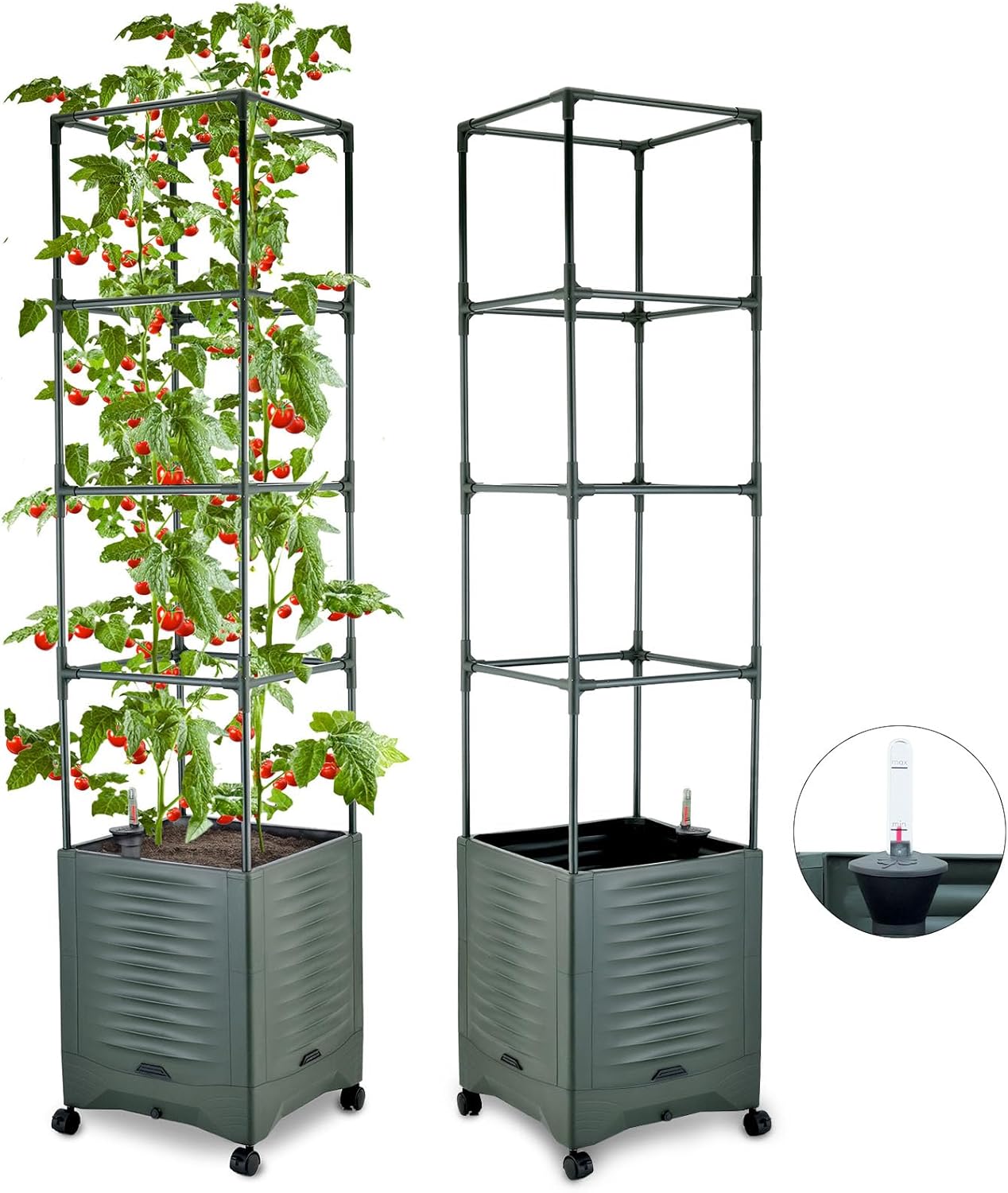
TeCreatio Tomato Planter with Trellis, Self-Watering Reservoir and Wheels
| Material Type | Metal |
|---|---|
| Capacity | 2 gallons |
| Included Components | Trellis, Wheels |
| Other Special Features of the Product | Rust Resistant |
| Indoor Outdoor Usage | Indoor, Outdoor |
This TeCreatio tomato planter is a vertical, floor-standing metal planter designed specifically for growing tomatoes in containers. It combines a 2.0 gallon self-watering reservoir with a top water inlet and a visible water-level indicator so you can refill without disturbing the soil. The powder-coated metal construction and dual-layer rust-resistant finish give it outdoor durability, and the included sturdy metal trellis supports indeterminate plants as they climb. Mobility is easy thanks to five wheels, four of which lock, so you can move the planter to optimize sun exposure or shelter plants during storms. Ventilation holes and two drainage outlets help prevent waterlogging while the planter depth supports adventitious root development for stronger plants. Limitations to note are its single planting column rather than multiple separate pockets and a modest soil capacity compared with large raised beds, so it is best for growing a few productive tomato plants rather than high-density production.
Best for: A home gardener who wants a low-maintenance, space-efficient solution for growing a few tomato plants on a patio, balcony, or small yard and values mobility and consistent moisture control.
Less Ideal for: Growers who need to produce large quantities or who prefer traditional wide raised beds for multiple plants should consider larger containers or bed systems instead.
- Self-watering reservoir with top fill and visible indicator reduces watering frequency
- Sturdy metal trellis offers reliable support for climbing indeterminate tomato varieties
- Powder-coated, rust-resistant finish improves outdoor durability
- Five wheels, four lockable, make it easy to reposition for light or weather management
- Single tall column and 2 gallon capacity limit soil volume compared with larger raised beds
- Not suitable for high-density planting or very large tomato varieties without frequent pruning
Verdict: Choose this planter if you want a compact, durable self-watering system with a built-in trellis and wheels for easy, low-maintenance tomato growing.
Vego Garden Large Outdoor Planter with Steel Trellis and Self-Watering System

| Capacity | 2.4 gallons |
|---|---|
| Material Type | Steel Trellis and Polypropylene Shell |
| Other Special Features of the Product | Rolling Casters For Mobility |
| Finish Types | Powder Coated |
| Indoor Outdoor Usage | Outdoor |
This Vego Garden planter is built for productive tomato growing in confined outdoor spaces. It combines a powder-coated 8mm steel trellis that resists bending with a polypropylene planter body that houses a 2.4 gallon (about 9L) self-watering reservoir and a visible water-level gauge. Use it as a freestanding container for indeterminate tomato varieties, peppers, or eggplants; the breathable inner vents promote soil aeration while the adjustable water-volume regulator and drain plug reduce overwatering and make maintenance simple. Low-profile rolling casters let you reposition the planter for light or protection without heavy lifting. Practical benefits include strong vertical support for heavy fruit loads, reduced watering frequency, and easier mobility for season management. Important limitations are that it is sized for individual plants rather than large multi-plant beds and the plastic shell and reservoir design require occasional monitoring to avoid mosquito breeding if the drain plug is misused outdoors.
Best for: Growers who prioritize strong plant support and consistent moisture for high-yield tomato varieties and want a low-maintenance, moveable container solution.
Less Ideal for: People wanting a large, wide bed for multiple tomato plants or those who prefer in-ground planting and heavy-duty all-metal planters.
- Reinforced 8mm steel trellis gives sturdy vertical support for heavy tomato vines.
- Integrated 9L self-watering reservoir with gauge reduces how often you need to water.
- Breathable inner vents improve soil aeration and root health.
- Powder-coated finish on trellis increases weather resistance and longevity.
- Rolling casters make it easy to move the planted container for light or sheltering.
- Reservoir and plug design can invite mosquitoes if not managed correctly.
- Tall narrow footprint limits it to one or two plants rather than larger multi-plant setups.
Verdict: Choose this planter if you want a durable trellis and a reliable self-watering system to maximize tomato yields in a compact, movable container.
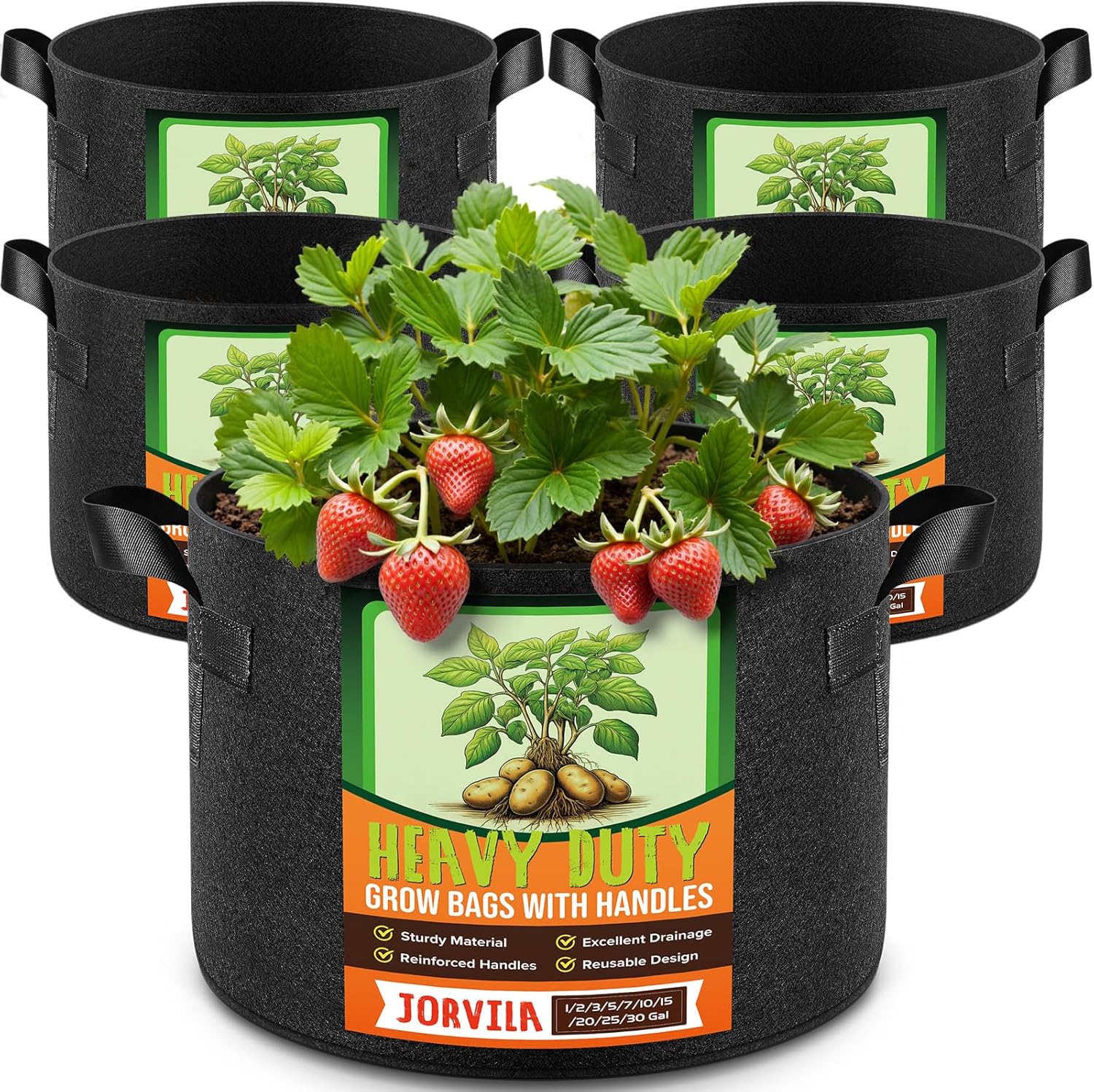
Jorvila 5 Gallon Fabric Grow Bags, 5-Pack
| Capacity | 5 gallons |
|---|---|
| Unit Count | 5 Count |
| Material | 300G nonwoven fabric |
| Indoor Outdoor Usage | Outdoor |
| Other Special Features of the Product | Breathable |
These Jorvila 5 gallon fabric grow bags are practical containers for growing tomatoes and other vegetables in limited space. Made from breathable nonwoven fabric, they encourage air pruning and improved root structure while providing excellent drainage to reduce overwatering problems. Each bag has reinforced, widened handles with X-stitching and double-stitched seams so you can move plants around your patio or deck without tearing the fabric. In typical use you fill them with a quality potting mix, plant tomato seedlings and water as needed; the breathable sides keep soil temperature more moderate than plastic pots and help roots stay healthy. The 5 gallon shape is shorter and wider than a standard bucket, so they suit determinate or smaller tomato varieties better than large indeterminate plants that need more volume. These bags are washable and reusable if emptied and fully dried after the season, but they will eventually wear faster than rigid containers and are not a replacement for very large, long-term planters for heavy feeders.
Best for: Home gardeners optimizing space and value who want easy-to-move, breathable containers for patio or container tomato production, especially for smaller or determinate varieties.
Less Ideal for: Growers planning to grow large indeterminate tomato cultivars or who prefer a rigid long-term planter for heavy feeding crops should consider larger or sturdier alternatives.
- Breathable fabric promotes air pruning and healthier root systems
- Good drainage reduces risk of overwatering
- Reinforced handles and double-stitched seams make moving full bags practical
- Washable and reusable for multiple seasons
- Suitable for outdoor vegetable use including tomatoes
- 5 gallon shape is relatively shallow so not ideal for large indeterminate tomato varieties
Verdict: A cost-effective, breathable and portable 5-pack of fabric grow bags that makes growing tomatoes in small outdoor spaces simple and space-efficient.
Land Guard 4-Pack 5-Gallon Nonwoven Fabric Grow Bags with Handles

| Capacity | 18.93 liters |
|---|---|
| Number of Pieces | 4 |
| Material Type | Nonwoven Fabric |
| Other Special Features of the Product | Breathable |
| Indoor Outdoor Usage | Outdoor |
These Land Guard grow bags are basic, no-frills fabric planters intended for small to medium container gardening. Made from breathable nonwoven fabric, they promote drainage and air pruning of roots, which helps prevent root circling and can encourage healthier, more compact root systems for crops like tomatoes. The set comes with four 5‑gallon bags and reinforced handles so you can move filled bags around a patio or balcony without special equipment. Practical benefits include lighter weight than rigid pots, better aeration and reduced overwatering, and easy storage when not in use. Limitations are their small capacity for determinate or large indeterminate tomato varieties and less structural support for heavy, mature plants without an external cage or stake. The fabric will also wear faster than plastic or ceramic, so expect to replace them after a few seasons with regular outdoor exposure. For gardeners who need affordable, space-efficient containers for starting seedlings or growing 1 to 2 small tomato plants per bag, these perform well.
Best for: Budget-minded gardeners who want an inexpensive, space-saving option to start seedlings or grow one small tomato plant per container on a patio, balcony, or small garden area.
Less Ideal for: Gardeners planning to grow large indeterminate tomato varieties or multiple heavy fruiting plants in a single container should choose larger, sturdier pots with room for heavier support systems.
- Breathable nonwoven fabric promotes drainage and air pruning of roots
- Includes heavy-duty handles for easier moving and repositioning
- Sold as a 4-pack which is cost-effective for starting multiple plants
- Lightweight and easy to store when not in use
- 5‑gallon capacity is small for full-size indeterminate tomato plants
- Fabric is less durable long-term than plastic or ceramic pots
Verdict: A low-cost, breathable 4-pack of 5‑gallon fabric grow bags that works well for starting seedlings or growing one small tomato plant per bag on tight budgets.
GlenLan 10 Gallon Nonwoven Fabric Grow Bags, 5-Pack

| Capacity | 10 gallons |
|---|---|
| Material | Nonwoven fabric (300G) |
| Usage | Outdoor |
| Set | 5-Pack |
These GlenLan 10 gallon grow bags are heavy-duty nonwoven fabric pots meant for outdoor vegetable and fruit growing, and they suit tomatoes well when space or soil beds are limited. Built from 300G breathable fabric, the bags use air pruning to reduce root circling and promote a dense fibrous root system, which can improve nutrient uptake for tomato plants. Reinforced, cross-stitched handles make it practical to move filled bags to follow sun or shelter plants during storms, and the fabric drains freely so you are less likely to see waterlogged roots. They are washable and reusable between seasons, and they collapse flat for compact storage. Limitations are the faster drying rate of fabric containers, which requires more frequent watering in hot weather, and the 10 gallon size is best for determinate or smaller indeterminate tomatoes rather than very large varieties. For gardeners who value durable, breathable containers and straightforward handling, these bags offer reliable, repeatable performance.
Best for: Gardeners who prioritize consistent, durable container performance and want breathable, reusable pots for growing tomatoes on patios, balconies, or small plots.
Less Ideal for: Growers who prefer minimal watering maintenance or who plan to grow very large tomato varieties that need deeper root volume should look at larger rigid containers or in-ground beds.
- Breathable 300G nonwoven fabric promotes air pruning to reduce root circling
- Reinforced cross-stitched handles let you lift and reposition filled bags safely
- Porous material provides strong drainage to reduce risk of root rot
- Washable and reusable design for multiple growing seasons
- Fabric containers dry out faster and need more frequent watering in hot conditions
- 10 gallon capacity may be small for very large indeterminate tomato varieties
Verdict: A dependable, breathable 10 gallon fabric grow bag pack that makes growing tomatoes in containers easier and repeatable season after season.
VIVOSUN 5-Pack 5 Gallon Fabric Grow Bags with Handles

| Material Type | Nonwoven fabric |
|---|---|
| Capacity | 20 liters |
| Number of Pieces | 5 |
| Other Special Features of the Product | Drainage Hole |
| Indoor Outdoor Usage | Indoor, Outdoor |
These VIVOSUN 5‑gallon fabric grow bags are a practical option for container tomato growing on patios, balconies, or raised beds. Made from 300g nonwoven fabric they breathe and drain well, which helps prevent waterlogged soil and encourages a healthy, fibrous root system rather than root circling. Each bag has reinforced serger‑stitched handles so you can move planted containers filled with soil more easily. In use they suit single tomato plants or smaller determinate varieties in 5‑gallon containers, and the breathable walls keep root temperatures cooler in summer. The bags are reusable and easy to store when not in use, but they are not rigid so you will need a consistent watering routine and a stable support (cage or stake) for indeterminate tomatoes. Also a 5‑gallon capacity limits larger indeterminate varieties that perform better in bigger containers. For growers who value straightforward drainage, portability, and long‑term reusability, these bags are a sensible, low‑maintenance choice.
Best for: Gardeners who want an easy, proven container for growing tomatoes on patios, balconies, or small plots and who prioritize good drainage and portability over maximum root volume.
Less Ideal for: Growers planning to cultivate large indeterminate tomato varieties or those who want a rigid, decorative planter and larger soil volume should consider bigger fabric bags or hard-sided containers.
- Breathable nonwoven fabric improves drainage and reduces root circling
- Reinforced handles make moving filled bags easier
- Reusable and foldable for off‑season storage
- Suitable for indoor and outdoor use
- 5‑gallon size may be too small for large indeterminate tomato varieties
- Flexible sides require external staking or cages for plant support
Verdict: A reliable, breathable 5‑gallon fabric grow bag set that delivers excellent drainage and portability for tomato growers using patio or small-space containers.
VIVOSUN 5-Pack 7‑Gallon Fabric Grow Bags with Handles

| Capacity | 7 Gallons |
|---|---|
| Material Type | Nonwoven fabric |
| Included Components | 5 x Grow Bag |
| Other Special Features of the Product | Drainage Hole |
| Indoor Outdoor Usage | Outdoor |
These VIVOSUN grow bags are flexible, breathable fabric pots intended for outdoor vegetable and herb growing. Each 7‑gallon bag is made from thickened nonwoven fabric that lets excess water drain and air to circulate around the root ball, which helps prevent root circling and keeps soil cooler during warm months. Reinforced stitched handles make it practical to lift and reposition filled bags on a patio or raised bed, and the fabric is durable enough for repeated seasons when cleaned and stored properly. Typical use is filling with potting mix, placing on a well‑drained surface, and growing tomatoes, peppers, or herbs where extra root aeration and drainage are beneficial. The bags are lightweight when empty, so they are easy to store, but they do require a stable spot once filled because the soft sides do not hold a rigid shape. Also these are outdoor‑rated and lack integrated saucers, so expect more frequent watering in hot, exposed sites and provide a drip tray if you need to protect decking or patios.
Best for: Home gardeners who want a low‑risk, easy container option for growing tomatoes and other vegetables outdoors and who prefer simple, reusable containers that improve root health.
Less Ideal for: Those seeking rigid decorative pots, built‑in water reservoirs, or a container that will sit on delicate decking without a tray should consider alternatives.
- Breathable nonwoven fabric promotes air pruning and prevents root circling
- Good drainage reduces waterlogging and helps roots stay aerated
- Reinforced stitched handles make filled bags easier to move
- Durable 300g fabric intended for multiple seasons of use
- Soft sides mean bags need stable placement and can slump when filled
- No included saucers or rigid support so extra watering management may be required
Verdict: Choose these grow bags if you want a practical, reusable fabric pot that improves root health and is easy to move for outdoor tomato growing.
Choosing the Right Plant Pot for Tomatoes: Key Factors to Consider
Container Size and Root Volume
Tomatoes need substantial soil to support fruiting. A larger root volume buffers against swings in moisture and nutrient availability, letting you water less often and avoid stress-related blossom drop.
Depth matters for indeterminate and larger determinate varieties because roots spread downward and outward. Shallow pots restrict root growth, increase the chance of tip-over with heavy plants, and require more frequent irrigation. When selecting a pot, think about how big the mature plant will get and whether you will use a trellis or cage that adds leverage to the container.
Drainage and Water Management
Good drainage prevents root rot and salt buildup from fertilizer. Pots should allow excess water to escape freely while retaining enough moisture for steady uptake between waterings.
Look for multiple drainage holes or designs that channel water away from the root collar. Consider whether you need a compatible saucer for patios or balconies and how easy it is to check and flush the soil. The ability to perform a quick flush when salts accumulate is a practical advantage.
Material and Weather Resistance
The pot material affects insulation, durability, and maintenance. Terracotta breathes and moderates root-zone moisture but can dry quickly and crack in freezing weather. Plastic and resin are lightweight and retain moisture, but lower-quality plastics may degrade under intense sun.
Consider UV resistance, frost tolerance if you overwinter pots outdoors, and whether the material absorbs heat that could stress roots on hot days. Also factor in how easy the surface is to clean between seasons to prevent disease carryover.
Weight and Ease of Handling
A heavy pot can be stable but hard to move for repositioning or winter storage. Lightweight containers are easier to manage but may require anchoring to resist wind or the leverage of a tall tomato plant.
Check for molded handles, lip designs that provide a grip, or whether the pot can be lifted when empty then filled in place. If you plan to move plants frequently, prioritize manageable weight and ergonomic features.
Compatibility with Supports and Accessories
Tomatoes often need cages, stakes, or trellises. The pot should accept secure anchoring or allow supports to be installed through the soil without destabilizing the container.
Some pots include built-in pockets or slots for tying supports, while others have rims that accept clamps or ties. Also consider whether you want a saucer, drip tray, or self-watering insert and whether the pot design accommodates those accessories.
Soil Temperature and Root Aeration
Soil temperature influences fruit set and root activity. Pots that overheat on sunny patios can stress plants and slow growth. Conversely, containers that allow good aeration help roots stay healthy and avoid anaerobic conditions.
Materials and color both affect how much heat the pot absorbs. Lighter colors and thicker walls reduce daily temperature swings. Look for designs that trade off insulation with breathability when your local climate has high heat or cool nights.
Matching Pot Size to Tomato Variety
Choose a pot size based on the type of tomato you intend to grow. Small patio or cherry tomato varieties do well in containers with 5 to 10 liters of usable soil, while larger determinate types generally need 20 liters or more. Indeterminate, vining tomatoes that will develop heavy canopies benefit from 30 liters or greater to avoid frequent drought stress.
- Patio cherries: 5-10 liters
- Determinate bush types: 15-25 liters
- Indeterminate/vining types: 30+ liters
Container Placement and Sun Exposure
Where you place the pot affects watering and heat. Pots on concrete or dark decking get hotter because the surface radiates heat back into the root zone. Placing containers on pot feet or a stand improves air circulation under the pot and reduces heat transfer and water pooling.
Using a spot with morning sun and afternoon shade can help fruit set in very hot climates. If all-day sun is unavoidable, choose a pot material and color that minimize heat absorption and be prepared to increase watering frequency during hot spells.
- Use pot feet to lift containers for airflow
- Avoid placement directly on heat-retaining surfaces
- Rotate pots periodically for even sun exposure
Managing Watering and Feeding Routines
Container tomatoes need a consistent watering and feeding schedule. Because pots can dry quickly, water deeply until excess drains from the holes, then check soil moisture at root level rather than relying on surface dryness as your only guide.
Apply a balanced fertilizer on a schedule appropriate to your potting mix and tomato type. Slow-release fertilizers mixed into the potting soil reduce the frequency of feeding, but liquid feedings during bloom and fruit set help support higher yields.
- Water deeply and let excess drain
- Check moisture at root depth
- Combine slow-release and targeted liquid feedings during fruiting
Winter Care and Reuse of Containers
If you overwinter pots outdoors, choose frost-resistant materials or bring containers to sheltered storage to prevent cracking. Before storing, remove old potting mix and clean the pot with a mild bleach solution or horticultural disinfectant to reduce disease carryover.
After cleaning and drying, store pots nested or upright in a dry location. Consider reconditioning lightweight pots by lining them with fresh potting mix and checking drain holes for blockages before the next season.
- Clean pots thoroughly to prevent disease
- Store in a dry, sheltered place to avoid freeze damage
- Inspect drain holes and repair chips before reuse
How We Chose the Best Plant Pot for Tomatoes
We focused on attributes that directly affect tomato health and grower convenience. Evaluation began with container capacity and usable root volume because tomatoes need enough soil to store moisture and nutrients for heavy fruiting. Drainage design was the next essential filter, including passive drainage holes, saucer compatibility, and how easily excess water exits without washing away soil. Material resilience was assessed to predict how the pot tolerates sun exposure, temperature swings, and seasonal reuse. We considered how the container affects root aeration and temperature; breathable materials or built-in vents reduce root rot risk while avoiding excessive heating of the root zone. Practical handling also mattered: we favored pots that are liftable, have workable handles, or are light enough to reposition when needed. We excluded thin, decorative planters without sufficient depth or drainage and any container that could not reliably hold the soil volume required for the stated tomato type. Also excluded were pots with hard-to-clean crevices or those likely to leach harmful substances into potting mix. Our final list balances root environment, water management, durability, and gardener ergonomics.
FAQ
How big should a plant pot for tomatoes be?
It depends on the tomato type. Small patio varieties can do well in pots that hold 5 to 10 liters of soil, while larger determinate plants need about 15 to 25 liters. Indeterminate vines usually perform best in 30 liters or more of usable soil.
Do tomatoes need a saucer under the pot?
A saucer helps protect decking and catch runoff, but it can trap water and keep the root zone too wet if left full. Use a saucer where needed but empty excess water after irrigation or ensure the saucer allows overflow away from the pot base.
Are breathable fabric pots good for tomatoes?
Fabric pots can improve root aeration and reduce root circling, which benefits tomato health. They also dry faster, so you may need to water more often. They are a good choice if you want better root structure and lighter containers.
Can I grow tomatoes on a balcony in pots?
Yes, with the right pot size and placement. Choose varieties suited to containers, ensure enough depth and volume for roots, secure supports for tall plants, and monitor water closely because balcony pots can dry faster in wind and sun.
How often should I fertilize tomatoes in containers?
Container tomatoes generally need regular feeding because nutrients leach from potting mix with frequent watering. Use slow-release fertilizer mixed into the soil at planting and supplement with liquid feed every 1 to 3 weeks during active growth and fruiting, depending on fertilizer strength.
Can pot color affect tomato growth?
Yes. Dark pots absorb more heat and can raise root-zone temperatures, which may stress plants in hot climates. Lighter-colored pots reflect more light and help keep soil cooler. Consider local climate when choosing pot color.
Final Verdict
Choose a plant pot for tomatoes by prioritizing root volume, reliable drainage, and a material suited to your local climate. Balance weight and handling against stability, and ensure the container accepts supports and accessories you need for healthy vines. The right tradeoffs depend on variety and placement: give indeterminate plants more soil and a sturdier container, while patio varieties can thrive in smaller, lighter pots. Use the factors above to match pot size, material, and features to how you grow tomatoes and you will reduce stress, simplify care, and improve fruit set.
