

Note: This article contains affiliate links. If you click on these links and make a purchase, I may earn a small commission at no extra cost to you. This helps support my research and content. Read my full affiliate disclosure here.
Picking the right planter for a spider plant changes how well it grows, how often you water, and how simple maintenance feels. Spider plants like even moisture but hate sitting in water, so the right pot balances drainage with enough root room. This guide presents seven shortlisted planters chosen for typical home and apartment conditions, including options suited to hanging displays and tabletop placements. We explain why drainage, pot size, material, and airflow matter, and we evaluate each pick against those practical criteria. Read on for clear guidance that helps you match a planter to your space and care style.
Top Picks at a Glance
| Best Overall The best all-around choice for most situations | Fielda 10-inch Self-Watering Hanging Planters, 2‑Pack |  |
| Best Quality Built to a higher standard if you want something more solid | LE TAUCI 10" Ceramic Planter with Drainage Saucer |  |
| Best Value The sweet spot between price and what you get | Fielda 10-Inch Self-Watering Hanging Planters, 2-Pack |  |
| Best Budget The cheapest option that still gets the job done reliably | Amazon Basics 8-Inch Plant Pot with Saucer and Drainage Hole |  |
| Highest Rated A top-rated pick with lots of positive feedback | montresor 10" Self-Watering Hanging Planter — 2 Pack |  |
| Most Popular A crowd favorite that many people choose with confidence | Utopia Home Indoor Plant Pots with Drainage, 5‑Pack |  |
| Best Seller A high-volume bestseller chosen again and again | Fielda 8 Inch Self-Watering Plastic Planter — 2‑Pack with Tray and Saucer |  |
Fielda 10-inch Self-Watering Hanging Planters, 2‑Pack

| Capacity | 2.6 gallons |
|---|---|
| Material Type | Plastic |
| Features | Self Watering, Drainage Hole, Breathable, Rust Resistant |
| Mounting Type | Hanging |
These Fielda 10-inch hanging planters are designed to make care of medium houseplants easier by combining a removable water reservoir, visible water-level window, and multiple drainage holes. Typical use is hanging spider plants, pothos, ferns or similar trailing greenery on a porch, balcony, or indoors where you want less frequent watering. The reservoir feeds soil via absorbent wicks so you can leave plants for several days without worry, while the water window tells you when to top up. The included metal chains and macrame hangers let you swap between a more durable outdoor setup and a decorative indoor look. Practical benefits include reduced watering chores, better root aeration from the drainage design, and durable 4 mm plastic walls that resist fading and cracking. Limitations are that the planter is plastic rather than ceramic for a premium look and the system works best for moisture-loving, medium-sized plants rather than very small succulents or very large specimen trees.
Best for: Plant owners who want a low-maintenance hanging solution for spider plants and similar trailing houseplants and who value reliable watering help and easy visual monitoring.
Less Ideal for: Buyers seeking premium decorative materials or those wanting planters for very small pots or very large heavy specimens should consider different options.
- Self-watering reservoir with absorbent wicks reduces watering frequency
- Visible water-level window for quick moisture checks
- Multiple drainage holes and ventilation to protect roots from waterlogging
- Comes with both rust-resistant metal chains and decorative macrame hangers
- Durable 4 mm thick plastic construction resistant to fading and cracking
- Plastic finish lacks the heft and aesthetic of ceramic or terracotta
- Not suited for very small succulents or very large heavy plants
Verdict: A practical, low‑maintenance hanging planter set that keeps spider plants healthy with a visible water window and self‑watering reservoir.
LE TAUCI 10" Ceramic Planter with Drainage Saucer

| Material Type | Ceramic |
|---|---|
| Finish Types | Satin Glaze; Unglazed Interior |
| Other Special Features of the Product | Drainage Hole and Saucer, Weather Resistant |
| Included Components | Drainage Hole Meshes, Mesh Pad, Saucer, Silicone Base Pad |
| Indoor Outdoor Usage | Indoor |
This LE TAUCI 10-inch ceramic planter is a sturdy, attractive pot designed for indoor houseplants such as spider plants. It has an 8-inch opening and a wider 10-inch body that gives room for roots to spread, and the built-in drainage hole plus included mesh pad and saucer let you water thoroughly without risking root rot. The satin reactive glaze on the exterior offers a clean modern look while the unglazed interior helps moderate moisture. Included silicone base pad protects furniture from scratches and minor leaks. It is fired at high temperature so the ceramic feels solid and resists fading or cracking under normal indoor conditions. Limitations to note are that the planter is intended for indoor use only and the saucer is integrated rather than fully detachable, which can make heavy cleaning or repotting a bit more fiddly. Also the internal depth is moderate, so very deep-rooted plants will eventually need a larger container.
Best for: A plant owner who prioritizes reliable watering management and a durable, attractive pot for medium houseplants like spider plants and wants a tidy indoor display.
Less Ideal for: People needing a weatherproof outdoor planter or those who need a very deep container for large, deep-rooted species.
- Built-in drainage hole with mesh pad and matching saucer for safer watering
- Durable high-fired ceramic construction that resists fading and cracking
- Satin reactive glaze exterior for a modern, low-maintenance finish
- Silicone base pad included to protect surfaces from scratches and minor moisture
- Labeled for indoor use only so not intended for prolonged outdoor exposure
- Saucer and planter are not fully detachable which can complicate deep cleaning or repotting
Verdict: A solid, attractive indoor ceramic pot that keeps spider plants healthy by combining good drainage, protective accessories, and durable construction.
Fielda 10-Inch Self-Watering Hanging Planters, 2-Pack

| Capacity | 2.6 gallons |
|---|---|
| Included Components | 2 Planters, 2 Reservoir Trays, 2 Cotton Wicks, 2 Metal Chains, 2 Macrame Hangers |
| Material Type | Plastic |
| Mounting Type | Hanging |
| Indoor Outdoor Usage | Indoor, Outdoor |
These Fielda 10-inch self-watering hanging planters are designed to simplify care for medium trailing and foliage plants. Each pot includes a removable reservoir tray with a clear water-level window and cotton wicks that feed moisture to the soil, which can reduce top-up frequency to roughly 7–10 days depending on conditions. The pots have grid drainage holes and side ventilation to keep roots aerated and help prevent waterlogging. Two hanger choices are included: decorative cotton macramé for indoor spaces and rust-resistant metal chains for outdoor use. Practical benefits are a roomy root zone for plants like pothos, spider plant and ferns, easy visual monitoring of reservoir water, and less frequent watering for busy households. Important limitations are the plastic construction, which while lightweight and weather-resistant may not suit buyers seeking natural materials, and the system still requires initial top watering to activate the wicks and occasional checks since reservoir duration varies by plant and environment.
Best for: Buyers who want a low-maintenance hanging planter that reduces frequent watering and offers flexible styling for both indoor and outdoor spots.
Less Ideal for: Those who prioritize natural materials or a high-end decorative finish should consider ceramic or handcrafted hangers instead.
- Self-watering reservoir with visible water window for easy monitoring
- Includes both macramé hangers and rust-resistant metal chains for indoor or outdoor styling
- Grid drainage and side ventilation to reduce waterlogging and improve root airflow
- Roomy 10-inch interior suitable for medium trailing plants and ferns
- Plastic construction may feel less premium than ceramic or terracotta
- Reservoir performance varies by plant, soil and environment so refill interval is not guaranteed
Verdict: A practical two-pack of self-watering hanging planters that makes caring for medium trailing houseplants easier while offering indoor and outdoor hanger options.
Amazon Basics 8-Inch Plant Pot with Saucer and Drainage Hole

| Plant-Friendliness | Drainage Hole |
|---|---|
| Material | Recyclable PP (polypropylene) |
| Intended Use | Indoor |
| Includes | Pot with saucer |
This Amazon Basics 8-inch plant pot is a simple, no-frills container for indoor plants that pairs a pot and saucer with built-in drainage. Made from lightweight recyclable polypropylene, it holds its shape and is easy to move when you rearrange houseplants or bring pots inside. The pot’s drainage hole helps prevent overwatering while the saucer’s ridged design promotes aeration and keeps excess water contained. Its matte white finish is neutral and can be hand-painted if you want a customized look. Because it is plastic, the pot is durable for routine use and will not crack easily if bumped, but it lacks the heft and insulating properties of ceramic or terracotta, so soil can dry out faster in warm, sunny spots. For basic repotting, propagation, or groupings of small decorative plants, this pot is practical and fuss-free, though serious collectors who want premium materials or larger sizes may prefer other options.
Best for: Buyers looking for an affordable, low-maintenance indoor pot for everyday houseplants and quick repotting projects who prioritize value and practicality.
Less Ideal for: People seeking high-end materials, larger containers, or heavy outdoor planters for extreme weather conditions should consider ceramic, terracotta, or larger commercial pots instead.
- Includes matching saucer to catch drainage and protect surfaces
- Drainage hole in the pot helps prevent waterlogged soil
- Lightweight, recyclable polypropylene is durable and easy to move
- Matte white finish is neutral and can be painted for customization
- Plastic construction offers less insulation for roots compared with ceramic or terracotta
- Single 8-inch size limits use to small to medium houseplants
Verdict: A budget-friendly, durable indoor pot-and-saucer combo that makes basic repotting and everyday houseplant care simple and mess-free.
montresor 10" Self-Watering Hanging Planter — 2 Pack

| Material Type | Polypropylene (PP) |
|---|---|
| Mounting Type | Hanging |
| Other Special Features of the Product | Breathable, Drainage Hole, Fade Resistant, Lightweight, Self Watering |
| Unit Count | 2 Count |
These montresor 10-inch hanging planters are designed to make hanging displays low-maintenance and weather resistant. Each set includes two pots made of polypropylene with a recessed removable saucer that creates a small reservoir for self-watering while an aperture and mesh base promote drainage and root aeration. The pack also comes with two hanger options — a metal chain or a bohemian-style rope with wooden beads — so you can choose a sturdier outdoor mounting or a decorative indoor look. In practice the planters work well for trailing plants, ferns, and mixed floral displays where you want less frequent watering and good airflow around roots. They are lightweight and fade resistant, which helps for porch or balcony use, but the plastic construction is less decorative than ceramic and will show wear differently over many seasons. The fixed 10-inch size limits very large specimens and you will need a secure ceiling hook or bracket for heavier plantings. For buyers who want hassle-reduced hanging planters with flexible hanger choices, these deliver useful features in an affordable, durable package.
Best for: Buyers who want dependable, low-maintenance hanging planters for balanced indoor and outdoor use and value flexibility between a sturdy outdoor hanger and a decorative indoor option.
Less Ideal for: Not the best choice for collectors seeking high-end decorative materials or gardeners needing very large heavy-planter solutions for big specimens.
- Built-in removable saucer provides a reservoir for self-watering
- Drainage aperture and mesh base promote aeration and prevent waterlogging
- Includes two hanger styles (metal chain and bohemian rope) for indoor or outdoor mounting
- Made from fade-resistant polypropylene so pots stay lightweight and weather tolerant
- Plastic construction is utilitarian and less premium looking than ceramic or terracotta
- Fixed 10-inch size limits use with very large or heavy plants
Verdict: A practical two-pack of 10-inch self-watering hanging planters that combines easy upkeep and versatile hanger options for reliable indoor or outdoor displays.
Utopia Home Indoor Plant Pots with Drainage, 5‑Pack

| Material Type | Plastic |
|---|---|
| Included Components | Saucers Tray |
| Unit Count | 5 Count |
| Other Special Features of the Product | Frost Resistant, Lightweight, Portable, Rot Resistant |
| Mounting Type | Tabletop |
These Utopia Home planters are a practical starter set for indoor potted trees and other houseplants. The pack includes five nested sizes and matching saucers so you can pot seedlings, small citrus or ficus cuttings and move them around a sunny windowsill or tabletop. Made from reinforced PP plastic, the pots are frost and rot resistant and feel light enough to reposition without strain. Each pot features drainage provisions and removable plugs that help prevent overwatering while the saucers protect furniture from runoff. The minimalist polished finish is unobtrusive with most décor, and the multiple sizes make it easy to repot a sapling as it grows. Limitations are that these are basic plastic planters so they offer less insulation and long-term durability than ceramic or thick fiberstone, and the listed specs emphasize indoor use rather than outdoor longevity in harsh weather. For buyers who prioritize fuss-free, lightweight containers with simple drainage, this set covers common needs for small potted trees and starter transplants.
Best for: Buyers who want a low-risk, practical set of indoor planters for starting or styling small potted trees and other houseplants and who value ease of use and social proof from a popular, well-reviewed product.
Less Ideal for: Gardners seeking heavyweight, display-grade planters for mature large trees or outdoor year-round exposure should consider ceramic, concrete, or fiberstone alternatives.
- Multiple pot sizes in one set for potting and repotting as a tree seedling grows
- Included saucers protect surfaces from drainage and allow indoor placement
- Drainage plugs and design to reduce risk of overwatering
- Lightweight, frost and rot resistant plastic that is easy to move
- Plastic construction provides less thermal insulation and premium appearance than heavier ceramic or stone pots
Verdict: A convenient, well-reviewed five-piece indoor planter set that makes starting and repotting small potted trees simple and low effort.
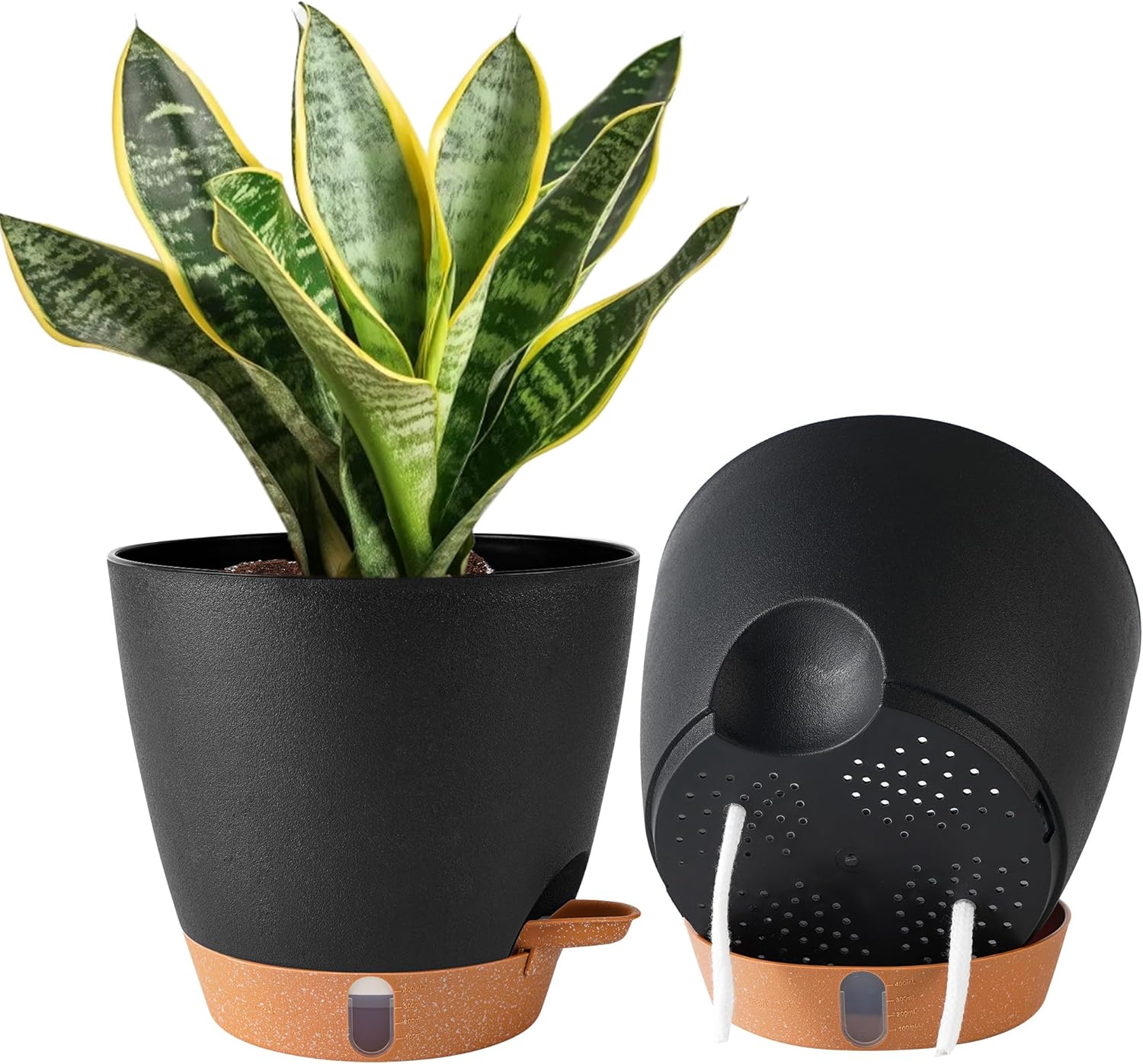
Fielda 8 Inch Self-Watering Plastic Planter — 2‑Pack with Tray and Saucer
| Capacity | 6.6 liters |
|---|---|
| Material Type | Plastic |
| Other Special Features of the Product | Breathable, Drainage Hole, Portable, Self Watering |
| Included Components | Tray, Saucer |
| Indoor Outdoor Usage | Indoor, Outdoor |
These Fielda 8-inch planters are designed to simplify everyday plant care with a built-in self-watering system and a clear water-level window that shows when the reservoir needs topping up. Typical use is potting houseplants, small patio specimens, or moving nursery pots into a slightly larger container; the included saucers make them easy to place on furniture or a balcony. Notable features are the cotton-wick feed that can sustain plants for several days, multiple drainage holes and a breathable mesh that help prevent waterlogging, and a thick, UV-resistant plastic body that withstands light outdoor exposure. In practice the clear indicator and removable tray save time and reduce guesswork about watering frequency, which is helpful for busy or cautious plant owners. Important limitations are that these are plastic planters so they retain heat in full sun and they suit small to medium plants rather than large specimens. Also the self-watering reservoir requires occasional cleaning to avoid algae buildup.
Best for: Buyers who want a low-effort, reliable planter that prevents over- and underwatering and suits everyday houseplants or small balcony containers with minimal fuss.
Less Ideal for: Gardeners seeking heavy-duty decorative pots for large outdoor plants or those who prefer porous materials like terra cotta for moisture-sensitive species should consider other options.
- Self-watering reservoir with cotton-wick feed reduces daily watering tasks
- Visible water level window makes hydration status easy to monitor
- Multiple drainage holes and breathable design help prevent root rot
- Durable thick plastic with UV resistance for indoor or light outdoor use
- Removable saucer tray simplifies mess-free placement and cleaning
- Plastic construction can heat up in strong direct sun and is less insulating than ceramic or clay
- Reservoir and wick need occasional cleaning to prevent algae or blockages
Verdict: If you want a fuss‑free, visible self‑watering system for everyday houseplants or small balcony containers, these 8‑inch Fielda planters make plant care much simpler.
Choosing the Right Planter for Spider Plant: Key Factors to Consider
Drainage and Overflow
Spider plants are sensitive to root rot when water pools at the pot base. A planter with a drainage hole and enough space below for excess water prevents prolonged saturation. Some planters include saucers or built-in reservoirs that separate roots from standing water while still allowing periodic moisture uptake.
When a pot lacks a hole, you will rely on very careful watering and faster-drying media, which increases the risk of under- or over-watering. For most indoor situations, choose a planter that makes it easy to flush the soil and discard surplus water without disturbing the plant.
Pot Size and Root Volume
Spider plants prefer slightly snug pots rather than enormous containers. A pot that is too large holds excess moisture and slows drying, while an undersized pot restricts root growth and leads to frequent watering and reduced vigor. Consider the plant's current root mass and allow room for at least one season of growth when choosing diameter and depth.
For pups and young plants pick a smaller pot to encourage root branching. For established clumps select a pot that provides 2 to 4 inches of extra diameter beyond the root ball so the plant can fill the space without staying waterlogged.
Material Breathability and Heat Regulation
Pot material affects how quickly soil dries and how roots experience temperature. Unglazed terracotta breathes and wicks moisture, helping prevent overwatering in warm, bright rooms. Glazed ceramic and certain plastics retain moisture longer and can be useful in dry homes or cooler rooms but require more attention to drainage.
Materials also impact weight and placement choices. Heavy materials stabilize large hanging clumps but make repositioning harder. Lightweight materials are easier to hang and move but may tip if the plant becomes top-heavy.
Shape and Root Architecture
The internal shape of a planter determines how roots spread and where moisture accumulates. Wider, shallower pots encourage lateral root growth and can suit spreading spider plants, while deeper pots accommodate longer roots and reduce surface drying. Tapered pots may concentrate roots toward the center and change watering frequency.
Select a shape that matches how you display the plant. For hanging arrangements, a more compact, deeper pot often keeps the crown away from rim edges and reduces stress on the root ball.
Ease of Repotting and Maintenance
Spider plants are often divided or repotted when pups develop or when roots become pot-bound. A planter that allows easy access to the root ball saves time and reduces transplant shock. Features like removable inner liners or lightweight construction make repotting and root inspection simpler.
Consider whether the planter design lets you slip the root ball out without disturbing the crown. Also think about whether the pot surface is easy to clean and whether saucers or trays can be removed for washing.
Hanging, Placement, and Aesthetics
Many gardeners display spider plants in hanging positions where light and airflow suit their trailing habit. The planter should work with the hardware you have, be balanced when the plant is full, and be resistant to sun fading if placed in bright light. For tabletop displays, choose a stable base and a shape that prevents tipping as the plant grows.
A planter's appearance matters, but prioritize functional features that support plant health. Consider how the pot coordinates with moss or topdressing choices, and whether its finish tolerates occasional misting or fertilizing without staining.
Best Planter Materials for Spider Plant Health
Material choice shapes how often you water and how roots temperature-fluctuate. Unglazed terracotta breathes and speeds drying, which helps prevent root rot in humid homes. Ceramic with a glazed finish holds moisture longer and can be helpful in dry spaces or during winter when evaporation is slower.
Lightweight plastic and resin planters are practical for hanging and for moving plants to follow light. If you choose a nonporous material, pair it with reliable drainage and check soil moisture before watering to avoid overwatering.
- Unglazed terracotta: good breathability, dries faster
- Glazed ceramic: retains moisture, stable and decorative
- Plastic/resin: lightweight for hangers, may retain moisture
Sizing Tips for Young Plants and Mature Clumps
Match pot diameter to the root ball plus modest extra room. Young spider plants and pups do better in smaller pots that encourage root branching; an oversized pot keeps soil too wet and slows development. For mature clumps, choose a pot that gives several inches of new space so you can delay repotting at least one season.
When in doubt, increase diameter gradually rather than jumping multiple sizes. If the plant is root-bound and you want faster recovery, choose a slightly larger pot and refresh part of the media to improve drainage and aeration.
- Small/pups: compact pots to promote branching
- Established clumps: allow 2-4 inches extra diameter
- Avoid dramatically oversized pots that hold excess water
Hanging Planters and Hardware Considerations
Spider plants are commonly displayed in hanging baskets where their arching foliage and pups are showcased. Make sure the planter pairs with secure hanging hardware rated for the filled pot weight. Consider planters with integrated hanger points or those that sit in a macrame or basket support.
Lightweight planters reduce strain on hooks and ceiling mounts, but ensure the container balances when the plant becomes top-heavy. If you prefer to rotate plants between hanging and tabletop displays, choose pots that are easy to detach from their hangers.
- Check weight rating for hooks and anchors
- Prefer balanced shapes that do not tip when full
- Look for removable liners or inner pots for easy watering
Soil Mix and Pot Interaction
The right potting mix interacts with the planter to determine drainage and nutrient retention. A well-draining mix with a proportion of coarse material prevents compaction in a breathable pot. In moisture-retentive containers, increase coarse components so the soil does not remain soggy.
Consider the practicality of refreshing the media. Planters that allow you to access and replace soil without damaging roots make seasonal repotting simpler and reduce stress on the plant.
- Use mixes with perlite or coarse sand for better drainage
- Adjust media composition depending on pot material
- Repot periodically to avoid compacted, depleted soil
Decorative Options That Do Not Compromise Function
Aesthetic finishes are important, but they should not override drainage and root health. Many decorative pots work well when used as cachepots with an inner draining container. This preserves the look while allowing proper water management.
If you use a decorative outer pot without drainage, plan to water inside a separate inner liner or take the plant to a sink to water and let it drain completely before returning it to the decorative container.
- Cachepot setups combine appearance with drainage
- Ensure inner pots fit with enough airflow around the root ball
- Avoid porous finishes that flake when watered frequently
How We Chose the Best Planter for Spider Plant
We focused on traits that matter in everyday spider plant care and excluded decorative items that lack basic functionality. Selection began with planters that provide effective drainage or built-in overflow systems and those sized appropriately for common spider plant stages, from young pups to mature clumps. We prioritized materials that influence moisture retention and root temperature, such as terracotta, glazed ceramic, and lightweight plastics suitable for hanging. Ease of repotting and access to roots was weighed, along with how a planter's shape supports healthy root architecture and prevents crown rot. Construction quality and durability mattered for hanging setups and frequent handling. We excluded purely ornamental containers without drainage, single-use or extremely shallow bowls, and planters that require complex assembly. Final picks balance breathable materials, correct volumes, and practical features gardeners rely on for consistent spider plant health.
FAQ
Do spider plants need special soil when repotted into a new planter?
They do best in a well-draining potting mix with some coarse material like perlite or orchid bark. The mix should hold moisture but not stay waterlogged, especially if the new planter retains water.
Can I use a decorative pot without a drainage hole for a spider plant?
You can if you use an inner pot with drainage or remove the plant to water and let it drain before returning it to the decorative container. However, planters without drainage increase the risk of root rot if watered in place.
What pot size is best when moving a spider plant from a small nursery pot?
Move up one pot size at a time, choosing a container only a few inches larger in diameter. This gives the roots room to grow without holding excessive moisture that delays drying.
Are hanging planters better than tabletop pots for spider plants?
Hanging planters showcase the plant's trailing habit and can provide better light and airflow, but both work well. Choose the type that suits your space and make sure the planter is secure and balanced when filled.
How often should I repot a spider plant into a larger planter?
Usually every one to three years depending on growth rate. Repot when roots circle the pot, the plant slows growth, or the soil becomes compacted and drains poorly.
Final Verdict
Prioritize drainage, appropriate pot size, and a material that matches your home environment when choosing a planter for a spider plant. Balance between breathability and moisture retention based on how often you can monitor and water. For hanging displays choose secure, lightweight options that stay balanced; for tabletop use choose stable pots with easy access for repotting. Focus on the functional tradeoffs that match your care rhythm and display needs. That approach leads to healthy spider plants with less fuss and fewer stress-related problems.
