

Note: This article contains affiliate links. If you click on these links and make a purchase, I may earn a small commission at no extra cost to you. This helps support my research and content. Read my full affiliate disclosure here.
Growing spinach in containers changes how you think about soil, light, and watering. The right planter for spinach makes it easier to manage shallow roots, avoid waterlogging, and reduce heat stress that causes early bolting. This guide shortlists seven top container options suited to growing spinach in small spaces, patio boxes, and balcony gardens. We evaluated options on drainage, soil depth, ease of access for harvesting, and durability to give you practical choices. Read on to see which planter traits matter most and which setups work best for continuous, cool-season spinach production.
Top Picks at a Glance
| Best Overall The best all-around choice for most situations | EZ Leafy Self-Watering Indoor Planter Box with Reservoir and Humidity Dome |  |
| Best Quality Built to a higher standard if you want something more solid | FEED GARDEN 5 Gallon Grow Bags, 4-Pack (300G Thickened Non-Woven Fabric) |  |
| Best Value The sweet spot between price and what you get | Jorvila 5 Gallon Fabric Grow Bags, 5-Pack |  |
| Best Budget The cheapest option that still gets the job done reliably | Land Guard 4-Pack 5-Gallon Nonwoven Fabric Grow Bags with Handles |  |
| Highest Rated A top-rated pick with lots of positive feedback | FULEIYA Fabric Raised Garden Bed Liner, Foldable 4ft x 2ft x 1ft |  |
| Most Popular A crowd favorite that many people choose with confidence | VIVOSUN 5-Pack 5-Gallon Fabric Grow Bags with Handles |  |
| Best Seller A high-volume bestseller chosen again and again | Land Guard Galvanized Oval Raised Garden Bed Kit (4×2×1 ft) |  |
EZ Leafy Self-Watering Indoor Planter Box with Reservoir and Humidity Dome

| Growing system | Soil-based with reservoir and wicking |
|---|---|
| Includes | Clear humidity dome |
| Intended crops | Leafy greens, lettuce, spinach, herbs |
| Use location | Countertop and windowsill |
The EZ Leafy planter is a countertop soil-based kit built to simplify growing spinach, lettuce and kitchen herbs indoors. It uses a built-in reservoir and wicking system to keep the soil evenly moist so seedlings and shallow-rooted leafy greens get steady hydration without daily watering. The included clear humidity dome speeds germination and protects tender seedlings during the first weeks, and the compact rectangular shape fits on windowsills or small kitchen counters. For real-soil flavor and nutrition this planter is better than hydroponic trays, and the reservoir reduces overwatering risk while extending times between refills. Limitations are its small footprint, which restricts how many plants you can grow at once, and that heavy feeders or deep-rooted crops will quickly outgrow the box. Plants also still need appropriate light and occasional fertilizing to reach full leaf production. For someone wanting reliable, low-maintenance spinach and herb starts in tight indoor spaces, this makes growing fresh greens straightforward and attractive.
Best for: Buyers who want an easy, low-maintenance way to grow spinach and fresh herbs indoors on a windowsill or countertop and value real soil flavor and straightforward seed starting.
Less Ideal for: Gardners who need high-volume production or want to grow larger root or fruiting vegetables should choose larger containers or outdoor beds.
- Built-in water reservoir and wicking system for consistent soil moisture without daily watering
- Soil-based growing gives better flavor and nutrition for leafy greens compared with soilless trays
- Clear humidity dome speeds seed germination and protects seedlings
- Compact countertop design fits windowsills and small kitchens and looks attractive
- Small planting area limits the number and size of mature plants you can grow
- Not suitable for deep-rooted or heavy-feeding vegetables
Verdict: A compact, soil-based self-watering planter that makes starting and maintaining spinach and herbs indoors simple and low-maintenance.
FEED GARDEN 5 Gallon Grow Bags, 4-Pack (300G Thickened Non-Woven Fabric)

| Capacity | 5 gallons |
|---|---|
| Material Type | Nonwoven |
| Number of Pieces | 4 |
| Other Special Features of the Product | Breathable, Drainage Hole, Lightweight, Portable, Weather Resistant |
| Indoor Outdoor Usage | Indoor, Outdoor |
These FEED GARDEN 5 gallon grow bags are a practical choice for small-space vegetable and herb gardening. Made from 300 g/m² nonwoven fabric, the bags hold their shape when filled and let excess water and air move through the entire wall so roots are air-pruned rather than circling. Each set includes four bags with reinforced double-stitched webbing handles that are rated for heavy lift, which makes repositioning containers on a balcony or patio straightforward. Typical use is filling with potting mix for herbs, salad greens, strawberries and compact peppers; the 5 gallon capacity and roughly 10 inch depth suit shallow-rooted crops. Because fabric walls drain across the surface, you get fewer standing-water problems but should place a tray underneath for indoor use. The bags fold flat for offseason storage, saving space compared with rigid pots. Limitations are the shallow depth for big crops like tomatoes or potatoes and the fabric surface will eventually show wear after multiple seasons if left constantly exposed to sun and abrasion.
Best for: Gardeners who want a space-saving, reusable container for herbs, salad greens, strawberries and other shallow-rooted crops and who value easy mobility and breathable soil conditions.
Less Ideal for: Growers planning to raise large, deep-rooted vegetables or full-size tomatoes should choose larger capacity or deeper containers instead.
- Thicker 300 g/m² nonwoven fabric holds shape and resists tearing compared with thinner bags
- Fabric walls provide full-surface drainage and air-pruning to reduce root circling and root rot
- Double-stitched reinforced handles support moving filled bags around the garden
- Folds flat for compact offseason storage, ideal for small patios and apartments
- 10.2 inch depth is too shallow for full-size tomatoes, large potatoes, or other deep-rooted crops
Verdict: A durable, space-efficient 4-pack of 5 gallon fabric grow bags that improve root health and make portable container gardening easy.
Jorvila 5 Gallon Fabric Grow Bags, 5-Pack
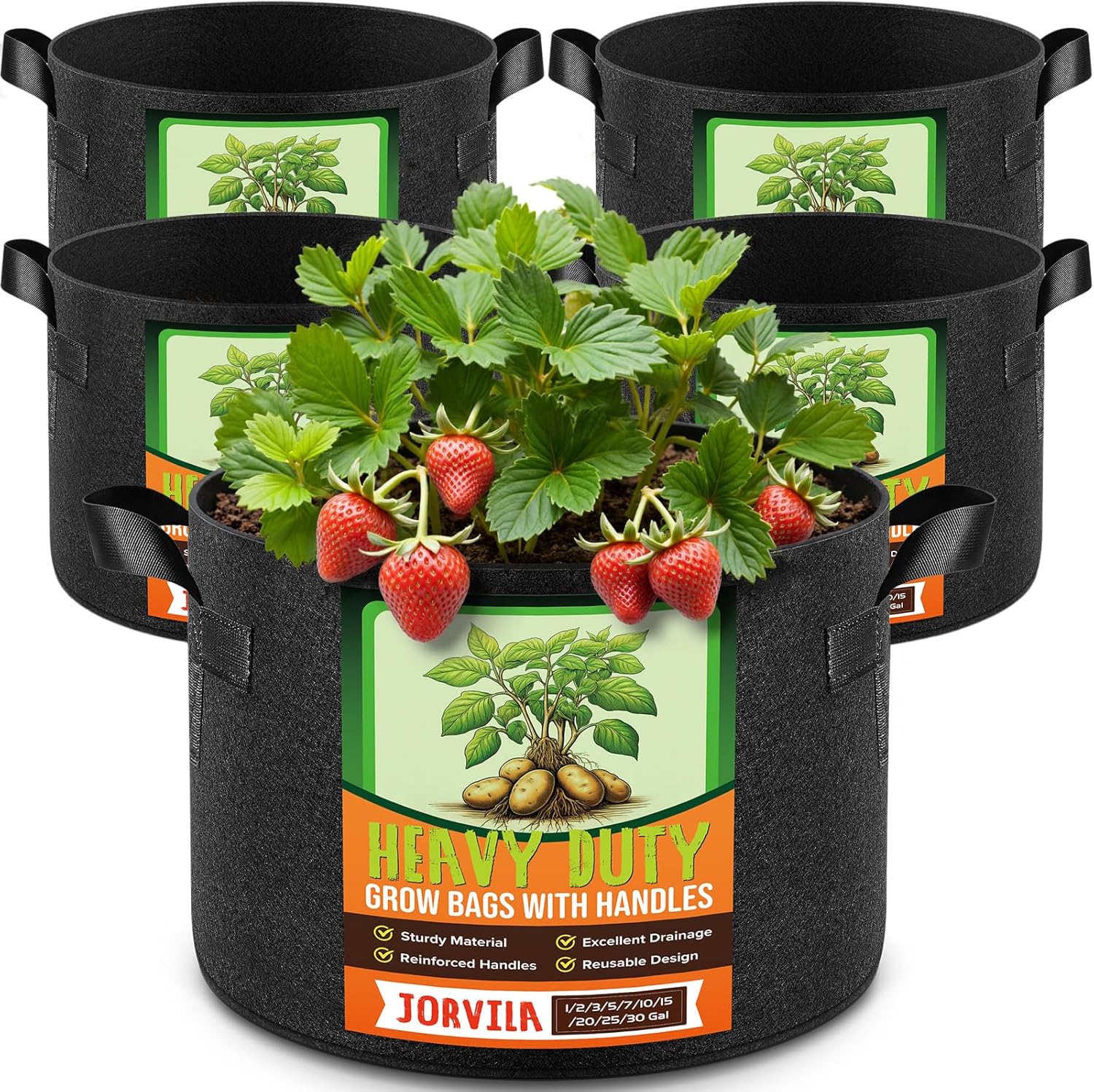
| Capacity | 5 gallons |
|---|---|
| Unit Count | 5 Count |
| Material | 300G nonwoven fabric |
| Indoor Outdoor Usage | Outdoor |
| Other Special Features of the Product | Breathable |
These Jorvila 5 gallon fabric grow bags are practical containers for growing tomatoes and other vegetables in limited space. Made from breathable nonwoven fabric, they encourage air pruning and improved root structure while providing excellent drainage to reduce overwatering problems. Each bag has reinforced, widened handles with X-stitching and double-stitched seams so you can move plants around your patio or deck without tearing the fabric. In typical use you fill them with a quality potting mix, plant tomato seedlings and water as needed; the breathable sides keep soil temperature more moderate than plastic pots and help roots stay healthy. The 5 gallon shape is shorter and wider than a standard bucket, so they suit determinate or smaller tomato varieties better than large indeterminate plants that need more volume. These bags are washable and reusable if emptied and fully dried after the season, but they will eventually wear faster than rigid containers and are not a replacement for very large, long-term planters for heavy feeders.
Best for: Home gardeners optimizing space and value who want easy-to-move, breathable containers for patio or container tomato production, especially for smaller or determinate varieties.
Less Ideal for: Growers planning to grow large indeterminate tomato cultivars or who prefer a rigid long-term planter for heavy feeding crops should consider larger or sturdier alternatives.
- Breathable fabric promotes air pruning and healthier root systems
- Good drainage reduces risk of overwatering
- Reinforced handles and double-stitched seams make moving full bags practical
- Washable and reusable for multiple seasons
- Suitable for outdoor vegetable use including tomatoes
- 5 gallon shape is relatively shallow so not ideal for large indeterminate tomato varieties
Verdict: A cost-effective, breathable and portable 5-pack of fabric grow bags that makes growing tomatoes in small outdoor spaces simple and space-efficient.
Land Guard 4-Pack 5-Gallon Nonwoven Fabric Grow Bags with Handles

| Capacity | 18.93 liters |
|---|---|
| Number of Pieces | 4 |
| Material Type | Nonwoven Fabric |
| Other Special Features of the Product | Breathable |
| Indoor Outdoor Usage | Outdoor |
These Land Guard grow bags are simple, inexpensive containers for growing herbs and small vegetables in limited space. The nonwoven fabric lets air and water pass through the soil, which reduces root circling and improves drainage so herbs like basil, parsley, and thyme establish healthier root systems. Each set includes four 5‑gallon bags with reinforced handles that make moving filled bags easier for repositioning or harvesting. The material is lightweight and folds flat for storage when not in use, and the breathable fabric provides modest insulation for roots during warm weather. Expect them to last multiple seasons with gentle use but know they are not indestructible; rough edges, constant sun exposure, or heavy abrasion can shorten their life. These are best for small-scale container herb gardens on patios, balconies, or raised beds where cost and portability matter more than decorative appearance or long-term commercial durability.
Best for: Budget-minded home gardeners who want an easy, portable way to grow several culinary herbs in containers on a patio, balcony, or small garden area.
Less Ideal for: Those seeking decorative or long-lasting hard planters for permanent displays or commercial growers who need very heavy-duty containers.
- Breathable nonwoven fabric improves drainage and reduces root circling.
- Includes reinforced handles for easier lifting and repositioning filled bags.
- Pack of four gives multiple planting spots for a small herb collection.
- Lightweight and foldable for compact storage when not in use.
- Material is not as durable as rigid planters and can wear faster with heavy use.
- Not decorative—plain utilitarian look that may not suit all outdoor aesthetics.
Verdict: An affordable, practical set of breathable 5‑gallon grow bags that gives budget gardeners a quick way to start a small container herb garden.
FULEIYA Fabric Raised Garden Bed Liner, Foldable 4ft x 2ft x 1ft

| Capacity | 48 gallons |
|---|---|
| Material Type | Fabric |
| Mounting Type | Floor Standing |
| Other Special Features of the Product | Foldable |
This fabric raised garden bed liner is a lightweight, foldable insert intended to sit inside a raised bed or be used on a deck or balcony for shallow-rooted vegetables like spinach. Made from non-woven fabric, it breathes and drains well so roots get air while the liner helps keep soil from washing away during watering or rain. Reinforced stitched handles make it easy to move or reposition the liner when planting or rotating crops, and the foldable construction stores flat when not in use. Practical benefits for spinach growers include good moisture balance and protection from soil loss, which support steady leaf production. Limitations to note are that the fabric is best for shallow or medium-depth root systems and will need a supportive frame or surface underneath to keep its shape when filled, and it does not provide rigid sides for heavy soils or very tall plantings.
Best for: Gardeners who prioritize a reliable, low-maintenance solution for growing leafy greens in small outdoor spaces and want consistent drainage and soil retention without heavy assembly.
Less Ideal for: Growers who need a permanent, rigid raised bed for heavy soils or deep-rooted vegetables should choose a solid-sided planter instead.
- Breathable fabric construction promotes drainage and root aeration
- Foldable design stores flat and saves space when not in use
- Reinforced stitched handles make moving and repositioning easy
- Helps prevent soil washing out, keeping planting areas cleaner
- Not rigid so requires a frame or solid surface to hold its shape when filled
- Better suited to shallow or medium-root crops rather than deep-rooted plants
Verdict: A dependable, breathable fabric liner that keeps soil in place and maintains good drainage for consistently healthy spinach in small raised beds or containers.
VIVOSUN 5-Pack 5-Gallon Fabric Grow Bags with Handles

| Capacity | 5 Gallons |
|---|---|
| Material Type | Nonwoven fabric |
| Included Components | 5 Bags |
| Indoor Outdoor Usage | Indoor, Outdoor |
| Other Special Features of the Product | Drainage Hole |
These VIVOSUN grow bags are basic, reliable fabric planters for small- to medium-sized container crops. Made from 300g nonwoven fabric they breathe and drain well, which helps keep roots cooler and reduces waterlogging compared with plastic pots. The set includes five 5-gallon bags that work for vegetables, herbs, and annual flowers in raised beds, patios, or a grow tent. Notable features are reinforced serged handles that make filled bags easier to move and a built-in drainage hole to prevent standing water. Because the fabric encourages air pruning, you can develop a healthier, fibrous root system and reuse the bags for multiple seasons with reasonable care. Limitations are the modest 5-gallon capacity, which is not suitable for large shrubs or trees, and the fabric will eventually show wear if left constantly exposed to UV and abrasion. Occasional hand-washing and storing them out of direct sun when not in use will extend their life.
Best for: Buyers who prioritize proven, well-reviewed basics and want a reliable set of breathable containers for vegetables, herbs, or patio flowers that are easy to move and reuse.
Less Ideal for: Not a good choice for gardeners who need large containers for trees or permanent decorative pots that must withstand long-term outdoor exposure.
- Breathable nonwoven fabric improves drainage and root aeration
- Reinforced serged handles make moving filled bags practical
- Reusable construction for multiple seasons with proper care
- Built-in drainage hole reduces risk of waterlogging
- 5-gallon size limits use to small- and medium-rooted plants
- Fabric will degrade faster than rigid pots if left in constant sun or abrasive conditions
Verdict: A dependable, well-made 5-pack of breathable grow bags that gives risk-conscious gardeners a proven, easy-to-handle solution for small to medium container plants.
Land Guard Galvanized Oval Raised Garden Bed Kit (4×2×1 ft)

| Material Type | Metal |
|---|---|
| Finish Types | Double-layer galvanized |
| Capacity | 7.14 cubic feet |
| Mounting Type | Floor Standing |
This Land Guard raised garden bed is a simple, durable option for planting vegetables, herbs, or mixed annuals in a compact outdoor space. The kit arrives as flat panels that assemble into an oval planter about 4 by 2 feet and 1 foot deep, and setup is straightforward so you can fill and plant in minutes. Its double-layer galvanized steel construction and wave-shaped panels are intended to resist corrosion and add rigidity, and the manufacturer states thicker panels at stress points to reduce deformation. An open base design lets excess water drain and helps avoid root rot if placed on soil or lawn. Practical benefits include low maintenance, a tidy planted border that keeps soil contained, and a metal finish that lasts longer than untreated steel. Limitations are the shallow depth for deep-rooted crops and the likelihood the metal will warm quickly in hot sun, which may require more frequent watering or shade management. It is best used as a portable, long-lasting planter for raised-bed style container gardening rather than a full replacement for deeper in-ground beds.
Best for: Gardeners who want a quick-to-assemble, durable raised planter to grow vegetables or herbs in small outdoor spaces and who prioritize evidence of longevity over decorative complexity.
Less Ideal for: Growers who need deep soil for large root crops, or those looking for insulated or fully enclosed beds to control soil temperature and moisture long-term.
- Galvanized double-layer steel resists corrosion for multi-season outdoor use
- Oval, interlocking panel design assembles quickly with included tools
- Open base allows natural drainage to reduce standing water and root rot
- Compact footprint fits small patios, balconies, and tight garden beds
- Only 12 inches deep which limits planting of larger, deep-rooted vegetables or shrubs
- Metal surface can heat up in full sun and increase watering needs
Verdict: A tough, easy-to-assemble galvanized oval raised bed that gives small-space gardeners a durable, low-maintenance container for vegetables and herbs.
Choosing the Right Planter for Spinach: Key Factors to Consider
Soil Depth and Root Volume
Spinach has relatively shallow roots but still benefits from consistent soil volume for steady moisture and nutrient supply. A planter that provides at least a few inches of usable soil ensures seedlings establish quickly and that mature leaves get steady water between irrigations.
Too-shallow containers force frequent watering and increase stress during warm spells, which triggers bolting. Conversely, very deep pots can retain more water than needed and take longer to warm in spring. Aim for a balance: enough depth for 2 to 3 weeks of growth without daily watering, but not so deep that the root zone becomes physiologically disconnected from the surface.
Drainage and Water Management
Good drainage prevents crown rot and root suffocation. Planters should allow excess water to escape while letting the soil hold enough moisture for leafy growth. Look for containers with multiple drainage holes or designs that raise the root zone above standing water.
Consider planters that pair well with a well-draining potting mix and incorporate a shallow reservoir or saucer only when you can control standing water. Predictable drainage reduces the risk of overwatering during cool, low-evaporation periods that spinach often prefers.
Thermal Performance and Material
Material affects how quickly the soil warms and cools. Spinach prefers cool conditions; materials that overheat or cool too fast can stress plants. Dark thin plastics and uninsulated metal containers can heat up on sunny days and push spinach into bolting. Thick-walled plastics, wood, or insulated planters moderate temperature swings better.
Also weigh freeze-thaw durability if you plan to extend the season. Some materials crack or warp after repeated cold cycles, which shortens planter lifespan and can create drainage problems.
Ease of Planting, Thinning, and Harvesting
Spinach planting often involves dense sowing, successive thinning, and frequent harvests. Planters that allow comfortable access-whether on a raised stand, balcony railing, or tabletop-make these tasks quicker and reduce damage to other plants.
Wide, shallow trays facilitate broadcast sowing and cutting outer leaves. Narrow, deep pots are less efficient for multiple heads or successive sowings but can work when space is limited. Consider how you will reach the greens for regular harvest without stepping on nearby beds or stretching over railings.
Mobility and Placement Flexibility
Being able to move planters matters for managing light and temperature. Spinach benefits from morning sun and afternoon shade in warm climates. Lightweight or wheeled planters let you shift containers seasonally or to protect plants from heat spikes.
Mobility also helps with pest management and winter storage. Fixed or very heavy planters restrict placement choices and complicate adjustments when a balcony area gets hotter or shadier through the season.
Maintenance and Longevity
Consider how easy the planter is to clean between crops to avoid disease carryover. Smooth surfaces, removable liners, and materials resistant to mold and rot simplify sanitation. Also check for typical wear points such as thin plastic edges, untreated wood that can rot, or metal that corrodes.
Long-lasting planters reduce replacement frequency and ensure consistent growing conditions over multiple seasons. Think about how often you will empty and refresh potting mix and whether the container design supports that workflow.
Best Planter Shapes for Continuous Spinach Harvests
Shallow rectangular troughs and wide planting trays are ideal for succession sowing because they provide an even surface for scattering seed and allow multiple rows. These shapes make it easy to thin and harvest without disturbing adjacent seedlings.
Round and square pots work when you have very limited space, but they are less efficient for multiple plants. If using those forms, place several together to mimic a trough and facilitate staggered sowing.
- Troughs: good for multiple rows and succession sowing
- Trays: best for cut-and-come-again harvesting
- Individual pots: useful for tight spaces or experimental varieties
Container Placement and Light Considerations
Spinach prefers bright, indirect light and tolerates some morning sun. On balconies and patios, orient planters to catch morning sun and avoid hot afternoon exposure. If you have only full-sun locations, use planters with shading options or moveable covers to prevent heat stress.
Place planters where air circulates to reduce disease pressure, but avoid spots where wind will desiccate young seedlings. Adjustable placement helps extend the growing window into early summer or late fall.
- Morning sun, afternoon shade is ideal
- Good air flow reduces fungal issues
- Moveable planters offer seasonal flexibility
Soil Mix and Fertility Tips for Containers
A light, well-draining potting mix keeps roots oxygenated while retaining sufficient moisture. Incorporate compost for fertility and a slow-release balanced fertilizer to support continuous leaf production. Avoid heavy garden soil that compacts in containers.
Top-dress with compost or liquid feed every few weeks during peak growth. Because containers have limited nutrients, plan for regular feeding to prevent pale, slow-growing spinach.
- Use a loose potting mix with compost
- Apply balanced feeding on a schedule
- Avoid compacted heavy soils
Season Extension Strategies
Use insulated planters, shade cloth, or strategic placement to keep soil cool and delay bolting as temperatures rise. In spring and fall, a raised or dark-colored planter can help soil warm earlier, giving you a head start on planting.
For winter growing, protect containers from freezing by moving them to sheltered spots or using frost cloth. Be mindful that some planter materials do better in freeze-thaw cycles than others.
- Shade cloth helps reduce heat stress
- Insulated planters moderate temperature swings
- Move planters indoors or to sheltered spots in winter
Watering Routines That Work in Containers
Establish a consistent watering routine rather than daily fixed schedules. Check soil moisture with your finger or a probe; containers dry at different rates depending on size and material. Water thoroughly until excess drains, then allow the top inch of soil to dry slightly.
Consider self-watering planters or adding a capillary mat for very shallow trays. These systems cut down daily attention while keeping moisture steady for leafy growth.
- Water deeply and check soil moisture
- Self-watering systems help maintain steady moisture
- Adjust frequency with temperature and wind
How We Chose the Best Planter for Spinach
We selected planters that match the specific requirements of spinach production in containers and excluded designs meant for long-term tree or shrub culture. Primary filters included container depth and soil volume because spinach needs shallow but consistent root space; drainage performance to prevent waterlogged crowns; material and thermal behavior since thin plastics or metal can overheat soil; and access for seeding, thinning, and harvesting. We also evaluated ease of cleaning and winter storage, plus whether common potting mixes and fertility tweaks fit each planter style. We excluded planters that lacked minimum recommended soil depth or had sealed bottoms that prevent adequate drainage. We also removed designs requiring specialized hardware or permanent installation, since most spinach growers prefer portable, manageable containers. The result is a list focused on practical container designs that suit succession sowing, cool-season management, and straightforward maintenance.
FAQ
How deep should a planter be for growing spinach?
A planter that gives about 6 to 8 inches of usable soil depth is usually sufficient for spinach. This depth supports seedlings and small mature plants while allowing adequate moisture retention without excessive volume that warms slowly.
Can I grow spinach on a sunny balcony?
Yes, but avoid full afternoon sun in warm months. Provide morning sun and afternoon shade or use a taller planter that shelters the crowns. Shading and monitoring soil temperature help prevent premature bolting.
Are self-watering planters a good choice for spinach?
Self-watering planters can be helpful because spinach benefits from steady moisture. They reduce the risk of drying between waterings, but you must monitor for overwatering and ensure good drainage above the reservoir.
What potting mix works best for container spinach?
A light, well-draining potting mix blended with compost is best. Avoid heavy garden soil. The mix should hold moisture while remaining airy so roots get oxygen and nutrients without waterlogging.
How often should I fertilize spinach in a planter?
Usually every 2 to 4 weeks with a balanced liquid feed or a light side dressing of compost works well. Container-grown spinach has limited nutrient reserves, so periodic feeding supports continuous leaf production.
Can I reuse potting soil from a previous spinach crop?
You can reuse potting mix after removing roots and refreshing it with compost or slow-release fertilizer, but sanitize or fully replace heavily diseased or pest-infested soil. Replenishing organic matter restores fertility and structure.
Final Verdict
Choosing the right planter for spinach means balancing soil depth, drainage, and thermal behavior against your available space and routine. Prioritize containers that provide moderate soil volume, reliable drainage, and placement flexibility to manage light and temperature. Focus on planter traits that support steady moisture, easy harvesting, and season extension rather than chasing uncommon features. With the right container and simple cultural practices, you can maintain a productive, slow-bolting spinach crop in small-space gardens.
