

Note: This article contains affiliate links. If you click on these links and make a purchase, I may earn a small commission at no extra cost to you. This helps support my research and content. Read my full affiliate disclosure here.
A sunny balcony can be one of the most productive spots for container gardening if you choose plants adapted to full sun. Picking the right species matters because intense afternoon light, reflected heat from buildings, and limited root volume change how plants use water and nutrients. This guide focuses on the top shortlisted choices that thrive in full-sun balcony conditions and explains the traits that make them reliable in pots and planters. We evaluate candidates for drought tolerance, container performance, and seasonal color so you can pick plants that match your watering routine and aesthetic goals. Below are the six best plant types for balcony full sun, followed by practical advice for care, container selection, and seasonal management.
Top Picks at a Glance
| Best Overall The best all-around choice for most situations | Plants by Mail Star Jasmine 'Large Leaf' (2.5 qt) Evergreen Vining Plant |  |
| Best Quality Built to a higher standard if you want something more solid | Southern Living Obsession Nandina 2 Gal. Shrub |  |
| Best Value The sweet spot between price and what you get | BuggyBeds Starry Sky Petunia Seeds (500) – Variegated Trailing Petunia for Hanging Baskets |  |
| Best Budget The cheapest option that still gets the job done reliably | BuggyBeds Double Dwarf Petunia Seeds (300+), Mixed Colors |  |
| Highest Rated A top-rated pick with lots of positive feedback | CitronellaKing Hesperaloe (Red Yucca) — 2 Live Starter Plants |  |
| Most Popular A crowd favorite that many people choose with confidence | The Three Company Lavender (2-Pack) Live Fragrant Purple Perennials in 1-Qt Pots |  |
Plants by Mail Star Jasmine 'Large Leaf' (2.5 qt) Evergreen Vining Plant

| Expected Blooming Period | Spring to Summer |
|---|---|
| Sunlight Exposure | sun to partial shade |
| USDA Hardiness Zone | 9 |
| Moisture Needs | Moderate Watering |
This large-leaf Star Jasmine is a twining evergreen vine valued for its glossy foliage and strongly scented white, star-shaped flowers. It is typically grown on a trellis, fence, or in a large container on a sunny balcony where it can climb or be trained as a cascading element. Notable features include vigorous growth to roughly 18–20 feet when supported, a preference for full sun to partial shade for best flowering, and moderate water needs with routine fertilizing during the growing season. In practice the plant establishes quickly and creates an evergreen screen or fragrant focal point within a single season if given support and regular watering. Limitations are its USDA hardiness around zone 9 and above, so it is best for warm climates or sheltered balcony microclimates, and it will need seasonal pruning to keep size and shape manageable in container settings. Buyers should expect to provide a sturdy support and follow the watering schedule the first two seasons for reliable establishment.
Best for: Sun-loving balcony gardeners who want a fast-growing, fragrant evergreen vine to climb a trellis or spill from a large container and are willing to prune and water for establishment.
Less Ideal for: People in cold climates without a protected microclimate or gardeners who prefer strictly low-maintenance, non-climbing plants for small balconies.
- Strong fragrance that attracts pollinators and creates a pleasant balcony scent
- Glossy evergreen foliage provides year-round screening or a lush backdrop
- Vigorous climber that establishes quickly on trellises or railings
- Performs well in full sun where it produces the most blooms
- Not reliably hardy below warm USDA zones so needs protection in cold climates
- Requires regular pruning to control vigorous growth in containers
Verdict: Choose this Star Jasmine if you want a fast-growing, fragrant evergreen vine that makes a sunny balcony feel lush and private.
Southern Living Obsession Nandina 2 Gal. Shrub

| Sunlight Exposure | Full Sun to Part Shade |
|---|---|
| USDA Hardiness Zone | 6, 7, 8, 9, 10 |
| Moisture Needs | Moderate Watering |
| Other Special Features of the Product | Deer Resistant |
The Southern Living Obsession Nandina is a 2-gallon evergreen shrub grown for its year-round bright red foliage and compact habit. It performs well in full sun to part shade and is marketed for landscapes and containers, so it can be used on a sunny balcony or in the garden as a low-maintenance accent. Notable features include deer resistance, tolerance across USDA zones 6–10, and moderate moisture needs; the plant is described as organic and suitable for loam and well-drained soils. In practice it requires regular watering until established and then reduced frequency, and it stays relatively compact at about 48 inches so it fits into smaller spaces or large containers. Limitations are that it does not bloom with showy flowers and will need occasional pruning to maintain shape if used in tight balcony layouts. Buyers should also plan for winter hardiness only within the listed zones and provide good drainage in containers to avoid root issues.
Best for: Gardeners who need a low-maintenance, performance-oriented color accent for a sunny balcony or small landscape and who prioritize reliable foliage and hardiness over showy flowers.
Less Ideal for: Buyers seeking a prolific flowering shrub or those outside USDA zones 6–10 should consider other species better suited to heavy bloom or more extreme climates.
- Vibrant red evergreen foliage that provides season-long color
- Suitable for containers or landscape use thanks to a compact mature size
- Performs across USDA zones 6–10 so many climates are covered
- Deer resistant, reducing the need for protective measures
- No significant flowering display for those wanting ornamental blooms
- Requires well-drained soil and attentive watering in containers until established
Verdict: Choose this nandina when you want a compact, hardy evergreen with standout red foliage that performs reliably on a sunny balcony.
BuggyBeds Starry Sky Petunia Seeds (500) – Variegated Trailing Petunia for Hanging Baskets

| Indoor Outdoor Usage | Outdoor |
|---|---|
| Other Special Features of the Product | Attracts Pollinators |
| Sunlight Exposure | Full Sun |
| Material Features | GMO Free |
| Unit Count | 1 Count |
These Starry Sky petunia seeds produce variegated, multi-colored trailing petunias suited to hanging baskets and balcony planters in full sun. They are presented as 500 seeds that germinate into vigorous, freely flowering plants that tolerate heat and strong sunlight and attract pollinators. In use you would sow in seed-starting mix, transplant to well-draining container soil, and place baskets in a sunny spot where the trailing habit can spill over edges for visual impact. The practical benefits are fast, dense bloom coverage from spring through autumn and low maintenance once established, making them a good pick for busy gardeners or renters who want reliable color without fussy care. Limitations are that results depend on correct seed starting and local climate, individual plants may vary in variegation and color intensity, and the packet does not include growing instructions or guaranteed germination rate, so some sowing experimentation may be needed.
Best for: Gardeners who want low-maintenance, high-impact color for sunny balconies or hanging baskets and prefer a quantity of seeds for multiple containers or repeat plantings.
Less Ideal for: Those who need precise, uniform flower color or guaranteed germination for a one-time formal display should consider nursery-grown plants instead.
- Large seed count (500) provides enough plants for multiple hanging baskets or repeat plantings
- Heat and full-sun tolerance extends reliable bloom through hot seasons
- Trailing habit is well suited to balcony hanging baskets for good visual coverage
- Attracts pollinators, adding ecological value to sunny balconies
- No germination rate or detailed growing instructions provided on the listing
- Color and variegation are not uniform so individual plants may differ from images
Verdict: A cost-effective seed option for filling sunny balcony hanging baskets with long-blooming, heat-tolerant trailing petunias.
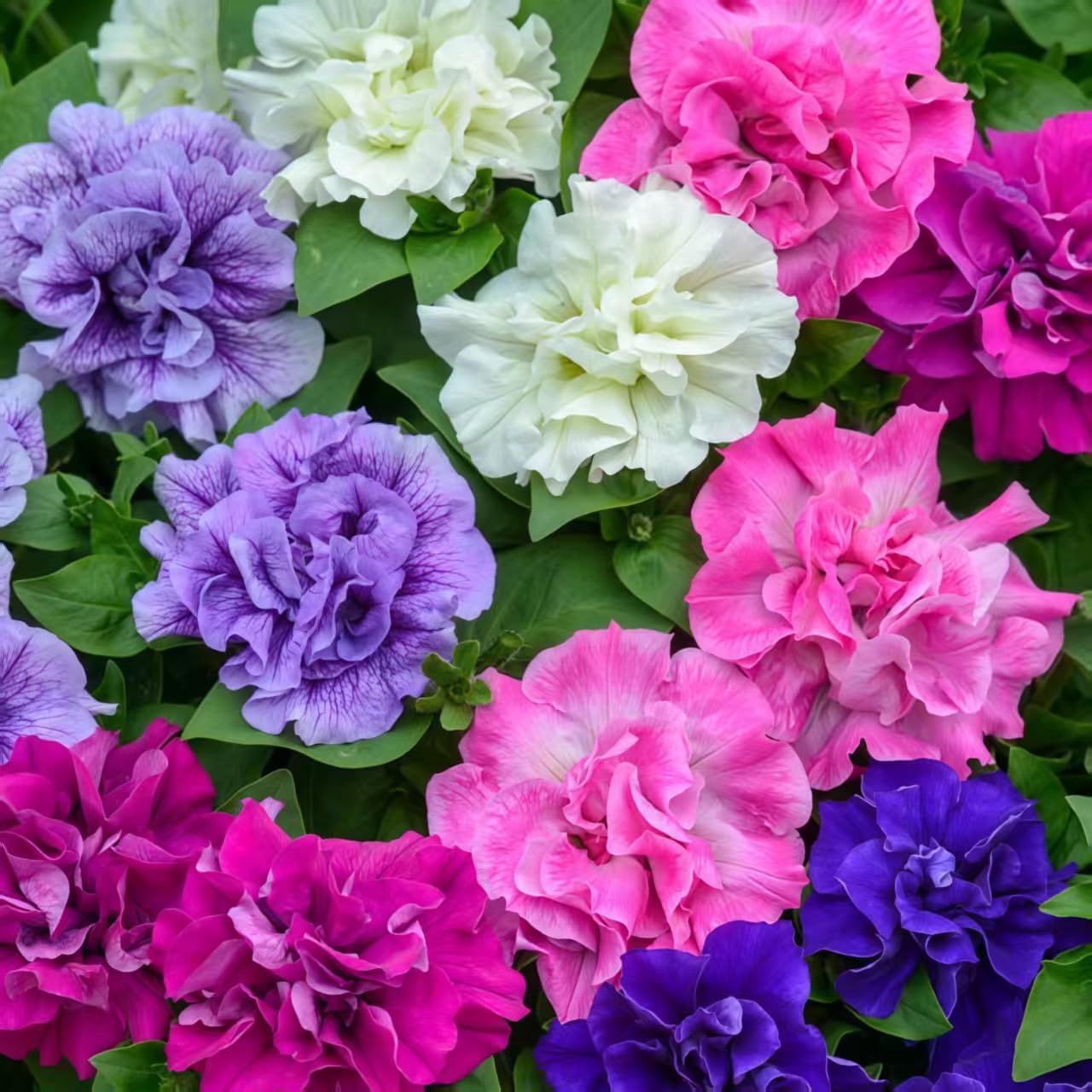
BuggyBeds Double Dwarf Petunia Seeds (300+), Mixed Colors
| Indoor Outdoor Usage | Indoor, Outdoor |
|---|---|
| Expected Blooming Period | Summer |
| Sunlight Exposure | Full Sun |
| Moisture Needs | Moderate Watering |
| Other Special Features of the Product | Attracts Pollinators |
These BuggyBeds double dwarf petunia seeds are aimed at filling small sunny spaces with continuous, colorful blooms. They produce compact plants suited to balcony containers and hanging baskets, flowering heavily from spring into summer and attracting bees and butterflies. The seeds are marketed for full sun and hot conditions and need moderate watering and regular fertilizing to maintain continuous blooms. Practical benefits include the compact habit that works well in limited balcony space and the low-maintenance requirement once established. Because the packet contains 300+ seeds, it is an economical choice for seeding multiple pots or scattering in a larger container. Limitations are that success depends on proper sunlight and moisture management and that color mix is not guaranteed per seed packet; also growing from seed requires more time and initial care than buying established seedlings. Expect a season of bright, small petunia flowers if you are willing to start from seed and keep soil evenly moist during establishment.
Best for: Buyers wanting an inexpensive way to fill sunny balcony pots or hangers with continuous summer color and who are comfortable starting plants from seed.
Less Ideal for: Those who need instant, guaranteed color or who prefer low-effort options like mature nursery plants that require no germination care.
- Large seed count provides value for multiple containers or reseeding
- Compact double dwarf habit fits small balconies and window boxes
- Heat and full-sun tolerance suits hot, sunny balcony exposures
- Attracts pollinators, adding ecological benefit to ornamental display
- Sold as seeds so plants take longer to establish than transplants
- Color mix is unspecified so exact bloom colors and ratios are not guaranteed
Verdict: A budget-friendly way to fill full-sun balconies with continuous, compact petunia blooms when you are willing to start and care for plants from seed.
CitronellaKing Hesperaloe (Red Yucca) — 2 Live Starter Plants

| Sunlight Exposure | Full Sun to Partial Shade |
|---|---|
| USDA Hardiness Zone | 5-11 |
| Expected Blooming Period | Spring, Summer, Fall |
| Soil Type | Well-Draining Soil |
| Moisture Needs | Moderate Watering |
These two Hesperaloe Red Yucca starters are hardy, low-maintenance perennials suited to sunny balconies and containers. Each plant establishes as a tidy clump of narrow, arching blue-green foliage and produces tall coral-red flower spikes that attract hummingbirds and add vertical interest. They are sold in 3.5" nursery cubes and are intended to be transplanted into well-draining potting mix or containers; care instructions recommend filtered sun at first and watering when the top inch of soil dries. Notable features are broad hardiness across USDA zones 5–11, strong drought tolerance once established, and multi-season bloom from spring through fall. Practical benefits for a balcony gardener include year-round structure, minimal watering needs, and reliable flowering with full sun exposure. Limitations are that mature plants can reach several feet tall and wide, so they need sufficiently large containers or regular trimming and may be less suitable for very small balconies where vertical height is constrained.
Best for: Buyers who prioritize dependable, low-care plants for sunny balcony containers and want long-lasting flowering and structural form without constant attention.
Less Ideal for: Not a great choice for very small balconies with strict height limits or for gardeners wanting instant, dense foliage cover without waiting for growth.
- Drought-tolerant and low-maintenance once established
- Attractive coral-red flower spikes that attract pollinators
- Wide USDA hardiness range (zones 5–11) for reliable outdoor performance
- Compact, evergreen basal rosette that stays tidy at the base
- Can grow several feet tall and wide, requiring large containers or pruning to control size
- Requires well-draining soil and some initial watering while establishing
Verdict: A reliable, low-water flowering perennial that gives sunny balconies strong vertical color and year-round structure with minimal fuss.
The Three Company Lavender (2-Pack) Live Fragrant Purple Perennials in 1-Qt Pots

| Sunlight Exposure | Full Sun |
|---|---|
| USDA Hardiness Zone | 5-9 |
| Moisture Needs | Low |
| Expected Blooming Period | Late Spring to Summer |
These lavender plants arrive as two 1‑quart pots of Lavandula Purple intended for outdoor planting in full sun. They are compact, mounded perennials that reach roughly 12–18 inches tall and are typically used in containers, balcony planters, or low hedge borders where their purple blooms and strong scent add visual and aromatic interest. The plants prefer well‑draining soil and low moisture once established, which makes them low‑maintenance for sunny balconies. Notable features include pollinator‑attracting flowers, deer‑deterring scent, and suitability for USDA zones 5–9, which covers many temperate climates. Because these are live plants shipped from a greenhouse, success depends on initial care during the first weeks after planting and ensuring pots have drainage. Plant size on arrival and bloom timing will vary by season, and buyers in very hot or very cold microclimates should adjust care accordingly. For small‑space gardeners wanting fragrant, drought‑tolerant color in full sun, these lavenders are a practical choice when tended promptly after delivery.
Best for: Gardeners with sunny balconies who want low‑maintenance, fragrant flowering plants that perform well in containers and attract pollinators.
Less Ideal for: People with shaded or mostly north‑facing balconies or those unwilling to water and pot the plants promptly after delivery.
- Compact habit suited to containers and balcony planters
- Fragrant purple blooms that attract pollinators
- Low water needs once established for easy care
- Shipped as live plants directly from greenhouse so you receive established starts
- Success depends on prompt transplanting and initial watering care after arrival
- Not suitable for shady balconies since it requires full sun
Verdict: A compact, fragrant lavender pair that gives sunny balconies long‑lasting color and low‑maintenance scent when planted in well‑draining containers.
Choosing the Right Plants for Balcony Full Sun: Key Factors to Consider
Drought Tolerance and Water Needs
Balconies in full sun dry out quickly because pots have limited soil volume and are exposed on all sides. Plants that tolerate occasional drying between waterings reduce the risk of stress during hot spells. Consider the plant's natural habitat: Mediterranean and xeric-origin species typically manage heat and low moisture better.
Even drought-tolerant plants need a consistent baseline of moisture in containers. Mulching the surface and using water-retentive potting mixes can extend the time between waterings without masking a plant's true need for occasional deep watering.
Container Size and Root Space
Root volume controls how long a container retains moisture and how fast a plant grows. A small pot will heat up and dry out faster, stressing large-rooted species. Choose plant types whose mature root demand matches the typical planter sizes you can fit on your balcony.
Think about eventual root crowding. Plants that tolerate root restriction or have compact root systems will stay healthier longer in small to medium planters, while larger or fast-spreading plants should be given bigger containers to avoid frequent repotting.
Sun and Heat Resistance
Full sun on a balcony often means high light intensity and temperature spikes, especially in afternoon sun. Plants vary in leaf structure, pigmentation, and stomatal behavior, which determine their ability to cope with intense radiation and heat. Choose species with reflective or thicker leaves, hairy or waxy surfaces, or naturally sun-adapted physiology.
Even sun-tolerant plants can suffer during heat waves, so plan for temporary shading or more frequent watering during extreme conditions.
Salt and Wind Exposure
Balconies can be windier than ground-level gardens, and buildings near roads or coasts may expose plants to airborne salts. Wind increases evapotranspiration and can cause physical damage or desiccation. Salt exposure damages leaf margins on sensitive species and can reduce growth.
Select plants with sturdy foliage or demonstrated tolerance to windy, exposed sites if your balcony faces open space or the sea. Use windbreaks, heavier pots, or grouped plantings to reduce wind impact and retain humidity around foliage.
Blooming Season and Ornamental Value
Because container space is limited, choose plants that offer good ornamental payoff for their footprint. Long-blooming species or those that provide multi-season interest from foliage, fragrance, or fruit make small spaces more rewarding.
Consider whether you want continuous summer color, seasonal peaks, or textural greenery. Mixing bloom times across several pots prolongs visual interest and spreads maintenance tasks across the season.
Maintenance and Fertility Needs
Plants in containers rely entirely on you for nutrients. Some species need steady feeding to maintain flowering or growth, while others tolerate leaner conditions. High-maintenance plants may need regular deadheading, pruning, or more frequent repotting.
Be realistic about the time you can spend caring for balcony plants. Choose lower-maintenance options if you travel frequently or prefer a low-effort balcony, and reserve higher-maintenance choices for dedicated container beds where you can fertilize and prune regularly.
Container and Soil Tips for Full-Sun Balconies
Quality potting mix and the right container make as much difference as plant selection. Use a well-draining potting mix blended with a moisture-retentive component, such as coconut coir or compost, to balance drainage and water-holding capacity.
Choose pots with adequate drainage holes and a volume suited to the plant's size. Heavy ceramic or composite pots are less likely to tip in wind and help buffer temperature swings. Consider double-potting or using saucers to lengthen intervals between waterings while avoiding root rot.
- Add a light layer of mulch to limit surface evaporation.
- Place pots where they receive morning sun if possible to reduce midday stress.
- Group pots to create microclimates that preserve humidity.
Watering Strategies for Hot, Sunny Exposures
Watering on a fixed schedule often fails in full sun because evaporation rates change with heat and wind. Check moisture by feeling the top and lower root zone and water deeply when the rootball begins to dry.
Early morning watering helps plants cope with midday heat and reduces fungal risk. For vacations or frequent absences, use self-watering inserts or capillary systems to deliver steady moisture without waterlogging.
- Avoid shallow, frequent watering that encourages weak roots.
- Use saucers briefly in extreme heat to increase humidity, but remove standing water after a few hours.
Design and Planting Combinations for Visual Impact
Mix complementary textures and bloom times to keep a balcony attractive across the season. Combine sturdy, sun-loving foliage plants with a few long-blooming flowers to provide both structure and color.
Use trailing varieties at the pot edge to soften planters and upright specimens for height. Repeat key colors or forms across several containers to make a small balcony feel cohesive and lush.
- Try single-themed pots (all foliage, all white flowers) for elegant simplicity.
- Add an evergreen or structural plant to maintain interest between flowering cycles.
Pest and Disease Notes for Sunny Containers
Full sun and warm, dry conditions reduce some fungal problems but can concentrate sap-sucking pests like aphids and spider mites on stressed plants. Regular inspection and prompt action keep infestations manageable.
Encourage natural predators with mixed plantings, and use targeted physical controls such as water sprays or hand removal for small outbreaks. Maintain good airflow by avoiding overcrowding and removing dead foliage promptly.
- Inspect undersides of leaves weekly during hot seasons.
- Rinse dusty leaves to improve photosynthesis and pest detection.
Seasonal Care and Winter Considerations
Some sun-loving balcony plants are tender and need protection or to be moved indoors in cold climates. Others are hardy and can overwinter in a sheltered spot with reduced watering.
Plan for seasonal transitions by reducing fertilizer and watering as plants enter dormancy, and refresh topsoil or repot in spring to encourage vigorous growth.
- Group sensitive pots near walls for winter shelter.
- Prune back spent perennials in late season to tidy containers before cold sets in.
How We Chose the Best Plants for Balcony Full Sun
We shortlisted plants that reliably survive and perform in true full-sun balcony conditions where plants receive at least six hours of direct sun and often face heat reflected from walls or decking. Selection emphasized traits that matter for container culture: proven drought tolerance, compact but vigorous habit suited to pots, resistance to common sun-related stresses such as leaf scorch, and predictable seasonal interest (flowers, foliage, or fruit). We prioritized species with wide hardiness or proven success in containers across climates, and we favored plants that respond well to routine feeding and pruning rather than those needing specialized care. Excluded from the list were plants that require deep ground rooting, long daily shade periods, or exacting humidity control that typical balconies cannot provide. The plants included scored well on measurable dimensions: water-use efficiency, container adaptability, sun tolerance, and ornamental impact. These are the evaluation criteria that guided selection and that we used to compare candidates in the product blocks.
FAQ
How much daily sun qualifies as full sun for balcony plants?
Full sun generally means at least six hours of direct sunlight each day, often including the hottest afternoon period. On a balcony, also note reflected heat from nearby surfaces that increases stress beyond simple hour counts.
Can I grow vegetables on a full-sun balcony, or should I stick to ornamentals?
Many vegetables do well in full sun containers if given sufficient root volume and regular watering. Choose varieties bred for containers and plan for heavier feeding than ornamental plants because fruiting vegetables have higher nutrient needs.
How often should I fertilize plants in full-sun containers?
Fertilizer frequency depends on the plant and potting mix. A balanced liquid feed every two to four weeks during the growing season works for many flowering and fruiting containers. Use slow-release granules in mixes designed to reduce feeding frequency if you prefer lower maintenance.
What can I do if leaves get scorched on my balcony plants?
Leaf scorch often signals excessive heat or inconsistent watering. Move sensitive plants to a slightly shadier spot temporarily, increase deep watering, and trim badly damaged leaves to encourage fresh growth. Adding a light afternoon shade screen can prevent repeat damage.
Are self-watering pots a good solution for sunny balconies?
Self-watering containers help stabilize moisture for sun-exposed plants and reduce watering frequency. They can be effective during hot periods but still require monitoring because wicking systems vary in how well they prevent over- or under-watering in extreme heat.
Final Verdict
Choosing plants for a full-sun balcony is about matching species traits to the unique stresses of containers and intense light. Prioritize drought-tolerant, sun-adapted plants with root demands suited to your available pots, and plan for simple water and fertility routines that fit your schedule. Balance color and structure across containers to keep visual interest while reducing maintenance. Focus on the tradeoffs between low-maintenance, heat-tolerant species and showier options that need more frequent care. With the right container choices and routine, you can create a resilient, colorful balcony garden that thrives in bright sun.
