

Note: This article contains affiliate links. If you click on these links and make a purchase, I may earn a small commission at no extra cost to you. This helps support my research and content. Read my full affiliate disclosure here.
Choosing the right plants for container gardening changes how much color, food, or fragrance you can get from a patio, balcony, or small yard. Containers limit root space, moisture retention, and nutrient supply, so plants that handle those constraints will perform far better than those that do not. This guide shortlists seven solid options that consistently do well in pots and hanging baskets, then explains why each type of plant succeeds in containers. We evaluated candidates for container performance, sun and water tolerance, and how much routine maintenance they need so you can pick plants that match your site and schedule.
Top Picks at a Glance
| Best Overall The best all-around choice for most situations | Sow Right Seeds Rainbow Mix Coleus Seeds (800 Count) |  |
| Best Quality Built to a higher standard if you want something more solid | SWEET YARDS Organic Container Garden Seeds Variety Pack — 10 Seed Packets |  |
| Best Value The sweet spot between price and what you get | SURVIVAL GARDEN SEEDS Tiny Tim Cherry Tomato Seeds (1 Pack) |  |
| Best Budget The cheapest option that still gets the job done reliably | Carpet Creeping Coleus Seeds (100 Count) — Colorful Shade-Loving Foliage |  |
| Highest Rated A top-rated pick with lots of positive feedback | SURVIVAL GARDEN SEEDS Tower Garden 15-Variety Heirloom Seed Collection |  |
| Most Popular A crowd favorite that many people choose with confidence | Seed Needs Herb Seed Variety Pack — 12 Culinary, Non-GMO Heirloom Seeds |  |
| Best Seller A high-volume bestseller chosen again and again | HOME GROWN Rainbow Mix Coleus Seeds (approx. 400) |  |
Sow Right Seeds Rainbow Mix Coleus Seeds (800 Count)

| Indoor Outdoor Usage | Indoor, Outdoor |
|---|---|
| Other Special Features of the Product | High Germination Rate |
| Expected Blooming Period | Spring to Summer |
| Sunlight Exposure | Partial Sun |
| Material Features | GMO Free, Heirloom |
These Sow Right Seeds Rainbow Mix coleus seeds are a high-count packet intended for gardeners who want lots of colorful foliage plants for containers or shady spots. The packet contains about 800 seeds (minimum 250 mg) of Plectranthus scutellarioides that germinate in roughly 10–14 days at 70–75°F and mature in about 85–95 days. Coleus from this mix reaches 18–30 inches tall and performs well in partial sun and loam-based potting mixes, making it easy to use in window planters, hanging baskets, and mixed container arrangements. The variety is non-GMO and heirloom, and the brand includes growing instructions on the packet to help with sowing depth and spacing. Because these are seed packets rather than starter plants, you get value and flexibility to grow many starts but you must provide consistent warmth and moisture for reliable germination and expect some variability in individual plant color and vigor. Best for gardeners who enjoy sowing from seed and filling several containers or beds with coordinated foliage color.
Best for: Gardeners who want to grow many colorful container or indoor foliage plants from seed and prefer a reliable, high-yield packet to fill planters and mixed containers in partial-shade locations.
Less Ideal for: Buyers who need instant, uniform plants or who prefer mature nursery transplants for immediate display should choose seedlings instead.
- High seed count suitable for filling multiple containers or replacing plants through the season
- Non-GMO heirloom seed mix for varied and vibrant foliage colors
- Clear germination guidance and relatively fast sprouting under recommended temperatures
- Performs well in partial shade making it ideal for shady patios and indoor containers
- Seeds require warm, consistent soil temperatures and attentive watering for reliable germination
- Color and pattern of finished plants vary by seed so you cannot guarantee exact matches across plants
Verdict: A high-count non-GMO coleus seed mix that gives container gardeners an economical way to grow lots of colorful, shade-tolerant foliage from seed.
SWEET YARDS Organic Container Garden Seeds Variety Pack — 10 Seed Packets

| Sunlight Exposure | Partial Sun |
|---|---|
| Soil Type | Varried |
| Moisture Needs | Regular Watering |
| Material Features | GMO Free, Heirloom, Organic |
| Unit Count | 1 Count |
This Sweet Yards container garden variety pack is designed for gardeners who want reliable, high-yield plants in pots and small beds. The kit includes ten focused varieties such as arugula, Genovese basil, bush beans, baby lettuces, Roma tomato, and lemon cucumber, which together cover quick greens, herbs, and compact vegetables suited to containers. Typical use is direct sowing into pots or starter cells following the included planting instructions; the seed pack emphasizes fresh 2026-season seed for better germination and comes in resealable, giftable packaging that helps with storage. Practical benefits include a mix that lets you stagger harvests for continuous production and pick compact cultivars that avoid overcrowding in patio planters. Limitations are usual for seed kits: individual packet sizes and germination depend on your care and microclimate, and compact tomato and cucumber varieties still need appropriate support and larger containers to reach full productivity. For performance-focused container growers this pack simplifies variety selection but you should still match each plant to pot size and light conditions to get the best yields.
Best for: Gardeners aiming to maximize harvest from patios, balconies, or container beds who want a ready mix of reliable, compact varieties and care about germination performance.
Less Ideal for: People planning large vegetable plots or bulk seed needs who prefer single-variety, high-volume seed buys.
- Ten complementary varieties chosen for container and small-space production
- USDA organic non-GMO seeds with fresh 2026-season seed for improved germination potential
- Resealable, giftable packaging with planting instructions for easy storage and reference
- Mix includes fast-maturing greens and compact vegetables for repeated harvests
- Packet quantities are small so repeat purchases may be needed for larger yields
- Some plants like tomato and cucumber still require larger pots and supports to perform well
Verdict: A performance-minded starter set that gives container growers a carefully selected mix of compact, high-germination organic seeds to maximize productivity in small spaces.
SURVIVAL GARDEN SEEDS Tiny Tim Cherry Tomato Seeds (1 Pack)

| Indoor Outdoor Usage | Indoor, Outdoor |
|---|---|
| Sunlight Exposure | Full Sun |
| USDA Hardiness Zone | 4-11 |
| Seed Treatment Method | Untreated |
| Material Features | GMO Free, Heirloom |
Tiny Tim seeds produce a compact determinate cherry tomato plant that tops out around 12 to 18 inches and sets heavy clusters of sweet red fruit, making it a natural choice for containers, balconies, and windowsills. Typically started indoors 6 to 12 weeks before the last frost, seedlings transplant easily and benefit from deep planting and a small trellis or stake when grown in larger pots. The packet notes the seeds are heirloom, non-GMO, untreated, and suited to USDA zones 4 through 11 for outdoor seasonals or year-round indoor production with bright light. Practical benefits include high germination, low maintenance, and suitability for seed saving because they are open pollinated. Expect fruit in roughly 50 to 65 days after transplanting, so you get a reasonably quick harvest in small spaces. Limitations are inherent to the variety: yields per plant are smaller than full-size indeterminate tomatoes and plants still need regular watering, good potting mix, and sufficient light to produce well indoors. For container growers seeking a reliable, space-efficient cherry tomato, Tiny Tim is straightforward and productive.
Best for: Container gardeners and apartment growers who prioritize space-efficient, easy-to-manage tomato plants that reliably produce fresh cherry tomatoes on balconies or windowsills.
Less Ideal for: Growers who need very large, continuous harvests from a few plants or who prefer indeterminate varieties for extended-season production.
- Compact determinate habit ideal for containers, patios, and windowsills
- Heirloom, non-GMO and open-pollinated seeds suitable for seed saving
- High germination and described as low maintenance for beginner-friendly growing
- Produces sweet cherry tomatoes relatively quickly, about 50–65 days after transplanting
- Smaller overall yield per plant compared with full-size tomato varieties
Verdict: A compact, easy-to-grow heirloom cherry tomato that delivers reliable, space-saving harvests for container gardeners.
Carpet Creeping Coleus Seeds (100 Count) — Colorful Shade-Loving Foliage

| Indoor Outdoor Usage | Indoor, Outdoor |
|---|---|
| Sunlight Exposure | partial to full shade |
| Soil Type | Loam/Sandy Soil |
| Moisture Needs | Regular/Moderate Watering |
| Unit Count | 100 Count |
These coleus seeds produce a wide range of colorful foliage ideal for brightening shady containers, hanging baskets, and border plantings. Start seeds indoors 8–12 weeks before the last frost, press them lightly onto moist seed-starting mix, and keep soil at 70–75°F for germination in about 10–14 days; transplant after frost and space plants 12–18 inches apart. The packet is described as heirloom and GMO free and is intended for gardeners who want low-maintenance, shade-resistant plants that prefer consistently moist, organically rich soil. Practical benefits include strong visual impact from foliage rather than flowers, quick fill-in for containers, and versatility across compact to mounding habit types. Limitations are that coleus needs regular watering and will not overwinter outdoors in cool climates unless moved indoors, and results depend on correct light and moisture management. For container gardeners on a budget, starting coleus from seed can produce many plants from a single packet but requires some indoor seed-starting effort and attention to moisture during establishment.
Best for: Budget-minded container gardeners who want high-impact, shade-friendly foliage and are willing to start seeds indoors to stretch a single packet across several pots.
Less Ideal for: Gardeners who want instant mature plants without seed-starting or those unable to provide regular watering and occasional indoor overwintering.
- Large 100-count packet provides many seedlings for multiple containers or massing
- Shade-tolerant foliage plants brighten low-light patios and north-facing spots
- Heirloom and GMO-free seed description appeals to organic-minded gardeners
- Versatile uses: containers, hanging baskets, borders, and indoor overwintering
- Requires consistent moisture and will suffer if allowed to dry out
- Not cold-hardy in most zones and must be overwintered indoors or treated as annuals
Verdict: A high-value packet of shade-loving coleus seeds that stretches a small budget into many colorful container plants when you are willing to start them from seed.
SURVIVAL GARDEN SEEDS Tower Garden 15-Variety Heirloom Seed Collection

| Indoor Outdoor Usage | Indoor, Outdoor |
|---|---|
| Sunlight Exposure | Full Sun |
| USDA Hardiness Zone | 3-9 |
| Seed Treatment Method | Untreated |
| Material Features | GMO Free, Heirloom |
This seed collection is designed for small-space and container gardeners who want reliable, repeatable harvests from a mix of vegetables, herbs, and a compact strawberry. Each of the 15 packets contains open-pollinated heirloom seeds plus clear, variety-specific instructions for planting depth, soil temperature, sunlight, and watering. The selection favors fast, cut-and-come-again greens (lettuces, kale, chard), quick roots (radish), culinary herbs (basil, parsley, thyme, chives) and compact producers suited to tower systems, raised beds, and balcony containers. Untreated, non-GMO seeds make it straightforward to save seed season-to-season if desired. Practical benefits include high germination rates, low-maintenance varieties, and guidance that reduces guesswork for beginners. Limitations are that results still depend on your microclimate and container setup, and some varieties will need succession planting for continuous production rather than producing large single harvests.
Best for: Gardeners who prioritize consistent, low-risk results in containers or vertical/tower systems and want a dependable mix of compact vegetables and herbs for frequent harvesting.
Less Ideal for: Growers who need single large harvests, commercial-scale yields, or specialized cultivars for competitive shows should look elsewhere.
- Includes 15 heirloom, non-GMO, open-pollinated seed packets suited to small-space systems
- Packaged with variety-specific planting instructions that simplify container and tower garden planting
- Selection emphasizes fast, cut-and-come-again greens and culinary herbs for frequent harvests
- Untreated seeds allow seed saving and avoid chemical coatings
- Variety performance depends on local climate and container conditions which the packets cannot control
- Not focused on large-volume single-crop production; best for steady small harvests
Verdict: A dependable heirloom seed assortment tailored for container and tower gardeners who want steady, easy-to-grow greens and herbs.
Seed Needs Herb Seed Variety Pack — 12 Culinary, Non-GMO Heirloom Seeds

| Indoor Outdoor Usage | Indoor, Outdoor |
|---|---|
| Other Special Features of the Product | Heirloom, Non-GMO & Untreated |
| Expected Blooming Period | Summer |
| Sunlight Exposure | Full Sun |
| Expected Planting Period | Spring |
This Seed Needs variety pack supplies 12 common culinary and medicinal herbs (basil, chives, cilantro, dill, marjoram, oregano, parsley, sage, thyme, borage, summer savory and rosemary) in individual packets intended for the current planting season. The packets include sowing directions and are stored in moisture‑resistant packaging to preserve freshness. You can direct sow these seeds in spring for outdoor containers or start them indoors and transfer to pots or hydroponic setups described on the packaging. Practical benefits include a wide selection for a kitchen container garden, clear planting instructions on each packet, and heirloom non‑GMO seed stock that is suitable for sharing or saving if stored correctly. Expect variable germination times by variety and smaller quantities per packet compared with single‑variety commercial packs, so plan to reseed or buy extra if you want full, continuous harvests across many pots. This set is best for growers who want to experiment with multiple herbs without committing to large seed quantities of any single variety.
Best for: Growers who want a low‑risk way to start a container herb garden or try multiple culinary herbs without committing to bulk seed purchases, and who prefer clear packet instructions and non‑GMO seed stock.
Less Ideal for: Gardeners who need large quantities of a single herb for commercial use or continuous large harvests should choose single‑variety bulk seed packs instead.
- Includes 12 commonly grown culinary and medicinal herbs in one kit for container or indoor gardens
- Packets show sowing instructions and spacing guidance for easier success
- Non‑GMO heirloom and untreated seeds stored in moisture‑resistant packaging to help maintain freshness
- Suitable for direct sowing, starting indoors, or use in hydroponic systems
- Individual packets contain limited seed quantities so you may need to reseed or share if you need large plantings
- Germination and time to harvest vary by species so staggered care and timing are required
Verdict: A convenient, non‑GMO 12‑herb assortment that makes it easy to start a small container or indoor kitchen herb garden and try many varieties without buying separate seed packs.
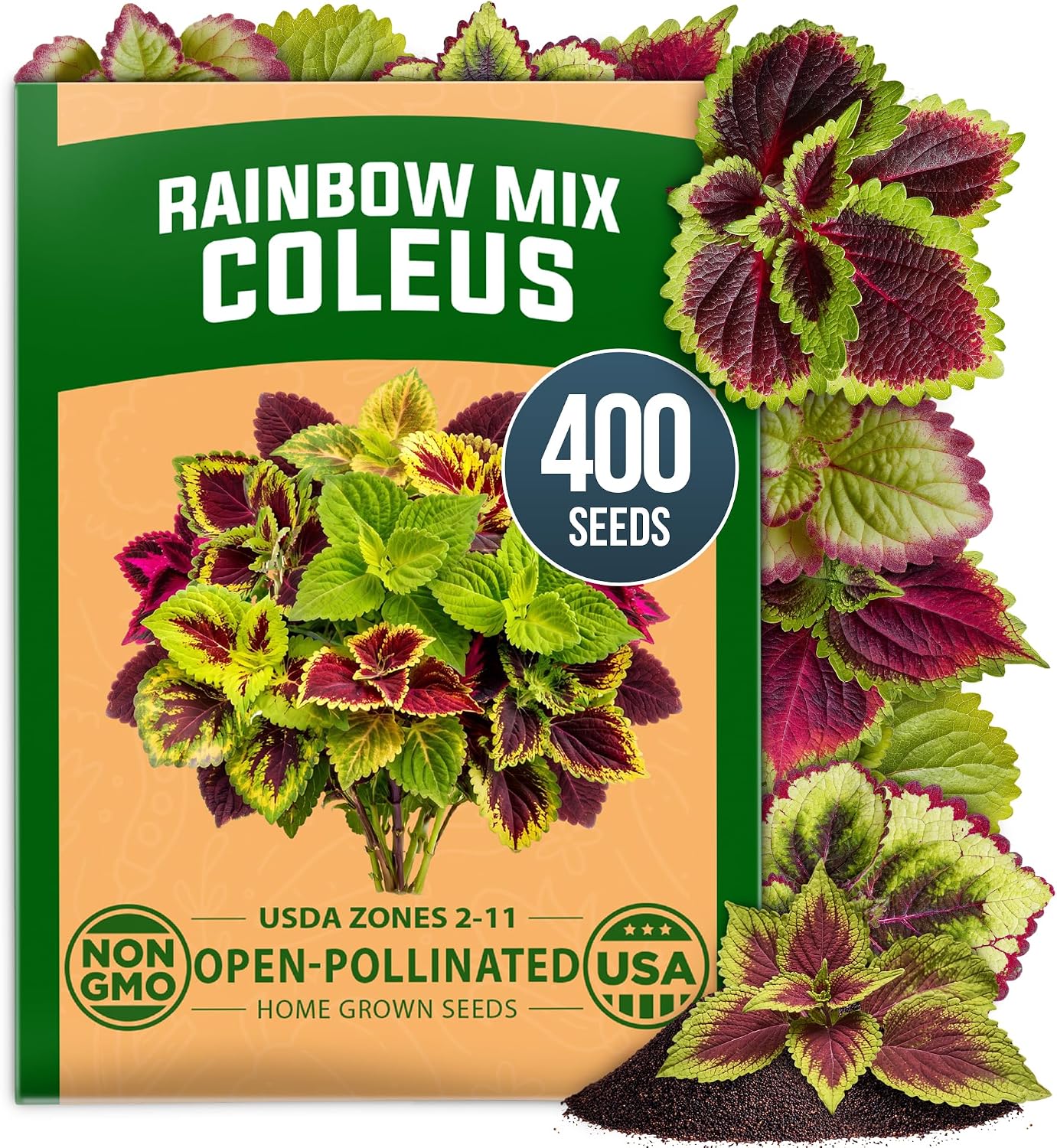
HOME GROWN Rainbow Mix Coleus Seeds (approx. 400)
| Sunlight Exposure | Part Shade to Shade |
|---|---|
| USDA Hardiness Zone | 2-11 |
| Expected Blooming Period | Spring through Frost |
| Material Features | GMO Free, Heirloom |
| Unit Count | 1 Count |
These Rainbow Mix coleus seeds produce compact, colorful foliage plants that are well suited to containers and shaded patio spots. Surface-sow the tiny seeds (do not cover), keep the medium warm and consistently moist, and seedlings typically appear in 10–14 days; pinch growing tips to encourage bushy, mounded plants. The mix is valued for season-long leaf color in shades of rose, green, bronze, cream, and scarlet, so you get visual impact without relying on flowers. Coleus grows indoors near bright north or east windows and outdoors in part shade to shade, making it a flexible choice for window boxes, mixed planters, and small pots. Important limitations are that coleus is a tender annual in most regions and needs protection from frost and prolonged drought, and it prefers warm temperatures for best germination and growth. For container gardeners who want low-maintenance, high-impact foliage, this seed mix is an easy way to produce many plants from one packet.
Best for: Gardeners who want easy-to-grow, high-impact foliage for containers and shaded patios and prefer predictable, low-fuss plants they can start from seed.
Less Ideal for: People seeking long-lived perennial landscaping or plants that tolerate full sun and drought without extra care.
- High seed count (about 400) gives many starts for containers or massing
- Open-pollinated non-GMO seeds from a mix that yields varied, colorful foliage
- Specifically suited to part shade and shade where many flowering plants struggle
- Compact, mounded habit that performs well in pots, window boxes, and mixed planters
- Tender annual in most zones and requires frost protection or indoor overwintering
- Requires consistent moisture and will suffer if soil dries out or remains waterlogged
Verdict: A high-count, non-GMO coleus seed mix that reliably produces compact, colorful foliage perfect for containers and shaded patios.
Choosing the Right Plants for Container Gardening: Key Factors to Consider
Mature Size and Root Habit
Know how big plants get above and below the pot rim. A plant that doubles or triples in size can quickly outgrow a standard 12-inch container and become root-bound, which reduces flowering and fruit set. Compact or naturally clumping plants are easier to keep contained and look tidy across the season.
Root habit matters because deep-rooted plants need taller pots while shallow-rooted types do fine in wide, low containers. Matching container depth and width to the plant's root architecture reduces repotting frequency and improves long-term vigor.
Sun Exposure and Placement
Containers move easily, but where you place them determines light availability and therefore which plants will thrive. Full-sun plants need at least six hours of direct light and will suffer in shaded balconies, while many foliage and bloomers for partial shade will languish in full afternoon sun.
Also consider reflected heat from walls or pavement; containers near hot surfaces can overheat roots and dry out quickly. Choose plants rated for the specific light conditions you can provide and place pots where morning light or filtered shade matches the species' preference.
Watering Frequency and Drainage
Pots dry out faster than in-ground beds, so water needs and drought tolerance are critical. Plants with steady, predictable water demands are easier to manage in containers, while thirsty crops or moisture-sensitive species require more attention and risk stress.
Good drainage is essential. Ensure containers have adequate holes and a free-draining potting mix. Consider plants that tolerate short dry cycles if you cannot water daily, and use mulch or top dressing to slow evaporation when needed.
Soil Mix and Nutrient Needs
Container soils must balance water retention and aeration. Lightweight mixes with compost or slow-release fertilizer provide steady feeding without compacting. Plants heavy in bloom or fruit production will need more frequent feeding, either through liquid feeds or timed slow-release granules.
Understand the fertility demands of the plants you choose so you can schedule feeding and avoid nutrient deficiencies that show up more quickly in limited pot volumes.
Cold and Heat Tolerance
Containers offer less insulation from temperature swings, so both frost risk and heat stress affect plant choice. Tender varieties that are marginal in your climate will need protection or indoor overwintering. Conversely, some plants that tolerate heat and reflected warmth are ideal for sunny patios.
Factor in seasonal temperature extremes where you live. Choose plants with tolerance ranges that match expected lows and highs to reduce loss and the need for frequent replacement.
Maintenance and Habit Control
Pruning, deadheading, and occasional repotting are normal for container gardeners. Some plants require regular pinching or trimming to encourage branching and continuous bloom, while others are low-maintenance and hold shape without intervention.
If you prefer low-effort containers, pick plants with tidy habits and slow growth. If continuous bloom or regular harvest is the goal, plan for more active maintenance and choose varieties that respond well to pruning and feeding.
Best Uses by Container Type
Different containers suit different plant functions. Shallow, wide pots work well for spreaders and shallow-rooted annuals, while deep pots accommodate small shrubs and larger perennials. Hanging baskets showcase trailing varieties, and window boxes favor compact, upright growers.
- Shallow saucers and wide bowls: trailing herbs, succulents, certain annuals
- Deep planters: small shrubs, dwarf vegetables, tomatoes with support
- Hanging baskets: trailing petunias, ivy, and vining herbs
- Window boxes: compact blooms and salad greens for easy access
Seasonal Rotation and Succession Planting
Containers make it easy to change displays through the year. Start with cool-season foliage and bulbs in spring, switch to sun-loving annuals and herbs for summer, then move to pansies, ornamental cabbage, or late-season perennials for fall interest. Succession planting keeps containers productive without big time gaps.
- Stagger crops for continuous color or harvest
- Use quick-growing fillers to bridge gaps between main plants
- Replace spent annuals with seasonal transplants to refresh appearance
Irrigation Solutions for Busy Gardeners
If daily watering is impractical, use self-watering containers, capillary mats, or reserve larger pot volumes that buffer moisture loss. Group pots with similar water needs together so you can water consistently and avoid overwatering drought-tolerant species. Mulching the surface also reduces evaporation from the top layer of the mix.
- Self-watering systems for steady moisture
- Grouping by water need to simplify schedules
- Top mulch to slow evaporation and protect roots
Designing Color and Texture Combinations
Pair upright, filler, and spiller plants for a balanced container. Use contrasting leaf textures and flower shapes to create depth within a small footprint. Repeating a single accent color across multiple pots ties a patio together without overwhelming a limited space.
- Use one tall anchor, one mid-height filler, and one trailing spiller
- Mix foliage shapes for winter and summer interest
- Repeat a color or foliage motif across containers for cohesion
Overwintering and Replacing Plants
Decide which plants are hardy in your zone and which need shelter or indoor storage. Tender plants can be potted up and brought inside or relocated to a protected microclimate. For annuals, remove spent plants and refresh the potting mix before replanting to reduce disease carryover.
- Bring tender plants indoors before first frost
- Refresh potting mix annually for best vigor
- Trim back perennials in late fall to reduce winter damage
How We Chose the Best Plants for Container Gardening
We prioritized traits that matter for container success rather than broad garden performance. First, we looked for plants with proven tolerance of root confinement and predictable size at maturity so they do not quickly become root-bound or outgrow their pots. Second, we assessed water-use behavior and drought tolerance because containers dry faster than ground beds; plants that tolerate intermittent drying or have steady moisture needs reduce stress and maintenance. Third, sun and shade adaptability was considered so picks match common container locations like balconies, porches, and small patios. We also weighed resilience to pests and disease in close quarters, as container plants sit nearer to people and other pots. Ease of feeding and responsiveness to standard fertilizer routines was another filter since containers need regular nutrient replacement. We excluded plants that require extensive grafting, frequent repotting, or specialized greenhouse conditions because the list targets practical outdoor container use. The final selection balances predictable growth habit, manageable water needs, and reliable flowering or production for container situations.
FAQ
Can I grow vegetables in containers year after year?
Often yes, but vegetables need replenished soil and regular feeding. Replace or amend potting mix annually because nutrients deplete and pathogens can build up. Rotate crop families where possible to limit disease pressure.
How large should a container be for herbs?
It depends on the herb's root habit. Small herbs like thyme and chives do well in 6 to 8-inch pots, while basil and parsley prefer 8 to 12-inch containers for steady growth and easier harvesting.
What potting mix is best for container plants?
Use a lightweight, free-draining potting mix designed for containers rather than garden soil. Look for blends with compost, peat or coir, and perlite or grit to balance moisture retention and aeration.
How often should I fertilize container plants?
Frequency depends on the plant and the fertilizer used. Slow-release formulas often last several months, while liquid feeds may be needed every two to four weeks for heavy bloomers or fruiting plants.
Can I keep container plants outside in winter?
It depends on hardiness. Many perennials are hardy in pots if placed in a protected spot, but tender species should be moved indoors or provided with frost protection to avoid root freeze in shallow pots.
Final Verdict
Choose container plants by matching mature size, light, and water behavior to the pots and site you have. Prioritize predictable water needs and a compatible root habit over showy but high-maintenance species unless you plan daily care. Balance season-long interest with the maintenance you are willing to do so containers remain attractive and productive. Focus on plants that tolerate confinement, respond well to regular feeding, and fit the light conditions of your space. That approach reduces surprises and gives you reliable color, fragrance, or harvest from small-space gardens.
