

Note: This article contains affiliate links. If you click on these links and make a purchase, I may earn a small commission at no extra cost to you. This helps support my research and content. Read my full affiliate disclosure here.
Choosing the right plants for hot, sunny containers changes how your patio or balcony looks and how much care you need. Plants placed in full sun face long hours of direct light, higher surface temperatures, and faster drying potting mix. The right selections give reliable blooms, foliage interest, and the ability to survive occasional missed waterings. This guide presents six shortlisted plants suited to full sun in pots, chosen for container performance, heat tolerance, and ease of care. Below we explain the practical criteria used to pick entries and what to expect from each type in an outdoor container setting.
Top Picks at a Glance
| Best Overall The best all-around choice for most situations | American Plant Exchange Desert Rose (6-inch potted flowering succulent) |  |
| Best Quality Built to a higher standard if you want something more solid | Perfect Plants Frostproof Gardenia Live Plant, 1‑Gallon |  |
| Best Value The sweet spot between price and what you get | American Plant Exchange Crown of Thorns (Euphorbia milii) – 6-inch Potted Succulent, Red Blooms |  |
| Best Budget The cheapest option that still gets the job done reliably | Wivolibe Gazania Flower Seeds, 300-Count Mix |  |
| Highest Rated A top-rated pick with lots of positive feedback | Sprout N Green Echeveria 'Sweet Honey' Live Succulent in 2" Pot |  |
| Most Popular A crowd favorite that many people choose with confidence | The Three Company Lavender (2-Pack) Live Purple Blooming Perennials in 1 qt Pots |  |
American Plant Exchange Desert Rose (6-inch potted flowering succulent)

| Indoor Outdoor Usage | Indoor, Outdoor |
|---|---|
| Sunlight Exposure | Full Sun |
| Expected Blooming Period | Spring to Summer |
| USDA Hardiness Zone | 10, 11, 12 |
| Moisture Needs | Moderate Watering |
The Desert Rose is a sculptural, flowering succulent that works as a low-maintenance statement plant for sunny pots and warm patios. It is typically used as a container specimen on a bright windowsill, patio table, or in a rock garden where it receives full sun; its swollen trunk stores water so you can water infrequently and allow the soil to dry between waterings. Notable features include drought tolerance, resistance to common pests and disease, and an extended bloom period in spring and summer that produces vibrant trumpet-shaped flowers. Practical benefits are obvious for container gardeners: it tolerates heat and dry spells, is suitable for bonsai-style shaping, and adds a strong vertical accent in small spaces. Important limitations are climate sensitivity to cold since it is hardy only in USDA zones 10 to 12 and it needs well-draining sandy soil and consistent bright light to bloom; without that it remains leggy or may fail to flower. Expect a slow-growing plant that rewards bright sun and minimal fuss rather than rapid filling of a large bed.
Best for: Buyers who want a low-maintenance, full-sun container plant that provides bold blooms and a sculptural form and who prefer plants that thrive on infrequent watering and bright light.
Less Ideal for: People in cool or frost-prone climates who cannot provide indoor overwintering, or gardeners who need a fast-spreading filler plant for shade or low-light containers.
- Distinctive sculptural trunk and showy trumpet blooms add strong visual interest in a pot
- Drought-tolerant and stores water in its swollen base so it needs infrequent watering
- Well suited to full-sun containers, rock gardens, and bonsai-style training
- Resistant to common pests and diseases and labeled low maintenance
- Only cold-hardy in USDA zones 10 to 12, so it requires frost protection or indoor overwintering
- Needs very well-draining sandy soil and bright direct sun to flower reliably
Verdict: If you need a heat-tolerant, low-water container plant that produces dramatic trumpet flowers in full sun, the Desert Rose is a standout choice.
Perfect Plants Frostproof Gardenia Live Plant, 1‑Gallon

| Indoor Outdoor Usage | Outdoor |
|---|---|
| Other Special Features of the Product | Deer Resistant, Fragrant |
| Expected Blooming Period | Summer |
| Sunlight Exposure | Full Sun, Partial Shade |
| Expected Planting Period | Spring |
The Frostproof Gardenia arrives as a 1‑gallon live shrub meant to establish in outdoor beds or containers where it will get full sun to partial shade. It produces glossy green foliage and highly fragrant white blooms in spring and summer, making it practical for scenting patios, entryways, and small garden beds. The plant is promoted as deer resistant and low maintenance once established, and it ships with plant food to help early growth. In pots it works best with regular watering and well‑drained potting mix to avoid root wetness; in landscape beds it tolerates natural rainfall but still benefits from occasional feeding. Limitations include its mature size of about 5 feet tall and a roughly 4 foot spread, so it will need a sizeable container or pruning to stay compact in pots. Also it is not offered for shipment to some states and will require summer sun exposure to flower reliably. For buyers focused on performance, its strong fragrance and predictable bloom habit are the key functional benefits to expect.
Best for: Gardeners who prioritize strong summer fragrance and consistent flowering and who can give a container or planting spot plenty of sun and routine care.
Less Ideal for: People who need a very compact houseplant or who cannot provide a large enough pot, regular watering, or reliable summer sun exposure.
- Noticeably fragrant white blooms that add scent to patios and small outdoor spaces
- Suitable for full sun to partial shade locations and reliably blooms in summer
- Sold in a 1‑gallon live plant with included starter plant food to help establishment
- Advertised as deer resistant, reducing damage in deer‑prone yards
- Mature size (~5 ft tall, ~4 ft wide) can outgrow small pots and requires large containers or pruning
- Requires consistent sun exposure and appropriate watering in containers to bloom well
Verdict: Choose this gardenia if you want a high‑performance, strongly scented summer bloomer for sunny containers or beds.
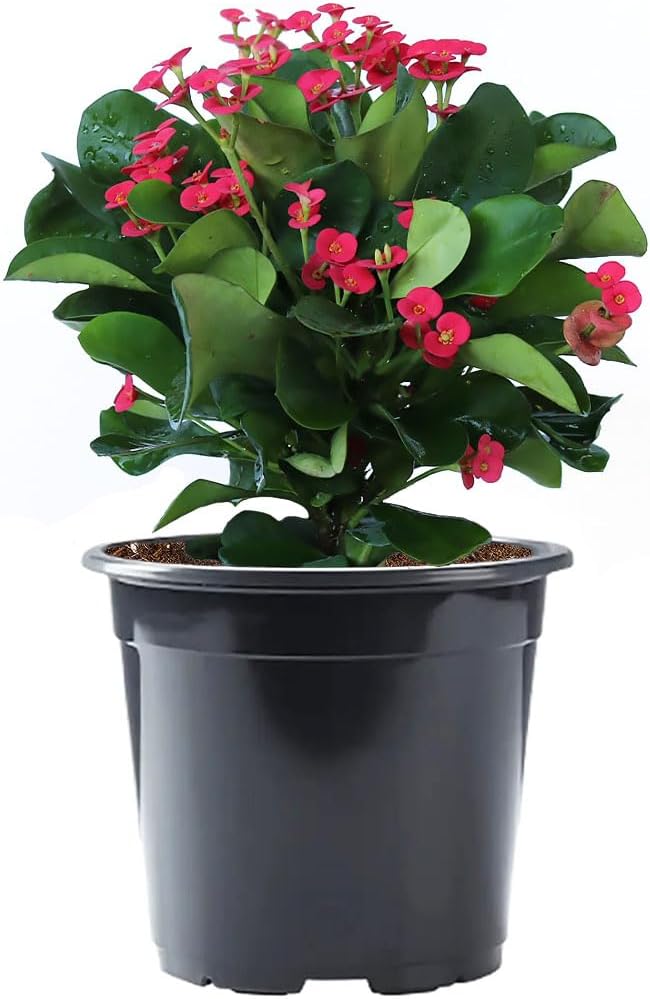
American Plant Exchange Crown of Thorns (Euphorbia milii) – 6-inch Potted Succulent, Red Blooms
| Indoor Outdoor Usage | Outdoor |
|---|---|
| Expected Blooming Period | Year Round |
| USDA Hardiness Zone | 9,10,11 |
| Moisture Needs | Little To No Watering |
| Sunlight Exposure | Partial Shade |
The Crown of Thorns (Euphorbia milii) is a low-maintenance flowering succulent grown in a 6-inch pot that delivers long-lasting color for sunny patios or bright windows. It is typically used as a container specimen or part of a drought-tolerant potting mix where it can receive direct sunlight and minimal watering. Notable features are its thick, water-storing stems, year-round bloom potential in warm sites, and tolerance for infrequent watering, which make it ideal for xeriscaping and busy gardeners who want continuous interest without much hands-on care. Practical benefits include easy upkeep, attractive pollinator-attracting flowers, and sculptural texture that works well alone or grouped with other sun-loving pots. Important limitations are that it prefers warm hardiness zones (9–11) for year-round performance, may need bright light to bloom reliably, and contains milky sap that can irritate skin or pets if ingested, so placement and handling require care.
Best for: Buyers looking to maximize color and low upkeep in sun-exposed pots will appreciate this plant; it fits gardeners who prioritize water-wise, easy-care specimens for patios or sunny windows.
Less Ideal for: Not a good choice for shaded balconies, cold-climate outdoor beds without winter protection, or households with curious pets or children who might chew foliage.
- Drought-tolerant and needs only infrequent watering once established
- Produces bright red bracts nearly year-round in warm, sunny conditions
- Compact 6-inch pot size is ready for containers and small patios
- Thick, sculptural stems add textural interest to sunlit plantings
- Year-round blooms are dependent on warm zones and strong light so flowering may be limited in cooler or low-light locations
- Contains irritant sap so it requires cautious handling and is not pet-safe if chewed
Verdict: A hardy, low-water flowering succulent that gives bright, long-lasting color in sunlit pots for gardeners who want big impact with minimal maintenance.
Wivolibe Gazania Flower Seeds, 300-Count Mix

| Indoor Outdoor Usage | Outdoor |
|---|---|
| Other Special Features of the Product | Attracts Pollinators |
| Sunlight Exposure | Full Sun |
| Moisture Needs | Moderate Watering |
| Material Features | GMO Free |
These Gazania seeds are aimed at gardeners who want bright, heat- and drought-tolerant blooms for sunny pots and beds. The mix contains 300 seeds and is described as full sun loving with moderate water needs, making it suitable for patio containers, hanging baskets, and clustered bedding in hot, exposed spots. Gazanias are noted for large, multicolored flowers and a long bloom season from early summer to frost in warm areas; they tolerate a range of soils and recover from dry spells, so they are low-maintenance once established. Practical benefits include strong visual impact in a small footprint and usefulness as a pollinator-friendly annual or short-lived perennial in milder climates. Limitations are that germination and final color distribution can vary with seed mixes, they behave as frost-tender annuals in cooler regions, and success depends on sowing at the right season and providing regular but moderate moisture in containers. Seed mixes also require thinning and multiple seeds per hole to ensure single healthy plants.
Best for: Buyers on a budget who want an easy, high-impact flowering option for sunny pots and patios and are comfortable growing from seed and thinning seedlings as needed.
Less Ideal for: Gardeners seeking guaranteed uniform cultivars or immediate mature plants should consider started transplants or named varieties instead.
- Large 300-count packet suitable for multiple pots or a small border
- Recommended for full sun and tolerates heat and drought once established
- GMO free and advertised to attract pollinators
- Long bloom season in warm climates, offering sustained color in containers
- Seed mixes can produce unpredictable color ratios and variable germination rates
- Plants are frost-tender and will behave as annuals in cooler climates
Verdict: A low-cost way to fill sunny pots with heat-tolerant, pollinator-friendly color when you are willing to grow and thin plants from seed.
Sprout N Green Echeveria 'Sweet Honey' Live Succulent in 2" Pot

| Indoor Outdoor Usage | Indoor, Outdoor |
|---|---|
| Other Special Features of the Product | Drought Tolerant, Low Maintenance, Pet Friendly |
| Sunlight Exposure | Partial Shade |
| USDA Hardiness Zone | 9b-11b |
| Soil Type | succulent potting mix |
Echeveria 'Sweet Honey' is a compact rosette-forming succulent offered in a 2" starter pot and intended for container display on windowsills or in outdoor pots during mild seasons. It develops tight spoon-shaped leaves that deepen to orange-pink at the edges under strong light and cool nights, and it will produce small orange-yellow bell flowers in late spring to early summer. The plant ships fully rooted in a cactus and succulent soil mix so it is ready to sit in a decorative pot or be repotted into a larger container. Care is straightforward: bright indirect light or morning to late-afternoon sun, infrequent thorough watering only after the soil is mostly dry, and good ventilation; protect from frost and harsh midday sun. Practical benefits include low maintenance, drought tolerance, and a resilient root start from the grower. Limitations are its small initial size tied to the 2" pot and need for protection from intense summer sun or freezing temperatures, so it performs best in sheltered full-sun to partial-shade container spots in warm climates or as a sunny indoor plant with supplemental light.
Best for: Buyers who want a dependable, low-maintenance succulent to brighten a sunny windowsill or warm-season outdoor pot and prefer plants that arrive well rooted and ready to use.
Less Ideal for: Gardeners seeking an instant, large specimen or year-round outdoor planting in climates with hard freezes should look for larger, cold-hardy varieties or bigger container plants.
- Ships fully rooted in succulent potting mix so it is ready for repotting or display
- Drought tolerant and low maintenance, suitable for busy owners
- Develops stronger color under bright light and cool nights for attractive seasonal interest
- Pet friendly and safe for households with animals
- Sold in a 2" starter pot so it will need repotting for long-term growth
- Requires protection from intense midday sun and winter frost in cooler zones
Verdict: A reliable, low-maintenance Echeveria that arrives well rooted and is ideal for sunny pots or bright windowsills when you want a tough, attractive succulent starter.
The Three Company Lavender (2-Pack) Live Purple Blooming Perennials in 1 qt Pots

| Sunlight Exposure | Full Sun |
|---|---|
| USDA Hardiness Zone | 5-9 |
| Moisture Needs | Low |
| Soil Type | Well draining soil |
| Unit Count | 2 Count |
This 2-pack of Lavender (Lavandula) arrives in 1-quart pots and is intended for planting in containers or garden beds that get full sun. The plants are compact and mounded, described to reach roughly 12 to 18 inches tall with fragrant purple blooms that attract pollinators and offer a lasting scent for pots on patios or sunny balconies. Care is straightforward: plant in well-draining soil, water to establish, then expect low moisture needs once settled. Practical benefits include their compact habit for small pots, strong fragrance for sensory container displays, and deer deterrent qualities in many landscapes. Limitations to consider are the plant hardiness range (USDA zones 5–9) which may exclude very cold or very hot regions, and the modest size in 1-qt pots means plants may need time to fill larger containers or borders. Buyers should also be prepared to ensure excellent drainage and full sun exposure to get the best bloom and drought tolerance from these lavender plants.
Best for: Home gardeners who want an easy-to-grow, fragrant flowering plant for sunny pots or small borders and who prefer low-maintenance, pollinator-friendly choices with visible peer feedback.
Less Ideal for: Gardeners in climates outside USDA zones 5–9 or those seeking instant, large specimen plants for oversized containers should consider larger or locally sourced stock instead.
- Sold as a ready-to-plant 2-pack convenient for filling two pots or a single larger container
- Fragrant purple blooms that attract pollinators and add sensory appeal to outdoor seating areas
- Compact, mounded habit suited to small pots, borders, or mixed container plantings
- Low moisture needs once established, reducing watering frequency for busy gardeners
- Comes in 1-quart pots so plants will need time to establish before filling large containers
- Recommended for USDA zones 5–9 which limits suitability in very cold or tropical climates
Verdict: A convenient 2-pack of fragrant, compact lavender well suited to sunny pots and low-water container displays.
Choosing the Right Plants for Full Sun in Pots: Key Factors to Consider
Sun Exposure and Heat Reflection
Full sun in a pot often means more than just hours of direct light. Pots on patios or balconies are subject to reflected heat from concrete, siding, and windows, which raises root-zone and surface temperatures. Choose plants labeled for full sun that also tolerate heat and high light intensity. In addition, consider pot color and material because dark, thin-walled containers heat up faster and will stress roots more quickly.
Placement matters. Move containers to capture morning sun if a plant prefers cooler starts to the day, or provide brief afternoon shade for marginal species. Understanding the actual microclimate where a pot will sit helps you match plant selections to real exposure rather than a general "full sun" label.
Pot Size and Root Space
Container volume directly affects how long soil stays moist, how fast roots become crowded, and how much fertility the plant can draw on. Many sun-loving plants do well in medium to large pots because those volumes buffer heat and moisture fluctuations. However, some compact or trailing species are adapted to smaller pots and will flower better without excessive top growth.
When choosing plants, compare their mature root habit to the pot you plan to use. Deep-rooted or vigorously branching plants need larger containers to avoid becoming rootbound and stressed under hot sun. Frequent repotting or root pruning may be necessary if the chosen plant outgrows a small container quickly.
Watering Rhythm and Drought Tolerance
Potted plants in full sun dry out faster than beds. Evaluate a species' drought tolerance honestly: some plants can handle intermittent dry spells, while others demand steady moisture. Drought-tolerant plants have adaptations such as silvery or hairy leaves, succulent tissues, or deep root systems that slow water loss and store moisture.
Plan a watering routine that matches the plant's needs and your schedule. For less frequent watering, choose plants rated for drought resilience and use higher-quality potting mixes with good water retention and drainage. Mulch on the soil surface and thicker-walled containers can also moderate evaporation.
Growth Habit and Pruning Needs
Growth habit affects how a plant looks in a pot and how often you must prune or deadhead it. Upright, clumping, and trailing types each have different space and care requirements. Trailing plants work well in hanging baskets or tall planters where their form is shown off, while clumping perennials or shrubs provide structure in centralized containers.
Some sun-loving bloomers require routine deadheading to prolong flowering, while others set seed freely and need occasional removal to keep the pot tidy. Choose plants whose maintenance fits your willingness to prune, trim, and refresh soil or fertilizer on a seasonal basis.
Soil, Fertility, and Feeding Schedule
Full sun increases plant growth and flower production, which in turn raises nutrient demand in a confined container. Using a potting mix formulated for containers with good aeration and moisture retention helps prevent both waterlogging and rapid drying. Regular feeding with a balanced or bloom-focused fertilizer keeps sun-loving plants productive through the growing season.
Adjust feeding frequency based on the plant's vigor and the container size. Smaller pots and heavy bloomers usually require more frequent, lighter feedings. Consider slow-release fertilizer at planting as a baseline and supplement with liquid feed during peak growth or flowering periods.
Winter Hardiness and Overwintering
Some sun-loving species are tender and will not survive freezing temperatures in pots where roots are exposed. Plan for overwintering by knowing whether you will move containers indoors, protect them with insulating wraps, or treat plants as annuals that are replaced each season. Hardier species may survive short freezes if the pot is insulated or sunk into the ground for the winter.
Overwintering strategy affects long-term cost and labor. If you want multi-year specimens in pots, prioritize plants with appropriate cold tolerance or make realistic plans for protection and minimal winter care.
Sizing Pots to Plant Type
Match pot size to the expected mature size of the plant rather than its current nursery container. Oversized pots retain more moisture and can be beneficial in hot sun, but very large containers also require more soil and fertilizer. For annuals and bedding-style plants, medium pots provide an efficient balance between water retention and manageable feeding schedules.
For shrubs or woody perennials grown in pots, pick containers with sufficient depth and width to accommodate root growth for at least two seasons. If space is limited, plan for annual repotting or root pruning to maintain vigor.
- Use deeper pots for plants with taproots.
- Choose wider, shallow pots for spreading or trailing plants.
- Ensure containers have drainage holes to prevent root rot.
Potting Mix and Mulch Tips
Select a high-quality container mix that balances drainage and water retention. Avoid plain garden soil which compacts and reduces oxygen around roots in containers. Adding organic matter and a small amount of water-absorbing material will keep root zones cooler and more stable under full sun.
A thin layer of decorative mulch on the soil surface reduces evaporation and prevents soil from splashing when you water. Organic mulches gradually break down and add nutrition, but refresh the top layer each season to maintain effectiveness.
- Mix in perlite or pumice for improved drainage.
- Use bark or shredded leaves as surface mulch.
- Avoid heavy compost-only mixes that retain too much moisture.
Watering Strategies for Busy Gardeners
If you cannot water daily, design containers and plant combinations to tolerate intermittent drying. Group thirstier plants together and place drought-tolerant specimens in locations with the hottest exposure. Use saucers and self-watering inserts selectively; they help reduce watering frequency but can keep the root crown too wet for some species.
Morning watering reduces evaporation losses and lets foliage dry before evening, lowering disease risk. During heat waves, check soil moisture at root level rather than judging by surface dryness alone.
- Water deeply and less frequently to encourage stronger root systems.
- Consider drip irrigation or soaker systems for large container groupings.
- Elevate pots slightly to ensure proper drainage from holes.
Designing Containers for Continuous Color
Combine plants with staggered bloom times and contrasting foliage textures to keep a container interesting through the season. Include a structural element, such as a taller focal plant, lower fillers, and trailing spillers to create a balanced composition. Select species that respond well to deadheading or light pruning to prolong floral displays.
Rotate color palettes and textures across containers rather than relying on a single plant to carry the visual load. This approach reduces the impact if one species declines midseason or requires removal.
- Use one tall, one medium, and one trailing plant for classic composition.
- Mix foliage textures to maintain interest when blooms fade.
- Replace tired annuals midseason to refresh the display.
Pest and Disease Management in Sunny Containers
Full sun reduces fungal disease pressure compared to shady, damp spots, but pests such as spider mites and aphids can thrive under hot, dry conditions. Inspect foliage regularly and manage pests with targeted cultural controls like water sprays, hand removal, or horticultural soaps when needed. Avoid overwatering which can attract root pests and slugs if the surface stays damp.
Maintain plant vigor with correct feeding and timely pruning, since healthy plants tolerate pests and environmental stress better. Isolate new additions for a short period to ensure they are pest-free before placing them with established containers.
- Rinse foliage occasionally to reduce dust and pest buildup.
- Use sticky traps or exclusion when appropriate.
- Prune damaged or infested growth promptly to limit spread.
How We Chose the Best Plants for Full Sun in Pots
We prioritized plants that reliably thrive in containers exposed to six or more hours of direct sun and perform well on patios, balconies, and sunny terraces. Key evaluation criteria included true sun tolerance under reflected heat, drought resilience in restricted root zones, and growth habit that fits common pot sizes. We also weighed flowering consistency, seasonal interest from foliage or seedheads, and pest or disease resistance in warm, confined environments. Plants were excluded if they need extensive winter protection, require large in-ground root zones, or have aggressive invasive root systems unsuitable for containers. We favored plants with straightforward pruning or deadheading needs and clear watering rhythms for busy gardeners. The selection reflects options that minimize transplant shock, respond predictably to container fertilizers, and maintain attractive form without constant shaping.
FAQ
How much sun qualifies as full sun for container plants?
Full sun generally means six or more hours of direct sunlight per day. For containers, also consider reflected heat and afternoon intensity which can increase stress beyond just the hour count.
Can I grow sun-loving perennials in pots long term?
Many sun-tolerant perennials do well in containers if given adequate root space and winter protection. You may need to repot or divide them every few years to prevent root crowding and maintain vigor.
How often should I water potted plants in full sun?
Water frequency depends on pot size, mix, and species. Expect to water more often than in beds, often daily in small pots during heat waves and every few days in larger containers. Check moisture at root level rather than relying on surface dryness.
What pot materials help plants in hot, sunny spots?
Thicker-walled materials such as ceramic or wood moderate temperature swings better than thin plastic or metal. Light-colored pots reflect heat and reduce root stress, while porous materials like terracotta dry faster and may need more frequent watering.
Should I fertilize differently for sun-demanding container plants?
Yes. High-light, high-bloom plants often need more frequent feeding because containers have limited nutrient reserves. Use a balanced or bloom-focused fertilizer on a regular schedule and supplement with liquid feed during peak flowering.
Final Verdict
For sunny patios and balconies, prioritize plants that tolerate heat, dry spells, and the constraints of container root zones. Choose pot sizes and mixes that buffer moisture swings, and match maintenance needs to how much time you can commit to watering and deadheading. By balancing sun tolerance, drought resilience, and growth habit you can build low-stress, high-impact containers that perform through long sunlit days.
