

Note: This article contains affiliate links. If you click on these links and make a purchase, I may earn a small commission at no extra cost to you. This helps support my research and content. Read my full affiliate disclosure here.
Choosing the right plants for a garden trellis changes how you use vertical space, whether you need privacy, a focal point, or extra blooms in a small yard. Trellis-friendly plants behave differently in various light exposures, soil types, and climates, so picking species that match your site reduces maintenance and increases success. This guide covers the seven top plants for garden trellis use, shortlisted for reliable climbing habit and landscape usefulness. We evaluate each plant on growth habit, hardiness, support needs, and maintenance to help you find the best climbers for your trellis setup.
Top Picks at a Glance
| Best Overall The best all-around choice for most situations | MYSHELFIE Japanese Honeysuckle Vine Starter, White Fragrant Climbing Plant (2-Inch Pot) |  |
| Best Quality Built to a higher standard if you want something more solid | MYSHELFIE Purple Honeysuckle (Lonicera japonica 'Purpurea'), Live Vine, 2‑inch Pot, 2-Pack |  |
| Best Value The sweet spot between price and what you get | BuggyBeds Honeysuckle Seeds — 200 Non‑GMO Heirloom Climbing Vine Seeds |  |
| Best Budget The cheapest option that still gets the job done reliably | Carpet Creeping Purple Clematis Seeds (50 Count) |  |
| Highest Rated A top-rated pick with lots of positive feedback | CZ Grain Wisteria Live Plants (3 pack) |  |
| Most Popular A crowd favorite that many people choose with confidence | SPROUTARAQ Morning Glory Seeds (Dark Red/Dark Purple) |  |
| Best Seller A high-volume bestseller chosen again and again | Outsidepride Ipomoea purpurea (Morning Glory) Flower Seeds, 250-Count Mix |  |
MYSHELFIE Japanese Honeysuckle Vine Starter, White Fragrant Climbing Plant (2-Inch Pot)

| Indoor Outdoor Usage | Outdoor |
|---|---|
| Sunlight Exposure | Full Sun To Partial Shade |
| USDA Hardiness Zone | 4-11 |
| Expected Blooming Period | Spring to Fall |
| Moisture Needs | Moderate, Water Regularly But Allow Soil To Dry Between Waterings |
This Japanese honeysuckle arrives as a small 2-inch potted starter intended for outdoor planting on trellises, fences, or in larger planters. It produces white and yellow fragrant blossoms from spring through fall and is valued for its vigorous climbing habit and ability to quickly establish a green screen or vertical accent. The plant tolerates full sun to partial shade and adapts to a range of soils when they are well draining, making it relatively low maintenance: water moderately, allow the soil to dry slightly between waterings, and prune to control spread and shape. Notable benefits include its drought tolerance once established and its attractiveness to pollinators like butterflies and hummingbirds. Important limitations are its vigorous growth habit, which can require regular pruning and containment in planters to prevent it from overtaking nearby plants or structures, and the small initial pot size which means it will need repotting or planting into substantial soil volume to reach its reported mature height.
Best for: Gardeners who want a fast-growing, fragrant climber to create screening or vertical interest in planters and are willing to prune and manage its growth.
Less Ideal for: Those who prefer slow-growing, low-spread plants or who cannot commit to routine pruning and containment should consider more compact climbers.
- Strong, fast-climbing habit that quickly covers trellises and walls
- Fragrant white and yellow blooms that attract pollinators from spring to fall
- Tolerant of full sun to partial shade and adaptable to a range of soils
- Drought tolerant once established, reducing watering needs
- Very vigorous and can become invasive without regular pruning and containment
- Ships as a very small 2-inch starter which requires repotting or planting into larger soil volume
Verdict: Choose this honeysuckle starter if you want a fast, fragrant climber that will quickly fill a planter or trellis and attract pollinators.
MYSHELFIE Purple Honeysuckle (Lonicera japonica 'Purpurea'), Live Vine, 2‑inch Pot, 2-Pack

| Sunlight Exposure | Full Sun To Partial Shade |
|---|---|
| USDA Hardiness Zone | 7-11 |
| Expected Blooming Period | Spring to Fall |
| Soil Type | Well-draining, Fertile Soil |
| Moisture Needs | Moderate, Water Regularly But Allow Soil To Dry Between Waterings |
This purple honeysuckle arrives as healthy starter plants in 2‑inch pots and is intended for outdoor planting on containers, trellises, fences, or arbors. It is appreciated for its purple foliage and fragrant spring-to-fall blooms and is marketed as a fast-growing, hardy climber that attracts pollinators. Use it in a container with a sturdy support or a trellis; plant in well-draining fertile soil, water moderately while allowing the soil to dry between waterings, and prune to control shape and vigor. The plant is adaptable to full sun or partial shade and is rated for USDA zones 7 to 11, making it suitable for many mild climates. Because these are small starter pots, expect several weeks of establishment before vigorous climbing and flowering; regular fertilizing during the growing season helps fill out the vine in containers. This is a sensible pick if you want an eye-catching, fragrant climber that needs minimal fuss, though it will require periodic pruning to prevent overly aggressive spread where that matters.
Best for: Gardeners who want a colorful, fragrant climbing vine for containers or small supports and prefer a low-maintenance plant that establishes quickly and attracts pollinators.
Less Ideal for: Those needing an immediate, full-size privacy screen or gardeners in colder zones below USDA 7 should consider sturdier or hardier alternatives.
- Fast-growing climber that establishes quickly when planted
- Attractive purple foliage plus fragrant blooms that attract pollinators
- Low-maintenance care: tolerates full sun to partial shade and moderate watering
- Suitable for containers and trained on trellises, fences, or arbors
- Ships as a small 2‑inch starter pot so it needs time and attention to reach full size
- Hardiness limited to USDA zones 7–11, not suitable for colder climates
Verdict: A low-maintenance, fast-climbing purple honeysuckle that adds fragrant blooms and striking foliage to container trellises in mild climates.
BuggyBeds Honeysuckle Seeds — 200 Non‑GMO Heirloom Climbing Vine Seeds

| Indoor Outdoor Usage | Outdoor |
|---|---|
| Expected Blooming Period | Spring to Fall |
| Sunlight Exposure | Full Sun |
| USDA Hardiness Zone | 4-9 |
| Moisture Needs | Moderate Watering |
These BuggyBeds honeysuckle seeds are sold as a bulk 200‑seed packet of non‑GMO heirloom varieties intended for outdoor planting on trellises, fences, or other vertical supports. The vine is described as a hardy twining climber that reaches tall heights and blooms from spring through fall, producing fragrant, nectar‑rich flowers that attract bees, butterflies, and hummingbirds. Typical use is spring sowing with cold stratification and shallow sowing, then training young shoots onto a trellis or fence; the plants prefer full sun and moderate watering in loam soil. Practical benefits include long bloom season, low maintenance cultural needs once established, and pollinator value for boosting garden biodiversity. Limitations to expect are the need for a sturdy support as the vine can grow vigorously and the time required for seedlings to establish before significant flowering; germination also may need the extra step of cold stratification. This seed packet is best for gardeners who want an affordable way to establish a scented, flowering climber over a larger area and are prepared to train vines as they grow.
Best for: Gardeners who want an economical way to establish fragrant, pollinator‑friendly climbers on trellises or fences and who prefer low‑maintenance perennials once established.
Less Ideal for: People with very small patios or container gardens where a large vigorous vine would overwhelm space or require frequent pruning.
- Large 200‑seed count provides enough plants to cover multiple trellises or fences
- Non‑GMO heirloom seed with long bloom period from spring to fall
- Fragrant, nectar‑rich flowers that attract bees, butterflies, and hummingbirds
- Described as low maintenance once established and suited to full sun sites
- Requires cold stratification and time for seedlings to establish before heavy flowering
- Can grow vigorously and needs sturdy support and regular training
Verdict: A cost‑effective seed option to establish a fragrant, pollinator‑attracting honeysuckle vine for trellises and fences.
Carpet Creeping Purple Clematis Seeds (50 Count)

| Unit Count | 50 Count |
|---|---|
| Indoor Outdoor Usage | Outdoor |
| Expected Blooming Period | Summer |
| Sunlight Exposure | Full Sun to Partial Shade |
| Moisture Needs | Regular Watering |
These clematis seeds are an affordable way to add a long-blooming climbing vine to a trellis or fence. The packet contains 50 seeds labeled GMO free and is intended for outdoor spring planting; plants grown from the seeds thrive in full sun to partial shade and bloom from late spring through summer. Use a sturdy support such as a trellis or arbor and keep the root zone cool and mulched with regular watering for best results. Notable features are pollinator-friendly flowers and extended bloom time, which help create continuous vertical interest in a garden. As with all seed purchases, germination is variable and you should expect some seeds not to produce mature vines, so planting extra and starting seeds in controlled conditions improves success. Seed-grown clematis also take longer to reach full size than purchased transplants, so plan for a season or two before they fully cover large structures.
Best for: Buyers who want a low-cost way to establish perennial climbing interest on trellises or fences and are willing to start plants from seed and be patient for full coverage.
Less Ideal for: Gardeners who need immediate, reliable coverage or want guaranteed plant performance should choose nursery-grown clematis or potted plants instead.
- Includes 50 seeds so you can plant multiple spots or replace failed germinations
- GMO free seed listing for buyers preferring non-GMO options
- Suitable for full sun to partial shade sites, offering planting flexibility
- Attracts pollinators and provides extended bloom time for season-long interest
- Germination and growth rates are not guaranteed and can be inconsistent for seed lots
- Seed-grown plants take longer to establish and flower compared with buying established transplants
Verdict: If you want an inexpensive way to grow a pollinator-friendly, long-blooming clematis on a trellis and can start plants from seed, this 50-count packet is a practical choice.
CZ Grain Wisteria Live Plants (3 pack)
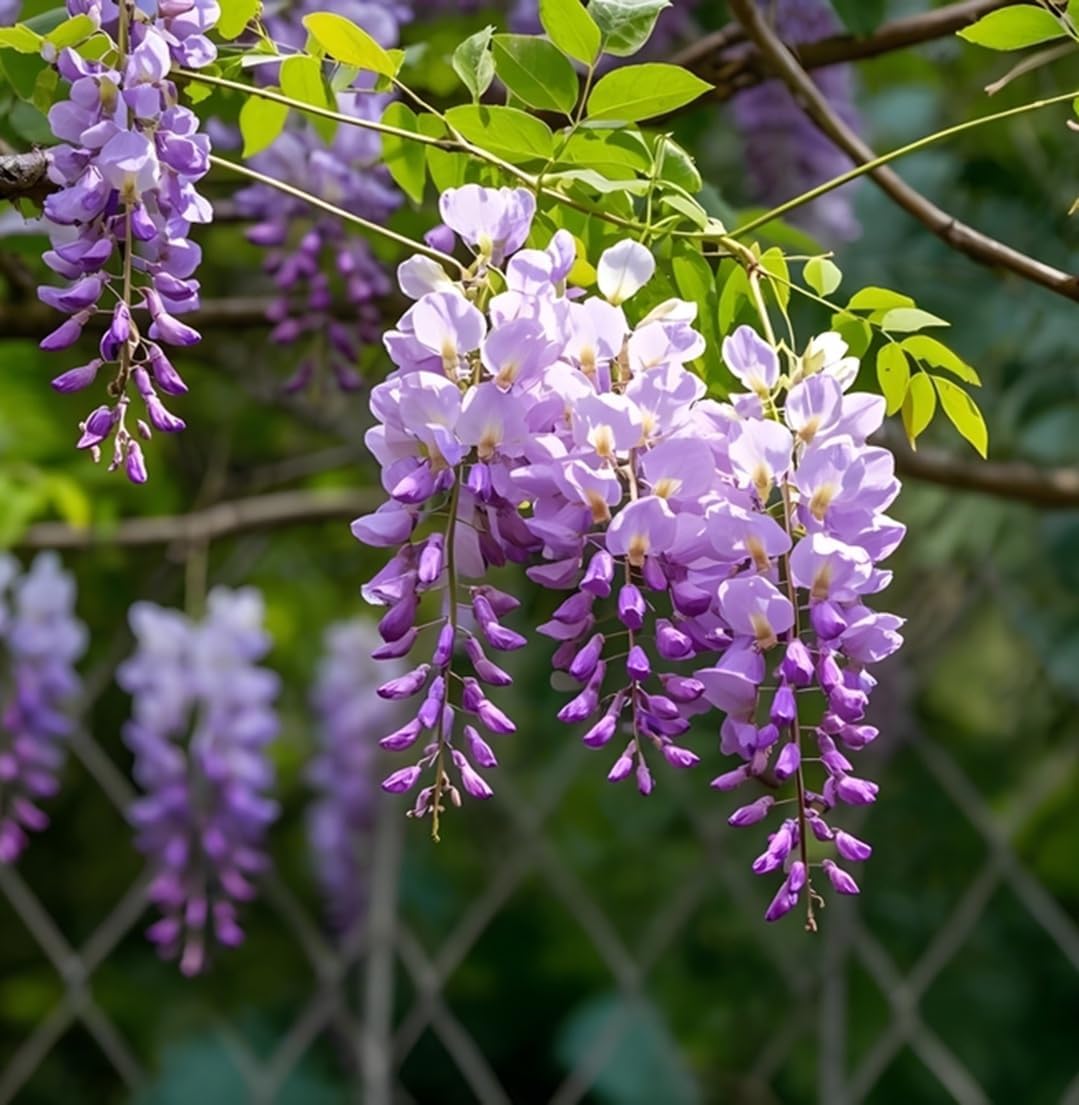
| Expected Blooming Period | Summer to Winter |
|---|---|
| Sunlight Exposure | Partial Shade |
| USDA Hardiness Zone | 3-10 |
| Moisture Needs | Moderate Watering |
These CZ Grain Wisteria plants arrive as healthy, well-rooted young vines about 1–2 feet tall and are intended for fast establishment on trellises, pergolas, fences or in containers. Wisteria floribunda is a vigorous climber noted for long, cascading purple blooms and a long flowering season from summer into winter. Buyers typically plant each vine at the base of a support, train stems up and across structures, and prune annually to control size and encourage flowering. Notable product details include heirloom material, moderate moisture needs, partial shade tolerance, and a wide USDA hardiness range of zones 3–10, which supports reliability across climates. The plants need regular watering the first year to maximize root and shoot growth and will reward patient training with dense foliage and dramatic blooms. Expect the usual wisteria responsibilities: regular pruning to prevent excessive woody growth and sturdy support to handle a mature vine. These are best for gardeners prepared for long-term maintenance rather than a no-care instant screen.
Best for: Gardeners who want a reliable, long-term vining plant to train on a trellis or pergola and who plan to provide routine watering and pruning.
Less Ideal for: Those seeking a low-maintenance instant privacy screen or people unwilling to install strong supports and commit to seasonal pruning.
- Sold as well-rooted live plants ready to transplant
- Fast-growing species suitable for quickly covering trellises and pergolas
- Wide hardiness range (USDA zones 3–10) for use in many climates
- Extended bloom period and fragrant cascading flowers for strong visual impact
- Requires regular first-year watering and ongoing pruning to control vigor and encourage blooms
- Needs a sturdy support structure as mature vines become heavy
Verdict: Choose these well-rooted Wisteria plants when you want a dependable, fast-growing vine that can be trained into a dramatic trellis display with attentive watering and pruning.
SPROUTARAQ Morning Glory Seeds (Dark Red/Dark Purple)

| Indoor Outdoor Usage | Outdoor |
|---|---|
| Expected Blooming Period | Summer to Fall |
| Sunlight Exposure | Full Sun |
| Expected Planting Period | Spring |
| Moisture Needs | Regular Watering |
These morning glory seeds grow vigorous climbing annuals that suit a whiskey barrel planter where you want fast vertical coverage and bold summer to fall blooms. Sow in spring in a sunny spot and provide a trellis or stake; the plants reach up to about 6–10 feet and quickly fill vertical space while flowering through warm months. The listing highlights full sun preference, regular watering, and sandy, well draining soil which matches typical morning glory needs, and the pack contains multiple seeds for repeated sowing or filling several barrels. Because they are annuals, expect a season of heavy flowering rather than permanent structure, and you will need to manage self-seeding and thinning if you prefer tidier growth. These seeds are presented in a small-count packet, so you may need multiple packets to densely cover larger planters or multiple barrels. For gardeners seeking an inexpensive, fast, flowering climber for container displays, these deliver strong visual impact with straightforward care.
Best for: Buyers who want an inexpensive, fast-blooming climber to quickly add vertical color to a whiskey barrel planter and who prefer easy, low-effort annuals.
Less Ideal for: Gardeners seeking permanent perennial structure or exact control over self-seeding and spread should choose more long-lived or clump-forming plants instead.
- Fast-growing climber ideal for vertical coverage in containers
- Produces abundant summer to fall flowers for strong seasonal impact
- Suitable for full sun locations common for barrel planters
- Annual habit means plants need replanting each year
- Packet unit count is small so multiple packets may be required for larger displays
Verdict: An affordable, fast-growing annual vine that quickly provides bold seasonal color and vertical coverage for whiskey barrel planters.
Outsidepride Ipomoea purpurea (Morning Glory) Flower Seeds, 250-Count Mix

| Number of Pieces | 250 |
|---|---|
| USDA Hardiness Zone | 3 |
| Sunlight Exposure | Partial Sun |
| Moisture Needs | Moderate Watering |
These Outsidepride morning glory seeds are a budget-friendly way to add rapid vertical color to a lattice or trellis. The packet contains 250 seeds of mixed varieties that germinate in about 7 to 21 days with simple prep like nicking and soaking. Once established the vines climb quickly, provide dense coverage for lattice work, and produce large trumpet-shaped blooms in multiple colors from summer into fall. They tolerate full sun to partial shade, are drought tolerant after establishment, and attract pollinators, which makes them practical for low-maintenance vertical screens and temporary summer displays. Important limitations are that these are annuals so they will not provide permanent cover, and vigorous twining stems can self-seed or smother nearby plants if not thinned or controlled. For gardeners on a tight budget who want a fast, eye-catching climber for lattice, these seeds deliver a lot of plants per packet, but expect seasonal replanting and occasional maintenance to keep the vines tidy.
Best for: Gardeners who want an inexpensive, fast way to add seasonal vertical color and pollinator-friendly blooms to a lattice or trellis without much ongoing care.
Less Ideal for: Those seeking permanent, year-round coverage or a low-spread plant for tight mixed beds should choose perennial or less vigorous climbers instead.
- Large 250-seed quantity offers many plants for the price
- Fast-growing twining habit quickly covers lattice and trellis
- Drought tolerant once established, suited to low-maintenance gardens
- Mix of bloom colors creates a vibrant vertical display and attracts pollinators
- Annual habit means you must replant each year for continued coverage
- Vigorous growth can self-seed or overrun nearby plants without pruning
Verdict: If you need inexpensive, fast-growing seasonal coverage for a lattice, this 250-count morning glory seed mix gives abundant, colorful vines for the money.
Choosing the Right Plants for Garden Trellis: Key Factors to Consider
Climbing Mechanism
How a plant attaches to a trellis matters because it dictates support construction and training methods. Twining vines wrap stems around supports and usually need vertical stakes or widely spaced lattice. Tendril-climbing plants use thin appendages to grip narrow openings and perform well on wire or mesh trellises.
Plants that cling with adhesive pads or aerial roots can attach to rough surfaces without much training but may damage delicate structures or be difficult to remove. Knowing the climbing mechanism helps you choose a trellis with the right spacing, material, and strength for the expected load.
Mature Size And Growth Rate
Estimating mature width and height prevents overcrowding and reduces the need for drastic pruning. Rapid growers can cover a trellis in a single season but often need frequent maintenance to keep them in bounds. Slower growers are lower maintenance but may take multiple seasons to achieve screening or bloom goals.
Consider how quickly a plant produces foliage and flowers as well as its long-term weight when fully leafed. Matching growth rate to your patience and maintenance schedule is key to a successful trellis planting.
Hardiness And Seasonal Behavior
Cold tolerance and seasonal growth patterns determine whether a plant will act as a perennial climber, die back each winter, or need winter protection. Selecting species with hardiness aligned to your local climate avoids winter losses and surprise regrowth patterns that complicate pruning.
Also account for bloom timing. Some trellis plants flower in spring, others in summer or fall. Coordinating bloom periods across multiple plants can extend seasonal interest on a single trellis.
Light Requirements And Soil Preferences
Sun exposure and soil moisture affect vigor, flowering, and disease susceptibility. Many flowering climbers prefer full sun for best bloom production, while some foliage climbers tolerate part shade and can be used to green a shady wall.
Soil drainage and fertility influence root health; heavy clay may require raised beds or amended soil for certain species. Choosing plants suited to your light and soil avoids common problems like poor flowering or root rot.
Support Strength And Installation Needs
Trellises must support both the living plant and temporary loads such as snow or wind. Heavier woody climbers need robust frames anchored into the ground. Lightweight annual vines perform fine on simple, removable supports.
Installation also includes training anchors, ties, and care access for pruning. Ensure your planned trellis allows safe maintenance and can be adjusted as the plant matures to prevent structural strain.
Maintenance And Pruning Commitment
Different climbers require different pruning routines to control size, encourage flowering, or remove dead wood. Some species bloom on new wood and respond well to annual hard pruning, while others set flower buds on old wood and need careful timing to avoid losing blooms.
Pest and disease monitoring also varies. Choosing plants with maintenance needs that match your willingness to prune and inspect will reduce long-term labor and produce more reliable results.
Best Trellis Materials And Designs
Material and design determine how well a trellis supports climbing plants. Common options include wooden lattice, metal grid panels, wire mesh, and tensioned cables. Each has pros and cons: wood is attractive but can rot if in constant contact with wet soil, metal is durable but may conduct heat and stress roots, and wire or cable systems are discreet and work well for lightweight or tendril climbers.
- Match opening size to the plant's climbing mechanism; twining vines need larger gaps than tendril climbers.
- Anchor heavy trellises to posts set in the ground or concrete for wind resistance.
- Consider removable panels for seasonal access and cleaning.
Training And Early Season Care
The first year sets the long-term habit of a trellis plant. Start by securing young shoots to the trellis with soft ties, weaving stems through openings rather than forcing them. Regularly check ties to prevent girdling and adjust as stems thicken.
Feed and water according to the species' needs during the establishment phase. Light formative pruning in the first two seasons directs growth and prevents congested stems that lead to poor air circulation and disease.
- Tie at multiple heights to encourage vertical climbing.
- Remove weak or inward-growing shoots early.
- Mulch the root zone to conserve moisture but keep mulch away from the trunk or crown.
Combining Plants On One Trellis
Mixing species on a single trellis can extend bloom time and add texture, but it requires matching vigor and maintenance needs. Pair faster growers with slower ones only if you plan regular pruning to prevent overrun.
Layering plants by planting a lower shrub or perennial at the base and a climber above creates depth, but watch root competition. When combining annual climbers with perennials, plan for seasonal removal and replanting to maintain structure and aesthetics.
- Use complementary bloom times for continuous color.
- Avoid pairing aggressive spreaders with slow growers.
- Ensure roots have sufficient space and nutrition when multiple plants share a bed.
Pest And Disease Management For Trellis Climbers
Plants on trellises can experience airflow issues that increase fungal disease risk. Prune to improve light penetration and airflow through the canopy, and remove any diseased or dead material promptly.
Inspect foliage regularly for common pests like aphids and scale, especially on new growth. Many problems are easier to manage when caught early; use targeted, low-impact controls and encourage beneficial insects by providing habitat nearby.
- Sanitize pruning tools between cuts when disease is present.
- Water at the base rather than overhead to keep foliage dry.
- Rotate annual climbers or replace spent plants to reduce buildup of pathogens.
How We Chose the Best Plants for Garden Trellis
We shortlisted plants that reliably climb and thrive on trellis structures in typical home garden settings. Selection prioritized species with documented climbing mechanisms, predictable mature size, and seasonality that suits common garden goals such as screening, vertical blooms, or fragrance. Evaluation criteria included ease of training to supports, vigor and climb rate, winter hardiness across common gardening zones, and maintenance demands such as pruning and pest resistance. We also considered adaptability to light and soil conditions so the plants work in sunny fences or shadier patio trellises. Plants with invasive reputations or that require specialized greenhouse conditions were excluded unless their habit is manageable with ordinary garden care. Excluded items included annual vines that need constant replanting and species that pose known aggressive spreading risks in home landscapes. The final list emphasizes dependable garden performance and realistic care expectations for most gardeners.
FAQ
Can any vine be trained on a trellis?
Not all vines are suitable for every trellis. The plant's climbing mechanism, mature size, and weight determine whether a given trellis will work. Choose a trellis with appropriate spacing and strength for the species you plan to grow.
How close should I plant trellis climbers to a wall or fence?
Give roots enough room to establish without forcing stems against the wall. A planting distance of several inches to a foot is common, depending on mature growth and root spread. Allow airflow between foliage and the wall to reduce moisture-related problems.
When is the best time to prune climbing plants on a trellis?
Pruning timing depends on whether the plant blooms on new or old wood. Many climbers are best pruned immediately after flowering if they bloom on last season's growth, while vigorous or repeat bloomers can tolerate late winter pruning to shape growth before active spring growth.
Will trellis plants damage siding or structures?
Some climbers with adhesive roots or strong stems can harm delicate siding or mortar over time. Use a freestanding trellis a short distance from the structure to protect finishes while still achieving vertical green coverage.
How do I prevent a fast grower from overtaking my trellis?
Regular formative pruning and removal of long, unneeded shoots keeps vigorous climbers in check. Train only selected stems and remove suckers or basal shoots promptly to concentrate growth on the framework you want covered.
Final Verdict
Pick trellis plants by matching their climbing habit, mature size, and maintenance needs to your site and patience level. Prioritize climbing reliability and hardiness if you want low-maintenance screening, or choose faster bloomers when seasonal color is the main goal. Balance support strength, pruning commitment, and light conditions to get the outcome you want. With the right species and a properly built trellis, you will achieve lasting vertical interest and improved garden function.
