

Note: This article contains affiliate links. If you click on these links and make a purchase, I may earn a small commission at no extra cost to you. This helps support my research and content. Read my full affiliate disclosure here.
Picking the right plants for pots in full sun matters because containers experience stronger heat, faster soil drying, and different root space than in-ground beds. With the right selections you can get steady blooms, manage watering needs, and keep plants compact so they suit patios, balconies, and small courtyards. This guide covers six top plants for pots in full sun that perform well under hot, direct light and outlines the practical traits that make a container-friendly choice. Expect notes on sun tolerance, water habits, root behavior, and maintenance to help you pick the best fit for your situation. Below are our shortlisted top picks for sunny containers, followed by guidance on choosing and caring for them.
Top Picks at a Glance
| Best Overall The best all-around choice for most situations | American Plant Exchange Desert Rose (6-inch potted flowering succulent) |  |
| Best Quality Built to a higher standard if you want something more solid | PERFECT PLANTS Frostproof Gardenia Live Plant (1 Gallon) |  |
| Best Value The sweet spot between price and what you get | Perfect Plants Peach Drift Rose Live Plant, 1 Gallon |  |
| Highest Rated A top-rated pick with lots of positive feedback | American Plant Exchange Crown of Thorns (Euphorbia milii) — 6-inch Potted Flowering Succulent |  |
| Most Popular A crowd favorite that many people choose with confidence | The Three Company Lavender (2-Pack) Live Fragrant Perennial in 1 qt Pots |  |
| Best Seller A high-volume bestseller chosen again and again | Costa Farms Ixora Live Outdoor Shrub, 2–3 ft |  |
American Plant Exchange Desert Rose (6-inch potted flowering succulent)

| Indoor Outdoor Usage | Indoor, Outdoor |
|---|---|
| Sunlight Exposure | Full Sun |
| USDA Hardiness Zone | 10, 11, 12 |
| Soil Type | Sandy Soil |
| Moisture Needs | Moderate Watering |
The Desert Rose is a sculptural, drought-tolerant succulent intended for sunny windowsills, patios, or container displays where strong light is available. It is typically grown in a well-draining, sandy potting mix and allowed to dry between waterings; its swollen base stores water so it survives dry periods and needs only moderate care. Notable features include its trumpet-shaped pink, red, or white flowers in spring and summer, natural resistance to common pests and diseases, and suitability for bonsai-style shaping or as a dramatic single-stem accent. In practice this makes it an excellent choice for gardeners who want a low-maintenance flowering plant that performs in full sun and heat. Important limitations are its preference for USDA zones 10 to 12 and full sun exposure, so it will need protection or indoor placement in cooler climates, and it requires very well-draining soil to avoid root rot. Expect slow growth and seasonal blooms rather than nonstop flowering.
Best for: Buyers who want a low-maintenance, sun-loving flowering succulent for pots or patios and appreciate sculptural form and seasonal blooms without high upkeep.
Less Ideal for: Gardeners in cool, wet climates who cannot provide bright, direct sun or fast-draining soil should choose a hardier, moisture-tolerant alternative.
- Drought-tolerant and stores water in a swollen base, reducing watering needs
- Thrives in full, direct sun and tolerates heat, ideal for sunny pots and rock gardens
- Low maintenance and disease resistant, suitable for beginners
- Attractive trumpet-shaped blooms that add seasonal color
- Suitable for bonsai training and dramatic single-plant displays
- Restricted to warm climates (USDA zones 10–12) or as an indoor plant elsewhere
- Requires very well-draining sandy soil to prevent root rot
Verdict: A striking, low-maintenance flowering succulent for sunny pots and patios when you want bold seasonal blooms with minimal watering.
PERFECT PLANTS Frostproof Gardenia Live Plant (1 Gallon)

| Indoor Outdoor Usage | Outdoor |
|---|---|
| Other Special Features of the Product | Deer Resistant, Fragrant |
| Expected Blooming Period | Summer |
| Sunlight Exposure | Full Sun, Partial Shade |
| Expected Planting Period | Spring |
The Frostproof Gardenia is a 1-gallon live shrub chosen for its fragrant white blooms and adaptability as a small hedge, border, or accent in sun-exposed pots and beds. It blooms in spring and summer and is marketed as deer resistant with dense, deep green foliage that adds year-round structure. Typical use is planting in a sunny container or mulched bed where the plant receives at least part of the day in full sun; in pots it will produce scent during flowering and serve well as a focal specimen near entries or seating areas. The included plant food and easy maintenance notes suggest minimal pruning is needed to keep a tidy shape. Important limitations are implied by its mature size and outdoor habit: it reaches several feet tall so will need a sufficiently large container and regular watering in pots, and it does not ship to certain states. For buyers seeking a fragrant, low-effort flowering shrub for bright containers or small sunny gardens, it delivers strong scent and classic gardenia blooms, though container growers should plan for adequate pot volume and moisture management.
Best for: Gardeners who prioritize fragrant, high-performing flowering shrubs for sunny containers or small sunny landscapes and want a low-pruning plant that reliably blooms in warm months.
Less Ideal for: People who need a very small, short-lived container plant or who prefer fully low-water, drought-tolerant species for hot, dry sites in containers.
- Fragrant white blooms that enhance outdoor seating areas and entryways.
- Suitable for full sun to partial shade locations common for sun-loving container displays.
- Sold as a live 1-gallon plant ready to transplant into pots or beds.
- Described as deer resistant, reducing damage in areas with deer pressure.
- Matures to around 5 feet tall, so requires a large container or regular transplanting to avoid root restriction.
- Needs regular watering in containers since it relies on rainfall when planted in the landscape, which means more hands-on care in pots.
Verdict: Choose this frostproof gardenia when you want a fragrant, showy shrub that performs as a focal container plant in sunny spots.
Perfect Plants Peach Drift Rose Live Plant, 1 Gallon

| Indoor Outdoor Usage | Outdoor |
|---|---|
| Other Special Features of the Product | Drought Tolerant |
| Sunlight Exposure | Full Sun |
| USDA Hardiness Zone | 10, 5, 6, 7, 8, 9 |
| Moisture Needs | Moderate Watering |
The Peach Drift rose is a low, spreading groundcover rose sold in a 1-gallon pot that blooms repeatedly and is intended for full-sun outdoor sites. It behaves like a compact groundcover, producing peach-colored flowers for much of the year while keeping a low profile around 1 to 2 feet tall. Key features are its drought tolerance, winter hardiness across multiple USDA zones, and moderate watering needs, which make it relatively low-maintenance once established. Use it as a mass planting along walkways, in sunny beds, or in large pots where a spreading, repeat-blooming shrub is desired. Because it is shipped as a live plant, expect initial acclimation time and routine watering while roots establish in a new container. The plant does not ship to certain states and is best placed where it receives consistent strong sun to maximize blooms. If you want a fuss-free, sun-loving flowering groundcover that performs in containers or landscape groupings, this Peach Drift is a practical choice.
Best for: Gardeners who want a low-growing, sun-loving flowering plant that performs well in pots or as a massed groundcover and who prioritize easy upkeep and reliable blooms.
Less Ideal for: Those seeking a tall specimen shrub or a very fast-growing filler for large, deep containers should look at alternatives better suited to those needs.
- Drought tolerant once established, reducing watering needs
- Repeat blooms for much of the year in full sun
- Low, spreading habit suitable for groundcover or container edges
- Hardy across multiple USDA zones for dependable winter survival
- Ships as a live plant so it needs careful acclimation and early watering in a new pot
- Seller notes it does not ship to some states which limits availability
Verdict: Choose this Peach Drift rose when you need a compact, sun-loving, low-maintenance flowering plant that works well in pots or as a repeating-bloom groundcover.
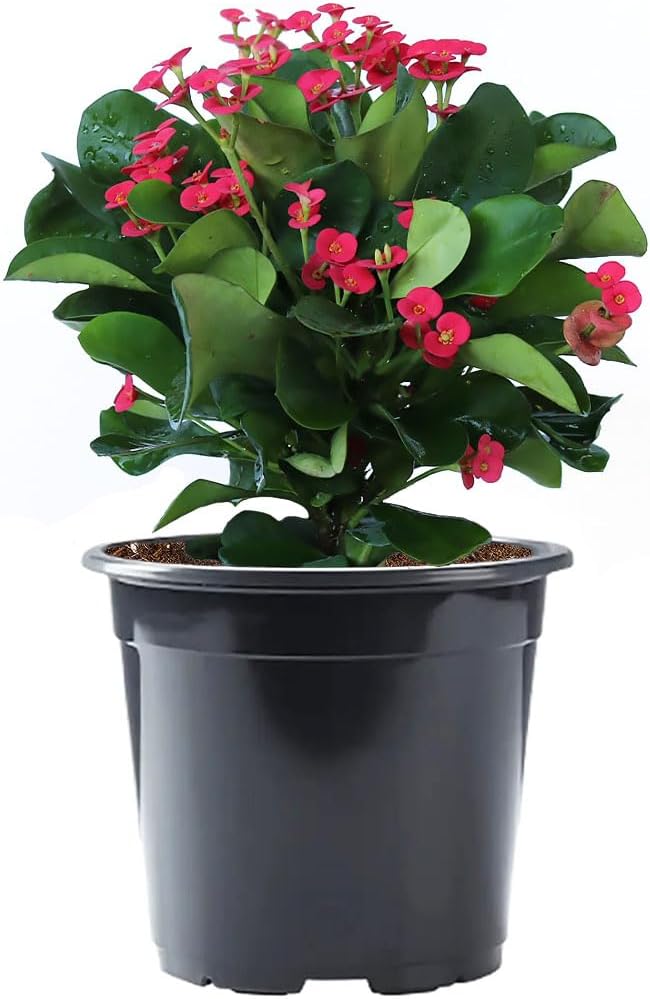
American Plant Exchange Crown of Thorns (Euphorbia milii) — 6-inch Potted Flowering Succulent
| Indoor Outdoor Usage | Outdoor |
|---|---|
| Expected Blooming Period | Year Round |
| USDA Hardiness Zone | 9,10,11 |
| Moisture Needs | Little To No Watering |
| Sunlight Exposure | Partial Shade |
This 6-inch potted Crown of Thorns (Euphorbia milii) is a straightforward choice for sunny pots and low-water gardens. It produces vivid red bracts most of the year in warm conditions and has thick, water-storing stems that make it tolerant of infrequent watering. Typical use is as a sun-loving container specimen on a patio, a sunny windowsill, or in a rock garden where it provides long-lasting color and sculptural texture. Notable features include year-round blooming in warm zones, suitability for full sun or bright indoor light, and a preference for well-draining loam. In practice the plant demands minimal day-to-day care beyond occasional deep watering after the soil dries and routine checks to prevent root rot. Important limitations are its outdoor hardiness limited to USDA zones 9 to 11 and that blooms depend on light and maturity so a newly shipped plant may not flower immediately. Also handle with care because the sap can be irritating.
Best for: Buyers who want a low-maintenance, sun-loving potted plant that delivers reliable color and sculptural form with minimal watering and routine care.
Less Ideal for: People seeking frost-hardy outdoor shrubs or those who prefer non-toxic plants for homes with curious pets or small children should consider alternatives.
- Drought-tolerant stems store water so it copes with infrequent watering
- Bright, long-lasting red blooms provide color almost year-round in warm sites
- Compact 6-inch pot size is ready for container display on sunny patios or windows
- Prefers full sun to bright light, making it ideal for hot, exposed spots and xeriscaping
- Only reliably hardy outdoors in USDA zones 9–11 so cooler climates need indoor wintering
- Sap can irritate skin and eyes so handling requires caution
Verdict: A dependable, low-water potted option for sunny containers that reliably provides long-lasting color and resilient structure in warm climates.
The Three Company Lavender (2-Pack) Live Fragrant Perennial in 1 qt Pots

| Sunlight Exposure | Full Sun |
|---|---|
| USDA Hardiness Zone | 5-9 |
| Moisture Needs | Low |
| Expected Blooming Period | Late Spring to Summer |
| Unit Count | 2 Count |
This 2-pack of live lavender arrives in 1-quart pots and is intended for outdoor, full-sun use in containers, borders, or small herb gardens. The plants produce classic purple blooms and a strong lavender scent that attracts pollinators and can help deter deer. They are described as a compact, mounded perennial that performs best in well-draining soil with low moisture needs once established, making them well suited to sunny pots on patios or balconies. Practical benefits include attractive fragrance and pollinator value plus low ongoing water needs after establishment. Limitations to expect are that they require full sun and excellent drainage to thrive, so heavy clay pots or poorly draining mixes will impair growth, and the small 1-qt starting size means you may need to transplant to a larger container for long-term display or fuller coverage. For gardeners in USDA zones 5 to 9 these are a straightforward option for sunlit pots but plan to monitor watering only until roots establish.
Best for: Gardeners who want easy-care, fragrant sun plants for pots or small borders and prefer picking varieties with visible performance and practical benefits.
Less Ideal for: People who need shade-tolerant or moisture-loving plants or who want instant large specimens without repotting or additional growth time.
- Fragrant purple blooms that attract pollinators
- Low moisture needs after establishment, good for drier spots
- Compact mounded habit suitable for containers and borders
- Sold as a two-plant set for instant visual impact
- Ships in small 1-qt pots so plants may need repotting for long-term container growth
- Requires full sun and well-draining soil so not forgiving in shaded or poorly drained sites
Verdict: A compact, fragrant two-pack of lavender that gives reliable full-sun container color and pollinator value with minimal watering once established.
Costa Farms Ixora Live Outdoor Shrub, 2–3 ft

| Indoor Outdoor Usage | Outdoor |
|---|---|
| Sunlight Exposure | Full Sun |
| USDA Hardiness Zone | 10 |
| Moisture Needs | Regular Watering |
| Expected Blooming Period | Year Round |
The Costa Farms Ixora is a ready-to-plant, 2–3 foot potted shrub that delivers dense clusters of star-shaped flowers and evergreen, leathery foliage for sunny patios and containers. Designed for full sun, it performs best when placed where it receives six or more hours of direct light and consistent moisture without waterlogging. Buyers get a plant shipped in a plastic grow pot and can use it as a colorful focal point in a sun-drenched container or planted in sandy, well-draining beds in USDA zone 10 and warmer. Notable features include year-round blooming in frost-free conditions, pollinator-friendly nectar that attracts bees and hummingbirds, and simple water-based care instructions. Practical benefits are immediate visual impact from its mature size and relatively low maintenance if grown in the recommended conditions. Limitations are climate dependence and the need to bring the plant indoors or treat it as seasonal in cooler areas since it is hardy only to zone 10, and the potting container is basic plastic rather than decorative.
Best for: Buyers who want an easy, ready-to-display sun-loving shrub for a full-sun patio or pot and prefer a low-risk plant that establishes quickly and produces immediate color.
Less Ideal for: People in cool or frosty climates looking for a year-round outdoor specimen without moving plants indoors should choose a hardier alternative.
- Provides vibrant, near-continuous blooms in full sun for strong visual impact
- Arrives potted at 2–3 feet tall for instant container display
- Attracts pollinators such as bees and hummingbirds
- Simple care routine: regular watering and bright direct sunlight
- Only reliably hardy in USDA zones 10 and warmer so not frost-tolerant
- Supplied in a basic plastic grower pot rather than a decorative container
Verdict: A plug-and-play sun-loving shrub that gives instant, pollinator-attracting color for warm, full-sun pots and patios.
Choosing the Right Plants for Pots in Full Sun: Key Factors to Consider
Sun and Heat Tolerance
Plants in full sun pots will face stronger radiation and higher leaf temperatures than those in beds. Choose species labeled for full sun that maintain leaf health under prolonged exposure; some plants will scorch or drop foliage even if they flower in open light. Consider plants with reflective or hairy foliage which can reduce leaf temperature, and recognize that young transplants take time to acclimate.
Sun tolerance affects placement and microclimate decisions too. A pot on a dark deck surface heats more than one on light gravel, so factor location when deciding how sun-hardy your plant needs to be.
Container Rooting Behavior
Roots in pots are confined and can become root-bound faster than in the ground. Prefer plants known to tolerate restricted root space without excessive stress or frequent repotting. Shallow-rooted or fibrous-rooted species often adapt well to standard 10-14 inch diameter pots, while deep tap-rooted plants can suffer unless given tall containers.
Think about how quickly a plant fills the pot: aggressive root spreaders may need regular division or larger containers to avoid decline, while slow rooters can stay undisturbed for seasons.
Drought Response and Water Needs
Full sun containers dry out quickly, so your plant's drought tolerance is a practical factor. Some species can pause growth and bounce back after infrequent watering, while others show irreversible stress after short dry spells. Look for plants described as drought-tolerant or water-wise for low-maintenance pots.
Also consider how visible stress is. Some plants will brown and recover; others will drop flowers and take longer to refill container volume. Match plant water habits to your watering schedule or irrigation options.
Size and Growth Habit
Containers limit horizontal and vertical space. Choose plants with compact habits or ones that respond well to pruning to keep them in scale with the pot. Cascading or trailing varieties are useful for hanging or tall planters, while clump-forming or mounding plants suit standard pots.
Predict how large a specimen will be at peak season and plan pot diameter accordingly. A plant that doubles in spread each season will need different care than one that holds a steady, compact clump.
Flowering Period and Seasonal Interest
Longevity of flowers matters for container impact. Plants that offer repeated blooms or long flowering windows reduce the need for frequent replanting or replacement. Also consider foliage interest and texture during non-flowering periods so a container still looks purposeful.
Combine plants with staggered bloom times or include evergreens and ornamental foliage to maintain presence across the season.
Pest and Disease Resilience in Containers
Containers have unique disease dynamics because of concentrated root zones and moisture patterns. Choose plants that are less prone to common fungal problems in pots or that tolerate occasional stress without severe decline. Some species attract fewer pests in isolated container settings, which reduces interventions.
Consider the ease of monitoring and treating issues in a pot. Plants that allow clean pruning or surface treatment help you manage outbreaks with minimal disruption.
Best Potting Mix and Drainage for Sunny Containers
A free-draining, lightweight potting mix helps prevent root rot and reduces heat retention in the root zone. Use mixes with components like coarse sand, perlite, or horticultural grit to improve drainage while retaining enough organic matter for nutrients. Avoid heavy garden soil that compacts and holds heat.
- Include a chunky drainage layer only if it prevents soil from escaping the pot; most mixes with larger particles are sufficient.
- Choose pots with adequate drainage holes and elevate them slightly to let water flow freely.
- Top-dress with mulch such as small gravel or bark to slow surface evaporation on very hot sites.
Container Size and Placement Strategies
Match pot depth to the plant's root habit and choose wider containers for mounding plants. Placing pots where they receive morning sun and afternoon shade can reduce heat stress for marginal sun-tolerant species. Conversely, if you want maximum heat exposure for truly sun-loving plants, select locations that get consistent direct light all day.
- Use lighter-colored pots to reflect heat and keep roots cooler.
- Group pots to create microclimates and reduce individual watering needs.
- Elevate pots off hot surfaces when possible to improve air circulation and reduce soil temperature.
Watering and Irrigation Tips for Full Sun Pots
Watering frequency is driven by pot size, soil mix, and local climate. In full sun, check moisture often: stick your finger into the mix to the second knuckle or use a moisture meter. Deep, thorough watering encourages roots to explore the whole pot rather than surface-only roots that stress quickly in heat.
- Water in the morning to reduce fungal issues and to give plants fresh moisture before midday heat.
- Use slow-watering methods like drip or wicking systems if you cannot water daily.
- Mulch the top of the pot lightly to reduce evaporation but do not overapply materials that retain excess moisture against stems.
Companion Planting and Container Combinations
Combine plants with similar sun and water needs to simplify care. A typical successful sunny container pairs a bold focal plant with lower-growing, drought-tolerant fillers and a trailing spiller to soften the pot edge. Keep root competition in mind and avoid pairing very aggressive rooters with slow growers.
- Stick to plants that share full-sun preferences and watering schedules.
- Use contrasting foliage textures to extend visual interest beyond flowers.
- Rotate plant components seasonally when bloom windows end to keep displays fresh.
How We Chose the Best Plants for Pots in Full Sun
We selected plants for pots in full sun using practical, gardener-focused filters that reflect real container conditions. Primary evaluation criteria included rated sun tolerance and heat resistance to ensure plants can thrive in prolonged direct light, and container performance which considers typical pot depth, root restriction tolerance, and growth habit. We also assessed water and drought response to favor species that survive or recover from the faster soil-drying common in sunny containers, and bloom duration or seasonal interest so container displays remain attractive for longer. Size control and pruning ease were considered to ensure plants stay proportionate to common pot sizes and are simple to manage. Disease and pest susceptibility in container settings rounded out our criteria to favor resilient choices. We excluded plants that reliably need significant in-ground root space, constant shade, or highly specialized greenhouse conditions. Varieties requiring frequent transplanting or aggressive soil amendments were deprioritized unless they offered clear container advantages.
FAQ
How often do pots in full sun need watering?
It depends on pot size, soil mix, and temperature, but many full-sun containers need daily watering in hot weather. Check moisture by feeling the soil an inch or two down; water thoroughly when it begins to dry to encourage deeper roots.
Can any plant survive full sun in a small pot?
Not any plant. Some species are intolerant of intense heat or restricted root space and will decline quickly. Choose plants labeled for full sun and known to handle container growth or use larger, deeper pots for more demanding varieties.
Will sunburned leaves recover in containers?
Often new growth will replace damaged leaves if the plant is otherwise healthy and stress is addressed by moving the pot or adjusting watering. Severe or repeated sunscald may permanently deform growth, so prevention and gradual acclimation are preferable.
Are there special fertilizers for potted plants in full sun?
Containers need regular feeding because nutrients wash out with frequent watering. Use a balanced, water-soluble fertilizer or slow-release granules according to label rates; adjust feeding during peak bloom to support flowering.
How do I overwinter sunny potted plants?
Overwintering depends on hardiness and local climate. For tender sun-loving plants, bring pots indoors to a bright, cool location or protect them with mulch and insulated wrapping. Alternatively, treat them as annuals and replace each season based on your gardening goals.
Final Verdict
When selecting plants for pots in full sun, prioritize species that tolerate heat, manage water stress, and remain proportionate to containers. Focus on container-friendly root behavior, drought recovery, and bloom longevity to ensure attractive, low-maintenance displays. Balance tradeoffs between dramatic flowering and maintenance needs: high-impact bloomers may demand more water and feeding, while foliage-forward or drought-tolerant choices need less intervention. Use the criteria above to match plants to your pot size, location, and care routine so you can confidently enjoy sunny container plantings.
