

Note: This article contains affiliate links. If you click on these links and make a purchase, I may earn a small commission at no extra cost to you. This helps support my research and content. Read my full affiliate disclosure here.
Growing in a large container changes what plants need from soil, water, and light. Plants suited to big outdoor pots must develop deep, vigorous root systems, tolerate variable moisture between waterings, and still produce reliable blooms or foliage through heat and wind. In this guide we shortlisted seven robust options that perform well in roomy containers, focusing on traits that matter in a real garden: container vigor, drought tolerance, sun/shade adaptability, and maintenance needs. Below you will find practical notes on how each plant behaves in a large pot and the evaluation criteria we used to choose them.
Top Picks at a Glance
| Best Overall The best all-around choice for most situations | Tropical Plants of Florida Braided Hibiscus Tree (Mixed Colors) |  |
| Best Quality Built to a higher standard if you want something more solid | American Plant Exchange Black Diamond Crimson Red Crape Myrtle Tree (7-Gallon, 2–3 ft) |  |
| Best Value The sweet spot between price and what you get | Plants for Pets Hesperaloe parviflora (Red Yucca) live succulent, 1-gallon |  |
| Best Budget The cheapest option that still gets the job done reliably | Giant Elephant Ear (3 Bulbs) Colocasia esculenta |  |
| Highest Rated A top-rated pick with lots of positive feedback | Blooming & Beautiful Yuletide Camellia, Live Evergreen Flowering Shrub, 3 Gallon |  |
| Most Popular A crowd favorite that many people choose with confidence | Perfect Plants Confederate Jasmine (2-Pack), Star Vine, 1 Gal |  |
| Best Seller A high-volume bestseller chosen again and again | PERFECT PLANTS Frostproof Gardenia Live Plant, 1 Gallon |  |
Tropical Plants of Florida Braided Hibiscus Tree (Mixed Colors)

| Indoor Outdoor Usage | Outdoor |
|---|---|
| Expected Blooming Period | Spring to Fall |
| Sunlight Exposure | Full Sun |
| Other Special Features of the Product | Attracts Pollinators, Pet Friendly |
This braided hibiscus tree brings a vertical, flowering focal point to a sunny patio or large container. The plant is sold with 3 to 4 mixed flower colors and a decorative braided trunk, which makes it an attractive option for entryways, patios, or hummingbird-friendly containers. It prefers full sun and consistent moisture in warm months, with reduced watering and slight drying between waterings in cooler conditions. Practical benefits include strong visual impact from repeated spring-to-fall blooms and the added bonus of attracting pollinators. Because it is an outdoor plant that thrives in clay-type soils and summer planting, it is best used where it will receive several hours of direct sun. Buyers should note this is a live plant so appearance and exact bloom colors vary, and it requires regular watering and appropriate winter protection in cooler climates. Expect to maintain it as a seasonal or container specimen rather than a no-maintenance landscape shrub.
Best for: Buyers who want a visible, pollinator-attracting container plant for a sunny patio or porch and who are comfortable providing seasonal watering and routine care.
Less Ideal for: People seeking a low-maintenance houseplant or gardeners in cool, consistently cloudy climates who cannot provide several hours of direct sun.
- Mixed-color blooms provide a varied, eye-catching display suitable for patios and entryways
- Braided trunk adds vertical structure and decorative appeal in containers
- Attracts pollinators, making it suitable for wildlife-friendly plantings
- Flowers reliably from spring through fall under proper sun and water conditions
- Requires regular watering and seasonal care rather than being low maintenance
- Performance depends on full sun exposure and suitable climate, so it may need winter protection
Verdict: A showy, pollinator-friendly potted hibiscus that delivers season-long blooms and decorative structure for sunny patios when given regular care.
American Plant Exchange Black Diamond Crimson Red Crape Myrtle Tree (7-Gallon, 2–3 ft)

| Indoor Outdoor Usage | Outdoor |
|---|---|
| Expected Blooming Period | Year Round |
| Sunlight Exposure | Partial Shade |
| Moisture Needs | Moderate Watering |
| Material Features | Live Plant, Nursery Pot, Potting Soil |
This potted Black Diamond Crimson Red crape myrtle is a ready-to-plant landscape accent sized for large pots and patios. It arrives in a 7-gallon nursery pot at about 2–3 feet tall so you can position it immediately as a focal point or container specimen. Expect vivid crimson blooms through much of the season and a drought-tolerant habit that reduces irrigation needs once established. Its moderate watering and partial-shade tolerance make it flexible for locations that do not get full sun all day. Being sold in potting soil and a plastic container means it is simple to move, repot, or place on a patio, and it is ASPCA-verified as pet-friendly for mixed outdoor spaces. Limitations to plan for are that it is a living tree so growth and bloom timing vary with local climate and maintenance, and a 7-gallon root volume will require repotting or planting in the ground over time for long-term size and vigor. For someone who wants a high-impact, low-fuss flowering tree in a large container, it delivers strong visual payoff.
Best for: Gardeners who want a high-impact flowering specimen for a large pot or patio and value low-maintenance, drought-tolerant plants that deliver strong seasonal color.
Less Ideal for: People seeking an instant large tree or a completely maintenance-free plant that can remain in the same container indefinitely.
- Ready-to-plant 7-gallon nursery pot simplifies container placement
- Vibrant crimson flowers provide a strong seasonal focal point
- Drought-tolerant once established, reducing watering needs
- Suitable for partial shade which increases planting location options
- 7-gallon container limits long-term root space and will need repotting or planting in ground
- Actual bloom timing and vigor depend on local climate and seasonal care
Verdict: A compact, showy crape myrtle that gives large pots year-round red blooms with low watering needs, ideal for creating a striking patio focal point.
Plants for Pets Hesperaloe parviflora (Red Yucca) live succulent, 1-gallon

| Indoor Outdoor Usage | Outdoor |
|---|---|
| Expected Blooming Period | Summer |
| Sunlight Exposure | Full Sun |
| USDA Hardiness Zone | 7 |
| Moisture Needs | Moderate Watering |
This live red yucca (Hesperaloe parviflora) is a hardy, yucca-like succulent intended for outdoor sun exposure; each order arrives in a 1-gallon nursery pot ready to go into a sunny balcony container or landscape bed. It produces arching blue-green leaves and coral-red tubular flowers on tall stalks in summer through fall, and it tolerates heat, drought, poor soils and cold down to around 0°F once established. Typical use is planting in a large pot or in-ground in full sun where occasional summer irrigation will encourage blooms. Notable features include its perennial habit, flowering showiness, and adaptability to sandy or poor soils. Practical benefits are low daily care, strong visual impact on a sunny balcony, and resilience through seasonal extremes. Limitations are that mature plants can reach several feet across and tall flower stalks may need space or pruning each spring, and a 1-gallon size means it will need repotting or time to reach full ornamental size.
Best for: A buyer who prioritizes a dependable, low-maintenance sun-loving plant for a sunny balcony or patio and wants reliable seasonal blooms with minimal daily care.
Less Ideal for: Not a great fit for shoppers wanting an instant small-screen ornamental or those with only deep shade balconies; also avoid if you need a permanently compact container specimen.
- Drought tolerant and heat loving so it survives hot, sunny balcony conditions with minimal watering.
- Flowers on tall stalks in summer to fall, giving strong seasonal color without extra fuss.
- Adaptable to poor, sandy soils so it performs well in lightweight container mixes.
- Evergreen foliage provides year-round architectural interest in a balcony planting.
- Sold in a 1-gallon pot so it requires repotting or time to grow to its mature size.
- Can produce 3–6 ft flower stalks that need room or annual pruning to control height.
Verdict: Choose this red yucca when you want a dependable, low-care flowering succulent that thrives in full sun and delivers seasonal color on a sunny balcony.
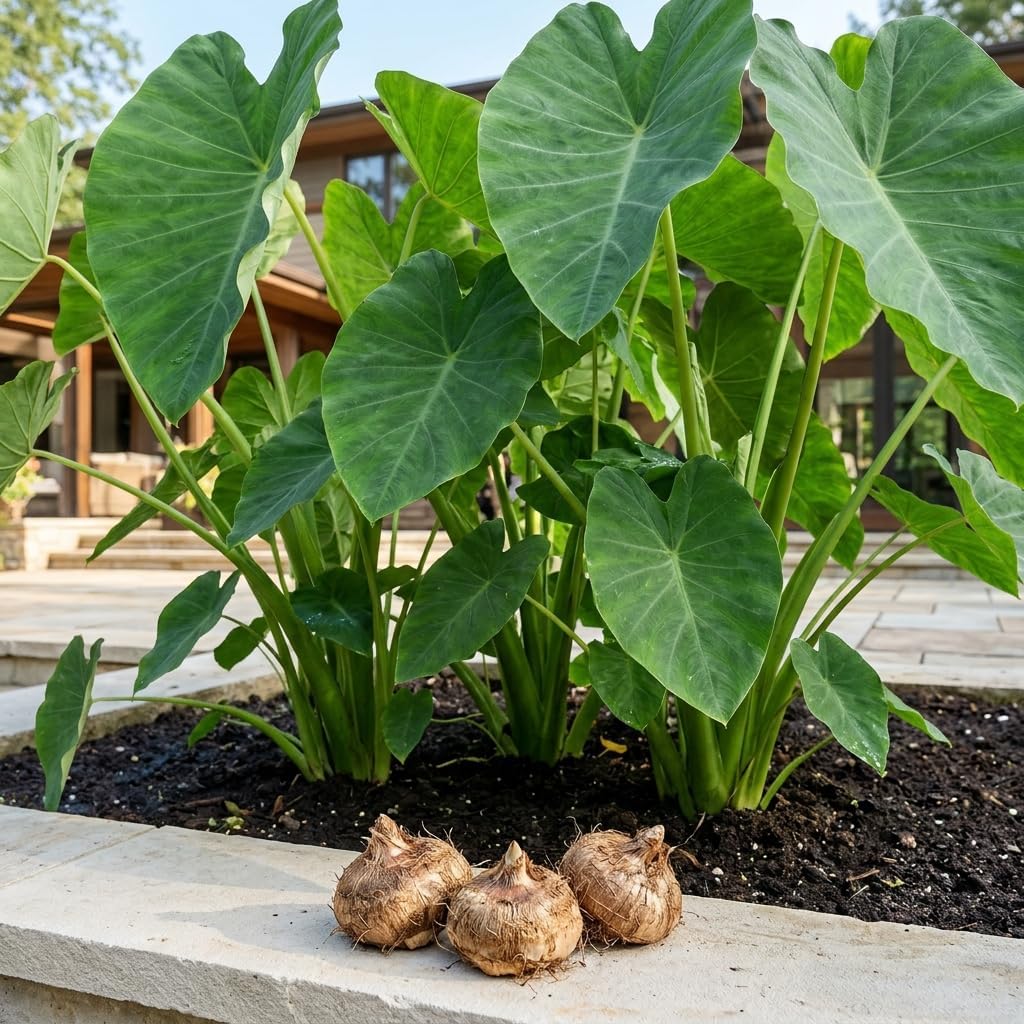
Giant Elephant Ear (3 Bulbs) Colocasia esculenta
| Quantity | 3 bulbs |
|---|---|
| Botanical name | Colocasia esculenta |
| Intended use | Outdoor pots and landscape beds |
These three Colocasia esculenta bulbs produce classic giant elephant ear plants valued for their huge, heart-shaped leaves that create strong tropical presence in large pots or landscape beds. Plant the dormant corms in spring after frost, place them in sun to partial shade, and keep the soil rich and consistently moist while they grow; in a sizable container they develop quickly into tall, architectural foliage that works well as a focal point on a patio or by a pool. The listing highlights easy seasonal use: lift and store corms in cold regions or leave them in warm climates where they behave as perennials. Practical benefits include dramatic visual impact without relying on flowers, straightforward planting and maintenance, and suitability for container culture. Limitations are that cold hardiness depends on location so extra winter care may be required, and the bulbs need ample water and a large pot to reach their full size, which may demand more space and attention than compact container plants.
Best for: Gardeners who want bold, architectural foliage for large outdoor pots and who prioritize strong visual impact on a budget.
Less Ideal for: People with only small containers, very dry sites, or those unwilling to provide winter storage in cold climates.
- Creates immediate tropical focal point with very large foliage suitable for big pots
- Sold as three bulbs so you can fill multiple containers or plant in a group
- Simple planting and seasonal care: plant after frost and lift corms where winters freeze
- Cold hardiness varies so bulbs often require lifting and winter storage in cooler climates
- Needs consistently moist, rich soil and a substantial container to thrive
Verdict: Buy this three-bulb pack when you want an affordable, high-impact tropical foliage plant for large containers outdoors.
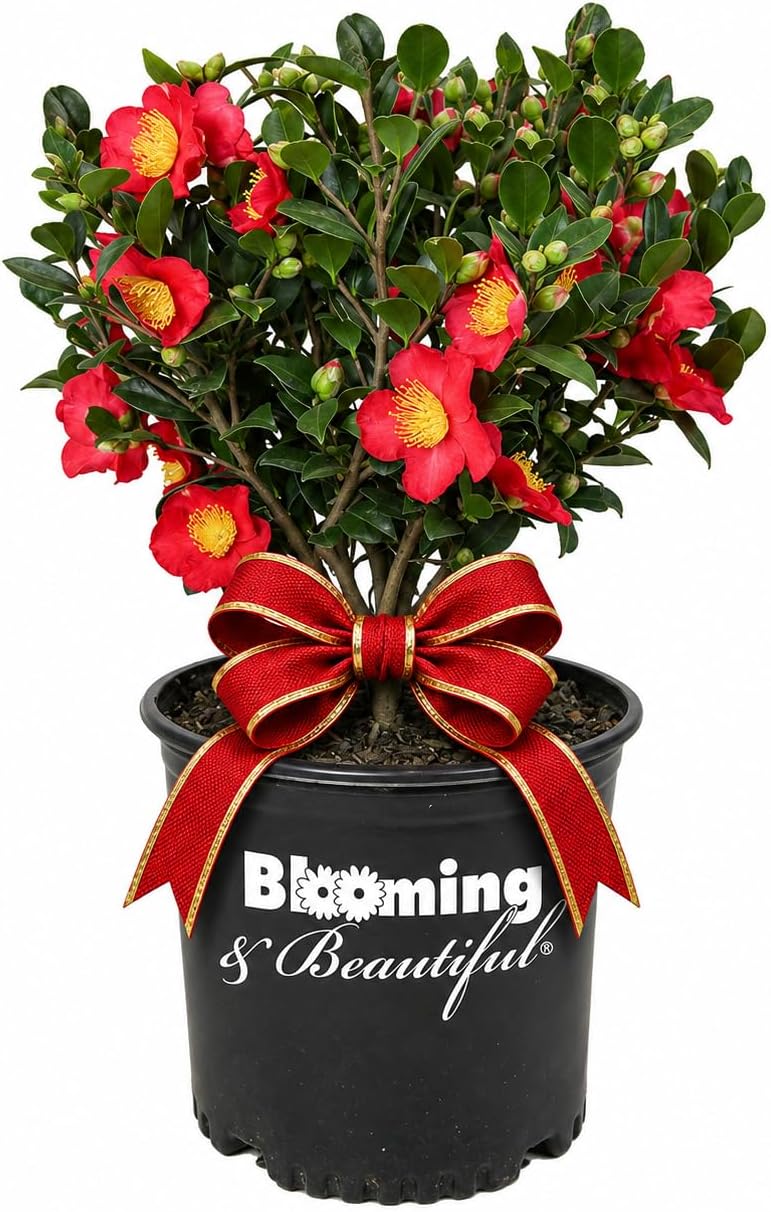
Blooming & Beautiful Yuletide Camellia, Live Evergreen Flowering Shrub, 3 Gallon
| Expected Blooming Period | Fall to Winter |
|---|---|
| Sunlight Exposure | Full Sun |
| USDA Hardiness Zone | 7 |
| Moisture Needs | Moderate Watering |
| Expected Planting Period | Spring |
This 3-gallon Yuletide camellia arrives nursery-grown with established roots and glossy evergreen foliage, making it a low-risk choice for gardeners who want reliable seasonal color. It produces small orange-red blooms with gold stamens in fall through winter, and its year-round foliage helps a container or small garden look attractive beyond the bloom period. Typical use is as a specimen shrub, foundation planting, or planted in a large pot on a protected patio where it will receive morning sun and afternoon shade. The plant is best in acidic, moist, well-drained soil and is described for USDA zones 7 to 10. Practical benefits include strong root establishment at purchase, extended bloom time, and compact upright habit that fits a large pot or tight landscape space. Limitations are climate and site needs: it is not cold-hardy below zone 7 and prefers specific light and soil acidity, so it will need placement or winter protection in cooler areas and monitoring of soil moisture and pH for best performance.
Best for: Gardeners who prioritize a dependable, professionally grown shrub that establishes quickly and provides seasonal blooms and year-round foliage in a container or protected patio setting.
Less Ideal for: Gardeners in cold climates below zone 7 or those who cannot provide acidic soil conditions and consistent moisture should consider hardier or lower-maintenance alternatives.
- Nursery-grown with established root system for quicker establishment
- Produces late-season orange-red blooms when many plants are dormant
- Evergreen foliage provides year-round structure and interest
- Compact upright habit suitable for large pots or small garden sites
- Recommended for USDA zones 7–10 so not suitable for colder climates
- Prefers acidic, moist, well-drained soil which may require soil amendments
Verdict: Choose this Yuletide camellia when you want a reliably established evergreen shrub that delivers late-season color and fits well in a large pot or protected outdoor spot.
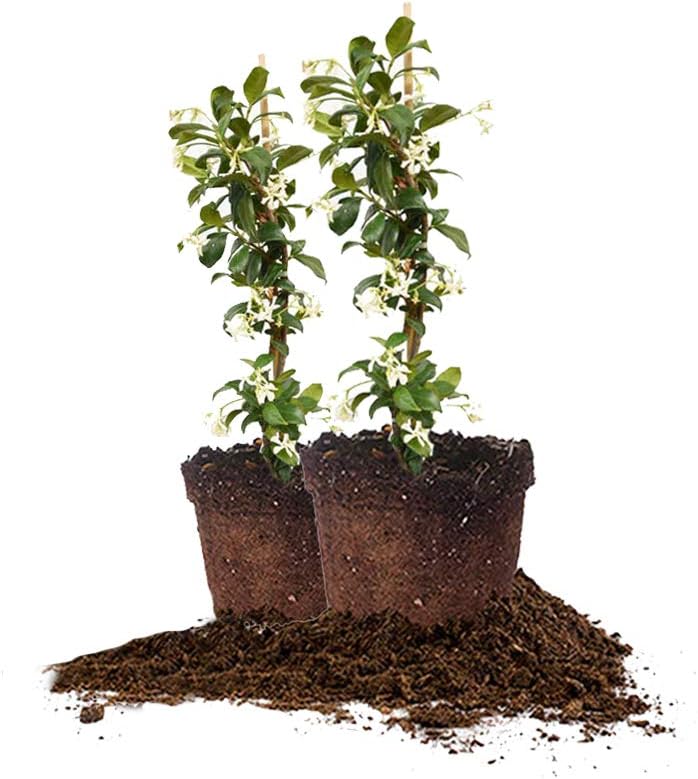
Perfect Plants Confederate Jasmine (2-Pack), Star Vine, 1 Gal
| Indoor Outdoor Usage | Outdoor |
|---|---|
| Expected Blooming Period | Spring |
| Sunlight Exposure | Full Sun, Partial Shade |
| Moisture Needs | Moderate Watering |
| Unit Count | 1 Count |
These two Confederate jasmine vines arrive in individual 1‑gallon nursery pots and are meant to be trained on fences, trellises, railings or other supports to form a fragrant, evergreen screen. They perform best in full sun to part shade and are rated for USDA zones 7–11, so on a shaded porch they will tolerate lower light but bloom most reliably where they get some sun. The plants are described as easy to establish; new arrivals need deep watering every day or two for the first two weeks and can drop some leaves while roots settle. Notable features are the glossy evergreen foliage, sweet white pinwheel flowers in spring and early summer, and organic plant material. Limitations include that each order contains small 1‑gallon pots so expect a period of growth before reaching the listed mature height, and some variability between the two plants. Buyers should plan to provide a structure and basic training to get a neat coverage and to monitor moisture while the plants establish.
Best for: Gardners who want a fragrant, evergreen climbing vine to train on a porch trellis or railing and who prefer a low‑maintenance plant that establishes quickly with basic watering.
Less Ideal for: Those seeking instant privacy or mature coverage right away or gardeners unwilling to train or support vines as they grow.
- Two evergreen vines per order for quicker coverage when planted together
- Fragrant white spring blooms that add scent to a porch area
- Tolerates full sun to partial shade, making it adaptable to sheltered porches
- Ships in 1‑gallon nursery pots so plants are ready to plant immediately
- Described as easy to establish with straightforward watering guidance
- Plants are small 1‑gallon specimens so visual impact takes time as they grow to mature height
- Some leaf drop and minor shipping damage to stems is possible during establishment
Verdict: A practical choice for porch gardeners who want a fragrant, adaptable evergreen vine they can train for seasonal blooms and long‑term screening.
PERFECT PLANTS Frostproof Gardenia Live Plant, 1 Gallon

| Indoor Outdoor Usage | Outdoor |
|---|---|
| Other Special Features of the Product | Deer Resistant, Fragrant |
| Expected Blooming Period | Summer |
| Sunlight Exposure | Full Sun, Partial Shade |
| Expected Planting Period | Spring |
This 1-gallon Frostproof gardenia is a compact, fragrant shrub intended for outdoor landscape use. It arrives as a live plant with a recommended mature height around 5 feet and is typically planted in mulch beds, as a low hedge, or as an accent near entries where its scent can be enjoyed. Notable features include deer resistance, a history of reliable spring and summer blooms, and included easy-to-use plant food for a simpler start. The plant prefers full sun to partial shade, so it will tolerate some shaded locations but performs best where it receives several hours of direct light. Practical benefits for a cautious buyer are straightforward care, minimal pruning to maintain shape, and an aromatic presence that enhances small gardens or patios. Limitations are that it is sold as a 1-gallon specimen so it will need time to reach mature size, and the product text notes shipping exclusions to a few states which affects availability for some buyers.
Best for: Buyers who want an easy-care, scented shrub for a small garden or patio and prefer reliable, low-maintenance plants that establish steadily rather than instant large specimens.
Less Ideal for: Gardeners seeking an immediate tall screening hedge or a plant for deep, full shade should consider alternative species better suited to dense shade or instant privacy needs.
- Fragrant white blooms that enhance outdoor seating areas during spring and summer
- Deer resistant variety reduces need for protective measures in deer-prone yards
- Includes plant food to simplify initial establishment
- Tolerates partial shade, allowing placement in spots without full sun all day
- Sold as a small 1-gallon plant so it requires time to reach mature size
- Per product notes it does not ship to certain states which limits access for some buyers
Verdict: Choose this gardenia if you want a low-maintenance, fragrant shrub that tolerates some shade and adds seasonal white blooms to small outdoor spaces.
Choosing the Right Plants for Large Pots Outdoors: Key Factors to Consider
Container Vigor and Root Behavior
How a plant develops roots in a deep, wide pot determines whether it will thrive or become rootbound. Plants with vigorous but non-circling roots use large volumes of potting mix efficiently, anchoring tall stems and drawing moisture across the root ball. Slow-rooting species may never fully exploit a big container, leaving unused soil that dries unevenly. Consider the typical root habit when choosing plants so you match pot size and soil depth to a plant that will fill and stabilize the container.
In practice, inspect nursery root balls before planting and choose specimens with evenly distributed roots. For very vigorous rooters, plan for regular repotting or root pruning to prevent girdling. Well-drained, airy potting mix helps encourage healthy root spread in large-volume containers.
Watering Frequency and Drought Response
Large pots hold more water than small containers, but they can still dry out unevenly, especially in heat and wind. Some plants tolerate intermittent drying and will signal stress slowly, while others suffer quickly when the outer inch of mix dries. Understanding a plant's drought tolerance helps you set a realistic watering schedule and irrigation method for the pot.
Consider how the plant responds to infrequent watering: does it wilt and recover, or does it drop foliage and fail to bounce back? Use mulch or top dressing to reduce surface evaporation and choose moisture-retentive mixes for species that need steady moisture. Conversely, for plants prone to root rot, pick fast-draining media and water less often.
Sun Exposure and Heat Tolerance
Large containers placed on patios or near walls often receive more reflected heat and light than garden beds. Plants selected for big pots should match the expected sun exposure and be able to tolerate temperature swings. Full-sun locations call for species that can withstand intense midday heat and high evaporative demand. Shadier spots require plants that maintain color and form with lower light levels.
When positioning a large pot, remember that movement is possible early in the season but heavy pots are harder to relocate once planted. Match the plant to the microclimate where the pot will sit to avoid repeated transplant stress.
Seasonal Interest and Bloom Duration
A large container can serve as a focal point, so choose plants that offer sustained seasonal interest. Some choices produce a short, spectacular bloom followed by a long period of decline, while others provide steady color or attractive foliage for months. Consider whether you want peak displays for events or continuous coverage through the season.
Perennial or woody plants in pots can give multi-season structure, while annuals and bedding plants often provide more immediate color. Mix plants with staggered bloom times or combine flowering and foliage plants to keep the container attractive between peak bloom periods.
Maintenance and Pruning Needs
Maintenance for large pots ranges from nearly zero to fairly intensive depending on the plant. Some container-friendly species need little more than occasional deadheading and light feeding, while others require regular pruning, staking, or winter protection. Large pots can conceal pest or disease issues in the root zone, so plan for periodic inspection.
Assess how much time you can commit to container care. For low-maintenance setups pick self-cleaning or slow-growing plants. If you enjoy grooming and seasonal refreshes, vigorous flowering choices will reward you but demand more frequent deadheading, fertilizing, and thinning.
Cold Hardiness and Overwintering Strategy
In many climates, large outdoor pots are exposed to colder soil temperatures than in-ground planting. A plant's hardiness influences whether it can stay in a pot through winter or needs to be moved or lifted. Some woody or herbaceous plants tolerate pot overwintering if insulated or tucked against a protected wall; tender species often require bringing indoors or treating as annuals.
When you select plants for big containers, factor in your local winter extremes and whether you can provide frost protection, mulching, or temporary relocation. Plan container material and size with overwintering in mind since large pots are harder to move.
Matching Plant Form to Pot Scale
Large pots allow you to combine vertical structure, mid-height fillers, and trailing plants in one composition. Think about the visual proportions: a tall central plant gives height, mid-level foliage adds body, and spillers soften the edge. In practice, a single vigorous specimen can also be striking if the pot is large enough to show its form without crowding.
Consider root space when planning multi-plant arrangements. Crowding multiple heavy feeders in one big pot can lead to competition and more frequent watering. Alternatively, use a large pot for one or two focal plants with lightweight annuals to add seasonal accents.
- Use a central anchor plant for height and structure
- Add mid-level plants for texture and color contrast
- Include trailing spillers to conceal the pot rim
Soil Mix and Drainage Tips for Big Pots
Large containers need a potting mix that balances moisture retention and aeration. Dense mixes can remain soggy in the center and cause root rot, while overly fast-draining mixes may leave the root ball too dry between waterings. Aim for an open, organic-rich mix with good drainage and some moisture-holding components for steady supply.
Include drainage holes and consider adding a layer of coarse material at the bottom only if it improves flow; most of the water management comes from the mix itself. For very large pots, check moisture at several depths with a probe or finger to avoid under- or over-watering.
- Choose airy, well-draining mixes with organic matter
- Avoid compacted garden soil that prevents root spread
- Monitor moisture at different depths in large volumes
Fertilizing Strategies for Long-Season Containers
Big pots require regular feeding because nutrients wash out with watering and because larger plants have high nutrient demands. Slow-release fertilizer incorporated at planting can provide steady nutrition, supplemented by periodic liquid feeds during the growing season for extra bloom or leaf growth.
Match feeding to plant type: heavy bloomers and fast growers benefit from more frequent, balanced feeding, while foliage-focused specimens may need less. Always follow recommended rates to avoid salt buildup, and occasionally flush the container with plain water to prevent residue accumulation.
- Use slow-release fertilizer at planting plus periodic liquid feed
- Adjust feeding frequency for heavy bloomers vs foliage plants
- Flush containers occasionally to prevent fertilizer buildup
Placement and Environmental Considerations
Think about wind, reflected heat, and sun exposure when siting large pots. A container placed on a south-facing patio gets more intense sunlight and may need plants with high heat tolerance. Sheltered corners can host specimens that prefer reduced wind and milder microclimates.
Large pots are heavy once filled, so plan locations ahead of planting. If you might need to move them seasonally, use pot stands with casters temporarily while arranging plants and then remove them for stability.
- Match plant light requirements to the pot location
- Avoid exposed sites for top-heavy plants without staking
- Plan access for watering and maintenance once the pot is filled
Dealing with Frost and Winter Care
In cold regions, containers can freeze faster than garden soil because of their exposed sides. Insulate pots with bubble wrap, burlap, or move them to a sheltered spot against a wall to moderate temperature swings. For plants that are marginally hardy, consider mulching the root zone heavily or lifting the plant out of the pot for protected overwinter storage.
Alternatively, treat tender plants as annuals and replace them each year with more cold-tolerant choices. Keep in mind that very large pots are harder to move and often benefit from planting with over-wintering hardy species if you plan to leave them outside.
- Insulate or relocate pots to reduce freeze-thaw stress
- Use heavy mulch around roots for extra protection
- Consider seasonal rotation of tender and hardy plants
How We Chose the Best Plants for Large Pots Outdoors
We screened garden-worthy plants by how they behave specifically in large outdoor containers rather than in-ground beds. Our selection focused on traits that make a plant practical for big pots: root architecture and container vigor, seasonal bloom consistency, tolerance of sun and wind exposure, drought response and irrigation needs, and pest and disease resilience in a confined rooting volume. We prioritized plants that establish quickly in large volumes of potting mix and that continue to look good with routine container care such as occasional feeding and pruning. Plants that require specialized greenhouse conditions, cold-frame forcing, or obligate in-ground rooting were excluded. We also filtered out species that are invasive in container settings or that need constant, daily watering to survive. The final list balances flowering and foliage options, covering multiple sun exposures and maintenance levels so gardeners can match a plant to a specific pot location and care routine.
FAQ
How often should I water plants in large outdoor pots?
Watering frequency depends on plant type, pot material, and weather. Large pots hold more moisture but can still dry out in heat or wind, so check moisture at several depths and water thoroughly when the top few inches begin to dry. Many plants in big containers need deep watering once or twice a week in warm weather, less often in cool or wet conditions.
Can I plant several plants together in a large pot?
Yes, but match plants with similar water and light needs and consider root competition. Use one or two anchor plants plus smaller fillers to avoid overcrowding. Allow enough soil volume per plant to reduce stress and monitor for signs of competition like yellowing leaves or stunted growth.
What pot material is best for large outdoor containers?
Material choices affect insulation, weight, and moisture loss. Terracotta breathes and can dry more quickly, while resin or glazed pots retain moisture longer and weigh less. Choose a material that fits your climate and the plant's watering tolerance, and always ensure adequate drainage regardless of pot type.
How do I prevent root rot in deep pots?
Use a free-draining potting mix, avoid overwatering, and ensure drainage holes are clear. For plants sensitive to wet feet, add grit or perlite to the mix and allow the surface to dry between waterings. Repot or lift the plant if you notice persistent soggy soil or a foul smell from the root zone.
Are large pots harder to overwinter than small ones?
Large pots can be harder to move and may expose roots to colder temperatures because they sit above ground. However, greater soil volume can also buffer temperature swings. Overwintering strategy depends on plant hardiness and whether you can insulate or relocate the pot to a protected site.
When should I repot plants in large containers?
Repot when roots visibly circle the root ball, drainage slows, or growth declines despite adequate care. For very vigorous plants, repotting or root pruning every few years helps maintain health. Refreshing the top layer of mix and adding fertilizer annually can also support ongoing growth between repots.
Final Verdict
Choosing plants for large outdoor pots comes down to matching root behavior, water needs, sun exposure, and maintenance level to your location and schedule. Prioritize container vigor and drought tolerance for exposed sites, and favor steady-season interest if you want low-effort displays. Think about overwintering and pot material up front because large containers are less forgiving to frequent moves. Focus on the few criteria that matter most to you and pick plants that fit that profile. With the right soil, feeding routine, and siting, a large pot can provide striking structure and long-lasting color in any outdoor space.
