

Note: This article contains affiliate links. If you click on these links and make a purchase, I may earn a small commission at no extra cost to you. This helps support my research and content. Read my full affiliate disclosure here.
If your window boxes sit in deep shade, choosing the right plants makes the difference between a limp display and a lush, year-round focal point. Plants suited to shady window boxes tolerate low light, handle shallow soil, and still offer texture, seasonal blooms, or evergreen interest. This guide shortlists the top options we recommend for shady window boxes and explains the features that matter for healthy containers. Read on to see which plants perform best in limited light and how we evaluated light tolerance, container adaptability, and maintenance needs.
Top Picks at a Glance
| Best Overall The best all-around choice for most situations | Topiary Art Works Swedish Ivy (Plectranthus) — Two 6" Potted Plants |  |
| Best Value The sweet spot between price and what you get | SVI Rainbow Coleus Heirloom Flower Seeds (1200 Count) |  |
| Best Budget The cheapest option that still gets the job done reliably | Groundio Coleus Rainbow Mix Seeds (Heirloom, Non-GMO) |  |
| Highest Rated A top-rated pick with lots of positive feedback | Shamrock Oxalis Live Plant (3–6 in) |  |
| Most Popular A crowd favorite that many people choose with confidence | KVITER Rainbow Coleus Seeds — 1,600 Heirloom Coleus (Plectranthus scutellarioides) |  |
| Best Seller A high-volume bestseller chosen again and again | HOME GROWN Rainbow Mix Coleus Seeds (approx. 400) |  |
Topiary Art Works Swedish Ivy (Plectranthus) — Two 6" Potted Plants

| Indoor Outdoor Usage | Indoor |
|---|---|
| Sunlight Exposure | Partial Shade |
| Expected Blooming Period | Fall to Winter |
| Soil Type | Peat Soil |
| Moisture Needs | Moderate Watering |
These two Swedish ivy plants arrive in 6" pots ready to transplant into hanging baskets or shady window boxes. Swedish ivy is valued for glossy scalloped foliage and a trailing habit that fills containers and softens edges; small tubular flowers may appear but the foliage is the main attraction. Typical use is as a hanging or trailing plant in partial shade where it will receive morning sun and afternoon shade. Care is straightforward: moderate watering allowing the topsoil to dry slightly between waterings, organic peat-based soil, and regular light feeding in the growing season. Notable features are the robust starter size that can be bumped into 8" or 10" baskets and suitability for year-round indoor growing. Limitations are that it prefers consistent indoor temperatures and good drainage, so it is not for locations that stay waterlogged or very cold; flowers are understated compared with the foliage. Pinching back tips is recommended to prevent legginess as it grows.
Best for: Buyers who want an easy, low-maintenance trailing plant to fill shady window boxes or hanging baskets and prefer decorative foliage over showy blooms.
Less Ideal for: Gardeners seeking a cold-hardy outdoor groundcover or a plant grown primarily for abundant, showy flowers should look elsewhere.
- Arrives as two robust, transplant-ready plants suitable for hanging baskets or window boxes
- Glossy, trailing foliage provides strong decorative impact even without showy flowers
- Simple care: tolerates partial shade and requires only moderate watering and occasional feeding
- Can be easily encouraged to bush out with pinching and fits well in indoor shaded displays
- Not frost-hardy outdoors so must be kept indoors in cool climates
- Flowers are minor and not the main ornamental feature
Verdict: Choose these Swedish ivy pairs when you want easy-to-grow, trailing foliage that quickly fills shady window boxes and hanging baskets.
SVI Rainbow Coleus Heirloom Flower Seeds (1200 Count)

| Unit Count | 1200 Count |
|---|---|
| Sunlight Exposure | Partial Shade |
| USDA Hardiness Zone | 4-10 |
| Moisture Needs | Regular Watering |
| Material Features | GMO Free, Heirloom |
These SVI rainbow coleus seeds are an economical choice for filling pots and shady spots with colorful, low-maintenance foliage. The packet contains a high unit count suitable for seeding many containers or creating dense drifts in garden beds. Coleus thrives in partial shade, germinates quickly in about 7 to 14 days, and grows into bushy 12-inch plants that respond well to pinching for fuller mounds. The seeds are heirloom and GMO free, and each pack includes planting guidance to simplify starting indoors or direct sowing after frost. Practical benefits include strong shade tolerance, flexible use in pots or borders, and regular watering needs that are straightforward for routine care. Limitations are mostly about the plant type: coleus is grown for foliage not flowers, so it contributes color and texture rather than prominent blooms, and successful results depend on keeping soil evenly moist and protecting plants from harsh afternoon sun in hot climates.
Best for: Buyers who want an affordable way to populate multiple pots or shady borders with colorful, low-effort foliage plants and who prefer straightforward seed-starting guidance.
Less Ideal for: Gardeners seeking plants focused on large, long-lasting blooms or those who cannot provide regular watering or occasional shade protection during heat spikes.
- High seed count (1200) lets you fill many pots or create dense plantings
- Heirloom, GMO-free seeds with planting guidance included
- Performs well in partial shade and is described as shade resistant
- Fast germination (7–14 days) and compact 12-inch habit ideal for containers
- Primarily grown for foliage rather than showy flowers
- Needs consistent moisture and protection from hot afternoon sun
Verdict: A cost-effective seed pack for quickly filling shade pots and beds with colorful, low-maintenance coleus foliage.
Groundio Coleus Rainbow Mix Seeds (Heirloom, Non-GMO)

| Indoor Outdoor Usage | Indoor, Outdoor |
|---|---|
| Expected Blooming Period | Spring to Summer |
| Sunlight Exposure | Full Sun |
| USDA Hardiness Zone | 4-10 |
| Moisture Needs | Moderate Watering |
These Groundio Coleus Rainbow Mix seeds supply a high number of non-GMO heirloom seeds for gardeners who want bold foliage in small or shaded containers. The mix is focused on leaf color rather than flowers, producing yellow, green, pink, red and maroon tones that deepen as plants mature. Seeds are described as easy to grow with a high germination rate and come with basic growing guidance, so they work well for first-time planters sowing indoors for transplanting or direct sowing in shaded pots and borders. Coleus performs best in part sun to part shade, making this packet a practical choice for balconies, patios and indoor spots with scattered light. Limitations include that coleus is grown for foliage not blooms and the packet warns the seeds and plants are not edible and may be harmful to pets, so placement matters in homes with animals. Also the listing emphasizes quantity over cultivar detail, so exact leaf patterns and sizes will vary across seedlings.
Best for: Budget-conscious gardeners who need an affordable way to add dramatic foliage to shaded pots, small balconies and container borders and who prefer easy-to-grow plants that establish from seed.
Less Ideal for: People seeking specific named coleus cultivars, detailed leaf patterns, or edible/child-and-pet-safe plantings should look at alternatives or nursery-grown plants.
- Large seed count suitable for filling multiple pots or repeating plantings
- Heirloom non-GMO seeds with a stated high germination rate
- Designed for shade or part-sun locations common for container gardening
- Vivid mixed foliage colors that add instant interest without relying on flowers
- Packet lists mixed varieties with limited detail on specific cultivars or mature plant size
- Not edible and may be harmful to pets, requiring cautious placement indoors or around animals
Verdict: An economical choice to fill shaded pots and small containers with vibrant, easy-to-grow coleus foliage from seed.
Shamrock Oxalis Live Plant (3–6 in)

| Sunlight Exposure | Partial Shade |
|---|---|
| Moisture Needs | Moderate Watering |
| Unit Count | 1 Count |
This Shamrock Oxalis arrives as a compact live plant about 3 to 6 inches tall and is intended for indoor pots, shaded window boxes, or small container gardens. It produces distinctive three-lobed foliage that adds a tidy, decorative accent to desks, windowsills, balcony planters, and garden beds in partial shade or bright indirect light. Care is straightforward: place it out of direct sun, use a well-draining potting mix, and water moderately to avoid waterlogging. The plant is sold dormant in winter with seasonal leaf drop, so expect reduced foliage in colder months and renewed growth with warmer, brighter conditions. Because it is a single plant unit, you may need several for fuller coverage in a window box. The main limits are its small size and seasonal dormancy, so plan placement and companion plants accordingly if you want continuous visual impact throughout the year.
Best for: Buyers who want an easy-care decorative plant for shaded window boxes or small indoor containers and prefer predictable, low-effort maintenance.
Less Ideal for: Gardeners seeking a large, year-round focal plant or immediate dense coverage for a wide window box should consider larger or multiple plants instead.
- Compact size fits small pots and window boxes
- Performs well in partial shade or bright indirect light
- Low-maintenance care with moderate watering and well-drained soil
- Distinctive shamrock foliage provides decorative interest
- Sold as a single plant so multiple units are needed for fuller coverage
- Goes dormant in winter which reduces foliage display seasonally
Verdict: A compact, low-maintenance shamrock plant that reliably brightens shady window boxes and small containers with minimal care.
KVITER Rainbow Coleus Seeds — 1,600 Heirloom Coleus (Plectranthus scutellarioides)

| Unit Count | 1600 Count |
|---|---|
| USDA Hardiness Zone | 4-10 |
| Sunlight Exposure | Partial Shade |
| Material Features | GMO Free, Heirloom |
| Moisture Needs | Regular Watering |
These KVITER Rainbow Coleus seed packets deliver a high-count mix of heirloom, non-GMO coleus seeds designed for easy container and border planting. The seeds are billed for part-shade locations and come with a step-by-step growing guide on every packet, which helps take the guesswork out of starting indoors 6–8 weeks before the last frost or sowing directly into pots and trays. Coleus produces colorful foliage rather than showy flowers and reaches about a foot tall, making it well suited to outside pots, hanging baskets, and shaded patio corners. The seeds are labeled low-maintenance and shade resistant, so once established they respond well to regular watering and occasional pinching to encourage bushier growth. Because this is a bulk 1,600-count pack, it is best for gardeners who want to fill several containers or create repeated plantings through the season. Expect germination within 7–14 days under good light; results can vary with local soil and care. The package focuses on starter guidance rather than advanced cultivation details, so experienced growers may want more specific spacing or fertilization notes.
Best for: Gardeners who prefer low-risk, easy-to-follow planting and want colorful, shade-tolerant foliage for multiple outside pots or shaded patio containers.
Less Ideal for: Buyers who only need a few plants for a single small pot or who want edible or flowering plants rather than foliage-focused coleus.
- Very large 1600-seed count is suitable for filling many pots or repeating plantings
- Heirloom, non-GMO seeds with a step-by-step growing guide on each packet
- Shade-tolerant foliage plant that performs well in part-sun/part-shade container locations
- Low-maintenance habit and responds to pinching for bushier growth
- Bulk quantity may be more than needed for casual single-pot gardeners
- Limited cultivation details on fertilizing and advanced care provided
Verdict: A risk-averse choice for filling multiple shaded pots with colorful, low-maintenance coleus foliage thanks to a large heirloom seed pack and clear growing instructions.
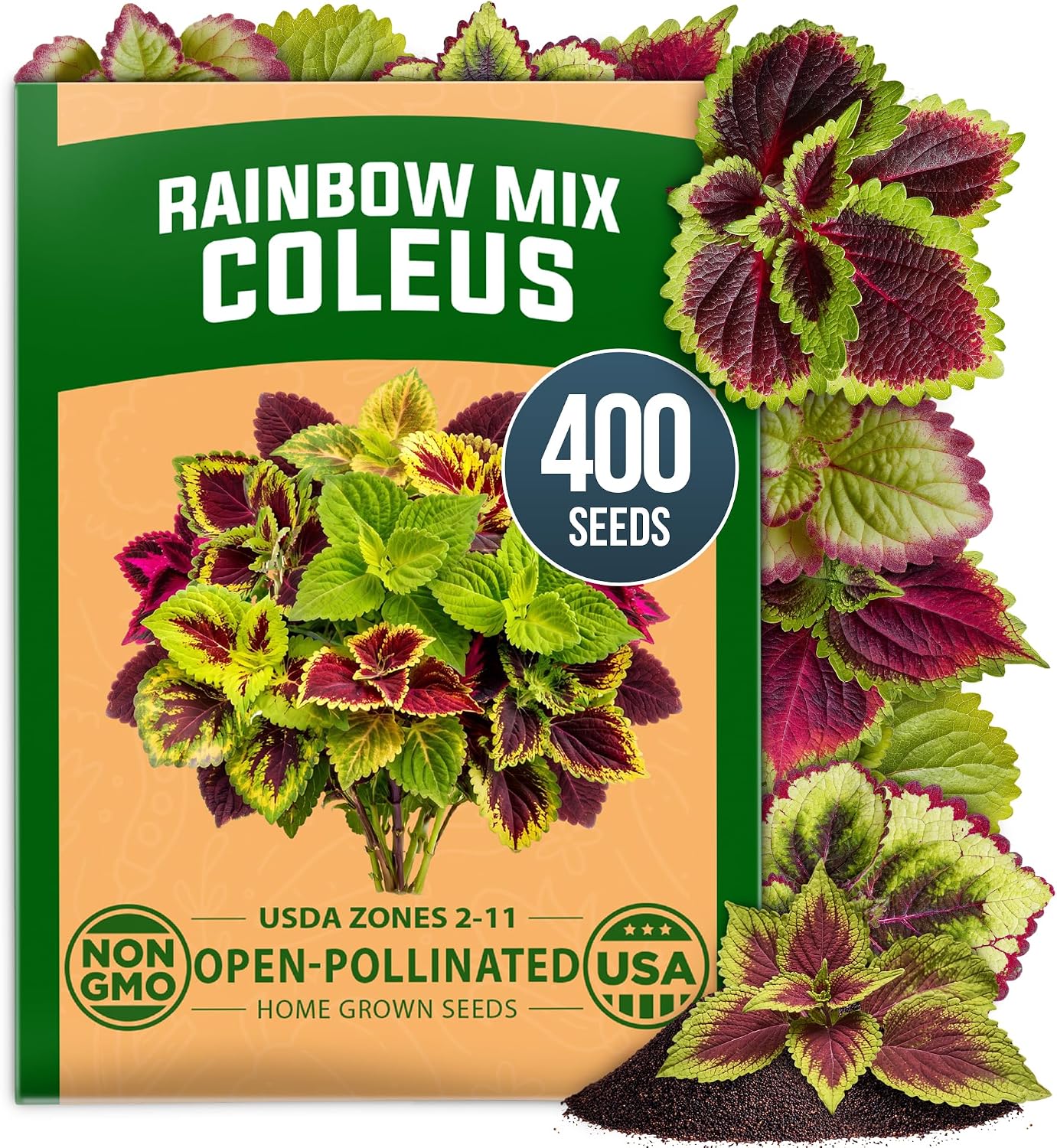
HOME GROWN Rainbow Mix Coleus Seeds (approx. 400)
| Sunlight Exposure | Part Shade to Shade |
|---|---|
| USDA Hardiness Zone | 2-11 |
| Expected Blooming Period | Spring through Frost |
| Material Features | GMO Free, Heirloom |
| Unit Count | 1 Count |
These Rainbow Mix coleus seeds produce compact, colorful foliage plants that are well suited to containers and shaded patio spots. Surface-sow the tiny seeds (do not cover), keep the medium warm and consistently moist, and seedlings typically appear in 10–14 days; pinch growing tips to encourage bushy, mounded plants. The mix is valued for season-long leaf color in shades of rose, green, bronze, cream, and scarlet, so you get visual impact without relying on flowers. Coleus grows indoors near bright north or east windows and outdoors in part shade to shade, making it a flexible choice for window boxes, mixed planters, and small pots. Important limitations are that coleus is a tender annual in most regions and needs protection from frost and prolonged drought, and it prefers warm temperatures for best germination and growth. For container gardeners who want low-maintenance, high-impact foliage, this seed mix is an easy way to produce many plants from one packet.
Best for: Gardeners who want easy-to-grow, high-impact foliage for containers and shaded patios and prefer predictable, low-fuss plants they can start from seed.
Less Ideal for: People seeking long-lived perennial landscaping or plants that tolerate full sun and drought without extra care.
- High seed count (about 400) gives many starts for containers or massing
- Open-pollinated non-GMO seeds from a mix that yields varied, colorful foliage
- Specifically suited to part shade and shade where many flowering plants struggle
- Compact, mounded habit that performs well in pots, window boxes, and mixed planters
- Tender annual in most zones and requires frost protection or indoor overwintering
- Requires consistent moisture and will suffer if soil dries out or remains waterlogged
Verdict: A high-count, non-GMO coleus seed mix that reliably produces compact, colorful foliage perfect for containers and shaded patios.
Choosing the Right Plants for Shady Window Boxes: Key Factors to Consider
Light Requirements and Placement
Window boxes described as shady can range from dappled morning light to full shade all day. Know the exact light at the planting site for several hours across different seasons before selecting plants. Many "shade" tolerant plants still benefit from a few hours of indirect or filtered light; true deep-shade species are the better choice for north-facing windows or boxes under large eaves.
Matching a plant's light needs to real site conditions reduces stress, leaf drop, and stretched growth. Consider how reflections from nearby walls or glass affect light levels, and remember that light changes with season and surrounding foliage.
Soil Depth and Root Space
Window boxes typically provide much shallower soil than garden beds, so pick plants with compact root systems or those known to adapt to confined containers. Shallow-rooted perennials and many ferns and foliage plants will establish and thrive where deeper-rooted shrubs or bulbs would struggle.
Because soil volume limits water and nutrient availability, plan for more frequent feeding and choose plants that tolerate tighter soil volume without rapid decline.
Watering Frequency and Drainage
Shallow containers dry out faster than ground soil, but shade slows evaporation. That means watering patterns vary: some shade-tolerant plants need consistently moist substrate while others prefer to dry slightly between waterings. Check each species' moisture preference and provide containers with reliable drainage to avoid root rot.
Use a mix or potting medium designed for containers that balances moisture retention with aeration. Mulching the surface can moderate drying and temperature swings in exposed urban settings.
Plant Size and Growth Habit
Window-box plants should be chosen for mature size and growth habit that fits the width and depth of the box. Trailing plants add spillover interest, while mounding or clumping types fill the central bed. Avoid vigorous spreaders or tall plants that require frequent cutting back or will flop over in confined soil.
Consider seasonal changes in habit. Some perennials or deciduous plants lose leaves in winter, so plan for evergreen or structural companions if year-round presence is important.
Cold Hardiness and Seasonal Behavior
Window boxes exposed to winter winds and freezing temperatures can be harsher than in-ground locations. Check hardiness or overwintering behavior for the plants you choose and whether the container will be moved indoors, insulated, or treated as an annual display.
Some shade-loving species hold attractive foliage through winter, while others die back and leave an empty box unless replaced or supplemented with evergreen accents.
Maintenance and Fertility Needs
Limited soil means nutrients are used up faster, so factor routine feeding and occasional soil refresh into your maintenance plan. Choose plants with similar fertility and pruning needs when grouping in the same box to keep care simple.
Also plan for periodic deadheading, trimming of spent foliage, and dividing or replacing overcrowded plants seasonally to sustain vigor in the restricted root volume.
Top Foliage Forms for Deep Shade
In true low light, foliage becomes the primary source of color and texture. Look for plants with variegation, interesting leaf shapes, or bold textures that read clearly at a distance from a window. Many ferns, hosta relatives that tolerate containers, and certain evergreen perennials hold up well in the deepest shade and keep the box looking full when flowering is sporadic.
Pair different leaf textures for contrast: fine feathery fronds offset broader, glossy leaves. In small boxes, a single dramatic foliage plant can serve as the center of interest with a low trailing accent around it.
- Use variegated leaves to brighten dark corners
- Mix upright and trailing forms for layered depth
- Avoid high-light textured succulents that sulk in shade
Incorporating Seasonal Blooms
Some shade-tolerant plants still produce attractive blooms in spring or summer. Bulbs that tolerate partial shade and certain perennial ephemerals can add short windows of color. Plan for seasonal succession so the box does not rely on a single bloom period.
Combine small, reliable bloomers with long-lasting foliage. This approach ensures color peaks without sacrificing structure once the flowers fade.
- Stagger bloom times with early spring bulbs and later-blooming perennials
- Use discreet supports if a taller spring bloomer needs stability in a shallow box
Creating Year-Round Interest
For window boxes visible across seasons, use a mix of evergreens, winter-hardy foliage, and seasonal fills. Evergreen or semi-evergreen groundcovers and compact shrubs can provide backbone structure. Add short-lived annuals or seasonal bulbs for color, then refresh as seasons change.
Consider winter protection techniques like insulating the box base or grouping boxes to reduce exposure. Even hardy plants may benefit from a layer of mulch when pots are exposed to freezing winds.
- Choose at least one evergreen or structural plant for winter presence
- Rotate seasonal elements to maintain color without disturbing established roots
Planting and Soil Mix Tips for Window Boxes
Use a high-quality container mix that balances moisture retention and drainage. Adding a small proportion of organic matter improves nutrient retention, but avoid heavy garden soil which compacts in shallow boxes. Crisp, well-aerated mixes encourage healthy roots and reduce standing water risk.
When planting, avoid burying crowns too deeply and position plants so larger roots are not forced against box sides. Top-dress with slow-release fertilizer suited for containers and refresh the top few inches of mix annually to replenish nutrients.
- Ensure at least one good drainage hole and test drainage before finishing soil level
- Use lightweight compost or coconut coir to increase moisture holding without weight
Design Ideas for Shady Window Boxes
Think in terms of thriller, filler, spiller even in small shady boxes. A bold upright foliage plant can act as the thriller, compact mounding plants fill the middle ground, and fine-textured trailers soften edges and add movement. Limit overly dense planting to allow air circulation in low light.
Use repetition of a single foliage color or repeated trailing accents across multiple boxes for a cohesive look on a facade. Reflective surfaces like lighter wall paint or a pale sill can amplify limited light and make colors read brighter.
- Keep taller elements centered or toward the back if the box is viewed from above
- Maintain spacing to reduce fungal issues in persistently damp shade
How We Chose the Best Plants for Shady Window Boxes
We filtered candidates based on traits that matter for plants kept in shallow, often drier containers positioned away from direct sun. Primary evaluation criteria included proven low-light tolerance, compact habit suited to narrow window boxes, root system behavior in confined soil, and seasonal interest that extends visual appeal beyond a few weeks. We also prioritized species and varieties known for reliable container performance rather than those that only thrive in garden beds. Additional filters included resistance to common container pests and diseases, ability to tolerate intermittent drought, and predictable growth that does not require frequent root pruning. We excluded plants that need deep soil, full sun, or an extensive root run to perform, as well as highly invasive species unsuitable for small urban containers. The list focuses on durable, easy-to-find plants that give dependable results in shady window boxes and require realistic maintenance for busy gardeners.
FAQ
Can window boxes in full shade still bloom?
Often they can, but bloom frequency and intensity are usually reduced compared with sunnier locations. Choose species known to flower in part shade and combine them with strong foliage plants to maintain interest when blooms are sparse.
How often should I water shady window boxes?
It depends on the plant mix and container volume. Shaded boxes dry more slowly than sunny ones, so check soil moisture regularly and water when the top inch feels slightly dry. Avoid keeping the mix waterlogged to prevent root rot.
Do I need to fertilize plants in window boxes?
Yes. Nutrients deplete faster in limited soil. Use a balanced container fertilizer at recommended intervals or a slow-release formula applied at planting and refreshed annually to maintain steady nutrition.
How can I protect shallow-rooted plants from winter damage?
Insulate the exterior of the box or move containers to a sheltered spot when possible. Adding mulch and avoiding late-season fertilization that promotes tender growth can also help plants harden off before cold periods.
Are there pruning tips specific to shady window-box plants?
Prune to remove dead or yellowing leaves and thin overcrowded growth to improve airflow. Light trimming keeps compact habit and encourages fresh growth without over-stressing shade-adapted plants.
Can I mix plants with different moisture needs in the same box?
Mixing plants with very different moisture preferences is risky in shallow boxes. Group plants with similar watering needs to maintain consistent care and avoid repeated stress from over- or under-watering.
Final Verdict
Choose plants for shady window boxes by prioritizing shade tolerance, compact root habits, and foliage interest that lasts beyond brief bloom periods. Balance maintenance demands with the box size and your watering routine to prevent stress from confined soil. Favor plants with predictable container behavior and resistance to common damp-shade issues so your window boxes stay attractive with minimal fuss. Focus on the tradeoffs between seasonal color and long-lasting structure: combine evergreen or strong-foliage species with short-season bloomers when you want both. With the right selections and routine care, shady window boxes can offer lush, layered displays even with limited light.
