

Note: This article contains affiliate links. If you click on these links and make a purchase, I may earn a small commission at no extra cost to you. This helps support my research and content. Read my full affiliate disclosure here.
Plumerias need a potting medium that drains quickly, resists compaction, and keeps roots healthy between waterings. Choosing the right Plumeria soil mix reduces root rot risk, supports regular blooming cycles, and makes container or ground culture easier to manage. This guide looks at five shortlisted potting blends that suit different growing setups and gardener skills. We evaluated mixes for drainage, nutrient-holding capacity, and ease of use so you can match a blend to your container size, watering routine, and climate. Below are the top options and the decision factors that matter when potting plumerias.
Top Picks at a Glance
| Best Overall The best all-around choice for most situations | Chalily Tropical Gold Potting Soil — Premium Mix for Tropical Plants |  |
| Best Quality Built to a higher standard if you want something more solid | Miracle-Gro Succulent Potting Mix, 4 qt. |  |
| Best Value The sweet spot between price and what you get | Miracle-Gro Tropical Potting Mix (6 qt., 2-Pack) |  |
| Highest Rated A top-rated pick with lots of positive feedback | E.B. Stone Organics Citrus & Palm Mix Potting Soil, 1.5 cu ft |  |
| Most Popular A crowd favorite that many people choose with confidence | Miracle-Gro Cactus, Palm & Citrus Potting Mix, 8 qt. |  |
Chalily Tropical Gold Potting Soil — Premium Mix for Tropical Plants

| Brand | Chalily |
|---|---|
| Style Name | Tropical |
Chalily Tropical Gold is a ready-to-use potting mix aimed at tropical species such as plumeria, hibiscus, palms, and crotons. The blend is described as nutrient-enriched and moisture-retentive yet well-draining, so it can be used for repotting container-grown plumeria or refreshing topsoil in tubs and planters. Its formulation claims to support strong root establishment and large leaf growth, which is useful for quick-growing tropical ornamentals. In practice, the mix should reduce watering frequency compared with straight potting soil while avoiding waterlogging thanks to drainage components. The product is positioned for both greenhouse production and home use, so it suits frequent repotting and routine container care. Limitations are that exact ingredient proportions and feeding schedule are not specified, so growers seeking precise control over pH, fertilizer strength, or custom coarse drainage may want to amend the mix with pumice or perlite and follow a regular fertilization plan for flowering plumeria.
Best for: Home gardeners and hobbyists who want an off-the-shelf, tropical-focused potting mix for container plumeria and other heat-loving ornamentals and prefer convenience over custom blends.
Less Ideal for: Growers who require a precisely controlled, custom soil recipe for show-quality flowering or those who prefer to blend their own coarse drainage and fertilizer levels from raw components.
- Formulated specifically for tropical plants to promote strong roots and vigorous foliage
- Balanced moisture retention with claimed good drainage to reduce root stress
- Enriched with natural nutrients to support early growth without immediate fertilization
- Used by professional growers, suggesting consistency for production and repeat use
- No detailed ingredient list or component proportions provided for precise customization
- Manufacturer guidance on feeding schedule or pH is not specified in the listing
Verdict: A ready-made, nutrient-rich tropical potting mix that simplifies repotting and routine care for plumeria and other tropical container plants.
Miracle-Gro Succulent Potting Mix, 4 qt.

| Brand | Miracle-Gro |
|---|---|
| Volume | 4 quarts |
| Plant types | Indoor succulents and cacti |
| Ingredients | Sphagnum peat moss, processed forest products, fertilizer, wetting agent |
Miracle-Gro Succulent Potting Mix is a ready-to-use, 4 quart soil blend made for indoor succulents, cacti and similar drought-tolerant houseplants. The mix combines sphagnum peat moss, processed forest products and a measured amount of Miracle-Gro plant food to create a light, fast-draining medium useful for repotting small specimens and filling 8-inch containers. In practice it is easy to work with when potting: fill the pot, loosen the root ball, add the mix and water to let it drain. Notable features are the included plant food for early nutrition and the formulation designed to avoid water retention that can rot succulent roots. The pack size is convenient for single pots or hobbyists but will require multiple bags for larger plumeria or outdoor plantings. While fine for young or container-grown succulents, the product is not a specialty soil for larger tropical trees and lacks the coarser drainage materials some growers prefer for big, fast-draining containers.
Best for: Plant owners who prioritize healthy, quick-start results for indoor succulents and small container plants and want a ready-made, low-effort potting mix.
Less Ideal for: Growers repotting large plumeria or building heavy-drainage outdoor mixes should choose a coarser, larger-volume potting medium or custom blend instead.
- Formulated for succulents and cacti with added plant food to support early growth
- Light, fast-draining blend that helps reduce root rot risk in container plants
- Convenient 4 qt bag sized to fill an 8-inch pot without excess waste
- Easy to use when repotting indoor succulents and small container plants
- Small volume means multiple bags are needed for larger plants or several pots
- Not formulated with large coarse aggregates ideal for big, fast-draining outdoor containers
Verdict: Choose this mix for an easy, nutrient‑boosted, fast‑draining potting medium when repotting indoor succulents or small container plants.
Miracle-Gro Tropical Potting Mix (6 qt., 2-Pack)

| Item Form | Granules |
|---|---|
| Coverage | tropical plants |
| Target Species | Tropical Plants |
| Liquid Volume | 6 quarts |
Miracle-Gro Tropical Potting Mix is a premixed potting soil designed to support tropical houseplants and container-grown specimens. It combines organic feed with lightweight lava rock to improve drainage and aeration, which helps prevent waterlogging for species that prefer steady but not soggy moisture. The bagged mix claims to feed plants for up to six months, so you can repot and delay the first feeding until about a month after planting. Typical uses include repotting monstera, fiddle-leaf figs, pothos, crotons, and other tropicals in pots both indoors and outdoors. Practical strengths are its consistent texture, built-in nutrients, and lower attraction to fungus gnats compared with richer, denser soils. Limitations are that it is a general tropical formula rather than a specialist blend for flowering tropicals like plumeria, and the bag size is modest for larger repotting projects. For gardeners wanting a straightforward, reliable container mix that improves drainage and reduces upkeep, this is a convenient option; those needing a highly custom mix for plumeria should consider adding extra grit or coarser components to increase drainage further.
Best for: Gardeners who want a low-effort, reliable potting mix for indoor or container tropicals and who prioritize ease of use and reduced maintenance.
Less Ideal for: Growers seeking a specialized, very fast-draining mix for plumeria or large-scale repotting projects should look for coarser, larger-volume substrates or amend this mix with extra grit.
- Formulated specifically for tropical container plants so plant needs are addressed out of the bag
- Contains lava rock to boost drainage and reduce compaction over time
- Feeds plants for up to six months, reducing immediate fertilizer needs
- Consistent, ready-to-use texture simplifies repotting and planting tasks
- Bag volume is small for multiple or large repots
- General tropical formula may not provide the very fast drainage ideal for plumeria without amendment
Verdict: A convenient, drainage-minded potting mix that lets you repot tropicals quickly while cutting early feeding and maintenance needs.
E.B. Stone Organics Citrus & Palm Mix Potting Soil, 1.5 cu ft

| Brand Name | E.B. Stone Organics |
|---|---|
| Volume | 1.5 cubic feet |
| Style Name | Potting Soil |
This E.B. Stone Organics Citrus & Palm Mix is a ready-to-use organic potting soil designed for deep-rooted tropicals and container specimens. It combines aged fir bark and pumice for fast drainage and improved aeration while retaining enough moisture and nutrients for steady growth, and it includes mycorrhizae to help roots access water and fertilizer. Typical use is potting up citrus, avocado or plumeria in containers or amending planting holes for palms and other tropicals in the garden. The mix removes the need to blend your own components and is suitable for both indoor and outdoor settings. Practical benefits include reduced risk of root rot from waterlogged soil and stronger root establishment from the added microbes. Limitations are the single 1.5 cu ft bag size, which means larger projects will require multiple bags, and it is a specialty mix that may be unnecessary for plants that prefer heavier, moisture-retentive soils.
Best for: Buyers who want a dependable, ready-made potting mix for plumeria and other tropical or citrus-type plants and prefer an organic product that minimizes mixing and guesswork.
Less Ideal for: Gardeners seeking a high-volume bulk soil for large bed plantings or those growing species that require consistently wet, heavy soils should look elsewhere.
- Formulated with aged fir bark and pumice for reliable drainage and aeration
- Includes beneficial mycorrhizae to improve root nutrient and water uptake
- Ready to use straight from the bag for potting or amending planting holes
- Organic blend suitable for both indoor and outdoor use with tropical species
- Only sold in a single 1.5 cubic foot bag which may be small for larger plantings
- Specialty mix may be overbuilt for plants that need heavier, moisture-retentive soil
Verdict: A dependable, ready-to-use organic mix that gives plumeria and other tropicals the drainage, aeration, and microbial support they need to establish strongly.
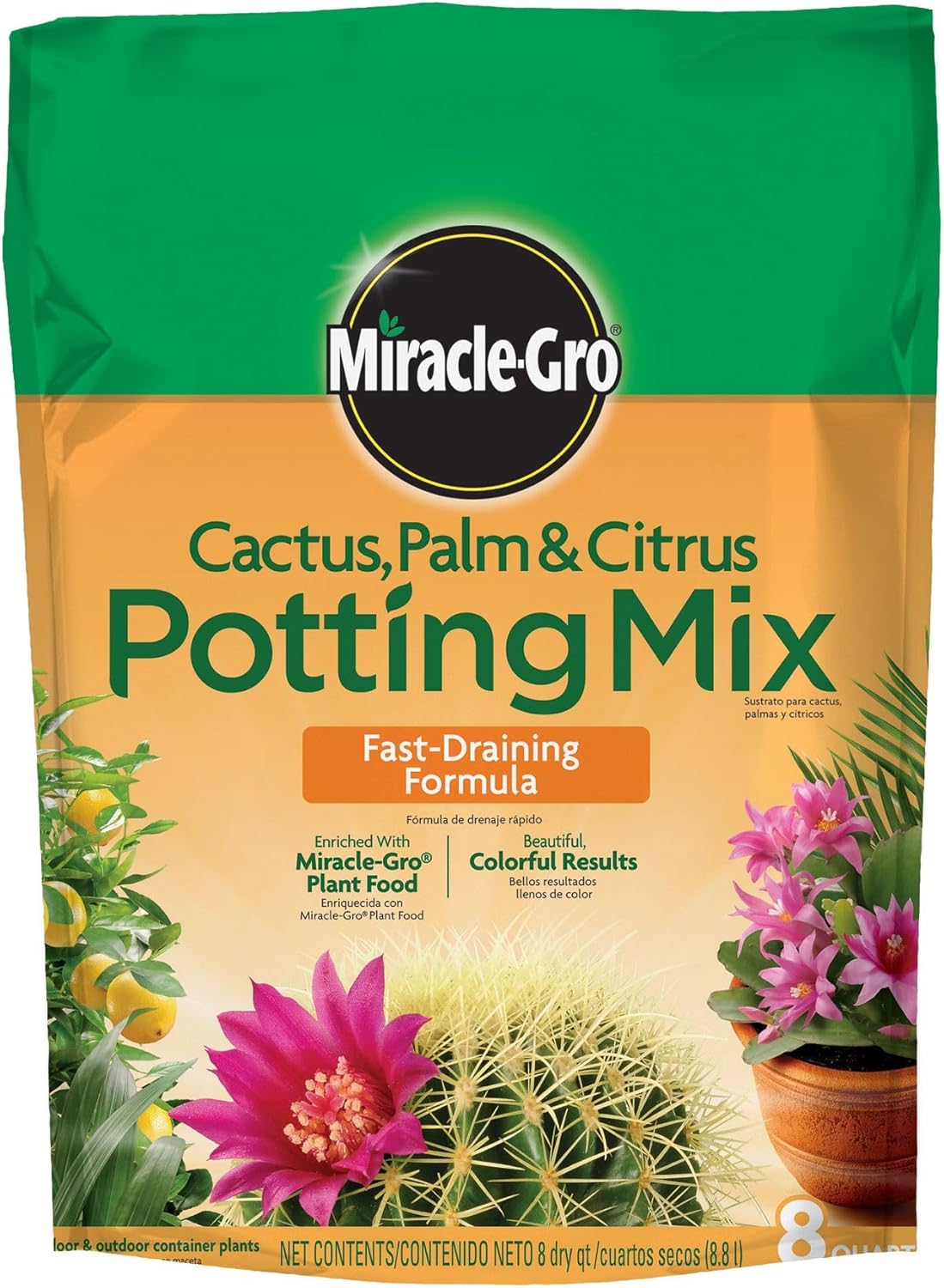
Miracle-Gro Cactus, Palm & Citrus Potting Mix, 8 qt.
| Volume | 8 quarts |
|---|---|
| Unit Count | 1 Count |
| Item Weight | 16 ounces |
This 8-quart Miracle-Gro potting mix is a ready-to-use container soil designed to give succulents, palms, and citrus plants quick drainage and an initial nutrient boost. It combines forest products, sphagnum peat moss, sand and perlite so water passes through instead of pooling around roots, which is useful when repotting plumeria into containers that need good aeration. The bag is pre-enriched with Miracle-Gro plant food so young transplants get a starter feed, and the instructions remind users to choose a pot with drainage and let the soil dry a bit between waterings. Practical benefits include easy handling for one- or two-pot projects and predictable performance without custom mixing. Limitations are the small 8-quart volume that fills one or two small containers only and the presence of peat and finer particles that may compact over time in heavy-water applications, so you may want to amend with extra coarse grit or more perlite for larger plumeria specimens or long-term container culture.
Best for: Buyers who want a convenient, work-ready potting mix that provides fast drainage and an initial nutrient boost for container-grown plumeria and other sun-loving ornamental plants.
Less Ideal for: Gardeners planning to pot large, mature plumeria or create long-term mixes for big containers who need bulk volumes or a coarser custom blend.
- Fast-draining formulation helps prevent root rot in container-grown plants
- Pre-enriched with Miracle-Gro plant food for an immediate nutrient boost
- Contains perlite and sand to reduce compaction and improve aeration
- Simple, ready-to-use mix that suits repotting and small container projects
- Only 8 quarts per bag, so multiple bags are needed for larger potted plumeria
- Includes peat and finer components that can compact over long-term use without occasional amendment
Verdict: A convenient, fast-draining potting mix that makes repotting and starting plumeria in containers quick and hassle-free.
Choosing the Right Plumeria Soil Mix: Key Factors to Consider
Drainage and Aeration
Plumerias are highly susceptible to root rot if their roots sit in water. A soil mix with large pore spaces created by components like pumice, coarse perlite, or coarse river sand allows rapid water escape after irrigation and encourages air exchange around roots. Good drainage also reduces fungal pressure and helps roots grow deeper and more fibrous, which supports flowering.
When assessing drainage, think about the whole container system: pot material, drainage holes, and the mix. Even a fast-draining mix will perform poorly in a pot without holes or with a tight saucer. Aim for a balance where water flows through easily but the mix still holds enough moisture between waterings.
Moisture Retention
While plumerias like to dry between waterings, they still need a mix that holds some moisture to feed growth and blooms. Components such as coir, aged compost, or small amounts of well-decomposed bark increase water-holding capacity without compaction. The goal is to avoid a mix that dries out in a day in hot weather, forcing excessive watering, while also preventing sogginess.
Consider how often you can water and the local climate. In hot, dry conditions choose a mix with slightly more organic or moisture-retentive particles; in consistently humid or cool climates favor lighter blends to keep roots healthy.
Nutrient Availability
Plumerias are heavy bloomers and benefit from a medium that either supplies baseline nutrients or accepts fertilizer well. A small proportion of well-aged compost or slow-release organic granules provides an initial nutrient boost while leaving room to adjust feeding through fertilizer. Avoid mixes overloaded with fresh manures or uncomposted materials that can burn roots or create excess microbial activity.
Look for mixes that state a balanced base or that are easy to supplement with your preferred feeding schedule, because consistent nutrition supports sustained flowering.
Particle Size and Texture Stability
Particle size affects long-term performance. Coarse particles keep structure and resist compaction, while fine dust and silt can bind the mix and reduce aeration over time. A stable texture that does not settle dramatically after repeated waterings means you will not need to repot as frequently or rework the soil.
Evaluate whether components will break down quickly. Materials like bark and coir decompose and change the mix's water-holding characteristics, so choose blends with durable aggregates if you prefer lower-maintenance containers.
pH and Salt Considerations
Plumerias prefer a slightly acidic to neutral root environment. Some potting ingredients or amendments can shift pH or contain salts that stress young roots. If you regularly use tap water with high alkalinity or fertilizer with strong salt content, select a mix that buffers pH or flushes salts easily through good drainage.
Testing soil pH periodically and occasionally leaching containers with extra water can prevent buildup of salts and keep nutrient uptake efficient, which supports healthy foliage and blooms.
Container and Climate Compatibility
The best mix depends on whether you are growing plumerias in small patio pots, large tubs, or in-ground beds. Smaller containers need mixes that retain more moisture because they dry faster, while large tubs and in-ground plantings tolerate coarser blends. Local climate influences mix choice: hot, arid regions need mixes with higher moisture retention; cool, wet regions require even drier blends to avoid rot.
Also consider container material. Clay pots wick moisture and can help prevent overwatering, whereas plastic pots retain moisture longer. Match your mix to both pot type and regional weather to reduce watering mistakes.
Preparing Containers for Plumeria Planting
Before adding soil, ensure containers have ample drainage holes and are clean of old root debris or salts. A shallow layer of coarse gravel is unnecessary if the mix drains well, but some gardeners add a thin layer of large pumice or broken terracotta to keep drainage holes from clogging.
Position pots where they receive strong light and good air circulation. When using heavy or deep containers, plan how you will water and lift them if needed; a well-draining mix reduces the weight of repeated saturations.
- Check drainage holes are unobstructed
- Use a clean container free of old soil residues
- Avoid tightly packed layers that block water flow
Mix Adjustments for Different Climates
Adjust the base mix to match your climate. In hot, dry areas add slightly more moisture-holding components like aged compost or coir to keep roots hydrated between waterings. In cool or humid climates reduce organic proportion and increase coarse aggregates to prevent soggy conditions.
Small tweaks like adding a handful of slow-release fertilizer at potting or mixing in extra pumice for wind-exposed sites can dramatically improve plant resilience without complex repotting.
- Hot/dry: increase coir or compost slightly
- Cool/humid: increase pumice or coarse sand
- Windy/exposed: improve anchoring with larger aggregates
Potting and Repotting Timeline
Young plumerias establish quickly in a loose, well-aerated mix. Repot when roots start circling the pot or when the mix compacts significantly. For most containers this is every 2 to 3 years, but check more often in small pots.
When repotting, gently tease roots and replace no more than one third of the rootball with fresh mix if the plant is otherwise healthy. This minimizes transplant shock and retains beneficial microbes from the old medium.
- Inspect roots annually for crowding
- Refresh top layer if surface appears depleted
- Avoid deep, unnecessary root disturbance
Feeding and Watering Practices
Water deeply and infrequently to encourage strong root systems. Let the top portion of the mix dry between waterings but avoid desiccation during active growth and bloom. Use a watering probe or finger test to judge moisture in the root zone rather than relying solely on surface dryness.
Feed according to your chosen fertilizer schedule; plumerias respond to higher phosphorus and potassium during bloom phases. Because mixes vary in baseline nutrients, adjust feeding frequency rather than switching mixes to correct minor nutrient shortfalls.
- Water to flush salts occasionally
- Use moisture checks below the surface before watering
- Match fertilizer timing to growth and bloom cycles
Troubleshooting Common Soil Problems
If the mix holds too much water and leaves yellowing or soft roots, repot into a coarser blend and improve pot drainage. For mixes that dry too fast, incorporate more organic matter or a moisture-retentive amendment and increase watering frequency slightly.
Salt buildup shows as white crust on the surface. Leach containers with extra water to remove salts, then reduce fertilizer concentration or flush water more regularly to prevent recurrence.
- Yellowing foliage often indicates overwatering
- Crusty surface or white deposits signal salt buildup
- Compaction requires replacing some of the old mix
How We Chose the Best Plumeria Soil Mix
We selected mixes that match common plumeria growing needs: rapid drainage to prevent waterlogged roots; adequate water-holding capacity to avoid daily watering; a loose, airy texture that encourages fibrous root development; and enough base nutrients or compatibility with common fertilizer schedules. We prioritized blends using coarse components such as pumice, perlite, or coarse sand because these elements maintain pore space over time. Particle stability and resistance to long-term compaction were also considered, since compacted soil quickly causes decline in containers. Practical handling matters, so we filtered for mixes that are easy to amend and that work across typical container sizes and in-ground plantings. We excluded heavy, clay-based soils and mixes formulated exclusively for succulents without any nutrient content. Also excluded were blends that require complex pre-treatment to be usable. The resulting picks balance drainage, moisture retention, aeration, and nutrient availability – the concrete dimensions we used to evaluate every candidate.
FAQ
How coarse should a Plumeria soil mix be for container growing?
A container mix should have a high proportion of coarse particles such as pumice or coarse perlite so water drains quickly and air reaches roots. Aim for a texture that feels loose and chunky rather than fine or dusty.
Can I use garden soil for potting plumerias in containers?
Garden soil is usually too heavy and can compact in containers, reducing aeration. It is better to use a purpose-made potting blend or to amend garden soil heavily with coarse aggregates and organic matter to improve drainage and structure.
How often should I repot a plumeria to refresh the soil?
Most container-grown plumerias benefit from repotting every 2 to 3 years when the mix shows compaction or roots begin to crowd. Small pots may need attention more frequently, while large tubs can go longer before needing fresh mix.
Should I add fertilizer to the soil mix at planting?
A modest amount of slow-release or well-aged organic material at planting gives an initial nutrient boost, but avoid fresh manures or unprocessed amendments that can burn roots. Plan to supplement with a regular feeding schedule tailored to bloom cycles.
What is the best way to correct a soggy mix?
To correct sogginess, repot into a coarser blend with more pumice or perlite and reduce organic proportion. Ensure drainage holes are clear and consider using a more porous potting container to help the mix dry between waterings.
Final Verdict
Choose a Plumeria soil mix that prioritizes drainage and steady nutrient availability while matching your container size and climate. Expect to balance coarse aggregates for aeration with modest organic content for moisture and feeding. Prioritize mixes that remain stable over time and are easy to amend if needed. With the right blend and sensible watering and feeding, you will reduce common problems and keep plumerias blooming reliably.
