

Note: This article contains affiliate links. If you click on these links and make a purchase, I may earn a small commission at no extra cost to you. This helps support my research and content. Read my full affiliate disclosure here.
If your patio gets little direct sun, choosing the right potted plants makes the difference between a drab corner and a lush retreat. Shade changes how plants grow, flower, and use water, so you need options adapted to low light, variable humidity, and container life. This guide shortlists six top potted plants for shaded patio that perform reliably in cooler, indirect light. We evaluated each option for light tolerance, container suitability, maintenance needs, and how well it adds seasonal interest. Read on to understand the traits that matter and which plant types match common patio conditions.
Top Picks at a Glance
| Best Overall The best all-around choice for most situations | American Plant Exchange Cast Iron Plant (6-inch pot) |  |
| Best Quality Built to a higher standard if you want something more solid | American Plant Exchange Calathea Makoyana (6-Inch) with Pot Cover |  |
| Best Budget The cheapest option that still gets the job done reliably | Hirt's Victorian Parlor Palm (4" Pot) – Chamaedorea elegans 'Bella' Live Plant |  |
| Highest Rated A top-rated pick with lots of positive feedback | The Three Company Ajuga (2-Pack) Live Flowering Ground Cover |  |
| Most Popular A crowd favorite that many people choose with confidence | American Plant Exchange English Ivy 8-Inch Hanging Basket |  |
| Best Seller A high-volume bestseller chosen again and again | Plants for Pets Pothos & Philodendron 6-Pack (2" Nursery Pots) |  |
American Plant Exchange Cast Iron Plant (6-inch pot)

| Indoor Outdoor Usage | Indoor, Outdoor |
|---|---|
| Other Special Features of the Product | Air Purification, Drought Tolerant, Low Maintenance, Pet Friendly, Shade Resistant |
| Sunlight Exposure | Partial Sun |
| Soil Type | Peat Soil |
| Moisture Needs | Moderate Watering |
The American Plant Exchange Cast Iron Plant is a classic, easy-care houseplant that brings dense, upright deep-green leaves to shaded patios, offices, or low-light corners of the home. Supplied in a 6-inch nursery pot with potting soil, it is typically displayed on a shelf, table, or floor where bright indirect light is limited. Notable features include tolerance for low light, drought resistance, and pet-friendly status, which together make it forgiving of irregular watering and simpler to care for than many tropicals. Practical benefits include durable year-round greenery without frequent watering, and its architectural form adds texture to shaded planting schemes. Limitations are its modest size at delivery and lack of flowers, so it functions primarily as foliage interest rather than a blooming specimen; larger-scale impact requires repotting and time. Buyers should also expect standard nursery potting rather than decorative containers and plan to refresh soil or up-pot for long-term growth.
Best for: Buyers who want reliable, low-effort greenery for a shaded patio or indoor corner and prefer plants that tolerate occasional neglect and low light.
Less Ideal for: Gardeners seeking showy flowering plants or immediate large specimens for a dramatic display should look elsewhere.
- Very tolerant of low light, suitable for shaded patios and dim interiors
- Drought-tolerant and low maintenance, good for busy owners or beginners
- Pet-friendly according to manufacturer, safer for homes with cats or dogs
- Architectural, long upright leaves provide strong foliage interest in shade-focused plantings
- Arrives in a small 6-inch nursery pot so additional repotting may be needed for long-term growth
- Does not produce notable flowers and is primarily valued for foliage
Verdict: An easygoing, low-light tolerant foliage plant that reliably adds low-maintenance greenery to shaded patios and indoor corners.
American Plant Exchange Calathea Makoyana (6-Inch) with Pot Cover

| Indoor Outdoor Usage | Indoor, Outdoor |
|---|---|
| Sunlight Exposure | Partial Shade |
| Moisture Needs | Moderate Watering |
| Container Material | Ceramic or Porcelain |
The Calathea Makoyana is a compact, pattern-leaved tropical houseplant that brings bold foliage interest to shaded patios, rooms, or offices. It is typically kept as an indoor potted specimen and prefers indirect light and consistent moisture, so most users place it in bright shade away from direct sun and water when the topsoil begins to dry. Notable features include its striking feather-like leaf patterns with burgundy undersides, pet-safe classification, and reported air-purifying qualities. In practice the plant performs well in small pots and ceramic covers, making it an easy focal point on tabletops or plant stands. Expect daily leaf movements and a slow to moderate growth habit rather than a fast-growing specimen. Important limitations are its preference for steady humidity and moderate watering discipline; environments that are very dry or erratically watered can cause leaf curling or brown edges. For someone who prioritizes high-impact foliage in shaded spots and is willing to monitor moisture and humidity, this Calathea is an attractive, low-footprint choice.
Best for: Buyers who want a high-impact, shade-tolerant potted plant for indoor or sheltered outdoor spots and who pay attention to regular watering and humidity.
Less Ideal for: People seeking a carefree, drought-tolerant plant or those who prefer fast-growing plants that quickly fill large containers.
- Attractive, patterned leaves with burgundy undersides that create visual impact in shade
- Suitable for partial shade and designed for indoor potted display
- Pet-friendly and described as having air-purifying qualities
- Comes in a 6-inch pot with a ceramic or porcelain cover for ready display
- Requires consistent moisture and higher humidity than many common houseplants
- Not a fast grower so it will remain a small, decorative specimen rather than filling large pots
Verdict: Choose this Calathea if you want a striking, shade-tolerant potted plant that adds dramatic patterned foliage to indoor or sheltered outdoor spots while remaining pet-safe.
Hirt's Victorian Parlor Palm (4" Pot) – Chamaedorea elegans 'Bella' Live Plant

| Sunlight Exposure | Partial Sun |
|---|---|
| Brand Name | Hirt's Gardens |
| Unit Count | 1 Count |
The Hirt's Victorian Parlor Palm is a compact Chamaedorea elegans 'Bella' offered in a 4-inch pot and intended as an easy-care house or patio specimen. This palm is typically used as a tabletop or small-stand plant on shaded patios where direct sun is limited. Its main strengths are strong tolerance for low light and drought, making it forgiving if you occasionally forget to water or cannot provide bright sun. The plant's classic feathery fronds give a lush, Victorian parlor look in a small footprint and it adapts well grouped with other shade plants. Because it ships as a young, small plant, expect slow vertical growth and likely repotting within the first season to give roots more room. The 4-inch pot size also means it will need more frequent watering than a larger container, and it may be more vulnerable to temperature swings outdoors. For a budget-friendly, low-maintenance shade plant that adds greenery to tight spaces, this Parlor Palm is a practical choice.
Best for: Buyers wanting an inexpensive, low-maintenance shade plant for a small patio, balcony, or indoor table who prefer a forgiving species that survives occasional neglect.
Less Ideal for: People who want a fast-growing focal palm or a large statement plant for open outdoor spaces should consider larger nursery specimens instead.
- Tolerates low light and drought, suited to shaded patios or indoor spots
- Compact size fits tabletops and small containers
- Classic, feathery foliage provides a lush look with minimal care
- Sold in a small 4-inch pot so it requires repotting relatively soon
- Smaller container means more frequent watering compared with larger potted plants
Verdict: A budget-friendly, low-care Parlor Palm that brings reliable shade-friendly greenery to small patios and indoor spots.
The Three Company Ajuga (2-Pack) Live Flowering Ground Cover

| USDA Hardiness Zone | 4-9 |
|---|---|
| Sunlight Exposure | Partial Shade to Full Sun |
| Expected Blooming Period | Spring |
| Moisture Needs | Moderate Watering |
| Soil Type | Well draining soil |
These Ajuga plants are sold as a two-pack of live, low-growing ground cover that quickly fills bare patches with glossy dark leaves and blue spring flower spikes. They are typically planted in beds, borders, or under trees where partial shade to full sun conditions occur; they spread to form a dense carpet that suppresses weeds and reduces exposed soil. Notable features from the listing include USDA hardiness to zones 4–9, preference for well-draining soil, moderate watering needs, and an expected mature height around six inches. In practice this means they are low-maintenance once established, provide year-round foliage interest, and add spring color without frequent deadheading or pruning. Important limitations are that they prefer well-draining conditions and moderate moisture, so they are not a solution for persistently waterlogged clay unless amended or planted on a raised bed or slope. Expect good site coverage in a season or two but plan for containment where you want to prevent aggressive spread.
Best for: Buyers who want a reliable, low-maintenance ground cover that quickly fills shaded or partly sunny beds and reduces weed pressure with minimal ongoing care.
Less Ideal for: Gardeners with permanently waterlogged clay sites or those who need a non-spreading, tightly contained plant should consider alternatives or soil improvement before planting.
- Evergreen foliage provides year-round visual interest
- Forms a dense ground cover that suppresses weeds and fills bare spots
- Blue spring blooms add seasonal color above dark, attractive leaves
- Cold-hardy across USDA zones 4 to 9 so suitable for many climates
- Low maintenance after establishment with only moderate watering needs
- Prefers well-draining soil and can struggle in heavy, poorly drained clay without soil amendment or raised planting
Verdict: A dependable, low-care evergreen ground cover that delivers seasonal blue flowers and rapid site coverage when planted in well-draining clay amended or raised beds.
American Plant Exchange English Ivy 8-Inch Hanging Basket

| Indoor Outdoor Usage | Indoor |
|---|---|
| Other Special Features of the Product | Air Purification |
| Sunlight Exposure | Partial Shade |
| Material Features | Live Plant, Nursery Pot, Potting Soil |
| Included Components | Pot, Hanging Holder |
This English Ivy arrives ready to hang in an 8-inch plastic basket and is designed for low-effort display on patios, porches, or shaded outdoor spots. It produces trailing vines that can be left to cascade or trained up a trellis and tolerates bright indirect light to partial shade, so placement is flexible around most covered outdoor living areas. The included hanging holder and nursery pot make setup immediate, and the plant’s reputation for modest air‑purifying ability adds a practical benefit indoors or in semi-enclosed patios. Expect routine maintenance of occasional watering and pruning to manage growth and keep the foliage looking tidy. Limitations to note are typical of live plants: initial size and fullness vary, and an outdoor hanging location with full sun or heavy exposure could stress the plant. Buyers who want an easy, decorative trailing vine for sheltered outdoor baskets will find this a straightforward option, while those seeking a specimen with precise variegation, guaranteed size, or sun tolerance should consider alternatives.
Best for: Buyers who want an easy, ready-to-hang trailing vine for sheltered outdoor baskets or covered porches and value low maintenance and immediate visual impact.
Less Ideal for: Gardeners seeking a sun-loving plant for fully exposed locations or those who require guaranteed mature size and dense coverage from day one.
- Ships pre-potted in an 8-inch basket with a hanging holder for immediate display
- Tolerates bright indirect light to partial shade, making placement flexible
- Low maintenance needs — occasional watering and pruning are usually sufficient
- Commonly listed as having air-purifying qualities for indoor or semi-enclosed spaces
- Performance and fullness can vary between individual live plants
- Not suited for exposed full-sun outdoor locations where foliage may scorch
Verdict: A ready-to-hang, low-maintenance English ivy that works well in sheltered outdoor hanging baskets and shaded patios for instant trailing greenery.
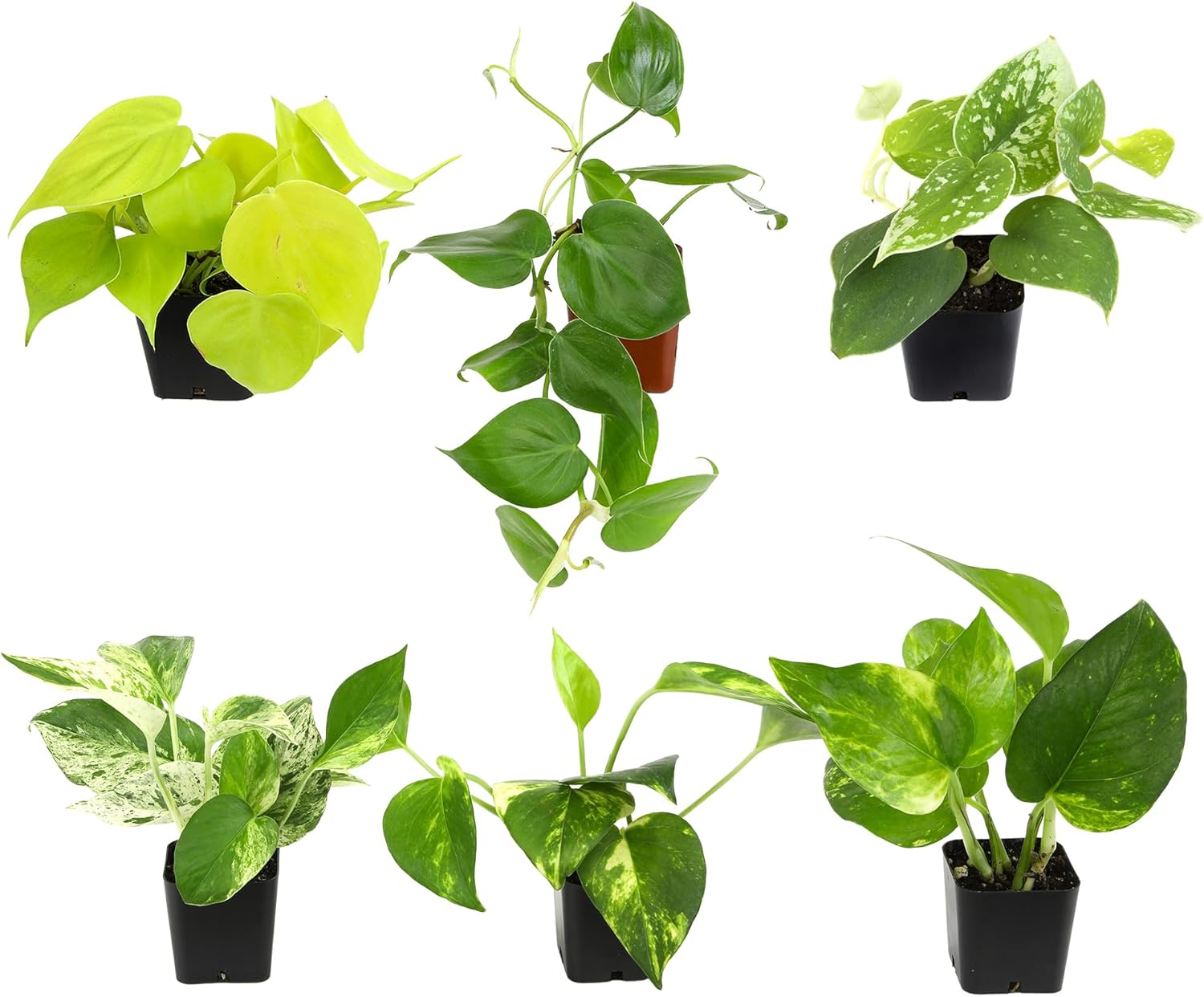
Plants for Pets Pothos & Philodendron 6-Pack (2" Nursery Pots)
| Indoor Outdoor Usage | Indoor, Outdoor |
|---|---|
| Other Special Features of the Product | Air Purification, Low Maintenance |
| Sunlight Exposure | Partial Sun |
| USDA Hardiness Zone | 10, 11, 12 |
| Moisture Needs | Regular Watering |
This six-pack bundles several pothos and philodendron varieties as small, rooted plants in 2-inch nursery pots for indoor trailing or low-light spots. The mix typically includes variegated types such as Marble Queen, Hawaiian, Silvery Ann and lemon-lime philodendron, which makes it useful for starting hanging baskets, training up a moss pole, or filling a shelf with cascading foliage. Pothos tolerate bright, indirect light but also persist in medium to low light, and they prefer the soil to dry between waterings which reduces overwatering risk. Plants arrive small and will need repotting within a few months to a larger container for vigorous growth. Notable benefits are the variety of leaf patterns and the beginner-friendly care: forgiving light range, low maintenance watering, and year-round indoor growth. Limitations are the tiny nursery pots on arrival and the short-term display size, so expect an extra step of repotting and occasional pruning to shape the vines as they grow.
Best for: Buyers who want an easy-to-grow, low-light trailing plant pack to quickly add greenery indoors and prefer forgiving plants that tolerate occasional neglect.
Less Ideal for: Gardeners seeking fully mature display plants or immediate large specimens should look for larger pots or nursery-grown sizes instead.
- Includes six rooted plants so you can start multiple displays or replace lost specimens
- Variegated and non-variegated varieties provide visual interest for trailing arrangements
- Tolerates low to medium indoor light making it suitable for shaded rooms
- Low-maintenance watering habit that helps prevent common beginner mistakes
- Ships in very small 2-inch nursery pots so repotting is required for long-term growth
- Not specified as pet-safe despite brand name so check toxicity before placing near animals
Verdict: A convenient six-pack of hardy, low-light trailing pothos and philodendron that makes adding beginner-friendly greenery to shaded indoor spots simple.
Choosing the Right Potted Plants for Shaded Patio: Key Factors to Consider
Light Level and Exposure
Shade on patios varies from light dappled shade to deep, north-facing darkness. Assess the actual light throughout the day before selecting plants. Some so-called shade plants need bright, indirect light to flower, while others will survive in consistent low light but not bloom.
Place plants where their preferred light level matches the spot. For example, plants that need bright shade do well near a patio edge where reflected light reaches them. Deep-shade tolerant types suit corners under eaves or dense tree canopy. Choosing plants by actual exposure reduces wasted effort and helps containers stay healthy.
Container Size and Root Space
Containers restrict root growth and change how quickly soil dries. Choose pots that leave enough volume for roots to develop without becoming waterlogged. Larger pots buffer moisture swings and give longer intervals between waterings, which is useful in shady spots that dry slowly.
Consider the mature root spread of the species and select a pot with appropriate depth and width. Drainage is critical in shade because slower evaporation can lead to soggy soil, so ensure containers have adequate holes and a well-draining potting mix to prevent root rot.
Watering Rhythm and Soil Mix
Shaded patios often retain moisture longer than sunny areas, so plants may need less frequent watering but still require consistent, even moisture. Use a potting mix formulated for containers that balances water retention with drainage. Organic components like compost or coconut coir help hold moisture while perlite or grit improves aeration.
Adjust the watering schedule seasonally and after heavy rain. Check soil moisture a few inches down rather than relying on surface dryness; that gives a more accurate picture of root conditions and prevents overwatering in shaded microclimates.
Foliage and Seasonal Interest
In low light, leaf texture, variegation, and form become the main source of visual interest since many plants produce fewer flowers. Choose species with attractive foliage color, variegation, or interesting leaf shapes to enliven a shaded patio. Some shade plants also offer late-season blooms or colorful stems which add variety.
Think beyond flowers: contrast glossy and matte leaves, mix large-leaved specimens with fine-textured foliage, and include seasonal performers to maintain visual appeal throughout the year.
Cold Hardiness and Microclimates
Patio conditions can differ from broader garden zones because walls, paving, and overhead cover create microclimates. Some containers next to warm walls will be slightly warmer at night and support marginally tender plants, while open, exposed patios can be colder. Select plants whose hardiness aligns with your outdoor microclimate or plan for moving containers indoors in cold snaps.
Also consider wind exposure and salt spray in coastal areas. Even shade-loving plants can suffer wind desiccation in exposed patios, so group pots and provide windbreaks where necessary.
Maintenance and Grooming Needs
Different shade-tolerant plants demand very different upkeep. Some require routine deadheading and occasional division to stay compact in a pot, while others grow slowly and need little pruning. Factor in how much time you want to spend on maintenance when choosing species for containers.
Regular tasks to plan for include seasonal repotting, monitoring for slugs and fungal issues that can be more common in damp, shaded conditions, and periodic feeding with a balanced container fertilizer to sustain growth in limited soil volume.
Best Uses for Shade-Tolerant Containers
Shade-tolerant potted plants work well to create privacy screens, soften hard edges, or add a cool, lush feeling to a patio. Use tall foliage in the back of a grouping and smaller, textural plants in front to create depth.
Containers can also define outdoor rooms on a patio. Position larger pots near seating to bring foliage closer to eye level and improve the microclimate around people without relying on direct sun.
- Group pots with similar watering needs to simplify care
- Use tapered or wide-mouthed containers to display layered foliage
- Place reflective items like light-colored flooring to increase available light
Potting Mix and Fertilizer Tips for Shade
A well-draining potting mix with organic matter supports steady moisture without waterlogging roots. Amendments such as compost and slow-release granular feed tailored for containers will supply nutrients through the growing season.
Because shaded plants often grow more slowly, avoid heavy nitrogen applications that force weak, leggy shoots. A balanced, low-to-moderate fertilizer regimen keeps foliage healthy without encouraging excessive, flopping growth.
- Top-dress containers annually and refresh surface soil to maintain nutrients
- Use a light liquid feed during active growth periods for quicker uptake
- Ensure mix contains aeration components to prevent compacting in damp conditions
Managing Pests and Diseases in Low Light
Shaded patios can favor snails, slugs, and fungal problems because the soil stays moist longer. Inspect plants regularly and remove affected leaves to limit spread. Improve air circulation around pots by spacing containers apart and avoiding overcrowding.
Choose disease-resistant cultivars where possible and rotate container placements to reduce the buildup of soil-borne pathogens. If fungal issues arise, reduce watering frequency and allow the surface to dry briefly between waterings.
- Handpick slugs or use physical barriers around pots
- Wipe down large leaves to remove spores and pests
- Quarantine new plants briefly before adding them to established groupings
Design Combinations That Thrive in Shade
Combine bold-leaved plants with delicate, arching foliage to add contrast without relying on blooms. Include trailing plants to spill over pot edges and soften hard lines. Repeating a plant form or color across several pots creates cohesion on a shaded patio.
Layer plant heights and textures to mimic natural understory planting. This approach conceals bare stems lower down and keeps the composition interesting even when flowering is sparse.
- Pair glossy, dark leaves with variegated or silver-toned foliage for brightness
- Use paired tall and groundcover pots to add vertical interest
- Rotate specimens seasonally to refresh the palette without redoing all pots
How to Move and Overwinter Containers
Plan for seasonal moves if your plants are marginally hardy in your region. Lighter pots are easier to reposition; consider pot movers or wheeled bases for heavy containers. In winter, group sensitive pots in a sheltered area to reduce cold and wind exposure.
Use insulating techniques such as surrounding pots with bark or wrapping containers when freezing temperatures are expected. For tender species, move containers to an unheated garage or indoor spot with bright indirect light for the cold months.
- Elevate pots slightly to keep drainage holes clear and prevent freezing to the patio surface
- Empty and store very large or fragile containers if they risk cracking in freeze-thaw cycles
- Trim back leggy growth before moving indoors to reduce stress
How We Chose the Best Potted Plants for Shaded Patio
We focused on plants that genuinely perform in low or filtered light on patios and balconies rather than those that merely tolerate shade for short periods. Selection began with species and cultivars known for consistent growth in indirect light, then prioritized container adaptability and predictable maintenance demands. Criteria we used included the plant's minimum light requirement, container root behavior and potting-depth needs, drought tolerance and watering frequency, pest and disease resilience in shaded microclimates, and seasonal interest such as foliage color or bloom timing. We also considered growth habit and maximum mature size so the plants fit typical container dimensions on patios. We excluded sun-loving species and plants that require specialized greenhouse conditions. Also left out specimens that need frequent repotting or aggressive pruning to remain attractive in containers. The final shortlist emphasizes low-risk, easy-to-manage choices that deliver foliage or flowers without demanding constant intervention.
FAQ
Can potted shade plants flower on a shaded patio?
Some shade-tolerant plants will still produce flowers in bright, indirect light, while others mainly provide foliage interest. Blooming depends on the species and the amount of filtered light available.
How often should I water containers in full shade?
Containers in full shade usually need less frequent watering than those in sun and may only require checking every few days. Always test the soil a couple of inches down to judge moisture rather than watering on a fixed schedule.
Do I need a special potting mix for shaded patio plants?
Use a well-draining container mix with organic matter to retain some moisture without becoming waterlogged. Adding perlite or grit improves aeration, which helps roots in damp, shaded conditions.
How do I prevent fungus and rot on a damp patio?
Improve air circulation by spacing pots and removing crowded foliage. Reduce watering frequency, ensure good drainage, and clear fallen debris promptly. Choosing plants with known disease resistance also helps.
Can I grow vegetables in shaded patio containers?
Most vegetables need several hours of direct sun to yield well, so shaded patios are better suited to leafy herbs or salad greens that tolerate lower light. Choose varieties labeled as shade-tolerant and expect lower yields.
Final Verdict
For shaded patios, prioritize plants with proven low-light tolerance, good container adaptability, and foliage that provides year-round interest. Balance pot size and soil mix to control moisture, and match maintenance needs to how much time you can spend caring for containers. Focus on the tradeoffs between bloom frequency and foliage quality when picking plants. With the right light assessment, container choices, and placement, you can create a thriving shaded patio planting scheme that requires manageable care and rewards you with consistent visual appeal.
