

Note: This article contains affiliate links. If you click on these links and make a purchase, I may earn a small commission at no extra cost to you. This helps support my research and content. Read my full affiliate disclosure here.
Using grow bags changes how potting mix behaves compared with rigid containers. The right potting mix for grow bags needs to drain freely through fabric sides while holding enough moisture and nutrients to support vegetable and herb roots in a shallow soil volume. In this guide we shortlisted the top choices for grow bags and evaluated them on the mix structure, water management, and nutrient stability gardeners care about. Whether you want larger root crops, compact tomatoes, or a mixed herb patch, the picks here focus on mixes that work well in fabric-sided containers and small raised beds. Read on for usable guidance that will help you match a mix to your grow bag setup.
Top Picks at a Glance
| Best Overall The best all-around choice for most situations | Miracle-Gro Potting Mix, 16 qt. (2-Pack) |  |
| Best Quality Built to a higher standard if you want something more solid | Roots Organics Formula 707 Potting Mix, 3 cu ft (30 gal grow bag) |  |
| Best Value The sweet spot between price and what you get | Miracle-Gro Moisture Control Potting Mix, 8 qt. (2-Pack) |  |
| Best Budget The cheapest option that still gets the job done reliably | Miracle-Gro Organic Outdoor Potting Mix, 16 qt. |  |
| Highest Rated A top-rated pick with lots of positive feedback | FoxFarm Ocean Forest Potting Soil, 12 qt (with 2 Plant Tags) |  |
| Best Seller A high-volume bestseller chosen again and again | Back to the Roots Organic Expanding Coco Coir Potting Soil Brick (10 lb) |  |
Miracle-Gro Potting Mix, 16 qt. (2-Pack)

| Feeds Plants | Up to 6 months |
|---|---|
| Volume | 16 quarts |
| Number of Packs | 2 |
| Intended Use | Outdoor containers |
| Ingredients | Sphagnum Peat Moss, Peat, Perlite, Compost, Fertilizer |
Miracle-Gro Potting Mix is a general-purpose container soil designed for outdoor pots, planters, and hanging baskets. It combines peat-based media, perlite, compost, and built-in fertilizer so you can pot vegetables, herbs, annuals, perennials, and shrubs without blending amendments. Typical use is straightforward: fill a pot about one third, set the plant at nursery depth, top off, and water until excess drains. Notable features are fast drainage to prevent root rot, an all-purpose nutrient charge that feeds plants for up to six months, and a texture that helps roots establish quickly. In practice this means less upfront prep and fewer immediate feedings compared with plain soil, and it is handy for seasonal repotting and new container plantings. Important limitations are that it is formulated for containers only (not in-ground beds) and the nutrient boost will diminish after the stated feeding period so you will need to supplement or repot for long-term specimens. Also peat-based mixes can compress over time and require refreshing each season.
Best for: Gardeners who want a low-effort, dependable potting soil for seasonal container planting and quick repots, especially those optimizing time and results across many pots.
Less Ideal for: Those wanting a soil to amend in raised beds or long-term in-ground planting should choose a garden soil formulated for in-ground use instead.
- Ready-to-use mix with built-in fertilizer that feeds up to six months
- Formulated for fast drainage to reduce risk of overwatering and root rot in containers
- Versatile for a wide range of outdoor container plants including vegetables, herbs, and flowers
- Not intended for in-ground garden beds
- Fertilizer effect is temporary and requires refeeding or repotting after about six months
Verdict: A convenient, fast-draining potting mix that simplifies container planting while providing up to six months of built-in nutrition.
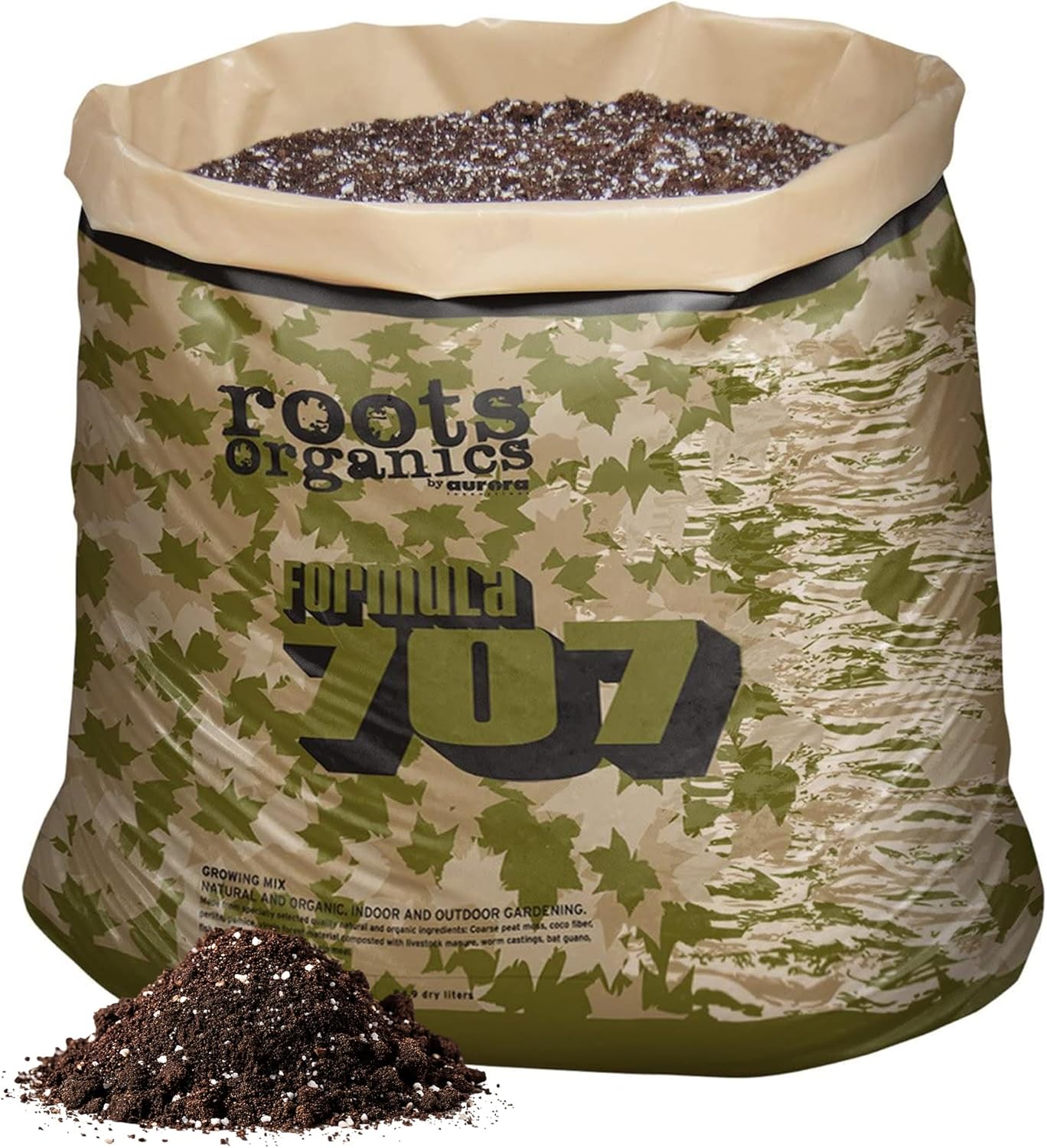
Roots Organics Formula 707 Potting Mix, 3 cu ft (30 gal grow bag)
| Volume | 30 gallons |
|---|---|
| Item Type Name | Organics Formula for Soil |
| Item Highlight | Peat, Compost & Coco Blend, Water Retention Potting Soil in 30 Gallon Grow Bag |
| Style Name | Peat Moss,Potting |
Roots Organics Formula 707 is a heavy-duty potting mix aimed at container gardeners who want strong, reliable performance. It is blended from coarse peat, coco fiber, compost, worm castings and a range of organic amendments such as bat guano, fish bone meal and kelp, which supply a spectrum of nutrients and feed soil biology. The mix is packaged in a 30-gallon grow bag that holds roughly 3 cubic feet, letting you pot large vegetables or fill multiple containers without immediate amendment. Formula 707 is designed with higher water-holding capacity and reduced perlite and pumice, so it stays moist longer and reduces the frequency of watering for thirsty summer crops. Expect good structure for root development and a biologically active medium that supports vigorous growth, but be mindful of its rich nutrient load early on for seedlings—lighter starts may prefer a weaker mix or dilution. Also follow safety guidance when handling to avoid dust inhalation and skin or eye irritation.
Best for: Gardeners growing vegetables in large containers who prioritize vigorous growth, consistent moisture, and a biologically active soil for higher yields.
Less Ideal for: Seed-starting specialists, microgreen growers, or anyone needing a very fast-draining, low-nutrient medium for delicate transplants.
- Formulated with diverse organic amendments that feed plants and soil biology
- Higher water retention reduces watering frequency for large container vegetables
- Large 30-gallon grow bag provides enough volume for big pots or multiple plants
- Coarse peat and coco fiber create a balance of aeration and moisture for strong roots
- Nutrient-rich profile may be too strong for very young seedlings without dilution
- Reduced perlite/pumice means less rapid drainage in hot, heavy-watering conditions
Verdict: Choose Formula 707 when you need a nutrient-dense, moisture-retentive mix that reliably supports large container vegetable production.
Miracle-Gro Moisture Control Potting Mix, 8 qt. (2-Pack)

| Number of Packs | 2 |
|---|---|
| Unit Count | 512 Ounce |
| Item Type Name | Potting Mix |
| Feeds Plants | Up to 6 months |
| Style Name | 8 qt. |
This Miracle-Gro Moisture Control Potting Mix is designed for outdoor container gardening and makes potting and repotting straightforward. The proprietary AquaCoir formula combines coir, sphagnum peat moss, and a wetting agent so the mix absorbs more water than standard potting soils and helps protect plants from both over- and under-watering. It also contains plant food that feeds up to six months, so newly potted flowers, vegetables, and shrubs get an extended nutrient boost. Use it in pots, planters, and hanging baskets with drainage holes; the manufacturer’s instructions to fill a third of the pot, set the plant, then top off are practical and easy to follow. The mix is airy to encourage root breathing and reduces compaction compared with dense garden soils. Important limitations: it is formulated for containers rather than in-ground beds and you should repot annually to refresh nutrients and avoid compaction over time. Also follow basic safety guidance to avoid skin or eye contact.
Best for: Buyers who want a low-fuss, reliable potting mix that stabilizes watering and gives container plants a long-lasting nutrient boost without frequent feeding; good for practical gardeners optimizing maintenance time.
Less Ideal for: Gardeners who need a soil for in-ground beds or who prefer organic-only mixes should consider alternatives tailored to those uses.
- Moisture-control formula absorbs up to 33% more water than basic potting soil
- Feeds plants for up to six months, reducing immediate need for fertilizing
- Airy texture promotes root aeration and reduces compaction in containers
- Suitable for a wide range of outdoor container plants including flowers, vegetables, and shrubs
- Formulated specifically for container use and not intended as in-ground garden soil
- Nutrients decline over time so annual repotting or supplemental feeding is recommended
Verdict: Choose this mix when you want a fuss-minimizing potting soil for containers that improves water retention and feeds plants for months.
Miracle-Gro Organic Outdoor Potting Mix, 16 qt.

| Volume | 16 qt. |
|---|---|
| Item Highlight | Plant Soil For Outdoor Container Plants, Contains Quick-Release Natural Fertilizer, OMRI Listed |
| Manufacturer | Scotts Miracle Gro |
This 16 qt. Miracle-Gro Organic Outdoor Potting Mix is designed specifically for outdoor container plants and is useful for planting strawberries in pots. The mix contains responsibly sourced peat and upcycled green waste and includes a quick-release natural fertilizer that feeds for up to two months, which helps young strawberry plants establish and start producing. It is OMRI listed so it fits an organic container-gardening approach. Typical use is to partially fill a 12-inch pot, set the plant with a loosened root ball, add more mix, and water thoroughly; a single bag is sized to fill about one 12-inch container. Practical benefits include moisture retention suitable for exposed pots and a built-in starter nutrient charge so you may not need immediate additional feeding. Important limitations are that nutrients last about two months so plan a feeding schedule for fruiting plants and that peat-based mixes can compact over time, so repotting or refreshing the soil biannually is recommended for continued vigor.
Best for: Gardeners who want an organic-ready potting mix for outdoor container strawberries and prefer a product that gives an initial nutrient boost while simplifying first-season care.
Less Ideal for: Growers who need a long-term, self-sustaining soil blend for mature strawberry beds or those who avoid peat entirely should consider alternatives.
- OMRI listed and made with responsibly sourced peat suitable for organic container gardening
- Includes quick-release natural fertilizer that feeds plants for up to two months
- Formulated to retain moisture for outdoor containers exposed to sun and wind
- Contains upcycled green waste and is locally crafted to reduce transport distance
- Fertilizer effect is limited to about two months so additional feeding is needed for ongoing fruiting
- Peat-based mix can compact over time and requires bi-annual repotting to refresh structure
Verdict: A convenient OMRI-listed container potting mix that gives outdoor strawberry starters an organic nutrient boost and good moisture retention for the first months.
FoxFarm Ocean Forest Potting Soil, 12 qt (with 2 Plant Tags)

| Brand Name | FoxFarm |
|---|---|
| Unit Count | 144 Ounce |
| Item Highlight | Light, Aerated Texture with Fish Meal, Crab Meal, Earthworm Castings |
| Volume | 12 quarts |
FoxFarm Ocean Forest is a pre-mixed potting soil built from aged forest products, sandy loam and sphagnum peat moss, amended with organic inputs like fish meal, crab meal and earthworm castings. It is designed to be used straight from the bag for container-grown plants and seedlings, providing a light, well-aerated texture that helps drainage and root development. Typical use is filling pots or raised beds for starts, houseplants and container vegetables or berries; the included plant tags make labeling varieties and planting dates easier. The nutrient-rich formula supplies an initial fertility boost so you can delay heavy nitrogen feeding while young plants establish. On the downside the 12 quart bag is relatively small for larger blackberry plantings in-ground or for filling many large containers and you may need to supplement specific soil pH or long-term fertility requirements for mature brambles. For container blackberries this mix gives an easy, reliable start but plan on larger volumes or soil amendments for permanent beds.
Best for: Gardeners who want a reliable, plug-and-play potting mix to start container blackberries or seedlings and value a nutrient-rich, well-aerated medium that reduces early feeding needs.
Less Ideal for: Growers preparing large in-ground blackberry beds or those needing specific soil pH control should choose bulk soil or amend based on a lab test rather than rely on this bag alone.
- Ready-to-use blend with organic amendments for immediate planting
- Light, aerated texture that promotes drainage and root growth
- Contains fish meal, crab meal and earthworm castings for early nutrient support
- Includes plant tags for easy labeling of varieties and planting dates
- 12 quart bag size is limited for larger plantings or multiple containers
Verdict: Use this nutrient-rich, aerated potting mix to give container or young blackberry plants a strong, low-effort start.
Back to the Roots Organic Expanding Coco Coir Potting Soil Brick (10 lb)

| Item Highlight | 10 lb compressed coco coir brick; peat-free; OMRI Listed |
|---|---|
| Item Type Name | Coconut Coir |
| Volume | 2 cubic feet |
| Ingredients | Coconut Coir |
| Style Name | Expanding Potting Soil |
This compressed coco coir brick provides a lightweight, peat-free potting medium that expands when you add water to create loose, airy substrate for containers and seed flats. It is typically used by hydrating the 10 lb block to about 2 cubic feet of coir and then using it alone for potted plants, mixing it into garden soil to improve drainage and aeration, or blending with compost for starting seeds. Notable features include OMRI listing for organic use, a balanced pH suited to a wide range of plants, and compact storage before expansion which saves space. Practical benefits are improved root aeration and water retention compared with heavy garden loam, easier handling than bulky bags, and versatility across vegetables, herbs, and ornamentals. Important limitations are that coco coir is a soilless substrate and does not supply significant nutrients on its own so you will need to add fertilizer or compost for long-term potted herbs like rosemary, and the product requires time and a water source to expand before use.
Best for: Buyers who prioritize low-risk, easy-to-handle, organic potting media and want a versatile base for container herbs and seed starting without dealing with heavy bags.
Less Ideal for: Gardeners who want a ready-to-plant, nutrient-rich potting mix out of the box or those who prefer soil with built-in slow-release fertilizer.
- Peat-free OMRI listed organic coco coir suitable for organic growing
- Expands from a compact brick to about 2 cubic feet for easy storage and transport
- pH balanced and airy texture that improves drainage and root aeration
- Versatile use: can be used alone, for seed starting, or mixed into existing soil
- Provides little inherent fertility so supplemental feeding or compost is needed for nutrient-hungry plants
Verdict: A compact, peat-free coco coir brick that expands into an airy, pH-balanced base ideal for low-risk organic container gardening and seed starting when paired with fertilizer or compost.
Choosing the Right Potting Mix for Grow Bags: Key Factors to Consider
Drainage and Aeration
Grow bags vent water through fabric sides, so the mix must shed excess water quickly to prevent root rot while still leaving air space for roots. A mix with coarse components such as perlite, pumice, or chunky composted bark creates pathways for air and speeds drainage. Fine, silt-like mixes will hold too much water against the bag surface and can become anaerobic during warm, wet spells.
Drainage also affects root architecture. Roots that get adequate oxygen will remain fibrous and productive, while poorly aeriated media encourage shallow, circling roots and increase disease risk. When choosing for grow bags, prioritize media with a visible gritty texture or labeled particle size to ensure the bag breathes and drains as intended.
Moisture Retention Balance
Because grow bags have less total soil volume than many planters, they heat and dry out faster. The ideal mix holds enough moisture to buffer against daily evaporation but releases it through capillary action so roots can access it without staying waterlogged. Components such as coco coir, composted bark, and well-aged compost store water while still letting excess drain away.
Think about plant type and local climate. In hot, windy sites choose a slightly higher water-holding mix or plan to increase watering frequency. In cooler, rainy climates favor faster-draining blends to avoid sogginess. For seasonal crops, a predictable moisture curve is more valuable than the highest possible water-holding capacity.
Nutrient Content and Release
Grow bag mixes should supply steady nutrients through the crop cycle because frequent repotting or top-ups are impractical. Look for mixes that include balanced starter nutrition plus slow-release granular fertilizer or stable organic matter that mineralizes over time. Straight inert mixes will need more frequent feeding, while mixes heavy in uncomposted materials can temporarily tie up nitrogen as they break down.
Consider crop feeding plans: heavy feeders like tomatoes need more sustained nutrition, while salad greens require less. A predictable nutrient release reduces the chance of mid-season deficiencies and helps maintain even growth across multiple plants in a single bag.
Structure Stability and Longevity
Media that collapse or compact in a single season reduce root oxygen and make watering unpredictable. Durable structure comes from a mix of coarse and fine particles that resist breakdown: aged compost for nutrients, stable mineral aggregates for air space, and fibrous components for water retention. Avoid mixes that are primarily fine peat or unprocessed bark, which tend to compress under repeated wetting and drying.
For seasonal planting in grow bags you want a mix that holds shape for the growing period so roots can explore evenly. That stability also simplifies reusing or refreshing the mix at season end without full replacement.
Salt and pH Management
Because grow bag volumes are small, soluble salts from fertilizers or irrigation water concentrate faster and can stress roots. Choose mixes with low initial salt levels and neutral to slightly acidic pH suitable for most vegetables. If you use municipal water with high alkalinity or saline irrigation, factor that into mix selection and watering strategy.
Regular flushes or leaching can manage salt buildup, but a mix formulated for container vegetables reduces the need for corrective measures. pH affects nutrient availability, so a stable range helps avoid micronutrient lockups that show as leaf discoloration.
Weight and Handling
Grow bags are often moved for light, frost protection, or to optimize airflow. Heavier mixes loaded with dense mineral components can make lifting and repositioning difficult. Lightweight mixes incorporating coco coir, perlite, or pumice ease handling while still offering good structure.
Consider whether you will leave bags in place or move them regularly. For rooftop or balcony gardens, weight limits matter. Also think about storage of unused mix and whether you need a ready-to-use blend or one that requires on-site amendments before planting.
Best Mix Types by Crop
Different crops place different demands on potting mix in a grow bag. Leafy greens and herbs can thrive in lighter mixes with higher moisture retention and modest nutrient levels, while indeterminate tomatoes and heavy-fruiting peppers need mixes with greater nutrient stability and higher drainage to support vigorous root systems.
For root vegetables like carrots or radishes, a mix with fine but stable texture is important to prevent deformities. Consider slightly deeper bags with a looser, friable mix to let roots grow straight and true.
- Leafy greens: higher water-holding, lighter nutrient load
- Tomatoes/peppers: good drainage, sustained slow-release nutrients
- Root crops: fine, stable texture with consistent aeration
Preparing and Filling Grow Bags
Fill grow bags to the recommended level while accounting for settling after watering. Lightly water as you fill to help the mix settle and reduce large voids. Avoid compacting the media with heavy tamping; gentle settling is better for maintaining air pockets.
Place a thin layer of coarser material or perlite at the base for extra drainage in taller bags. If using a high-nutrient mix, wait a day after filling before planting to let soluble salts equilibrate, or water heavily to flush excess salts if needed.
- Pre-moisten mix for even settling
- Do not overfill; allow room for watering
- Consider a drainage layer for very deep bags
Watering Strategies for Fabric Bags
Fabric grow bags dry faster than plastic pots, so adopt a watering routine that matches your chosen mix. Check moisture by finger testing or using a probe; surface dryness does not always indicate deep moisture levels. Water thoroughly until water runs from the sides or bottom, then wait until the top inch or so starts to dry before rewatering.
In hot conditions, water in the morning to reduce evaporation losses and cool the root zone. Mulching the top of the mix with straw, shredded bark, or a thin layer of compost reduces surface evaporation and moderates temperature swings.
- Water until runoff for even saturation
- Use morning watering in hot weather
- Top mulch to conserve moisture
Refreshing Mix Between Seasons
At the end of the season, remove spent plant material and assess the remaining media. Some mixes can be refreshed by blending in fresh compost or new potting mix at roughly 25 to 40 percent to restore nutrients and structure. For heavily cropped bags or mixes that compacted, a full replacement may be simpler.
Sanitize or sun-bleach bags between seasons if disease was present and consider rotating contents with a different set of amendments to break pest and pathogen cycles.
- Top up with fresh mix and compost for partial refresh
- Replace fully if compacted or contaminated
- Sanitize bags when disease was an issue
Amending Mixes for Specific Conditions
You can tailor a base potting mix for grow bags by adding components to address local needs. Add extra perlite or pumice for windy, fast-drying sites. Mix in slow-release granular fertilizer or rock phosphate for long-season heavy feeders. For very sandy or low-organic mixes, incorporate well-aged compost to improve nutrient reserves.
Make adjustments in small batches and test on a single bag before applying broadly. Over-amending can create imbalance, especially when using multiple bags with different crops.
- Increase coarse material for improved drainage
- Add organic matter for nutrient and moisture buffering
- Adjust fertilizer type for crop feeding schedule
How We Chose the Best Potting Mix for Grow Bags
We prioritized factors that matter in fabric-sided containers and shallow media volumes. Key evaluation criteria were drainage and air porosity to prevent waterlogging in breathable grow bags; moisture retention and water-holding balance to reduce watering frequency while avoiding soggy roots; nutrient formulation and slow-release feeding to support plants between feedings; and particle stability so the mix does not compact or break down quickly under regular watering. We also considered organic matter content for long-term fertility and the presence of inert components that help maintain structure for a full season. We excluded mixes designed solely for indoor houseplants or heavy, mineral-based potting soils intended for large ceramic pots because those mixes behave differently in thin-walled fabric bags. Final selections emphasize mixes that perform reliably in the shallower, more exposed microclimate of grow bags and that suit common container crops like tomatoes, peppers, lettuces, and herbs.
FAQ
How often should I water grow bags with potting mix?
Frequency depends on weather, bag size, and mix. In hot weather you may water daily; in mild conditions every two to three days is common. Check moisture by feeling the mix an inch below the surface and water thoroughly when it begins to dry.
Can I use garden soil in a grow bag instead of potting mix?
Garden soil is usually too dense for grow bags and can compact, limiting aeration. It also increases weight and may contain weed seeds or pathogens. A lighter, well-structured potting mix is a better choice for fabric containers.
Should I fertilize potting mix in grow bags during the season?
Yes. Most potting mixes will need supplemental feeding, especially for fruiting vegetables. Use a balanced liquid feed or periodic slow-release granules according to crop needs and product directions to maintain steady growth.
How deep should the potting mix be in a grow bag?
Depth depends on crop. For most herbs and leafy greens 6 to 8 inches is adequate. For tomatoes and larger vegetables choose bags that allow 10 to 14 inches or more of media so roots have room to develop.
Can I reuse potting mix from last season in grow bags?
You can reuse it if the structure is still good and there are no signs of disease. Refresh by mixing in fresh compost and fertilizer. Replace the mix if it has compacted, smells sour, or shows persistent pest or pathogen problems.
Final Verdict
For grow bags, prioritize mixes that balance free drainage with enough moisture-holding capacity to reduce water stress in small soil volumes. Focus on structure stability, nutrient delivery, and low initial salts so plants establish quickly and continue to produce through the season. Consider the crop type, site exposure, and whether you will move bags when deciding which mix to use. Choosing a mix that matches those priorities will minimize mid-season interventions and deliver the best results for container-grown vegetables and herbs.
