

Note: This article contains affiliate links. If you click on these links and make a purchase, I may earn a small commission at no extra cost to you. This helps support my research and content. Read my full affiliate disclosure here.
Picking the right potting soil for citrus trees matters more than many gardeners expect. Proper soil affects root health, water management, and how well a tree sets fruit when grown in containers or in-ground beds. This guide narrows the field to seven top options suited for citrus growing, focusing on mixes that promote good drainage while holding enough moisture and nutrients between feedings. We'll explain the key performance points that influenced our shortlist so you can match a soil to your planting container, climate, and watering habits.
Top Picks at a Glance
| Best Overall The best all-around choice for most situations | FoxFarm Ocean Forest Potting Soil, 12 qt |  |
| Best Quality Built to a higher standard if you want something more solid | Soil Sunrise Citrus Tree Potting Soil Mix (30 Quart) |  |
| Best Value The sweet spot between price and what you get | Duspro Pre-Mixed 4-in-1 Citrus Tree Potting Soil Mix, 10 Quarts |  |
| Best Budget The cheapest option that still gets the job done reliably | Doter Citrus Tree Potting Soil Mix (1 qt) |  |
| Highest Rated A top-rated pick with lots of positive feedback | E.B. Stone Organics Citrus & Palm Mix Potting Soil, 1.5 cu ft |  |
| Most Popular A crowd favorite that many people choose with confidence | Miracle-Gro Indoor Potting Mix for Cactus & Succulent, 2‑Pack (8 qt. each) |  |
| Best Seller A high-volume bestseller chosen again and again | Miracle-Gro Cactus, Palm & Citrus Potting Mix, 8 qt. |  |
FoxFarm Ocean Forest Potting Soil, 12 qt

| Item Form | Granules |
|---|---|
| Specific Uses For Product | Dry Fertilizer |
| Coverage | 4.8 sq ft |
| Mixing Ratio | 1:1 |
FoxFarm Ocean Forest is a pre-mixed potting soil designed for immediate use in containers and houseplants. It combines aged forest products, sandy loam and sphagnum peat moss to give a light, well-aerated texture that drains yet holds moisture for roots. The mix is boosted with organic amendments such as fish meal, crab meal and earthworm castings so seedlings and transplants receive starter nutrients without extra feeding for the first month. Typical use is filling pots or top-dressing existing containers and watering in; the product also blends easily with other soils at a 1:1 mixing ratio if you want a lighter or heavier medium. Practical benefits include good root aeration, improved nutrient availability early on, and convenience from being ready out of the bag. Important limitations are that it is a bagged potting mix rather than a citrus-specific formula so you may still want to monitor pH and supplement with slow-release citrus fertilizer as the tree matures, and coverage per bag is modest for large pots.
Best for: Gardeners who want a reliable, easy-to-use all-purpose potting mix to start citrus trees or repot young container citrus and prefer a blend that supplies early nutrients without immediate fertilizer work.
Less Ideal for: Growers with mature citrus in large containers or those needing a pH-tailored citrus substrate should consider specialty mixes or amend and test soil rather than relying on a single small bag.
- Ready-to-use light, aerated texture suitable for container planting
- Includes organic amendments (fish meal, crab meal, earthworm castings) for early nutrient supply
- Formulated to retain moisture while still allowing drainage
- Can be used straight from the bag or mixed 1:1 with other soils for customization
- Not marketed as a citrus-specific soil so long-term nutrient program may still be required
- Single 12 quart bag provides limited coverage for large citrus containers
Verdict: A convenient, nutrient-rich potting mix that gives young container citrus good aeration and starter fertility straight from the bag.
Soil Sunrise Citrus Tree Potting Soil Mix (30 Quart)

| Volume | 30 quarts |
|---|---|
| Ingredients | Peat moss, perlite, sand, worm castings, lime |
| Style Name | Sandy |
This Soil Sunrise mix is designed specifically for potted citrus like Meyer lemons, limes and dwarf mandarins. The formula combines peat moss, perlite and coarse sand for a light, well-aerated texture that helps prevent soggy roots, while worm castings supply slow-release nutrients and lime helps stabilize pH for citrus needs. Typical use is repotting or planting citrus in containers indoors or on patios; the sandy, fast-draining profile makes it straightforward to manage watering and reduces root-rot risk. Practical benefits include improved drainage and aeration compared with standard houseplant soils, plus built-in organic feeding from worm castings so you can delay heavy fertilizing. The mix is chemical-free and hand-blended, which is helpful for growers aiming for a natural medium. Limitations are that peat-based mixes can compact over time and will still require periodic fertilization for heavy fruiting trees, and the bagged volume means serious growers may need multiple bags for larger pots or multiple trees.
Best for: Citrus growers who prioritize reliable drainage and natural ingredients when repotting container lemons, limes or mandarins and want a ready-made mix that reduces watering mistakes.
Less Ideal for: Growers seeking an all-in-one, high-nutrient commercial fertilizer mix for large fruit yields or those who prefer completely peat-free substrates should consider alternatives.
- Formulated for citrus with lime to help maintain appropriate pH
- Fast-draining blend of peat, perlite and sand to reduce root rot risk
- Contains worm castings for organic nutrient support
- Hand-blended, chemical-free ingredients suited to edible plants
- Peat-based mix may compress over time and need refreshing
- Not a complete fertilizer for high-yielding or mature fruiting trees
Verdict: Choose this mix if you want a citrus-focused, fast-draining, natural potting soil that simplifies watering and supports healthy container citrus growth.
Duspro Pre-Mixed 4-in-1 Citrus Tree Potting Soil Mix, 10 Quarts

| Brand Name | Duspro |
|---|---|
| Item Highlight | Indoor Fruit Tree Mix for Potted Lemon Tree, Oranges & Other Citrus Trees |
| Style Name | 10 Quarts |
| Item Weight | 1.24 kg |
This pre-mixed citrus potting soil is designed to simplify repotting and care for potted lemons, limes, oranges and similar container fruit trees. It combines coco coir and coco fiber to retain steady moisture, vermiculite to hold some water and nutrients, and perlite to improve drainage and root aeration. In practice the mix pours cleanly thanks to double-screened ingredients and is easy to use straight from the bag when repotting into a drainage pot or when topping up containers. The 10-quart size is convenient for two to three standard 8-inch pots or one larger citrus, so it fits routine home maintenance without buying bulk components separately. Notable benefits are consistency and time savings for gardeners who prefer a predictable, balanced medium. Limitations are the small package size for larger trees and the dry, dusty texture on opening which means you should handle it outdoors or wear a mask if you are dust-sensitive.
Best for: Gardeners who prioritize convenience and predictable results when repotting or maintaining potted citrus trees and want a ready-made mix that eliminates measuring and blending components.
Less Ideal for: People repotting large citrus specimens or managing many pots at once who need bulk volumes or who prefer to custom-blend media for specific irrigation regimes.
- Pre-mixed 4-in-1 formula (coco coir, coco fiber, perlite, vermiculite) saves time and ensures balanced moisture and drainage
- Double-screened ingredients give a cleaner, more consistent texture for easy pouring and repotting
- Formulated specifically for potted citrus and similar container plants for targeted performance
- Available in a 10-quart size that suits repotting two to three standard 8-inch pots
- 10-quart bag may be small for larger trees or multiple repots requiring more volume
- Dry, dusty texture on opening may require caution for users sensitive to dust
Verdict: Buy this if you want a convenient, pre-blended potting mix that delivers balanced moisture and improved drainage specifically for potted citrus trees.
Doter Citrus Tree Potting Soil Mix (1 qt)
| Brand Name | Doter |
|---|---|
| Item Type Name | Garden soil |
| Volume | 1 quarts |
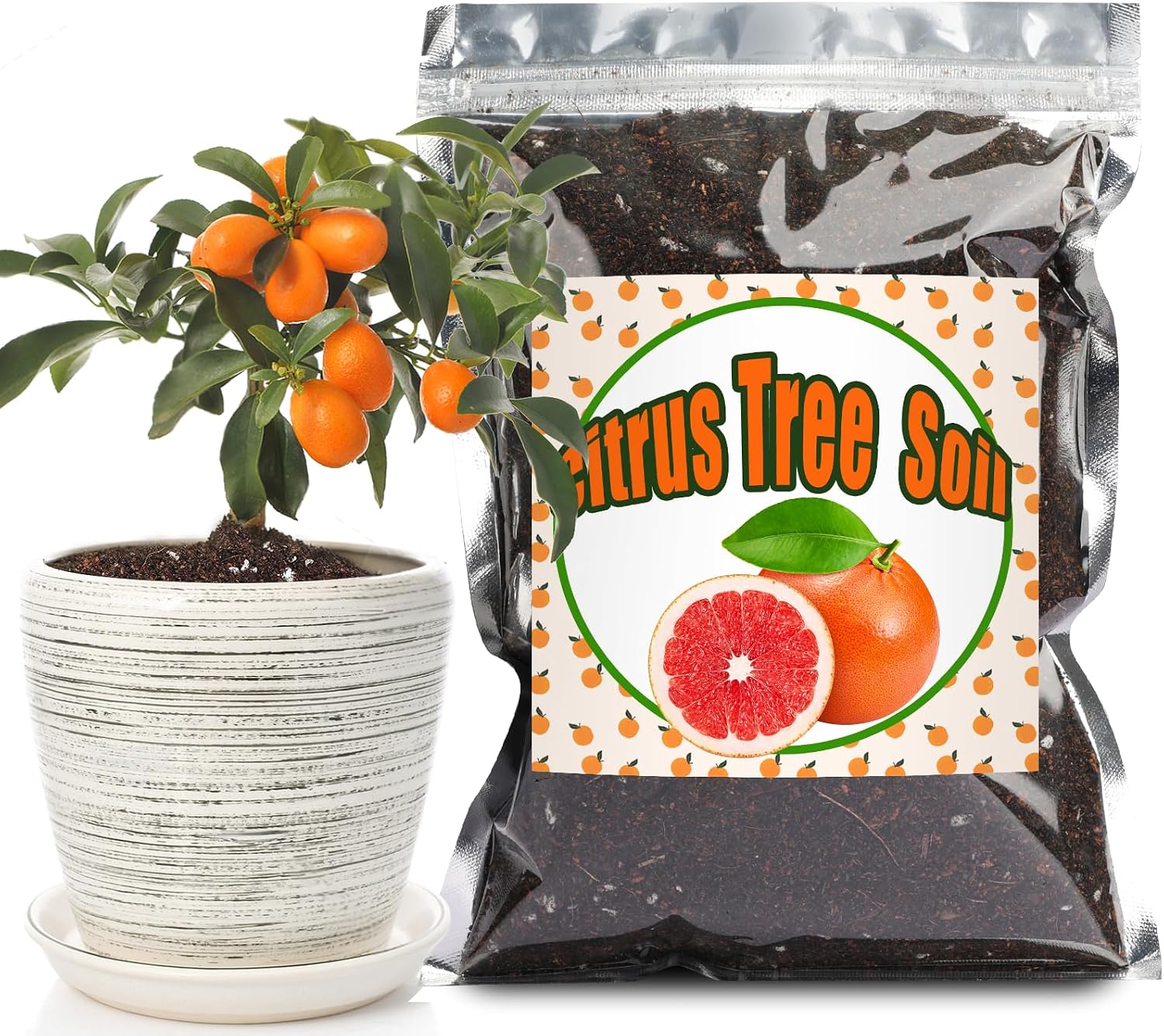
This 1 qt Doter citrus potting mix is a small, ready-to-use bagged soil designed specifically for potted lemon, lime, orange, and grapefruit trees. It combines loamy organic matter with drainage-enhancing components so containers do not stay waterlogged while retaining enough moisture for citrus root systems. The blend is calibrated to a slightly acidic-to-neutral pH (about 6.0 to 7.1) and includes organic and mineral nutrients to support growth and fruiting from young saplings to established container trees. For container growers the convenience is notable because there is no need to mix in amendments for basic citrus care. Limitations are the small 1 quart volume and lightweight packaging, which means it is best for top dressing, small repots, or trial plants rather than filling large planters; serious growers will need multiple bags or a larger bulk mix. As a budget-conscious option it gives citrus-specific balance without extra additives you might not need, but expect to supplement with fertilizer over time for heavy fruiting trees.
Best for: Buyers who want an affordable, citrus-specific ready mix for small containers, seedling repots, or as a top-dressing and prefer a product that works out of the bag with minimal fuss.
Less Ideal for: Gardeners filling large planters, orchard-scale growers, or anyone who needs a bulk soil solution for multiple mature citrus trees.
- Formulated pH between 6.0 and 7.1 tailored for citrus nutrient uptake
- Improved drainage to reduce risk of root rot in containers
- Includes organic and mineral nutrients to support growth and fruiting
- Ready-to-use mix that saves time over blending separate amendments
- Small 1 quart volume is insufficient for large pots or multiple trees
- May require additional fertilizer for sustained heavy fruit production
Verdict: A convenient, citrus-focused 1 qt potting mix that gives small-container citrus the right pH and drainage without needing immediate amendment.
E.B. Stone Organics Citrus & Palm Mix Potting Soil, 1.5 cu ft

| Brand Name | E.B. Stone Organics |
|---|---|
| Volume | 1.5 cubic feet |
| Unit Count | 1536 Ounce |
| Style Name | Potting Soil |
| Manufacturer | E.B. Stone & Son, Inc. |
This ready-to-use citrus and palm mix is designed for container and in-ground planting of citrus, palms, avocado and tropical foliage. The formula pairs aged fir bark and pumice to keep the root zone well aerated and fast-draining, which helps prevent root rot in moisture-sensitive plants, while added mycorrhizae promote nutrient and water uptake. It can be used straight from the bag to repot container trees or worked into planting holes for garden trees. Practical benefits include improved drainage without sacrificing moisture retention and a soil community that supports establishment and steady growth. Because it is a focused blend rather than an all-purpose mix, gardeners seeking a general potting soil for mixed houseplants may prefer a different product, and larger plantings will require multiple bags. For someone who wants a reliable, plant-specific base medium for citrus and other tropicals, this delivers predictable performance with minimal prep.
Best for: Gardeners who prioritize consistent, plant-specific growing media for citrus and tropical trees and want a low-prep, reliable soil that supports healthy root development.
Less Ideal for: People looking for a general all-purpose houseplant mix or those planting large areas who prefer bulk soil sold by the yard or pallet.
- Formulated specifically for citrus, palms and tropicals so root needs are addressed
- Aged fir bark and pumice provide fast drainage and good aeration
- Includes beneficial mycorrhizae to help roots access water and nutrients
- Ready to use straight from the bag for potting or planting
- Only sold in 1.5 cu ft bags which means buying several for larger trees or beds
Verdict: Buy this if you want a dependable, purpose-built potting mix that promotes healthy roots and good drainage for citrus and tropical trees.
Miracle-Gro Indoor Potting Mix for Cactus & Succulent, 2‑Pack (8 qt. each)

| Item Highlight | Fast-Draining Cactus and Succulent Potting Mix with Plant Food |
|---|---|
| Number of Packs | 2 |
| Included Components | 2 bags |
| Item Type Name | Soil |
| Ingredients | Sphagnum Peat Moss,Sand,Perlite |
This two-pack of Miracle-Gro Indoor Potting Mix for Cactus & Succulent is a ready-to-use soil blend designed to give desert-type and sun-loving indoor plants rapid drainage and a nutrient boost. The mix combines sphagnum peat moss, sand, perlite and forest products to create a gritty, open texture that helps prevent waterlogging in pots. Typical use is repotting succulents, cacti or small indoor citrus into containers with drainage; each 8‑qt. bag is sized to top up or fill multiple 6‑inch pots. The included plant food means newly potted plants get an initial nutrient supply, and the manufacturer recommends feeding with indoor plant food after about 30 days. Practical benefits are less frequent root rot with correct watering and a consistent, no-mixing-needed medium for quick repots. Limitations are that the bags are small for larger citrus or deeper-rooted plants and the peat-based formula will compact over time, so repotting or amending every couple of years is advised to refresh structure and nutrients.
Best for: Buyers who want a convenient, pre-mixed fast-draining medium to repot small indoor succulents, cacti or young citrus and prefer a product with built-in plant food and wide customer acceptance.
Less Ideal for: Growers planning to pot mature citrus trees or large deep-rooted container specimens should choose a larger volume, more robust potting medium or custom citrus mix instead.
- Fast-draining blend reduces risk of waterlogged roots for succulents and cacti
- Enriched with plant food to give newly potted plants an initial nutrient boost
- Ready-to-use formula requires no mixing before repotting
- Gritty components (sand and perlite) improve aeration around roots
- Small 8 qt. bag size is limited for larger citrus or deeper containers
- Peat-based mix may compact and lose structure over time and needs periodic repotting or amendment
Verdict: Choose this ready-to-use, drainable potting mix when you need a convenient, plant-food‑enriched medium for repotting small indoor succulents, cacti or young citrus.
Miracle-Gro Cactus, Palm & Citrus Potting Mix, 8 qt.
| Brand Name | Miracle-Gro |
|---|---|
| Volume | 8 quarts |
| Item Highlight | Palm and Citrus Potting Mix, For Indoor or Outdoor Container Plants, Great for Succulents |
| Contains | Forest products, sphagnum peat moss, sand, and perlite |
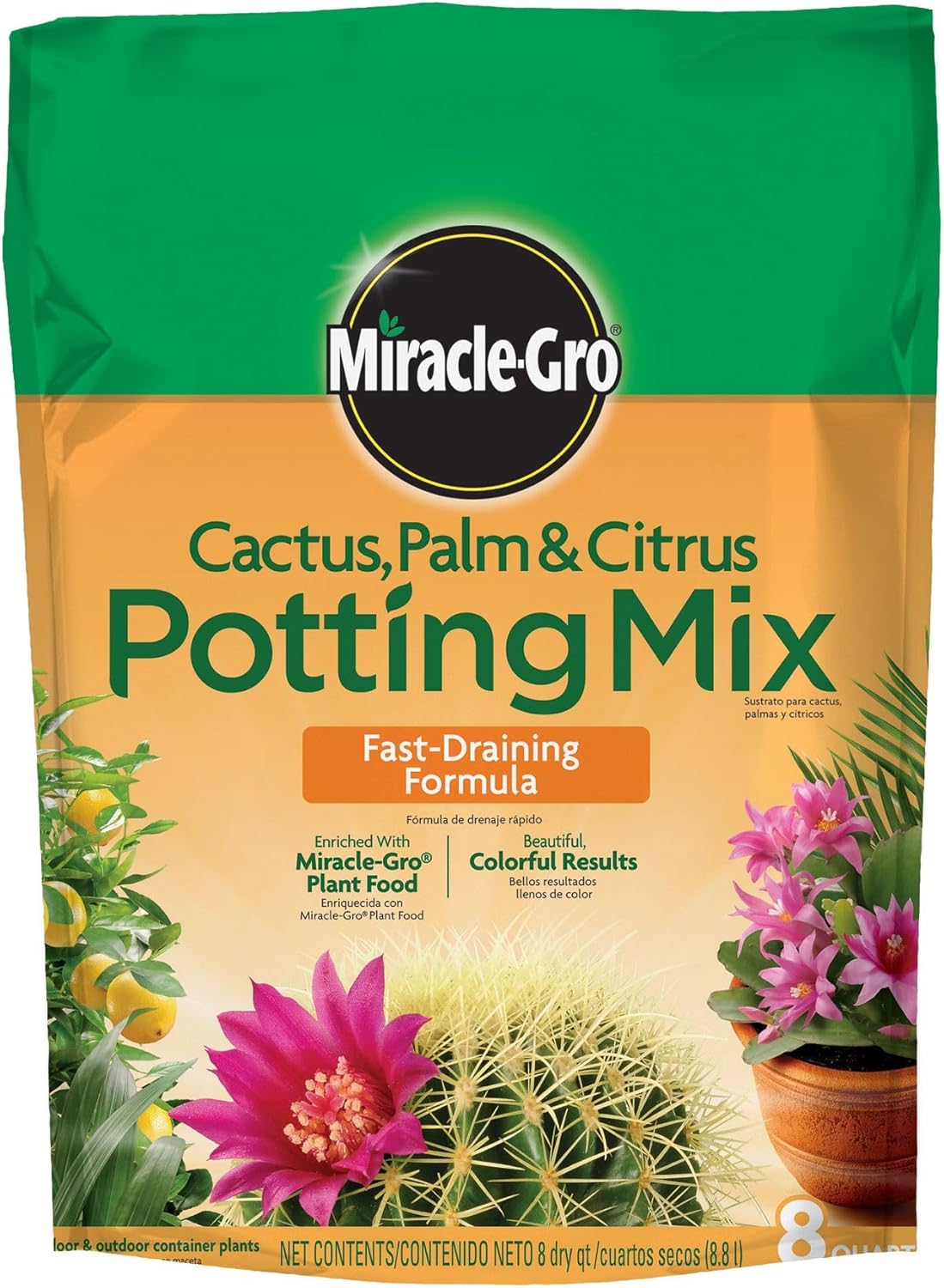
This 8 qt. Miracle-Gro Cactus, Palm & Citrus Potting Mix is made for container-grown succulents and citrus trees and combines peat moss, sand, perlite, and forest products for a fast-draining medium. It is typically used to repot indoor or outdoor citrus into containers with drainage holes, filling about one bag for two 8-inch pots, and the included plant food helps feed young transplants. The mix’s sand and perlite improve drainage and reduce compaction so roots get air instead of sitting in water, which is important for citrus grown in pots. Practical benefits include easier watering management, less risk of root rot, and a ready-to-use blend that removes guesswork for casual gardeners. Limitations are the small 8 qt. volume for larger trees and the presence of peat moss if you prefer peat-free mixes; heavier or repeat repotting of larger citrus will require multiple bags or a larger-scale soil solution.
Best for: Gardeners who want a reliable, ready-to-use potting mix for potted citrus and prefer a low-effort solution that reduces watering mistakes and root rot risk.
Less Ideal for: Growers planning to pot large citrus trees, build custom soil blends, or seeking peat-free and bulk soil options should look elsewhere.
- Fast-draining formula that helps prevent waterlogged roots in container citrus
- Enriched with Miracle-Gro plant food to support early growth after repotting
- Contains sand and perlite to reduce compaction and improve aeration
- Designed for both indoor and outdoor container use so it fits different planting locations
- Small 8 qt. bag size means you may need multiple bags for larger pots or repeat repotting
- Contains sphagnum peat moss, so not suitable for gardeners avoiding peat-based products
Verdict: A convenient, fast-draining potting mix that makes repotting container citrus safer and easier for cautious gardeners.
Choosing the Right Potting Soil for Citrus Trees: Key Factors to Consider
Drainage and Aeration
Citrus roots need a mix that drains freely to avoid root rot but still retains some moisture between waterings. Look for components like coarse pine bark, perlite, or pumice that create pore space and prevent compaction. A well-aerated soil allows oxygen to reach fine roots and supports beneficial microbes that help nutrient uptake.
In practice, a container mix with visible drainage amendments will dry from the surface in a predictable way and reduce soggy zones at the bottom. For in-ground growers, looser soil helps during wet seasons and prevents the crown from staying saturated.
Nutrient Balance and Release
Young and fruiting citrus both need regular, balanced feeding. A potting soil with a modest baseline of slow-release fertilizer or an organic nutrient base reduces the frequency of shock from transplanting and supports steady growth. However, too-high initial fertilizer levels can burn roots in seedlings or newly potted trees.
Consider mixes that list nutrient sources and recommended feeding intervals. A balanced N-P-K profile and trace elements such as iron, manganese, and zinc are important because deficiencies can show quickly in container citrus.
pH and Buffering Capacity
Citrus generally prefers slightly acidic to neutral soil. A mix that holds a stable pH prevents nutrients from locking out and reduces the need for frequent pH correction. Ingredients like peat can acidify a mix, while lime or dolomite buffers pH in peat-based blends.
Check whether a soil lists expected pH range or includes buffering amendments. For gardeners who use municipal water that is alkaline, a slightly more acidic starting mix can offset gradual pH drift.
Organic Matter and Long-Term Structure
Organic components such as composted bark or well-aged compost supply both nutrients and structure. They break down slowly and help retain moisture while keeping the mix light. Too much fine organic material, however, can compact and reduce aeration as it decomposes.
Aim for a balance: enough organic content to support microbial life and slow nutrient release, but paired with coarse components so the rooting zone remains open over multiple seasons.
Salt Control and Leaching Behavior
Container-grown citrus are prone to salt buildup from water and fertilizers. A potting soil that allows easy leaching without losing structure helps prevent tip burn and leaf drop. Avoid mixes that trap salts or include unwashed amendments that can add salts.
Gardeners should expect to flush containers periodically and choose soils that handle occasional deep watering without washing out fine texture or collapsing.
How Potting Soil Affects Citrus Fruiting and Flowering
Soil influences how much energy a citrus tree can allocate to blooms and fruit. A mix that limits oxygen or holds excessive water forces the plant to focus on survival rather than reproduction. Conversely, a consistent supply of available nutrients and good drainage encourages regular flowering and more reliable fruit set.
For container citrus, root volume also limits how big a crop the tree can support. Using a soil that maximizes root health in a given pot size is as important as fertilization schedules.
- Loose mixes promote fine root growth that supports fruiting.
- Balanced, steady nutrient release helps sustain blossom development.
- Avoid heavy, moisture-retentive soils that can reduce flowering.
Potting Mixes for Different Container Sizes
A small citrus in a 6 to 10 inch container needs a mix that drains quickly because the soil column dries fast and salts concentrate rapidly. Use a coarser mix and reduce the organic fines to prevent waterlogging.
Larger containers can accommodate mixes with a bit more organic matter since the larger volume buffers moisture swings. For patio trees in big tubs, prioritize pH stability and slow-release nutrients to reduce maintenance.
- Small pots: higher proportion of pumice or perlite.
- Medium pots: balanced drainage and moisture retention.
- Large tubs: more organic matter with good aeration additives.
Adjusting Your Soil by Climate and Watering Habits
In hot, dry climates, mixes that retain a little more moisture will reduce watering frequency while still allowing oxygen at the roots. Adding water-retentive crystals or more compost can help, but keep drainage amendments to avoid saturation after heavy rains.
If you tend to overwater, choose a very free-draining mix and increase watering frequency rather than relying on a moisture-retentive soil. For gardeners using automated irrigation, test-run how quickly the chosen mix dries to avoid chronic overwatering.
- Dry climates: slightly higher organic content for moisture holding.
- Humid climates: maximize drainage and aeration.
- Automated irrigation: match soil water retention to run length.
Repotting and Refresh Cycles for Citrus in Pots
Citrus trees benefit from periodic repotting to renew the rooting medium and check for root crowding. When repotting, replace a portion of the old soil with fresh mix to maintain structure and nutrient availability without shocking the tree.
Older mixes break down and hold less air. If a root ball looks dense and the soil compacts, plan to refresh the top one-third to one-half of the potting medium and trim circling roots carefully.
- Refresh soil every 2 to 3 years for most container citrus.
- Inspect roots at repotting and remove rotten or tightly circling roots.
- Top-dress with slow-release feed if full repotting is not practical.
Common Soil Problems and Quick Fixes
Yellowing leaves and poor vigor often trace back to compacted or waterlogged soil. Improving drainage by mixing in coarse bark or perlite and ensuring the pot has a clear drainage hole can quickly reverse symptoms.
If iron chlorosis appears in otherwise healthy trees, it might be a pH issue. Test the soil pH and use appropriate buffering amendments or foliar iron until the root zone pH stabilizes.
- Salt buildup: flush the pot thoroughly and check fertilizer rates.
- Poor drainage: amend with coarse material and check pot size.
- Nutrient deficiency: use a targeted citrus fertilizer after diagnosis.
How We Chose the Best Potting Soil for Citrus Trees
We prioritized mixes that match citrus trees' unique root and moisture needs. Evaluation focused on drainage and aeration, nutrient profile and slow-release feeding, pH stability and buffering, organic matter and structure, and salt control for container-grown citrus. Practical handling factors such as texture, dust level, and suitability for potting or repotting were also considered. Products were included only if they explicitly targeted fruiting or citrus use, had clear ingredient lists, and offered details on pH, feeding rates, or drainage amendments. We excluded generic houseplant soils with no drainage data, mixes formulated only for acid-loving ornamentals, and any product lacking ingredient transparency. Our goal was to surface mixes that provide the right physical structure and fertility for citrus rather than broad-purpose potting blends that can lead to overwatering or nutrient imbalance.
FAQ
How often should I repot a citrus tree in a container?
Usually every two to three years for younger or fast-growing trees and every three to five years for established patio trees. Repot sooner if roots are circling or the soil is compacted.
Can I use garden soil for potted citrus?
Garden soil is often too dense for containers and can compact, reducing aeration. A purpose-built potting mix with drainage amendments is a better choice for container citrus.
What pH should potting soil for citrus trees be?
Citrus prefer slightly acidic to neutral conditions, typically around pH 5.5 to 6.5. A mix with buffering agents helps maintain that range over time.
Should I add slow-release fertilizer to the potting soil?
A modest amount of slow-release fertilizer in the mix can supply steady nutrients, but avoid high initial concentrations that can burn roots. Supplement with targeted citrus feed during the growing season.
How can I prevent salt buildup in container citrus?
Flush containers periodically with ample water to leach salts and avoid overfeeding. Choose well-draining mixes that do not trap salts and monitor leaf tips for early signs of buildup.
Final Verdict
When choosing potting soil for citrus trees, prioritize good drainage and aeration while maintaining enough organic matter to supply steady nutrients. Balance pH stability with slow-release feeding and look for mixes that handle salt leaching well in containers. Match the soil texture to your pot size and climate, and plan for periodic refreshes to keep roots healthy. With those tradeoffs in mind, you can pick a mix that supports flowering, fruit set, and long-term tree vigor.
