

Note: This article contains affiliate links. If you click on these links and make a purchase, I may earn a small commission at no extra cost to you. This helps support my research and content. Read my full affiliate disclosure here.
Lavender does best in lean, free-draining mixes rather than the rich, moisture-retentive potting soil many gardeners use. Choosing an appropriate potting soil for lavender affects flowering, root health, and how often you need to water. This guide focuses on mixes and potting blends suited for lavender grown in containers and small outdoor beds. We shortlisted seven top potting soils that meet those needs and evaluated them on drainage, pH control, and long-term structure. Below you will find the top picks and the practical reasons each type of mix performs well in a lavender planting. The next sections explain what matters when selecting a mix and how we judged the options.
Top Picks at a Glance
| Best Overall The best all-around choice for most situations | Burpee Premium Organic Potting Mix with Coco Coir (9 Qt) |  |
| Best Quality Built to a higher standard if you want something more solid | Espoma Organic Potting Mix, 16-Quart |  |
| Best Value The sweet spot between price and what you get | Espoma Organic Potting Soil Mix, 8 qt |  |
| Best Budget The cheapest option that still gets the job done reliably | Doter Premium Lavender Potting Mix, 1 qt |  |
| Highest Rated A top-rated pick with lots of positive feedback | Rosy Soil Herb Mix Organic Potting Soil, 4 Quart |  |
| Most Popular A crowd favorite that many people choose with confidence | Soil Sunrise Lavender Potting Soil Mix (8 Quarts) |  |
| Best Seller A high-volume bestseller chosen again and again | Soil Sunrise Lavender Potting Soil Mix (4 Quarts) |  |
Burpee Premium Organic Potting Mix with Coco Coir (9 Qt)

| Item Form | Powder |
|---|---|
| Specific Uses For Product | Plant Growth, Root Development, Seed Development, Soil Conditioning |
| Coverage | 9 Qt Container |
| Liquid Volume | 9 quarts |
Burpee Premium Organic Potting Mix is a ready-to-use container soil designed to give potted plants a consistent, organic growing medium. It combines coco coir with a nutrient blend to hold moisture without waterlogging and to feed plants for up to three months, so it is typically used to fill pots, planters, and raised beds before planting seeds or seedlings. Notable features include OMRI listing for organic gardening, a lightweight coir component that improves aeration and drainage, and embedded slow-release nutrients that reduce immediate feeding needs. For lavender grown in containers, the mix’s improved drainage and stable moisture retention help avoid soggy roots while providing a baseline of nutrients during establishment. Limitations are that the mix is formulated as an all-purpose potting medium rather than a specialized alkaline, very fast-draining lavender mix, so growers aiming for the sharp, gritty profile lavender prefers may still want to amend with extra coarse sand or perlite and check pH. The bag is a convenient size for small projects but may require multiple bags for larger pots or several plants.
Best for: For gardeners who want an easy, organic starting mix for container-grown herbs and flowers and prefer a balanced, low-maintenance medium to establish plants without frequent feeding.
Less Ideal for: Not the best choice for growers seeking a specialized, ultra-fast-draining, gritty soil for large or heat-stressed lavender plantings who should look for or create a more mineral-heavy mix.
- OMRI-listed organic formula suitable for organic container gardening
- Coco coir improves aeration while retaining moisture to reduce watering frequency
- Includes slow-release nutrients that feed plants for up to three months
- Lightweight, ready-to-use bag convenient for potting and seed starting
- Not formulated specifically for high-drainage, alkaline-loving plants so may need amendments for ideal lavender conditions
- 9-quart bag is small for multiple or larger containers
Verdict: A convenient organic potting mix that gives container lavender a balanced, moisture-stable starting medium while letting you tweak drainage and pH for peak lavender performance.
Espoma Organic Potting Mix, 16-Quart
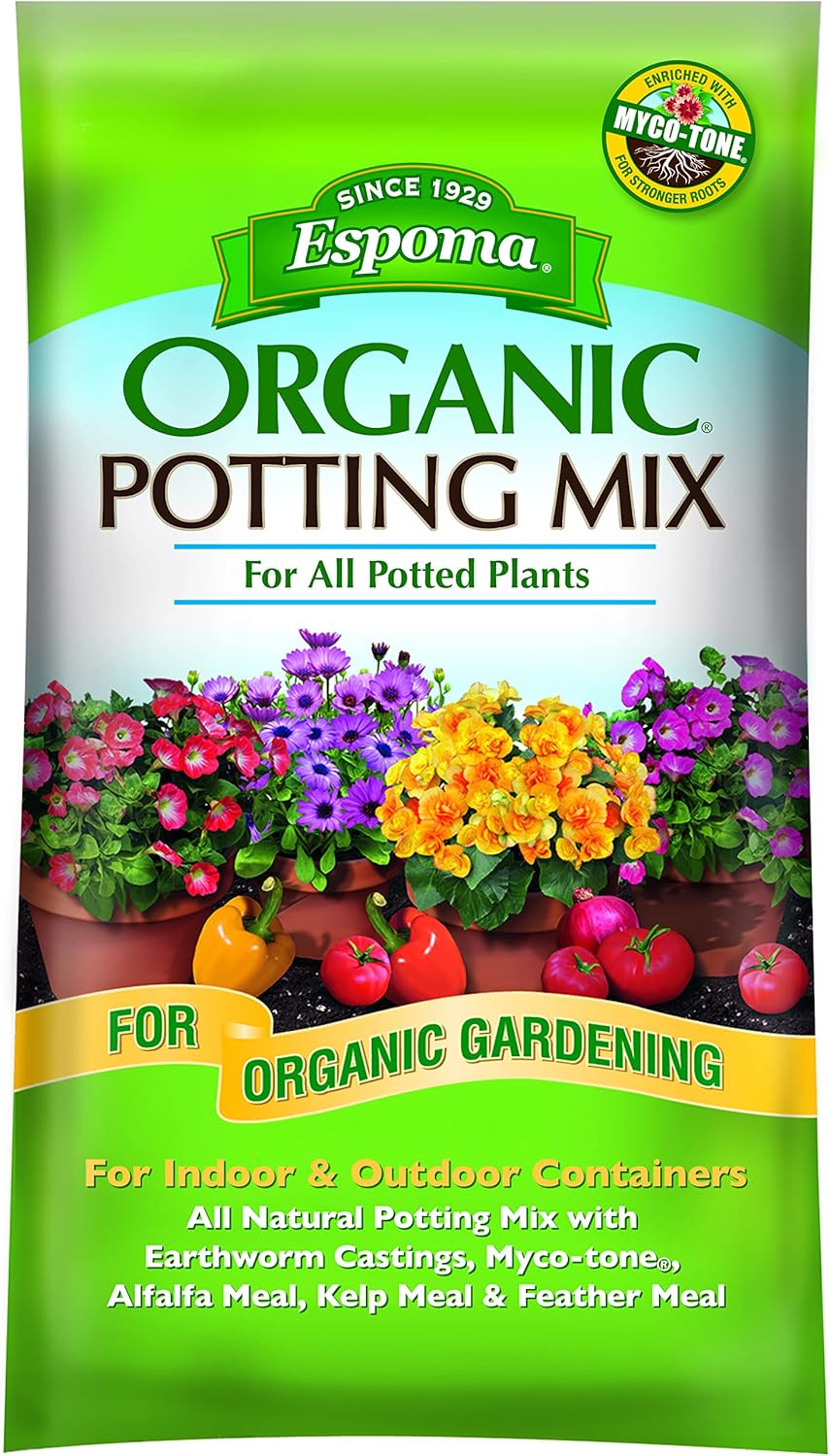
| Volume | 16 quarts |
|---|---|
| Item Weight | 16 ounces |
| Style Name | Mix |
Espoma Organic Potting Mix is a general-purpose, organic blend designed for container gardening and transplanting. It combines sphagnum peat moss, humus and perlite for drainage and aeration, and is enriched with earthworm castings, alfalfa, kelp and feather meals to supply slow-release nutrients. The added Myco-tone mycorrhizae can help roots establish faster after potting, which is helpful when repotting or starting new plants. In practice this mix works well for potted herbs, vegetables and ornamentals where a balance of moisture retention and drainage is needed. Because it is peat-based it holds water longer than coarse, mineral-heavy mixes so you will likely water less frequently but should monitor for overwatering with moisture-sensitive plants. It is fully organic and does not include synthetic fertilizers, so nutrient buildup and salt stress are less of a concern for sensitive plants when used as directed. The bagged 16-quart size is convenient for small patios and containers but may require multiple bags for several large pots.
Best for: Gardeners who prioritize organic inputs and want a reliable, nutrient-rich potting medium for container-grown herbs and ornamentals and who value easier establishment after repotting.
Less Ideal for: Growers seeking an extremely fast-draining, gritty mix tailored to Mediterranean plants that require very low moisture between waterings should look for a cactus or specialized lavender mix instead.
- Organic ingredient blend with no synthetic fertilizers
- Includes mycorrhizal inoculant to support root establishment
- Perlite and humus improve drainage and aeration compared with pure peat
- Contains slow-release organic amendments for steady nutrient supply
- Peat-based formula retains more moisture than very gritty mixes preferred by some Mediterranean herbs
Verdict: Choose this organic mix if you want a balanced, nutrient-rich potting soil with mycorrhizae that helps container plants establish and grow well.
Espoma Organic Potting Soil Mix, 8 qt

| Brand | Espoma |
|---|---|
| Unit Count | 256 Ounce |
| Volume | 8 liters |
| Includes | Myco-Tone mycorrhizae |
Espoma Organic Potting Soil Mix is a general-purpose organic container mix intended for indoor and outdoor pots, including herbs and vegetables. It combines sphagnum peat moss, humus and perlite for drainage and structure, and is enriched with earthworm castings, alfalfa meal, kelp meal and feather meal to provide slow-release organic nutrients. The proprietary Myco-Tone mycorrhizae blend can help roots establish after repotting, making this useful when starting new lavender plants in containers or when repotting established ones. In practice the mix holds enough moisture for drought-tolerant herbs yet drains better than straight peat, so it reduces waterlogging risk common with heavy garden soils in pots. Limitations to consider are that the formula contains peat moss, which is acidic and may require lime adjustment for lavender long term, and this is a general mix rather than a specifically gritty Mediterranean blend some lavender growers prefer. For gardeners who value organic inputs and easy transplanting, this is a convenient ready-to-use potting mix for container lavender with occasional pH tweaks.
Best for: Gardeners who want an organic, ready-to-use potting mix that supports easy transplanting and steady nutrient release for container-grown lavender and other herbs.
Less Ideal for: Those seeking a specifically gritty, fast-draining Mediterranean mix for lavender grown in very hot, dry conditions or growers who require a lime-free, non-peat formula.
- Organic ingredient blend with earthworm castings, alfalfa meal and kelp meal for slow-release nutrition
- Contains perlite and humus for improved drainage and root aeration compared with plain peat
- Includes Myco-Tone mycorrhizae to help root establishment after potting or transplanting
- Suitable for both indoor and outdoor containers and a range of plants including herbs and vegetables
- Contains sphagnum peat moss which is acidic and may need lime adjustment for lavender's preferred pH
- Not a specialized gritty or mineral-heavy mix that some lavender growers recommend for best drought tolerance
Verdict: A convenient organic potting mix that helps roots establish and provides steady nutrition for container lavender when you want an easy, all-purpose solution.
Doter Premium Lavender Potting Mix, 1 qt

| Brand | Doter |
|---|---|
| Item Type | Garden soil |
| Volume | 1 quarts |
| Unit Count | 1 Count |
This one-quart Doter lavender potting mix is blended for lavender growers who need a ready-to-use small bag for containers, small raised beds, or trial plantings. The mix combines perlite and coir for improved drainage and moisture retention while claiming a pH suited to lavender, so it helps prevent waterlogged roots and supports fragrant blooms. Enriched nutrients aim to encourage stronger root development and more consistent flowering compared with generic potting soil. Because the package is small, it is most useful for repotting a few plants, starting new container specimens, or topping up container soil rather than filling large beds. There is no detailed nutrient analysis or ingredient percentages on the label, so gardeners wanting precise fertilizer plans or bulk quantities will need additional products. For a budget-focused gardener testing a few lavender plants or keeping potted lavender healthy, this mix is a convenient, plant-specific option that eliminates the need to blend your own small batches.
Best for: Gardeners who want an inexpensive, ready-made lavender mix for containers or a few plants and prefer a plug-and-play solution over mixing components themselves.
Less Ideal for: People who need soil in bulk for large garden beds or who require exact nutrient and ingredient specifications for professional growing.
- Formulated specifically for lavender with a pH range targeted to lavender preferences
- Contains perlite and coir for improved drainage and balanced moisture retention
- Nutrient-enriched to encourage root development and flowering
- Convenient small 1 quart size ideal for repotting or testing a few plants
- Very small volume makes it impractical for larger plantings or beds
- Product label lacks detailed ingredient percentages and nutrient analysis
Verdict: A convenient, budget-friendly 1 qt mix tailored to potted lavender that saves you blending time when repotting or testing a few plants.
Rosy Soil Herb Mix Organic Potting Soil, 4 Quart

| Unit Count | 64 Ounce |
|---|---|
| Volume | 4 quarts |
| Item Highlight | Biochar, Worm Castings, Mycorrhizae Blend, Peat-Free, Fast Draining |
This 4-quart Rosy Soil Herb Mix is a ready-to-use potting soil aimed at container herbs and small outdoor planters. It combines wood biochar, compost, worm castings, bark fines, and beneficial mycorrhizae to create a light, airy medium that drains quickly while retaining nutrients near roots. Typical use is straight from the resealable bag into 6-inch pots or balcony planters for basil, thyme, lavender, and other culinary and aromatic herbs without needing to amend or blend. The peat-free formula and microbial inputs help build a living soil that supports stronger root growth and improved nutrient uptake, which can lead to fuller, more flavorful plants. Because the mix is designed for drainage and seedling establishment it is less likely to sit wet and invite root rot in containers. Limitations are the small 4-quart volume — the bag covers only a few pots — and there is no listed NPK analysis for fine-tuning fertilization, so heavier-feeding herbs or larger plantings will need supplemental fertilizer over time.
Best for: Buyers who prioritize a reliable, peat-free, microbially active potting mix for container herbs and want a plug-and-play soil that promotes healthy roots with minimal effort.
Less Ideal for: Gardeners needing large volumes for beds or heavy-feeding herbs and those who require a measured fertilizer profile built into the mix.
- Peat-free, organic blend using biochar and worm castings to support microbial activity.
- Includes beneficial mycorrhizae to improve root establishment and nutrient uptake.
- Fast-draining, airy texture suitable for seedlings and container-grown herbs.
- Resealable 4-quart bag ready to use without additional mixing.
- Small volume per bag restricts use to a few pots or small planters.
- No nutrient (NPK) breakdown provided for precise fertilizing schedules.
Verdict: Choose this mix if you want a dependable, peat-free, microbially rich potting soil that encourages strong roots and fast drainage for container lavender and other herbs.
Soil Sunrise Lavender Potting Soil Mix (8 Quarts)

| Volume | 8 quarts |
|---|---|
| Unit Count | 1 Count |
| Ingredients | Peat, perlite, charcoal, pumice, sand, wormcastings, lime |
| Style Name | Peat Moss,Potting Soil Mix |
This Lavender Potting Soil Mix is a small-batch blend designed to mimic Mediterranean soils lavender prefers. It combines peat moss for moisture retention with perlite, pumice, sand and horticultural charcoal to keep the mix light and fast-draining, while worm castings supply gentle, organic nutrients and lime adjusts pH toward mild alkalinity. In practice the mix is best used for container-grown lavender or small raised beds where drainage and a slightly alkaline pH matter; the sandy loam texture helps prevent root rot and reduces overwatering risks. The resealable 8-quart bag is convenient for repotting one or two 10–12 inch pots and the ingredient list is straightforward and chemical-free. Limitations are the small volume if you need to fill large planters or multiple pots and peat-based content if you prefer a fully peat-free or larger-scale landscape amendment. For hobbyists focused on container lavender, this blend simplifies getting soil conditions closer to what the plants need without extra amendments.
Best for: Gardeners who want an off-the-shelf, lavender-focused potting mix for container or small raised-bed planting and value a ready-made, no-fuss soil that reduces the need for additional amendments.
Less Ideal for: Large-scale landscapers or growers who need bulk soil quantities or gardeners seeking a peat-free, landscape-grade amendment for in-ground beds.
- Formulated for lavender with ingredients that improve drainage and aeration (perlite, pumice, sand)
- Includes worm castings for gentle organic nutrient support
- Lime-adjusted to favor the slightly alkaline pH lavender prefers
- Horticultural charcoal and pumice help reduce compaction and potential root rot
- Small 8-quart bag may not be enough for multiple or large containers
- Contains peat moss, which some gardeners avoid for sustainability reasons
Verdict: If you want a convenient, lavender-specific potting mix that improves drainage and adjusts pH for healthier container plants, this ready-made 8-quart blend delivers.
Soil Sunrise Lavender Potting Soil Mix (4 Quarts)

| Volume | 4 quarts |
|---|---|
| Ingredients | Peat moss, pumice, perlite, charcoal, coarse sand, worm castings, lime |
| Style Name | Peat Moss,Potting Soil Mix |
| Unit Count | 1 Count |
This 4-quart Soil Sunrise mix is formulated for lavender in pots and small containers by combining peat moss with pumice, perlite, coarse sand, charcoal, worm castings, and lime. It is typically used when repotting or starting lavender in 6-inch to larger containers to recreate the Mediterranean-like, well-draining medium lavender prefers. Notable features include added pumice and sand for fast drainage and aeration, lime to keep the soil mildly alkaline, and worm castings for slow-release nutrients without synthetic fertilizers. In practice the mix helps prevent overwatering and root rot in container-grown lavender and reduces the need for frequent soil amendments. The small 4-quart size is convenient for trialing plants or treating a few pots, and the resealable bag format shown in brand materials keeps extra mix usable. Limitations are the modest volume, which means heavier users will need multiple bags for several plants, and the peat-based formula may compress over time and benefit from occasional refresh or addition of fresh grit.
Best for: Buyers who want a ready-made, plant-focused soil that reduces the guesswork when potting lavender and prefer an all-natural, low-maintenance option for a few containers.
Less Ideal for: Gardeners who need bulk soil for large beds or who prefer fully peat-free or commercial potting soils formulated for long-term container crops.
- Lavender-specific blend with sand, pumice, and perlite for excellent drainage and root aeration
- Lime-adjusted pH to better match lavender's mild alkalinity needs
- Contains worm castings for gentle organic nutrient support
- Includes horticultural charcoal to improve soil structure and reduce odors
- Small 4-quart volume may require multiple bags for more than a few plants
- Peat-based mix can compact over time and may need refreshing or added grit
Verdict: A convenient, lavender-focused potting mix that provides the drainage, mild alkalinity, and gentle nutrients container-grown lavender needs to thrive.
Choosing the Right Potting Soil for Lavender: Key Factors to Consider
Drainage and Aeration
Lavender roots need oxygen and cannot tolerate prolonged wet feet. A potting soil that drains quickly prevents root rot and reduces fungal problems.
Look for mixes with coarse components such as coarse sand, horticultural grit, or perlite to keep channels open for air and water movement. The particle size distribution matters: too many fine particles leads to compaction and slow drainage, while a balance of fines and coarse particles provides moisture retention without waterlogging.
pH and Lime Content
Lavender generally prefers neutral to slightly alkaline soils. If a mix trends too acidic it can limit nutrient uptake and weaken fragrance production.
Some potting soils include dolomitic lime or are naturally alkaline through mineral components. Choose a mix with stable pH or one that can be adjusted easily. Regularly testing pH in containers helps you catch drift over a season, and small lime amendments are safer than relying on high-phosphorus fertilizers to mask pH issues.
Low Nutrient and Fertility Levels
Lavender thrives in lean conditions and often produces more oils and better structure when not overfed. Rich, high-organic mixes promote soft, leggy growth and can reduce winter hardiness.
Select potting soils with modest starter fertilizer or those labeled low-fertility. If you need to feed, use low-nitrogen, balanced schedules and avoid high-phosphorus blends. This approach supports compact growth and heavy flowering rather than excessive foliage.
Texture and Particle Stability Over Time
Container mixes compress and break down with watering, repotting, and root growth. A stable texture maintains drainage and prevents pots from becoming dense and soggy.
Look for durable components like coarse sand, pumice, or calcined clay that resist breakdown. Avoid mixes that rely solely on fine peat or compost as the structural backbone, because these materials collapse and reduce air space after a season.
Salt Levels and Soluble Salts
High soluble salt or residual fertilizer in a mix can stress lavender, especially young plants and newly rooted cuttings. Symptoms include leaf burn and reduced vigor.
Choose mixes with low reported salt content or those intended for long-term container culture with minimal starter feed. If you use a pre-fertilized mix, flush containers regularly during the first months to leach excess salts, and monitor plant response.
Water-Holding Balance
Although lavender likes fast drainage, it still needs enough moisture between waterings to avoid chronic drought stress. The ideal potting soil holds moisture in the right places while letting excess flow away.
A balanced mix includes particles that retain some water near roots, such as small amounts of well-decomposed compost or fine bark, combined with larger pore-forming components. That balance reduces extreme wet-dry swings that can shock plants while keeping conditions aerobic.
Best Mix Types for Container Lavender
Containers intensify drainage and moisture swings, so mix choice matters more than in-ground plantings. For potted lavender, blends that mirror Mediterranean soils perform best: coarse mineral particles with modest organic content. A typical container mix combines coarse sand or grit, perlite or pumice, and a small fraction of well-aged compost or fine bark to offer minimal nutrients.
Use deeper pots with wide diameters where possible to give roots room and reduce watering frequency. When mixing your own, aim for roughly one part coarse mineral to one part potting medium with a small portion of organic matter. That proportion keeps pots light and free-draining while offering modest water-holding capacity.
- Add grit or pumice for improved aeration and long-term structure.
- Avoid moisture-retaining crystals or high-peat blends.
- Consider coarse sand to mimic natural stony soils.
How to Adjust Store-Bought Mixes
Pre-made potting soils vary widely. If a mix is too rich or moisture-retentive, amend it with coarse sand, horticultural grit, or perlite until you get quick drainage. If a mix is very fine and fast-draining but offers almost no moisture retention, fold in a small amount of fine compost or bark to buffer dryness between waterings.
Always test an amended mix by watering a container and timing how quickly water exits the drainage hole. You want rapid flow but not immediate bone-dry conditions. Make adjustments in small increments and note the mix ratio so you can replicate successful blends.
- Start with a 1:1 ratio of potting mix to inorganic amendment for most mixes.
- Increase organic matter slightly for smaller pots to maintain steady moisture.
- Pre-moisten and let the mix settle before planting to check compaction.
pH Testing and Simple Corrections
Check pH in container-grown lavender periodically because fertilizers and water can shift media acidity. A handheld pH meter or test kit is sufficient for routine monitoring. Aim for pH close to neutral to slightly alkaline rather than strongly acidic.
If the mix is too acidic, incorporate a small amount of dolomitic lime during repotting. Avoid heavy-handed corrections; small, measured applications over time give steadier results. If pH trends alkaline unexpectedly, reducing lime and avoiding alkaline irrigation sources usually solves the issue.
- Test pH at planting and mid-season to detect drift.
- Make corrections during repotting rather than abrupt top-dressing.
- Record changes so you can track long-term media behavior.
Repotting and Media Refresh Strategies
Lavender benefits from repotting every 1 to 3 years, depending on pot size and root growth. Repotting restores structure, refreshes the low-fertility profile, and reduces salt buildup. When repotting, gently tease roots and replace a portion of old media with fresh mix to maintain stability without over-disturbing established plants.
If roots are circling densely, move to a slightly larger container and replace at least half of the old soil. For mature specimens in large pots, top-dressing with a fresh, lean mix and light root pruning can extend time between full repots.
- Replace one-half to two-thirds of media when repotting.
- Use the same fast-draining mix recipe to avoid shock.
- Check root health and trim dead or waterlogged roots.
Watering Practices with Lean Mixes
Watering frequency changes when you use lean, fast-draining potting soils. These mixes dry faster, so containers may require more frequent watering during hot periods. Water deeply until excess runs from drainage holes, then allow the top inch or two to dry before the next soak. This encourages healthy root architecture and prevents chronic saturation.
Mulching with a thin layer of fine gravel or grit on the surface reduces evaporation and keeps stems off consistently wet soil. Avoid organic mulches that trap moisture against the crown, which can invite rot.
- Water thoroughly, then let the top 1-2 inches dry.
- Use surface grit to protect crowns and reduce evaporation.
- Adjust frequency seasonally; reduce water in cool months.
Growing Lavender In-Ground Vs. Containers
In-ground soil often has more buffering capacity and a larger root zone, so drainage amendments may be less critical than in pots. However, many garden soils still benefit from grit and sand to improve permeability when planting lavender beds. For heavy clay soils, incorporate coarse sand, gravel, or raised beds to prevent waterlogging.
Containers demand deliberate mix choices and maintenance but offer excellent control over drainage and pH. If you prefer low-maintenance lavender, planting in an amended bed with good drainage can reduce the need for frequent watering and repotting.
- Amend heavy soils with grit and coarse sand before planting.
- Raised beds combine drainage control with easier winter protection.
- Containers give more precise control over fertility and pH.
How We Chose the Best Potting Soil for Lavender
We evaluated mixes that match the specific cultural needs of lavender rather than general-purpose mixes. Core evaluation criteria were drainage ability, pH stability, texture and structure, organic matter level, and salt content. Drainage ability was assessed for how quickly excess water moves through the mix and how well the blend resists compaction over time. pH stability focused on whether a mix maintains the slightly alkaline to neutral range lavender prefers without frequent corrections. Texture and structure covered particle size distribution and the presence of grit, perlite, or sand that preserve aeration. Organic matter level was checked to avoid overly rich mixes that promote leggy growth and reduce essential oils. Salt content and soluble fertilizer levels were considered because lavender is sensitive to high salts and excess phosphorus. We excluded potting soils formulated for acid-loving plants, water-retentive moisture crystals, and mixes designed specifically for seedlings because their properties conflict with lavender needs. We also filtered out blends with opaque ingredient lists or no guidance on drainage and pH. The remaining shortlisted products were judged by these repeatable, gardener-focused dimensions that align directly with successful lavender culture.
FAQ
Can I use general-purpose potting soil for lavender?
You can start with a general-purpose mix but should amend it for lavender. Improve drainage by adding coarse sand, grit, or perlite and reduce organic matter if the mix is rich. Testing and adjusting pH and drainage will help prevent common problems.
How often should I repot lavender in containers?
Repotting every one to three years is typical depending on pot size and root growth. Replace a portion of the old media with a fresh, lean mix to restore structure and lower accumulated salts.
What pH should the potting soil be for lavender?
Aim for neutral to slightly alkaline pH. Regular testing helps detect drift caused by fertilizers or irrigation. Small lime adjustments at repotting will raise pH gradually if needed.
Should I add fertilizer to potting soil for lavender?
Lavender prefers low fertility. Use a light, low-nitrogen feed sparingly during the growing season if plants show poor vigor. Excess fertilization encourages soft growth and reduces essential oil concentration.
Is sand or perlite better for improving drainage?
Both work but behave differently. Coarse sand or horticultural grit mimics natural stony soils and adds weight, while perlite and pumice are lighter and maintain air space well. Choose based on pot weight, aesthetics, and availability.
How much organic matter should be in a lavender potting mix?
Keep organic matter modest. A small fraction of well-aged compost or fine bark is helpful for moisture buffering and nutrient supply, but excessive compost makes the mix too rich and prone to compaction.
Final Verdict
Choose a potting soil for lavender that prioritizes drainage, stable pH, and modest fertility. The best mixes pair coarse mineral components with just enough organic matter to buffer moisture without creating a heavy, nutrient-rich environment. Expect to adjust store-bought mixes with grit or sand as needed and to repot periodically to maintain structure and low salt levels. Prioritize the tradeoffs that fit your situation: lighter mixes that dry quickly require more frequent watering but reduce rot risk, while mixes with slightly more organic matter ease watering frequency at the cost of leaner plant form. Focus on drainage, pH control, and low fertility to get healthy, fragrant lavender in containers or beds.
