

Note: This article contains affiliate links. If you click on these links and make a purchase, I may earn a small commission at no extra cost to you. This helps support my research and content. Read my full affiliate disclosure here.
Aloe plants need a potting mix that sheds excess water, supports shallow succulent roots, and keeps nutrients modest so plants do not become leggy. Choosing the right potting soil for aloe plant matters whether you keep aloes on a sunny windowsill, on a patio, or in a small indoor container. The wrong mix traps moisture or holds too many salts, leading to root rot or slow growth. This guide examines seven shortlisted potting soils formulated for aloe and other succulents. We focus on real garden performance: drainage, texture, and nutrient balance that suit aloe growth. Below are our top picks and the factors we considered to help you pick the right mix for your situation.
Top Picks at a Glance
| Best Overall The best all-around choice for most situations | Leaves and Soul Professional Aloe Plant Soil Mix, 2.2 Quart |  |
| Best Quality Built to a higher standard if you want something more solid | Rosy Soil Cactus & Succulent Potting Mix, 4 Quart |  |
| Best Value The sweet spot between price and what you get | Miracle-Gro Succulent Potting Mix (4 qt) |  |
| Best Budget The cheapest option that still gets the job done reliably | Doter Aloe Vera Potting Soil Mix, 1 qt |  |
| Highest Rated A top-rated pick with lots of positive feedback | Happy Trees Premium Cactus & Succulent Potting Soil Mix, 8 qt |  |
| Most Popular A crowd favorite that many people choose with confidence | Miracle-Gro Indoor Potting Mix for Cactus & Succulent, 8 qt. (2-Pack) |  |
| Best Seller A high-volume bestseller chosen again and again | Back to the Roots Organic Succulent & Cacti Soil, 6 Quart |  |
Leaves and Soul Professional Aloe Plant Soil Mix, 2.2 Quart

| Brand Name | Leaves and Soul |
|---|---|
| Unit Count | 81.92 Ounce |
| Volume | 2.2 quarts |
| Made in | USA |
This ready-to-use Aloe Plant Soil Mix is designed to give aloe vera and similar succulents a well-aerated, fast-draining root environment without additional amendments. The blend of pine bark, peat, and coarse sand creates an open texture that encourages root expansion and quick moisture runoff, which helps reduce the risk of root rot when used in pots with drainage holes. It arrives in a resealable bag sized for smaller repotting jobs, making it convenient for single plants, pups, or a few containers. Practical benefits include improved oxygen flow around roots, compatibility with terracotta or plastic pots, and a formula that supports fertilizer efficiency once plants are established. Limitations are that the mix retains only minimal moisture, so plants in lower-light or high-humidity indoor spots may need slightly different watering rhythms, and larger collections will require multiple bags or the larger size option. Follow normal repotting care and allow roots to recover before heavy feeding.
Best for: Buyers who want a dependable, no-fuss potting mix that creates a fast-draining, aerated root zone for individual aloe plants, pups, or small succulent collections.
Less Ideal for: People managing large numbers of containers or those who need a higher-moisture medium for shade-grown or moisture-loving houseplants should consider other mixes.
- Fast-draining blend reduces prolonged wetness around roots and lowers root-rot risk
- Open texture from pine bark and coarse sand promotes root aeration and expansion
- Ready-to-use formula requires no immediate amendment for typical repotting
- Resealable bag keeps unused soil contained and easier to store
- Minimal moisture retention can require more frequent watering in low-light or humid indoor spots
- Small 2.2 quart bag is suited to a few pots and may not be economical for large collections
Verdict: A convenient ready-to-use, fast-draining soil mix that reliably creates the drier, airy root conditions aloe and similar succulents need.
Rosy Soil Cactus & Succulent Potting Mix, 4 Quart

| Unit Count | 64 Ounce |
|---|---|
| Item Type Name | Soil |
| Ingredients | Biochar,Pumice,Mycorrhizae,Sand,Pine Bark Fines,Compost |
| Style Name | Cactus & Succulent |
This chunky Rosy Soil cactus and succulent mix is designed to keep roots airy and prevent water retention that commonly stresses aloe and other drought-tolerant houseplants. You get a peat-free blend of biochar, pumice, sand, pine bark fines and compost with added mycorrhizae and worm castings, which supports faster drainage and establishes a beneficial microbe population in the root zone. The texture resists compaction, so pots drain quickly and are less prone to root rot, and the resealable 4 quart bag is convenient for small repotting jobs. Practical benefits include easier watering management for aloes, reduced need for corrective amendments like perlite, and ready-to-use organic feeding from the worm castings. Limitations are the small volume—one bag covers only a few plants—so it is not the best value for larger collections or outdoor beds, and safety notes recommend avoiding dust inhalation and skin contact when handling the mix.
Best for: A buyer focused on performance and plant health who wants a ready-made, fast-draining mix to minimize watering problems for aloe and other succulents.
Less Ideal for: People repotting large collections, filling big outdoor containers, or anyone needing a bulk soil for extensive garden beds.
- Chunky, well-draining texture reduces risk of overwatering and root rot
- Contains biochar, pumice and sand for sustained aeration and drainage
- Pre-inoculated with mycorrhizae and worm castings to support root health
- Peat-free formula that dries more quickly than peat-based mixes
- Small 4 quart volume means multiple bags are needed for several plants
Verdict: Choose this mix when you want a performance-focused, ready-to-use soil that keeps aloe roots dry, airy, and biologically active.
Miracle-Gro Succulent Potting Mix (4 qt)

| Brand Name | Miracle‑Gro |
|---|---|
| Unit Count | 128 Ounce |
| Item Type Name | Indoor Cactus Plants, Aloe Vera and More |
| Volume | 4 quarts |
This 4 quart Miracle‑Gro Succulent Potting Mix is formulated for indoor succulents such as aloe vera and cacti and works as a ready‑to‑use container soil when repotting or planting new specimens. The blend of sphagnum peat moss, processed forest products, and built‑in plant food creates a light, fast‑draining medium that helps prevent waterlogged roots while supplying initial nutrition. Use it to fill a drain‑hole pot one third full, nestle the plant and top up, then water and allow to drain. Notable features include the succulent‑specific formulation and the included plant food that supports early growth; the manufacturer also recommends feeding with a dedicated cactus and succulent fertilizer 30 days after planting for best results. Practical benefits are ease of use, predictable drainage for sensitive aloe roots, and a bag size that fills an 8‑inch container. Limitations are the small 4 qt volume which may require multiple bags for larger collections and the peat‑based ingredients that may compact over time, so plan to repot or refresh the medium every couple of years.
Best for: Buyers who want an easy, ready‑to‑use soil tailored to indoor succulents and prioritize predictable drainage and low‑effort repotting.
Less Ideal for: People needing large volumes for many pots or outdoor planting beds should choose bulk mixes or an outdoor cactus soil alternative.
- Formulated specifically for succulents and cacti to improve drainage and root health
- Includes built‑in Miracle‑Gro plant food for initial nutrition
- Lightweight, fast‑draining blend suitable for indoor aloe and similar plants
- Clear usage guidance for potting and repotting makes it beginner‑friendly
- Small 4 quart bag may not be sufficient for multiple or larger pots
- Peat‑based mix can compact over time and may need replacement or amendment
Verdict: A convenient, succulent‑specific potting mix that gives indoor aloe and cacti good drainage and starter nutrition for straightforward repotting.
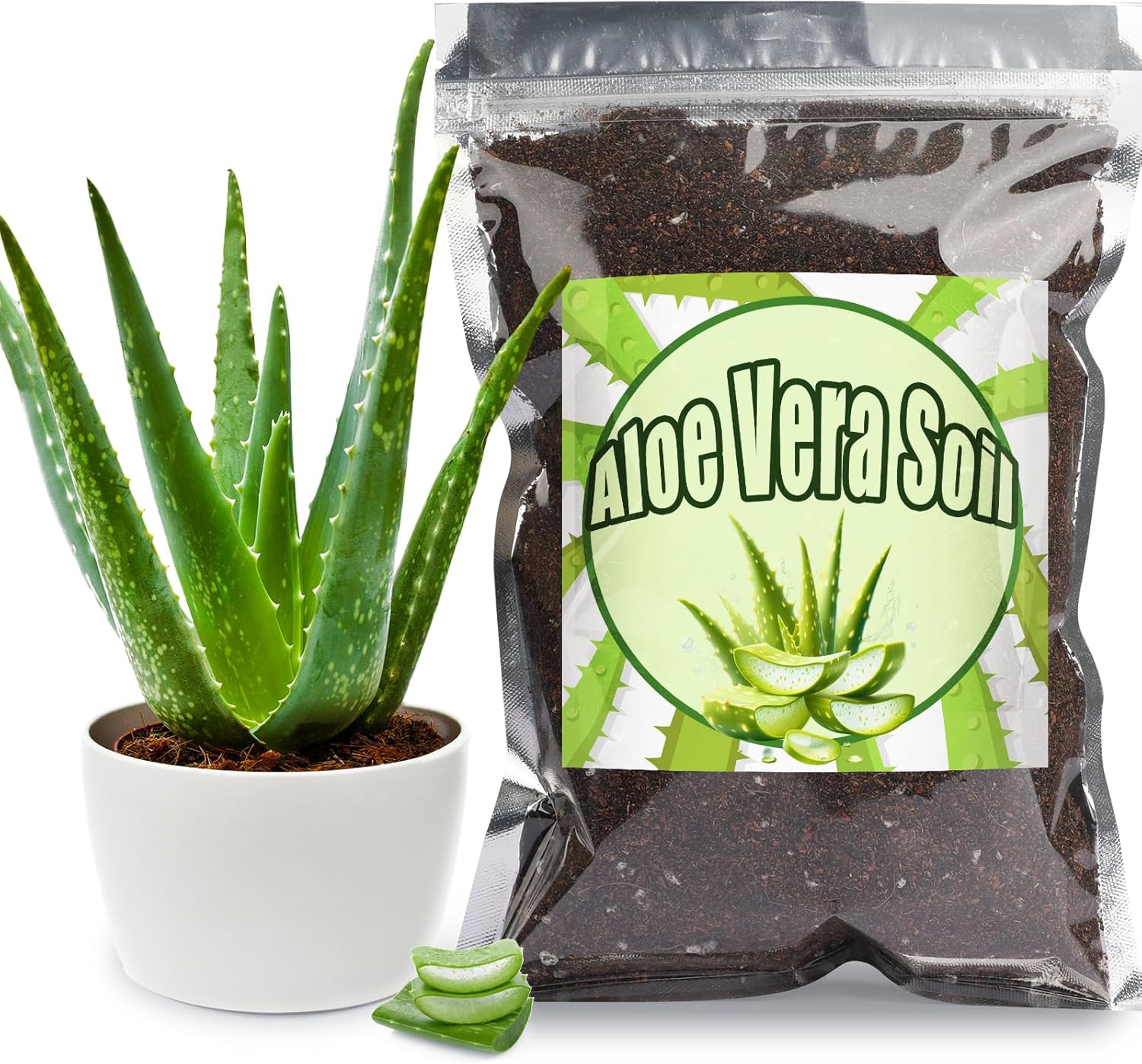
Doter Aloe Vera Potting Soil Mix, 1 qt
| Brand Name | Doter |
|---|---|
| Item Type Name | Garden soil |
| Volume | 1 quarts |
This Doter Aloe Vera Potting Soil Mix is a small, ready-to-use 1-quart blend aimed at giving aloe plants the drainage and aeration they need. It combines porous components and nutrient-rich matter to prevent waterlogging while supporting root development and plump leaves. Use it straight from the bag for repotting small aloe pups, top-dressing container plants, or refreshing the potting medium for indoor succulents. Notable features include its advertised balanced pH, added nutrients, and emphasis on airflow through the mix, which together reduce the risk of root rot and help young plants establish quickly. Because the product comes in a 1-quart size, it is convenient for single pots and small projects but requires multiple bags for larger collections or full repots. The mix appears focused on function rather than premium additives, so gardeners who want an inexpensive, plant-specific medium will appreciate its simplicity, while those needing large volumes or specialty ingredients may prefer bigger or more custom mixes.
Best for: Practical home growers and beginners on a budget who need a plant-specific, ready-to-use mix for one or a few aloe vera pots and want a straightforward solution without mixing components themselves.
Less Ideal for: Collectors with many large pots or growers who prefer to custom-blend their own high-volume or specialty succulent soils should look for larger bags or component-specific products.
- Formulated for aloe with good drainage to reduce risk of overwatering damage
- Contains nutrients to support leaf vigor and root development
- Balanced pH and advertised aeration help with nutrient uptake and healthy growth
- Handy 1-quart size for small pots, repotting pups, or trialing a new mix
- Small volume means you may need multiple bags for more than a few plants
- No detailed ingredient breakdown provided to compare with premium succulent mixes
Verdict: A convenient, budget-friendly 1-quart aloe-specific potting mix that delivers the drainage and nutrients most home growers need for small pots.
Happy Trees Premium Cactus & Succulent Potting Soil Mix, 8 qt

| Brand Name | Happy Trees Hemp |
|---|---|
| Item Highlight | Professional Mix for Agaves, Aloes, Echeverias, Euphorbias and cacti, Fast Draining, With Biochar, Made in USA |
| Volume | 8 quarts |
| Item Weight | 10 pounds |
This Happy Trees Cactus & Succulent Mix is a professional-style potting medium built for dryland plants like aloes. The blend contains pumice, lava rock, coarse sand, fir bark fines and biochar, giving it a coarse, mineral texture that promotes rapid drainage and airflow to roots. You would typically use it straight from the bag for repotting or as a component when improving an existing potting mix for succulents and agaves; it also works for patio containers and rock gardens. Practical benefits include reduced risk of root rot, easier watering cycles because the soil dries predictably, and stable support for shallow or deeper-rooted desert plants. It is peat-free and labeled organic-friendly, which appeals to growers who prefer lighter, mineral substrates. Important limitations are that it is specialized for succulents and cacti so it will not retain moisture like all-purpose potting soils, and gardeners who need a larger volume should plan for multiple bags since this listing is an 8 quart package.
Best for: A grower who prioritizes consistent, low-risk results for aloes and other succulents and wants a dependable, mineral-based medium for repotting and container displays.
Less Ideal for: Gardeners looking for an all-purpose potting soil for moisture-loving houseplants or those who need large bulk quantities from a single purchase.
- Designed for optimal drainage and root aeration for succulents and cacti
- Contains pumice, lava rock and biochar to keep the mix porous and stable
- Ready to use straight from the bag for repotting or blending with existing soil
- Peat-free, organic-friendly formula suitable for growers avoiding peat
- Small 8 quart volume may require multiple bags for larger collections or outdoor projects
- Specialized formula holds less moisture than general potting soils so not suited for moisture-loving plants
Verdict: Choose this mix when you want a reliable, fast-draining, mineral-based substrate that keeps aloes healthy and reduces root rot risk.
Miracle-Gro Indoor Potting Mix for Cactus & Succulent, 8 qt. (2-Pack)

| Item Highlight | Fast-Draining Cactus and Succulent Potting Mix with Plant Food |
|---|---|
| Number of Packs | 2 |
| Included Components | 2 bags |
| Item Type Name | Soil |
| Ingredients | Sphagnum Peat Moss, Sand, Perlite |
This Miracle-Gro indoor potting mix is designed to give desert-type houseplants the fast drainage and starter nutrition they need. The blend of sphagnum peat moss, sand, perlite and forest products creates a loose, airy medium that helps prevent root rot by letting water move through quickly, which is especially useful when repotting aloe and other succulents. Each bag is enriched with plant food so newly potted plants get an initial nutrient boost without extra amendments. Use it straight from the bag in a pot with drainage: fill, set the plant, backfill and water through. Practical benefits include easier watering management for growers who tend to overwater and a consistent texture from bag to bag. Limitations are that the bags are small for larger pots or multiple plants and the mix contains peat moss, which some gardeners avoid for sustainability reasons. For long-term fertility you will still want to top-dress or fertilize seasonally after the initial feed runs out.
Best for: Buyers who want a fuss-free, cactus/succulent-specific potting medium for indoor aloe and other desert plants and who value a premixed, ready-to-use solution with initial nutrients.
Less Ideal for: Gardeners looking for large-volume soil for many repots or those seeking peat-free or fully organic mixes should consider other options.
- Formulated blend promotes fast drainage suited to succulents and aloe
- Includes plant food to give newly potted plants an early nutrient boost
- Consistent texture and ready-to-use packaging saves mixing time
- Contains perlite and sand to improve aeration and reduce compaction
- Individual 8 qt. bags are small for repotting many or larger plants
- Contains sphagnum peat moss which some buyers avoid for environmental reasons
Verdict: A convenient, fast-draining premixed potting soil that makes repotting aloe and other succulents quick and low-effort while providing an initial nutrient boost.
Back to the Roots Organic Succulent & Cacti Soil, 6 Quart

| Volume | 6 quarts |
|---|---|
| Item Highlight | Fast-draining cactus and succulent soil; peat-free |
| Ingredients | Dolomitic Limestone, Perlite, Horticultural Sand, Aged Bark, Plant Food |
| Made in | USA |
This 6 quart Succulent & Cacti Mix from Back to the Roots is a ready-to-use potting soil made specifically for desert-type plants like aloe. The blend includes aged bark, perlite, horticultural sand and dolomitic limestone to create a loose, well-aerated medium that sheds water quickly and reduces the risk of root rot. It comes pre-enriched with plant food so young transplants get an early nutrient boost, and the peat-free formula appeals to gardeners who prefer organic inputs. Typical use is potting or repotting individual aloe plants and other succulents for indoor or outdoor containers where rapid drainage and airflow around roots are important. Practical benefits are easy handling, less need for DIY amendments, and a formulation tuned to avoid overwatering problems. Limitations are the small 6 quart volume if you have multiple plants or large pots, and you may still want to top up with fertilizer after a few weeks for long-term feeding needs.
Best for: A risk-averse gardener who wants a ready-made, organic-feeling soil that minimizes overwatering problems when potting or repotting aloe and similar succulents.
Less Ideal for: People who need bulk volumes for many pots or large raised containers should choose a larger bag or bulk succulent mix instead.
- Fast-draining formula with perlite and horticultural sand to protect aloe from waterlogged roots
- Contains aged bark to improve aeration and root development
- Pre-enriched with plant food to support early growth after transplanting
- Peat-free and made in the USA, suitable for gardeners preferring organic components
- Small 6 quart bag may not be economical for multiple or large pots
- Nutrient boost is temporary so additional fertilizer is recommended after initial growth
Verdict: Choose this mix if you want a plug-and-play, fast-draining organic potting soil that reduces the risk of root rot for aloe and other succulents.
Choosing the Right Potting Soil for Aloe Plant: Key Factors to Consider
Drainage and Porosity
Aloe roots sit in shallow crowns and are highly sensitive to waterlogged soil. A mix with high porosity and fast drainage prevents standing moisture around the root crown and reduces root rot risk.
Look for a high proportion of inert, chunky particles such as coarse sand, perlite, pumice, or grit that create air pockets. These particles keep the mix open while allowing water to pass through quickly. Avoid mixes that feel sticky or dense when damp, because they are likely to retain too much water for succulent culture.
Particle Size and Texture
Particle size determines how the mix behaves when watered and how easily roots penetrate. Finer, dust-like components compact more quickly, while medium-to-large particles maintain structure and better aeration.
A uniform but chunky texture helps young roots find oxygen and prevents compaction in deep pots. Texture also affects repotting: chunky mixes are easier to shake from roots and typically need less frequent replacement than fine, peat-heavy soils.
Nutrient Balance and Fertility
Aloe plants are adapted to low-nutrient, well-drained soils; too much fertility can encourage weak, leggy growth and increase watering needs. Potting soils formulated for succulents usually have modest, slow-release nutrients or a low initial fertilizer charge.
Choose mixes labeled for cacti or succulents or those that list low nitrogen or controlled-release feeding. If you plan to fertilize seasonally, start with a lean mix and add dilute, balanced fertilizer during the active growing season rather than relying on a high-fertility potting medium.
Salt Content and Fertilizer Formulation
Manufactured potting mixes can contain soluble salts from pre-applied fertilizers or from recycled organic components. High salt levels cause leaf tip burn and stress drought-adapted plants like aloe.
Check for mixes described as low-salt or plant-safe. If salt content is unclear, expect to flush new mixes through the pot after the first few waterings to remove excess soluble salts. Avoid mixes with heavy slow-release pellets unless you know they are formulated specifically for succulents.
Organic Matter and Water Retention
Organic matter improves nutrient retention and microbial activity but can also increase water retention if present in large amounts. For aloe, a modest amount of stable organic material helps supply some nutrients without holding excessive moisture.
Look for mixes that balance organic components like well-aged compost or coir with plenty of inorganic aggregate. Avoid mixes heavy in fresh peat or uncomposted bark that hold water and break down quickly in pots.
Container Compatibility and Repotting Frequency
The pot material and size affect drying times and root behavior. Terra cotta pots wick moisture and suit aloe needs, while plastic containers retain water longer. Choose a soil that matches how quickly your chosen container dries.
Also consider how often you want to repot. Stable, chunky mixes can remain suitable for several seasons, whereas fine, peat-heavy mixes compress and may require more frequent replacement to maintain aeration.
Why Aloe Needs a Different Mix Than Houseplants
Aloe species evolved in rocky, well-drained habitats. Typical houseplant potting soils are formulated to retain moisture and support a range of plant types, which is the opposite of what aloes need. A succulent-friendly mix mimics gravelly soils with coarse pores and limited organic loading.
Using a succulent-specific potting soil reduces the chance of overwatering problems and helps maintain firm, compact growth. It also simplifies care because the soil's water behavior aligns with the succulent watering rhythm of deep, infrequent watering followed by thorough drying.
- Succulent mixes prioritize aeration over moisture retention
- Standard houseplant soils can lead to root rot in aloes
- Match soil to your container to control drying rate
Mix Additives to Improve an Existing Potting Soil
If you have a multipurpose potting soil you want to adapt, you can amend it to suit aloes. Add coarse materials such as horticultural grit, pumice, or coarse perlite at roughly 30 to 50 percent by volume to increase drainage. Avoid using fine builder's sand which can compact; use coarse sand designed for horticulture.
Organic amendments should be modest. Coir or well-aged compost at small percentages can add stability without dramatically increasing water retention. Mix thoroughly before planting so the texture is consistent throughout the pot.
- Add 30 to 50 percent coarse aggregate for better drainage
- Use horticultural-grade materials rather than construction sand
- Keep organic amendments to a small proportion
Pot Choice and Soil Interaction
Pot material and drainage hole size change how a soil performs. Unglazed clay pots wick moisture away from the soil surface, helping a chunky mix dry faster. Plastic pots hold moisture longer and may require a coarser blend to compensate.
Always use a pot with a drainage hole and consider a slightly smaller pot for established aloes. Planting in oversized containers with too much soil volume increases the risk of waterlogging and slows the drying cycle.
- Use pots with drainage holes
- Prefer terra cotta for faster drying, plastic for longer moisture retention
- Avoid oversized pots that increase soil volume unnecessarily
Watering Practice with Succulent Mixes
Aloe watering should be guided by how the soil dries, not by a fixed schedule. Water thoroughly, then allow the top one to two inches to dry before watering again. Well-draining mixes show clear differences in weight between wet and dry, which helps you time irrigation.
In winter, when growth slows, reduce watering frequency. Even fast-draining mixes will retain some moisture in the lower pot profile, so err on the side of drier conditions during dormancy.
- Water deeply, then let soil dry to the top layer
- Use pot weight as a moisture indicator
- Cut back watering in cooler months
Troubleshooting Common Potting Soil Problems
If leaves become floppy and soft, the soil may be staying too wet or the roots may be rotting. Check the root ball and consider repotting into a chunkier mix with improved drainage. If you see brown leaf tips or white crust on the soil surface, soluble salts may be accumulating from fertilizer or tap water.
Reflushing the pot with clean water and replacing the top inch of mix can help with salt issues. For compacted or degraded soils, a full repot into a fresh, structured succulent mix restores aeration and reduces future issues.
- Floppy leaves often indicate overwatering or root problems
- White crust suggests salt buildup; flush and refresh topsoil
- Repot into a chunkier mix when soil has compacted
How We Chose the Best Potting Soil for Aloe Plant
We selected mixes that match the physiological needs of aloe plants and real-world container growing. Editorial filters emphasized drainage profile, aggregate composition, and nutrient level because aloes require fast-draining substrates with modest fertility. Particle size and texture were evaluated to ensure roots can anchor while water moves quickly through the pot. Salt content and fertilizer formulation mattered because high soluble salts or constant high nitrogen can stress succulents. We also measured practical handling traits: how easy the mix is to rewet after drying, dust levels that affect planting, and compatibility with common container types. Long-term stability was considered to avoid mixes that compact or break down rapidly in pots. Products that relied on lawn soil, heavy peat alone, or mixes designed for moisture-loving houseplants were excluded. The final picks balance porosity, organic content, and plant-safe nutrition suitable for aloe plants.
FAQ
Can I use regular potting soil if I add perlite or sand?
Often yes. Amending regular potting soil with coarse perlite, pumice, or horticultural grit at about 30 to 50 percent by volume improves drainage. Use coarse materials rather than fine sand to avoid compaction.
How often should I repot an aloe in commercial succulent mix?
Usually every two to three years is sufficient, depending on pot size and how much the mix breaks down. If the mix compacts or the plant becomes rootbound, repot sooner into a fresh, chunky blend.
Is peat-based mix okay for aloe plants?
Peat can be used if balanced with plenty of inorganic aggregate, but peat-heavy mixes retain moisture and may not be ideal on their own. Mix peat with pumice or perlite to increase drainage and reduce water retention.
Should I fertilize aloe plants planted in a low-nutrient succulent mix?
Aloe benefits from light feeding during the active growing season. Use a diluted, balanced fertilizer sparingly. Lean toward low-nitrogen formulations and avoid heavy-feeding schedules that encourage weak, rapid growth.
Does container size affect soil choice for aloe?
Yes. Larger pots hold more moisture and may need a coarser mix to dry properly. Smaller pots dry faster and can use a slightly finer texture, but still need good porosity to keep roots healthy.
Final Verdict
Choose a potting soil for aloe plant that prioritizes drainage, coarse particle texture, and modest nutrient levels. Balance a small amount of stable organic matter with plenty of inorganic aggregate to mimic the plant's natural, rocky habitat. Prioritize soil that matches your pot material and watering habits. If you must adapt a general potting soil, add coarse pumice or perlite and reduce organic loading. With the right mix and watering routine, you can minimize rot risk and keep aloes compact and healthy.
