

Note: This article contains affiliate links. If you click on these links and make a purchase, I may earn a small commission at no extra cost to you. This helps support my research and content. Read my full affiliate disclosure here.
Ponytail palms need potting soil that drains quickly, resists compaction, and gives light but steady nutrition. Choosing the right mix affects watering frequency, root health, and the plant's tolerance for indoor conditions. This guide covers six shortlisted potting soils tailored for ponytail palm growing, explaining how each mix handles drainage, aeration, and nutrient delivery for container culture. Below we explain the evaluation factors used and what matters in the potting mixes so you can pick the best one for your pot size, watering habits, and light conditions.
Top Picks at a Glance
| Best Overall The best all-around choice for most situations | Espoma Organic Cactus & Succulent Potting Mix (8 qt, 2-pack) |  |
| Best Value The sweet spot between price and what you get | Miracle-Gro Indoor Potting Mix for All Plants, 16 qt. |  |
| Best Budget The cheapest option that still gets the job done reliably | Miracle-Gro Organic Outdoor Potting Mix, 16 qt. |  |
| Highest Rated A top-rated pick with lots of positive feedback | E.B. Stone Organics Citrus & Palm Mix Potting Soil, 1.5 cu ft |  |
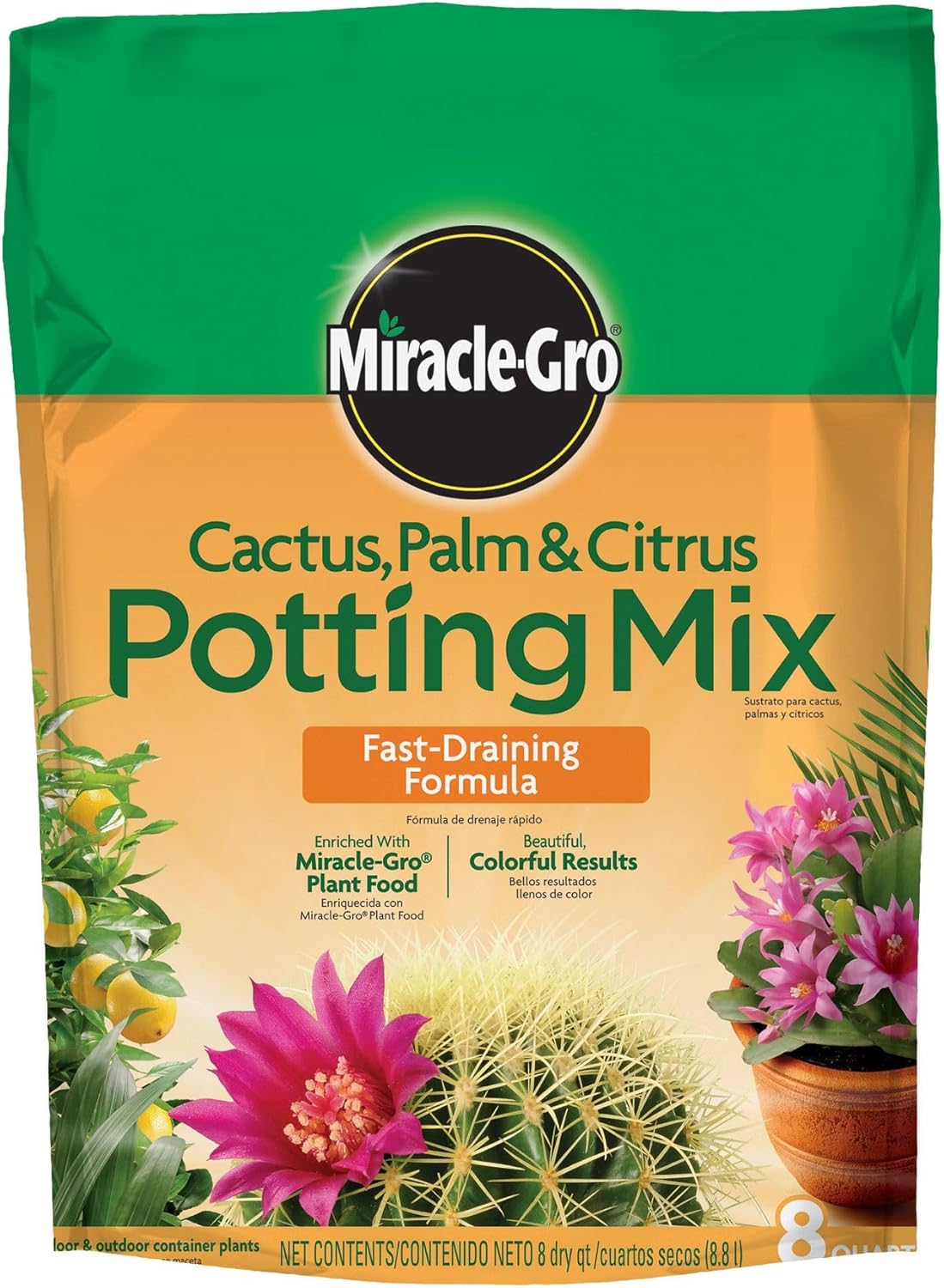
| Most Popular A crowd favorite that many people choose with confidence | Miracle-Gro Cactus, Palm & Citrus Potting Mix, 8 qt. |  |
| Best Seller A high-volume bestseller chosen again and again | Back to the Roots Organic Expanding Coco Coir Potting Soil Brick (10 lb) |  |
Espoma Organic Cactus & Succulent Potting Mix (8 qt, 2-pack)

| Brand | Espoma |
|---|---|
| Number of Packs | 2 |
| Unit Count | 598.4 Ounce |
| Volume | 8 quarts |
This Espoma Cactus & Succulent Potting Mix is designed to give plants that prefer fast-draining soil a balanced, organic medium for container growing. It mixes sphagnum peat moss, humus, and perlite to improve aeration and drainage while including organic amendments such as earthworm castings, alfalfa meal, kelp meal, feather meal, and a proprietary Myco-tone mycorrhizae blend to support root establishment. Typical use is for repotting or planting ponytail palms, succulents, cacti, and other container palms and citrus where preventing water retention is important. The practical benefits are easy handling, organic-certified ingredients suitable for organic gardening, and added biological support from mycorrhizae that can help young roots access nutrients. Expect noticeably better drainage than standard potting soil and reduced risk of root rot when used properly. Limitations are that the mix contains peat moss which can compact over time and may require occasional amendment or top‑dressing, and very heavy feeders may need supplemental fertilization since the product avoids synthetic fertilizers.
Best for: Buyers who want an organic, well‑draining potting mix for container-grown ponytail palms, succulents, or other drought‑tolerant plants and who prioritize natural soil biology over synthetic feeds.
Less Ideal for: Gardeners seeking a moisture-retentive mix for heavy-water‑loving tropical plants or those who want a pre-fertilized, high-nutrient potting soil.
- Formulated for good aeration and drainage suitable for succulents and palms
- Contains organic amendments and earthworm castings to improve soil biology
- Includes Myco-tone mycorrhizae to help root establishment
- Approved for organic use and made without synthetic fertilizers or chemicals
- Contains sphagnum peat moss which can compact or dry out unevenly over time
Verdict: A ready-to-use, organic potting mix that gives ponytail palms and succulents superior drainage and biological support for healthier container roots.
Miracle-Gro Indoor Potting Mix for All Plants, 16 qt.

| Unit Count | 128 Ounce |
|---|---|
| Item Type Name | Soil |
| Item Highlight | Feeds for up to 6 Months |
| Style Name | All Purpose Indoor Potting Mix |
| Volume | 16 quarts |
Miracle-Gro Indoor Potting Mix is a lightweight, ready-to-use soil designed for common houseplants, herbs, tropicals, foliage plants, and flowering indoor containers. It blends sphagnum peat moss, coconut coir, and perlite to retain moisture while allowing excess water to drain, so roots stay aerated and less prone to rot. The formula is bark- and compost-free, which helps reduce habitat for fungus gnats. Use it straight from the bag to repot plants or to fill new containers; one 16 qt. bag is sized to refill multiple 8-inch pots. The mix includes nutrients meant to feed plants for up to six months, but you will want to start a regular feeding schedule after that period for actively growing specimens. Practical gardeners will appreciate the consistent texture and the ease of use, though heavy feeders or plants with specialized needs may still require custom amendments or more frequent fertilizing.
Best for: Houseplant owners who want a low-effort, reliable potting mix for everyday repotting and container refreshes and prefer a product that minimizes common indoor pest issues.
Less Ideal for: Growers who manage high-demand vegetables, orchids, or carnivorous plants that require specialized media or precise nutrient and pH management should choose a purpose-made substrate.
- Ready-to-use balanced blend suitable for a wide variety of indoor plants
- Contains peat moss, coir, and perlite for good water retention and drainage
- Bark- and compost-free formula that helps reduce fungus gnat habitat
- Feeds plants for up to six months, reducing immediate need for fertilizer
- Nutrient boost lasts about six months so additional feeding is required afterward
- Not formulated for specialty crops that need very high nutrient levels or specific pH
Verdict: A convenient, all-purpose indoor potting mix that makes repotting and maintaining healthy houseplants quick and low effort.
Miracle-Gro Organic Outdoor Potting Mix, 16 qt.

| Volume | 16 qt. |
|---|---|
| Item Highlight | Plant Soil For Outdoor Container Plants, Contains Quick-Release Natural Fertilizer, OMRI Listed |
| Manufacturer | Scotts Miracle Gro |
This 16 qt. Miracle-Gro Organic Outdoor Potting Mix is designed specifically for outdoor container plants and is useful for planting strawberries in pots. The mix contains responsibly sourced peat and upcycled green waste and includes a quick-release natural fertilizer that feeds for up to two months, which helps young strawberry plants establish and start producing. It is OMRI listed so it fits an organic container-gardening approach. Typical use is to partially fill a 12-inch pot, set the plant with a loosened root ball, add more mix, and water thoroughly; a single bag is sized to fill about one 12-inch container. Practical benefits include moisture retention suitable for exposed pots and a built-in starter nutrient charge so you may not need immediate additional feeding. Important limitations are that nutrients last about two months so plan a feeding schedule for fruiting plants and that peat-based mixes can compact over time, so repotting or refreshing the soil biannually is recommended for continued vigor.
Best for: Gardeners who want an organic-ready potting mix for outdoor container strawberries and prefer a product that gives an initial nutrient boost while simplifying first-season care.
Less Ideal for: Growers who need a long-term, self-sustaining soil blend for mature strawberry beds or those who avoid peat entirely should consider alternatives.
- OMRI listed and made with responsibly sourced peat suitable for organic container gardening
- Includes quick-release natural fertilizer that feeds plants for up to two months
- Formulated to retain moisture for outdoor containers exposed to sun and wind
- Contains upcycled green waste and is locally crafted to reduce transport distance
- Fertilizer effect is limited to about two months so additional feeding is needed for ongoing fruiting
- Peat-based mix can compact over time and requires bi-annual repotting to refresh structure
Verdict: A convenient OMRI-listed container potting mix that gives outdoor strawberry starters an organic nutrient boost and good moisture retention for the first months.
E.B. Stone Organics Citrus & Palm Mix Potting Soil, 1.5 cu ft

| Brand Name | E.B. Stone Organics |
|---|---|
| Unit Count | 1536 Ounce |
| Volume | 1.5 cubic feet |
| Style Name | Potting Soil |
E.B. Stone Organics Citrus & Palm Mix is a ready-to-use organic soil blend designed for container and in-ground planting of citrus, palms, avocados and tropical foliage. The mix pairs aged fir bark and pumice to keep the root zone well aerated and fast-draining so plants that dislike soggy feet avoid root rot, while added mycorrhizae improve nutrient and water uptake. It is intended to be used straight from the bag for potting or worked into beds when planting, which simplifies planting and repotting tasks. For gardeners seeking reliability, this blend delivers consistent structure and moisture retention without heavy amendments, and the organic base supports longer-term soil biology. Limitations are the single bag volume of 1.5 cubic feet, which means larger projects will require multiple bags and mixing on site, and it does not list N-P-K numbers or slow-release fertilizer content so supplemental feeding may be needed for heavy-feeding specimens.
Best for: Gardeners who prioritize reliable, low-maintenance potting media for citrus and tropical plants and want a ready-made organic blend that supports healthy roots.
Less Ideal for: People who need large volumes for landscaping projects or who prefer a potting mix with specified fertilizer content and tailored nutrient ratios.
- Formulated specifically for citrus, palms and tropicals to match their root needs.
- Aged fir bark and pumice provide good drainage and aeration to reduce risk of root rot.
- Contains beneficial mycorrhizae to enhance root nutrient and water uptake.
- Ready-to-use bag simplifies repotting or planting without on-site blending.
- Single bag is only 1.5 cubic feet so multiple bags are required for larger trees or beds.
- No detailed fertilizer analysis provided so additional feeding may be necessary for heavy feeders.
Verdict: Choose this mix when you want a consistent, ready-to-use organic soil that promotes healthy, well-aerated roots for citrus and tropical plants.
Miracle-Gro Cactus, Palm & Citrus Potting Mix, 8 qt.
| Brand Name | Miracle-Gro |
|---|---|
| Volume | 8 quarts |
| Unit Count | 1 Count |
This 8-quart Miracle-Gro potting mix is designed for container-grown cacti, palms, and citrus and combines peat moss, sand, perlite, and forest products for faster drainage and reduced compaction. It arrives ready to use and is enriched with Miracle-Gro plant food so newly potted citrus get an initial nutrient boost without immediate fertilizing. Typical use is straightforward: choose a pot with drainage, fill about one third, set the root ball and top up, then water and allow to drain. The formula helps soil dry between waterings, which is important for citrus root health in containers, and one bag is enough for two 8-inch pots. Limitations are the small volume for larger trees and the presence of peat moss if you prefer peat-free mixes; heavier or older citrus will need larger volumes and eventual repotting. For growers wanting a quick, reliable container medium that balances moisture retention with drainage, this mix performs as expected.
Best for: Growers who repot or maintain container citrus and want a ready-to-use mix that balances drainage and initial feeding for healthier root development.
Less Ideal for: Gardeners potting mature or large citrus specimens that need large volumes of soil or those seeking a peat-free or custom mineral-heavy citrus bonsai substrate.
- Fast-draining blend reduces risk of waterlogged roots for container citrus
- Pre-enriched with plant food to give newly potted plants an initial nutrient boost
- Contains perlite and sand to resist compaction and maintain aeration
- Formulated for indoor or outdoor containers so it works across sites
- 8-quart bag is small for larger or multiple citrus containers
- Contains peat moss which some buyers avoid for sustainability reasons
Verdict: A convenient, fast-draining, plant-food–enriched container mix that makes repotting small to medium citrus trees quick and reliable.
Back to the Roots Organic Expanding Coco Coir Potting Soil Brick (10 lb)

| Item Highlight | 10 lb compressed coco coir brick; peat-free; OMRI Listed |
|---|---|
| Item Type Name | Coconut Coir |
| Volume | 2 cubic feet |
| Ingredients | Coconut Coir |
| Style Name | Expanding Potting Soil |
This compressed coco coir brick provides a lightweight, peat-free potting medium that expands when you add water to create loose, airy substrate for containers and seed flats. It is typically used by hydrating the 10 lb block to about 2 cubic feet of coir and then using it alone for potted plants, mixing it into garden soil to improve drainage and aeration, or blending with compost for starting seeds. Notable features include OMRI listing for organic use, a balanced pH suited to a wide range of plants, and compact storage before expansion which saves space. Practical benefits are improved root aeration and water retention compared with heavy garden loam, easier handling than bulky bags, and versatility across vegetables, herbs, and ornamentals. Important limitations are that coco coir is a soilless substrate and does not supply significant nutrients on its own so you will need to add fertilizer or compost for long-term potted herbs like rosemary, and the product requires time and a water source to expand before use.
Best for: Buyers who prioritize low-risk, easy-to-handle, organic potting media and want a versatile base for container herbs and seed starting without dealing with heavy bags.
Less Ideal for: Gardeners who want a ready-to-plant, nutrient-rich potting mix out of the box or those who prefer soil with built-in slow-release fertilizer.
- Peat-free OMRI listed organic coco coir suitable for organic growing
- Expands from a compact brick to about 2 cubic feet for easy storage and transport
- pH balanced and airy texture that improves drainage and root aeration
- Versatile use: can be used alone, for seed starting, or mixed into existing soil
- Provides little inherent fertility so supplemental feeding or compost is needed for nutrient-hungry plants
Verdict: A compact, peat-free coco coir brick that expands into an airy, pH-balanced base ideal for low-risk organic container gardening and seed starting when paired with fertilizer or compost.
Choosing the Right Potting Soil for Ponytail Palm: Key Factors to Consider
Drainage and Water-Holding Balance
A ponytail palm prefers a mix that sheds excess water quickly but still retains enough moisture to sustain roots between waterings. Soils that hold too much water will encourage root rot around the plant's bulbous base and shallow root system. Conversely, a mix that dries out in hours can stress the palm and require overly frequent irrigation.
Aim for a blend with coarse particles and visible drainage components. Those ingredients create channels for excess water while leaving finer organic matter to retain accessible moisture, producing a predictable dry-down pattern for consistent indoor care.
Aeration and Porosity
Good porosity ensures oxygen reaches the roots and prevents compaction over time. Ponytail palms do best when the mix remains chunky and open rather than becoming a dense, cake-like mass after repeated wetting and drying cycles. Lightweight inorganic components such as pumice or coarse perlite increase air space and reduce the chance of anaerobic pockets.
Porous mixes also warm and dry faster, which suits indoor conditions where low root-zone oxygen combined with cool, wet soil can lead to decline. Consider how the mix will behave after repotting and through seasonal watering changes.
Nutrient Composition and Release
Ponytail palms are slow growers that need moderate, steady nutrition rather than high, fast-release fertility. A good potting soil provides baseline nutrients and either a modest slow-release fertilizer or the capacity to hold applied feeds without tying up salts. Avoid mixes with excessive initial fertilizer spikes that can burn fine roots in small containers.
Also consider whether the organic fraction is stable and decomposes slowly. Fast-breaking organics can temporarily increase nutrient availability but will reduce porosity as they break down, changing the mix's behavior over time.
Particle Size and Long-Term Stability
Particle size affects drainage, aeration, and how long the mix maintains its structure. Larger, stable particles resist compaction and provide persistent pore space. Smaller particles and fines can clog air passages and increase water retention dangerously for ponytail palms.
Look for mixes that list coarse components and avoid those that rely solely on fine peat or compost. Long-term stability reduces the need for frequent repotting and keeps root health consistent as the plant matures.
pH, Salt Content, and Water Quality Compatibility
Soil pH influences nutrient availability and can affect leaf color and overall health in ponytail palms. The ideal mix will be close to neutral to slightly acidic, avoiding extremes that lock up micronutrients. Salt accumulation from fertilizers or hard water is also a concern in container culture because salts concentrate in limited media volumes.
Choose mixes with clear guidance on pH and soluble salt levels, and consider your local water quality when deciding whether to use distilled water or periodic leaching in your routine.
Suitability for Pot Size and Container Material
Pot size and container material change how a soil performs. Small pots dry faster and benefit from mixes with slightly higher water-holding capacity, while large pots can use chunkier mixes that drain faster overall. Unglazed clay pots wick moisture and increase dry-down speed; plastic pots retain moisture longer.
Match the mix texture to the typical pot you use so that watering frequency stays manageable and the root zone remains healthy.
Mixing a Custom Blend
If you prefer to tailor a potting medium, combine a lightweight, well-draining base with coarse inorganic additives and a modest organic fraction. A workable approach is to blend a soilless base with pumice or coarse perlite for aeration and a small amount of aged compost or coconut coir for gentle water retention and nutrients.
Adjust proportions based on pot size and climate: use more inorganic material in humid or low-light environments and slightly more organic content in dry, warm indoor rooms where evaporation is rapid.
- Typical starting ratio for small pots: 50% soilless base, 30% pumice/perlite, 20% aged organic matter
- For larger pots, increase base to 60% and cut perlite to 20% to slow overall dry-down
- Sterilize or use clean components to reduce pest and disease introduction
Repotting Timing and Technique
Ponytail palms prefer being slightly root-bound and do not need frequent repotting. Repot only when roots crowd the pot or the soil has compacted and no longer drains well. When repotting, choose a container only one size larger to avoid excess moisture retention around the root ball.
Gently tease the outer roots and remove any decomposed, waterlogged media. Place the palm so the crown sits at the same depth as before and backfill with a fast-draining mix. Water lightly to settle the medium and then allow a period of drier surface drying before resuming normal watering.
- Avoid burying the bulbous base deeper than it was previously
- Check drainage holes are clear and add a thin layer of coarse material at the bottom only if necessary to improve flow
Watering Practices With Fast-Draining Mixes
Fast-draining mixes change how you water. Rather than small, daily top-ups, use a thorough soak and then let the top several centimeters dry before watering again. This encourages roots to explore the medium and reduces the risk of rot around the swollen base.
Monitor moisture using finger tests or a moisture meter in the root zone. Indoor heating or air conditioning can accelerate dry-down, so check pots more frequently during seasonal changes.
- Soak until water drains from the pot, then let excess drain completely
- Reduce watering in winter when growth slows and evaporation drops
Fertilizing Strategies for Slow Growth
Because ponytail palms grow slowly, use low-to-moderate feeding schedules. A slow-release formulation in the mix or diluted liquid feed during the growing season is usually sufficient. Heavy feeding can produce weak, leggy growth or accumulate salts in the confined root zone.
Flush the pot occasionally to prevent salt buildup if you use regular liquid feeds or live in a hard-water area. Watch leaf color and tip dryness as indicators of over- or under-fertilization.
- Apply diluted liquid feed every 4 to 6 weeks during spring and summer
- Use a balanced fertilizer with lower nitrogen if you notice overly soft new growth
Troubleshooting Root and Soil Problems
Yellowing leaves or a soft, mushy base often point to overwatering or poor drainage. Inspect the root ball for brown, slimy roots and consider repotting into a chunkier mix. If roots look healthy but the plant is pale, check pH and fertilizer routine.
Compaction is common in older mixes with high fine organic content. When soil becomes dense, repotting with a more porous blend restores aeration and reduces disease risk.
- Look for bright, firm roots as a sign of health
- If repotting is not immediately possible, reduce watering frequency and improve airflow around the pot
How We Chose the Best Potting Soil for Ponytail Palm
We focused on formulation and performance traits that matter for ponytail palm culture in containers. Key evaluation criteria included drainage and water-holding balance, so mixes neither stay soggy nor dry out instantly; aeration and porosity, which prevent root rot for the bulbous, shallow-rooted palm; nutrient composition and slow-release behavior to match the plant's slow growth; pH stability and salt levels, since excess salts can stress ponytail palms in small pots; particle stability and resistance to compaction over time; and suitability across pot sizes from small desktop containers to larger floor pots. Products that relied heavily on peat-only bases, had poor porosity, or lacked clear information about drainage additives were excluded. We also excluded mixes formulated primarily for moisture-loving houseplants or for cacti with extremely sparse organics, unless they had a balance suitable for ponytail palm. The shortlisted potting soils were each checked for ingredient transparency, expected watering cadence, and whether the texture supports steady root anchorage without holding standing water.
FAQ
How often should I water a ponytail palm in a fast-draining soil?
It depends on pot size and environment, but typically you should water thoroughly and wait until the top few centimeters are dry. Smaller pots and warm, dry rooms need water more often than large pots or humid spaces.
Can I use cactus or succulent soil for a ponytail palm?
Often cactus mixes are a good starting point because they drain well, but some are too low in organics. Choose a succulent mix that includes a modest organic fraction or amend it slightly with compost or coir for gentle moisture retention.
What should I add to potting soil to improve aeration?
Coarse pumice, horticultural perlite, or coarse sand increase air space and improve porosity. Pumice is durable and resists breakdown, making it a good long-term option for maintaining structure.
How do I tell if my soil has compacted and needs replacing?
Signs include slow drainage, water pooling on the surface, a noticeable decline in plant vigor, or roots circling densely at the pot edge. If the mix crushes to a fine mass when squeezed, it is likely compacted and should be refreshed.
Is repotting into a larger pot always better for growth?
No. Ponytail palms like being slightly root-bound and oversized pots can hold too much moisture, increasing rot risk. Move up only one pot size when necessary and use a fast-draining mix.
Final Verdict
Prioritize mixes that combine quick drainage with a modest, stable organic fraction and durable inorganic particles. That balance reduces root-rot risk while giving a ponytail palm steady access to water and nutrients without frequent interventions. Match the mix texture to your typical pot material and size, and adjust watering and feeding to the soil's dry-down behavior. With the right potting medium and simple seasonal adjustments, you can keep a ponytail palm healthy for years. Focus on drainage, porosity, and particle stability when choosing a soil and you will minimize repotting and common container problems.
