

Note: This article contains affiliate links. If you click on these links and make a purchase, I may earn a small commission at no extra cost to you. This helps support my research and content. Read my full affiliate disclosure here.
Choosing the right potting soil for terrariums matters because enclosed or semi-enclosed plant displays behave differently than open garden beds. In a terrarium, moisture cycles, airflow, and root space are all constrained, so soil that holds too much water or breaks down quickly will stress plants and invite mold. This guide covers seven top potting soils for terrariums shortlisted for their texture, water control, and long-term stability. We evaluated each option for drainage, moisture retention, particle size, and suitability for different terrarium types so you can pick a substrate that keeps your miniature ecosystem healthy. Read on for the evaluation criteria and practical tips for using terrarium soil effectively.
Top Picks at a Glance
| Best Overall The best all-around choice for most situations | Soil Sunrise Terrarium Potting Soil Mix (4 Quart) |  |
| Best Quality Built to a higher standard if you want something more solid | Leaves and Soul Professional Terrarium Soil Mix, 2.2 Quarts |  |
| Best Value The sweet spot between price and what you get | DUSPRO Recycle 6-in-1 Terrarium Soil Mix, Pre-Mixed, 8 QT |  |
| Best Budget The cheapest option that still gets the job done reliably | Doter Terrarium Potting Soil Mix, 1 qt |  |
| Highest Rated A top-rated pick with lots of positive feedback | Josh's Frogs ABG Mix Bioactive Terrarium Substrate (4 qt) |  |
| Most Popular A crowd favorite that many people choose with confidence | Zoo Med Creatures Creature Soil Bag, 1 Quart (Peat Moss Blend) |  |
| Best Seller A high-volume bestseller chosen again and again | Back to the Roots Organic Indoor Potting Mix, 6 Quart |  |
Soil Sunrise Terrarium Potting Soil Mix (4 Quart)

| Volume | 4 quarts |
|---|---|
| Ingredients | Coco coir, horticultural charcoal, pumice |
| Unit Count | 1 Count |
| Style Name | Compact |
This 4‑quart Soil Sunrise terrarium mix is designed specifically for closed and open terrarium displays. The blend of coco coir, pumice, and horticultural charcoal creates a lightweight, soilless medium that holds moisture without becoming waterlogged while allowing airflow around roots. In practice it is used as the primary growing medium for ferns, mosses, African violets and other small, humidity‑loving plants in glass containers. Notable features include built‑in charcoal for toxin absorption and pumice for improved drainage and aeration, so you can avoid frequent repotting or root rot in sealed environments. The bagged 4‑quart size is sized for a few small containers and is easy to scoop into layered terrarium builds. Limitations are the small volume if you want to fill several or larger closed terrariums and the lack of added slow‑release fertilizer, so plan to supplement nutrients for long‑term plantings. Overall it is a focused, low‑maintenance substrate for hobbyists building compact, high‑humidity displays.
Best for: Buyers who want a ready‑to‑use, low‑maintenance substrate for building or refreshing small closed terrariums and fairy gardens and who prioritize proper moisture control over added fertilizers.
Less Ideal for: Gardeners planning to plant many or larger terrariums, or those who want an all‑in‑one potting mix with preloaded long‑term fertilizer.
- Formulated blend of coco coir, pumice, and horticultural charcoal for moisture balance and drainage
- Charcoal helps absorb impurities and supports healthy microenvironments in closed terrariums
- Lightweight, soilless mix that promotes airflow to roots and reduces risk of root rot
- Appropriate texture for small, humidity‑loving plants like ferns, mosses, and violets
- Only 4 quarts per bag, so multiple bags are needed to fill larger or several terrariums
- No built‑in fertilizer so periodic nutrient supplementation is required
Verdict: A purpose‑built, low‑maintenance terrarium mix that keeps closed displays moist but not soggy, ideal for building healthy small terrariums.
Leaves and Soul Professional Terrarium Soil Mix, 2.2 Quarts

| Brand Name | Leaves and Soul |
|---|---|
| Volume | 2.2 quarts |
| Unit Count | 81.91 Ounce |
| Made in | USA |
Leaves and Soul Professional Terrarium Soil Mix is a pre-blended 2.2 quart potting medium aimed at indoor succulent and terrarium setups. It combines pine bark for structure, peat for moisture retention, and coarse sand for drainage so the mix stays airy while holding enough water between waterings. Typical use is straight from the bag for potting small succulents, cactus, aloe, or filling layered terrarium planters; no additional amendments are required for most small-scale projects. The light, well-draining texture helps reduce the risk of overwatering and root rot and encourages healthy root growth in containers that do not have large drainage reserves. The resealable bag keeps leftover mix usable between plantings. Limitations are the small 2.2 quart volume, which means multiple bags are needed for larger collections, and peat content may be a concern for gardeners preferring peat-free blends. For growers who need a reliable, out-of-the-box soil for individual succulents and terrarium displays, this delivers consistent, easy results.
Best for: Buyers who prioritize a dependable, ready-made soil that reliably supports succulents, cacti, and small terrariums without extra mixing or fuss.
Less Ideal for: Gardeners outfitting large collections, outdoor beds, or those who specifically require a peat-free or bulk soil option should consider other products.
- Ready-to-use premix that requires no additional blending for terrariums or small succulent pots
- Balanced ingredient mix (pine bark, peat, coarse sand) that promotes drainage and aeration
- Resealable packaging preserves remaining soil between uses
- Formulation designed to reduce risk of overwatering and root rot in confined containers
- Only 2.2 quarts per bag, so larger projects require multiple purchases
- Contains peat, which some gardeners avoid for sustainability or preference reasons
Verdict: A convenient, professionally blended terrarium mix that reliably delivers the drainage and aeration succulents need in small pots and displays.
DUSPRO Recycle 6-in-1 Terrarium Soil Mix, Pre-Mixed, 8 QT

| Included Components | Coco Coir, Peat Moss, Pine Bark, Perlite, Pumice & Zeolite |
|---|---|
| Tank Volume | 8 quarts |
| Specific Uses For Product | Indoor |
| Vivarium Type | Terrarium |
This DUSPRO terrarium soil arrives pre-mixed with coco coir, peat moss, pine bark, perlite, pumice and zeolite so you can use it straight from the bag for planted terrariums and miniature indoor gardens. It is intended for closed and semi-closed setups where moisture control matters: organic components hold moisture while the mineral pieces create air pockets that reduce compaction and improve drainage. Zeolite and pumice help the substrate keep a stable structure over time, which makes layering and top dressing simpler and reduces the need for frequent remixing. Typical uses are lining the bottom of a closed jar terrarium, creating a layered substrate for moss and small ferns, or repotting several 6-inch pots at once. The practical downside is this is a purpose-built terrarium mix rather than a universal potting soil, so it may not match the needs of heavy-draining cactus mixes or large container plants. Also the product is sold as a soil-only bag and does not include containers, decorative items, or charcoal.
Best for: Buyers who want a time-saving, purpose-built substrate for closed or semi-closed terrariums and prefer a consistent ready-to-use mix that reduces layering guesswork.
Less Ideal for: Gardeners who need a fast-draining cactus/succulent repotting mix for large pots or growers who want a multi-purpose all‑in‑one potting soil for many plant types.
- Pre-mixed 6-in-1 blend ready to use with no mixing required
- Balance of organic and mineral components helps retain moisture while maintaining airflow
- Zeolite and pumice improve long-term structure and reduce compaction
- Available in sizes suitable for multiple small terrariums or several 6-inch pots
- Formulated specifically for terrariums so it is not ideal as a universal potting mix
- Sold as soil only and does not include containers, plants, or decorative accessories
Verdict: If you want a ready-to-use terrarium substrate that balances moisture retention and airflow without mixing components yourself, this premixed 6-in-1 soil is a practical choice.
Doter Terrarium Potting Soil Mix, 1 qt

| Unit Count | 32 Ounce |
|---|---|
| Volume | 1 quarts |
| Item Type Name | Garden soil |
| Brand Name | Doter |
Doter Terrarium Potting Soil Mix is a ready‑to‑use 1 quart blend made for closed and open terrarium setups. It combines peat moss, chunky perlite, pine bark, charcoal, dried forest moss, and worm castings to create a medium that holds moisture without becoming waterlogged while still allowing airflow around roots. In practice it works well for mosses, ferns, and many tropical terrarium plants and simplifies layering when you build a miniature ecosystem. Notable features are the chunky perlite for improved drainage, horticultural charcoal to reduce odors in closed systems, and added organic nutrients for early growth. Because the mix is pH balanced and described as versatile, it is convenient for hobbyists who want to pot quickly without custom blending. Limitations are the small 1 quart volume, which is suited to single small containers rather than multiple or larger terrariums, and the description does not specify exact particle ratios, so experienced growers who prefer precise mixes may still want to amend components for specialty setups.
Best for: Ideal for hobbyists and beginners building or refreshing a single small terrarium who want a ready‑made, balanced mix that saves time over custom blending.
Less Ideal for: Not a good choice for growers building multiple large terrariums or those who require exact soil component ratios for specialist plants.
- Formulated blend includes charcoal, peat moss, pine bark, perlite and worm castings for balanced moisture and nutrients
- Chunky perlite improves drainage and reduces compaction in small containers
- Horticultural charcoal helps control odors and maintains a healthier closed terrarium environment
- pH balanced and versatile for a wide range of common terrarium plants
- Only 1 quart volume makes it suitable mainly for a single small terrarium or touch‑ups
- No precise particle size or ingredient ratios provided for growers who mix bespoke soils
Verdict: Buy this if you want an inexpensive, ready‑to‑use terrarium soil that balances moisture, drainage, and basic nutrients for small enclosed gardens.
Josh's Frogs ABG Mix Bioactive Terrarium Substrate (4 qt)

| Brand Name | Josh's Frogs |
|---|---|
| Item Type Name | Terrarium Substrate |
| Unit Count | 128 Ounce |
| Style Name | Tropical |
Josh's Frogs ABG Mix is a ready-to-use terrarium substrate formulated from the original Atlanta Botanical Garden recipe to support tropical plants and bioactive setups. It combines charcoal, milled sphagnum moss, pine bark, tree fern, and peat to create a moisture-retentive yet well-draining layer that breaks down slowly, so you do not need frequent replacement in long-term displays. The mix is vivarium-ready and works well for cultivating springtails and isopods that help control mold and waste, which simplifies maintenance. Preparation is straightforward: remix the bag and moisten with distilled or RO water to reduce dust and ease handling. Important practical limits are its plant-only guidance and a caution against saturation in setups that can trap excess water, so it needs proper drainage design or a drainage layer underneath. The 4 quart volume is suitable for small to medium enclosures but may require multiple bags for larger terraria.
Best for: Buyers who prioritize reliable, proven performance for tropical or bioactive terrariums and want a substrate that promotes plant health and a self-sustaining microfauna community.
Less Ideal for: People setting up large enclosures who need bulk substrate quantities in one purchase or keep animals explicitly listed as incompatible should consider other options.
- Formulated from the original ABG recipe trusted for tropical plant growth
- Balanced blend of charcoal, sphagnum moss, bark, tree fern, and peat for moisture retention and drainage
- Supports culturing of springtails and isopods for low-maintenance bioactive cleanup
- Breaks down slowly for longer service life in established terrariums
- Pre-mixed and vivarium-ready for simple setup after moistening
- Supplied volume (4 quarts) is limited for larger terraria and may require multiple bags
- Not recommended for use with hermit crabs or pac-man frogs and requires care to avoid saturation
Verdict: Choose this ABG mix when you want a proven, plant-focused substrate that supports a low-maintenance bioactive terrarium.
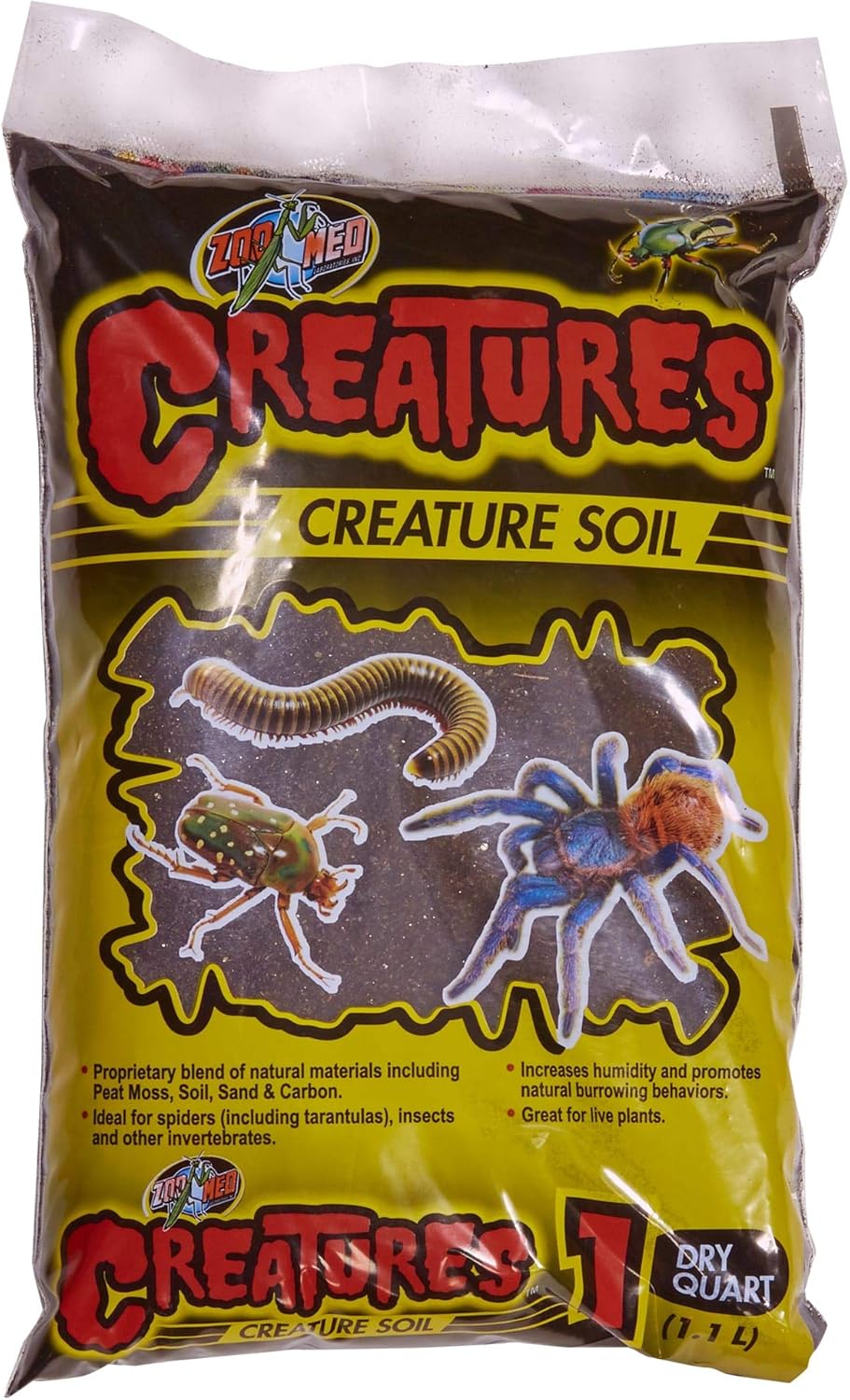
Zoo Med Creatures Creature Soil Bag, 1 Quart (Peat Moss Blend)
| Unit Count | 32 Ounce |
|---|---|
| Number of Packs | 1 |
| Style Name | Peat Moss |
| Volume | 2 liters |
Zoo Med Creature Soil is a small, pre-mixed substrate aimed at terrariums that house spiders, insects, and other invertebrates. The bag combines peat moss with soil, sand, and carbon to retain humidity, encourage burrowing, and support live plants in smaller enclosures. It comes in a one quart (2 liter) bag that is easy to portion into starter setups or to top-dress existing substrates. The mix is practical for hobbyists who want a natural-feeling substrate without mixing components separately, and the peat content helps keep humidity stable for species that need moisture. Important limitations are the small volume for larger terrariums and the inhalation/irritation warning for peat moss, so handle it with a mask and avoid dusty clouds when filling a tank. For long-term use in active burrowing species you may want deeper quantities or periodic replacement but for planting, humidity control, and temporary setups this is a convenient, low-effort option.
Best for: A thrifty hobbyist setting up small terrariums for spiders, insects, or planted displays who prefers a ready-made substrate to save time and effort.
Less Ideal for: Not a good fit for builders of large or deep burrowing systems who need bulk substrate or for users seeking peat-free or sterile commercial mixes.
- Pre-mixed blend saves time compared with assembling peat, sand, and soil separately
- Peat moss base holds moisture well to support humidity-loving invertebrates and live plants
- Small 1 quart bag is easy to portion for starter tanks or to use as top-dressing
- Quantity is limited so multiple bags are needed for medium or large terrariums
- Contains peat moss which can produce dust and may irritate respiratory systems if not handled carefully
Verdict: A compact, ready-to-use peat-based substrate that delivers good humidity and burrowing performance for small terrariums on a tight budget.
Back to the Roots Organic Indoor Potting Mix, 6 Quart

| Unit Count | 192 Fluid Ounces |
|---|---|
| Item Type Name | Indoor Potting Mix 6qt |
| Item Highlight | Peat-free, 100% organic, made in the USA |
| Ingredients | Coconut Coir, Yucca, Mycorrhizae, Perlite, Horticultural Sand |
This Back to the Roots indoor potting mix is a ready-to-use, 6-quart blend designed for common houseplants such as pothos, monstera and ferns. It combines coconut coir, yucca extract, mycorrhizae, perlite and horticultural sand to improve moisture retention, drainage and root development without peat. In practice it feels light and friable, so it is easy to pot seedlings or repot mature plants and it reduces compaction that can suffocate roots. The added mycorrhizae helps young roots establish and take up nutrients more efficiently while yucca extract helps the mix hold water between waterings, which is convenient for forgetful or busy plant owners. Because it is peat-free and made in the USA, it is a more sustainable choice versus traditional peat-based mixes. Limitations are the small 6-quart size, which means frequent repurchasing for larger collections, and the bag does not include fertilizer so you will need to feed plants separately as they grow.
Best for: Buyers who prioritize low-risk, easy-care houseplant solutions and want an organic, ready-to-use potting mix that reduces watering hassles and supports healthy root growth.
Less Ideal for: Not ideal for gardeners who need large-volume soil for many pots or for those expecting a mix that includes built-in fertilizer for long-term feeding.
- Peat-free organic formula that reduces environmental impact
- Yucca extract improves moisture retention between waterings
- Contains mycorrhizae to support root development and nutrient uptake
- Light, well-draining texture suitable for repotting seedlings and houseplants
- Small 6-quart volume may require frequent repurchasing for larger plant collections
- Does not include fertilizer so additional feeding is necessary
Verdict: A compact, peat-free potting mix that simplifies indoor plant care by holding moisture and boosting root establishment.
Choosing the Right Potting Soil for Terrariums: Key Factors to Consider
Drainage Versus Retention Balance
Terrariums need a soil that balances holding moisture without becoming waterlogged. In closed or mostly closed containers, water evaporates then condenses back into the substrate, so mixes that hold too much free water invite root rot and fungal growth.
Look for mixes with coarse components such as perlite, sand, or coarse bark that create pore space and improve aeration. Those particles let excess water move away from roots while finer components retain enough humidity for moisture-loving plants. The right balance depends on whether the terrarium is fully closed, partially open, or open-topped.
Particle Size and Texture
Particle size determines how the soil behaves when wet, how easily roots can grow, and how prone the mix is to compaction. Coarse, irregular particles maintain air pockets; fine, dusty particles pack down when damp and reduce oxygen availability to roots.
For most terrariums a mix with a range of particle sizes is best: larger aggregates for drainage and structure, medium particles for root anchoring, and a small fraction of fine material to hold moisture. Avoid mixes described as very fine or powdery for enclosed containers.
Organic Content and Longevity
Organic matter feeds microbes and plants but also breaks down over time, changing the mix structure. In a sealed or long-lived terrarium you want stable organic components that do not decompose quickly and compact the substrate.
Peat and compost-rich mixes can initially be fertile but may compress or acidify in a closed environment. Consider mixes with aged bark, coconut coir, or slow-decomposing humus that provide nutrients without rapid structural loss. Longevity matters because refreshing a sealed terrarium is disruptive.
pH and Nutrient Needs of Plants
Different terrarium species prefer different pH ranges and nutrient levels. Mosses and many tropical terrarium plants favor slightly acidic to neutral substrates, while some succulents or alpine species prefer leaner, more alkaline conditions.
Choose a base mix appropriate for your plants or plan to adjust pH and nutrients with appropriate amendments. Remember that closed terrariums recycle nutrients and salts more readily, so avoid heavily fertilized potting soils that can concentrate salts over time.
Sterility and Disease Risk
Introducing pests, weed seeds, or fungal spores via contaminated soil is a common cause of terrarium problems. Pre-sterilized or well-aged substrates lower the initial microbial load and reduce the chance of early mold outbreaks.
If you reuse outdoor soil or untested mixes, consider sterilizing small batches by baking or using fresh, packaged substrates designed for indoor planting. Good initial drainage layers and proper planting technique also reduce the chance that pathogens become established.
Workability and Dust Levels
How easy the soil is to work with matters when arranging small plants and decorative elements inside confined glass vessels. Very dusty mixes are messy and can cloud glass; mixes that clump or are too coarse can make delicate planting awkward.
Look for mixes labeled low-dust or rinse coarse components before use. Work slowly and use tools like long tweezers or scoops to avoid disturbing plants while building layers.
Preparing a Layered Substrate
Most terrariums benefit from a simple layered structure that prevents waterlogging and supports healthy roots. A typical setup starts with a drainage layer of gravel or LECA balls, a thin barrier of mesh or charcoal to limit migration, then the chosen potting soil layer sized for root depth.
Activated charcoal in the drainage layer helps control odors and reduces fungal activity, which is especially useful in sealed containers. Keep the soil layer shallow for most terrarium plants; many tropical species thrive with just a couple of inches of substrate.
- Drainage layer: coarse stones or clay pellets, 1-2 cm for small jars
- Barrier: fine mesh or a thin cloth to stop soil filtering into drainage
- Soil layer: depth depends on plant root systems, usually 2-5 cm
Adjusting Mixes for Different Plant Types
You can adapt a base terrarium potting soil depending on the plants you plan to grow. For moss and moisture-loving tropical plants, increase the proportion of fine components and organic matter slightly to help retain humidity. For succulents and cacti in open terrariums, add extra sand or grit to improve drainage.
Small ferns often prefer mixes with more fibrous bark or coconut coir to mimic forest floor conditions. Make adjustments in small test batches before committing an entire terrarium to a new mix.
- Moss: finer, moisture-retentive mix with stable organic content
- Tropical plants: balanced mix with good aeration and moderate organic matter
- Succulents: leaner, gritty mix with rapid drainage
How to Rehydrate and Maintain Moisture
Establishing correct moisture levels is key. After planting, mist lightly and observe condensation patterns over several days. A sealed terrarium often needs only occasional misting; too much water shows as constant heavy condensation or pooling at the base.
If the soil appears dry, mist in phases and allow it to equilibrate. For drier mixes, a light bottom soak can help distribute moisture evenly, but avoid saturating fresh plantings. Use a moisture meter or finger test on small vessels to learn how your chosen mix behaves.
- Initial wet-in: moisten gradually to avoid over-saturating roots
- Observation: watch condensation cycles for 3-7 days before final adjustments
- Maintenance: mist sparingly for closed terrariums, more often for open displays
Common Problems and Simple Fixes
Mold and algae growth are common early issues in terrariums. Reduce humidity slightly by opening the vessel for a few hours if mold appears, remove affected plant material, and consider replacing the topsoil layer if the problem persists. Improving drainage and reducing organic fines often prevents recurrence.
If roots become waterlogged, gradually remove excess soil or repot into a slightly leaner, coarser mix. For persistent pest problems, isolate the terrarium and treat affected plants; sterile substrates and good plant hygiene at setup limit these risks.
- Mold: remove infected areas, improve airflow, replace topsoil if needed
- Algae: reduce light intensity and clean glass surfaces
- Waterlogging: remove plants and adjust to a grittier mix
Small Tools and Techniques for Working in Glass
Working inside a jar or bottle requires different tools than standard potting. Long-handled spoons, narrow scoops, feeding pipettes, and long tweezers allow precise placement of soil and plants without disturbing other elements.
Layering with funnels or folded paper channels helps position substrate without spilling. When planting, create small pockets in the soil with a narrow stick rather than digging broadly to maintain the integrity of surrounding plantings.
- Use a pipette for targeted watering
- Long tweezers for planting small specimens
- Small funnel or paper chute for clean layering
How We Chose the Best Potting Soil for Terrariums
We focused on characteristics that directly affect plant health inside enclosed or open-topped terrariums. The core evaluation criteria were particle size and texture, moisture retention and drainage balance, organic content and long-term stability, and compatibility with common terrarium plants such as mosses, ferns, and small tropical species. We also assessed mix consistency and dust level because fine dust compacts under humidity and reduces air exchange. Products were included only if they are sold as potting or terrarium substrates suitable for indoor use and do not require extensive on-site modification to function in a terrarium. We excluded garden soils, topsoil, or mixes formulated solely for outdoor planting because their drainage and pathogen profiles are inappropriate for enclosed environments. Our process prioritized substrates that minimize mold risk, support root health in shallow containers, and retain stable moisture without becoming waterlogged.
FAQ
Can I use regular potting soil in a closed terrarium?
Usually it depends on the potting soil composition. Many regular potting soils contain high organic content and fertilizers that can retain too much moisture and concentrate salts in a closed environment. If you use regular potting soil, modify it with coarse material and reduce fertilizer content.
How often should I water a sealed terrarium?
Sealed terrariums often require very infrequent watering, sometimes only every few months. Rely on visual cues such as condensation and plant appearance, and add water sparingly when the substrate looks dry.
What soil depth do terrarium plants need?
Most small terrarium plants thrive in a shallow layer of substrate, often 2 to 5 centimeters depending on root depth. Use deeper soil only for species with larger root systems and ensure drainage increases proportionally.
Is activated charcoal necessary in a terrarium?
Activated charcoal can help absorb odors and reduce fungal growth in sealed containers, but it is not strictly necessary in every setup. It is most useful for long-term sealed displays and is often placed between the drainage layer and soil.
How do I prevent my terrarium soil from compacting?
Choose mixes with a mix of particle sizes and include coarse components like perlite, grit, or bark. Avoid very fine, dusty soils and do not overwater, as repeated saturation accelerates compaction.
Final Verdict
Prioritize a substrate that balances drainage and moisture retention while remaining structurally stable over time. Consider particle size, organic stability, and low dust levels as primary decision points when choosing potting soil for terrariums. Match the mix to the plant type and container style, and be ready to tweak texture or depth to suit your miniature ecosystem.
