

Note: This article contains affiliate links. If you click on these links and make a purchase, I may earn a small commission at no extra cost to you. This helps support my research and content. Read my full affiliate disclosure here.
When you need a professional string trimmer for daily landscape work, the right tool changes how quickly and cleanly you finish jobs. Commercial crews and serious property managers need trimmers that stand up to thick grass, long hours, and frequent knocks while still offering predictable balance and simple maintenance. This guide covers five top shortlisted Professional String Trimmers chosen for heavy-duty cutting, runtime, and serviceability. Below we explain the evaluation criteria and what matters in real garden and landscape use before you inspect the product summaries.
Top Picks at a Glance
| Best Overall The best all-around choice for most situations | ECHO X Series SRM-3020T 30.5cc Professional Gas String Trimmer |  |
| Best Quality Built to a higher standard if you want something more solid | DEWALT FLEXVOLT 60V MAX String Trimmer, Brushless, Two-Speed, 15-Inch (3Ah Battery) |  |
| Best Value The sweet spot between price and what you get | Milwaukee M18 FUEL String Trimmer with Quik-LOK (bare tool) |  |
| Highest Rated A top-rated pick with lots of positive feedback | Makita XRU15Z 36V (18V x2) LXT Brushless String Trimmer, Tool Only |  |
| Most Popular A crowd favorite that many people choose with confidence | ECHO SRM-2620 X Series Straight-Shaft Gas String Trimmer |  |
ECHO X Series SRM-3020T 30.5cc Professional Gas String Trimmer

| Power Source | Gas Powered |
|---|---|
| Cutting width | 12 inches |
| Speed | 10000 rpm |
The ECHO X Series SRM-3020T is built for high-performance trimming on large properties and commercial jobs. Its 30.5 cc engine delivers strong torque and, combined with a 1.62:1 gear reduction, produces fast, aggressive cutting that handles dense turf and thick weeds. The unit uses a flex cable drive and bellows-type fuel intake for lower vibration and more reliable hot restarts, which helps during long shifts. Magnesium fan housing and over-molded front and rear grips reduce operator fatigue and improve comfort when used for extended periods. Typical use is line trimming and edge work across extensive lawns, brushy areas, and professional landscaping sites where power and uptime matter. Limitations include the typical maintenance and noise of a gas engine and a weight profile more suitable for experienced users rather than casual gardeners. Protective gear and attention to exhaust ventilation are required when operating.
Best for: Buyers who prioritize cutting performance and uptime for large lawns or professional landscaping crews and need a durable trimmer that runs well under heavy use.
Less Ideal for: Casual homeowners with small yards or those who prefer low-noise, low-maintenance electric or battery trimmers.
- High 30.5 cc engine output for strong cutting power
- 1.62:1 gear reduction for faster, more efficient cutting through thick growth
- Flex cable drive and bellows-type fuel intake for reduced vibration and more reliable hot restarts
- Magnesium fan housing and over-molded grips improve operator comfort during long use
- Gas engine requires regular maintenance and fuel handling
- Heavier and louder than electric alternatives, less suited to small yards
Verdict: Choose the ECHO SRM-3020T when you need a powerful, professional gas trimmer that delivers fast, reliable cutting on large or demanding jobs.
DEWALT FLEXVOLT 60V MAX String Trimmer, Brushless, Two-Speed, 15-Inch (3Ah Battery)

| Battery platform | FLEXVOLT 60V MAX |
|---|---|
| Motor type | Brushless |
| Speed settings | Two-speed |
| Cutting swath | 15-Inch |
| Battery included | 3-Ah |
This DEWALT FLEXVOLT 60V MAX string trimmer is built for heavy-duty trimming where power and runtime matter. Its brushless motor and FLEXVOLT battery deliver strong, consistent torque for cutting thick grass and light brush, while the two-speed control lets you choose between maximum run time or maximum cutting power. The 15-inch cutting path is suitable for faster coverage along edges, lawns, and around obstacles, and the battery integration avoids cords and fuel mixing. In practice it performs more like a small commercial trimmer than a casual homeowner unit, making it useful for professionals or serious property owners who need repeatable performance on larger jobs. Expect the advantages of lower maintenance compared with gas engines, but be aware runtime depends on battery capacity and heavier work will need spare batteries for a full day. The unit trades the unlimited runtime of gas for cleaner operation, reduced noise at moderate speeds, and simpler starting and upkeep.
Best for: Professional landscapers and performance-minded homeowners who need a cordless trimmer that delivers near-commercial cutting power and predictable operation across multiple properties or larger yards.
Less Ideal for: Casual users with small yards who prioritize lowest cost or who prefer infrequent use and minimal battery management.
- Brushless motor for higher efficiency and longer motor life
- FLEXVOLT 60V system delivers strong cutting power suitable for thick grass and light brush
- Two-speed control to balance runtime and performance
- 15-inch cutting swath for faster coverage on larger areas
- Cordless battery operation reduces maintenance and eliminates fuel mixing
- Runtime on a single 3Ah battery can be limited during heavy cutting and may require spare batteries
- Heavier jobs may still be better suited to gas-powered commercial trimmers
Verdict: Choose this DEWALT FLEXVOLT trimmer when you need cordless, near-commercial cutting power with the convenience of a brushless motor and two-speed control.
Milwaukee M18 FUEL String Trimmer with Quik-LOK (bare tool)

| Power Source | DC |
|---|---|
| Cutting width | 16 inches |
| Speed | 6200 rpm |
| Battery Average Life | 3 years |
The Milwaukee M18 FUEL string trimmer is a cordless, brushless trimmer engineered for demanding yard work and professional use. The POWERSTATE brushless motor delivers high torque and the listed 6200 rpm cutting speed gives the power needed to tackle thick grass and light weeds, while the 16 inch cutting width balances coverage and control for longer passes. It is offered as a bare tool and is compatible with all 13 Milwaukee QUIK-LOK attachments, so you can convert it for edging, brush cutting, or other jobs without buying a separate powerhead. Typical use is heavy-duty trimming around yards, fence lines, and properties where durability and attachment flexibility matter. Practical benefits include gas-level power without fuel maintenance and the modular QUIK-LOK system for multi-tasking. Important limitations are that the listing is for the bare tool only so batteries and charger are required, and its heavier item weight means it may be more fatiguing on extended handheld use compared with lighter consumer trimmers.
Best for: Best for homeowners or pros who need a durable, gas-replacing trimmer and value the ability to swap attachments for multiple yard tasks.
Less Ideal for: Not the best choice for casual users who want a complete kit out of the box or for those who prioritize the lightest possible tool for long daily use.
- Brushless POWERSTATE motor for strong, gas-like cutting performance
- 16 inch cutting width for good coverage without sacrificing maneuverability
- QUIK-LOK compatibility expands functionality with multiple attachments
- Cordless DC power eliminates fuel maintenance and reduces noise
- Sold as bare tool so battery and charger are not included
- Relatively heavy for handheld use which can increase operator fatigue
Verdict: Choose this trimmer if you want a heavy-duty, brushless cordless powerhead that adapts to many jobs via the QUIK-LOK attachment system.
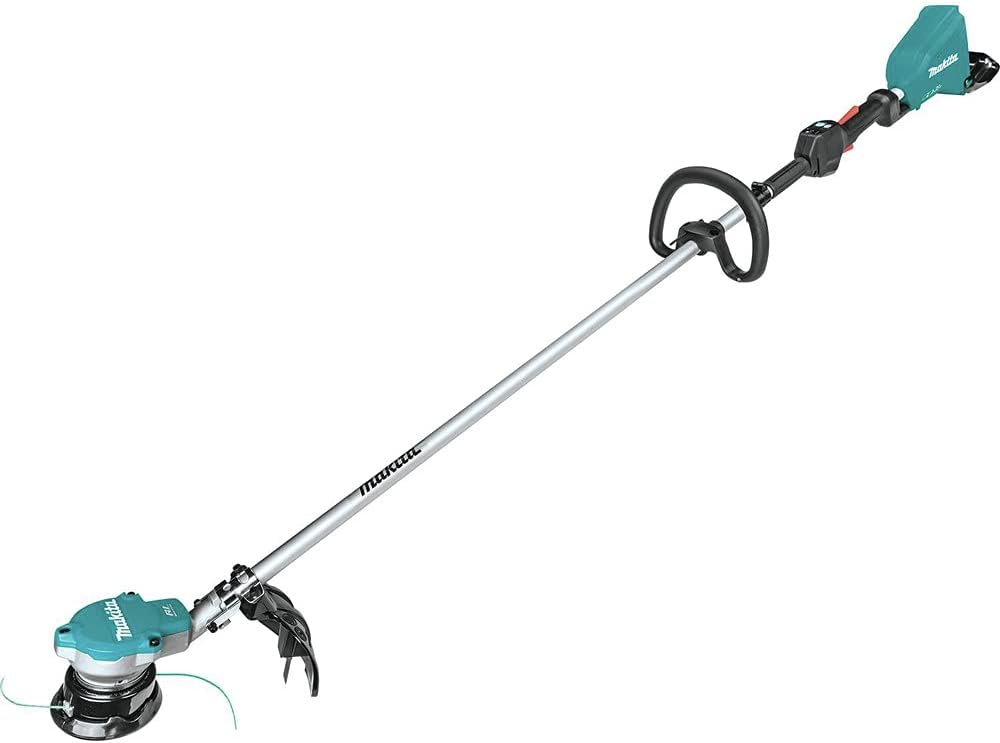
Makita XRU15Z 36V (18V x2) LXT Brushless String Trimmer, Tool Only
| Power Source | Battery Powered |
|---|---|
| Cutting width | 15 inches |
| Speed | 6500 rpm |
The Makita XRU15Z is a professional-grade cordless string trimmer built around a high-torque outer-rotor brushless motor and a direct-drive head for efficient power transfer. It runs on two 18V LXT batteries (sold separately) to deliver gas-like performance without emissions or the maintenance of gas engines. Electronic controls and Automatic Torque Drive Technology shift RPM between 3,500 and 6,500 to balance runtime and cutting power, while three speed settings let you dial in efficiency for light edging or heavy weed cutting. The 15-inch cutting swath covers more ground per pass, and Makita’s XPT sealing plus Star Protection electronics help protect internal components from dust, moisture, overload and overheating. As a tool-only unit it fits into the wider 18V LXT battery ecosystem, which is convenient if you already use Makita batteries and chargers. The main trade-off is that batteries and charger are not included so you must invest in compatible high-capacity batteries for the claimed run times, and the unit’s heavier professional build means it is less compact than consumer trimmers.
Best for: Pros and contractors who need a durable, high-torque cordless trimmer that integrates with the Makita 18V LXT battery system and prioritizes reliable, jobsite-ready performance.
Less Ideal for: Homeowners who want an all-in-one package for occasional yard work or those who prefer a lightweight consumer trimmer with included batteries and charger.
- Powerful outer-rotor brushless motor with direct drive for higher torque and efficient cutting
- Automatic Torque Drive Technology and three speed settings optimize run time and performance
- Built for durability with XPT sealing and Star Protection electronics to guard against dust, water, overload and overheating
- Large 15-inch cutting swath increases productivity on professional jobsites
- Sold as tool-only so batteries and charger must be purchased separately
- Heavier professional construction is less convenient for casual or infrequent users
Verdict: A professional, reliability-focused cordless trimmer that delivers high torque, weather-resistant durability, and efficient battery-managed performance for demanding jobsites.
ECHO SRM-2620 X Series Straight-Shaft Gas String Trimmer

| Power Source | Gasoline-Powered |
|---|---|
| Speed | 8500 rpm |
| Manufacturer | Echo |
| Model Number | SRM2620 |
The ECHO SRM-2620 is a professional straight-shaft gas trimmer built around a 25.4cc engine and an 8500 rpm top speed, intended for heavy residential or light commercial yard work. It is used for cutting dense grass, trimming around landscaping and edging hard-to-reach spots where a straight shaft gives reach and control. Notable features include a robust commercial-grade engine, a straight-shaft design for reach and balance, and OEM build quality that supports frequent use. In practice the trimmer delivers strong cutting power and steady high-speed performance for thicker growth, and the straight shaft helps with maneuvering under shrubs and along fences. Important limitations are typical of gas units: it requires fuel and routine maintenance, produces engine noise and exhaust, and weighs more than consumer battery models which can fatigue users during long sessions. For users who prioritize durability and cutting performance the SRM-2620 is purpose-built, but it is less convenient than cordless alternatives for short, quick jobs.
Best for: Ideal for landscapers and homeowners who need a durable, powerful trimmer for frequent heavy-duty trimming and professional-looking edges.
Less Ideal for: Not a good fit for casual users who prefer quiet, low-maintenance equipment or short quick cleanup jobs around small yards.
- Professional-grade 25.4cc gasoline engine for sustained cutting power
- Straight-shaft design provides extended reach and better balance for edging and trimming under obstacles
- High top speed (8500 rpm) for effective cutting of thick or overgrown grass
- Built to OEM commercial standards for frequent, heavy use
- Requires gasoline and regular engine maintenance unlike cordless electric trimmers
- Heavier and louder than battery-powered models which can increase operator fatigue
Verdict: Choose the SRM-2620 when you need a tough, high-speed gas trimmer built for regular heavy-duty trimming and professional results.
Choosing the Right Professional String Trimmer: Key Factors to Consider
Cutting Power and Torque
Cutting power determines how well a trimmer slices through thick grass, weeds, and light brush. For professional use, you need consistent torque so the head does not bog down in dense patches. Higher sustained RPM under load helps keep a clean cut and reduces the need for multiple passes.
Pay attention to how power is delivered. Two-stroke engines, four-stroke units, and electric motors each behave differently under continuous load. Match the power delivery to the job: dense roadside vegetation and crabgrass require more torque than routine edging.
Runtime, Fuel Economy, and Recharge Speed
Long runtime matters when you are on a route or running consecutive jobs. Gas models require enough tank capacity and efficient fuel consumption to minimize refills. Battery-powered trimmers must offer battery runtime and recharge patterns that fit a workday or allow fast battery swaps. Consider real-world runtime under load rather than manufacturer peak numbers.
Also think about refueling and charging logistics. Quick-change battery systems and common battery platforms across other tools can reduce downtime. For gas units, easy-access fuel caps and predictable burn rates keep crews moving.
Durability and Serviceability
Professional equipment sees bumps, drops, and hours of vibration. Shaft material, head housing strength, and protective guards should resist cracking and deformation. Metal gearbox housings or reinforced composite sections prolong life in commercial conditions.
Serviceability is equally important. Easy access to spark plugs, air filters, replaceable gear heads, and standard fasteners cut shop time. Consider how simple it is to source wearable parts like bump heads, driveline components, and belts.
Ergonomics and Operator Comfort
Operator comfort affects speed and quality. Balance, handle design, and harness compatibility reduce fatigue and help maintain a straight trim line. High vibration can cause numbness and slow crews, so look for dampening features and anti-vibration mounts.
Controls that are reachable without changing grip, adjustable handles, and weight distribution optimized for extended use all reduce strain. For teams, consider models that adapt to different operator heights and handedness.
Cutting Head Reliability and Line Management
The trimmer head design affects efficiency and downtime. Bump-feed heads are fast to reload but vary in reliability; lock-head and tap-and-go designs can be more consistent in a professional setting. Line retention, compatibility with thicker lines, and the ability to accept different head types increases versatility.
Frequent reloading slows a crew. Look for heads that simplify line changes and secure heavier line sizes for tough vegetation. Replaceable head components and clear replacement procedures also reduce repair time.
Weight, Balance, and Portability
Weight alone does not tell the whole story. A moderately heavier trimmer with excellent balance and harness support can feel easier to use than a lighter but poorly balanced one. Portability for transport between jobs and compact storage for trucks or trailers also matters.
Consider whether the unit can be carried comfortably for long distances, how it fits in a service vehicle, and whether disassembly for transport is straightforward. A design that minimizes operator strain while allowing quick staging improves daily productivity.
When to Choose Gas Over Battery
Gas and battery options each have advantages in professional settings. Gas trimmers still lead in continuous high-torque situations and when you cannot quickly swap or charge batteries on site. Modern battery systems, though, offer quieter operation, simpler maintenance, and zero on-site emissions.
If your work involves long, remote runs or heavy brush, gas tends to keep running where a single battery might not. If you operate in noise-sensitive neighborhoods or require minimal on-site servicing, a battery platform with spare packs and quick chargers can be the smarter logistical choice.
- Gas: better for long continuous runs and thick brush
- Battery: quieter, lower maintenance, easier starts
- Plan for spare batteries or fuel depending on route length
Maintenance Routines That Keep Crews Working
A simple daily and weekly maintenance checklist reduces unexpected failures. Daily tasks should include inspecting the cutting head, checking line condition, and ensuring the guard and harness are secure. For gas units, check fuel and oil levels, and for battery units, inspect contacts and pack health.
Weekly or monthly tasks should cover cleaning cooling fins or vents, replacing air filters on gas engines, and checking gearbox seals. Keep a small kit of common wearable parts and basic tools in service vehicles to handle quick head replacements or line swaps on the job.
- Daily: head inspection, guard check, line condition
- Weekly: filters, fasteners, and gearbox inspection
- Carry common spare parts and basic tools
Managing Noise, Emissions, and Local Regulations
Commercial operators encounter noise and emissions restrictions more often than homeowners. Battery trimmers offer reduced noise and zero tailpipe emissions, which can be a major advantage in residential or municipal contracts. Gas models may require scheduling around noise ordinances or choosing quieter attachments.
Know local regulations before bidding jobs. In some areas, electrified routes can open doors to properties with strict rules. Also consider personal protective equipment and practices to minimize exposure to exhaust and loud operation for crew health.
- Check local noise and emissions rules on commercial routes
- Use quieter equipment in noise-sensitive neighborhoods
- Protect crews with hearing and respiratory protection
Line Types and Cutting Techniques
Line diameter and shape affect cut quality. Twisted or serrated lines cut more aggressively but may wear faster. Thicker line handles tougher vegetation but increases power draw and can shorten runtime on battery models. Matching line type to the vegetation type improves efficiency.
Technique also matters. Keep the head at a consistent height for clean edges, and use motion that slices rather than hacks at material. For dense patches, make overlapping passes instead of forcing the head into the mass, which reduces strain on the motor or engine.
- Use thicker line for tough weeds, thinner for fine grass
- Prefer slicing motions and overlapping passes for dense growth
- Test line types to find balance between cut quality and wear
Transport and Storage Best Practices
How you transport and store Professional String Trimmers affects longevity and readiness. Secure units in racks or tie-downs to prevent drops and bangs while on service vehicles. For battery systems, store packs in a cool, dry place and keep a rotation schedule so packs remain healthy.
Perform a quick pre-shift check after transport to confirm controls, guards, and harnesses are still secure. Proper storage of spare heads, line, and tools reduces jobsite delays and protects parts from premature wear.
- Secure tools during transport to prevent impact damage
- Rotate and store batteries in cool, dry conditions
- Keep spare heads and line organized for quick swaps
How We Chose the Best Professional String Trimmer
We evaluated Professional String Trimmers against concrete, work-oriented criteria that reflect real commercial and heavy-residential use. Key considerations included cutting performance over a range of grass types and stem thicknesses, motor or engine power and torque under load, and continuous runtime or fuel efficiency for long shifts. We rated durability features such as shaft construction, bump and impact resistance, and serviceability for routine maintenance. Ergonomics and vibration levels were examined because less fatigue improves speed and trimming precision. Ease of line replacement and head reliability were assessed because downtime on a job is costly. We excluded consumer-grade models designed only for occasional yard work, trimmers lacking proven parts availability, and units with unclear maintenance paths. Selections prioritized tools that balance sustained cutting power with manageable weight and straightforward upkeep. The scoring emphasized measurable specs and user-facing features that affect daily productivity and long-term ownership costs.
FAQ
How long should a professional trimmer battery last in active use?
Battery runtime varies with line thickness and vegetation density, but professional battery packs often provide 30 to 60 minutes of heavy use. Many crews rely on quick-change packs to maintain continuous operation rather than a single long-duration battery.
Can I use thicker line in any trimmer head for tougher jobs?
Not always. Heads have maximum line diameters and may not accept heavier sizes. Check head compatibility and be aware that thicker line increases power draw, which can affect runtime on battery units.
What maintenance extends the service life of a professional trimmer?
Regularly inspecting and replacing worn heads, keeping filters and cooling fins clean, tightening fasteners, and following scheduled lubrication prolong service life. Simple daily and weekly checks prevent small issues from becoming breakdowns.
Is vibration a serious concern for long shifts?
Yes. Excessive vibration causes operator fatigue and can lead to discomfort or numbness over time. Anti-vibration features, good harnesses, and balanced tools reduce strain and help maintain productivity during long shifts.
Are gas trimmers always better for thick brush?
Gas models typically provide continuous torque for dense brush, but high-torque battery systems are closing the gap. The right choice depends on job duration, access to chargers, and whether quieter operation is required.
How do I choose between straight and curved shaft trimmers?
Straight shafts usually offer better reach and are preferred for heavy commercial work because they are easier to adapt with different heads and accessories. Curved shafts can be lighter and more maneuverable for small properties but may transmit more vibration to the operator.
Final Verdict
Choose a Professional String Trimmer by prioritizing the features that match your daily workflow: consistent under-load cutting power for the vegetation you face, runtime or fuel logistics that match route lengths, and durability that minimizes shop time. Balance ergonomics and weight against duty cycle to reduce operator fatigue. Tradeoffs are inevitable. Heavier, more durable units may cost more to carry but return time savings in fewer breakdowns. Battery systems simplify maintenance and reduce noise, while gas models still lead for prolonged high-torque tasks. Select the configuration that aligns with typical job conditions and support capacity for the clearest productivity gains.
