

Note: This article contains affiliate links. If you click on these links and make a purchase, I may earn a small commission at no extra cost to you. This helps support my research and content. Read my full affiliate disclosure here.
When you care for apple trees, the right pruning shears change a long, awkward chore into efficient seasonal work. Proper pruning improves light penetration, reduces disease risk, and directs energy into fruiting wood. Using shears that deliver clean, accurate cuts reduces ragged wounds that slow healing and invite pathogens. This guide covers six shortlisted pruning shears for pruning apple trees chosen for their cutting capacity, blade quality, ergonomics, and durability. We explain why those features matter for orchard and backyard apple pruning and outline the tradeoffs to consider before you buy. Read on to see which tool characteristics match your tree size and pruning style.
Top Picks at a Glance
| Best Overall The best all-around choice for most situations | DEWALT 20V MAX Cordless Pruner (DCPR320B) — Bare Tool |  |
| Best Quality Built to a higher standard if you want something more solid | FELCO F5 Large All-Steel Pruning Shears |  |
| Best Value The sweet spot between price and what you get | Decerk 8.5" Bypass Pruning Shears with Titanium-Coated SK5 Blade |  |
| Highest Rated A top-rated pick with lots of positive feedback | Kimura 8" Pro Bypass Pruning Shears — Japanese SK5 Steel, 1" Cut Capacity |  |
| Most Popular A crowd favorite that many people choose with confidence | Fiskars Bypass Pruning Shears with Nonstick Coating |  |
| Best Seller A high-volume bestseller chosen again and again | VOTREK VT-C800 8.5" Bypass Pruning Shears with SK5 Teflon-Coated Blade |  |
DEWALT 20V MAX Cordless Pruner (DCPR320B) — Bare Tool

| Cutting width | 1.5 inches |
|---|---|
| Blade Type | Bypass |
| Blade Material | High Speed Steel |
| Hand Orientation | Ambidextrous |
The DEWALT 20V MAX Cordless Pruner is a battery-powered bypass pruner designed to speed through repetitive cutting tasks that would be tiring with manual shears. It is typically used for pruning shrubs, harvesting cut flowers, and trimming small branches up to 1.5 inches in diameter. The tool’s motorized action reduces the physical effort required, and the nonstick coated blades help produce smooth cuts and resist sap buildup. A built-in LED improves visibility when working in shaded or early morning conditions, and the included blade change tool makes maintenance straightforward. As a bare tool this model requires a compatible 20V MAX battery and charger, so buyers who already have DEWALT cordless batteries will get the best value. The pruner is compact and geared toward continuous use, but users should be aware that runtime and cutting cadence depend on the battery used and that heavier woody cutting will be limited to the stated 1.5-inch capacity.
Best for: Buyers who prioritize faster, less strenuous pruning and already own or plan to use DEWALT 20V batteries for frequent garden maintenance and light woody cutting.
Less Ideal for: Casual gardeners who want an all-in-one kit with battery included or people who need to cut branches thicker than 1.5 inches should consider other options.
- Motorized bypass action reduces manual effort for repetitive pruning
- Nonstick coated blades for smoother cuts and easier cleaning
- On-board LED improves visibility in low-light or dense foliage
- Quick blade-change tool included for simple maintenance
- Sold as a bare tool so battery and charger are required separately
- Cut capacity limited to stems and branches up to 1.5 inches
Verdict: If you want a performance-focused cordless pruner to speed up frequent shrub and flower pruning and you already have DEWALT 20V batteries, this bare-tool pruner delivers efficient, low-effort cuts.
FELCO F5 Large All-Steel Pruning Shears

| Blade Material | Alloy Steel |
|---|---|
| Blade Edge | Serrated |
| Blade Type | anvil,bypass |
| Hand Orientation | Ambidextrous |
The FELCO F5 is built for heavy garden and landscape pruning where power and clean cuts matter. Its forged steel handles and hardened alloy-steel blades deliver the leverage to tackle thicker woody stems, while the tapered head and narrow point help access crowded branches. The tool combines an anvil-style cutting geometry with a serrated edge and screw-mounted components so you get reliable, close cuts and straightforward maintenance. A rubberized grip and revolving handle reduce strain on long sessions, and nearly every part is replaceable so the shear can be serviced rather than discarded. Trade-offs are its weight compared with lightweight aluminum models and the anvil/bypass mix may require a bit more sharpening attention than premium bypass-only designs for the cleanest cuts on live wood. For gardeners who need a durable, serviceable tool that holds an edge and delivers consistent cutting force, the FELCO F5 performs exceptionally well.
Best for: Serious gardeners and landscapers who prioritize cutting performance and longevity and want a repairable tool for regular heavy pruning tasks.
Less Ideal for: Casual gardeners who prefer very lightweight pruners for light floral trimming or those who want the absolute cleanest cuts on delicate live stems.
- Forged steel handles provide strong leverage for cutting thicker stems
- Hardened alloy-steel blade and screw-mounted anvil produce precise, close cuts
- Replaceable components extend service life and simplify maintenance
- Ergonomic features including a revolving handle and rubberized grip reduce hand fatigue
- Heavier than aluminum-bodied pruners which may tire users during long sessions
- Anvil-style cutting can crush fibrous stems if not used correctly
Verdict: Buy this if you need a heavy-duty, serviceable pruning shear that delivers strong, reliable cuts and long-term value.
Decerk 8.5" Bypass Pruning Shears with Titanium-Coated SK5 Blade

| Cutting width | 20 millimeters |
|---|---|
| Blade Type | Bypass |
| Blade Material | Titanium |
| Hand Orientation | Ambidextrous |
| Included Components | Replacement Spring |
These Decerk pruning shears are built for regular garden tasks like deadheading, stem trimming, and cutting small branches up to about 3/4 inch. The SK5 high-carbon steel blade is nano-polished and titanium-coated to resist rust and hold an edge longer, while the lever-action design multiplies cutting force so thicker stems go through with less hand strain. Aluminum handles with a rubberized grip make the tool comfortable to hold and the ambidextrous layout and one-hand safety lock simplify use and storage. The pruner ships with a spare spring and the straight bypass blade produces clean cuts that help plant health. Expect a compact, durable tool that suits routine pruning and light shrub work; it is not intended for heavy woody pruning beyond its stated cut capacity. As with any bypass pruner, keeping the blade clean and occasionally oiling the pivot will preserve performance over time.
Best for: Gardeners who prefer reliable, low-effort tools for routine pruning and want a durable, easy-to-use shear that reduces hand fatigue.
Less Ideal for: People who need a tool for heavy woody pruning or for frequent commercial-scale cutting should choose larger pruning tools or loppers instead.
- Titanium-coated SK5 bypass blade for longer edge life and corrosion resistance
- Lever-action design increases cutting force and reduces hand effort
- Ergonomic rubberized handles for a secure, comfortable grip
- Includes spare spring and one-hand safety lock for convenience and safer storage
- Cut capacity limited to about 20 mm (3/4 inch), not suitable for larger woody branches
- Blade care required to prevent sap buildup and maintain sharpness
Verdict: A comfortable, rust‑resistant bypass pruner with lever-action power that makes everyday garden cuts easier and gentler on the hands.
Kimura 8" Pro Bypass Pruning Shears — Japanese SK5 Steel, 1" Cut Capacity

| Cutting width | 25 millimeters |
|---|---|
| Blade Material | Japanese SK5 Steel |
| Handle Material | Aluminum |
| Blade Edge | Bypass Pruners |
| Hand Orientation | Ambidextrous |
These Kimura 8" Pro bypass pruning shears are built for everyday garden work from roses and ornamentals to light woody branches up to about 1 inch thick. The forged SK5 Japanese steel blades are heat treated for hardness and finished with PTFE to reduce sap buildup, so cuts stay sharp longer and blades glide through stems. The aluminum handles keep the tool lightweight while the PVC coating improves grip and comfort during repetitive use. A simple safety lock and ambidextrous design make them easy to carry and use by either hand. In practice they shine for pruning, deadheading, and trimming hedges where precision cuts matter, and the riveted construction and anti-rust components give confidence these will hold up season after season. They are not intended for heavy-duty logging or branches much thicker than 1 inch, and users who need anvil-style cutting or very large capacity should look elsewhere. For a balanced, all-purpose pruner these offer a strong mix of sharpness, comfort, and durability.
Best for: Gardeners who want a reliable, comfortable pair of pruners for everyday trimming, shaping, and light woody work and who value sharpness and ease of use.
Less Ideal for: Landscapers or homeowners who regularly cut large-diameter branches or need an anvil-style cutter for very hard wood should choose a heavier-capacity tool instead.
- High-hardness SK5 Japanese steel blades for lasting sharpness
- PTFE coating reduces sap build-up for smoother cuts
- Lightweight aluminum handles with PVC coating improve comfort and grip
- Ambidextrous design and simple safety lock for easy, safe use
- Cut capacity limited to about 1 inch so not suitable for large branches
- Not an anvil-style pruner, so less effective on very hard, dried wood
Verdict: A well-balanced, durable bypass pruner offering sharp SK5 blades and comfortable handling for most everyday garden pruning tasks.
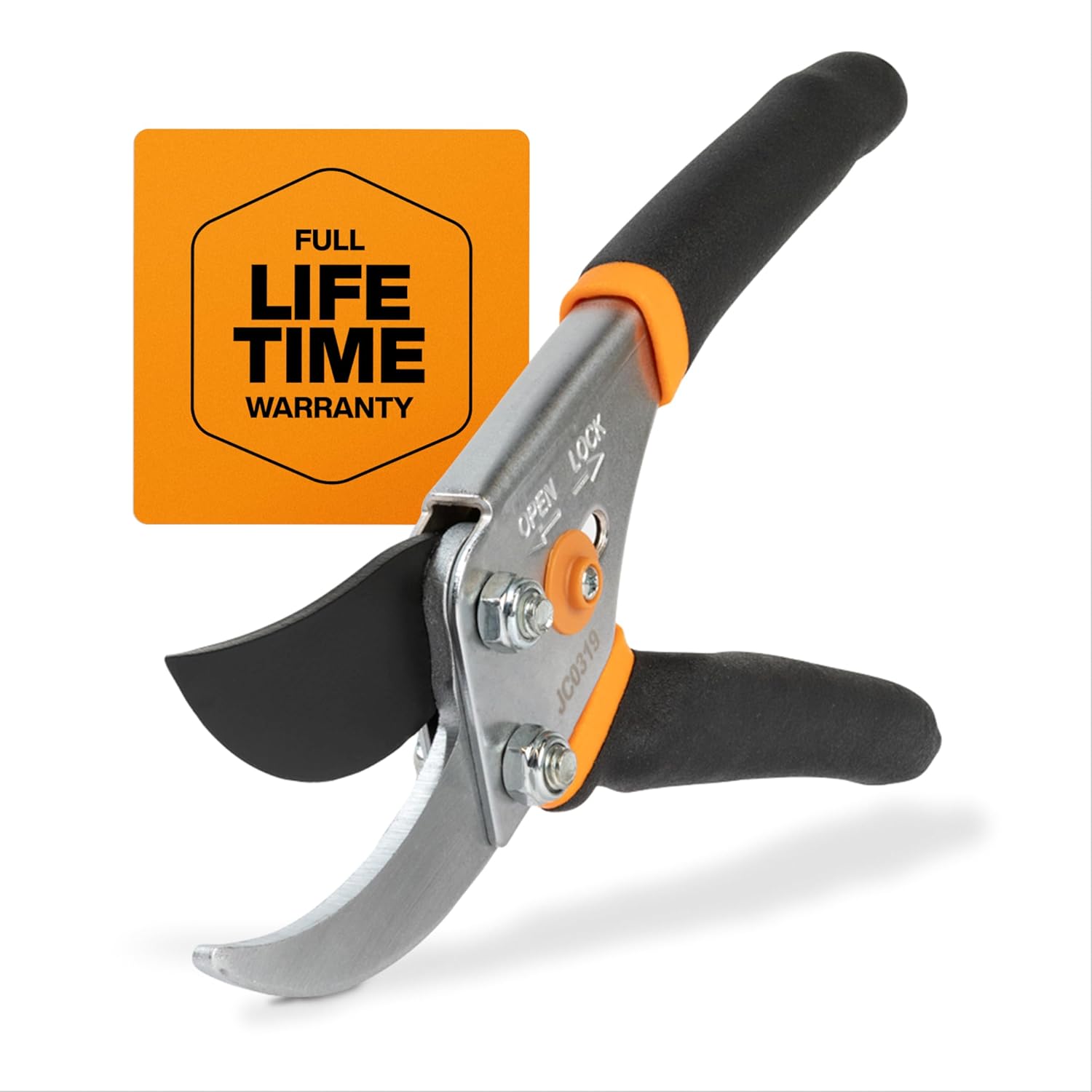
Fiskars Bypass Pruning Shears with Nonstick Coating
| Cutting width | 0.63 inches |
|---|---|
| Blade Edge | Serrated |
| Blade Material | Alloy Steel |
| Hand Orientation | Ambidextrous |
These Fiskars bypass pruning shears are a straightforward, reliable tool for everyday garden pruning. They use a bypass cutting action with precision-ground alloy steel blades and a low-friction coating so stems and green growth are sheared cleanly without crushing, which is helpful for flowers, shrubs, and small woody shoots up to about 5/8 inch. The pruners include a sap groove and nonstick finish to reduce sticking and rust, and an ergonomic non-slip handle that makes repeated trimming more comfortable. Because they are all-steel construction they feel solid and hold an edge through routine use, and the safety lock keeps the blades closed for storage. The main limitations are the modest cutting capacity, which is not suited for thick branches, and the simpler design lacks compound leverage for heavy cutting, so they work best for regular maintenance rather than heavy-duty pruning. For gardeners who want a durable, easy-to-maintain daily pruner, these are a dependable choice.
Best for: Home gardeners who want a dependable, low-maintenance pruner for routine trimming, deadheading, and shaping of flowers and small shrubs and who value proven, widely used tools.
Less Ideal for: People who need a pruner for larger woody branches or frequent heavy-duty cutting should choose a lopper or powered/pruning tool instead.
- Bypass blades and precision-ground steel deliver clean cuts on live stems
- Low-friction blade coating and sap groove reduce sticking and resist rust
- Ergonomic non-slip handle improves control and reduces hand fatigue
- All-steel construction offers durable, long-lasting performance
- Cut capacity limited to about 5/8 inch so not suitable for thicker branches
- No compound leverage mechanism, making heavy or woody cuts harder
Verdict: A tough, no-nonsense pruner that provides clean cuts and low-maintenance blades for everyday garden grooming.
VOTREK VT-C800 8.5" Bypass Pruning Shears with SK5 Teflon-Coated Blade

| Blade Material | High Carbon Steel (SK5) |
|---|---|
| Cutting width | 20 millimeters |
| Hand Orientation | Ambidextrous |
| Handle Material | Aluminum, Rubber |
The VOTREK VT-C800 is a straightforward hand pruner aimed at routine garden pruning, rose trimming, bonsai work, and light tree maintenance. It uses an SK5 high-carbon steel blade with a Teflon coating to resist sap buildup and keep cuts clean, while a sealed spring reduces debris jams and improves blade return in damp conditions. The ambidextrous thumb lock can be operated one-handed and works with gloves, which helps with safe carrying between jobs. Ergonomic aluminum and rubber handles and a non-slip grip reduce wrist strain for longer sessions and make the tool easier for users with weaker hands. The cutter is rated to slice branches up to about 20 mm (0.8 in), so it is best for live growth and small stems rather than large-diameter pruning. Buyers should expect to sharpen the blade occasionally to maintain peak performance and to avoid using it on dry, very hard wood where bypass pruners are less efficient. For routine backyard pruning where reliable, jam-resistant action and comfortable handling matter, this model delivers consistent, low-fuss performance.
Best for: A practical gardener who prioritizes reliable, low-maintenance tools and wants comfortable, safe shears for everyday pruning tasks around the yard.
Less Ideal for: People who need to cut thick, dry, or woody branches frequently should choose a larger anvil or powered pruner instead.
- Sharp SK5 high-carbon steel blade with Teflon coating reduces sap adhesion and keeps cuts cleaner
- Sealed jam-proof spring design resists debris and improves blade return in wet or dirty conditions
- Ambidextrous one-handed thumb lock that works with gloves for safer handling and storage
- Ergonomic aluminum and rubber handles with non-slip grip minimize wrist fatigue during extended use
- Cut capacity is limited to about 20 mm (0.8 in), so not suitable for larger branches
- Requires periodic sharpening to maintain optimal cutting performance
Verdict: If you want dependable, jam-resistant garden shears with a sharp, low-stick blade and comfortable grip for routine pruning, this is a solid, low-fuss choice.
Choosing the Right Pruning Shears for Pruning Apple Trees: Key Factors to Consider
Blade Sharpness and Edge Geometry
Sharp blades make clean, precise cuts through living apple wood, which speeds healing and reduces the chance of disease. Look for a shears blade profile that slices rather than crushes – a bypass style or a well-honed anvil with a sharp edge are common options. A finely ground edge holds a keen cutting surface longer, but will still need routine honing during the season to maintain performance.
How the blade is heat treated and the steel alloy used affects how long the edge stays sharp and how easy it is to resharpen. If you prune frequently, choose blades that are both tough and serviceable so you can restore the edge without specialized tools.
Maximum Cutting Diameter and Intended Branch Size
Apple trees present a range of branch sizes, from thin fruit spurs to older scaffold limbs. Pruning shears have a rated cutting diameter – pick shears that comfortably handle the largest branches you expect to cut without forcing the tool. For heavier limbs, loppers or a pruning saw are more appropriate.
Using a shear beyond its capacity damages the blades and increases the effort needed for each cut. Consider the most common cuts you make: shaping and thinning young trees needs less capacity than removing older wood. Choosing a tool matched to typical branch diameter keeps cutting efficient and prevents premature wear.
Handle Ergonomics and Hand Comfort
Pruning apples often means repeated cuts across long sessions. Comfortable grips and a handle shape that fits your hand reduce fatigue and the risk of hot spots or blisters. Look for handles with non-slip surfaces, an ergonomic curve to follow natural hand posture, and enough real estate to allow two-handed use when extra leverage is needed.
Locking mechanisms should be easy to operate with gloves and should not pinch the skin. For gardeners with weaker grip strength or joint issues, consider models with gear-assist or compound leverage features that reduce the force needed per cut.
Corrosion Resistance and Outdoor Durability
Garden tools live in damp, acidic, or winter conditions that accelerate corrosion. Stainless or coated blades resist rust and stay functional from spring through dormant-season work. Fasteners and springs should also resist corrosion to avoid seizing after storage.
Durable finishes and sealed joints make cleaning sap and residue easier, which helps prevent blade gumming and preserves cutting action. Regular light oiling and correct winter storage remain important, but choosing materials with inherent resistance reduces maintenance burden.
Ease of Maintenance and Sharpening
A shear that is easy to take apart, sharpen, and reassemble stays useful for many seasons. Look for tools with accessible pivot bolts and simple blade profiles that accept a file or whetstone. Replaceable blades or bolt-on cutting edges extend service life and can be a practical long-term choice for frequent pruners.
Maintenance also includes the ability to clean sap and debris from hard-to-reach areas. Simple latch systems and wide gaps near the pivot make drying and lubrication straightforward after use.
Safety Features and Secure Storage
Pruning involves sharp blades and spring mechanisms under tension. A dependable safety latch that locks the blades closed prevents accidental cuts in a tool bag or shed. Some shears include blade guards or holsters that add protection when carrying tools in the field.
Consider visibility and balance when carrying shears along trunks or in dense foliage. A tool that locks securely and stores safely reduces the chance of injury and protects the cutting edge from damage between jobs.
When To Use Shears Versus Loppers or Saws
Pruning shears are best for live wood up to their rated cutting diameter, typically small scaffold branches, fruit spurs, and deadheading growth. They give control and precision for shaping and selective thinning where you need a close, accurate cut near fruiting wood. For branches that exceed the shear's capacity, switch to loppers or a pruning saw to avoid damaging the shear and the tree.
If you are unsure whether to use shears or a larger tool, inspect the branch thickness at the cut point. Thicker wood and older scaffold limbs usually require a saw because forced cuts can splinter or leave ragged wounds that heal slowly.
- Use shears for shoots, small lateral branches, and precise heading cuts.
- Use loppers for medium-diameter limbs and a pruning saw for large scaffold removal.
Techniques for Clean Cuts on Apple Trees
Make cuts at a slight angle just above a bud or outward-facing lateral to encourage the desired growth direction. Avoid leaving stubs; cut close to the branch collar without slicing into it, so the tree can seal the wound effectively.
Open the blades fully and apply smooth, continuous pressure for each cut. For sap-filled areas, clean the blades between cuts to prevent sticky buildup that can tear the next cut. Disinfect tools between trips to different trees when disease pressure is high, and keep a sharpening stone in your kit to maintain a crisp edge.
- Cut above an outward-facing bud to shape new growth.
- Keep cuts clean and avoid crushing the branch collar.
Maintaining Shears Through the Season
After each pruning session, wipe blades clean of sap and debris and apply a thin film of light oil to the pivot and blade surfaces. Periodic full disassembly allows you to clean the spring and pivot, tighten fasteners, and inspect for cracked handles or bent components.
Sharpen blades several times per season depending on use. Use a small flat file or fine stone along the bevel at the original edge angle. Reassemble with correct tension so blades slide smoothly without wobble.
- Wipe and oil after use to prevent rust and sap buildup.
- Sharpen and tighten pivot bolts periodically for consistent cutting action.
Selecting Shears for Different Orchard Sizes
In a small backyard with a handful of apple trees, a single pair of versatile shears that balance sharpness and comfort is often sufficient. In larger plantings, consider having two types on hand: a light, nimble pair for fruit spur work and a heavier-capacity pair for larger summer thinnings.
If you manage multiple trees or work with helpers, standardizing on a durable model that is easy to maintain reduces downtime. For community orchards, pick tools with obvious safety features and simple maintenance so volunteers can use them confidently.
- Backyard growers benefit from a single comfortable, sharp pair.
- Larger orchards benefit from having both light-capacity and higher-capacity shears available.
Gloves and Personal Protection With Shears
Wear snug-fitting gloves that allow tactile feedback while protecting from accidental nicks. Thicker gloves reduce dexterity, so choose gloves designed for pruning that balance cut resistance and dexterity. Eye protection can be valuable when pruning overhead limbs or cutting densely branched areas.
Be mindful of posture and body positioning to avoid overreaching; use a small step or ladder for better angle and control when pruning upper canopy branches. Keep a first-aid kit accessible for minor cuts and splinters.
- Choose pruning-specific gloves for protection and dexterity.
- Use eye protection when working in dense or overhead branches.
How We Chose the Best Pruning Shears for Pruning Apple Trees
We focused selection on practical pruning needs for apple trees of different ages and sizes. Our filters prioritized blade geometry that produces clean scissor-like cuts on living wood, cutting capacity to handle common branch sizes found in apple management, and handle ergonomics to limit hand strain during longer pruning sessions. We also evaluated corrosion resistance for outdoor use, ease of blade maintenance and sharpening, and how securely the tool locks for safe storage. Excluded items included multi-tool gadgets intended primarily for garden trimming rather than arboricultural cuts, and shears with cutting capacity far below what apple tree pruning typically requires. Final choices reflect tools that balance sharp blades, comfortable grips, and durable construction suitable for seasonal pruning chores. These are the practical dimensions we weighed when shortlisting options for gardeners focused on apple tree health and harvest quality.
FAQ
What cutting diameter do I need for most apple tree pruning?
Most seasonal pruning on apple trees involves branches under 1 inch in diameter, but scaffold removal and older wood can reach 1.5 inches or more. Choose shears rated for the largest routine cut you plan to make; heavier cuts should be handled with loppers or a saw.
How often should I sharpen my pruning shears during pruning season?
Frequency depends on use. For light seasonal pruning you may sharpen once or twice. If you prune many trees or cut through gritty wood, you might need to sharpen after every few sessions. A quick touch-up with a stone between uses keeps the edge performing well.
Are bypass or anvil shears better for apple trees?
Bypass shears generally give cleaner cuts on living wood because the two blades pass each other like scissors. Anvil shears can be fine for dead or dry wood but may crush living tissue if not sharp. For most apple pruning work, a sharp bypass shear is preferred.
Can I use pruning shears while wearing thick gloves?
Yes, but thick gloves reduce dexterity and can make fine cuts harder. Look for gloves designed for pruning that provide cut resistance while allowing enough feel to operate the latch and blades safely.
How should I disinfect shears between trees to prevent disease spread?
Wipe blades clean of sap and then use a disinfectant such as diluted bleach or 70 percent isopropyl alcohol on the blade surfaces. Allow tools to air dry or wipe dry before resuming pruning. Repeat this when moving between trees showing disease symptoms.
Final Verdict
Choose pruning shears for pruning apple trees based on the size of cuts you make most often, how long you will hold the tool, and the local growing conditions that affect metal longevity. Prioritize blade sharpness and a comfortable handle for precise cuts, pick the right cutting capacity to avoid forcing the tool, and favor corrosion-resistant finishes if you work in wet climates. Balancing these tradeoffs will help you select a shear that stays useful season after season. Focus on tools that are simple to maintain and safe to store so pruning stays efficient and your trees remain healthy and productive.
