

Note: This article contains affiliate links. If you click on these links and make a purchase, I may earn a small commission at no extra cost to you. This helps support my research and content. Read my full affiliate disclosure here.
If you manage a medium-to-large residential lawn or several landscape beds, a push behind string trimmer can speed routine edge work and reduce shoulder strain compared with handheld models. The right unit matters because cutting width, shaft height, and how the head tracks around obstacles determine how quickly you clear edges and how clean those edges look. This guide shortlists the top options for common yard tasks and mowing routines, then evaluates them on practical, hands-on criteria gardeners care about. You will find choices suited to tighter beds, long runs of sidewalk edges, and mixed turf with light brush. Read on for a clear overview of what each shortlisted trimmer does best and the features that drive day-to-day usability.
Top Picks at a Glance
| Best Overall The best all-around choice for most situations | BILT HARD 22-Inch Walk-Behind 170cc 4-Cycle Gas String Trimmer |  |
| Best Quality Built to a higher standard if you want something more solid | Powerhorse 22 in. High-Wheeled Walk-Behind String Trimmer, 173cc |  |
| Best Value The sweet spot between price and what you get | PROYAMA 170cc 22" Walk-Behind String Trimmer (Push) |  |
| Best Budget The cheapest option that still gets the job done reliably | SENIX 22" High-Wheel Gas Walk-Behind Brush Cutter and String Trimmer (160 cc) |  |
| Highest Rated A top-rated pick with lots of positive feedback | YARDMAX YL2250 22 in. 170cc Gas Walk-Behind String Trimmer Mower |  |
| Most Popular A crowd favorite that many people choose with confidence | Earthquake Walk-Behind String Mower with 160cc Viper 4-Cycle Engine, 22-inch Cut |  |
BILT HARD 22-Inch Walk-Behind 170cc 4-Cycle Gas String Trimmer
| Power Source | Gasoline-Powered |
|---|---|
| Cutting width | 22 inches |
| Wheel Size | 14 inches |
| Material Type | Alloy Steel |
| Operation Mode | Manual |
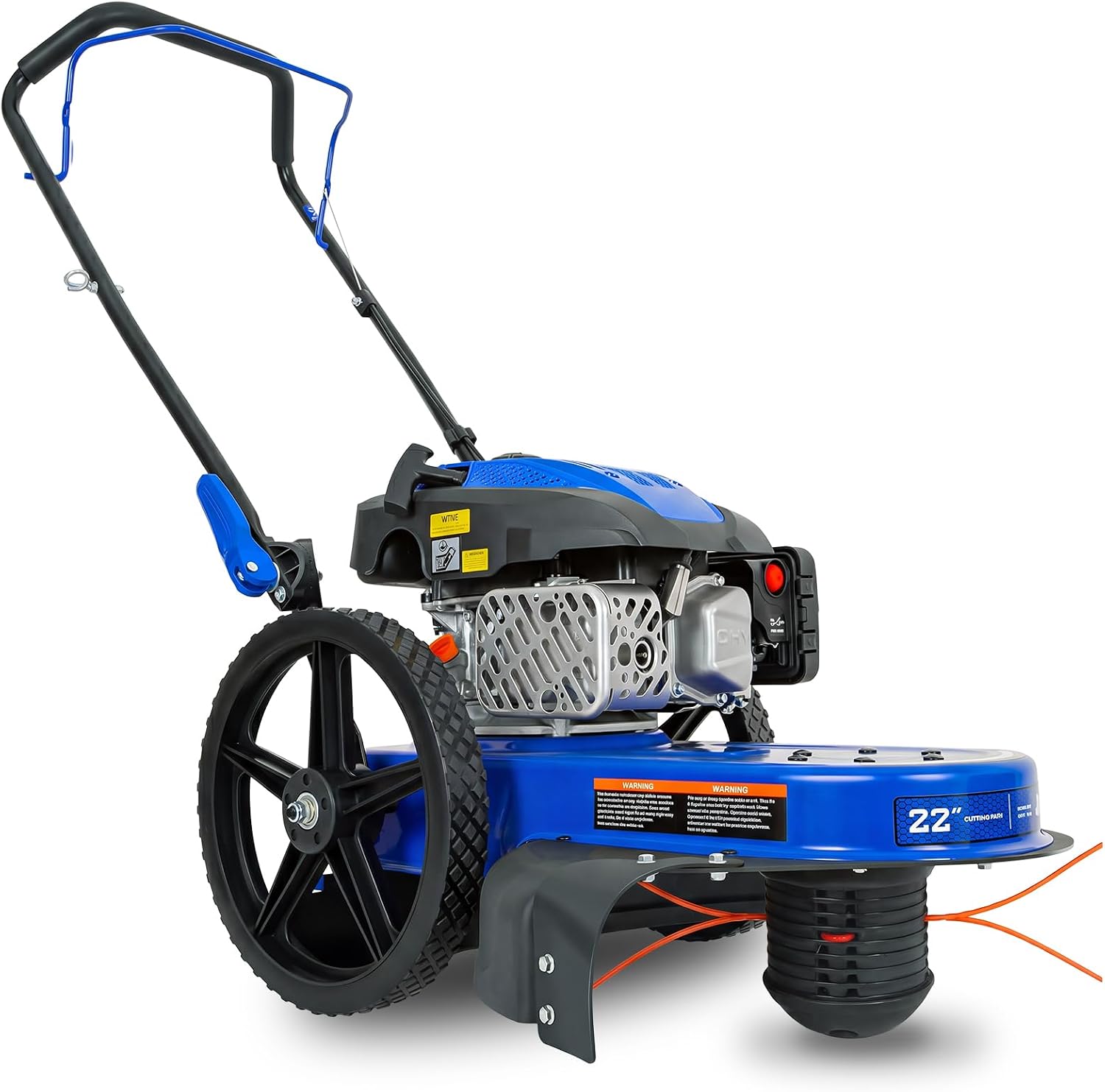
This BILT HARD walk-behind string trimmer is designed to clear heavy grass and weeds where a standard mower or handheld trimmer struggles. It uses a 170cc 4-cycle OHV engine with a manual recoil start to power a heavy-duty nylon line across a 22-inch cutting width, and a one-piece steel deck improves strength and reduces vibration while you work. Large 14-inch flat-free wheels make it easier to push over uneven ground and the foldable ergonomic handle helps with control and compact storage. Typical uses include edging along fences, clearing overgrown patches, and cutting through dense, tall grass or light brush around obstacles. Important limitations are the manual start and small 0.2 gallon fuel tank, which mean occasional refueling and some effort starting compared with electric or e-start models, and regular engine maintenance is required. For buyers who want a robust gas-powered solution for heavy trimming, this machine delivers straightforward performance without complex electronics.
Best for: A buyer who prefers a straightforward, durable gas-powered tool for heavy-duty backyard trimming and values reliability over advanced features. Good for homeowners who want a machine that tackles thick grass and tight spots where a lawn mower cannot reach.
Less Ideal for: Not the best choice for users who prioritize low-noise, zero-emissions operation or who need electric push-button starting; consider electric or e-start gas models instead.
- Powerful 170cc 4-cycle OHV engine for cutting dense grass and weeds
- 22-inch cutting width covers wide swaths and reduces passes
- One-piece steel deck increases durability and reduces vibration
- 14-inch flat-free wheels improve maneuverability on uneven terrain
- Foldable ergonomic handle for improved control and compact storage
- Manual recoil start requires physical effort and may be harder for some users
- Small 0.2 gallon fuel tank means more frequent refueling during long jobs
Verdict: Buy this if you want a no-frills, heavy-duty gas walk-behind trimmer that reliably clears thick grass and overgrown areas.
Powerhorse 22 in. High-Wheeled Walk-Behind String Trimmer, 173cc

| Power Source | gasoline |
|---|---|
| Cutting width | 22 inches |
| Operation Mode | Manual |
| Engine displacement | 173cc |
The Powerhorse wheeled walk-behind string trimmer is built to tackle tall grass, thick weeds, and rough patches without the constant bending and bumping that handheld trimmers require. Its 173cc vertical gas engine provides strong torque for a 22-inch cutting swath, and the offset head plus rear wheels let you push the unit across uneven ground for faster coverage. It ships with a multi-pack of 4mm square line so you can get started trimming wide swaths right away. Practical advantages include straightforward walk-behind control that reduces operator fatigue and a design focused on durability for demanding yard or jobsite work. Important limitations are that it is a gas machine, so expect routine fuel, oil, and spark plug maintenance and more noise than electric alternatives; it is also relatively heavy to maneuver when lifting or loading. For someone who prioritizes reliable, powerful trimming across larger or rough lots, this is a practical, work-ready choice.
Best for: Buyers who need a robust, jobsite-capable trimmer for regular heavy-duty property maintenance and prioritize dependable power and uptime over quiet or lightweight operation.
Less Ideal for: Casual gardeners with small lawns, or buyers seeking a low-noise, low-maintenance cordless or electric option should consider lighter alternatives.
- Powerful 173cc gas engine for consistent cutting performance on thick vegetation
- 22-inch cutting width reduces passes and speeds up large-area trimming
- Wheeled walk-behind design reduces user fatigue and improves control on rough terrain
- Includes replacement trimmer line so the unit is ready to use out of the box
- Gas-powered operation requires regular fuel and engine maintenance
- Heavier unit that can be awkward to lift or transport for one person
Verdict: Choose this wheeled gas trimmer if you need a rugged, high‑power unit that covers wide swaths quickly for demanding yards and jobsite cleanup.
PROYAMA 170cc 22" Walk-Behind String Trimmer (Push)

| Power Source | Gas Powered |
|---|---|
| Cutting width | 22 inches |
| Speed | 3600 rpm |
The PROYAMA 170cc walk-behind string trimmer is a gas-powered push unit built to tackle overgrown yards and rough patches that handheld trimmers struggle with. It uses a 170cc four-cycle OHV engine running at 3600 rpm and a heavy-duty 0.155-inch nylon line on a 22-inch cutting head to cut dense weeds, thick brush, and tall grass more quickly than a handheld unit. The large 14-inch flat-free rear wheels and push-behind frame make it easier to roll over uneven terrain and maintain consistent cutting height, while the foldable handle helps with storage. Practical touches include a four-cycle engine that takes straight fuel, a side bag for line spools, and some supplied oil so you can start work without extra trips. Expect a heavier, louder machine than electric trimmers and regular maintenance typical of gas engines, including oil checks, spark plug service, and periodic line replacement. For large properties or areas with heavy brush this model speeds up clearing, but it is more than needed for small, groomed lawns.
Best for: Buyers with medium to large properties or overgrown areas who prioritize efficient clearing and reliable gas power over lightweight convenience.
Less Ideal for: People with small, well-kept lawns, those wanting zero-emission electric tools, or users who prefer minimal maintenance equipment.
- Powerful 170cc four-cycle engine provides strong torque for dense weeds and brush
- Wide 22-inch cutting path covers more ground per pass to save time on large areas
- Large 14-inch flat-free wheels improve stability and maneuverability over rough terrain
- Foldable handle allows compact storage and easier transport
- Uses straight fuel so no gas-oil mixing is required
- Gas engine requires regular maintenance and is louder than electric alternatives
- Heavier and bulkier than handheld trimmers, making it less suitable for small yards
Verdict: A workhorse walk-behind trimmer that clears dense weeds and brush quickly across larger or rough properties where power and coverage matter most.
SENIX 22" High-Wheel Gas Walk-Behind Brush Cutter and String Trimmer (160 cc)

| Power Source | gasoline-powered |
|---|---|
| Cutting width | 22 inches |
| Size | 22-Inch |
| Recommended Uses For Product | Maintaining large lawns, trimming around edges, clearing brush |
The SENIX walk-behind brush cutter is a high-capacity wheeled string trimmer built to clear heavy weeds, overgrowth, and large lawn edges without pushing a full mower. It uses a 160 cc 4-cycle engine to drive a .155-inch line across a 22-inch cutting swath, so you cover wide passes quickly while the 14-inch rubber wheels smooth movement over uneven ground. Height is adjustable via a five-position steel deck so you can set cut height between about 1.6 and 3 inches, and the ergonomic, fold-down handle makes operation more comfortable and storage simpler. The unit arrives with engine oil and extra line and emphasizes durability with a steel deck and large wheels that resist rough terrain. Expect typical gas-tool maintenance such as fuel management, spark plug and air-filter care, and louder operation than electric alternatives. It is heavier and bulkier than handheld trimmers, so storage space and occasional tuning are required to keep peak performance when used frequently on big yards or brush areas.
Best for: Buyers who need a cost-effective, powerful wheeled trimmer to clear heavy weeds or maintain large yards and who are willing to perform basic gas-engine upkeep.
Less Ideal for: People with small yards, strict noise restrictions, or those who prefer low-maintenance electric or battery tools should consider lighter, quieter options.
- Large 22-inch cutting swath covers wide areas faster than handheld trimmers
- 160 cc 4-cycle engine provides steady power for heavy weeds and brush
- Five-position height adjustment for controllable cutting heights
- 14-inch rubber wheels improve maneuverability on uneven terrain
- Includes engine oil and replacement trimmer line out of the box
- Requires regular gas-engine maintenance and storage considerations
- Louder and heavier than electric or battery-powered alternatives
Verdict: If you want an affordable, gas‑powered wheeled trimmer that clears heavy brush and large areas quickly, this SENIX 22" walk‑behind unit delivers strong cutting power and durability.
YARDMAX YL2250 22 in. 170cc Gas Walk-Behind String Trimmer Mower

| Cutting width | 22 inches |
|---|---|
| Power Source | gasoline-powered |
| Number of Positions | 5 |
| Wheel Size | 14 inches |
The YARDMAX YL2250 is a wheeled, gas-powered string trimmer mower built to cover large areas and reach edges that a regular mower misses. You push it like a lawn mower while the offset head and 22-inch cutting width let you trim close to fences, beds, and structures without awkward angling. It stores extra pre-cut string in an onboard cord caddy and offers tool-free height adjustment across five positions from 1.5 to 3.5 inches, so you can adapt quickly between light touch-ups and heavier cuts. Rugged 14-inch ball-bearing wheels and a one-piece seamless metal deck reduce vibration and help it roll over uneven ground. Because it is gasoline-powered and manually operated, expect louder operation and the usual maintenance for small engines, and it is heavier to move than a battery model. For routine yard maintenance where fuel range and continuous power matter, this unit is a practical, no-frills performer.
Best for: Buyers who want a dependable, gas-powered wheeled trimmer to handle larger yards and frequent edge work with minimal refilling downtime and straightforward controls.
Less Ideal for: People who need a lightweight, quiet, low-maintenance solution for very small yards or who prefer cordless electric tools for zero-emission operation.
- Wide 22-inch cutting width covers more ground per pass than handheld trimmers
- Offset head design helps trim close to fences and landscaping without repositioning
- Onboard cord caddy stores extra pre-cut string for quick replacements
- Tool-free adjustment with five cutting heights from 1.5 to 3.5 inches
- 14-inch ball-bearing wheels and seamless metal deck reduce vibration and improve roll
- Gasoline engine requires regular maintenance and produces noise and emissions
- At over 60 pounds it is heavier to maneuver than battery-powered alternatives
Verdict: A robust gas walk-behind string trimmer mower that lets you trim wide swaths and finish edge work efficiently without frequent recharging.
Earthquake Walk-Behind String Mower with 160cc Viper 4-Cycle Engine, 22-inch Cut

| Power Source | Gas Powered |
|---|---|
| Cutting width | 22 inches |
| Maximum Adjustable Cutting Height | 3 inches |
| Minimum Adjustable Cutting Height | 1.5 inches |
| Number of Positions | 5 |
The Earthquake Walk-Behind String Mower is a purpose-built machine for clearing thick grass, brush and tight paths where conventional rotary mowers cannot go. You push the unit along like a small mower while the 160cc Viper four-cycle engine drives a 22-inch string cutting head that accepts 0.155 line. Key usability features include a Grab-N-Go engagement bail that stops the cutting head without killing the engine, wide airless wheels that float over uneven ground, and an adjustable handlebar for operator comfort. The one-piece steel deck and oversized debris deflector help direct clippings away from the operator and let the head reach under low obstacles. Typical use is trimming long grass, reopening overgrown trails, or mowing around fences and trees where a wheeled mower would not fit. Expect easier starting and lower vibration from the 4-cycle engine compared with two-stroke trimmers, but know this is a handheld-string-mower alternative that still requires fuel, regular line replacement, and routine engine maintenance. It is a strong choice when you need a more stable, walk-behind solution for heavy trimming jobs rather than a handheld trimmer.
Best for: Gardeners and property owners who want a stable, walk-behind solution to clear thick grass and brush where a handheld trimmer or standard mower cannot reach and who prioritize reliable gas power and operator comfort.
Less Ideal for: People seeking a lightweight electric or battery tool for small yards or those who prefer near-silent, low-maintenance equipment for frequent light trimming.
- Powerful 160cc four-cycle Viper engine for reliable starting and sustained cutting power
- 22-inch cutting head covers wide swaths and reduces passes compared with handheld units
- Grab-N-Go engagement bail lets you stop the cutting head without restarting the engine
- Extra-wide airless wheels and adjustable handlebar improve balance and reduce operator fatigue
- Requires gasoline and routine engine maintenance unlike electric alternatives
- Cutting height range is limited to 1.5 to 3 inches which may not suit very low-mow finishes
Verdict: Choose this walk-behind string mower when you need reliable gas-powered cutting power and a wider 22-inch clearing path to tackle thick grass and brush where handheld trimmers fall short.
Choosing the Right Push Behind String Trimmer: Key Factors to Consider
Cutting Width and Head Type
Cutting width dictates how much ground you cover with each pass. Wider heads reduce the number of passes on open runs but can be harder to maneuver around tight beds, trees, and fences. A swappable head or adjustable guard helps balance wide coverage for long edges and a narrower, more precise setting for trimming close to obstacles.
Head type matters too. Fixed dual-line heads often offer consistent cutting for turf grass, while bump-feed or automatic-feed heads affect how often you stop to advance line. Consider how much open edge you have versus intricate borders when weighing width and head choice.
Ergonomics and Operator Comfort
Handle design, shaft height, and overall balance determine whether a trimmer feels light and controllable during long sessions. An adjustable-height shaft and multiple handle positions reduce back and shoulder strain for different users. Wheels that track true and a well-placed throttle or control handle reduce wrist fatigue and make precise edge work easier.
Also consider starting and stopping behavior. Smooth engagement of the cutting head and predictable throttle response keep you from fighting the machine during tired periods.
Power Source and Torque
How a trimmer is powered affects its suitability for dense growth and long runs. Gas-powered push-behind trimmers deliver continuous torque for thicker weeds and longer runtimes without recharging. Electric or battery-assisted variants offer cleaner operation and lower maintenance but may have limited runtime or less low-end torque for heavy stems.
Think about the typical vegetation in your yard and the distance from a power source. Torque and sustained power determine whether the unit can cleanly cut through damp or taller growth without bogging down.
Maneuverability and Turning Radius
Maneuverability governs how quickly you can follow curbs, driveways, and garden beds. Wheel size, wheel placement, and overall footprint determine turning radius and tracking stability. Narrower footprints and well-tuned steering let you work close to borders without nicking plants.
Also assess how the unit handles transitions from turf to mulch beds or gravel paths. A stable platform that still allows nimble corrections saves time and reduces accidental damage.
Head Durability and Line Feed Reliability
Durable head components reduce trips to the shed for repairs. Reinforced guards and metal-reinforced mounting points resist wear when you accidentally nudge curbs or stones. Line feed reliability is crucial because jammed or finicky feeds interrupt workflow and make long jobs tedious.
Evaluate whether the head accepts common spool types or requires proprietary replacements. A robust head that tolerates occasional knocks preserves uptime and lowers maintenance hassles.
Maintenance and Serviceability
Routine tasks like changing line, replacing guards, checking belts or belts' equivalents, and accessing the drive components should be straightforward. Tools-free access to spools and simple drive layouts make seasonal upkeep faster. Consider how easy it is to get driven parts apart and back together without specialty tools.
Also think about storage and winterization. A design that lets you drain fuel, remove batteries, or stow the head neatly reduces off-season headaches and extends operating life.
Best Uses by Yard Size and Layout
Match unit features to the yard you actually maintain. For sprawling, open lots, a wider cutting width and higher torque save time by covering long edges quickly. For small suburban yards with many beds and trees, prioritize compact footprint and tight turning for cleaner passes near plantings.
If your property mixes long runs with intricate borders, look for a compromise: a mid-width head, adjustable handle positions, and a head that swaps easily between wider and narrower settings.
- Open lawns: wider head and higher power for fewer passes
- Tight beds and plantings: smaller footprint and precise control
- Mixed properties: adjustable features and easy head changes
Setting Up and Adjusting for Clean Edges
Proper setup makes a huge difference in edge quality. Set shaft height so the head sits level with the edge you are following and adjust handle position to keep your wrists neutral. Some units allow camber or handle tilt adjustments to align the head with curbs or walkways.
When trimming, move at a steady pace and keep the head just above the surface to avoid gouging. Practice a few passes to find the rhythm that produces a crisp, consistent edge without overcutting into turf.
- Set shaft height for wrist-neutral posture
- Keep head level with the target edge
- Use steady forward movement rather than aggressive slicing
Line Types and Feeding Strategies
Line gauge and shape affect cut quality. Thicker, twisted, or star-shaped lines hold up better on coarse vegetation, while thinner copolymer lines work well for light turf and reduce vibration. Match line type to the toughest plants you expect to face rather than the average blade of grass.
Feeding systems vary between bump-feed, automatic, and fixed-head setups. Bump or tap feeds are common because they let you advance line on the move, but they can require more frequent line adjustments. Automatic feeds reduce stopping but add mechanical complexity.
- Choose line gauge based on toughest vegetation
- Prefer tap-feed if you want simple on-the-go line advancement
- Consider automatic feeds for uninterrupted long runs
Maintenance Routine for Longevity
Establish a simple post-use routine: clear debris from the head and guard, check line condition, and inspect wheel treads and steering linkages. For gas units, follow seasonal fuel care and spark plug checks. For electric options, monitor battery health and keep contacts clean.
Replace worn guards promptly and replace line before it becomes brittle. Regular light maintenance prevents small issues from becoming repairs and keeps trimmers ready when weeds surge.
- Clean head and guard after each heavy use
- Inspect wheels and steering components monthly
- Store batteries or fuel per manufacturer recommendations
Storage, Transport, and Winter Care
Plan where you will store the trimmer so it is easy to access during growing season. Clean it before stowing. For gas machines, run the carburetor dry or use fuel stabilizer and disconnect the battery for long storage. For battery units, store cells at recommended charge level and in a cool, dry spot.
When transporting, secure the unit to prevent head damage and keep line away from sharp edges. Good storage extends life and ensures reliable starts when the season resumes.
- Drain or stabilize fuel for long-term storage
- Store batteries at mid-charge in cool conditions
- Secure unit during transport to avoid head and guard damage
How We Chose the Best Push Behind String Trimmer
We selected these push behind string trimmers by focusing on the features that directly affect field performance and routine maintenance. Key evaluation criteria included cutting width and head type for productivity, shaft and handle ergonomics for operator comfort, power source and torque delivery for consistent cutting in variable growth, head durability and line feed reliability for reduced downtime, and ease of service for routine spool and guard maintenance. We prioritized units that reliably cut through common yard grasses, follow edges without excessive bounce, and let gardeners adjust height or handle position to match body size. We excluded machines intended primarily for commercial mowing, specialty brush cutters, or products designed only for industrial turf to keep recommendations relevant to home and light-property use. Units that required proprietary spare parts with limited availability were deprioritized. The result is a shortlist of models that balance field efficiency, user comfort, maintainability, and suitable cutting capacity for typical residential and small-property trimming tasks.
FAQ
How wide should the cutting head be for a typical suburban yard?
For most suburban yards, a mid-range cutting width balances speed and control. Wider heads cut more ground per pass but can be harder to maneuver near beds. Choose based on how much open edge you have versus intricate borders.
Is a gas-powered push behind trimmer worth the extra maintenance?
Gas units generally deliver more sustained torque for thick growth and long runs but require fuel care and occasional engine service. If you face heavy vegetation or long distances, gas may be worth the upkeep; for lighter, shorter jobs, alternatives reduce maintenance.
What line type lasts longest against coarse weeds and small brush?
Thicker, twisted, or multi-sided copolymer lines resist breakage and wear better on coarse weeds. They increase cutting durability at the cost of slightly more vibration and quicker spool use compared with thinner round line.
How often will I need to replace the trimming line?
Replacement frequency depends on vegetation and usage. Expect to reload more often with bump-feed heads and when working on coarse or gravelly edges. Regular users typically change line every few heavy jobs or sooner if line becomes brittle.
Can push behind trimmers handle edging along gravel paths without scattering stones?
With careful technique and correct height setting, you can trim along gravel without excessive scatter. Keep the head level and avoid digging into the surface. Some guards are designed to reduce stone throw but no setup eliminates risk entirely.
What maintenance matters most to avoid downtime in peak season?
Keep the head and guards clean, check line condition before long jobs, and verify wheels and steering are free of debris. For gas units, maintain fuel and ignition components. Quick daily checks prevent most common interruptions.
Final Verdict
Selecting the right push behind string trimmer comes down to matching cutting capacity, ergonomics, and maintenance needs to your yard. Prioritize cutting width and power for long open edges, and favor compact, well-balanced units if you work around beds and trees. Durable heads and reliable line feeds reduce interruptions, while adjustable handles and sensible storage practices minimize fatigue and extend service life. Decide which tradeoffs fit your routine: maximum coverage with more power and upkeep, or lighter maintenance and cleaner operation with limited runtime. Focus on the factors that affect daily use and you will end up with a tool that shortens chores and produces consistently neat edges.
