

Note: This article contains affiliate links. If you click on these links and make a purchase, I may earn a small commission at no extra cost to you. This helps support my research and content. Read my full affiliate disclosure here.
If you want to keep gardening after mobility or balance changes, the right raised garden bed can make the difference between regular outdoor time and quitting the hobby. A raised bed designed for seniors reduces bending, improves access from standing or seated positions, and keeps tasks like planting, watering, and harvesting comfortable. This guide covers six shortlisted raised garden beds for seniors, chosen for ease of use, long-term durability, and low maintenance. Below we explain the key criteria we used to evaluate each option and offer practical advice for choosing the style and setup that will keep you gardening happily and safely. Read on to see which features matter most for accessible raised-bed gardening.
Top Picks at a Glance
| Best Overall The best all-around choice for most situations | Maple99 Cedar Raised Garden Bed with Legs, 48 x 24 x 30 |  |
| Best Quality Built to a higher standard if you want something more solid | Vego Garden Rolling Elevated Raised Garden Bed 2' x 4' with Legs and Storage Rack |  |
| Best Value The sweet spot between price and what you get | LEETOLLA 31.6" Elevated Raised Garden Bed with Wheels and Storage Shelf |  |
| Best Budget The cheapest option that still gets the job done reliably | VINGLI Elevated Raised Garden Bed with Liner (48.5 x 22.5 x 30 inches) |  |
| Highest Rated A top-rated pick with lots of positive feedback | BIVODA HDPE Weatherproof Raised Garden Bed with Legs |  |
| Most Popular A crowd favorite that many people choose with confidence | FOYUEE Elevated Mobile Raised Garden Bed with Wheels and Shelf |  |
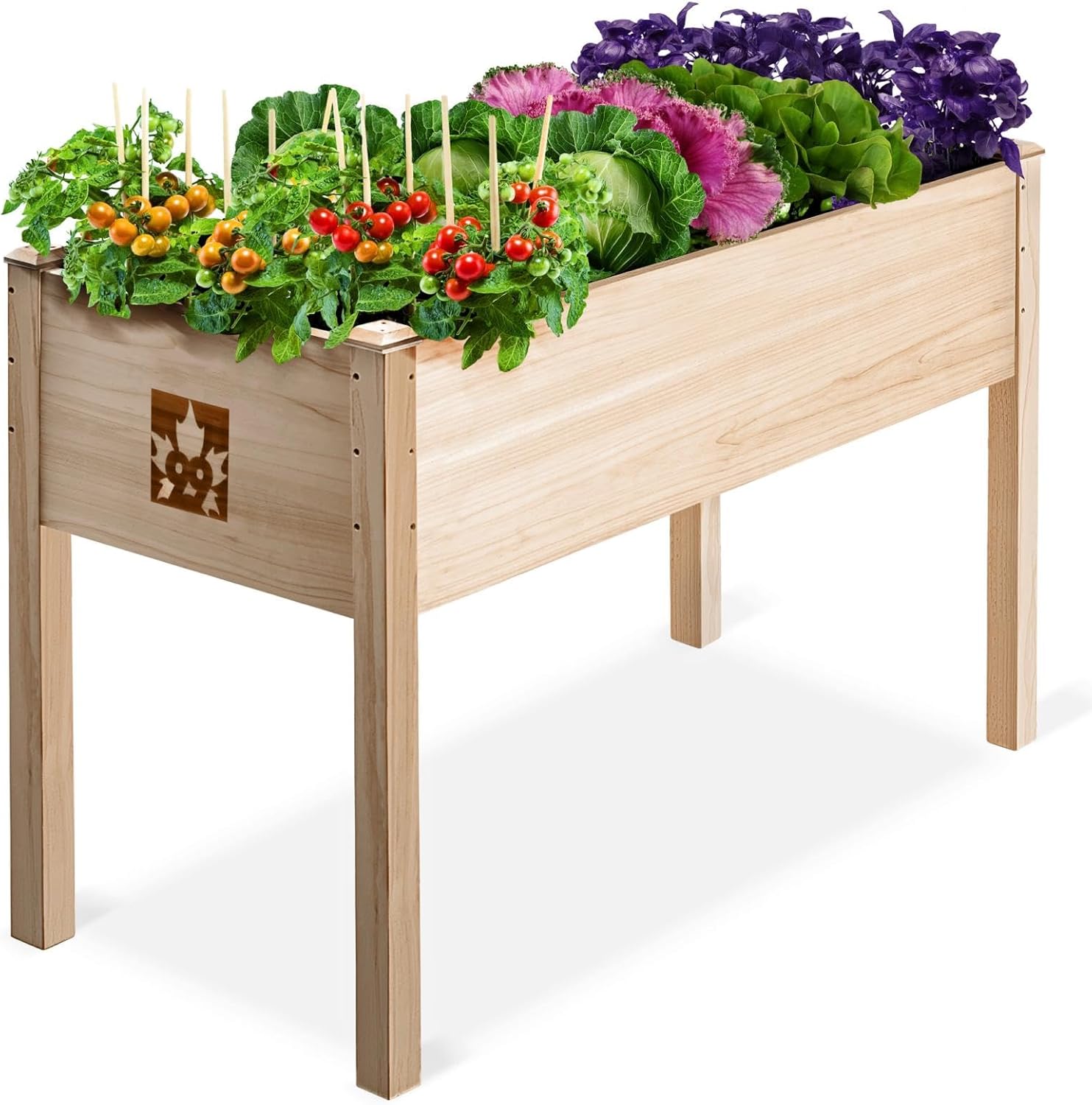
Maple99 Cedar Raised Garden Bed with Legs, 48 x 24 x 30
| Capacity | 200 pounds |
|---|---|
| Material Type | Cedar Wood, Fir Wood, Wood |
| Other Special Features of the Product | Drainage Hole |
| Mounting Type | Floor Standing |
This Maple99 cedar raised garden bed is a sturdy, back-friendly planter built for small-scale vegetable and flower growing. It stands on 30-inch legs so you can tend plants without bending, and the cedar construction offers natural resistance to insects and weather while leaving the option to paint or customize the finish. The box is designed to hold up to 200 pounds of soil and water, and a drainage hole helps prevent waterlogging. Assembly is straightforward and includes the necessary tools and instructions, making it an achievable DIY project for one or two people. Practical benefits include improved ergonomics, reduced weed pressure compared with ground beds, and a contained footprint that works on patios or lawns. Limitations are its medium footprint, which may not suit gardeners who need very large planting volume, and the wood will still age over time so eventual maintenance or replacement is possible. The unit is best used for concentrated vegetable patches, herbs, or decorative flower mixes where raised height and tidy appearance matter.
Best for: Gardeners who prioritize ergonomic, performance-focused planting in a compact footprint and want a durable wooden planter for vegetables, herbs, or flowers that reduces bending and improves access.
Less Ideal for: People needing very large growing volume or commercial-scale production should choose larger beds or in-ground rows instead.
- Cedar and fir construction offers natural insect resistance and an attractive natural finish
- 30-inch legs raise planting height for comfortable, back-friendly gardening
- Supports up to 200 pounds of soil and water for stable planting
- Includes tools and clear instructions for straightforward assembly
- Built-in drainage hole reduces waterlogging risk
- Medium planting volume may be too small for large-scale vegetable production
- Wood will weather over time and require maintenance or replacement
Verdict: Choose this cedar raised bed when you want a durable, ergonomic wooden planter that keeps gardening comfortable while delivering reliable performance for focused vegetable and flower beds.
Vego Garden Rolling Elevated Raised Garden Bed 2' x 4' with Legs and Storage Rack

| Size | 2' x 4' |
|---|---|
| Capacity | 3.9 cubic feet |
| Material Type | Metal |
| Finish Types | Powder Coated |
| Weight Capacity | 700 lbs |
The Vego Garden Rolling Elevated Raised Garden Bed is a metal, floor-standing planter built for heavier-duty container gardening on patios and decks. It assembles from powder-coated VZ 2.0 steel panels and welded corner legs to create a 32-inch tall bed that raises the planting surface to reduce bending and offers a 12-inch planting depth for substantial root volume. The bed is tested to support up to 700 pounds for the 2' x 4' size, so it handles heavy soil mixes, multiple large plants, or potted specimens without sagging. Practical touches include rot- and rust-resistant finish, a lower storage rack integrated into the leg frame, and rubber edging for safer handling during assembly. Because it is elevated and rolling, the bed is easy to reposition for sun, shade, or winter storage, and it pairs with the brand's add-on covers and irrigation accessories. Limitations are typical of metal beds: you will need to manage insulating and drainage for extreme heat or cold, and assembly requires tightening multiple fasteners and aligning panels for the welded supports to sit correctly.
Best for: Buyers who prioritize durable, performance-oriented raised beds that hold heavy soil loads and make planting easier on the back, and who want a mobile solution for patios or small outdoor spaces.
Less Ideal for: People seeking a lightweight, foldable planter for seasonal use or those who prefer natural wood aesthetics for garden beds.
- High tested weight capacity (700 lbs) suitable for heavy soil and large plants
- VZ 2.0 powder-coated steel construction with welded corners for long-term corrosion resistance
- Raised 32" height reduces bending and provides a deeper planting profile
- Integrated lower storage rack adds useful tool or supply storage without extra footprint
- Metal construction can transfer heat to roots in hot climates without added insulation
- Assembly requires multiple fasteners and careful alignment of panels and legs
Verdict: Choose this rolling Vego Garden elevated bed when you need a tough, high-capacity, mobile planter that minimizes bending and stands up to heavy soil and large plants.
LEETOLLA 31.6" Elevated Raised Garden Bed with Wheels and Storage Shelf

| Capacity | 2.5 cubic feet |
|---|---|
| Number of Levels | 2 |
| Material Type | Iron |
| Indoor Outdoor Usage | Indoor, Outdoor |
| Other Special Features of the Product | 2 universal wheels + 2 stabilizing feet, 5 drainage holes + 2 cross-lines, Handle Bar, Storage Shelf |
This LEETOLLA elevated raised bed lifts container gardening to waist height so you can plant, water, and harvest without kneeling. It is built from painted iron with a powder-coat finish, includes two all-terrain wheels and an ergonomic handle for moving the filled bed, and has a lower shelf for tools or extra pots. The planting area holds about 2.5 cubic feet of soil and features five drainage holes plus cross-channels to help prevent waterlogging. Assembly is straightforward with the included hardware and takes roughly 30 to 45 minutes with two people. Practical benefits include reduced back strain, mobility to follow sun patterns or shelter plants from storms, and tidy storage on the attached shelf. Limitations are the metal construction, which will require touch-up care over time to avoid surface rust in very wet or coastal conditions, and the relatively narrow planting depth compared with deep beds, so very large root crops may be less suitable. The unit fits small balconies and patios but is best for mixed vegetables, herbs, and compact varieties rather than large, heavy crops.
Best for: Buyers who want comfortable, low-effort vegetable or herb gardening on a balcony, patio, or small yard and prioritize mobility and ease of use over maximal soil depth.
Less Ideal for: Gardeners seeking very deep beds for large root vegetables or those who prefer untreated wood or plastic planters that do not require metal maintenance.
- Elevated height reduces bending and kneeling for easier planting and harvesting
- Two large wheels and a handle let you reposition the bed to follow sun or avoid bad weather
- Built-in drainage holes and cross-channels reduce risk of overwatering
- Lower storage shelf keeps small tools and supplies handy
- Powder-coated iron construction for sturdier, decorative outdoor use
- Metal finish can require periodic touch-up to prevent corrosion in very wet or salty environments
- Planting depth is modest so very deep-rooted crops may be limited
Verdict: A mobile, waist-height metal raised bed that makes growing herbs and compact vegetables easier by cutting bending and letting you move plants to the best light.
VINGLI Elevated Raised Garden Bed with Liner (48.5 x 22.5 x 30 inches)

| Capacity | 151.6 gallons |
|---|---|
| Material Type | Fir Wood |
| Included Components | Geotextile Bed Liner |
| Other Special Features of the Product | Weather Resistant |
| Mounting Type | Floor Standing |
This VINGLI elevated raised garden bed is a straightforward planter box built from fir wood with an included geotextile bed liner and a transparent anticorrosive finish. It is designed to sit at waist height so seniors and anyone who prefers not to bend can tend flowers, herbs, and vegetables more comfortably. Assembly requires basic tools and some effort since the kit uses thicker 0.8 inch boards and additional screws for a sturdy frame, but that beefy construction also makes the unit stable once built. The included liner improves drainage and soil retention while the weather-resistant finish helps the wood hold up outdoors. Limitations to consider are modest load bearing relative to heavy soil mixes and the need for periodic maintenance of wood over multiple seasons; size and wood construction mean it will still age faster than metal or rot-resistant composite alternatives. For a low-cost, easy-to-use elevated bed that prioritizes accessibility, this model delivers practical value.
Best for: Seniors or gardeners who prioritize easy access and a low-cost, sturdy wooden planter for growing vegetables, herbs, or flowers without bending over. Good for buyers who prefer a simple, traditional raised bed and are willing to assemble it themselves.
Less Ideal for: People seeking a maintenance-free, long-lived bed made of composite or metal or those who need very high load capacity for heavy soil or large containers.
- Elevated height reduces bending and makes planting and harvesting easier for seniors
- Solid fir wood construction with 0.8 inch thick boards provides a stable frame
- Includes geotextile bed liner for better drainage and soil retention
- Transparent anticorrosive paint improves outdoor durability
- Requires tools and time for assembly due to tight fittings and many screws
- Wood needs periodic upkeep and will not last as long as composite or metal beds
Verdict: A budget-friendly elevated wooden planter that makes gardening easier for seniors by reducing bending while providing a sturdy, weather-resistant bed with a built-in liner.
BIVODA HDPE Weatherproof Raised Garden Bed with Legs

| Material Type | High Density Polyethylene (HDPE) |
|---|---|
| Capacity | 20.7 gallons |
| Other Special Features of the Product | Drainage Hole, Fade Resistant, Rot Resistant, Rust Resistant, Weather Resistant |
| Mounting Type | Floor Standing |
| Max Weight Capacity | 300 lbs. |
This BIVODA raised garden bed is an elevated planter box built from high-density polyethylene (HDPE) that resists rot, rust, fading, and most weather damage. It assembles with pre-drilled panels and included stainless steel fasteners so one person can set it up quickly, and the built-in drainage hole and two reinforcing crossbars help keep soil from becoming waterlogged while supporting the planting area. The elevated height reduces bending and makes routine tasks like planting, watering, and harvesting easier for users with limited mobility. Its low-maintenance finish means no painting or sealing is required and it can be cleaned with soap and water. Limitations to note are the modest 20.7 gallon planting capacity and the 300 lb maximum weight, which constrains very deep or heavy soil mixes and large container plantings. Also the unit is a single-level rectangular bed so gardeners needing multiple tiers or very wide beds will need additional units or a different solution.
Best for: Ideal for buyers who prioritize a reliable, low-maintenance raised bed that eases gardening tasks and reduces bending or stooping, especially in small patios or near walkways.
Less Ideal for: Not the best choice for gardeners who need large, deep planting beds, multi-tiered systems, or heavy professional-grade soil loads.
- Durable HDPE construction that resists rot, rust, cracking and fading for long outdoor life
- Elevated design reduces bending and makes planting and maintenance easier
- Pre-drilled parts and included stainless steel screws simplify one-person assembly
- Built-in drainage hole and reinforcing crossbars help prevent waterlogging and sagging
- Low-maintenance finish requires no painting or sealing and cleans easily with soap and water
- Relatively small planting volume limits very deep-rooted plants or large mixed plantings
- 300 lb weight capacity restricts very heavy soil mixes or loaded containers
Verdict: A durable, low-maintenance elevated planter built to last that makes gardening easier for seniors by cutting down on bending and upkeep.
FOYUEE Elevated Mobile Raised Garden Bed with Wheels and Shelf

| Capacity | 2.5 cubic feet |
|---|---|
| Material Type | Metal |
| Finish Types | Powder Coated |
| Mounting Type | Floor Standing |
| Indoor Outdoor Usage | Outdoor |
This FOYUEE elevated raised bed is a mobile planter built for productive container gardening without bending or kneeling. The powder-coated galvanized steel box sits at a standing height and includes a handle plus 6-inch all-terrain wheels so you can roll a full bed around a patio or balcony to follow sun or clear space for events. The planting box is wider than many compact planters, holds several cubic feet of soil, and has molded drainage channels plus a central drain to reduce waterlogging and protect roots. A lower shelf gives handy storage for tools and pots. Construction is heavy-duty enough to support substantial loads, and the rust-resistant finish makes it practical for outdoor seasons. Expect assembly and some metal hardware alignment during setup, and the steel construction makes it heavier to move before wheels are fitted. It is best used for herbs, salad greens, and shallow-rooted vegetables in small outdoor spaces rather than deep-root vegetables that need more soil depth.
Best for: Gardeners who prioritize durability and high performance in a compact, accessible planter and want to maximize yield from a patio, balcony, or small backyard while avoiding frequent bending.
Less Ideal for: Those who need very deep soil for root vegetables or who prefer ultra-lightweight, portable fabric or plastic planters for frequent long-distance moves.
- Sturdy galvanized steel with outdoor-grade powder coating resists rust and supports heavy loads.
- Built-in wheels and handle let you reposition a fully planted bed without lifting.
- Integrated drainage channels and a central drain reduce overwatering and improve root health.
- Wider planting area and a lower storage shelf increase usable space for plants and tools.
- Not suitable for deep-rooted crops because planting box depth is limited.
- Steel construction adds weight before wheels are attached, making initial placement harder.
Verdict: Choose this elevated, wheeled galvanized-steel planter when you want a heavy-duty, rust-resistant mobile bed that boosts productivity and saves your back.
Choosing the Right Raised Garden Bed for Seniors: Key Factors to Consider
Bed Height and Working Reach
Height determines how much bending or reaching is required. A taller bed lets seniors work from a standing or seated position without stooping, which reduces hip and lower-back strain. Consider both the bed wall height and how soil depth affects the top of the planting surface; a shallow fill in a tall frame may still force extra reaching.
Also think about reach across the width. Narrower beds or beds with split access allow you to get to the center without leaning over. If you expect to tend beds while seated, measure typical arm reach and match bed width accordingly so tasks like planting and weeding remain comfortable.
Edge Design and Comfort
The edge profile affects both comfort and functionality. A rounded or wide top rail gives a place to rest forearms while working and can serve as a temporary seat during light tasks. Sharp or thin edges can be uncomfortable and discourage longer gardening sessions.
Edges that double as tool rests or that accept cushions create extra comfort for longer sessions. If leaning on the bed is likely, ensure the top rail and connections are strong enough to support moderate weight without wobble or flex.
Material Choice and Longevity
Materials determine how long a raised bed will last with minimal upkeep. Treated lumber, rot-resistant wood, powder-coated metal, and recycled composite boards each have tradeoffs in lifespan and maintenance. Wood can feel warm and natural but may require occasional sealing; metal is durable but can heat up in full sun unless finished to resist corrosion and reflect heat.
Consider local climate when choosing material. Wet climates accelerate rot, salty air speeds corrosion, and intense sun can degrade plastics. Durable materials reduce the need for repairs and preserve safe edges and anchors over time.
Stability and Anchoring Options
Stable construction prevents tipping, wobbling, or shifting when leaned on or when the soil is disturbed. Look for beds with robust corner connections, ground stakes, or the ability to be bolted to a patio surface. Wider footings or low center of gravity designs improve stability for light support while gardening.
If you plan to place a bed on uneven ground or a raised surface, check how it can be leveled and anchored. Mobility aids or canes should not be used to support oneself by leaning on a flimsy bed; stability features reduce fall risk during routine tasks.
Soil Depth and Planting Flexibility
Soil depth affects which plants you can grow and how often you need to replenish soil. Shallow-rooted vegetables and herbs do well in shallow beds, while root vegetables and perennial plantings need deeper fills. For seniors, deeper soil that is already in place means fewer frequent topping-ups and less lifting of heavy bags of soil.
Consider modular designs that allow adding or removing internal soil layers or inserts. Being able to customize depth means you can create a mix of shallow and deep zones to reduce the need to reach or bend when harvesting different crops.
Ease of Assembly and Ongoing Maintenance
Complex assembly can be a barrier for seniors who prefer simple setup or limited lifting. Beds that arrive with intuitive hardware, clear instructions, and minimal heavy components reduce the need for extra helpers or professional assembly. Look for kits that split into manageable pieces or that allow most work to be done at waist level.
Maintenance tasks such as replacing liners, topping soil, or tightening fasteners should be straightforward. Removable liners, accessible drainage, and parts that can be replaced without disassembling the entire bed make long-term upkeep simpler and safer.
Raised Bed Layouts That Reduce Bending
Different layouts affect how you move around the bed and how far you must reach. Narrow single-row beds, U-shaped beds, and waist-height planters each reduce bending in different ways. Narrow beds let you reach across from both sides while U-shaped layouts let you approach plants from three sides so you never have to stretch to the middle.
Think about the amount of path space you will have between beds. Wider paths accommodate mobility aids and reduce the need to carry loads across tight areas. For container-style raised beds, consider placing them on a patio or deck surface that keeps the planting area at a comfortable working height.
- Narrow beds minimize reach and are easy to tend from either side
- U-shaped or horseshoe layouts allow seated access into the middle
- Stand-alone planters on legs create a countertop-style workspace
Seating, Tool Storage, and Work Surfaces
Integrating seating or a wide top rail turns a raised bed into a multi-use station where you can sit while potting or pruning. Built-in tool pockets, hooks, or nearby storage reduce the need to walk back and forth for trowels and hand tools.
A stable work surface at bench height is useful when repotting or mixing soil. If you cannot add built-in features, place a small folding table or a lightweight potting bench adjacent to the bed to keep tasks within easy reach.
- Wide top rails provide arm support and a place to rest tools
- Nearby storage cuts repeated walking and reduces fatigue
- Use lightweight, ergonomic hand tools to match reduced strength
Soil Choices That Lighten the Load
Using a light, well-structured soil mix reduces the effort required to dig and weed. Mixing in compost and coarse materials like perlite improves drainage and lowers soil bulk, making turning and planting easier. Avoid very heavy, clay-dominant mixes that demand more physical effort to work.
Mulching the surface reduces the frequency of weeding and watering. Organic mulches also break down to improve soil tilth over time, while a stable surface cover keeps tasks lighter for longer.
- Choose light, free-draining mixes for easier planting
- Top mulch cuts weeding and reduces watering frequency
- Consider soil blocks or prefilled inserts to avoid heavy lifting
Accessibility Add-Ons and Safety Aids
Simple add-ons can make raised beds significantly more accessible. Side-mounted grab bars or nearby handrails help when standing up from a seated position, while non-slip surfaces on adjacent paths reduce fall risk. Edge bumpers or soft padding make resting on rails comfortable without sacrificing support.
Lighting for early-morning or late-evening work improves visibility and reduces the risk of trips. Place motion-sensor fixtures near garden paths and beds to light work areas on demand.
- Install grab bars or nearby handrails for safer transitions
- Use non-slip path materials and adequate lighting
- Attach tool holders to reduce bending and repeated movements
Seasonal Care and Winterizing Considerations
Think about how the bed will perform across seasons. In cold climates, raised beds can warm sooner in spring, extending the growing season, but they also dry out faster. Ensure chosen materials can withstand freeze-thaw cycles without splitting or corroding.
Plan for winter protection such as removable insulation panels or simple covers to keep soil structure intact. Beds that allow easy access to the soil in autumn make it simpler to add compost and prepare beds without strenuous lifting.
- Select materials rated for local winter conditions
- Design for easy cover attachment and soil protection
- Leave access for fall composting and low-effort winter prep
How We Chose the Best Raised Garden Bed for Seniors
We focused on practical, measurable features that matter for older gardeners and those with limited mobility. Our selection filters prioritized beds with clear ergonomic benefits, such as reduced required bending height, accessible edge design for seated work, and layout options that allow comfortable reach. Durability and material resistance to rot or rust were required to ensure the bed stays usable without frequent repair. We also evaluated stability and anchoring options so beds remain safe during leaning or light support. Ease of assembly and straightforward maintenance were included to keep ongoing care manageable. Excluded from consideration were novelty or decorative pieces that compromise access, untested DIY plans that lack clear durability, and beds that rely on fragile materials or complex hardware. The final list emphasizes beds that balance ergonomics, longevity, and simple upkeep, with attention to dimensions and features that reduce strain while maintaining good soil health and drainage for everyday gardening.
FAQ
What is the ideal height for a raised garden bed for seniors?
Ideal height depends on whether you will work standing or seated. Waist- or hip-height beds reduce bending for standing gardeners, while knee-to-thigh height is better for seated work. Measure your comfortable working height and allow space for soil depth when choosing a bed.
How wide should a raised bed be so seniors can reach the center?
A common comfortable width is 24 to 36 inches for two-sided access, and narrower for one-sided access. If you plan to sit while gardening, err toward narrower beds or a U-shaped layout so you can reach all planting areas without stretching.
Are certain materials better for low-maintenance raised beds?
Materials like rot-resistant wood, composite boards, or powder-coated metal generally need less upkeep than untreated lumber. Each material has tradeoffs in heat retention and appearance, so choose one that matches your climate and willingness to perform occasional maintenance.
Can I convert an existing raised bed to be more senior-friendly?
Yes. You can add wide top rails for arm support, attach edge-mounted seats, install nearby tool storage, or build raised inserts to lift the planting surface. Improving nearby paths and adding handrails also increases accessibility without replacing the entire bed.
How important is soil depth for the plants seniors want to grow?
Soil depth matters for root development. Shallow-rooted crops and many herbs do fine in shallower beds, while root vegetables and perennials need deeper soil. Deeper beds reduce the frequency of adding soil and allow a wider range of crops with less physical effort over time.
What maintenance tasks should seniors expect with raised beds?
Expect occasional topping up of soil, mulching, and simple repairs like tightening fasteners or replacing a liner. Regular light weeding and seasonal compost additions keep soil healthy and reduce heavy lifting; choosing low-maintenance materials and mulches lowers the overall workload.
Final Verdict
Prioritize beds that match how you plan to work: standing or seated, and how much reach you have. Height, edge comfort, and stability are the most important features because they directly reduce bending and fall risk. Balance durable materials with low maintenance so the bed stays safe and usable without constant repair. Choosing a design that minimizes reaching, provides comfortable arm support, and allows easy soil management will keep gardening enjoyable and sustainable. Focus on the tradeoffs between height, soil depth, and material so you pick a raised garden bed that fits your mobility and gardening goals confidently.
