

Note: This article contains affiliate links. If you click on these links and make a purchase, I may earn a small commission at no extra cost to you. This helps support my research and content. Read my full affiliate disclosure here.
If you have seen droppings, chewed wiring, or nighttime scurrying, you need a dependable solution designed for indoor use. Choosing the right rat trap for inside matters because indoor environments call for different features than outdoor setups: compact size, secure baiting, low risk to pets and children, and easy disposal. This guide shortlists six top indoor rat trap options and explains the practical differences you will notice in a home, garage, or basement. We evaluate each option on capture reliability, safety for indoor placement, and how simple the trap is to set, empty, and maintain. Read on for clear buying guidance and the criteria we used to pick these indoor-friendly traps.
Top Picks at a Glance
| Best Overall The best all-around choice for most situations | Kat Sense Tunnel Rat Trap, Reusable Covered Snap Trap, 2-Pack |  |
| Best Quality Built to a higher standard if you want something more solid | Tougher Than Tom Sure-Catch Rat Trap (2-Pack) |  |
| Best Value The sweet spot between price and what you get | TRATPER Dual-Entry Covered Rat and Chipmunk Trap (2-Pack) |  |
| Best Budget The cheapest option that still gets the job done reliably | Tomcat Rat Snap Trap (1 rat-size trap) |  |
| Highest Rated A top-rated pick with lots of positive feedback | JahyElec Humane Live Rat and Mouse Cage Trap (1-Pack) |  |
| Best Seller A high-volume bestseller chosen again and again | UCatch Dual-Entry Tunnel Rat Trap (2-Pack) |  |
Kat Sense Tunnel Rat Trap, Reusable Covered Snap Trap, 2-Pack

| Unit Count | 2 Count |
|---|---|
| Target Species | Chipmunk, Mouse, Rat |
| Material Type | Plastic |
| Number of Pieces | 2 |
The Kat Sense Tunnel Rat Trap is a covered snap-style trap designed to catch mice, chipmunks, and rats while minimizing exposure to the animal. It is typically baited via a removable bait cup, placed along runways or near burrows, then allowed to snap shut when a rodent enters either tunnel opening. The plastic housing keeps the spring and capture area enclosed so you do not have to touch the rodent during disposal and the trap can be opened and emptied directly into a bin. Practical benefits include dual-entry placement flexibility, a reusable easy-clean body, and a captive chamber that reduces accidental triggering by pets or children. Limitations are that the unit is plastic so very large, heavy Norway rats may overpower it in some cases, and the two-pack provides only limited coverage for multi-point infestations. Also the trap relies on correct bait placement and positioning to be consistently effective rather than being a one-size-fits-all solution.
Best for: Buyers who want a cleaner, low-contact snap trap for routine indoor or perimeter use and who value reusability and safer handling around children or pets.
Less Ideal for: People dealing with large, powerful rat populations who need heavy-duty metal traps or multiple-point coverage across a property.
- Covered tunnel design keeps the snap mechanism enclosed for touch-free disposal
- Removable bait cup simplifies baiting and placement
- Reusable plastic body is easy to clean and suitable for indoor or outdoor use
- Dual-entry tunnels increase the chance a rodent will enter from either side
- Plastic construction may be less durable against very large or determined rats
- Only two traps in the pack may be insufficient for heavy infestations
Verdict: A practical, touch-free reusable tunneled snap trap for homeowners who want cleaner, lower-contact rat control in typical indoor and perimeter situations.
Tougher Than Tom Sure-Catch Rat Trap (2-Pack)

| Unit Count | 2 Count |
|---|---|
| Brand Name | Tougher Than Tom |
| Model Number | TTT-RatTrap |
The Tougher Than Tom Sure-Catch rat trap is built for performance-minded homeowners who need a reliable indoor solution for larger rodents. It combines a reinforced polymer body with a high-tension steel spring to deliver fast kills and reduce escapes. Setup is quick and safe: a rear lever sets the trap with one hand and a bottom-loading bait cup keeps fingers out of the strike zone. After a catch the one-click release deposits the animal directly into the trash for hygienic no-touch disposal. The trap is weather-resistant and washable, so it can be reused season after season and is suitable for garages, basements, and crawl spaces where durability matters. Limitations to consider are that it is a single-capture mechanical trap so multiple traps or frequent checking are necessary for larger infestations, and it requires correct placement and baiting to reach its top performance.
Best for: Buyers who prioritize fast, dependable kills and hygienic disposal for indoor rat problems and who are willing to deploy and check traps strategically around the home.
Less Ideal for: People dealing with very large infestations who prefer multi-capture or electronic solutions or those who want a hands-off professional removal service.
- Reinforced polymer body and high-tension steel spring for reliable, quick kills
- One-click no-touch disposal lets you discard catches without handling the rodent
- One-hand rear-lever set and bottom-loading bait cup improve safety during use
- Reusable and washable weather-resistant construction for long-term indoor durability
- Mechanical single-capture design means multiple traps or frequent checks are needed for heavy infestations
- Effectiveness depends on correct placement and baiting which can require some trial and error
Verdict: Choose this trap if you want a tough, reusable indoor rat trap that delivers fast kills and hygienic no-touch disposal.
TRATPER Dual-Entry Covered Rat and Chipmunk Trap (2-Pack)

| Target Species | Rat, Chipmunk, Large Mouse, Large Mice |
|---|---|
| Unit Count | 2 Count |
| Material | ABS plastic |
| Maximum Range | 10 feet |
The TRATPER dual-entry covered trap is a heavy-duty, reusable tunnel-style snap trap meant to keep children and pets away from the strike mechanism while targeting rats, chipmunks, and large mice. You set bait inside the tunnel, push the lever to arm the sensitive trigger pad, and place the trap where vermin activity is seen; the enclosed design reduces accidental triggering and hides caught animals. Constructed from ABS plastic, the unit is washable and designed for repeated outdoor or indoor use, and the locking mechanism is hands-free so no hooks or wires are needed. Practical benefits include a covered housing that improves safety around households with pets, a responsive trigger for quick kills, and a form factor that works well along runways or near structures. Limitations are that plastic construction can become brittle over many seasons in extreme sun and cold, and larger aggressive rodents may sometimes avoid a covered tunnel compared with bait stations that use heavier materials. Also handle with gloves to avoid transferring scent that can reduce effectiveness.
Best for: Buyers who want a practical, safer outdoor trap that can be reused season after season and placed along runways, foundations, or near refuse where rodents are active.
Less Ideal for: People needing a heavy professional-grade metal trap for very large rats or for permanent outdoor stations in extreme climates should consider sturdier alternatives.
- Covered tunnel keeps children and pets away from the trigger
- Dual-entry design increases chance of capture by allowing approach from either direction
- Reusable, washable ABS plastic construction for repeated outdoor or indoor use
- Simple hands-free set and automatic locking mechanism with no hooks or wires
- Plastic body may degrade after prolonged exposure to sun and freezing temperatures
- May be less intimidating to larger rodents compared with metal or heavier-duty traps
Verdict: A user-friendly, reusable covered tunnel trap that balances safety and effectiveness for homeowners managing outdoor rats and chipmunks.
Tomcat Rat Snap Trap (1 rat-size trap)

| Unit Count | 1 Count |
|---|---|
| Target Species | Rat |
| Power Source | manual |
| Material Type | Plastic |
The Tomcat Rat Snap Trap is a mechanical rat trap built for recurring indoor use in basements, garages, storage areas, and other covered spots where rats travel. It uses a powerful snap mechanism and patented interlocking teeth to hold captured rodents, and a removable bait cup that lets you bait or service the trap without arming it. The trap sets easily by hand or foot and is made of high-impact plastic with rust-resistant metal parts so it can be reused. Practical benefits include a no-touch disposal tab and an easy-view indicator that helps confirm a catch without handling the carcass. Because it is manual and non-toxic, it is a good option around households that prefer chemical-free control. Limitations are that it requires correct placement perpendicular to walls and periodic checking, and it is not a hands-off solution for heavy infestations where multiple traps or professional measures may be needed.
Best for: Buyers who want a reliable, chemical-free indoor trap they can reuse and maintain themselves, and who value visible, no-touch handling when a catch occurs.
Less Ideal for: People seeking a fully hands-off or large-scale solution for heavy infestations should consider multi-trap strategies or professional services instead.
- Powerful snap with interlocking teeth to reduce escapes
- Removable bait cup allows baiting without setting
- Reusable construction with rust-resistant metal parts
- Easy one-motion set by hand or foot and built-in disposal tab
- Requires correct placement and regular checking to be effective
- Single trap unit is not sufficient for large or severe infestations
Verdict: A simple, reusable mechanical rat trap that delivers effective, chemical-free indoor control when placed and checked correctly.
JahyElec Humane Live Rat and Mouse Cage Trap (1-Pack)

| Power Source | manual |
|---|---|
| Unit Count | 1 Count |
| Number of Pieces | 1 |
| Item Dimensions L x W x H | 9.96"L x 4.05"W x 3.34"H |
This JahyElec live-capture trap is a simple, reusable cage that uses a one-way door to trap small rodents without harming them. You bait the narrow entrance with food and the one-way mechanism lets animals enter but not exit, allowing the trap to capture multiple animals in sequence. Its manual, tool-free operation and smooth internal edges make it straightforward to set, check, and release animals, which is useful for regular monitoring around gardens, yards, and outbuildings. The cage is lightweight and intended for repeated outdoor use; the listing emphasizes durable materials and year-round placement. Limitations to keep in mind are the compact footprint, which targets smaller rodents rather than larger rats, and the need to check the trap frequently to avoid stress to captured animals. This trap suits humane relocation or temporary containment but does not remove the need for preventive habitat management to stop reentry.
Best for: Buyers who prioritize a reliable, no-frills humane solution for occasional small-rodent problems and want a trap they can set and check regularly without special tools.
Less Ideal for: Those dealing with large infestations, large rodent species, or who need a long-term exclusion solution rather than temporary capture and release.
- Humane one-way door design allows live capture and release without injuring animals.
- Reusable manual mechanism is simple to operate and does not require power or consumables.
- Suitable for both indoor and outdoor placement, allowing flexible use around gardens and yards.
- Compact internal size limits effectiveness on larger rats or heavily infested sites.
- Requires frequent checks and handling to minimize stress to captured animals.
Verdict: A straightforward, durable live-capture trap that reliably catches small rodents for humane release, ideal for owners seeking a dependable nonlethal option.
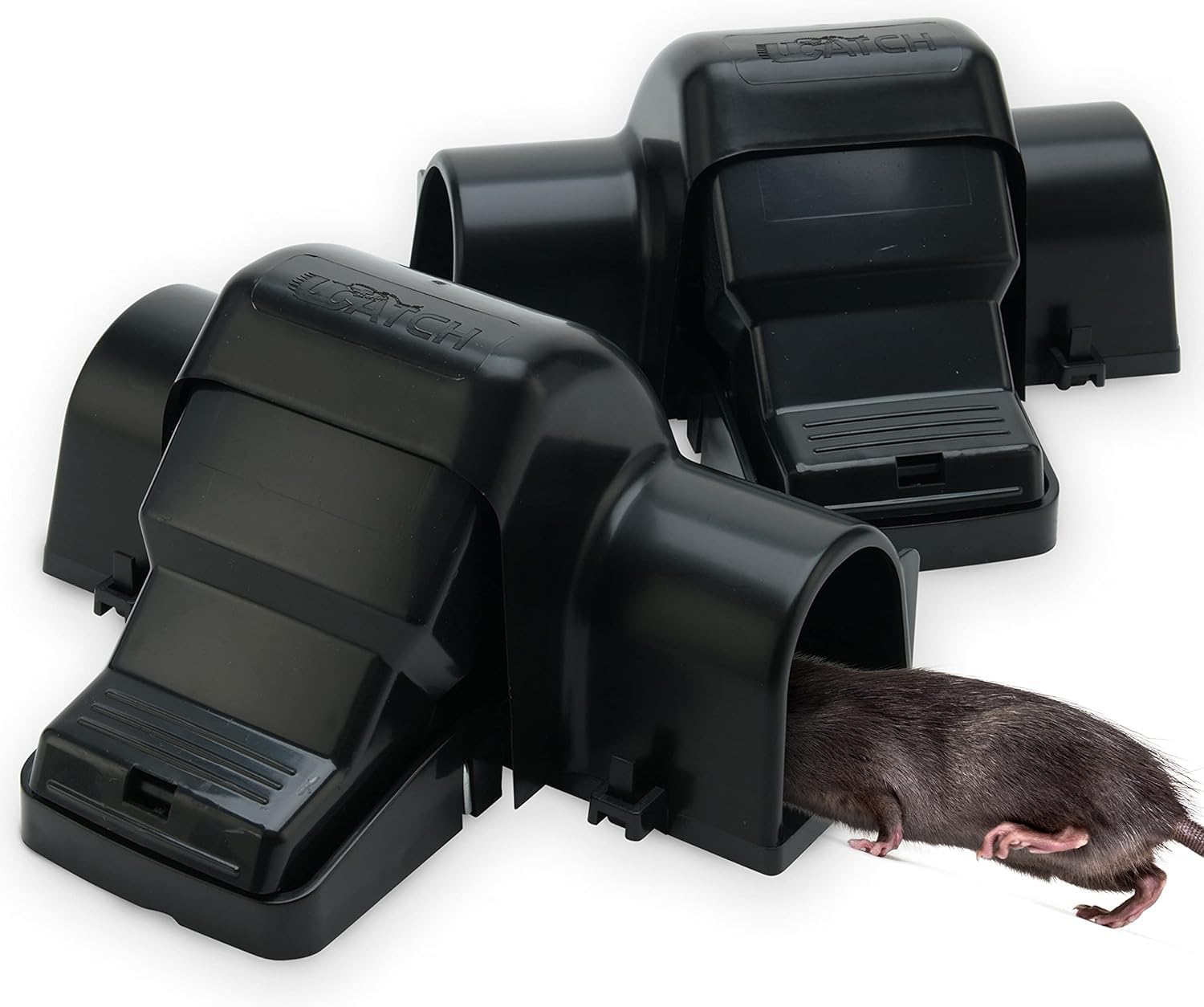
UCatch Dual-Entry Tunnel Rat Trap (2-Pack)
| Unit Count | 2 Count |
|---|---|
| Target Species | Rat, Mouse, Chipmunk, Squirrel |
| Power Source | Manual |
| Material Type | Premium ABS plastic |
The UCatch dual-entry tunnel rat trap is a manual snap trap sold as a two-pack and built to be used both inside the home and around outdoor structures. Its tunneled, dual-entry design lets rodents enter from either side, increasing the chance they trigger the powerful jaws, and the enclosed mechanism keeps fingers and pet noses away during setting and disposal. Typical use is simple: bait the cup, press the lever to set, place in runways or along walls, then remove and wash the reusable plastic housing after a catch. The practical benefits are straightforward for homeowners who want a low-fuss, no-chemicals solution: it is reusable, easy to set without touching the strike area, and targets rats, mice, chipmunks, and squirrels. Important limits are that it is a manual snap device so it requires correct placement and periodic checking, and like all snap traps it can pose a safety risk to curious pets or children if not positioned carefully out of reach.
Best for: Homeowners who prioritize a simple, low-chemical and low-contact way to stop rodents and who want a straightforward reusable trap they can place in known runways.
Less Ideal for: People who need a completely hands-off electronic or remote-monitoring system or those who cannot safely place traps out of reach of non-targets.
- Dual-entry tunnel increases likelihood of capture compared with single-entry traps
- Enclosed design keeps the strike mechanism out of reach for safer hands-free setting and disposal
- Reusable ABS plastic housing that can be washed and redeployed
- Works for a range of small mammals including rats, mice, chipmunks, and squirrels
- Requires manual setting and regular checking which may not suit buyers wanting fully automated or remote solutions
- Not suitable for households that cannot keep traps out of reach of children or pets
Verdict: A practical, reusable dual-entry snap trap that gives risk-averse homeowners a safer hands-free option for trapping common rodents.
Choosing the Right Rat Trap for Inside: Key Factors to Consider
Capture Reliability
A trap that consistently captures rats on the first interaction reduces the chance of partial captures and repeat attempts. Trigger sensitivity, bait placement, and entry design are all part of this factor. Inside the home you want a mechanism that does not allow a rodent to take the bait and escape, since stressed or injured animals inside walls or ceilings create longer-term problems.
Consider how the trap holds the animal after activation. Designs that secure the animal away from the trigger area and prevent secondary escapes are preferable for indoor use. Reliable capture also means fewer check cycles and less chance of odors from prolonged remains.
Indoor Safety
Safety for people and pets is more important indoors than outside. Look for traps with enclosed housings or safety locks that prevent accidental contact with the trigger mechanism. Childproof latches, tamper-resistant covers, and the ability to place traps in narrow, out-of-reach locations increase household safety.
Also consider the visual and olfactory impact. Enclosed or covered traps hide captured animals and reduce the chance of household disturbance. Some designs also minimize the need to touch the animal when disposing of it, which is a key safety consideration for many caregivers.
Ease of Setting and Deployment
Indoor traps should be straightforward to set and position so you are not repeatedly handling them in living spaces. Assess how easy the trigger is to arm and whether you can bait the trap cleanly without contaminating the mechanism. Simple, intuitive settings reduce the chance of fumbled setups that leave the bait exposed or the trap inactive.
Deployment also includes placement flexibility. Slimline or corner-friendly designs work better in baseboards, under appliances, and along walls inside rooms. A trap that can be anchored or wedged in place will stay effective when pets or children move around.
Sanitation and Cleaning
Because traps used indoors may be checked more often, look for models that are easy to clean and disinfect. Removable trays, smooth nonporous materials, and rust-resistant finishes make sanitation simpler and safer. Avoid traps with many small crevices that trap fluids and odors.
Consider whether components are dishwasher-safe or can be rinsed and scrubbed without damaging the mechanism. Ease of cleaning affects how comfortable you will be maintaining the trap in shared household spaces.
Durability and Longevity
Durable construction matters even indoors. Metal parts should resist bending and rust, while plastic housings should be thick enough to withstand repeated handling. Durability affects whether the trap keeps working reliably after multiple captures and cleanings.
Long-lasting traps protect your investment and reduce waste from devices that fail after a few uses. Also consider how well latches and springs hold tension over time, since a weakened mechanism can lead to failed captures or unsafe operation.
Bait Compatibility and Placement Versatility
Different traps accept different bait types and sizes. Inside a home you may prefer traps that accept solid bait blocks, peanut butter, or fresh food scraps without requiring constant rebaiting. The ability to secure bait so it stays in place when a rat enters is important for consistent captures.
Placement versatility describes how well the trap adapts to typical indoor locations-along baseboards, in cabinets, under furniture, or near wall voids. Traps with low profiles, detachable trays, or modular pieces make it easier to place them where rats travel most.
Where Rats Tend to Travel Indoors
Rats follow familiar routes along baseboards, behind appliances, and inside wall voids. Look for droppings, greasy rub marks, and gnawed materials to identify runways. Placing traps along these routes increases contact chance because rodents prefer to travel next to walls rather than across open floor areas.
In multiroom houses, focus on transitional spaces such as laundry rooms, basements, attics, and crawlspaces. Kitchens are common foraging zones, but the animals often retreat to quieter spaces during the day. Position traps near openings, behind stored items, and beside food sources for the best results.
- Check behind refrigerators, stoves, and dishwashers where cables and insulation provide cover.
- Inspect pantry bottoms and cabinet corners for droppings and tracks.
- Place traps with their narrow ends against the wall to match natural travel paths.
Safe Placement Strategies for Indoor Use
Keep traps out of reach of children and pets by placing them inside cupboards, under heavy furniture, or along high baseboard gaps. Use furniture spacing and dedicated bait stations that can be secured to prevent curious hands or paws from triggering them.
Consider using enclosed bait stations or boxes that house the trap itself. These reduce accidental contact and help control odor and sight of captured animals. When using snap-style or live-capture traps, make sure the setup is stable so a knocked-over trap does not create a mess or pose a hazard.
- Anchor traps if necessary so pets cannot move them.
- Use corner or slimline traps where space between furniture and walls is limited.
- Regularly check traps to avoid prolonged remains indoors.
Cleaning and Disposal Best Practices
When a trap captures an animal, handle it with disposable gloves and follow local health guidance for disposal. For live captures, release protocols vary by local regulations; for lethal traps, use a sealed bag and dispose of remains according to municipal rules. Immediate cleaning reduces odors and disease risks.
Sanitize trap components after each use. Remove debris, rinse with hot water, and use a mild disinfectant if the manufacturer allows. Air-dry completely before rebaiting to preserve bait adhesion and avoid corrosion.
- Keep a dedicated cleaning kit with gloves, disinfectant, and trash bags.
- Avoid handling with bare hands; use tools or scoopers to transfer remains.
- Store clean traps in a dry area to prevent rust and odors.
When to Call a Professional
If you find signs of a large infestation, repeated captures without reducing activity, or chewed wiring and structural damage, professional pest control may be needed. Professionals can assess entry points, advise on exclusion work, and implement integrated strategies that go beyond individual traps.
Also consult a professional when dealing with rats in sensitive indoor locations such as food preparation areas, daycare settings, or properties with vulnerable occupants. They can recommend safe, compliant solutions and coordinate follow-up inspections.
- Large or persistent infestations
- Damage to wiring, insulation, or structural materials
- Issues in commercial or sensitive residential settings
Combining Traps With Exclusion and Sanitation
Traps work best as part of an overall strategy that includes sealing entry points and removing attractants. Close gaps around pipes, vents, and eaves, secure food in containers, and eliminate clutter that provides shelter. Reducing available food and shelter makes traps more effective.
Regular sanitation reduces the scent trails that lead rodents into living spaces. Store pet food in sealed containers, clean up spills promptly, and limit access to compost or bird feeders that can attract rats near the house.
- Seal holes larger than a quarter-inch with metal mesh or cement
- Store foodstuffs in rodent-proof containers
- Maintain regular cleanup routines in basements and garages
How We Chose the Best Rat Trap for Inside
We focused on features that matter when controlling rats inside a home, apartment, garage, or basement. Key evaluation criteria included capture reliability, indoor safety, ease of use, durability, and ease of sanitation. Capture reliability covers trigger sensitivity, bait compatibility, and likelihood of a clean capture without escapes. Indoor safety assesses how well the trap prevents accidental contact by children or pets and whether it can be discreetly placed in living spaces. Ease of use includes how easy the trap is to set, check, and empty without touching remains, while durability considers construction materials and how the trap stands up to repeated use in damp basements or heated rooms. Ease of sanitation looks at washability, rust resistance, and whether components can be cleaned without special tools. We excluded outdoor-only stations, traps that require extensive installation, and devices that rely on chemical sprays or poisons rather than physical capture. Only traps appropriate for indoor placement and routine household handling were considered. The scoring focused on measurable, repeatable features gardeners and homeowners can verify before purchase.
FAQ
Are live-capture traps better for indoor use?
Live-capture traps can be effective indoors if you are prepared to check them frequently and follow local rules for release. They avoid killing animals inside the home, but you must be ready to handle and transport captured rodents safely.
How often should I check indoor rat traps?
Check traps daily or at least every 24 hours. Frequent checks prevent prolonged remains from causing odors or health concerns and let you rebait and reposition traps as needed.
Can I use baited snap traps if I have pets?
You can, but take extra precautions. Place traps inside cabinets, behind furniture, or in tamper-resistant boxes to reduce accidental contact. Choose trap types that minimize exposed mechanisms when pets are present.
Will moving traps around help if I am not catching anything?
Yes. Rats change routes when disturbed, so try moving traps closer to fresh signs of activity like new droppings or gnaw marks. Small adjustments along the wall or into corners often increase catches.
Is cleanup after a capture risky?
There is some risk because rodents can carry pathogens. Use disposable gloves, avoid direct contact, place remains in a sealed bag, and disinfect the trap and area afterward. Follow local guidance for disposal if available.
Final Verdict
For indoor rodent control, prioritize traps that combine reliable capture with features that protect household members and pets. Traders-off often involve choosing between ease of cleaning and the type of capture-sealed enclosures reduce exposure but may require different maintenance. Focus on placement flexibility, sanitation, and a durable build to get consistent results. Ultimately, select the trap that matches the spaces you need to protect and the level of handling you are comfortable with. When combined with exclusion and good sanitation, the right indoor trap will reduce activity quickly and safely.
