

Note: This article contains affiliate links. If you click on these links and make a purchase, I may earn a small commission at no extra cost to you. This helps support my research and content. Read my full affiliate disclosure here.
When rodents move into a barn they can damage feed, contaminate surfaces, and spread disease. Picking the right rodent poison for barn use matters because barns combine animals, stored feed, and open access points that change how baits perform and how you protect livestock and people. This guide covers the top shortlisted options for barn situations and explains the practical tradeoffs you should weigh. We evaluated products by how well bait attracts rodents in real farm environments, and by safety and placement options that reduce risk to non-target animals. Below are our top picks and the decision criteria to help you choose a safe, effective solution for your barn.
Top Picks at a Glance
| Best Overall The best all-around choice for most situations | Bell Final Blox Rodent Bait with Brodifacoum (18 lb) |  |
| Best Quality Built to a higher standard if you want something more solid | First Strike Soft Bait Rodenticide (16 lb) |  |
| Best Value The sweet spot between price and what you get | Ramik Bars Rodenticide, 4 lb (4 x 16 oz Bars) |  |
| Best Budget The cheapest option that still gets the job done reliably | Victor M925 Rodent Killer, 4 lb Fish‑Flavored Bait Balls | 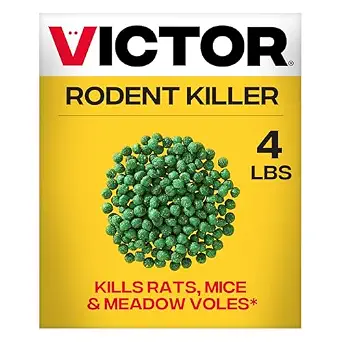 |
| Highest Rated A top-rated pick with lots of positive feedback | Bell Laboratories Final Blocks Rodenticide 18 lb |  |
| Most Popular A crowd favorite that many people choose with confidence | Tomcat Bromethalin Bait Chunx, 4 lb |  |
| Best Seller A high-volume bestseller chosen again and again | Tomcat Mouse Killer Refillable Bait Station with 16 Bait Blocks |  |
Bell Final Blox Rodent Bait with Brodifacoum (18 lb)

| Target Species | Rodents |
|---|---|
| Item Weight | 18 pounds |
Bell Final All-Weather Blox is a high-potency rodent bait designed for demanding infestations in barns and outbuildings. The extruded cog-shaped blocks are paraffinized for weather resistance and include a center hole so they can be placed on securing rods or nailed/wired into tight baiting locations inside tamper-resistant stations. Because the active ingredient is brodifacoum, a single-feeding anticoagulant, this bait is effective at reducing persistent mouse and rat populations where repeated feeding is hard to achieve. Its hard, multiple-edged form gives meal-like palatability while holding up to moisture and handling in busy farm environments. Practical benefits include long-lasting placement without rapid breakdown and compatibility with standard professional bait stations. Important limitations are that brodifacoum is an extremely toxic, long-lasting anticoagulant that requires careful placement to avoid non-target exposure and that use generally requires following strict local regulations and safe-disposal procedures.
Best for: Farmers and property owners needing a professional-strength, long-lasting solution to clear entrenched mouse or rat problems in barns, outbuildings, and similar agricultural structures who will use tamper-resistant placement and follow safety rules.
Less Ideal for: Casual homeowners, urban users, or anyone unable to isolate baiting areas from non-target animals should choose less persistent or lower-toxicity options.
- Contains brodifacoum, an effective single-feeding anticoagulant for quick control of persistent infestations
- Paraffinized extruded blocks resist weathering for reliable outdoor and barn placement
- Cog-shaped blocks with center hole allow secure placement on rods or attachment inside bait stations
- Formulated for strong palatability while remaining physically durable during handling
- Extremely toxic active ingredient poses high risk to non-target animals and requires strict containment
- Not appropriate for use where children, pets, or livestock may access bait without robust tamper-resistant stations
Verdict: A professional-grade, weather-resistant single-feeding bait that clears stubborn barn rodent infestations when used with secure placement and proper safety practices.
First Strike Soft Bait Rodenticide (16 lb)

| Item Form | Spray |
|---|---|
| Target Species | Rat |
| Specification Met | EPA |
First Strike Soft Bait is a ready-to-use rodenticide designed for heavy infestations in barns and other outbuildings. The product is packaged as palatable soft pouches that can be secured inside tamper-resistant bait stations on vertical or horizontal rods, combining easy placement with reduced scatter. Its active ingredient, difethialone, is a potent anticoagulant that typically produces noticeable reductions in rodent activity within a week when used correctly. The bait retains aroma in hot and cold conditions and contains no wax, which helps acceptance even when other food sources are present. Included bittering agents reduce accidental human or pet consumption risk but do not replace safe placement practices. Handling a 16 pound pail is most appropriate for larger properties or professional applicators since the quantity is large and the product is restricted from sale in some states. Users must follow legal and safety guidelines, keep bait out of reach of non-targets, and monitor bait stations to confirm consumption and avoid secondary exposures.
Best for: Property owners or professional pest controllers needing a high-performance bait for large barns or heavy infestations who prioritize rapid knockdown and reliable rodent acceptance.
Less Ideal for: Small households or users who need a low-quantity, non-anticoagulant, or state-compliant option should consider smaller baits or alternative products.
- High palatability and aroma retention encourages rapid uptake even with competing food sources
- Soft pouch format secures easily to bait station rods and minimizes scattering
- Contains difethialone for effective control and typically fast population decline
- Formulation stays stable in hot and cold environments
- Not permitted for sale in several states which limits availability
- Large 16 lb pail is more than most homeowners need and is geared toward commercial or large-property use
Verdict: A high-impact soft bait formulated for fast, reliable control in large barns and heavy-infestation scenarios.
Ramik Bars Rodenticide, 4 lb (4 x 16 oz Bars)

| Active ingredient | diphacinone (0.005%) |
|---|---|
| Item form | Bar |
| Target species | Mouse and certain rat species |
| Unit count | 64 Ounce |
Ramik Bars deliver a practical, no-frills solution for controlling house mice, Norway rats, roof rats, and certain voles and woodrats around barns and other buildings. The product comes as four scored 16-ounce bars made with a food-quality grain mix and a fish flavor that increases palatability. Bars are hot-extruded for weather and wear resistance and can be broken into one-ounce pieces to place in bait stations or on secure placements like rafters. Because the active ingredient is diphacinone, maintain an uninterrupted bait supply for the recommended 10 to 15 days to ensure effective control. The formulation is suitable for wet or damp areas and intended for use indoors and outdoors when placed in tamper-resistant bait stations. Key limitations are that it is a first-generation anticoagulant, so control may be slower than second-generation products, and strict adherence to label directions and bait-station requirements is needed to protect non-target animals and comply with regulations.
Best for: Buyers managing rodent problems around barns or outbuildings who prioritize reliable, easy-to-place bait that tolerates damp conditions and can be portioned for bait stations.
Less Ideal for: People needing very fast knockdown in heavy infestations or those who cannot guarantee secure bait-station placement should consider other control strategies.
- Formulated with fish-flavored, food-quality grain mix to increase rodent palatability
- Hot-extruded scored bars resist weather and wear and can be broken into smaller portions
- Suitable for use in wet or damp areas and for both indoor and outdoor placements when secured
- Intended for common barn pests including mice, Norway rats, roof rats, and meadow voles
- Contains a first-generation anticoagulant which generally requires longer exposure compared with second-generation rodenticides
- Requires tamper-resistant bait stations for outdoor above-ground use and careful placement to protect non-targets
Verdict: A durable, portionable bait that works well for steady, monitored rodent control around barns where secure bait stations and slower-acting anticoagulants are acceptable.
Victor M925 Rodent Killer, 4 lb Fish‑Flavored Bait Balls

| Item Form | Soft Bait |
|---|---|
| Target Species | Rodents |
| Specification Met | EPA |
| Active Ingredients | Diphacinone 0.005% |
Victor M925 is a ready-to-use rodenticide supplied as fish-flavored soft bait balls in a 4 lb bag for broad indoor and outdoor use. It is typically placed along walls, in concealed spots, or inside tamper-resistant bait stations to attract rodents and encourage repeated feeding until a lethal dose is consumed. Notable features include a palatable formulation that appeals to mice, rats, and meadow voles, an EPA specification, and weather-resistant properties that help the bait remain effective in damp exterior locations. The large bag gives enough material for multiple placements across a property or extended treatment periods. Important limitations are safety and non-target risk since the product is toxic to pets, children, and wildlife and must be secured in approved stations and handled with care. This product is a poison rather than a trapping solution, so it is best used where baiting is acceptable and strict placement and disposal rules can be followed.
Best for: Homeowners who prioritize a straightforward, low-maintenance baiting approach to reduce existing rodent activity and who will use tamper-resistant bait stations and follow label safety instructions.
Less Ideal for: People seeking a non-toxic or purely mechanical trapping method, or those unable to reliably prevent access by pets, children, or wildlife.
- Ready-to-use soft bait that requires no mixing or preparation
- Fish-flavored formula designed to attract rats, mice, and voles
- Weather-resistant so placements outdoors retain potency
- Large 4 lb bag provides enough bait for extensive or repeated treatments
- Contains an anticoagulant active ingredient and is hazardous to pets, children, and non-target wildlife
- Not a mechanical trapping solution so carcass removal and secondary poisoning concerns apply
Verdict: Choose this ready-to-use, weather-resistant bait when you want an easy-to-deploy, high-coverage rodenticide for indoor and outdoor infestations and can secure placements to protect people and pets.
Bell Laboratories Final Blocks Rodenticide 18 lb

| Item Form | Spray |
|---|---|
| Target Species | Rodents |
| Item Weight | 19.9 pounds |
Final Blocks Rodenticide is a bulk block-style poison formulated for controlling rodents indoors and in outbuildings. It is presented as solid bait blocks designed to be placed in secure bait stations or locations rodents frequent; the block form helps keep bait in place and reduces scattering. Typical use is by distributing blocks around burrows, along runways, or inside tamper-resistant bait stations on a routine monitoring schedule. Practical benefits include a large 18 pound supply for sustained control programs and a concentrated formulation suited to professional or heavy residential infestations. Important limitations are that it is a toxic pesticide requiring careful placement in secured stations to keep pets and non-target wildlife away, and it assumes the user understands local regulations and safe handling. It does not include bait stations or measuring tools, so buyers should plan for storage and safe deployment accessories.
Best for: People managing moderate to heavy indoor or outbuilding rodent problems who prioritize an effective, long-lasting bait supply and will use tamper-resistant bait stations and proper safety practices.
Less Ideal for: Those with small, occasional mouse sightings, households with unsupervised pets or children, or anyone unwilling to follow pesticide safety rules should choose non-chemical or smaller packaged options.
- Large 18 lb supply suitable for multi-location or long-term control programs
- Block form resists scattering and stays in place along runways
- Designed for targeting rodents specifically, reducing wasted product
- Bulk pack is convenient for maintenance schedules without frequent repurchasing
- Contains toxic active ingredients and requires strict use in tamper-resistant bait stations
- No bait stations or placement accessories are included
- Not formulated or sold with child or pet-proof packaging integrated
Verdict: A bulk, block-style rodenticide that gives sustained, professional-strength bait supply for serious mouse control when used responsibly.
Tomcat Bromethalin Bait Chunx, 4 lb

| Unit Count | 64 Ounce |
|---|---|
| Item Form | Pellets |
| Target Species | Mouse |
| Active Ingredients | Bromethalin |
This Tomcat Bromethalin Bait Chunx pack is a concentrated bait block used outdoors near structures to control Norway rats, roof rats and house mice. Each block is formulated with bromethalin and is intended to be placed in tamper-resistant bait stations around barns, outbuildings, and other farm structures where rodents are active. The product claims high per-block lethality, with small blocks able to eliminate multiple mice and larger blocks effective against rats, so a few placements can cover frequent runways and entry points. Practical benefits include a long-lasting solid block that resists weather when kept in stations and reduces the need for constant re-baiting. Important limitations are that this is a toxic neurotoxin intended for professional or restricted use near structures, it must be used inside tamper-proof stations to protect livestock, pets, and wildlife, and users must follow local regulations and disposal guidance for dead rodents. This is a targeted outdoor solution best used as part of an integrated rodent plan rather than a standalone quick fix.
Best for: Farmers, barn owners, and property managers seeking a powerful outdoor rodent bait to use around structures and in tamper-resistant stations who prioritize proven effectiveness and want to address anticoagulant-resistant infestations.
Less Ideal for: People looking for pet-safe or broad open-field placement options or casual homeowners uncomfortable handling professional-use toxicants should choose nonchemical or lower-risk alternatives.
- Formulated with bromethalin, effective against anticoagulant-resistant rodents
- Solid bait blocks designed for outdoor placement in tamper-resistant stations
- High potency per block can reduce how many placements are needed
- Long-lasting pellet form helps resist brief weather exposure when protected
- Intended for professional use and requires careful handling and secure stations
- Toxic to non-target wildlife, pets, and potentially livestock if misused
- Must be used within 100 feet of man-made structures, limiting placement flexibility
Verdict: A high‑potency bromethalin bait designed for barn and structure use when secure tamper‑resistant placement and professional handling are acceptable.
Tomcat Mouse Killer Refillable Bait Station with 16 Bait Blocks

| Unit Count | 16 Count |
|---|---|
| Target Species | Rodents |
| Power Source | manual |
| Material Type | Plastic |
This Tomcat kit combines a weather-resistant refillable bait station with 16 preformed bait blocks to control mice around buildings and yards. You place the station where activity is seen—against foundations, in garages, basements, or behind appliances—then monitor the clear lid and replace blocks as they are consumed. The station is designed to resist tampering by children and dogs and the bait blocks are intended to kill rodents after feeding so they leave the station before dying. Practical benefits include a reusable plastic station that makes ongoing monitoring simple and a supply of multiple premeasured bait blocks so you can maintain coverage without repackaging bait. Limitations to note are that poison requires caution during placement and handling and that results are not instantaneous, as rodents typically die days after feeding. This product targets mice primarily and does not replace exclusion work or sanitation as part of a complete outdoor rodent control plan.
Best for: Buyers who need an affordable, reusable station and a ready supply of bait for routine outdoor perimeter control and who prioritize ease of monitoring and tamper resistance.
Less Ideal for: People who want immediate knockdown or need a single heavy-duty solution for large rat infestations should consider other methods or products.
- Includes a reusable, weather-resistant bait station for outdoor placement
- Child- and dog-resistant design reduces accidental access
- Clear lid allows quick visual monitoring of bait level
- Comes with 16 premeasured bait blocks for extended use without extra refills
- Contains rodenticide so careful placement and handling are required
- Designed for mice primarily and may be less suitable for larger infestations of rats
Verdict: A cost-conscious option that pairs a tamper-resistant refillable station with 16 bait blocks for straightforward outdoor mouse control.
Choosing the Right Rodent Poison for Barn: Key Factors to Consider
Bait Formulation and Palatability
How attractive a bait is under barn conditions determines whether rodents will take it rather than competing feed. Dust, spilled grain, and strong farm odors can mask scents that work indoors, so choose formulations designed to compete with feed and survive dusty environments.
Palatable baits reduce the time it takes to achieve control because more rodents consume a lethal dose. Some formulations include sweet or fatty carriers that appeal to common barn species. Consider also whether the bait remains palatable after exposure to moisture or when stored in typical barn temperatures.
Safety for Livestock and Pets
Any poison used in a barn must be evaluated for risk to livestock, working animals, and pets. Look for delivery systems and label guidance that minimize accidental access. Tamper-resistant bait stations, secured placement, and clear handling instructions matter because barns have animals that share airspace and flooring with rodents.
Also consider secondary poisoning risk if predators or scavengers consume poisoned rodents. Choose products and placement strategies that reduce carcass availability to birds of prey, farm dogs, or cats whenever possible.
Bait Placement and Accessibility
Placement determines whether target species find and use the bait. Rodents follow established runways along walls, beams, and feed lines, so baits must be positioned where activity is highest and where livestock or staff will not disturb them.
Accessibility also includes the ability to secure baits within stations that protect from dust and moisture. In large barns, plan multiple placement points and consider mounting or anchoring options to avoid baits being knocked over by animals or equipment.
Regulatory Labeling and Legal Use
Label directions dictate where and how a product may be used; in agricultural settings this is critical. Ensure the product label explicitly allows use in barns or agricultural buildings and follow mandated restrictions on placement, timing, and recordkeeping.
Using a product outside its labeled scope can be illegal and increase liability, so verify that the chosen option aligns with local regulations for farm structures and livestock areas.
Persistence and Reinfestation Control
Some baits work quickly but offer little residual protection, requiring frequent re-baiting. Others provide longer persistence, which helps prevent reinfestation in barns with ongoing rodent pressure. Consider how long a product remains active and palatable after placement.
Persistence affects labor and monitoring schedules. For barns with continuous feed sources, longer-lasting control can reduce weekly maintenance, but ensure long persistence does not increase non-target exposure risk.
Ease of Monitoring and Cleanup
Routine monitoring is essential in barns to track bait uptake and detect carcasses. Choose products that are easy to check and remove safely. Clear packaging, simple station designs, and labels that instruct on carcass disposal simplify farm workflows.
Ease of cleanup also matters when dealing with spilled bait or partial consumption. Products that crumble or create dust complicate monitoring and increase accidental exposure, so prefer formulations and stations that make inspection and cleanup straightforward.
Understanding Barn Rodent Behavior
Rodents in barns behave differently than those in homes. They exploit feed sources, hide in lofts and wall voids, and travel predictable runways near walls and beams. Recognizing these patterns helps you place bait where it will be encountered quickly.
Activity peaks at dawn and dusk for many species, but some are active day and night if food is abundant. Inspect areas under feeders, around feed sacks, inside equipment, and near nesting materials to map out where to concentrate control efforts.
- Check along walls, behind equipment, and near feed storage.
- Look for droppings, rub marks, and gnawing as placement cues.
- Inspect lofts and insulated areas where nests may form.
Safe Deployment and Staff Procedures
Develop simple protocols for staff who interact with baits during chores. Train people to wear gloves, avoid eating near bait placements, and to secure bait stations after inspection. Label storage containers for baits and keep them separate from animal feed.
Record placement locations and inspection dates so you can track uptake and make adjustments. If carcasses are found, handle them with gloves and dispose of them according to local guidance to limit secondary poisoning.
- Use dedicated tools and PPE for bait handling.
- Keep an inspection log with dates and bait condition notes.
- Store unused bait in locked, clearly labeled containers.
Combining Baits with Nonchemical Measures
Poison is most effective when combined with sanitation and exclusion. Reduce spilled feed, seal gaps around doors and vents, and remove nesting materials to lower rodent carrying capacity. Trapping can be used alongside baits for immediate reduction in visible populations.
Regularly checking and repairing entry points prevents new rodents from entering after a bait program has reduced numbers. Nonchemical steps lengthen the effectiveness of any poison strategy and lower the need for ongoing chemical use.
- Repair holes, gaps, and damaged doors.
- Practice good feed management to remove attractants.
- Use traps where nonchemical removal is appropriate.
Monitoring Results and Adjusting Strategy
Set a monitoring schedule during the first weeks of treatment and continue periodic checks thereafter. Note bait consumption trends, new droppings, and any non-target interactions. If uptake is low, try alternative placements or a different bait formulation.
If reinfestation occurs, reassess sanitation and entry points before increasing chemical use. A combination of targeted re-baiting and exclusion often resolves recurring issues with fewer interventions over time.
- Monitor daily during initial weeks, then weekly once control is evident.
- Change bait location if uptake stalls after a few visits.
- Document all actions to inform future control decisions.
Disposal and Environmental Considerations
Proper disposal of leftover bait and carcasses reduces environmental risk. Follow label guidance for disposal and use sealed containers for removed bait. Prevent runoff and avoid placing bait where rain or irrigation could carry residues into soil or water.
Consider the presence of wildlife and scavengers around your farm. Use station designs and placement strategies that limit access by birds and non-target mammals to reduce unintended impacts.
- Collect and dispose of carcasses in sealed bags per local rules.
- Keep bait out of areas where wildlife or pets forage.
- Store and transport baits in locked, leak-proof containers.
How We Chose the Best Rodent Poison for Barn
We focused on features that matter in operational barn settings and excluded products intended solely for indoor household use or wildlife control outside agricultural contexts. Selection prioritized bait formulations and delivery methods proven to get consumed by common barn rodents, plus product labels that include farm-specific safety instructions. Key evaluation criteria included bait attractiveness under dusty or feed-scented conditions, documented control speed, and persistent efficacy to address reinfestation. We also weighed safety controls such as tamper-resistant bait stations and clear non-target animal warnings, plus ease of use for farm staff during routine chores. Packaging and quantity were considered for barns with large infestations, and legal label compliance for agricultural structures was required. Products lacking agricultural label guidance, or those that required specialized licensing beyond normal farm operation, were excluded from consideration. The result is a shortlist that balances barn-scale effectiveness with practical on-farm safety and handling.
FAQ
Can I use rodent poison in a barn with livestock present?
Often it is possible if you follow product label instructions for agricultural buildings. Place baits in tamper-resistant stations and away from feeding areas. Always follow handling and disposal directions to reduce risk to livestock and consult label restrictions for specific use cases.
How long does it take to see results after placing bait?
Results can vary by formulation and infestation size. Some baits reduce visible activity within a few days, while others rely on secondary effects and may take longer. Monitor uptake daily early on to judge effectiveness and adjust placement as needed.
What should I do if a non-target animal accesses bait?
Isolate the area, remove any accessible bait, and contact a veterinarian if the animal shows signs of poisoning. Review placement and consider more secure stations or relocation of baits to prevent repeat incidents.
Are tamper-resistant bait stations necessary in a barn?
Tamper-resistant stations are strongly recommended in barns because they limit access by livestock, children, and pets. They also protect bait from dust and moisture, improving palatability and monitoring reliability.
How often should I inspect bait placements?
Inspect daily during the first one to two weeks to establish uptake patterns, then move to weekly inspections once control is apparent. More frequent checks are needed in high-traffic or wet areas where bait can be disturbed or spoiled.
Can sanitation alone eliminate a barn infestation?
Sanitation reduces attractants and can lower rodent numbers over time, but existing infestations often require baits or trapping for rapid reduction. Combining sanitation with targeted chemical or mechanical control is usually the most effective approach.
Final Verdict
For barn settings prioritize baits and delivery methods that match the site conditions: high palatability in feed-scented environments, secure placement to protect livestock, and labels that permit agricultural use. Balance faster-acting options with the safety and persistence needs of your facility. Make a plan that combines baiting with exclusion, sanitation, and monitoring. That integrated approach reduces reinfestation risk and helps you choose the right product for your barn with confidence.
