

Note: This article contains affiliate links. If you click on these links and make a purchase, I may earn a small commission at no extra cost to you. This helps support my research and content. Read my full affiliate disclosure here.
Getting a new tree established depends as much on technique as on timing. The right rooting hormone for trees can reduce transplant shock, stimulate new roots from cuttings or root prunings, and improve survival through the first critical season. This guide presents six shortlisted options that excel in garden and nursery use for trees, with attention to ease of use, active ingredient strength, and suitability for different planting situations. Below we explain why those criteria matter in practical terms and how each product was judged, then run through additional tips for using rooting hormone with trees.
Top Picks at a Glance
| Best Overall The best all-around choice for most situations | TPS Nutrients Root Stimulator for Trees, 6 oz |  |
| Best Quality Built to a higher standard if you want something more solid | Hormex Rooting Hormone Powder #16 for Hardwood Cuttings, 21 g |  |
| Best Value The sweet spot between price and what you get | Garden Safe TakeRoot Powder Rooting Hormone, 2 oz (pack of 12) |  |
| Best Budget The cheapest option that still gets the job done reliably | Doff Rooting Hormone Powder for Plant Cuttings, 75 g |  |
| Highest Rated A top-rated pick with lots of positive feedback | Herrdemia 3-in-1 Rooting Powder (IBA + NAA + Mycorrhizae) |  |
| Most Popular A crowd favorite that many people choose with confidence | Garden Safe TakeRoot Rooting Hormone Powder, 2-Pack (2 oz) | 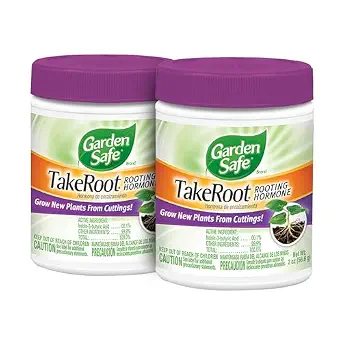 |
TPS Nutrients Root Stimulator for Trees, 6 oz

| Item Form | Powder |
|---|---|
| Specific Uses For Product | Transplants, Root Development, Established Trees & Shrubs |
| Coverage | Medium |
| Unit Count | 6 Ounce |
| Mixing Ratio | 1/4-1/2 tsp per gallon of compost tea |
This powdered root stimulator is designed to help trees and shrubs establish roots after planting or transplanting. You can sprinkle it into the planting hole or mix it into the top inch of soil around the trunk; directions also provide dose guidance by trunk diameter and for potted trees. The formula is targeted at root development and claims to include living soil probiotics to support a healthier rhizosphere, which is useful for reducing transplant shock and encouraging quicker root growth. Because it is a powder, it is easy to store and measure but requires careful handling and adherence to mixing rates to avoid overapplication. Practical benefits include simple application during planting, suitability for both landscape and orchard trees, and a small 6 ounce unit that is convenient for occasional use. Important limits are that coverage is medium so large numbers of trees will need multiple containers, and the product requires dry storage and safe handling to avoid skin or eye contact.
Best for: Gardeners and small-scale orchard or landscape owners who want an easy-to-use product to reduce transplant shock and encourage faster root growth in individual trees and shrubs.
Less Ideal for: Large-scale landscapers or anyone needing to treat many trees at once should consider bulk products or concentrated formulations better suited to high-coverage jobs.
- Formulated specifically for trees and shrubs to promote root establishment
- Clear application guidance for transplants, established trees, and potted specimens
- Powder form is easy to measure and mix into soil or compost tea
- Includes probiotics or biology-focused ingredients aimed at improving soil health
- 6 ounce unit provides only medium coverage and may not be sufficient for larger plantings
- Powder requires careful handling and storage to avoid skin or eye irritation
Verdict: A compact, easy-to-use powdered root stimulator that helps reduce transplant shock and speed root establishment for individual trees and shrubs.
Hormex Rooting Hormone Powder #16 for Hardwood Cuttings, 21 g

| Item Form | Powder |
|---|---|
| Application Method | Dip |
| Specific Uses For Product | Rooting Hormone for Cloning Plants | Root Starter for Plant Cuttings | Propagation | Root Development |
| Ingredients | IBA |
Hormex #16 is a purpose-built rooting powder for tough hardwood cuttings such as junipers, maples and other woody shrubs and trees. You use it by moistening the cut end, dipping the prepared stem into the powder, tapping off excess and planting the cutting into your chosen medium. The 1.6% IBA strength is aimed at difficult-to-root material and simplifies attempts to propagate mature, woody stems that often fail with weaker treatments. A single 21 g bottle treats many cuttings, so it is economical for batch propagation. Practical benefits include a simple dip-and-plant application, compatibility with soil, coco coir, rockwool or rooting cubes, and clear guidance on matching strength to cutting type. Important limitations are that it is specialized for hardwood only and higher-concentration powders are not suitable for tender softwood cuttings, so users must select the correct Hormex strength for each plant. Success still depends on clean cuts, proper hygiene and appropriate humidity and light while roots form.
Best for: Gardeners and arborists focused on reliable tree and woody-shrub propagation who prioritize performance on difficult hardwood cuttings and want a concentrated, proven rooting treatment.
Less Ideal for: Beginners intending to propagate softwood houseplants or casual users who prefer all-in-one liquid systems should consider lower-strength or liquid rooting products instead.
- High 1.6% IBA concentration formulated specifically for difficult hardwood and woody cuttings
- Simple dip-and-plant application that works with common propagation media
- Small 21 g bottle treats up to about 200 cuttings, making it economical for multiple plants
- Clear strength system and plant guide to match hormone strength to cutting type
- Not appropriate for tender or softwood cuttings due to its high IBA concentration
- Powder requires careful handling to avoid contaminating the bottle or wasting product
Verdict: Choose Hormex #16 when you need a high‑strength, professional rooting powder to boost rooting success on difficult hardwood tree and shrub cuttings.
Garden Safe TakeRoot Powder Rooting Hormone, 2 oz (pack of 12)

| Item Form | Powder |
|---|---|
| Specific Uses For Product | Potting,Rooting |
| Application Method | Stir the cut end in powder |
| Coverage | Medium |
| Target Species | [Multiple] |
Garden Safe TakeRoot is a straightforward powdered rooting hormone meant to encourage root development on a wide range of garden and greenhouse cuttings. You moisten a prepared cutting, dip or stir the cut end in the powder, tap off excess and plant in a rooting medium, then keep the medium misted until roots form. Because it uses indole-3-butyric acid, the product acts like the natural hormone plants produce and is appropriate for many ornamentals and woody species often grown from cuttings. The powder format is convenient for small propagation jobs and avoids measuring liquids, and the 12-pack supply suits gardeners who propagate frequently or in batches. Limitations are that powder application can be messier than a quick dip solution and requires careful tapping to avoid over-application, and the product does not include a liquid concentrate option for larger or repeated nursery-style rooting tasks. For tree cuttings and woody ornamentals, follow label directions closely and use a well-draining rooting mix for best results.
Best for: Gardeners who routinely propagate ornamentals or woody cuttings and want a reliable, ready-to-use powder that makes batch propagation efficient.
Less Ideal for: Large-scale growers seeking a liquid concentrate or automated dipping method should consider alternative formats better suited to high-volume propagation.
- Contains indole-3-butyric acid, a proven rooting hormone for many plant types
- Powder form is easy to apply to individual cuttings without measuring liquids
- Pack of 12 two‑ounce units provides a large supply for repeated propagation
- Simple, repeatable directions suitable for home and greenhouse use
- Powder can be messier to handle than liquid dips and requires careful removal of excess
- No liquid concentrate option for high-volume or nursery-style propagation
Verdict: A dependable powdered rooting hormone in small ready‑to‑use units that simplifies repeated propagation of woody cuttings and ornamentals.
Doff Rooting Hormone Powder for Plant Cuttings, 75 g

| Item Form | Powder |
|---|---|
| Specific Uses For Product | Root Development |
| Target Species | plants |
| Mixing Ratio | 1:0:0 |
| Unit Count | 2.6 Ounce |
Doff Rooting Hormone Powder is a simple powdered auxin formulation intended to speed and strengthen root formation on plant cuttings. You dip or dust the base of a cutting into the powder before planting in your preferred propagation medium; the product is designed for use across plant types and all seasons. Its powder form makes it easy to apply precisely without diluting, and the package size is convenient for multiple propagation sessions. Practical benefits include faster, more reliable rooting and healthier root systems that help reduce losses when propagating valuable plants. Limitations are that the product is a single-formulation powder so it lacks adjustable concentrations for very delicate or juvenile cuttings, and users who prefer a liquid dipping solution may find application less convenient. For gardeners focused on straightforward propagation without complex mixing, this is a no-frills option that delivers predictable rooting support.
Best for: Gardeners who want an inexpensive, ready-to-use rooting aid for regular propagation and prefer a simple powder application over mixing liquids.
Less Ideal for: Users needing adjustable strength formulations for sensitive or rare cuttings or those who prefer premixed liquid rooting solutions.
- Powder form allows precise, low-waste application to cutting bases
- Formulated to encourage root development across a wide range of plant species
- Suitable for year-round use so propagation is not limited by season
- Package size (75 g) supports multiple propagation sessions
- Single powder concentration cannot be easily adjusted for very delicate cuttings
- Not a liquid dip, which some users prefer for uniform coverage
Verdict: A budget-friendly powder rooting hormone that reliably promotes root formation for routine plant propagation.
Herrdemia 3-in-1 Rooting Powder (IBA + NAA + Mycorrhizae)

| Item Form | Powder |
|---|---|
| Application Method | dip or mix with water |
| Specific Uses For Product | Root Development, plant propagation |
| Target Species | Houseplants |
| Unit Count | 1.1 Ounce |
This rooting powder is designed to accelerate root initiation and improve survival of cuttings across soil and hydroponic systems. It is typically used as a dip for soil propagation or dissolved in water for water and LECA propagation; the package includes mixing ratios and step-by-step directions. The formula combines IBA for feeder roots, NAA for a strong central root, and R. irregularis mycorrhizae to extend nutrient uptake, plus adjuncts such as seaweed extract and chitosan to reduce stress and protect cut sites. Practical benefits include faster visible rooting in 1–2 weeks in many species, compatibility with popular houseplants and woody cuttings, and an estimated high coverage per bottle suited to repeated propagation projects. Important limitations are the need to follow the dosage carefully because overuse can inhibit rooting, and the product is a concentrated chemical powder that requires careful handling and must be kept away from children and pets. Overall it is a reliable option for gardeners who want consistent rooting performance when propagating a variety of plants.
Best for: Buyers who prioritize dependable, repeatable propagation results and want a single product that works across soil and water systems for houseplants and woody cuttings.
Less Ideal for: Gardeners who prefer purely organic, food-safe options or who will not follow precise dosing and safety precautions should consider alternative gentler methods.
- Broad-spectrum formula combining IBA, NAA, and mycorrhizae for stronger, more complete root systems
- Works in both soil and water propagation and is compatible with hydroponic media like LECA
- Includes practical directions and mixing ratios for dips and water solutions
- High estimated coverage per bottle suitable for many cuttings or repeated propagation sessions
- Concentrated formula requires precise dosing since overuse can suppress rooting
- Contains active ingredients that are hazardous if swallowed or inhaled and must be stored safely
Verdict: Choose this powder when you want a single, lab-tested rooting hormone that reliably speeds and strengthens root formation across soil and water propagation.
Garden Safe TakeRoot Rooting Hormone Powder, 2-Pack (2 oz)

| Item Form | Powder |
|---|---|
| Specific Uses For Product | Plant Growth, Root Development |
| Application Method | Stir cut ends in powder |
| Number of Packs | 2 |
| Active Ingredient | Indole-3-butyric acid |
Garden Safe TakeRoot is a simple powder rooting hormone intended to help grow new plants from stem cuttings. You moisten the cut end, dip or stir it in the powder, tap off excess and plant the treated cutting in a rooting medium, then mist regularly. The active ingredient is indole-3-butyric acid, a commonly used auxin that encourages root initiation on a wide range of houseplant and garden varieties such as African violets, geraniums, roses, poinsettias and many woody ornamentals. In practice the powder form is easy to apply, low-mess compared with liquids, and the included two-pack gives extra supply for repeated propagation attempts. Limitations are that it is a basic, single-concentration product so you cannot adjust strength for difficult species, and you must avoid cross-contaminating the jar when treating multiple plants. For cautious gardeners who prefer a proven, no-frills rooting aid, this product reliably increases the odds that common cuttings will form roots when used with proper cutting and aftercare techniques.
Best for: Buyers who want a straightforward, proven rooting aid to improve success with common cuttings and who favor reliable, low-risk products over experimental approaches.
Less Ideal for: Propagators seeking adjustable-concentration hormones, specialized formulations for very difficult-to-root plants, or liquid dosing systems should consider other options.
- Contains indole-3-butyric acid, a widely used rooting hormone that promotes root formation
- Powder form is easy to apply and reduces spills compared with liquid formulations
- Suitable for many common houseplants and garden cuttings including roses, geraniums and African violets
- Two-pack supply lets you treat multiple cuttings or keep a back-up jar
- Single-strength powder does not allow dosing adjustments for very sensitive or hard-to-root species
- Requires careful handling to avoid contaminating the container when treating multiple plants
Verdict: A dependable, easy-to-use powder rooting hormone that raises your chances of success with typical houseplant and garden cuttings.
Choosing the Right Rooting Hormone for Trees: Key Factors to Consider
Active Ingredient and Concentration
Rooting hormones for trees typically contain auxin-type compounds that stimulate root initiation. The most common active ingredients are indolebutyric acid (IBA) and napthaleneacetic acid (NAA), each available at different concentrations. For woody species, higher concentrations are often recommended compared with herbaceous cuttings because tree tissues are tougher and slower to respond.
Knowing the active ingredient and its concentration matters because it determines whether the product is appropriate for a softwood, semi-hardwood, or hardwood cutting. Overly weak formulations may produce no effect on tree cuttings, while unnecessarily high concentrations can damage tissue or inhibit rooting in some species. Check labels for guidance on woody plant use and recommended dip times or dilution rates before applying to trunks, root collars, or larger cuttings.
Application Method and Practicality
Rooting hormones come as powders, gels, or liquids that you either dip, paint, or soak tree cuttings or roots in. Powder dips are simple for quick treatments and for handling larger numbers of small cuttings. Gels and pastes spread easily over larger wounds or graft unions and help protect exposed tissue. Liquids are flexible because they can be diluted for long soaks or used in quick dips depending on concentration.
Practicality affects how likely you are to use the product correctly in the field. Consider how the product handles in wind or cold conditions, whether it clumps, and how easy it is to control application on larger root masses or basal cuts. Packaging that allows measured dosing and resealing also reduces waste and contamination when working with multiple plants.
Suitability for Tree Size and Species
Trees vary from small nursery seedlings to large grafted saplings; the appropriate rooting hormone technique depends on size and species. Small, newly rooted transplants may only need a light dip or soil drench, while hardwood cuttings and root prunings on larger nursery stock benefit from stronger formulations and longer contact time.
Different species also respond differently to auxins. Hard-to-root species will often require tailored procedures such as basal wounding combined with a higher-concentration treatment. Consider whether the product explicitly lists woody plant instructions and whether its recommended use matches the scale and species mix in your yard or nursery.
Timing and Environmental Conditions
When you apply rooting hormone affects outcomes. Cuttings and transplants generally root best when taken during active, but not excessively hot, growing periods so carbohydrates and moisture support new root formation. For many trees that means late spring to early summer for softwood cuttings or late summer for semi-hardwood.
Environmental factors such as soil temperature, humidity, and light influence how well hormonal stimulation translates into root growth. A good rooting hormone will be part of a broader plan that includes moisture management, appropriate potting medium or backfill, and protection from desiccation. If you expect to be working in variable weather, choose a product whose instructions include environmental guidance and flexible application options.
Shelf Life and Mixed Solution Longevity
Some rooting hormones remain stable for long periods in sealed packaging while others degrade quickly once opened or when mixed with water. Liquids that require dilution can have limited usable life, especially if contamination occurs during field use. Powdered formulations and sealed gel tubes often offer longer shelf life and less risk of accidental spoilage.
Shelf stability matters for gardeners and small nurseries that use products intermittently. A formulation that keeps well reduces waste and ensures consistent dosing each season. Look for clear storage instructions, unopened shelf life, and guidance on how long a prepared solution remains effective.
Safety and Handling
Rooting hormones are active plant growth regulators and should be handled with care. Some formulations are more concentrated and require gloves, eye protection, or avoidance of inhalation during dusting. Others are formulated to be low-dust or easy to apply without specialized gear.
Safety considerations affect where and how you will use the product in the garden. If you regularly work with children, pets, or edible plants nearby, choose formulations with safer handling profiles and clear cleanup instructions. Always follow label directions for personal protection and disposal to reduce exposure and environmental risk.
When to Use Rooting Hormone on Trees
Rooting hormone is most useful when you are trying to stimulate root growth after taking hardwood cuttings, performing root pruning on nursery stock, or transplanting young trees with small root systems. It is less necessary for large, well-rooted specimen trees that already have an established root ball.
Apply hormone during active growth windows appropriate to the species. For most deciduous trees, that means avoiding deep dormancy and extreme heat. For grafting and wound protection, a gel or paste that seals tissue can also reduce moisture loss and infection risk.
- Use dips for many small cuttings and quick basal treatments.
- Paint gels onto larger wounds or graft unions for protection.
- Soaks are useful for root-pruned nursery plants with exposed roots.
How to Apply Rooting Hormone Safely
Work on clean, dry cut surfaces and avoid overapplication. For powder dips, tap off excess to prevent clumping and uneven dosing. For liquid dips, follow the recommended contact time and do not exceed labeled concentrations for woody material. When using gels, spread a thin, even layer over the wound rather than globbing it on.
Wear gloves and eye protection when handling concentrated formulations, and keep pets and children away from treated areas until surfaces are dry or soil has settled. Clean tools between cuts to avoid transferring pathogens.
- Prepare a small test application on one cutting if you are unsure about species sensitivity.
- Label any mixed solutions with the mix date and concentration.
- Store products according to label directions to maintain effectiveness.
Combining Rooting Hormone with Cultural Practices
Hormone is only one part of successful rooting. Use a well-draining, moisture-retentive potting mix or backfill when propagating or transplanting. Maintain consistent moisture without waterlogging, as soggy conditions reduce oxygen at the root zone and hinder new root formation.
Provide gentle shading and wind protection for newly treated cuttings or transplants to reduce desiccation stress. Fertilize sparingly until new roots are established; excessive nitrogen can promote top growth at the expense of root development.
- Water at the root zone rather than overhead to keep treated surfaces drier.
- Use rooting media with added perlite or sand for better aeration.
- Hold off on heavy pruning of the canopy until roots show consistent growth.
Common Mistakes That Reduce Success
Overusing hormone or using the wrong concentration for woody material is a common error. Excessive auxin can be counterproductive, causing tissue damage or inhibiting root initiation. Another mistake is applying hormone to wet, dirty cuts where the product cannot adhere properly.
Failing to control moisture and temperature after treatment also reduces success rates. Even the best hormone will not compensate for planting into compacted, poorly drained soil or leaving exposed roots to dry out in full sun for long periods.
- Do not apply to frozen or saturated tissue.
- Avoid repeated dipping without refreshing the powder or solution.
- Do not assume houseplant instructions are sufficient for tree work.
Storage and Preparation Tips for Garden Use
Keep powders sealed in their original containers to prevent moisture pickup. Store liquids in cool, dark places and use within the timeframe specified on the label. When preparing diluted solutions, mix only what you expect to use in a single session to avoid wasted, degraded mixtures.
Consider small disposable containers for field work and bring a brush or applicator for gels. Clean and dry applicators between uses to avoid cross-contamination between species or batches of cuttings.
- Use a clean jar with a tight lid for temporary liquid mixes and label it clearly.
- Replace or reseal containers promptly after each use to limit exposure to air and humidity.
- Keep products out of direct sunlight and away from heat sources.
How We Chose the Best Rooting Hormone for Trees
We focused on attributes that directly affect a tree's ability to form a healthy root system after transplanting or propagation. Selection began with products formulated or commonly used for woody plants and trees, then filtered for clarity of active ingredient, appropriate concentration for woody cuttings, and practical packaging for garden use. We prioritized products that offered reliable application methods such as powders for dipping, gels for wound coverage, or liquids for dilution and basal treatments. Concrete evaluation criteria included active ingredient type and concentration, application method and ease, suitability for woody species and root size, and longevity/stability once mixed or opened. We excluded formulations aimed only at herbaceous annuals or indoor houseplants when their labels or recommended concentrations were not appropriate for trees. Also excluded were products lacking clear usage instructions for woody cuttings or transplanting large seedlings. The resulting shortlist balances laboratory-relevant chemistry with real-world handling and gardener-friendly directions.
FAQ
Do I always need rooting hormone when transplanting a tree?
Not always. Rooting hormone is most helpful for young transplants with limited root mass, hardwood cuttings, or when you want to speed establishment. Large, well-rooted trees usually do not benefit from hormone treatments.
Which application method is best for larger saplings?
For larger saplings, gels or pastes applied to the root collar or larger wounds offer good coverage and help seal tissue. Liquids can be used for root soaks if the root mass can be contained; powders are less practical on very large roots.
How long after applying rooting hormone should I expect new roots?
Rooting time depends on species, season, and environment. Some quick-rooting woody cuttings may show root primordia in a few weeks, while others take months. Keep conditions favorable and check gently for new roots before heavy handling.
Can I use rooting hormone on graft unions or pruning wounds?
Gels and pastes that provide both rooting stimulation and wound sealing can be useful on graft unions and some pruning wounds. Ensure the product is labeled for woody plant use and follow directions for thin, even application.
Are rooting hormones safe around vegetable beds and wildlife?
Many formulations require careful handling and containment. Avoid applying concentrations where runoff could enter vegetable beds. Follow label safety instructions and consider low-dust or contained application methods when wildlife or pollinator exposure is a concern.
Final Verdict
When choosing a rooting hormone for trees, prioritize formulations and concentrations designed for woody species, an application method that fits the size of your material, and clear instructions that match your working conditions. Balance the active ingredient strength against species sensitivity and always pair hormone use with proper moisture control, good rooting media, and protection from desiccation. A practical approach that matches product type to task will deliver the best results: use powders or dips for many small cuttings, gels for larger wounds and grafts, and diluted soaks for root-pruned nursery stock. Focus on correct technique and timing rather than relying solely on chemistry to solve establishment problems.
