

Note: This article contains affiliate links. If you click on these links and make a purchase, I may earn a small commission at no extra cost to you. This helps support my research and content. Read my full affiliate disclosure here.
Getting new rose plants from cuttings is one of the most satisfying and cost-effective ways to expand your garden. The right rooting hormone for roses helps cuttings form roots faster and more uniformly, reduces failure rates, and lets you move rooted plants to soil or containers sooner. This guide shortlists the best options we vetted for rose cuttings and explains the practical differences you need to know. We evaluated each product on how well it encourages root development and how straightforward it is to use in a garden setting. Below you will find our top picks and a clear explanation of the criteria used to choose them.
Top Picks at a Glance
| Best Overall The best all-around choice for most situations | Hormex Rooting Powder #8 (0.8% IBA), 21 g |  |
| Best Quality Built to a higher standard if you want something more solid | Clonex Rooting Gel High-Performance Rooting Compound, 100 ml |  |
| Best Value The sweet spot between price and what you get | Hormex Rooting Hormone Powder Set #1, #3 & #8 (3 x 21g) |  |
| Best Budget The cheapest option that still gets the job done reliably | Bonide Bontone II Rooting Powder, 1.25 oz |  |
| Highest Rated A top-rated pick with lots of positive feedback | Herrdemia 3-in-1 Rooting Powder (IBA + NAA + Mycorrhizae) |  |
| Most Popular A crowd favorite that many people choose with confidence | Garden Safe TakeRoot Rooting Hormone, 2 oz (pack of 12) |  |
| Best Seller A high-volume bestseller chosen again and again | Garden Safe TakeRoot Rooting Hormone Powder, 2-Pack (2 oz) | 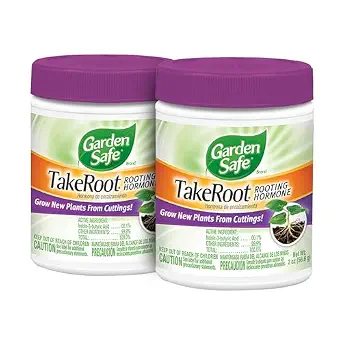 |
Hormex Rooting Powder #8 (0.8% IBA), 21 g

| Item Form | Powder |
|---|---|
| Specific Uses For Product | Rooting Hormone for Cloning Plants | Root Starter for Plant Cuttings | Propagation | Root Development |
| Application Method | Dip |
| Coverage | Semi-Hardwood Plants, Medicinal and Tree Cuttings |
| Active Ingredient | Indole-3-Butyric Acid |
Hormex #8 is designed to help semi-hardwood and woody cuttings, such as roses, azaleas and shrubs, develop roots faster and more reliably. You use it by moistening the cut end, dipping roughly an inch into the powder, tapping off the excess and planting the cutting in a prepared medium like potting mix, coco coir or propagation cubes. The 0.8% IBA concentration is aimed at firmer stems that do not root as easily as softwood cuttings, so it is a sensible choice for mid-season rose cuttings or woody shoot tip propagation. The 21 g bottle is concentrated enough to treat many cuttings, and the powder form is easy to control for single dips. Limitations are that powders require careful hygiene to avoid cross-contamination and that success still depends on correct cutting technique, humidity and light; very tender or very hardwood cuttings may need a different strength. If you prefer liquid applications or want a ready-to-use spray for mother-plant care, those are separate products in the same line.
Best for: Gardeners who propagate roses and other woody ornamentals and want a targeted, higher-strength rooting aid to improve rooting success for mid-season or firmer cuttings.
Less Ideal for: Growers who prefer ready-to-use liquid hormones, need a lower-strength product for very softwood cuttings, or who dislike handling powders for hygiene reasons.
- Formulated specifically for semi-hardwood and woody cuttings with 0.8% IBA
- Simple dip-and-plant application that is easy to dose for individual cuttings
- Small 21 g bottle treats many cuttings so it is economical for hobby propagation
- Widely referenced plant-strength guide helps match the product to roses and other varieties
- Powder form can cross-contaminate if excess is returned to the bottle and requires careful handling
Verdict: Choose Hormex #8 when you need a dependable, higher-strength powder rooting hormone to reliably root rose semi-hardwood cuttings.
Clonex Rooting Gel High-Performance Rooting Compound, 100 ml

| Item Form | Gel |
|---|---|
| Application Method | Dip |
| Specific Uses For Product | Gardening, Propagation |
| Liquid Volume | 100 ml |
Clonex Rooting Gel is a tenacious, water-based rooting compound designed for dipping cuttings to speed root initiation. You apply it by dipping the cut end into the gel, then place the treated cutting into your chosen rooting medium and keep it warm and moist. The gel formula adheres to tissue so it stays in contact longer than powders or liquids, delivering a measured dose of IBA and nutrients that encourage consistent root development across many soft-tissue plant types. For growers focused on reliable, repeatable propagation results the product is easy to use, stores compactly, and is widely trusted by nurseries. Important limitations are that root timing still depends on species and environment, and a 100 ml bottle suits moderate use but may be small for large-scale commercial propagation. It is best paired with good sanitation, a stable humidity environment, and appropriate rooting media to get the strongest results.
Best for: Growers who prioritize predictable, high-performance propagation and want a proven rooting compound that gives repeatable results for soft-tissue cuttings.
Less Ideal for: Casual gardeners who rarely propagate and prefer single-use powders or non-hormonal methods, or operations that need bulk quantities for very large-scale propagation.
- Gel formulation adheres to cuttings for prolonged contact and effective delivery of rooting hormones
- Contains IBA and additional nutrients formulated to encourage root initiation and development
- Simple dip application that integrates easily into standard propagation workflows
- Trusted formulation used by hobbyists and commercial growers for consistent results
- 100 ml bottle may be insufficient for very large propagation runs
- Effectiveness still depends on plant species and environmental conditions
Verdict: Choose Clonex Rooting Gel when you want a proven, professional-grade gel that reliably accelerates rooting for soft-tissue cuttings.
Hormex Rooting Hormone Powder Set #1, #3 & #8 (3 x 21g)

| Item Form | Powder |
|---|---|
| Application Method | Dip |
| Specific Uses For Product | Rooting hormone for plant cuttings, propagation, root development |
| Coverage | #1 for delicate; #3 common home/garden; #8 semi-hardwood |
| Target Species | Ornamentals, fruits, vegetables, medicinal plants |
Hormex Rooting Hormone Powder Set provides three 21g bottles of powdered IBA in strengths #1 (0.10%), #3 (0.30%) and #8 (0.80%) so you can match hormone strength to the type of cutting you are propagating. You use it by moistening a prepared cutting, dipping the base into the powder, tapping off excess, and planting into your chosen medium such as potting soil, coco coir, or propagation cubes. The practical benefit for rose growers is having mid-range strengths (#3 and #8) available for softwood and semi-hardwood rose cuttings without buying separate bottles. The kit covers many cuttings per season — the listing notes each 21g bottle treats up to about 200 cuttings — and the powder format is stable and easy to store. Limitations are that this is a powder only so it requires careful handling to avoid waste and you must follow strength recommendations for different rose types; very difficult hardwood cuttings may need the higher #16 strength which is not included in this specific three-pack. There is also no application tool in the kit so you will need clean shears and a misting bottle for best results.
Best for: A practical gardener who wants one kit to handle most rose cutting types across a season and prefers matching hormone strength to cutting maturity for reliable rooting success.
Less Ideal for: Growers who only take very difficult hardwood cuttings or who prefer liquid rooting solutions and premeasured applicators should consider other formats.
- Three distinct IBA strengths included to match tender, semi-soft and semi-hardwood cuttings
- Powder form is shelf-stable and treats many cuttings per bottle (up to ~200)
- Simple dip-and-plant application that fits standard propagation workflows
- Clear plant strength guidance in product images to help choose the right bottle
- Does not include the highest #16 strength for very difficult hardwood cuttings
- Powder can be messy and requires careful handling to avoid contaminating the bottles
Verdict: A convenient three-strength powder kit that gives rose propagators the right IBA options to root softwood through semi-hardwood cuttings reliably.
Bonide Bontone II Rooting Powder, 1.25 oz

| Item Form | Powder |
|---|---|
| Specific Uses For Product | Root Development |
| Application Method | dip and shake |
| Target Species | azaleas, mums, geraniums, pachysandra, poinsettias and others |
| Unit Count | 1.25 Ounce |
Bonide Bontone II is a classic IBA-based rooting powder sold in a small 1.25 oz dust jar for home gardeners and hobbyists. You apply it by dipping a cutting’s wound into the powder, shaking off excess, and planting into moist media; it can also be used to coat seeds or bulbs in a bag before planting. The product’s straightforward formulation of indole-3-butyric acid targets root initiation and is effective on both softwood and hardwood cuttings as well as many ornamentals and vegetables. In practice the powder is convenient to use, has a medium coverage per package, and reduces the time and failure rate for many common cuttings. Limitations are the small unit size if you plan to take large numbers of cuttings, and because it is a dry powder it can be messier to apply than gel alternatives. Safety precautions are also reasonable to follow since it is a plant hormone rather than an inert filler.
Best for: Gardeners who want a reliable, easy-to-use rooting hormone backed by long-standing use and positive user feedback and who take a cautious approach to selecting proven products for their cuttings.
Less Ideal for: Propagation professionals or growers who take very large numbers of cuttings and need bulk quantities or who prefer the tidier application of gels or liquid dilutions.
- Contains indole-3-butyric acid (IBA), a proven rooting hormone for cuttings
- Ready-to-use powder that is simple to apply by dip and shake
- Versatile for cuttings, seeds, bulbs, and transplants across many ornamental and edible plants
- Compact jar size convenient for occasional home garden use
- Small 1.25 oz package may not be economical for frequent or large-scale propagation
- Powder form can be messier and harder to control than gel or liquid formulations
Verdict: A proven, ready-to-use IBA powder that reliably speeds rooting for home gardeners focused on successful cuttings.
Herrdemia 3-in-1 Rooting Powder (IBA + NAA + Mycorrhizae)

| Item Form | Powder |
|---|---|
| Application Method | dip or mix with water |
| Specific Uses For Product | Root Development, plant propagation |
| Target Species | Houseplants |
| Unit Count | 1.1 Ounce |
This rooting powder is designed to accelerate root initiation and improve survival of cuttings across soil and hydroponic systems. It is typically used as a dip for soil propagation or dissolved in water for water and LECA propagation; the package includes mixing ratios and step-by-step directions. The formula combines IBA for feeder roots, NAA for a strong central root, and R. irregularis mycorrhizae to extend nutrient uptake, plus adjuncts such as seaweed extract and chitosan to reduce stress and protect cut sites. Practical benefits include faster visible rooting in 1–2 weeks in many species, compatibility with popular houseplants and woody cuttings, and an estimated high coverage per bottle suited to repeated propagation projects. Important limitations are the need to follow the dosage carefully because overuse can inhibit rooting, and the product is a concentrated chemical powder that requires careful handling and must be kept away from children and pets. Overall it is a reliable option for gardeners who want consistent rooting performance when propagating a variety of plants.
Best for: Buyers who prioritize dependable, repeatable propagation results and want a single product that works across soil and water systems for houseplants and woody cuttings.
Less Ideal for: Gardeners who prefer purely organic, food-safe options or who will not follow precise dosing and safety precautions should consider alternative gentler methods.
- Broad-spectrum formula combining IBA, NAA, and mycorrhizae for stronger, more complete root systems
- Works in both soil and water propagation and is compatible with hydroponic media like LECA
- Includes practical directions and mixing ratios for dips and water solutions
- High estimated coverage per bottle suitable for many cuttings or repeated propagation sessions
- Concentrated formula requires precise dosing since overuse can suppress rooting
- Contains active ingredients that are hazardous if swallowed or inhaled and must be stored safely
Verdict: Choose this powder when you want a single, lab-tested rooting hormone that reliably speeds and strengthens root formation across soil and water propagation.
Garden Safe TakeRoot Rooting Hormone, 2 oz (pack of 12)

| Item Form | Powder |
|---|---|
| Specific Uses For Product | Potting,Rooting |
| Application Method | Stir the cut end in powder |
| Coverage | Medium |
| Target Species | [Multiple] |
Garden Safe TakeRoot is a powder rooting hormone formulated to help cuttings develop roots faster and more reliably. You use it by moistening the cutting, dipping or stirring the cut end in the powder, tapping off excess, then planting the treated cutting in a rooting medium and keeping it misted. The active ingredient, indole-3-butyric acid, is a standard and well-studied choice for stimulating root initiation on softwood and woody cuttings including roses. Practical benefits include ease of application, a medium coverage suitable for multiple cuttings, and a bulk pack that works well for frequent propagators or gardeners working through many rose cuttings. Limitations are that it is a powder so dosing requires care to avoid overapplication and it does not include a gel carrier that can help with messy or very wet cuttings; users must also follow label directions for safety. For gardeners seeking a familiar, no-frills rooting aid for roses, this product is straightforward and effective when used correctly.
Best for: Gardeners who want a proven, no-nonsense rooting hormone for regularly propagating roses and other common ornamentals and who rely on established ingredients and widespread user experience.
Less Ideal for: People who prefer pre-mixed gels or liquid dip systems for very small numbers of cuttings or who want a mess-free single-use option.
- Contains indole-3-butyric acid, an established rooting stimulant for many plant species including roses
- Powder form is simple to apply by dipping or stirring cut ends
- Packaged quantity suitable for propagating multiple cuttings or repeated use
- Works with both softwood and woody ornamentals listed on the label
- Powder can be messy and requires careful dosing to avoid waste or overapplication
- No gel or liquid carrier included, which some users prefer for ease of use on wet cuttings
Verdict: A reliable, bulk powdered rooting hormone that uses a standard active ingredient to help roses and other ornamentals root from cuttings.
Garden Safe TakeRoot Rooting Hormone Powder, 2-Pack (2 oz)

| Item Form | Powder |
|---|---|
| Specific Uses For Product | Plant Growth, Root Development |
| Application Method | Stir cut ends in powder |
| Number of Packs | 2 |
| Active Ingredient | Indole-3-butyric acid |
Garden Safe TakeRoot is a simple powder rooting hormone intended to help grow new plants from stem cuttings. You moisten the cut end, dip or stir it in the powder, tap off excess and plant the treated cutting in a rooting medium, then mist regularly. The active ingredient is indole-3-butyric acid, a commonly used auxin that encourages root initiation on a wide range of houseplant and garden varieties such as African violets, geraniums, roses, poinsettias and many woody ornamentals. In practice the powder form is easy to apply, low-mess compared with liquids, and the included two-pack gives extra supply for repeated propagation attempts. Limitations are that it is a basic, single-concentration product so you cannot adjust strength for difficult species, and you must avoid cross-contaminating the jar when treating multiple plants. For cautious gardeners who prefer a proven, no-frills rooting aid, this product reliably increases the odds that common cuttings will form roots when used with proper cutting and aftercare techniques.
Best for: Buyers who want a straightforward, proven rooting aid to improve success with common cuttings and who favor reliable, low-risk products over experimental approaches.
Less Ideal for: Propagators seeking adjustable-concentration hormones, specialized formulations for very difficult-to-root plants, or liquid dosing systems should consider other options.
- Contains indole-3-butyric acid, a widely used rooting hormone that promotes root formation
- Powder form is easy to apply and reduces spills compared with liquid formulations
- Suitable for many common houseplants and garden cuttings including roses, geraniums and African violets
- Two-pack supply lets you treat multiple cuttings or keep a back-up jar
- Single-strength powder does not allow dosing adjustments for very sensitive or hard-to-root species
- Requires careful handling to avoid contaminating the container when treating multiple plants
Verdict: A dependable, easy-to-use powder rooting hormone that raises your chances of success with typical houseplant and garden cuttings.
Choosing the Right Rooting Hormone for Roses: Key Factors to Consider
Formulation Type
Rooting hormones come in powder, gel, and liquid forms, and each behaves differently with rose cuttings. Powdered hormones are convenient for quick dips on drier cuttings and are easy to store, but they can clump and may deliver inconsistent coverage on very thin stems.
Gels adhere well to the cutting and often provide better contact for softwood cuttings by holding moisture around the wound. Liquids can be diluted for misting or longer soak treatments and are useful when treating many cuttings at once, but they require attention to concentration and can be messier to use outdoors. Choose a formulation that matches how you prefer to prepare and handle rose cuttings in your garden.
Active Ingredient and Concentration
Different products use auxin-type active ingredients at varying strengths, which affects how quickly and reliably roots form. Higher concentrations can speed root initiation but may stress very tender cuttings or cause callus formation without roots if used incorrectly.
For roses, which are often woody or semi-woody, a moderate auxin level is usually best. Check product instructions for recommended dilutions and follow the guidance for hardwood versus softwood cuttings. If directions are vague about concentration, expect more trial and error in your propagation routine.
Type of Rose Cutting
Roses are propagated from different cutting types: softwood in spring and early summer, semi-hardwood in mid-late summer, and hardwood during dormancy. Each cutting type has different moisture and rooting requirements that affect which rooting hormone format and strength will work best.
Softwood cuttings often benefit from gel formulas that maintain moisture. Semi-hardwood and hardwood cuttings can be drier and may take better to powdered dips or concentrated liquid treatments after a quick wound preparation. Match your propagation timing and cutting type to the product you choose.
Application Method and Equipment
How you apply hormone matters for coverage and safety. Dipping the cut end into powder is quick but can transfer excess product back into the container. Gels allow more controlled application with minimal waste. Liquid concentrates used as a soak require a measuring jug and clean container to avoid contamination.
Consider whether you want to treat a few cuttings at a time on a potting bench or prepare dozens in trays. Ease of cleanup, the ability to reuse solutions safely, and how a product performs outdoors in wind or humidity should all influence your choice.
Nursery Media and Moisture Control
Rooting hormone only does so much if the medium and moisture are wrong. Roses need a free-draining, sterile propagation mix that holds some moisture without staying waterlogged. The medium interacts with a hormone's effectiveness: coarse mixes can dry out gels faster, while fine mixes may cling to powders and limit contact at the wound site.
Pay attention to humidity control, bottom heat, and air circulation when propagating roses. Good environmental control reduces the reliance on high-strength hormones and improves overall success rates.
Storage, Shelf Life, and Safety
Many gardeners keep rooting supplies between seasons, so shelf stability and clear safety labeling matter. Powders can cake if exposed to moisture; gels may separate if frozen or overheated; liquids can degrade or become contaminated when reused.
Look for products with sealed packaging, clear expiration guidance, and safe-disposal instructions. Consider storage conditions in your shed or garage so the product remains effective when you need it next season.
Preparing Rose Cuttings for Better Rooting
Successful propagation starts with healthy parent material and a clean cut. Take cuttings early in the day when plants are turgid, cut just below a node, and remove lower leaves to reduce transpiration. Wounding the base slightly or removing a small strip of bark can expose cambial tissue and improve hormone uptake.
Treat the wound immediately with your chosen rooting hormone and plant the cutting at the recommended depth in a moist, sterile propagation medium. Maintain consistent humidity with a clear dome or plastic bag and avoid direct hot sun until roots are established.
- Use sharp, clean tools to avoid crushing stems
- Make cuts at a 45-degree angle to increase surface area
- Label cuttings with date and variety to track results
Timing and Seasonal Tips for Rose Propagation
Different rose varieties and climates shift the optimal timing for cuttings. Softwood cuttings work best in late spring to early summer, semi-hardwood in mid-summer, and hardwood during late fall or winter dormancy in milder climates. Adjust hormone strength and moisture management based on cutting type.
Avoid attempting large propagation batches during extreme heat or cold. Gradual acclimation after roots form, often called hardening off, helps reduce transplant shock when you move new plants outdoors.
- Start small batches to refine technique before scaling up
- Use bottom heat in cool climates to speed root initiation
- Reduce watering frequency once roots are established
Common Propagation Problems and How to Fix Them
Rot and fungal issues are common when humidity is high but air movement is poor. Ensure trays and domes are ventilated and avoid overwatering. Sterilize tools and use a fresh propagation mix to cut down pathogens.
If cuttings produce callus without roots, the hormone concentration or application timing may be off, or environmental cues like light and warmth may be insufficient. Try a slightly lower concentration or improve bottom heat and humidity balance.
- Remove and discard any cuttings that show mold to protect the rest
- Try a different formulation if you consistently see callus but no roots
- Keep propagation area clean and use fresh water for any liquid soaks
Integrating Rooting Hormone Into Your Seasonal Workflow
Make rooting hormone one component of a repeatable propagation routine. Prepare a clean workspace, pre-moisten propagation mix, and organize tools and labels before taking cuttings. This reduces handling time and keeps the hormone application consistent.
Track which formulations and application methods you use for different rose varieties and cutting types. Over time, this log will reveal what works best for your garden microclimate and preferred rose cultivars.
- Keep a propagation log with dates, hormone form, and results
- Store small measured packets or single-use doses for ease
- Rotate stock and note expiration dates to avoid degraded products
How We Chose the Best Rooting Hormone for Roses
We focused on attributes that directly affect success with rose cuttings in home and small-scale garden settings. Key evaluation criteria included root initiation speed, which determines how quickly a cutting shows measurable root growth; formulation appropriateness, whether powder, gel, or liquid is suited to woody rose cuttings; concentration and consistency, to balance efficacy with safe handling; application practicality, meaning how easy the product is to dose and apply in the garden or on a potting bench; and shelf stability, since gardeners often keep rooting supplies between seasons. We excluded products aimed primarily at non-woody houseplants or at large-scale commercial propagation where different protocols apply. We also filtered out formulations with unclear active ingredients or safety labeling. The final list emphasizes usable formats for rose hardwood and softwood cuttings, clear instructions, and reliable root initiation in typical backyard conditions.
FAQ
Do roses always need rooting hormone to root from cuttings?
Not always. Some rose varieties root readily without hormone, but using an appropriate rooting hormone increases success rates and often speeds root formation, especially with hardwood or older wood cuttings.
Is powder, gel, or liquid better for rose cuttings?
It depends on cutting type and your workflow. Gels are handy for softwood cuttings and reduce mess. Powders are convenient for quick single cuts. Liquids work well for soaking multiple cuttings but require careful dilution and clean containers.
How long before I can transplant rooted rose cuttings?
Timing varies, but many cuttings show root growth in a few weeks. Wait until you can feel a network of fine roots that hold the propagation medium together before moving to a pot or garden bed, and gradually reduce humidity to harden them off.
Can I reuse liquid rooting solution for multiple batches?
Reusing solutions often raises contamination risk and reduces effectiveness over time. If you must reuse, keep the solution covered, avoid dipping dirty tools or stems back into it, and use it within a short window while monitoring for cloudiness or odor.
Will rooting hormone harm roses if I use too much?
Excessive concentration can stress cuttings or encourage callus formation without root development. Follow product instructions for concentrations and exposure times, and adjust by cutting strength or season when necessary.
Final Verdict
Focus on matching the hormone format and concentration to the type of rose cutting you are taking, and pair that choice with appropriate propagation media and humidity control. Tradeoffs exist between convenience and precision: powders are simple, gels reduce waste, and liquids scale well for larger batches. Prioritize root initiation speed and consistent application when deciding which product to use. With the right technique and environmental control, you can reliably propagate roses and expand your garden with healthy, vigorous plants.
