

Note: This article contains affiliate links. If you click on these links and make a purchase, I may earn a small commission at no extra cost to you. This helps support my research and content. Read my full affiliate disclosure here.
Keeping rodents out of garden beds and raised planters matters for both plant health and hygiene. The wrong control product can either fail to stop damage or create secondary risks to pets, wildlife, and beneficial creatures. This guide covers six shortlisted rodent poison options suited for garden use and explains how each type behaves in soil, around plantings, and near structures. We evaluate persistence, non-target risk, and ease of deployment so you can choose an approach that reduces plant loss while managing safety around people and animals. Read on for practical notes on application, containment, and what to expect after treatment before the product list.
Top Picks at a Glance
| Best Overall The best all-around choice for most situations | Tomcat Bromethalin Place Pacs Rodent Bait, 4.1 lb. |  |
| Best Quality Built to a higher standard if you want something more solid | Bell Laboratories Final Blocks Rodenticide 18 lb |  |
| Best Value The sweet spot between price and what you get | Victor M925 Rodent Killer, 4 lb Fish‑Flavored Bait Balls | 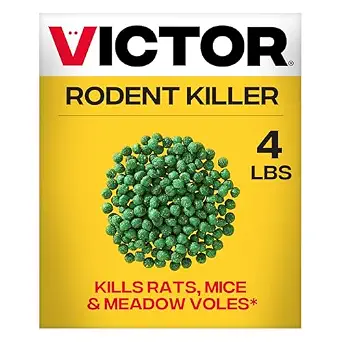 |
| Best Budget The cheapest option that still gets the job done reliably | Amdro Mole & Gopher Bait, 1 lb |  |
| Highest Rated A top-rated pick with lots of positive feedback | JT Eaton 709-PN Anticoagulant Bait Block, Peanut Butter Flavor (2 pails of 144) |  |
| Most Popular A crowd favorite that many people choose with confidence | Tomcat Bromethalin Bait Chunx Pail, 4.25 lb |  |
Tomcat Bromethalin Place Pacs Rodent Bait, 4.1 lb.

| Unit Count | 1 Count |
|---|---|
| Item Type Name | Bait Pail |
| Target Species | Mouse |
| Manufacturer | The Scotts Company LLC |
Tomcat Bromethalin Place Pacs are a pre-portioned rodenticide intended to deliver a lethal dose to Norway rats, roof rats, and house mice. The product comes as individual 3-ounce place pacs inside a 4.1 pound pail, which makes distribution quick for both indoor and outdoor use around manmade structures when placed in tamper-resistant stations. Typical use is along walls, near gnawed openings, in corners, or inside bait stations; for rats the label recommends 1 to 2 pacs every 15 to 30 feet and for mice opening the pac and applying measured portions every 8 to 12 feet. The practical benefits are ease of placement, consistent dosing and efficacy against some anticoagulant-resistant rodents. Important limitations are safety requirements and restrictions: handlers must wear gloves and other protective gear, bait must be protected from children, pets and non-target wildlife with tamper-resistant stations for above-ground use, and the product has species-use restrictions in California. Expect to monitor and replenish bait sites for several days to achieve control.
Best for: Buyers who prioritize fast, dependable kill of rats and mice and want pre-measured bait for efficient placement around structures.
Less Ideal for: Households with young children, roaming pets, or frequent wildlife access where secure baiting cannot be guaranteed should consider non-toxic control methods or professional services.
- Pre-measured place pacs simplify consistent dosing and placement
- Contains bromethalin effective against some anticoagulant-resistant rats
- Formulated for both indoor and outdoor use when used in tamper-resistant stations
- Large 4.1 lb. pail supplies multiple placements for ongoing control
- Requires careful handling and protective gear to avoid exposure
- Must be used in tamper-resistant stations for above-ground application to protect children, pets, and non-target animals
- Not permitted for use against certain rodent species in California
Verdict: If you need a professional-strength, ready-to-place rodenticide that works on anticoagulant-resistant rats, these bromethalin place pacs deliver consistent, effective control when used safely.
Bell Laboratories Final Blocks Rodenticide 18 lb

| Item Form | Spray |
|---|---|
| Target Species | Rodents |
| Item Weight | 19.9 pounds |
Final Blocks Rodenticide is a bulk block-style poison formulated for controlling rodents indoors and in outbuildings. It is presented as solid bait blocks designed to be placed in secure bait stations or locations rodents frequent; the block form helps keep bait in place and reduces scattering. Typical use is by distributing blocks around burrows, along runways, or inside tamper-resistant bait stations on a routine monitoring schedule. Practical benefits include a large 18 pound supply for sustained control programs and a concentrated formulation suited to professional or heavy residential infestations. Important limitations are that it is a toxic pesticide requiring careful placement in secured stations to keep pets and non-target wildlife away, and it assumes the user understands local regulations and safe handling. It does not include bait stations or measuring tools, so buyers should plan for storage and safe deployment accessories.
Best for: People managing moderate to heavy indoor or outbuilding rodent problems who prioritize an effective, long-lasting bait supply and will use tamper-resistant bait stations and proper safety practices.
Less Ideal for: Those with small, occasional mouse sightings, households with unsupervised pets or children, or anyone unwilling to follow pesticide safety rules should choose non-chemical or smaller packaged options.
- Large 18 lb supply suitable for multi-location or long-term control programs
- Block form resists scattering and stays in place along runways
- Designed for targeting rodents specifically, reducing wasted product
- Bulk pack is convenient for maintenance schedules without frequent repurchasing
- Contains toxic active ingredients and requires strict use in tamper-resistant bait stations
- No bait stations or placement accessories are included
- Not formulated or sold with child or pet-proof packaging integrated
Verdict: A bulk, block-style rodenticide that gives sustained, professional-strength bait supply for serious mouse control when used responsibly.
Victor M925 Rodent Killer, 4 lb Fish‑Flavored Bait Balls

| Item Form | Soft Bait |
|---|---|
| Target Species | Rodents |
| Specification Met | EPA |
| Active Ingredients | Diphacinone 0.005% |
Victor M925 is a ready-to-use rodenticide supplied as fish-flavored soft bait balls in a 4 lb bag for broad indoor and outdoor use. It is typically placed along walls, in concealed spots, or inside tamper-resistant bait stations to attract rodents and encourage repeated feeding until a lethal dose is consumed. Notable features include a palatable formulation that appeals to mice, rats, and meadow voles, an EPA specification, and weather-resistant properties that help the bait remain effective in damp exterior locations. The large bag gives enough material for multiple placements across a property or extended treatment periods. Important limitations are safety and non-target risk since the product is toxic to pets, children, and wildlife and must be secured in approved stations and handled with care. This product is a poison rather than a trapping solution, so it is best used where baiting is acceptable and strict placement and disposal rules can be followed.
Best for: Homeowners who prioritize a straightforward, low-maintenance baiting approach to reduce existing rodent activity and who will use tamper-resistant bait stations and follow label safety instructions.
Less Ideal for: People seeking a non-toxic or purely mechanical trapping method, or those unable to reliably prevent access by pets, children, or wildlife.
- Ready-to-use soft bait that requires no mixing or preparation
- Fish-flavored formula designed to attract rats, mice, and voles
- Weather-resistant so placements outdoors retain potency
- Large 4 lb bag provides enough bait for extensive or repeated treatments
- Contains an anticoagulant active ingredient and is hazardous to pets, children, and non-target wildlife
- Not a mechanical trapping solution so carcass removal and secondary poisoning concerns apply
Verdict: Choose this ready-to-use, weather-resistant bait when you want an easy-to-deploy, high-coverage rodenticide for indoor and outdoor infestations and can secure placements to protect people and pets.
Amdro Mole & Gopher Bait, 1 lb

| Item Form | Pellets |
|---|---|
| Target Species | Rodents |
| Active Ingredients | Zinc Phospide |
| Unit Count | 1 Count |
Amdro Mole & Gopher Bait is a ready-to-use pellet formulated to control pocket gophers and moles by placing pellets directly into active tunnels and burrows. In typical use you locate active runs or fresh mounds and apply the pellets into the opening where rodents will feed, which makes this product practical for targeted below-ground control across lawns and landscaped areas. The product contains zinc phosphide, so it acts quickly when consumed and is intended only for manual, below-ground baiting of active burrows. Notable features include a pellet form that is easy to handle and instructions focused on direct placement rather than broadcast application. Practical benefits are rapid knockdown of tunneling rodents when applied correctly and the convenience of a ready-to-use container. Important limitations are legal and regional restrictions on mole use in certain states, the toxicity that requires careful handling and protective gear, and that it is only approved for use in active burrows rather than for above-ground or non-target bait stations.
Best for: Home gardeners who need an affordable, direct-control solution for active gopher or mole tunneling in lawns and who are comfortable following safety instructions for a toxic bait.
Less Ideal for: People who need non-toxic or pet-safe rodent control, those wanting preventative or above-ground solutions, or gardeners in states where mole use is restricted.
- Ready-to-use pellet form that is simple to place in active burrows
- Contains zinc phosphide for effective, fast action on gophers and moles
- Specifically labeled for below-ground application in lawns to target tunneling damage
- Contains a toxic active ingredient requiring protective handling and careful use
- Not approved for mole use in some states which limits usability
- Only suitable for manual placement in active burrows, not for broadcast or above-ground control
Verdict: Amdro offers a budget-friendly, ready-to-use pellet that provides targeted, fast control of gophers and moles when applied directly in active burrows.
JT Eaton 709-PN Anticoagulant Bait Block, Peanut Butter Flavor (2 pails of 144)

| Unit Count | 288 Count |
|---|---|
| Item Form | Bait |
| Target Species | Rodents |
This JT Eaton 709-PN bait is a professional-grade anticoagulant block designed to attract and eliminate mice and rats. It is supplied in two tamper-evident resealable pails, each holding multiple one-ounce blocks, which makes it straightforward to place in bait stations or protected areas around buildings. The peanut butter formulation is intended to improve palatability so rodents consume a lethal dose over multiple feedings. For reliability-focused buyers, the packaging and block form simplify storage and handling while helping maintain bait integrity during use. Important limitations are that this is a toxic rodenticide requiring careful placement in tamper-resistant stations and strict adherence to label instructions to avoid non-target exposures. It is not an instant-kill solution; the anticoagulant mode of action works over days and may require monitoring and repeated placements to achieve full control in heavy infestations.
Best for: Buyers who prioritize a dependable, professional rodent control product for buildings and need bait that stores and dispenses cleanly in bait stations; suitable for property managers and experienced homeowners.
Less Ideal for: Casual users seeking a non-toxic or immediate-action solution or those unable to guarantee tamper-resistant placement should consider alternatives.
- Professional anticoagulant block form suitable for use in bait stations
- Peanut butter flavor increases attractiveness to mice and rats
- Supplied in resealable, tamper-evident pails for secure storage and easy dispensing
- Contains anticoagulant active ingredients so it requires careful use to prevent accidental poisoning of non-target animals or people
- Not an immediate knockdown product; control occurs over several days and may need follow-up placements
Verdict: A dependable professional anticoagulant bait in resealable pails that makes sustained control of mice and rats practical and manageable.
Tomcat Bromethalin Bait Chunx Pail, 4.25 lb

| Item Form | Bar |
|---|---|
| Target Species | Rodents |
| Net Weight | 4.25 lb |
This Tomcat pail contains preformed 1 oz. bromethalin bait blocks intended for tackling mice, Norway rats, roof rats, and meadow voles in and around buildings. It is packaged for professional or agricultural use and is typically deployed inside tamper-resistant bait stations placed in basements, garages, crawl spaces, and around foundations within 100 feet of structures. The bait is fast-acting so rodents often consume a lethal dose in a single night and mortality can occur within a few days. The large 4.25 lb. pail supplies many placements and makes regular monitoring and replenishment simple. Important practical points are that outdoor placements must be in weather- and tamper-resistant stations and the label restricts use against certain species in California. Because this contains an acute pesticide, care is needed to keep it inaccessible to children, pets, and non-target wildlife and to follow local regulations and label directions.
Best for: Buyers who want a professional-strength, ready-to-use rodent bait for systematic control around buildings and who plan to use tamper-resistant stations and follow label directions.
Less Ideal for: Casual homeowners who cannot commit to secure bait station use or who need a rodent solution safe for free outdoor placement around pets and wildlife.
- Preformed 1 oz. blocks are easy to place and monitor in bait stations
- Contains bromethalin which is effective against anticoagulant-resistant rodents
- Large 4.25 lb. pail supplies many bait placements for ongoing control
- Suitable for indoor and outdoor use when placed in tamper-resistant stations
- Requires tamper- and weather-resistant bait stations for safe outdoor use and to protect non-targets
- Not permitted for use on several listed species in California and must be used according to label restrictions
Verdict: Choose this product when you need a professional-grade, preformed bromethalin bait supply for effective, managed rodent control around structures.
Choosing the Right Rodent Poison for Garden: Key Factors to Consider
Toxicity and Target Specificity
How toxic a product is to rats and mice determines how quickly it will reduce visible activity in a garden. Higher-toxicity compounds may kill pests faster but can increase the chance of secondary poisoning if predators or scavengers eat poisoned carcasses. Target specificity matters because formulations vary in how attractive they are to different rodent species; baits designed for commensal rats may not work as well on vole or gopher populations.
Assessing toxicity helps you match the tool to the pest and to how close the infestation is to people, pets, or desirable wildlife. Read labels for species lists and bait acceptance notes before applying in planting areas.
Persistence and Environmental Fate
Persistence describes how long active ingredients or residues remain effective in the soil and bait matrix. Some compounds break down quickly and need repeat application, while others remain active longer and can reduce reinfestation risk. In a garden, persistence also affects residual exposure to earthworms, pollinators, and nearby wildlife.
Consider your soil type, drainage, and sun exposure because these environmental factors influence breakdown rates. Choose products with persistence profiles that match how often you can monitor baits and remove spent material.
Containment, Bait Stations, and Placement
Placement strategy is critical for minimizing non-target uptake. Using enclosed bait stations, placing bait in burrows or under cover, and avoiding open spread of granules reduces access by birds, pets, and beneficial mammals. Some formulations are designed specifically for locked boxes or tamper-resistant stations, which is a strong feature for gardens where children or pets may be present.
Think about where rodents travel in your yard. Place baits along runways, at burrow entrances, or near structural foundations rather than on open soil, and ensure stations are fixed so they are not disturbed by weather or wildlife.
Attractiveness and Bait Acceptance
Even the most toxic product will fail if rodents will not eat it. Palatability depends on bait matrix, flavoring, and the local diet of the rodent population. In gardens with abundant alternative food sources such as compost or bird seed, more attractive formulations or pre-baiting strategies may be necessary.
Observe feeding behavior during the first few days and be prepared to try a different matrix or move placement if uptake is low. Successful control often combines good placement with a bait that is appealing to the specific rodent species.
Safety for Pets, Wildlife, and Humans
Gardens are shared spaces. Consider the risk to pets, backyard wildlife, and children when selecting a product. Restricted-access formulations and bait stations reduce accidental ingestion, but you must still follow label directions for application distance from edible plants and how to dispose of dead rodents.
Plan for monitoring and removal of carcasses, and keep pets away from treated areas until baits are removed. Balance the need for effective control with the responsibility to protect non-target animals.
Legal and Label Requirements
Regulations and label instructions determine where and how a toxic control product may be used outdoors. Labels specify approved uses, species, buffer distances from water or edibles, and safety precautions. Using a product off-label can be illegal and dangerous.
Always read and follow label directions for application rates, reentry intervals, and disposal procedures. Choose products whose label permissions align with garden use and your local regulations.
How Different Active Ingredients Behave In Soil
Active ingredients vary in solubility, binding to organic matter, and breakdown by microbes and sunlight. These properties determine how long residues persist and whether a compound moves through the soil profile. In heavier, clay-rich soils some molecules bind and persist longer, while sandy soils with good drainage tend to promote faster leaching or microbial breakdown.
Understanding these behaviors helps you plan monitoring intervals and pick-up schedules for used bait. It also informs decisions about using bait near vegetable beds versus ornamental areas.
- Low-persistence actives break down faster and may require repeat applications
- High-persistence actives reduce frequency but increase long-term exposure risks
- Soil type and moisture accelerate or slow environmental breakdown
Using Bait Stations Effectively In Garden Settings
Bait stations keep toxicants contained, reduce non-target access, and often include features to anchor them so wind or wildlife cannot move them. In gardens, choose stations that allow placement near burrows, under shrubs, or along fences without disturbing plant roots.
Secure stations on a regular schedule, check bait uptake, and replace spent bait promptly to avoid leaving degraded material in the open.
- Place stations along rodent runways and near burrows
- Lock or fasten stations to prevent tipping
- Use weatherproof models that protect bait from rain
Minimizing Risk To Pets And Beneficial Wildlife
Adopt simple precautions to shield non-target animals. Keep pets indoors or away from treated zones during active baiting and for the period specified on the product label. Remove any carcasses you find using gloves and a sealable bag to prevent scavengers from exposure.
Avoid placing baits where birds or pollinators forage, and do not use loose granules in open beds. Where possible, prefer tamper-resistant forms that reduce incidental contact.
- Monitor areas daily when baits are first deployed
- Wear gloves when handling baits or carcasses
- Store unused product securely out of reach
Timing Treatments To Garden Activity
Time applications for periods when garden activity is low, such as early spring before heavy planting or late fall after harvest, to limit exposure to people and pets. Rodent feeding patterns also shift with seasons; in colder months they seek shelter and bait stations near foundations may be more effective.
Coordinate baiting with other sanitation practices like securing compost, clearing spilled bird seed, and sealing entry points to reduce food competition and improve bait uptake.
- Avoid peak pollinator activity when placing baits near flowering plants
- Combine baiting with sanitation for best results
- Reassess treatment timing after heavy rains or irrigation events
Disposal and Carcass Management
Proper disposal reduces secondary poisoning risks. Remove dead rodents promptly using gloves and a sturdy bag. Check local guidance for disposal methods; in many cases double-bagging and placing in general waste is advised, but follow label and local rules.
Avoid leaving carcasses where predators or scavengers can access them. If you cannot safely remove a carcass, contact a local extension office or pest professional for guidance.
- Wear protective gloves and wash hands after handling
- Double-bag carcasses and dispose according to label or local rules
- Record locations and dates of finds to track treatment effectiveness
How We Chose the Best Rodent Poison for Garden
We focused on options that are commonly used in outdoor garden settings and applied filters relevant to gardeners rather than pest professionals. Evaluation emphasized toxicity profile and target specificity to balance effectiveness against non-target risk. Persistence and environmental fate were assessed to understand how long residues last in soil and bait stations. Delivery and containment were considered so we prioritized formats that can be used safely in garden beds, planters, and near structures. We also looked at ease of use for typical gardeners, including clear labeling and simple application methods, and the likelihood of secondary poisoning events based on how baits are consumed and carcasses are handled. Excluded from consideration were products intended only for indoor use or for species control methods that require specialized licensing or professional-only equipment. We did not include general repellents or non-lethal exclusion devices that do not rely on toxicant action. The final shortlist reflects products that scored well across the concrete dimensions gardeners care about: toxicity control, persistence, containment and deployment, and safety toward non-target animals.
FAQ
Can I use rodent poison around edible plants?
It depends on the product and its label. Some formulations are labeled for use near ornamental areas but not directly in vegetable beds. If a product is allowed near edibles, follow buffer distances, avoid direct contact with harvestable parts, and remove bait stations before harvesting.
How long before I see results after placing bait?
Results vary by active ingredient and rodent species. Some baits reduce visible activity in a few days, while others designed for multi-feed effects may take a week or more. Monitor bait uptake and activity to judge effectiveness.
What should I do if a pet finds a bait station?
If a pet accesses bait, contact a veterinarian immediately and bring the product label if possible. For prevention, use locked or tamper-resistant stations and place them where pets cannot reach.
Are there non-chemical alternatives that work in gardens?
Yes. Exclusion, trapping, habitat modification, and sanitation can reduce rodent pressure. These methods often work best when combined with targeted baiting, especially for larger or persistent populations.
How often should I check bait stations?
Check stations at least once or twice a week during active treatment, and after heavy rain. Regular checks let you replace eaten bait, remove spoiled bait, and find carcasses promptly to reduce secondary exposure.
Final Verdict
When selecting a rodent poison for garden use, prioritize containment and non-target safety alongside effectiveness. Match the toxicity profile to the target species and your proximity to pets, children, and wildlife. Consider persistence and soil behavior so you can plan monitoring and cleanup. Balance bait attractiveness and placement with responsible handling and disposal. By focusing on targeted deployment, protective bait stations, and careful timing, you can reduce plant damage while managing risks to beneficial organisms and household animals.
