

Note: This article contains affiliate links. If you click on these links and make a purchase, I may earn a small commission at no extra cost to you. This helps support my research and content. Read my full affiliate disclosure here.
When rodents move into a house, choosing the right rodent poison matters for quick control and household safety. You want a formulation that reliably reduces populations while minimizing risk to pets, children, and non target wildlife where practical. This guide shortlists the top options for home use and explains why each type might suit a different situation. We evaluated candidate products for toxicity profile, bait formulation and placement flexibility, and how easy they are to monitor or remove. Read on to compare the main tradeoffs and find the right approach for controlling rodents in a home setting.
Top Picks at a Glance
| Best Overall The best all-around choice for most situations | Neogen Ramik Green Fish‑Flavored Weather‑Resistant Rodenticide Nuggets, 4 lb |  |
| Best Quality Built to a higher standard if you want something more solid | Tomcat Bromethalin Place Pacs Rodent Bait, 4.1 lb. |  |
| Best Value The sweet spot between price and what you get | Ramik Bars Rodenticide, 4 lb (4 bars) |  |
| Best Budget The cheapest option that still gets the job done reliably | Tomcat Rat & Mouse Killer Disposable Bait Station, Child & Dog Resistant, 2-Pack |  |
| Most Popular A crowd favorite that many people choose with confidence | Victor M925 Rodent Killer, 4 lb Fish‑Flavored Bait Balls | 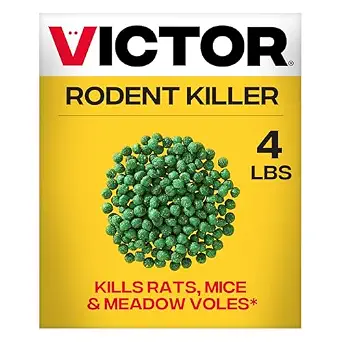 |
| Best Seller A high-volume bestseller chosen again and again | Tomcat Bromethalin Bait Chunx Pail, 4.25 lb |  |
Neogen Ramik Green Fish‑Flavored Weather‑Resistant Rodenticide Nuggets, 4 lb

| Item Form | Pellets |
|---|---|
| Target Species | Rats, Mice and Meadow Voles |
| Active Ingredients | Diphacinone |
Neogen Ramik Green nuggets are a fish‑flavored, weather‑resistant rodenticide formulated with diphacinone and sold in a 4 lb bag. You place the pellets where rodent activity is seen or inside approved bait stations; the palatable grain mix encourages feeding and the anticoagulant acts over several days after ingestion. The nuggets are designed for indoor and outdoor use and are marketed as especially suited to wet or damp areas because they resist softening in moisture better than wax baits. Practical users will appreciate the simple pellet form that is easy to distribute in stations or around structures and the familiar single‑ingredient formulation. Important limitations are that this is a first‑generation anticoagulant so multiple feedings are usually required and results can take several days, and it is a toxic pesticide that requires careful handling and secure placement to avoid exposure to children, pets, and non‑target wildlife. Follow label directions and local regulations when using this product.
Best for: Buyers who want a straightforward, proven pellet rodenticide for routine control around buildings and in damp outdoor sites and who prioritize ease of deployment and reliable palatability.
Less Ideal for: People who need an immediate‑action solution, those unwilling to follow pesticide safety rules, or those with uncontrolled access by pets or wildlife should choose different control methods.
- Weather‑resistant pellet form suitable for damp or wet areas
- Fish flavor and food‑quality grain mix increase palatability to rodents
- Simple pellet nuggets are easy to place in bait stations or along runways
- Contains diphacinone, a widely used first‑generation anticoagulant
- Requires multiple feedings and can take several days to produce mortality
- Toxic to non‑target animals and humans so strict placement and handling are necessary
Verdict: A practical, weather‑resistant pellet bait that reliably attracts rodents for routine indoor and outdoor control when used according to label instructions.
Tomcat Bromethalin Place Pacs Rodent Bait, 4.1 lb.

| Unit Count | 1 Count |
|---|---|
| Item Type Name | Bait Pail |
| Target Species | Mouse |
| Manufacturer | The Scotts Company LLC |
Tomcat Bromethalin Place Pacs are a pre-portioned rodenticide intended to deliver a lethal dose to Norway rats, roof rats, and house mice. The product comes as individual 3-ounce place pacs inside a 4.1 pound pail, which makes distribution quick for both indoor and outdoor use around manmade structures when placed in tamper-resistant stations. Typical use is along walls, near gnawed openings, in corners, or inside bait stations; for rats the label recommends 1 to 2 pacs every 15 to 30 feet and for mice opening the pac and applying measured portions every 8 to 12 feet. The practical benefits are ease of placement, consistent dosing and efficacy against some anticoagulant-resistant rodents. Important limitations are safety requirements and restrictions: handlers must wear gloves and other protective gear, bait must be protected from children, pets and non-target wildlife with tamper-resistant stations for above-ground use, and the product has species-use restrictions in California. Expect to monitor and replenish bait sites for several days to achieve control.
Best for: Buyers who prioritize fast, dependable kill of rats and mice and want pre-measured bait for efficient placement around structures.
Less Ideal for: Households with young children, roaming pets, or frequent wildlife access where secure baiting cannot be guaranteed should consider non-toxic control methods or professional services.
- Pre-measured place pacs simplify consistent dosing and placement
- Contains bromethalin effective against some anticoagulant-resistant rats
- Formulated for both indoor and outdoor use when used in tamper-resistant stations
- Large 4.1 lb. pail supplies multiple placements for ongoing control
- Requires careful handling and protective gear to avoid exposure
- Must be used in tamper-resistant stations for above-ground application to protect children, pets, and non-target animals
- Not permitted for use against certain rodent species in California
Verdict: If you need a professional-strength, ready-to-place rodenticide that works on anticoagulant-resistant rats, these bromethalin place pacs deliver consistent, effective control when used safely.
Ramik Bars Rodenticide, 4 lb (4 bars)

| Active ingredient | diaphacinone 0.005% |
|---|---|
| Item Form | Bar |
| Unit Count | 64 Ounce |
Ramik Bars are a first‑generation anticoagulant bait sold as four scored bars designed to be placed where rodents feed. The product is typically used in bait stations along walls, in attics, basements, and other areas where rodent activity is seen; the scored bars let you break portions off for targeted placements. The active ingredient diaphacinone (0.005%) and a food‑quality grain mix make the bars palatable, and the hot‑extruded formulation improves resistance to moisture and physical wear so it holds up in damp or semi‑protected outdoor locations. Important practical points: maintain fresh bait for the recommended period (about 10 days for rats, 15 for mice) and use tamper‑resistant stations when non‑target animals or children could access the bait. This product is labelled only for use against specific rodent species and must be used according to directions, so expect to pair it with monitoring and secure placement rather than scattering it openly.
Best for: Buyers who want a durable, portionable bait to manage household or structural rodent activity with measured, station‑based application and steady monitoring.
Less Ideal for: Not a fit for people who need instant knockdown or who cannot commit to regular monitoring and secure bait station use; also not suitable where non‑target access cannot be prevented.
- Hot‑extruded bars resist moisture and physical wear, suitable for damp or semi‑protected areas.
- Scored bars allow portioning so you can place smaller doses in multiple locations.
- Food‑quality grain mix and fish flavor improve palatability for rodents.
- Labelled for indoor and outdoor use around man‑made structures when used in bait stations.
- Contains a first‑generation anticoagulant so multiple days of continuous baiting are required for control.
- Must be used in tamper‑resistant bait stations for outdoor or accessible locations, limiting placement options.
Verdict: A durable, portionable rodent bait for homeowners who prefer station‑based, monitored control of mice and rats.
Tomcat Rat & Mouse Killer Disposable Bait Station, Child & Dog Resistant, 2-Pack

| Unit Count | 2 Count |
|---|---|
| Target Species | Mouse |
| Power Source | manual |
| Material Type | Plastic |
This Tomcat disposable bait station is a ready-to-use option for controlling mice and rats around a home. Each plastic station comes pre-filled with a bait block and a clear lid so you can monitor consumption without opening the unit. The station is described as child- and dog-resistant and weather resistant, allowing placement in basements, garages, behind appliances, and on exterior foundations. Because it is preloaded and disposable, you do not need to handle loose bait or refill blocks during routine use. Practical benefits include easy placement vertically or horizontally and simple visual checks through the lid to know when to replace the station. Limitations are that the product is a single-use station that must be disposed of when spent and that rodents may eat and then die elsewhere, which can mean finding carcasses away from the station. Also the formulation and toxicity require following label directions and safe placement out of reach of non-target animals and children.
Best for: Buyers who want a low-effort, safety-focused solution for outdoor or periphery indoor rodent control and prefer products that minimize direct contact with bait.
Less Ideal for: People who need reusable or refillable bait stations or who want non-toxic catch-and-release trapping methods should consider alternatives.
- Pre-filled and ready to use so you avoid handling loose bait
- Child- and dog-resistant design reduces accidental access
- Clear lid allows quick visual monitoring of bait level
- Weather resistant for use indoors and outdoors
- Can be placed vertically or horizontally to suit tight spaces
- Disposable single-use design requires replacement rather than refilling
- Rodents may die away from the station making recovery of carcasses possible
Verdict: A safe, no-fuss disposable bait station for homeowners who want an easy, monitored way to reduce outdoor and perimeter mouse activity.
Victor M925 Rodent Killer, 4 lb Fish‑Flavored Bait Balls

| Item Form | Soft Bait |
|---|---|
| Target Species | Rodents |
| Specification Met | EPA |
| Active Ingredients | Diphacinone 0.005% |
Victor M925 is a ready-to-use rodenticide supplied as fish-flavored soft bait balls in a 4 lb bag for broad indoor and outdoor use. It is typically placed along walls, in concealed spots, or inside tamper-resistant bait stations to attract rodents and encourage repeated feeding until a lethal dose is consumed. Notable features include a palatable formulation that appeals to mice, rats, and meadow voles, an EPA specification, and weather-resistant properties that help the bait remain effective in damp exterior locations. The large bag gives enough material for multiple placements across a property or extended treatment periods. Important limitations are safety and non-target risk since the product is toxic to pets, children, and wildlife and must be secured in approved stations and handled with care. This product is a poison rather than a trapping solution, so it is best used where baiting is acceptable and strict placement and disposal rules can be followed.
Best for: Homeowners who prioritize a straightforward, low-maintenance baiting approach to reduce existing rodent activity and who will use tamper-resistant bait stations and follow label safety instructions.
Less Ideal for: People seeking a non-toxic or purely mechanical trapping method, or those unable to reliably prevent access by pets, children, or wildlife.
- Ready-to-use soft bait that requires no mixing or preparation
- Fish-flavored formula designed to attract rats, mice, and voles
- Weather-resistant so placements outdoors retain potency
- Large 4 lb bag provides enough bait for extensive or repeated treatments
- Contains an anticoagulant active ingredient and is hazardous to pets, children, and non-target wildlife
- Not a mechanical trapping solution so carcass removal and secondary poisoning concerns apply
Verdict: Choose this ready-to-use, weather-resistant bait when you want an easy-to-deploy, high-coverage rodenticide for indoor and outdoor infestations and can secure placements to protect people and pets.
Tomcat Bromethalin Bait Chunx Pail, 4.25 lb

| Item Form | Bar |
|---|---|
| Target Species | Rodents |
| Net Weight | 4.25 lb |
This Tomcat pail contains preformed 1 oz. bromethalin bait blocks intended for tackling mice, Norway rats, roof rats, and meadow voles in and around buildings. It is packaged for professional or agricultural use and is typically deployed inside tamper-resistant bait stations placed in basements, garages, crawl spaces, and around foundations within 100 feet of structures. The bait is fast-acting so rodents often consume a lethal dose in a single night and mortality can occur within a few days. The large 4.25 lb. pail supplies many placements and makes regular monitoring and replenishment simple. Important practical points are that outdoor placements must be in weather- and tamper-resistant stations and the label restricts use against certain species in California. Because this contains an acute pesticide, care is needed to keep it inaccessible to children, pets, and non-target wildlife and to follow local regulations and label directions.
Best for: Buyers who want a professional-strength, ready-to-use rodent bait for systematic control around buildings and who plan to use tamper-resistant stations and follow label directions.
Less Ideal for: Casual homeowners who cannot commit to secure bait station use or who need a rodent solution safe for free outdoor placement around pets and wildlife.
- Preformed 1 oz. blocks are easy to place and monitor in bait stations
- Contains bromethalin which is effective against anticoagulant-resistant rodents
- Large 4.25 lb. pail supplies many bait placements for ongoing control
- Suitable for indoor and outdoor use when placed in tamper-resistant stations
- Requires tamper- and weather-resistant bait stations for safe outdoor use and to protect non-targets
- Not permitted for use on several listed species in California and must be used according to label restrictions
Verdict: Choose this product when you need a professional-grade, preformed bromethalin bait supply for effective, managed rodent control around structures.
Choosing the Right Rodent Poison for Home: Key Factors to Consider
Active Ingredient and Mode of Action
Different rodent poisons use varied active ingredients and kill mechanisms. Some act as anticoagulants that cause internal bleeding over several days, while others produce rapid neurotoxic effects. Knowing the mode of action helps predict how quickly rodents will die, whether secondary poisoning risk exists for pets or wildlife that scavenge carcasses, and how many feedings are required for effectiveness. For home use, choose an ingredient with clear labeling for indoor application and understand any first aid or exposure guidance provided on the product label.
Regulatory classifications and restrictions vary by ingredient. Homeowners should follow label instructions closely and consider non chemical controls alongside baits to reduce overall reliance on poisons.
Formulation Type and Palatability
Poisons come as loose pellets, blocks, pastes, or waxes. Palatability affects how readily rodents consume the bait, especially in environments where alternative food is available. Blocks and waxes often withstand humidity and are easier to place in tamper resistant stations, while loose pellets can be tempting but harder to secure. Pastes and gels are useful for targeted placements in crevices but may dry out over time.
Consider seasonal food availability in and around the home. When rodents have many competing food sources, choose a formulation proven to attract the target species and plan to refresh or reposition bait until feeding is consistent.
Placement Options and Tamper Resistance
Where and how a bait can be placed is critical for safety in a home environment. Products designed for secured bait stations reduce accidental access by children and pets. Look for baits that fit standard tamper resistant boxes or are supplied in child resistant packaging. Also consider whether the bait can be placed in crawlspaces, attics, behind appliances, or inside wall voids where rodents travel.
Placement also affects monitoring. Baits placed in accessible stations make it easier to check consumption and remove uneaten material. Always follow label instructions about placement to comply with safety guidance and legal use.
Detection, Monitoring, and Carcass Recovery
A key practical issue with rodent poisons is locating and removing dead animals. Some poisons cause rodents to die in hidden spaces, producing odor and secondary pest issues. Choose options and placement strategies that make carcass recovery realistic, such as positioning baits in accessible runways or stations rather than inside deep voids.
Plan a monitoring schedule to check bait uptake and signs of activity. Using tracking pads or flour trails near bait stations can help confirm which baits are being eaten and whether additional control measures are needed.
Risk to Pets, Children, and Non Target Wildlife
Homeowners must weigh the potential for accidental exposure when selecting a rodent poison. Some active ingredients remain hazardous to dogs, cats, and birds if they ingest bait directly or eat poisoned carcasses. Evaluate how easy it would be for a pet to access a baited area, and prefer formulations that are less attractive to companion animals or that are placed in tamper resistant enclosures.
Also consider possible secondary poisoning of outdoor wildlife if carcasses are accessible. Minimizing exposed bait and promptly removing dead rodents reduces these risks.
Legal Labeling and Indoor Use Instructions
Not all rodent poisons are authorized for indoor use. Check the product label for explicit indoor application guidance and any restrictions. Labels also specify required personal protective equipment and handling steps that protect household members during placement and disposal.
Following labeling ensures compliant and safer use. Products lacking clear indoor directions or that require professional application should be excluded for typical homeowner scenarios.
Choosing Placement That Reduces Risk
Placement decisions affect both effectiveness and household safety. Place baits where rodents naturally travel, such as along baseboards, behind appliances, and near entry points, but always inside tamper resistant stations when pets or children are present. Securing bait inside a locked box cuts accidental access and concentrates feeding in an inspectable location.
If you must bait an attic or crawlspace, consider sealing access and using bait stations mounted out of reach. Avoid placing loose bait on the ground in garages or sheds where pets frequent; instead use enclosed stations or wall mounted blocks.
- Position stations against walls where droppings and rub marks appear
- Use multiple small stations rather than one large pile of bait
- Check stations regularly and replace damp or fouled bait
Integrating Non Chemical Controls
Poisons work best when combined with exclusion and sanitation. Seal gaps where rodents enter, store food in rodent proof containers, and remove clutter that provides nesting sites. Reducing available food increases bait uptake and decreases reinfestation risk.
Snap traps, electronic traps, and live-capture options can reduce population numbers quickly and make detection and carcass disposal simpler. Use these methods alongside targeted baiting rather than relying on poison as a sole solution.
- Inspect exterior walls and foundations for holes larger than a quarter inch
- Keep compost and pet food secured away from house foundations
- Trim vegetation and firewood away from walls to reduce shelter
Managing Secondary Risks and Disposal
Plan ahead for safe carcass and spent bait disposal. Wear gloves when handling dead rodents and place remains in sealed bags before disposing according to local regulations. If a household pet eats bait or a poisoned carcass, contact a veterinarian immediately and bring the product label information.
Minimize secondary wildlife impacts by removing carcasses promptly and avoiding outdoor loose bait. When using rodent poison near conservation areas, prefer placements and formulations that reduce exposure to scavengers.
- Keep a dedicated kit with gloves, bags, and a sealable container for disposal
- Document bait placements and check them at regular intervals
- Follow local guidance for biohazard or animal remains disposal where applicable
When to Call a Professional
Call a licensed pest control professional for large or persistent infestations, for suspected rodent-borne illness exposure, or when baiting is restricted by local rules. Professionals can apply products that are not available to homeowners and can execute targeted baiting and exclusion plans.
Also seek professional help if household members include very young children, elderly people with health concerns, or if multiple pets are present and risk of accidental exposure is high. A professional can advise on the safest mix of control methods for those situations.
- Large, established infestations inside wall voids or attics
- Recurring activity despite repeated homeowner treatments
- Uncertainty about safe bait placement or handling
Signs of Successful Baiting
Successful control is indicated by reduced fresh droppings, fewer gnaw marks, and less activity at night. Visible feed marks on bait or partial consumption in stations tells you which formulations are attractive to local rodents. Expect a lag between bait uptake and a drop in visible activity depending on the active ingredient used.
Continue monitoring for several weeks after feeding stops and maintain exclusion and sanitation to prevent reinfestation.
- Track bait weight or appearance to confirm feeding
- Use motion activated lights or cameras in severe cases to monitor activity
- Rebait or reposition stations if no feeding is observed after several days
How We Chose the Best Rodent Poison for Home
We selected the six rodent poison options included here by focusing on practical, home-focused criteria that matter in everyday pest control. First, we assessed toxicity profile and active ingredient class to understand how each formula affects rodents and what secondary risks it poses to pets, children, and wildlife. Second, bait formulation and delivery were evaluated to judge how easily the product can be placed out of reach and whether it attracts target rodents effectively. Third, we considered placement flexibility and tamper resistance so homeowners can secure baits indoors and in crawlspaces safely. Fourth, persistence and environmental fate were examined to estimate how long residues or dead rodents might present a hazard. Finally, we looked at monitoring and removal practicality, including whether the product makes it straightforward to detect feeding or retrieve carcasses. Products were excluded if they are labeled only for agricultural or industrial use, require specialized licensing to apply, or lack clear home-use instructions. Our criteria prioritize homeowner safety, legal indoor use, and realistic effectiveness in typical house environments.
FAQ
Are rodent poisons safe to use around pets?
It depends on the product and placement. Many poisons are hazardous to dogs and cats if ingested directly or if they eat poisoned rodents. Using tamper resistant bait stations, placing baits out of reach, and selecting formulations with lower secondary risk reduce hazards, but accidental exposure remains possible.
How long does it take for rodent poison to work?
Time to death varies by active ingredient. Some anticoagulants act over several days and may require multiple feedings, while certain neurotoxins act faster. Expect a delay between feeding and a visible reduction in activity, and plan monitoring accordingly.
Can I put bait inside wall voids or behind appliances?
You can place bait in locations rodents use, but accessibility for monitoring and carcass recovery is important. Avoid placing baits deep inside wall voids where carcasses cannot be retrieved. Use bait stations designed for narrow spaces or mountable blocks behind appliances when possible.
What should I do if a pet eats rodent poison?
If a pet ingests bait or a suspected poisoned carcass, contact a veterinarian immediately and provide the product label details. Early veterinary intervention improves outcomes. Keep a record of where the bait was placed to help inform treatment.
Will using rodent poison eliminate the need to seal entry points?
No. Poisoning reduces populations but does not prevent new animals from entering. Sealing gaps, repairing screens, and removing attractants are essential to prevent reinfestation after control efforts.
Is it better to use traps instead of poison in a home?
Traps can provide immediate removal and simpler carcass disposal, making them a good choice in many homes. Combining traps with targeted baiting often gives faster and more manageable control than poison alone, especially in environments with pets or children.
Final Verdict
For home rodent control, prioritize safety and practicality. Choose a product with an appropriate active ingredient and a formulation you can secure in tamper resistant stations. Combine any baiting with exclusion, sanitation, and monitoring so you reduce reinfestation risk and handle carcasses responsibly. Weigh the tradeoffs between speed of kill and secondary risk, and favor placements that make monitoring and removal feasible. When in doubt or when infestations are large or persistent, consult a licensed pest professional to design a safer, more effective plan.
