

Note: This article contains affiliate links. If you click on these links and make a purchase, I may earn a small commission at no extra cost to you. This helps support my research and content. Read my full affiliate disclosure here.
If you want consistent success propagating fiddle leaf fig cuttings, the rooting hormone you pick matters. Different formulations influence how quickly roots form, how well cuttings resist rot, and how easy the product is to apply in potting mix or water. This guide covers six shortlisted rooting hormones for fiddle leaf fig, chosen for their suitability with woody cuttings and indoor houseplant conditions. We evaluate each option on active ingredient strength, ease of use, and how well it fits typical indoor propagation setups. Read on to see practical guidance for getting strong, healthy roots in your fiddle leaf fig cuttings.
Top Picks at a Glance
| Best Overall The best all-around choice for most situations | TPS NUTRIENTS Root Stimulator for Fiddle Leaf Fig, Liquid Root Supplement, 8 oz |  |
| Best Quality Built to a higher standard if you want something more solid | Houseplant Prop Drops Rooting Hormone & Propagation Promoter, 8 oz |  |
| Best Value The sweet spot between price and what you get | Montorchid Root Drops Liquid Rooting Hormone (4 fl oz) |  |
| Best Budget The cheapest option that still gets the job done reliably | Doff Rooting Hormone Powder for Plant Cuttings, 75 g |  |
| Highest Rated A top-rated pick with lots of positive feedback | Herrdemia 3-in-1 Rooting Powder (IBA + NAA + Mycorrhizae) |  |
| Most Popular A crowd favorite that many people choose with confidence | Bonide Bontone II Rooting Powder, 1.25 oz |  |
TPS NUTRIENTS Root Stimulator for Fiddle Leaf Fig, Liquid Root Supplement, 8 oz

| Item Form | Liquid |
|---|---|
| Specific Uses For Product | Root Development |
| Target Species | Fig |
| Liquid Volume | 8 fluid ounces |
| Mixing Ratio | 1:16 |
This liquid root stimulator is designed specifically for fiddle leaf figs and is used as a supplement during repotting, transplanting, or periods of stress. Mixed at the supplied 1:16 ratio, it integrates into regular watering to encourage stronger root growth and faster establishment without forcing excessive top growth. The formula highlights kelp and probiotics, which in practice can improve nutrient uptake and help delicate roots recover from shock. Because it is a gentle, low‑build up liquid, you can use it with container and indoor fig specimens without frequent flushing. Practical limitations are its single 8 ounce size and target focus on figs only, so gardeners with many plants or mixed-species collections may need more product or a broader-use alternative. Safety precautions are standard for concentrated plant supplements, so gloves and careful storage are advisable.
Best for: Plant owners who want a straightforward, fig-focused rooting supplement to use during repotting or recovery and who prefer integrating treatments into normal watering routines.
Less Ideal for: Growers managing large collections or mixed-species indoor gardens who need higher-volume or multi-species root treatments.
- Formulated specifically for fiddle leaf fig root development
- Liquid concentrate mixes into watering routine with a 1:16 ratio
- Contains kelp and probiotics to support nutrient uptake and recovery
- Gentle formula designed to avoid nutrient buildup in pots
- Small 8 ounce unit may require frequent repurchase for multiple plants
- Targeted for figs only and not marketed for broader species use
Verdict: A gentle, fig‑specific liquid root supplement that slots into regular watering to help fiddle leaf figs establish and recover after repotting.
Houseplant Prop Drops Rooting Hormone & Propagation Promoter, 8 oz

| Item Form | Liquid |
|---|---|
| Specific Uses For Product | Root Development |
| Application Method | Add to water or soil |
| Target Species | All Houseplants |
| Unit Count | 8 Fluid Ounces |
Houseplant Prop Drops is a ready-to-use liquid rooting hormone designed to speed root formation on cuttings and reduce transplant shock. It is applied by adding a measured amount to water or soil when propagating cuttings and can also be used when moving young plants into fresh potting mix. The formula highlights seaweed extract and humic acid, which supply natural growth stimulants and improve root vigor without the handling and dust of powdered hormones. Practical benefits include faster visible root growth, gentler action on sensitive species like fiddle leaf figs, and a flip-top bottle that makes dosing and repeat applications straightforward. The product comes with a mixing ratio and a plant care guide to help with species-specific techniques. Limitations to keep in mind are that the bottle is an 8 ounce unit so frequent propagators may need refills, and precise effectiveness will vary by species and cutting health rather than delivering identical results every time. It is not a one-step fix for severely weakened plants but a useful tool to improve propagation success for performance-focused hobbyists.
Best for: Experienced plant owners who prioritize faster, reliable rooting when propagating houseplants and want a gentle, natural liquid stimulator to improve success with cuttings like fiddle leaf figs.
Less Ideal for: Someone looking for a bulk or commercial-scale rooting supply or a single guaranteed cure for severely stressed, dying plants should consider larger or specialized treatment options.
- Liquid formula with seaweed extract and humic acid supports steady, natural root stimulation
- Works in both water and soil propagation for flexible use
- Flip-top bottle and provided mixing ratio make dosing quick and low-mess
- Includes a plant care guide to assist with species-specific propagation techniques
- 8 ounce bottle may be small for frequent or large-scale propagation
- Results vary by species and cutting condition rather than guaranteeing uniform performance
Verdict: Choose this liquid rooting hormone if you want a natural, easy-to-dose promoter that speeds root formation on fiddle leaf fig cuttings and other houseplants.
Montorchid Root Drops Liquid Rooting Hormone (4 fl oz)
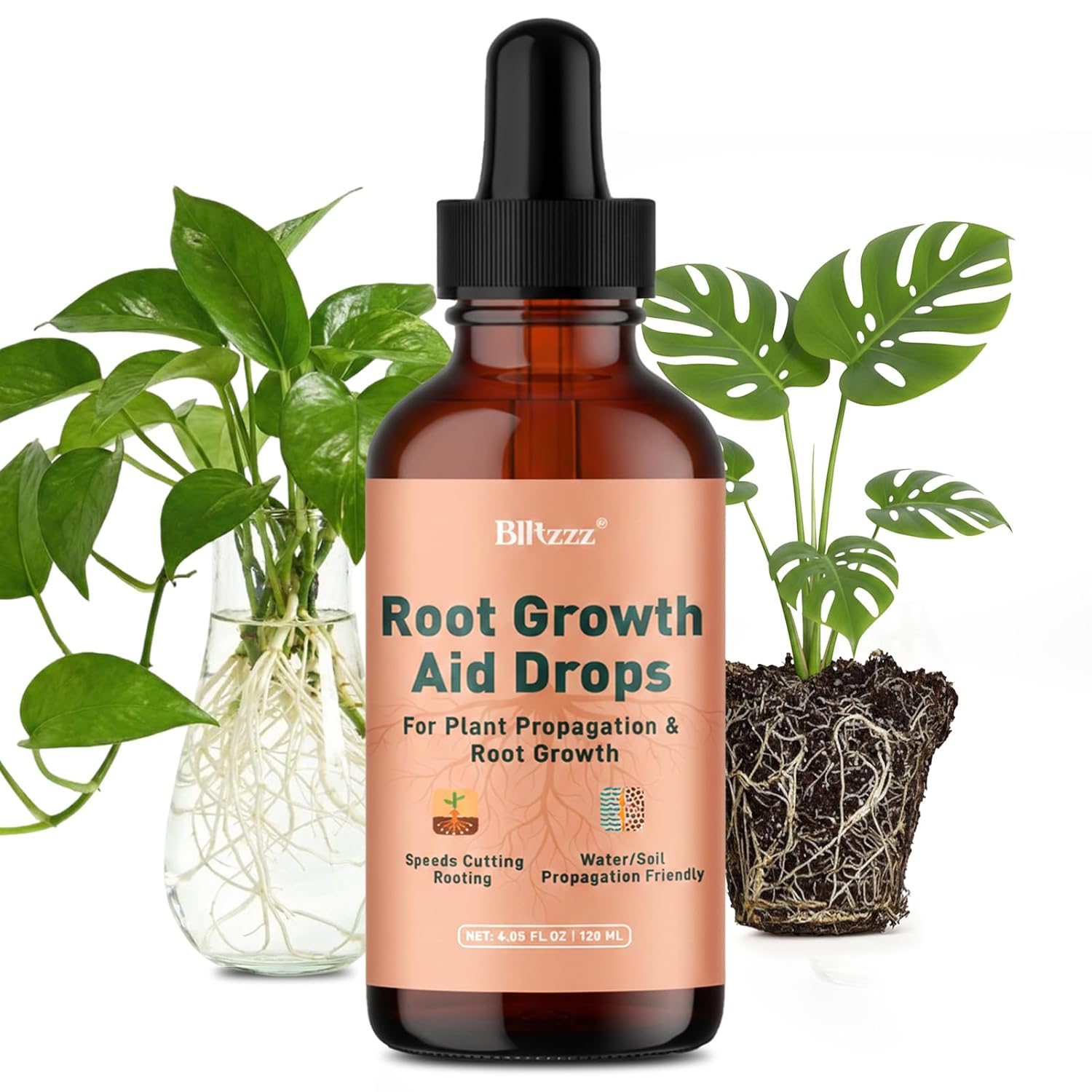
| Item Form | Liquid |
|---|---|
| Specific Uses For Product | Plant Growth, Root Development |
| Application Method | Drops |
| Target Species | Houseplants |
| Mixing Ratio | 3 drops per 500ml of fresh water |
Montorchid Root Drops is a concentrated liquid rooting hormone designed for propagating common houseplant cuttings and for occasional root support of established plants. It is used by adding a few drops to propagation water (manufacturer recommends 3 drops per 500 ml) or mixing small amounts into watering for transplanted plants. The product contains indole-3-butyric acid (IBA) plus proprietary vitamins and comes with a dropper for precise application, which reduces waste and contamination compared with powders or gels. In practice the small dropper bottle is easy to store and the concentrated formula stretches over many propagation cycles, making it cost effective for regular propagators. Limitations are that the bottle is small so users who propagate at scale will need multiple bottles, and the label does not list full ingredient concentrations beyond IBA and vitamins which may concern growers who prefer fully transparent formulations. For standard houseplant propagation—Pothos, Monstera, Philodendron—this provides a simple, mess-free way to speed root formation and help cuttings transition to soil or LECA.
Best for: Buyers who propagate houseplants regularly and want a precise, economical rooting aid that speeds root formation and eases transitions between water and soil.
Less Ideal for: Large-scale growers or nursery operations that need bulk quantities and fully detailed ingredient analyses should consider larger commercial formulations instead.
- Concentrated liquid formula that requires only a few drops, extending bottle life
- Includes a dropper for precise, low-waste application
- Formulated with IBA plus vitamins to promote faster and denser root development
- Versatile for use in water, soil, LECA, and moss
- Small 4 fl oz bottle may be insufficient for heavy or commercial propagators
- Product listing does not disclose full ingredient concentrations
Verdict: A compact, concentrated dropper formula that makes propagating houseplant cuttings quicker and more precise.
Doff Rooting Hormone Powder for Plant Cuttings, 75 g

| Item Form | Powder |
|---|---|
| Specific Uses For Product | Root Development |
| Target Species | plants |
| Mixing Ratio | 1:0:0 |
| Unit Count | 2.6 Ounce |
Doff Rooting Hormone Powder is a simple powdered auxin formulation intended to speed and strengthen root formation on plant cuttings. You dip or dust the base of a cutting into the powder before planting in your preferred propagation medium; the product is designed for use across plant types and all seasons. Its powder form makes it easy to apply precisely without diluting, and the package size is convenient for multiple propagation sessions. Practical benefits include faster, more reliable rooting and healthier root systems that help reduce losses when propagating valuable plants. Limitations are that the product is a single-formulation powder so it lacks adjustable concentrations for very delicate or juvenile cuttings, and users who prefer a liquid dipping solution may find application less convenient. For gardeners focused on straightforward propagation without complex mixing, this is a no-frills option that delivers predictable rooting support.
Best for: Gardeners who want an inexpensive, ready-to-use rooting aid for regular propagation and prefer a simple powder application over mixing liquids.
Less Ideal for: Users needing adjustable strength formulations for sensitive or rare cuttings or those who prefer premixed liquid rooting solutions.
- Powder form allows precise, low-waste application to cutting bases
- Formulated to encourage root development across a wide range of plant species
- Suitable for year-round use so propagation is not limited by season
- Package size (75 g) supports multiple propagation sessions
- Single powder concentration cannot be easily adjusted for very delicate cuttings
- Not a liquid dip, which some users prefer for uniform coverage
Verdict: A budget-friendly powder rooting hormone that reliably promotes root formation for routine plant propagation.
Herrdemia 3-in-1 Rooting Powder (IBA + NAA + Mycorrhizae)

| Item Form | Powder |
|---|---|
| Application Method | dip or mix with water |
| Specific Uses For Product | Root Development, plant propagation |
| Target Species | Houseplants |
| Unit Count | 1.1 Ounce |
This rooting powder is designed to accelerate root initiation and improve survival of cuttings across soil and hydroponic systems. It is typically used as a dip for soil propagation or dissolved in water for water and LECA propagation; the package includes mixing ratios and step-by-step directions. The formula combines IBA for feeder roots, NAA for a strong central root, and R. irregularis mycorrhizae to extend nutrient uptake, plus adjuncts such as seaweed extract and chitosan to reduce stress and protect cut sites. Practical benefits include faster visible rooting in 1–2 weeks in many species, compatibility with popular houseplants and woody cuttings, and an estimated high coverage per bottle suited to repeated propagation projects. Important limitations are the need to follow the dosage carefully because overuse can inhibit rooting, and the product is a concentrated chemical powder that requires careful handling and must be kept away from children and pets. Overall it is a reliable option for gardeners who want consistent rooting performance when propagating a variety of plants.
Best for: Buyers who prioritize dependable, repeatable propagation results and want a single product that works across soil and water systems for houseplants and woody cuttings.
Less Ideal for: Gardeners who prefer purely organic, food-safe options or who will not follow precise dosing and safety precautions should consider alternative gentler methods.
- Broad-spectrum formula combining IBA, NAA, and mycorrhizae for stronger, more complete root systems
- Works in both soil and water propagation and is compatible with hydroponic media like LECA
- Includes practical directions and mixing ratios for dips and water solutions
- High estimated coverage per bottle suitable for many cuttings or repeated propagation sessions
- Concentrated formula requires precise dosing since overuse can suppress rooting
- Contains active ingredients that are hazardous if swallowed or inhaled and must be stored safely
Verdict: Choose this powder when you want a single, lab-tested rooting hormone that reliably speeds and strengthens root formation across soil and water propagation.
Bonide Bontone II Rooting Powder, 1.25 oz

| Item Form | Powder |
|---|---|
| Specific Uses For Product | Root Development |
| Application Method | dip and shake |
| Target Species | azaleas, mums, geraniums, pachysandra, poinsettias and others |
| Unit Count | 1.25 Ounce |
Bonide Bontone II is a classic IBA-based rooting powder sold in a small 1.25 oz dust jar for home gardeners and hobbyists. You apply it by dipping a cutting’s wound into the powder, shaking off excess, and planting into moist media; it can also be used to coat seeds or bulbs in a bag before planting. The product’s straightforward formulation of indole-3-butyric acid targets root initiation and is effective on both softwood and hardwood cuttings as well as many ornamentals and vegetables. In practice the powder is convenient to use, has a medium coverage per package, and reduces the time and failure rate for many common cuttings. Limitations are the small unit size if you plan to take large numbers of cuttings, and because it is a dry powder it can be messier to apply than gel alternatives. Safety precautions are also reasonable to follow since it is a plant hormone rather than an inert filler.
Best for: Gardeners who want a reliable, easy-to-use rooting hormone backed by long-standing use and positive user feedback and who take a cautious approach to selecting proven products for their cuttings.
Less Ideal for: Propagation professionals or growers who take very large numbers of cuttings and need bulk quantities or who prefer the tidier application of gels or liquid dilutions.
- Contains indole-3-butyric acid (IBA), a proven rooting hormone for cuttings
- Ready-to-use powder that is simple to apply by dip and shake
- Versatile for cuttings, seeds, bulbs, and transplants across many ornamental and edible plants
- Compact jar size convenient for occasional home garden use
- Small 1.25 oz package may not be economical for frequent or large-scale propagation
- Powder form can be messier and harder to control than gel or liquid formulations
Verdict: A proven, ready-to-use IBA powder that reliably speeds rooting for home gardeners focused on successful cuttings.
Choosing the Right Rooting Hormone for Fiddle Leaf Fig: Key Factors to Consider
Active Ingredient and Concentration
The chemical that stimulates root growth, usually an auxin, is the single most important factor for woody houseplant cuttings. Different active ingredients and concentrations trigger roots at different rates and with varying reliability. Too low a concentration may slow rooting or produce weak root systems, while too high a concentration can burn delicate tissues and inhibit root development. For fiddle leaf fig cuttings, which are semi-woody and prone to rot, choose a formulation and concentration recommended for woody or semi-woody houseplants rather than for soft-stem bedding plants.
Labels should list the active ingredient and its percentage or ppm so you can compare strength across products. If the product requires dilution, pay attention to the manufacturer dilution ratios and how those translate to final concentration when applied.
Formulation and Application Method
Rooting hormones come as powders, gels, concentrated liquids, and ready-to-use sprays. Powders are easy to dust onto a cut stem and are good for inserting directly into potting mix. Gels cling to the cutting and reduce mess, which is helpful for indoor propagation. Concentrated liquids let you control dose for repeated use and are often better for dips and larger batches, but they require careful mixing.
Consider where you will root cuttings. If you use water or hydroponic propagation, a liquid formulation or a product labeled safe for water use is preferable. For direct planting into soil or perlite, powders or gels are convenient. Also think about cleanup and how precise you need to be with dosing to avoid over-application.
Disease Control and Rot Prevention
Fiddle leaf fig cuttings are vulnerable to rot during the rooting phase, especially in humid indoor environments. Some rooting hormone products include antifungal additives or are compatible with fungicidal treatments to lower failure rates. Other times the choice of propagation medium and sanitation practices matter more than additives.
Look for products that pair well with common protective measures, such as sterile cutting tools, clean pots, and well-draining media. If a product lacks antifungal claims, plan to use it in combination with separate fungicide treatments or in a drier medium to reduce rot risk.
Suitability for Indoor Houseplant Conditions
Not all rooting hormones are formulated for indoor houseplants. Some commercial or agricultural products are designed for outdoors or large woody shrubs and may require higher concentrations or produce volatile fumes that are inappropriate for closed living spaces. Indoor suitability also covers odor, ease of mixing without contaminating living areas, and safety around pets and children.
Choose products with clear indoor use guidance and instructions that match the size and frequency of cuttings you will propagate. Also consider whether the product requires ventilation or special handling that might complicate home propagation.
Packaging, Instructions, and Reproducibility
Good packaging and clear instructions make it easier to repeat successful propagation outcomes. Look for containers that keep powders dry, bottles with measured dosing marks, or pre-measured packets that reduce waste. Instructions should give specific dilution ratios, application timings, and guidance on compatible media.
Reliable labeling reduces guesswork when you revisit propagation later. If the product requires dilution, check whether recommended shelf life after mixing is stated and whether the company advises storage conditions for unopened and opened bottles.
Compatibility with Propagation Media
Different media-sterile potting mix, perlite, peat, coco coir, or water-interact differently with rooting hormones. Powders may adhere better in dry media, while liquids can distribute more evenly in moist substrates or water. Some formulations are less effective in very acidic or alkaline mixes.
Consider what medium you normally use and choose a product that performs reliably in that context. If you change media between attempts, expect small differences in root initiation speed and adjust technique accordingly.
Preparing Fiddle Leaf Fig Cuttings for Best Results
Take clean, sharp cuts from healthy branches and remove lower leaves to reduce transpiration. Let semi-woody cuttings callus for a few hours to a day so the wound begins to dry; this lowers the chance of rot when hormone is applied.
Apply the rooting hormone according to the product format: a quick dip for liquid concentrates, a light dusting for powders, or a thumb-smeared bead for gels. Avoid packing excess product into the stem cavity because that can trap moisture and invite fungal growth.
- Sterilize tools with alcohol between cuts
- Make a clean slanted cut to increase cambium contact
- Remove lower leaves to prevent rot in the medium
Water Vs Soil Propagation: Choosing a Method
Water propagation lets you watch roots form but can lead to softer roots that need time to adapt to soil. Use liquid-safe formulations and change water frequently to prevent stagnation and algae. Gently rinse off any excess hormone before potting to reduce transplant shock.
Soil or soilless media usually produce sturdier roots and are less prone to sudden collapse when moved out of water. Powders and gels work well here because they stick to the cutting and transfer into the medium without washing away.
- Water propagation: visible rooting, risk of weaker roots
- Soil/perlite: firmer root systems, better for immediate potting
- Consider a short period in water before potting if you prefer visibility
Sanitation and Environment Control During Rooting
Maintaining clean tools, fresh media, and a low-pathogen environment reduces losses. Work on a clean surface and avoid reusing contaminated soil. If you are propagating multiple cuttings, separate finished batches to prevent cross-contamination.
Humidity domes or clear covers can help maintain humidity for cuttings, but ventilate periodically to avoid fungal growth. Provide bright, indirect light and stable warm temperatures to speed root initiation without stressing the cutting.
- Use sterile pots and fresh potting mix
- Open humidity covers once daily for air exchange
- Keep temperatures around 70 to 75 F for best rooting
How to Transition Rooted Cuttings to Regular Care
Once roots are a few inches long or a healthy network is visible, start acclimating the cutting to normal humidity and watering rhythms. If roots formed in water, plant into a moist but well-draining mix and avoid overwatering until the plant shows new leaf growth.
Reduce humidity cover gradually over a week and move the plant to its intended light level. Continue gentle fertilization only after the cutting has established and new growth appears.
- Pot water-rooted cuttings into mix and keep slightly moist for first two weeks
- Remove humidity dome gradually over 5 to 10 days
- Start light feeding after several weeks of steady new growth
Common Mistakes That Reduce Rooting Success
Overusing rooting hormone, leaving cuttings in overly wet media, and skipping sanitation are frequent errors. Overapplication does not speed rooting and can damage tissue. Likewise, keeping cuttings in stagnant water or compacted media raises rot risk.
Another common issue is transplanting too early. Roots that look flimsy or very fine may struggle when moved to potting mix. Wait for a healthy, fibrous root network before subjecting cuttings to normal lower-humidity conditions.
- Do not apply more hormone than recommended
- Avoid low light and cold temperatures during rooting
- Be patient: premature transplanting often causes failure
How We Chose the Best Rooting Hormone for Fiddle Leaf Fig
We prioritized criteria that matter for propagating fiddle leaf fig, focusing on what gardeners actually handle in home and indoor settings. Selection emphasized active ingredient and concentration because auxin type and strength determine root initiation speed and success with semi-woody Ficus cuttings. Formulation and application method were next, comparing powders, gels, and liquid dips for accuracy, mess, and suitability for water versus soil propagation. Disease control and rot prevention were considered, including whether formulations contain antifungal properties or pair safely with fungicides. Safety and plant compatibility were evaluated to avoid phytotoxic formulations at higher concentrations. Finally, packaging and instructions were weighed so gardeners can get repeatable results without confusing dilution math. We excluded formulations intended only for soft-stem annuals, hardwood outdoor trees, or large-scale commercial rooting systems that require specialized handling. Products lacking clear active ingredient labeling or with instructions unsuitable for indoor houseplants were not considered. The resulting picks reflect materials and formats that work with typical fiddle leaf fig cuttings and standard indoor propagation workflows.
FAQ
Can I use rooting hormone in water propagation for fiddle leaf fig?
Yes, but use a product labeled safe for water propagation or a diluted liquid concentrate. Change the water often to prevent algae and rinse excess hormone off the cutting before planting to reduce transplant shock.
How long before roots appear on a fiddle leaf fig cutting?
It often takes two to six weeks to see noticeable root development, depending on temperature, light, and hormone strength. Warmer, stable conditions and correct hormone use usually speed the process.
Is a powder better than a gel for indoor propagation?
Powders are tidy and work well for inserting cuttings directly into media, while gels cling to stems and reduce dust. Choice depends on your propagation method and whether you prefer less mess or easier dosing.
Can rooting hormone prevent rot entirely?
No. Rooting hormones encourage root formation but do not guarantee immunity to rot. Good sanitation, well-draining media, and proper humidity control are also critical to prevent fungal issues.
How often should I apply rooting hormone to repeat cuttings?
Most hormones are applied once at the start. Reapplying is unnecessary and can harm tissue. If a cutting fails to root, assess technique and environment rather than increasing dose on subsequent attempts.
Final Verdict
Choose a rooting hormone that matches how you propagate fiddle leaf fig cuttings and the environment in which you root them. Prioritize a formulation with an appropriate active ingredient strength, clear instructions, and compatibility with your chosen medium to reduce rot risk and produce robust roots. Accept that tradeoffs exist between visibility of water rooting and strength of soil-rooted systems. Use good sanitation, control humidity, and be patient. With the right hormone and technique, you can reliably establish healthy new fiddle leaf fig plants.
