

Note: This article contains affiliate links. If you click on these links and make a purchase, I may earn a small commission at no extra cost to you. This helps support my research and content. Read my full affiliate disclosure here.
When you need to control insects indoors without bringing harsh chemicals into living spaces, the right safe indoor bug spray makes a big difference. You want something that reduces bites and pests effectively while posing minimal risk to children, pets, and indoor plants. This guide covers six shortlisted options that balance efficacy with low-toxicity ingredients and practical application styles for apartments, houses, and multiroom living areas. We evaluate each spray on measurable safety and performance criteria gardeners and homeowners care about: active ingredient profile, real-world pest control, ease of use, and indoor residue and odor. Read on for concise buying guidance and the factors that matter when choosing a safer indoor spray.
Top Picks at a Glance
| Best Overall The best all-around choice for most situations | Wondercide Indoor Pest Control Spray, Peppermint, 16 fl oz |  |
| Best Quality Built to a higher standard if you want something more solid | EcoVenger All Purpose Insect Spray, Plant-Based 16 oz |  |
| Best Value The sweet spot between price and what you get | Mighty Mint Peppermint Oil Insect Repellent Spray, 1 Gallon |  |
| Best Budget The cheapest option that still gets the job done reliably | STEM Plant-Based Bug Spray — Ants, Roaches & Spiders, 10 oz |  |
| Highest Rated A top-rated pick with lots of positive feedback | STEM Plant-Based Bug Spray for Ants, Roaches and Flies, 12 fl oz |  |
| Most Popular A crowd favorite that many people choose with confidence | Mighty Mint Peppermint Oil Insect Repellent Spray, 16 oz |  |
Wondercide Indoor Pest Control Spray, Peppermint, 16 fl oz

| Unit Count | 16 Fluid Ounces |
|---|---|
| Item Form | Spray |
| Target Species | Ants, Roaches, Spiders, Flies, Fleas, Ticks, Mosquitoes, Silverfish, Moths, Gnats |
| Active Ingredients | 4.2% Cedar Oil; 1.5% Peppermint Oil; 2.2% Sodium Lauryl Sulfate; 0.1% Sesame Oil |
Wondercide Indoor Pest Control is a ready-to-use peppermint-scented spray designed to kill and repel flying and crawling household pests including ants, roaches, spiders, flies, fleas, ticks, mosquitoes, moths, and gnats. It is typically used around baseboards, windows, doors, under sinks, in cabinets, on furniture and carpets, or sprayed directly on visible insects from 8 to 12 inches. Key features include a plant-derived active blend led by cedarwood and peppermint oils, a multi-surface sprayer with adjustable nozzle, and labeling that emphasizes safe use around people and pets when directions are followed. In practical terms this makes it a straightforward option for spot treatments and routine preventative spraying in kitchens, bathrooms, pet areas and living spaces. Limitations to keep in mind are that it must contact flying insects to kill them, surfaces can be slippery when wet, and some people may experience mild skin or eye irritation if misused. For someone looking to reduce reliance on synthetic pesticides while keeping indoor pest problems under control, this product delivers an easy, plant-based approach.
Best for: Buyers who prioritize practical, lower-toxicity solutions and want a versatile, easy-to-use indoor spray for routine spot treatment and prevention around the home and pet areas.
Less Ideal for: People who need long-duration residual control or professional-grade pesticide strength for large infestations should consider stronger or specialized treatments.
- Plant-powered formula with cedarwood and peppermint oils as primary active ingredients
- Kills and repels a broad list of common indoor pests including fleas, ants, roaches and flies
- Ready-to-use spray with adjustable nozzle for targeted or mist application
- Labeled safe for use around people and pets when directions are followed
- Must directly contact flying insects to be effective against them
- Can cause mild skin or eye irritation and surfaces may be slippery when wet
Verdict: A practical, plant-based indoor spray for homeowners who want an easy, lower-toxicity way to kill and repel common household pests while using a product safe for family and pets when used as directed.
EcoVenger All Purpose Insect Spray, Plant-Based 16 oz

| Volume | 16 oz |
|---|---|
| Active ingredients | Geraniol, Cedarwood Oil, Citronella Oil, Sodium Lauryl Sulfate |
| Use | Indoor & outdoor ready-to-use spray |
| Kills on contact | Yes |
| Targets eggs | Yes |
EcoVenger All Purpose Insect Spray is a botanical, ready-to-use spray formulated to kill common household pests, including fruit flies, on contact while also disrupting eggs to reduce re-infestation. You use it the same way as any trigger-spray insecticide: shake, spray directly onto affected surfaces, entry points, and breeding areas, and let it dry. Key features are a plant-based active blend (geraniol, cedarwood, citronella) that gives a mild natural scent, non-staining formula safe for most surfaces, and claims of residual protection that lasts for days to weeks depending on conditions. For fruit fly control it is useful for treating countertops, drains, trash areas, and window frames where adults land and lay eggs, and the egg-targeting action helps break the life cycle. Limitations: as a non-synthetic formula it may act more slowly or require repeat applications versus stronger chemical insecticides for heavy infestations, and the nozzle is noted as delicate so treat it gently. Follow label directions and avoid eye contact.
Best for: Buyers who prioritize effective, plant-based pest control for kitchens and indoor spaces and want a product that targets adults and eggs without harsh chemical odors.
Less Ideal for: Those facing a large, established infestation who need the fastest-acting professional-strength chemical control should consider alternative options.
- Broad-spectrum list of target pests including fruit flies and their eggs
- Plant-based ingredients suitable for use around children and pets when used as directed
- Ready-to-use trigger spray for quick spot treatment
- Non-staining formula with a mild, natural scent
- Leaves a residual barrier to help prevent re-infestation for days to weeks
- May require repeated applications or longer to match the speed of stronger synthetic insecticides
- Nozzle described as delicate and can be damaged if handled roughly
Verdict: If you want a safer, plant-based spray that tackles fruit flies and their eggs while leaving a mild scent, this 16 oz ready-to-use formula is built for routine home use.
Mighty Mint Peppermint Oil Insect Repellent Spray, 1 Gallon

| Volume | 128 oz |
|---|---|
| Ingredients | Water, Glycerin, Polyglycerol Oleate, Soap, Peppermint Oil |
| Use areas | Indoor / Outdoor |
| Scent | Peppermint |
Mighty Mint’s 1-gallon peppermint oil spray is a plant-based insect repellent intended for broad indoor and outdoor use. The product is supplied as a large ready-to-use bottle with a detachable nozzle for spraying around entryways, baseboards, patios, and gardens or for refilling smaller spray bottles. Its formula lists peppermint oil along with water, glycerin, and soap, so it works by delivering a strong peppermint scent that repels spiders, ants, roaches and similar pests without synthetic pesticides. Practical benefits include the large 128 oz volume for extended coverage and a scent that many households find more pleasant than chemical sprays. The label notes it is safe for use around people and pets when used as directed, and the concentrate-style packaging simplifies repeat applications. Limitations to keep in mind are that it is a deterrent rather than a lethal insecticide, so it may not eliminate established infestations, and effectiveness can vary by pest and environmental conditions. Users should follow safety directions and reapply after heavy rain or watering for outdoor use.
Best for: Buyers who prioritize safer, plant-based pest control and want a proven, widely used product with visible social proof for routine outdoor and perimeter pest prevention.
Less Ideal for: People facing severe infestations who need a fast-acting, residual insecticide or professional pest control should consider stronger, targeted treatments instead.
- Large 128 oz ready-to-use gallon provides long-lasting coverage and value
- Plant-based formula using peppermint oil rather than synthetic pesticides
- Versatile for indoor and outdoor application and can refill smaller bottles
- Pleasant mint scent that is less intrusive than chemical alternatives
- Designed as a repellent and deterrent so it may not eradicate heavy or established infestations
- Performance can be inconsistent depending on pest type and weather conditions
Verdict: Choose this gallon peppermint spray if you want a plant-based, widely adopted repellent for routine outdoor perimeter and home pest prevention.
STEM Plant-Based Bug Spray — Ants, Roaches & Spiders, 10 oz

| Item Form | Aerosol |
|---|---|
| Target Species | Ants, Roaches, Spiders |
| Unit Count | 10 Ounce |
| Active Ingredients | Geraniol 6.0%, Lemongrass Oil 0.5% |
This STEM plant-based bug spray is an aerosol insecticide formulated with geraniol and lemongrass oil to kill ants, roaches, and spiders while avoiding strong chemical odors or added fragrances. It is used like a conventional spray: aim at visible insects, crevices, or likely harborages and apply short bursts for spot treatments inside or around entry points outdoors. The botanical active ingredients make it suitable for households looking to reduce synthetic pesticide exposure and the product is labeled for use around people and pets when directions are followed. Practical benefits include a fresh, low-odor application, entomologist testing noted by the brand, and a compact 10 oz size that is convenient to store in a utility closet. Limitations are that it is a spot-treatment aerosol rather than a long‑lasting residual solution and botanical actives can require more frequent reapplication than some conventional synthetic insecticides for ongoing control of heavy infestations.
Best for: Buyers who want an inexpensive, low-odor spray for quick indoor and perimeter spot treatments and prefer plant-based formulations over conventional chemicals.
Less Ideal for: Those facing a heavy or persistent infestation who need a long‑lasting professional‑strength residual treatment should consider alternative products or professional services.
- Plant-based active ingredients (geraniol and lemongrass oil) that reduce harsh chemical odors
- Suitable for indoor and outdoor spot treatments when used as directed
- Compact 10 oz aerosol is easy to store and handy for quick use
- Formulation is marketed as safe around people and pets when directions are followed
- Provides spot control rather than long-lasting residual protection
- May require more frequent applications than stronger synthetic insecticides
Verdict: A budget-friendly, low-odor plant-based aerosol for quick spot control of ants, roaches, and spiders around the home.
STEM Plant-Based Bug Spray for Ants, Roaches and Flies, 12 fl oz

| Active ingredients | Geraniol 6.2%, Lemongrass Oil 0.5% |
|---|---|
| Other ingredients | White Mineral Oil, Isopropyl Myristate, (+)-Ethyl Lactate 93.9% |
| Form | Trigger spray |
| Use | Indoor and outdoor spot treatments |
This STEM bug spray is a trigger-spray insecticide formulated with plant-derived actives such as geraniol and lemongrass oil to kill ants, roaches and flies on contact. It is intended for targeted indoor and outdoor spot treatments: shake, hold about a foot from the insect and spray directly on or where insects congregate. The product’s botanical formula and absence of added dyes or strong chemical fragrances make it a reasonable choice for homes where users prefer less synthetic-smelling options. The trigger bottle gives control for spot application and repeated short bursts, and the directions note it is oil-based so spills should be cleaned promptly. Important limitations are that it is not for spraying on people, pets or plants and requires direct hits for best effect rather than long-range fogging. For persistent infestations you may need supplemental measures because this is designed for surface and contact kills rather than residual baiting or area-wide control.
Best for: Buyers who want an affordable, low-odor botanical spray for quick spot control of common household pests and who prioritize a simple, easy-to-use trigger bottle for targeted treatments.
Less Ideal for: People facing large or hidden infestations who need long-lasting residual control or bait-style solutions should consider professional products or integrated pest control approaches.
- Plant-based active ingredients (geraniol and lemongrass oil) that reduce strong chemical odor
- Trigger-spray bottle for controlled, targeted application
- Labeled for both indoor and outdoor spot treatments when used as directed
- No added dye or fragrance listed, which minimizes residue and scent
- Oil-based formula can leave slippery residue if spilled
- Requires direct spraying of insects for effectiveness and offers limited residual control
- Not safe to spray on people, pets or plants
Verdict: A budget-friendly, low-odor plant-based trigger spray that provides quick, targeted kills of ants, roaches and flies for everyday spot treatments.
Mighty Mint Peppermint Oil Insect Repellent Spray, 16 oz
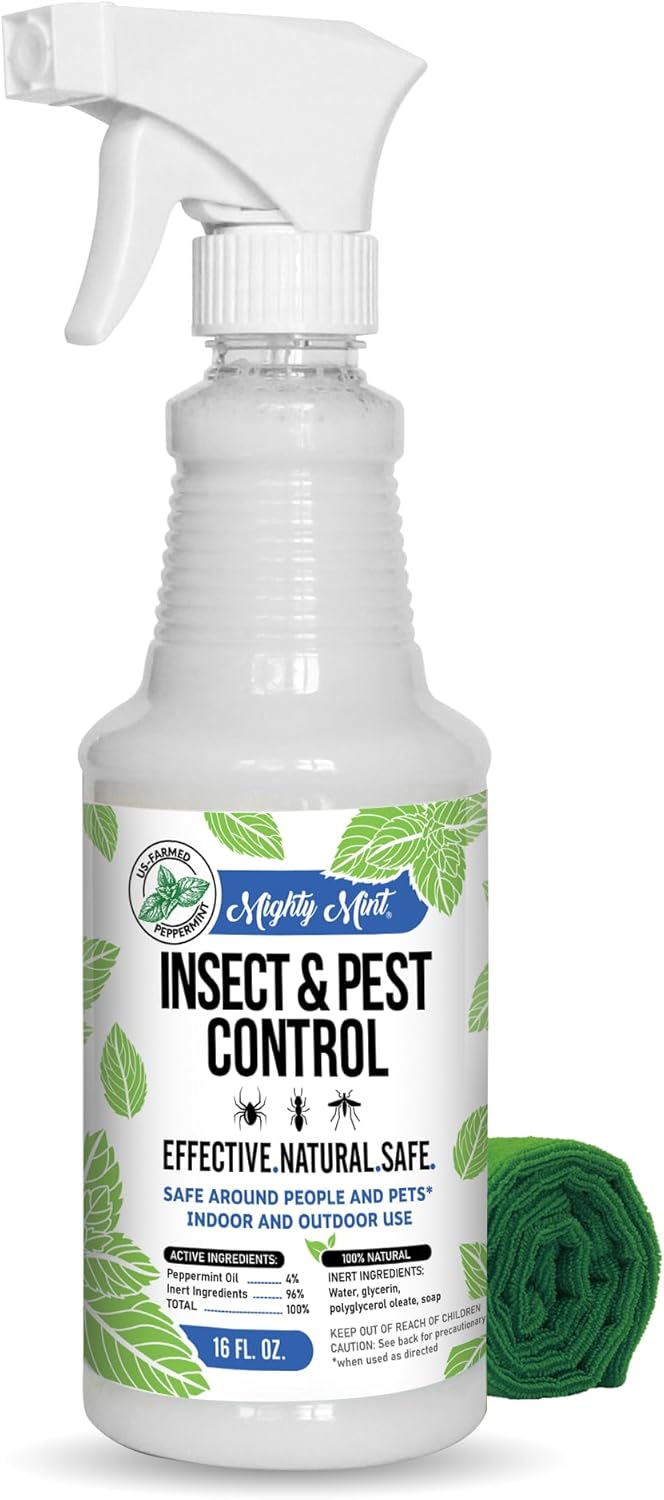
| Ingredients | Water, Glycerine, Polyglycerol oleate, Soap, Peppermint oil |
|---|---|
| Use Areas | Indoor / Outdoor |
| Size | 16 oz |
Mighty Mint is a plant-based, ready-to-use spray that uses concentrated peppermint oil to repel a broad range of household and patio pests. You apply it directly to problem areas such as baseboards, entryways, patios and around outdoor seating; the manufacturer recommends shaking and spraying until surfaces are covered and repeating applications two or more times per week for best results. Notable features include a peppermint-only scent profile, a formulation that avoids synthetic fragrances and the convenience of a 16 oz spray bottle for targeted spot treatments. Practical benefits are that it is safe to use around people and pets when dry and does not leave obvious stains on most surfaces, and the scent can make treated areas smell fresher than chemical alternatives. Important limitations are that it is a repellent rather than a pesticide so it works by discouraging pests rather than killing them, effectiveness depends on regular reapplication and it should not be applied when pollinators are present or to skin or food-contact surfaces.
Best for: Buyers who prioritize natural, low-toxicity solutions and want a targeted spray to reduce insects around patios and entryways while keeping family and pets in mind.
Less Ideal for: Anyone needing a one-time extermination or long-term residual pesticide for severe infestations should consider professional treatments or products formulated to kill pests rather than repel them.
- Plant-based peppermint formula that avoids synthetic fragrances
- Ready-to-use spray for quick, targeted indoor and outdoor applications
- Safe for people and pets when used as directed and allowed to dry
- Nonstaining on most surfaces and leaves a fresh mint scent
- Repels rather than kills insects so regular reapplication is needed to maintain protection
- Strong peppermint concentration may bother scent-sensitive individuals and requires keeping children and pets away until dry
Verdict: Choose Mighty Mint when you want a pet-friendly, plant-based spray to reduce patio and entryway insects with a fresh peppermint scent.
Choosing the Right Safe Indoor Bug Spray: Key Factors to Consider
Active Ingredient and Toxicity
Knowing the active ingredient tells you how the spray works and how it might affect people and pets. Some active ingredients break down quickly and present lower long-term exposure, while others linger. Read label language about acute toxicity and recommended reentry times. For households with infants, elderly people, or pets, favor formulations with ingredients that have established low-risk profiles for indoor use.
Ingredient concentration matters too. Even a lower-toxicity substance can cause irritation at high concentrations. Check whether the product lists inert ingredients or fragrance components that can trigger sensitivities in occupants with asthma or chemical sensitivities.
Target Pests and Effectiveness
Different sprays are optimized for different insects. Some are broadly effective against flying and crawling pests, while others are focused on ants, cockroaches, or mosquitoes. Choose a spray that lists the pests you actually encounter in your home; that increases the chance of a quick, effective result and reduces unnecessary chemical exposures from using a mismatched product.
Also consider the expected speed of knockdown and residual protection. A quick knockdown reduces immediate bites and frustration, whereas a modest residual effect can lower the need for frequent reapplication. For persistent infestations, a single spray rarely solves the problem and you may need integrated measures.
Application Method and Coverage
Sprays come in trigger bottles, aerosols, pump sprays, or foams. Trigger bottles allow targeted application to crevices and baseboards while aerosols provide wider, sometimes less controlled, dispersion. For indoor use in occupied rooms, choose an application method that minimizes airborne mist and gives you control over where the product lands.
Consider nozzle quality and adjustability for precise placement. A concentrated jet or foam can treat cracks and voids without saturating surfaces, whereas fine mists can spread over furnishings and fabrics and contribute to lingering odors or residue.
Residue, Odor, and Indoor Air Impact
Indoor environments trap residues and odors more than outdoor spaces. Some formulations dry cleanly with minimal residue; others leave sticky films or strong fragrances that cling to fabrics. Residues can affect indoor plants and surfaces and may require extra cleaning.
Odor is an important comfort and health consideration. People with respiratory sensitivities can react to strong scents even when active ingredients are low toxicity. Look for products that specify low odor or rapid odor dissipation when used at labeled rates.
Safety Instructions and Reentry Times
Clear label instructions reduce accidental exposure. Good indoor sprays provide explicit guidance on reentry times, ventilation recommendations, and what to do if a child or pet comes into contact with treated surfaces. They spell out whether treated rooms need airing out before sleeping or if furniture and dishes must be covered.
Also check for guidance on surface suitability. Some sprays are safe on upholstery and curtains, while others are meant only for baseboards and cracks. Following labeled instructions is the best way to limit unintended exposure.
Packaging and Child-Resistant Design
Container design affects accidental exposure risk and ease of use. Child-resistant caps, clear directional nozzles, and sturdy trigger mechanisms reduce the chances of spills or unintended sprays. Lightweight, ergonomically designed bottles make targeted applications easier for small tasks or frequent treatments.
Packaging that allows partial application without generating a full-room aerosol is preferable for occupied spaces. Refillable or recyclable packaging can also be a consideration for gardeners and homeowners mindful of waste.
How Safe Indoor Sprays Behave in Living Spaces
Indoor sprays interact with air currents, surfaces, and fabrics differently than outdoor products. In a living room or kitchen, sprays can land on baseboards, curtains, and upholstery where residues may persist. Targeted application to cracks, door frames, and insect entry points reduces spread and limits exposure to people and pets.
Ventilation matters. Opening windows and using fans for a short period after application can help dissipate odors and airborne droplets, but follow label guidance on reentry and ventilation. For quick knockdown of flying pests, a brief, targeted spray near windows or light fixtures is often more effective than saturating entire rooms.
- Aim at insect hiding spots rather than open-air misting when people are present
- Avoid spraying directly onto food prep surfaces and cover dishes
- Use minimal quantity needed to treat the problem area
Integrating Sprays with Nonchemical Controls
A spray is often one element in a broader pest management plan. Seal cracks, store food in airtight containers, and reduce standing water or clutter that shelters pests. Physical traps, screens, and routine cleaning reduce pressure on spray treatments and lower how often you need to apply chemical controls.
For recurring issues, use sprays for targeted control while addressing the root cause. Combining mechanical exclusion with periodic spot treatments can keep indoor pest populations low with less chemical use overall.
- Seal gaps around pipes and doors to reduce re-infestation
- Use sticky traps or baits where appropriate to monitor pest activity
- Reduce attractants like uncovered food and excess moisture
Safe Use Around Pets and Indoor Plants
Pets and houseplants can be sensitive to residues and some active ingredients. Keep animals out of treated rooms until residues have dried and ventilation recommendations are followed. For floor-level treatments, wipe or clean pet eating areas afterward if labels advise.
Test sprays on an inconspicuous plant leaf before broad use if you plan to treat near houseplants. When in doubt, move more sensitive plants out of the treatment zone until surfaces are dry and odors have dissipated.
- Remove or cover pet bowls and toys before spraying
- Relocate plants from direct spray paths and allow time to air out
- Follow label guidance for indoor pet-safe use and reentry times
Application Tips for Small Apartments and Multiroom Homes
In tight spaces, target application and ventilation are especially important to avoid exposing occupants to lingering vapors. Treat baseboards, door frames, and entry points rather than open-air misting of the whole room. Use a fan to direct vapors toward an open window for a short period if labeled instructions permit.
In multiroom homes, focus treatment on the source room or the insects' likely travel paths. Over-treating multiple rooms can increase indoor residue without improving control.
- Treat entry points and perimeters first
- Avoid simultaneous application in adjacent occupied rooms
- Use small, controlled bursts rather than continuous spraying
When to Call a Professional
If infestations persist despite responsible use of safe indoor sprays and nonchemical measures, a professional pest service may be necessary. Professionals can inspect for hidden nests or entry points and recommend targeted treatments that reduce repeated exposures.
Choose a professional who offers low-toxicity or integrated pest management options and who provides clear reentry and safety instructions for homes with children and pets.
- Consider professional help for large or hidden infestations
- Request low-toxicity treatment options when available
- Ensure professionals provide written safety and reentry guidance
How We Chose the Best Safe Indoor Bug Spray
We focused on sprays formulated specifically for indoor use with lower human and pet toxicity compared with standard outdoor insecticides. Our selection criteria favored products whose active ingredients are known for reduced systemic exposure or rapid degradation indoors, and formulations that limit airborne particles or sticky residues. We prioritized documented effectiveness against common indoor pests such as mosquitoes, flies, ants, and cockroaches while requiring reasonable reapplication intervals. Evaluation emphasized ingredient safety, labeled indoor use, application method, residue and odor profile, and manufacturer-provided exposure guidance. We also considered container designs that reduce accidental discharge and make targeted spraying easier for small spaces. Products were excluded if labeled for outdoor use only, if they relied on banned or high-toxicity active ingredients, or if they lacked clear indoor exposure instructions. The resulting shortlist balances practical household pest control with reduced chemical burden in occupied homes.
FAQ
Are indoor-safe bug sprays really safer for children and pets?
Indoor-safe sprays are formulated for lower toxicity or quicker breakdown, which reduces risk compared with many outdoor insecticides. Safety depends on correct use and following label instructions for ventilation and reentry. Keep children and pets away from treated areas until recommended drying or airing times have passed.
How long should I wait to reenter a treated room?
Reentry times vary by product and formulation. Many low-odor indoor sprays allow reentry within minutes after ventilation, while others recommend longer airing. Always follow the product label for specific wait times and ventilation instructions.
Will safe indoor sprays harm my houseplants?
Some sprays can irritate sensitive plants if applied directly or if droplets settle on foliage. Move plants away from the treatment area or cover them, and avoid direct spraying of leaves. If plants show stress after exposure, rinse foliage with water and relocate them until odors dissipate.
Can I use indoor sprays to control ants and cockroaches long-term?
Sprays can reduce visible activity but are rarely a complete long-term solution on their own. For ants and cockroaches, combining targeted sprays with sanitation, exclusion of entry points, and baits or traps is more effective for sustained control.
Is there a difference between trigger sprays and aerosols for indoor use?
Yes. Trigger or pump sprays allow more precise application to cracks and surfaces and produce fewer airborne particles, which is preferable in occupied spaces. Aerosols disperse more widely and can leave more residues and odors, so use them with greater caution indoors.
How often should I reapply a safe indoor bug spray?
Reapplication frequency depends on the product's residual activity and the severity of the infestation. Many low-toxicity indoor sprays provide limited residual protection and may need spot treatments every few weeks for persistent pest pressure. Follow label guidance and monitor pest activity to time reapplications.
Final Verdict
Prioritize sprays that match the pests you see, have clear indoor use labeling, and minimize airborne mist and lingering residues. Balance immediate control needs with ingredient safety, application method, and guidance for pets and children. For ongoing problems, combine targeted spray treatments with exclusion, sanitation, and monitoring to reduce how often you need to apply any chemical control. Choosing a product with transparent instructions and a low-toxicity profile gives the best compromise between effective indoor pest control and household safety.
