

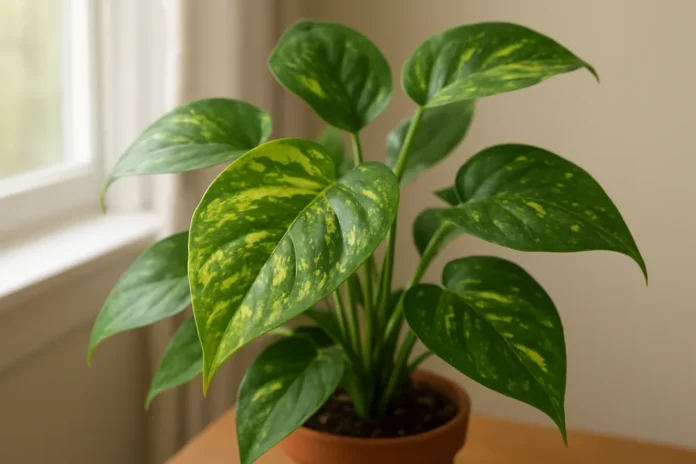
Yellow spots on philodendron leaves are usually caused by watering stress, pest feeding, too much direct sun, or a leaf spot disease. The exact cause often shows up in the pattern, size, and location of the spots.
Seeing philodendron leaves with yellow spots can be frustrating because the problem looks similar at first whether the cause is simple or serious. In my experience, these spots are most often tied to moisture problems, pest damage, too much sun, or a fungal or bacterial issue that got started when leaves stayed damp too long.
The good news is that philodendrons usually give several clues before they decline badly. Spot color, where the damage starts, whether the leaf feels dry or mushy, and whether new growth is still healthy can tell you a lot. Once you know what kind of spotting you are looking at, it gets much easier to choose the right fix instead of guessing.
What Yellow Spots Usually Mean on Philodendron
Yellow spotting is a symptom, not a diagnosis. On philodendrons, it commonly shows up when roots stay too wet, when leaves are exposed to harsh direct light, when sap-sucking pests feed on the foliage, or when a leaf spot disease begins to spread. Less often, the plant is reacting to fertilizer buildup, inconsistent watering, or cold stress.
A few isolated yellow spots on one older leaf are not always an emergency. If the rest of the plant looks firm, green, and actively growing, the issue may be mild or already past. If spots are spreading quickly, appearing on multiple leaves, or turning brown in the center, I start thinking beyond simple aging and look for a care problem.
- Small speckled yellow dots often point to pest feeding, especially spider mites or thrips.
- Large faded yellow patches can suggest sunburn or uneven moisture stress.
- Round yellow spots with tan or brown centers often fit leaf spot disease.
- Yellow mottling across several leaves can come from root stress, overwatering, or poor drainage.
- Yellowing confined to older leaves may simply reflect natural leaf turnover if the rest of the plant looks healthy.
When I troubleshoot philodendron spotting, I compare the oldest damaged leaf to the newest one first. If new growth looks clean and firm, the problem is often environmental and already corrected. If the newest leaves are getting marked too, I pay much closer attention to pests and root health.
Overwatering and Root Stress
Overwatering is one of the most common reasons philodendrons develop yellow spots or blotches. This does not always mean you water too often by the calendar. It can also mean the potting mix stays wet too long because the container drains poorly, the soil is too dense, the pot is oversized, or the plant is sitting in low light and using moisture slowly.
When roots remain waterlogged, they struggle to take up oxygen and nutrients. Leaves may begin with pale speckling or patchy yellow areas, then progress to broader yellowing, soft stems, drooping, or brown edges. If root damage gets worse, the plant may stall and older leaves may collapse one after another.
Signs the Spots Are Tied to Too Much Moisture
- Soil stays damp for many days after watering
- Leaves feel limp or slightly soft instead of crisp
- Yellow spots expand into larger patches
- Older leaves decline first
- The pot smells sour or musty
- Roots look brown, mushy, or slough off their outer layer
If overwatering is the cause, let the top portion of the mix dry before watering again and make sure excess water drains freely. If the soil has compacted into a heavy mass, repot into a chunky aroid mix with ingredients like bark, perlite, and coco coir or peat. Remove obviously rotten roots with clean scissors, then keep the plant in bright indirect light while it recovers.
Underwatering and Inconsistent Moisture
Philodendrons also spot when they swing from bone dry to soaking wet. Inconsistent moisture stresses the leaf tissue and can create yellow flecks, pale margins, or dry tan patches ringed in yellow. This is especially common in warm rooms, small pots, or hanging baskets that dry much faster than expected.
Unlike overwatered plants, underwatered philodendrons usually feel lighter in the pot, and the soil may pull away from the edges. Leaves often look thinner, curled, or slightly crispy. Spots tend to feel dry rather than mushy, and damaged areas may appear on leaf tips and edges first.
How to Correct Dry Stress
- Water deeply until excess drains from the bottom
- Do not give tiny sips that only wet the surface
- Adjust your schedule based on soil dryness, not the calendar
- Move very rootbound plants into the next pot size up
- Increase humidity only as a support, not as a substitute for proper watering
If a dry philodendron has become hydrophobic and water runs straight down the sides, I like to bottom-water it once to fully rehydrate the root ball. After that, I go back to normal top watering and watch the next round of new growth rather than expecting damaged leaves to clear up.
Too Much Direct Sun and Leaf Scorch
Most philodendrons like bright indirect light, not prolonged direct sun. When they sit in a hot south- or west-facing window without filtering, leaves can develop yellow or bleached spots that later turn tan or brown. The damage often appears on the side facing the glass or on leaves that were suddenly exposed after the plant was moved.
Sun-related spotting usually looks flat and papery, not wet. The leaf may have a washed-out patch rather than many tiny speckles. Variegated types can scorch even faster because lighter tissue contains less chlorophyll and burns more easily.
When Light Is the Likely Cause
- Spots appear mainly on the window-facing side
- Damage follows a recent move to brighter conditions
- The affected tissue looks faded, dry, or crisp
- No webbing, insects, or sticky residue are present
- The rest of the plant remains firm and upright
Move the plant a little farther from direct sun or diffuse the light with a sheer curtain. Burned tissue will not turn green again, but the goal is to protect future growth. If only one or two leaves are badly marked, leave them in place until the plant has enough healthy foliage to spare.
Spider Mites, Thrips, and Other Pest Damage
Tiny yellow spots are very often a feeding pattern. Spider mites puncture leaf cells and create fine stippling that can make leaves look dusty or faded. Thrips can leave silvery scarring mixed with yellow flecks, while mealybugs and scale tend to cause broader yellowing by weakening the leaf over time.
Pests are more likely if your philodendron has been stressed by dry air, underwatering, or crowding with other houseplants. Always inspect the undersides of leaves, the midrib, petiole joints, and any unfurling growth. That is where early infestations like to hide.
Pest Clues to Look For
- Very fine yellow stippling across the leaf surface
- Silvery patches or distorted new leaves
- Thin webbing, especially near leaf stems
- Tiny moving dots on the underside of leaves
- Black specks of frass from thrips
- Sticky residue from sap-feeding insects
If you find pests, isolate the plant right away. Rinse the foliage thoroughly, especially underneath, then treat with insecticidal soap or horticultural oil according to label directions. Repeat treatments are usually necessary because one spray rarely catches eggs and newly hatched pests. Wiping down leaves and improving air circulation can also help break the cycle.
Spider mite damage can look like a watering issue from across the room, but the leaf surface tells the story. When I tilt the leaf toward the light and see a fine sandblasted look instead of one big blotch, I almost always start checking for mites first.
Fungal and Bacterial Leaf Spot Diseases
Some yellow spots are true leaf spot diseases rather than a watering or pest problem. Fungal and bacterial spots often begin as small yellow circles or halos, then develop brown or black centers. In humid conditions they can multiply quickly, especially when leaves stay wet from misting, overhead watering, or poor airflow.
These spots tend to look more defined than general yellowing. You may see a target-like shape, a dark center, or a translucent wet-looking lesion in the early stage. On badly affected leaves, spots merge together and create larger dead patches.
Conditions That Encourage Leaf Spot
- Frequent wet foliage
- Poor air movement around dense leaves
- Plants packed tightly together
- Cool, damp conditions
- Old infected leaves left in the pot or on the soil surface
Remove heavily affected leaves with sterilized scissors and discard them. Water the soil, not the leaves, and give the plant more airflow and space. If the problem continues to spread, a houseplant-safe copper fungicide or bactericide may help, but improving the environment matters more than spraying alone. Always sanitize tools between cuts so you do not move the problem around.
Nutrient Issues, Fertilizer Buildup, and Water Quality
Nutrient deficiency is not the first thing I suspect with spotted philodendron leaves, but it can play a role. A shortage of magnesium or other nutrients can lead to interveinal yellowing or pale mottling, especially on older leaves. More often, I see spotting from the opposite problem: too much fertilizer or salt buildup in the potting mix.
When excess salts accumulate, roots absorb water poorly and leaf tissue can show yellow flecks, brown tips, or scorched margins. Hard tap water may add to the problem over time, particularly in small containers that are fertilized regularly and rarely flushed.
Clues That Feeding or Salts Are Involved
- Crusty white residue on the soil surface or pot rim
- Yellow spotting with brown tips after fertilizing
- Healthy roots are present, but growth still looks stressed
- The plant has not been repotted in a long time
- You fertilize year-round at full strength
Flush the pot thoroughly with room-temperature water to wash out excess salts, or repot if the mix is old and compacted. During active growth, feed lightly rather than heavily. A diluted balanced fertilizer every few weeks is usually enough for a philodendron in good light.
How to Tell Which Cause Is Most Likely
The pattern of damage usually gives the best clue. Try not to focus on color alone. Look at whether the spots are tiny or large, dry or soft, random or symmetrical, and whether they are affecting old leaves, new leaves, or just the side facing a window.
- Tiny scattered speckles: pests are high on the list
- Large faded patches: think sunburn or moisture swings
- Round spots with dark centers: suspect leaf spot disease
- General patchy yellowing with droop: check roots and watering habits
- Brown tips plus yellow flecks: consider fertilizer salts or dry stress
Also consider what changed recently. A moved plant, a new watering routine, a hot window, a fresh bag of potting mix, or a plant brought home from the store can all explain the timing. In many cases, one recent change matters more than the spots themselves.
What to Do Right Now
If your philodendron has yellow spots and you are not sure why, the safest approach is to stabilize the basics without making five changes at once. Check the soil moisture, inspect for pests, review the light, and remove the worst damaged leaves only if the plant still has plenty of healthy foliage left.
- Feel the potting mix a couple of inches down before watering again.
- Look closely at the undersides of leaves and new growth for mites, thrips, or sticky residue.
- Move the plant out of harsh direct sun if it is getting blasted through glass.
- Avoid misting and keep water off the leaves if you suspect disease.
- Pause fertilizer until you see steady healthy new growth.
- Trim only leaves that are mostly damaged or clearly infected.
Remember that damaged leaf tissue usually does not recover. Success shows up in the next leaves that emerge, not in the old spots disappearing. If new growth comes in clean and the spotting stops spreading, you are on the right track.
When Yellow Spots Are Not a Serious Problem
Not every yellow mark means the plant is in trouble. An older lower leaf may yellow in patches as the plant naturally sheds it. Minor mechanical damage from unfurling, brushing against a wall, or brief stress after transport can also leave a few spots behind.
If spotting is limited to one or two older leaves and the plant is still pushing strong new growth, I usually monitor rather than panic. The bigger concern is progression. A stable plant with isolated cosmetic damage is very different from one that keeps producing new spots week after week.
FAQ
Can Yellow Spots on Philodendron Turn Green Again?
Usually no. Once leaf tissue has been damaged by pests, sunburn, disease, or watering stress, the spot stays marked. Judge recovery by the condition of new leaves.
Should I Cut Off Leaves with Yellow Spots?
Remove leaves only if they are heavily damaged, diseased, or making the plant look sparse and stressed. If a leaf is still mostly green, it can continue helping the plant while you correct the problem.
Do Spider Mites Cause Yellow Spots on Philodendron?
Yes. Spider mites often create many tiny yellow speckles that make leaves look faded or dusty. Fine webbing and damage on the undersides of leaves are common clues.
Can Too Much Sun Cause Yellow Spots on Philodendron Leaves?
Yes. Direct sun can bleach leaf tissue into pale yellow patches that later turn tan or brown. This is especially common near hot west- or south-facing windows.
Is Misting My Philodendron Causing Leaf Spots?
It can contribute, especially if leaves stay wet for long periods and air circulation is poor. Misting does not usually solve humidity problems and may increase the risk of fungal or bacterial spotting.
How Often Should I Water a Philodendron with Yellow Spots?
Water based on soil dryness, not a fixed schedule. Most philodendrons do best when the top part of the potting mix dries slightly before you water thoroughly again.
Could Yellow Spots Mean My Philodendron Has a Nutrient Deficiency?
Possibly, but it is less common than watering issues, pests, or excess fertilizer salts. Deficiencies usually cause broader chlorosis or mottling rather than sharply defined isolated spots.
Need help fixing the root cause fast? Read our guide to the best philodendron soils, pest treatments, and grow lights so you can choose the right solution with confidence.
