

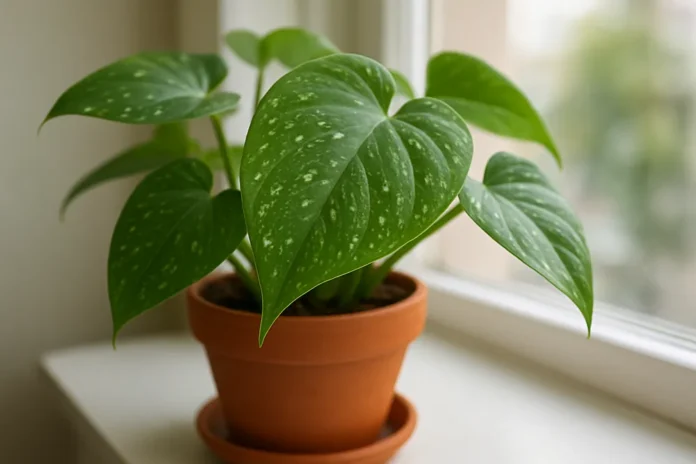
White spots on philodendron are usually caused by pest damage, hard water residue, fungal problems, sun stress, or natural variegation. The cause depends on whether the spots wipe off, look fuzzy, appear bleached, or are part of the leaf’s normal pattern.
Seeing white spots on a philodendron can be unsettling because that symptom covers everything from harmless mineral residue to spider mites, mealybugs, fungal growth, and simple sun scorch. The good news is that philodendrons usually give pretty readable clues once you slow down and look at the shape, texture, and location of the spotting.
When I troubleshoot this on my own plants, I do not start by treating everything at once. I first ask a few simple questions: Do the spots wipe off? Are they fuzzy, crusty, or flat inside the leaf tissue? Are they showing up only on leaves facing a bright window, or mostly on older leaves, stems, and leaf joints? Those details usually narrow the cause quickly.
In many cases, philodendron leaf spots are fixable if you catch them early. Below, I will walk through the most common reasons, how to tell them apart, and what kind of response actually helps.
What the White Spots Can Mean at a Glance
White spotting is a symptom, not a diagnosis. On philodendrons, it commonly points to one of five categories: residue sitting on the leaf surface, pest activity, fungal or mildew growth, environmental damage such as sunscald, or normal coloring in naturally variegated plants.
- If the white material wipes away easily, it is often hard water residue, fertilizer splash, dust buildup, or mildew beginning on the surface.
- If the spots look like tiny cottony blobs around stems or leaf nodes, mealybugs are a strong possibility.
- If leaves show fine stippling or a silvery-white cast, especially with faint webbing, spider mites are more likely.
- If the affected areas look bleached, papery, or tan-white, the plant may have been scorched by too much direct sun.
- If the white pattern is stable, crisp-edged, and appears on new growth in a known variegated cultivar, it may be completely normal.
I usually compare a brand-new leaf with an older damaged one before deciding anything. If the newest leaf opens clean while older leaves are spotted, I lean toward residue, past stress, or sun exposure rather than an active infection spreading through the plant.
Harmless Residue Is One of the Most Common Causes
Hard Water and Humidifier Minerals
If you mist your philodendron, water with very hard tap water, or run a humidifier nearby, mineral deposits can leave pale white spots or a chalky film on the leaves. These marks tend to sit on the surface rather than inside the tissue. They may be heavier on the top sides of leaves and worse on plants close to a cool-mist humidifier.
This type of spotting is mostly cosmetic. Wipe a leaf with a damp microfiber cloth. If the white mark loosens or disappears, residue is likely the problem. Plants exposed to repeated residue buildup can photosynthesize a little less efficiently, but they are not usually in immediate danger.
Fertilizer Splash and Dried Guttation
Sometimes the spots come from fertilizer solution splashing onto leaves during watering. Philodendrons can also leave pale mineral traces after guttation, which is when the plant pushes excess moisture out through leaf edges. You may notice speckling near tips or margins where droplets dried.
- Residue usually feels crusty or smooth, not fuzzy.
- It often appears in random droplets, rings, or scattered patches.
- The leaf underneath is normally still green and firm.
Pests Often Create White Spotting Before Gardeners Notice the Insects
Spider Mites
Spider mites are a very common culprit, especially indoors during dry weather. They feed by piercing leaf tissue, which leaves fine pale specks that can merge into a dull, washed-out, white or silvery look. On philodendrons, this often starts on the undersides of leaves and along the midrib. Heavy infestations may produce delicate webbing between petioles and leaf surfaces.
Mite damage does not wipe off because the spots are actual tissue injury. Leaves may also look tired, dusty, or slightly bronzed. If only one or two leaves are affected but the stippling pattern is spreading, treat it as an active pest problem.
Mealybugs
Mealybugs show up as soft white cottony masses on stems, leaf joints, petioles, and sometimes roots. They can make a philodendron look spotted from a distance, especially when several bugs cluster near the base of leaves. Unlike mineral residue, these spots look lumpy and alive. The plant may also feel sticky from honeydew.
Scale and Other Sap-sucking Pests
Scale insects are usually tan or brown, but their feeding can still lead to pale spots, yellow speckling, and weak growth. Thrips can also cause silvery-white scarring, though on philodendrons I see spider mites and mealybugs more often than thrips in typical home conditions.
When I suspect pests, I inspect the undersides of leaves and the tight spots where the petiole meets the stem before I look anywhere else. That is where early infestations usually hide, and it saves time compared with staring at the top of the leaf alone.
- Isolate the plant from others right away.
- Rinse leaves thoroughly, especially the undersides.
- Remove visible mealybugs with cotton swabs dipped in isopropyl alcohol.
- Use insecticidal soap or horticultural oil according to label directions.
- Repeat treatment on schedule because eggs and hidden insects often survive the first pass.
Fungal Growth and Mildew Can Look White or Powdery
If the white spots look dusty, fuzzy, or powder-like, fungal growth is worth considering. Powdery mildew is less common on philodendrons than on many outdoor plants, but it can happen indoors where air circulation is poor and leaves stay damp. Other fungal issues may begin as pale spots before turning tan, brown, or yellow-ringed.
Fungal problems are more likely when a plant is crowded, watered overhead, or kept in a stale, humid corner with little airflow. Infections usually do not look like crisp paint splatters. They tend to spread irregularly and may enlarge over time.
- Remove badly affected leaves with clean pruners.
- Avoid misting the foliage.
- Improve spacing and airflow around the plant.
- Water the soil, not the leaves.
- Use a houseplant-safe fungicidal product if the problem is clearly spreading.
If white spotting later turns brown in the middle or develops yellow halos, that shifts suspicion away from residue and more toward disease or tissue damage.
Too Much Direct Sun Can Bleach Philodendron Leaves
Philodendrons generally prefer bright, indirect light. If a plant that was used to gentler light is moved into strong afternoon sun, the leaves can develop pale white patches that look bleached. These are not true spots sitting on top of the leaf. They are damaged cells inside the leaf surface.
Sunscald usually appears on the side facing the window or on the highest, most exposed leaves. The affected area may start light green, then fade to white or tan, and eventually become dry or papery. The pattern is often broad and irregular rather than made of tiny dots.
- Move the plant back from harsh direct sun.
- Use a sheer curtain if the window is intense.
- Do not expect damaged tissue to turn green again.
- Judge recovery by healthy new leaves, not by old scars disappearing.
Natural Variegation Is Sometimes Mistaken for a Problem
Healthy variegation usually has fairly clean edges and appears consistently with new growth. The white areas are integrated into the leaf pattern, not dusted on top. The plant otherwise looks vigorous, with normal stems, normal texture, and no sign of webbing, fuzz, sticky residue, or rotting tissue.
Variegation worries people because white tissue can look dramatic, but the pattern tends to repeat itself in a recognizable way. Random speckling that gets worse on older leaves makes me think damage. Clean blocks or pinstripes showing up as the leaf unfurls make me think genetics.
How to Tell Which Cause You Are Dealing With
A quick hands-on inspection usually separates most causes. Start with one affected leaf and one healthy-looking leaf so you have a comparison.
- Gently wipe the spot with a damp cloth. If it comes off, think residue or surface fungal growth.
- Look at the underside with a flashlight. Tiny moving dots, webbing, or clustered white fluff point to pests.
- Check whether the spots are on the window-facing side only. That pattern often suggests sun stress.
- Notice whether the marking is crisp and stable on new leaves. That can indicate normal variegation.
- Watch the pattern for a week. Spreading spots, new stippling, or sticky leaves suggest an active problem rather than old cosmetic damage.
Also consider your recent care. A new humidifier, stronger light, skipped cleaning, a plant brought home from a store, or a stretch of very dry indoor air can all explain why the symptom appeared now.
What to Do Next Based on the Cause
If It Is Residue
Wipe leaves clean with lukewarm water and a soft cloth. If buildup is stubborn, a tiny drop of mild soap in water can help, followed by a plain-water wipe. Reduce misting, keep humidifier output from blowing directly onto leaves, and consider filtered or distilled water if your tap water is very mineral-heavy.
If It Is Pests
Isolate the plant, wash it thoroughly, and begin a repeat treatment routine. One treatment rarely solves a full infestation. Check nearby houseplants too, because philodendrons often share pests with pothos, monstera, ivy, and calatheas.
If It Is Fungal Spotting or Mildew
Trim the worst leaves, reduce leaf wetness, and improve air movement. If symptoms continue to spread, use a fungicidal spray labeled for ornamental houseplants and follow the label exactly.
If It Is Sun Damage
Move the plant into bright but indirect light. Keep conditions steady and let the plant replace damaged leaves over time. Avoid rotating a shade-grown philodendron straight into hot midday sun.
If It Is Natural Variegation
No treatment is needed. Just keep light bright enough to support the plant without scorching the pale tissue, since white areas have less chlorophyll and can burn more easily.
How to Prevent White Spots From Coming Back
Prevention is mostly about steady indoor plant care. Philodendrons are forgiving, but they stay cleaner and healthier when humidity, light, and watering are kept in a comfortable range.
- Keep the plant in bright, indirect light rather than harsh direct sun.
- Inspect new plants before placing them near your collection.
- Wipe leaves occasionally so residue and pests are easier to spot early.
- Avoid crowding plants tightly together.
- Water the potting mix when it is partly dry, but do not let the plant sit stressed for long stretches.
- Use fans or open-air circulation in very humid rooms.
- Be careful with foliar sprays, fertilizer splash, and constant misting.
One thing I have learned the hard way is that overreacting can make diagnosis tougher. If you wash, spray, repot, fertilize, and move the plant all in one day, you lose the ability to tell what actually helped and what created new stress.
FAQ
Can White Spots on Philodendron Leaves Be Wiped Off?
Sometimes, yes. If the spots wipe away, they are often mineral residue, dried water marks, fertilizer splash, dust, or surface mildew. If they stay put, the leaf tissue is probably damaged by pests, sun, or disease.
Are White Spots on Philodendron a Sign of Spider Mites?
They can be. Spider mites often cause tiny pale specks or a silvery-white stippled look, especially on the undersides of leaves. Fine webbing and very dry room conditions make mites more likely.
Do Mealybugs Look Like White Spots on Philodendron?
Yes. Mealybugs often appear as little white cottony clumps on stems, leaf joints, and the undersides of leaves. They are raised and fuzzy rather than flat like leaf discoloration.
Can Hard Water Cause White Marks on Philodendron Leaves?
Yes. Hard water and humidifier minerals often leave chalky white spotting or film on the leaf surface. This is usually cosmetic and can often be cleaned off.
Will Sunburned Philodendron Leaves Turn Green Again?
No. Bleached or scorched tissue does not recover its green color. The goal is to prevent further damage and look for healthy new growth after moving the plant to better light.
How Do I Know if the White Pattern Is Natural Variegation?
Natural variegation usually has clean edges, repeats in a stable pattern, and shows up as the leaf develops. The plant otherwise looks healthy and does not have webbing, fuzz, sticky residue, or spreading damage.
Should I Cut Off Philodendron Leaves with White Spots?
Only if the leaves are heavily damaged, diseased, or covered with pests. Mild cosmetic spotting from residue or old sun stress does not always require removal, especially if the leaf is still doing useful work for the plant.
Need a treatment that actually works? Read our guide to the best houseplant pest sprays and leaf-cleaning products so you can fix white spots faster and protect the rest of your collection.
