

Note: This article contains affiliate links. If you click on these links and make a purchase, I may earn a small commission at no extra cost to you. This helps support my research and content. Read my full affiliate disclosure here.
When you need to remove stubborn weeds and unwanted grass without risking surrounding plants, the right safe weed and grass killer matters. You want an option that eliminates target growth reliably while reducing harm to desirable turf, pollinators, and soil health. This guide shortlists six top-rated safe products chosen for real garden situations – from spot treatment along walkways to larger patch cleanup in the lawn. We evaluate each option for how quickly it works and how benign it is for non-target plants and soil. Read on to understand the tradeoffs and which product profiles fit different lawn, garden, and patio needs.
Top Picks at a Glance
| Best Overall The best all-around choice for most situations | Natural Elements Ready-to-Use Weed Killer (1 Gallon) |  |
| Best Quality Built to a higher standard if you want something more solid | Spruce Snap & Spray Weed & Grass Killer Starter Kit, 64 oz |  |
| Best Value The sweet spot between price and what you get | Natural Armor Weed & Grass Killer, 1 Gallon (128 oz) |  |
| Best Budget The cheapest option that still gets the job done reliably | Earth's Ally Weed & Grass Killer Spray, 32 fl oz |  |
| Highest Rated A top-rated pick with lots of positive feedback | Natures Wisdom 20% Vinegar Weed & Grass Killer, 1 Gallon |  |
| Most Popular A crowd favorite that many people choose with confidence | Spruce Weed & Grass Killer Power Wand Kit with 64 oz Refill |  |
Natural Elements Ready-to-Use Weed Killer (1 Gallon)

| Unit Count | 128 Fluid Ounces |
|---|---|
| Item Form | Spray |
| Coverage | Most broadleaf weeds and grasses |
| Active Ingredients | Sodium Chloride, Salt Water, Commercial Vinegar, Soap |
This one-gallon ready-to-use bottle is a vinegar- and salt-based herbicide intended for spot treatment of unwanted weeds, grasses, moss and algae on hardscape and landscaped areas. You spray targeted plants until wet and they wilt within a short period, which makes it useful for patios, driveways, gravel, fence lines and mulched beds. The formula contains commercial vinegar, sodium chloride and soap, so there is no synthetic herbicide to mix and no special application equipment required. Practical benefits include immediate ease of use, a large volume for treating multiple areas, and a product description that highlights pet and child safety after the treated surface has dried. Important limitations are that it will also kill desirable grass and can damage nearby plants if oversprayed, and it is not an EPA‑registered conventional herbicide which may affect expectations for long-term control compared with systemic products.
Best for: People who want a simple, low-chemical option to remove visible weeds from hard surfaces and non-lawn areas and who prioritize quick results and ease of use.
Less Ideal for: Homeowners seeking long-term root-level control of weeds in lawns or gardeners who need a selective herbicide for beds with desirable plants should consider alternative products or targeted mechanical removal.
- Ready-to-use spray requires no mixing or special equipment
- Large one-gallon volume covers multiple treatment areas
- Active ingredients are vinegar and salt rather than synthetic herbicides
- Works on a broad range of broadleaf weeds, grasses, moss and algae
- Non-selective and will damage desirable turf and nearby plants if not applied carefully
- Provides contact burn rather than long-term systemic control
Verdict: Choose this ready-to-use vinegar-based spray when you need an easy, pet-friendly option to quickly remove visible weeds from driveways, patios and non-lawn areas.
Spruce Snap & Spray Weed & Grass Killer Starter Kit, 64 oz

| Unit Count | 64 Fluid Ounces |
|---|---|
| Item Form | Spray |
| Coverage | 1 bottle treats up to 400 weeds |
| Active Ingredients | Sodium Lauryl Sulfate, Geraniol, Cornmint Oil |
This Spruce Snap & Spray starter kit pairs a 64 oz refill bottle with a reusable snap-on wand to deliver a no-mess, ready-to-use weed and grass killer for spot treatment. It works on contact, dehydrating plants so you can see darkening or wilting within an hour and complete dieback often by 24 hours. Use it on driveways, pavers, walkways, mulch beds and garden edges by holding the nozzle about a foot from the weed and thoroughly wetting leaves and stems. The formula is water-based and uses sodium lauryl sulfate, geraniol and cornmint oil instead of glyphosate, and the brand states it is safe around people and pets when used as directed. The powered wand and EZ-AIM options make precision spraying easier for cracks and tight spots, and one bottle claims coverage for up to 400 weeds. Limitations include the need to avoid desirable plants and lawns, follow temperature and dry-weather application guidance, and the spray may take extra priming on first use or between uses.
Best for: Buyers who prioritize a pet-conscious, practical approach to spot-treating weeds around yards and hardscapes and want an easy-to-use, ready-made spray system for targeted applications.
Less Ideal for: People looking for a lawn-wide systemic herbicide or a long-term preemergent solution should consider other products; those needing broadcast treatment of large turf areas will find this kit unsuitable.
- Ready-to-use kit with a reusable snap-on wand for no-mix, no-pour application
- Plant-based active ingredients reduce reliance on harsh synthetic herbicides
- Visible results often within one hour and full effect by 24 hours when used as directed
- Designed for precision spot treatments on hardscapes, mulch beds and garden edges
- One 64 oz bottle claims coverage up to about 400 weeds
- Not labeled for broadcast use on lawns so it is for spot treatment only
- Must be applied in dry, warm conditions and may require reapplication for persistent weeds
- Sprayer can take time to prime on first use or between applications
Verdict: A convenient, pet-conscious ready-to-use spray kit ideal for precise spot treatment of weeds on hardscapes and beds.
Natural Armor Weed & Grass Killer, 1 Gallon (128 oz)

| Unit Count | 128 Fluid Ounces |
|---|---|
| Item Form | Spray |
| Active Ingredients | Vinegar |
| Coverage | Hardscapes, beds, driveways, foundations and similar areas |
Natural Armor Weed & Grass Killer is a concentrated, vinegar-based herbicide supplied in a one-gallon ready-to-use bottle with a sprayer connection. It is intended for spot-treating unwanted vegetation around driveways, patios, mulch beds, gravel, foundations and other hardscape areas where you do not want plant growth. The product uses high-strength vinegar as the active ingredient so you get fast visible wilting often within an hour and broader dieback over the following days. Practical benefits include easy application with no mixing, a formula marketed as all-natural and glyphosate-free, and coverage recommendations that list many common outdoor use areas. Limitations are that it is non-selective so it will damage desirable plants on contact and may require repeat applications for persistent perennial weeds because vinegar-based products typically burn foliage but do not always kill deep roots. Also follow safety directions to keep children and pets away during use and avoid application around vegetation you want to keep.
Best for: Gardeners who want a non-glyphosate, easy-to-use herbicide for spot-treating driveways, patios and other areas where no vegetation is desired and who prioritize natural active ingredients over systemic control.
Less Ideal for: Homeowners who need selective weed control near ornamental plants or who require a systemic herbicide that reliably kills deep-rooted perennials across large turf areas.
- Ready-to-use formula requires no mixing and connects to a sprayer for straightforward application
- Vinegar-based, glyphosate-free formulation for buyers seeking non-synthetic active ingredients
- Fast-acting foliage burn with visible results often within an hour
- Large one-gallon volume reduces the need for frequent repurchase for larger yards
- Non-selective action will harm any plants it contacts rather than targeting weeds only
- May need multiple treatments to control deeply rooted perennial weeds
Verdict: A large ready-to-use, vinegar-based herbicide for buyers who want a fast, non-glyphosate option to spot-treat weeds on hardscapes and unwanted areas.
Earth's Ally Weed & Grass Killer Spray, 32 fl oz
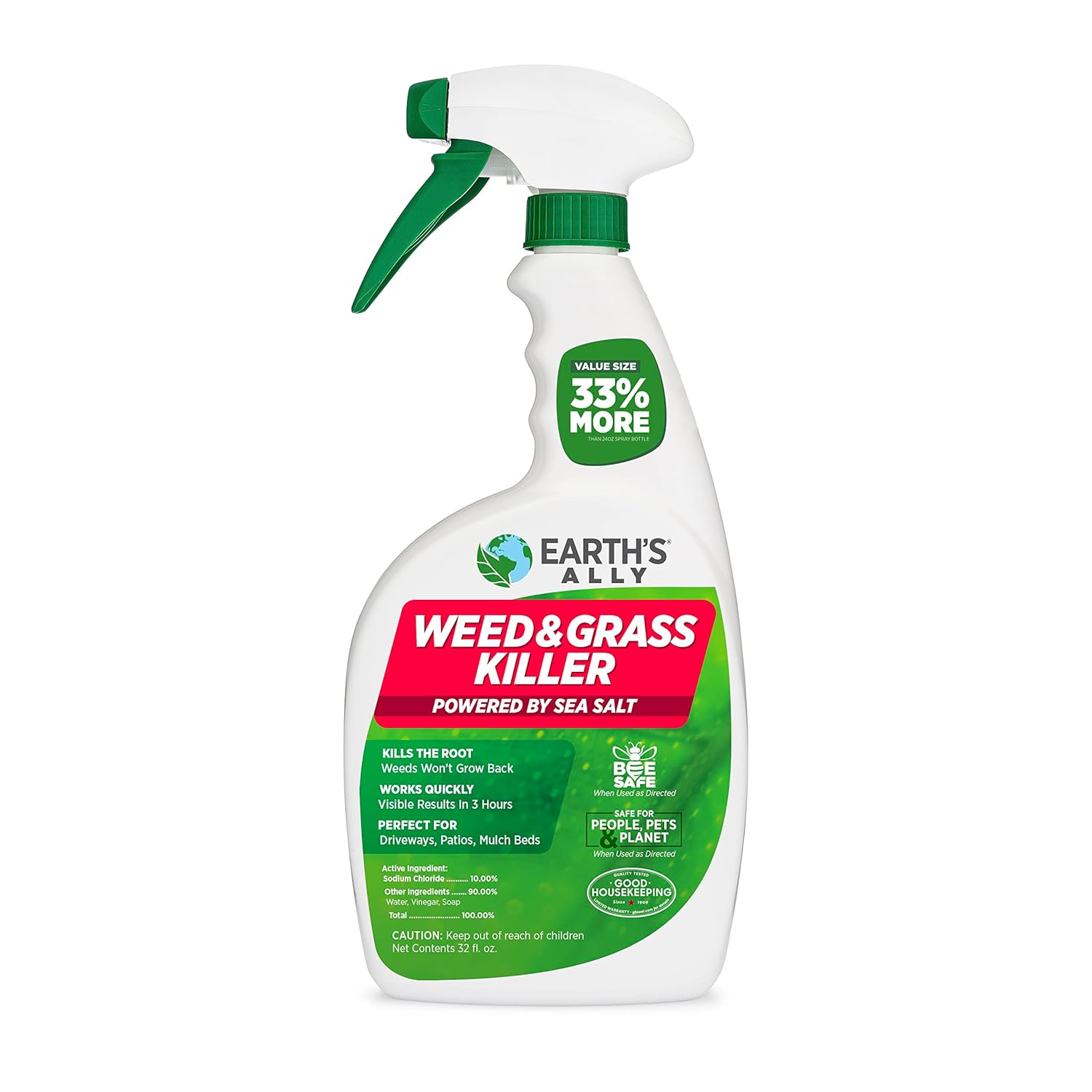
| Unit Count | 32 Fluid Ounces |
|---|---|
| Active Ingredient | Sodium Chloride (10.00%) |
| Item Form | Spray |
| OMRI Listed | Yes |
| Safe for Bees | Yes |
Earth's Ally Weed & Grass Killer is a ready-to-use spray that relies on sea salt, vinegar, and soap to kill common broadleaf and grassy weeds on contact and to the root when applied generously. It is typically used on hardscape and high-traffic areas such as patios, driveways and sidewalks; for larger beds the brand recommends mixing in a pump or backpack sprayer. Notable features include an OMRI-listed formulation, pet- and pollinator-safe testing when used as directed, and visible wilting often within a few hours. Practical benefits are straightforward: no mixing of toxic concentrates, safer handling around people and pets, and an easy spray application that requires saturating leaves and base to reach roots. Important limitations are that it is non-selective so it will damage desirable plants if oversprayed, it requires repeat saturating applications compared with synthetic herbicides, and results depend on dry, sunny conditions for best effect rather than working in wet or overcast weather.
Best for: Buyers who prioritize a safer, low-toxicity option for spot-treating weeds on patios, driveways, sidewalks and other high-traffic hardscape areas and who prefer convenience over industrial-strength persistence.
Less Ideal for: Gardeners who need a selective lawn herbicide or long-term residual control across large turf areas should consider products formulated for those specific uses.
- Ready-to-use spray requires no measuring or harsh concentrate handling
- Sea-salt based formula avoids glyphosate and other synthetic herbicides
- Shown to produce visible wilting within hours when applied on a sunny, dry day
- OMRI-listed and independently tested for pollinator and pet safety
- Non-selective formula will harm any plant it contacts so careful application is required
- Less persistent than some synthetic herbicides so repeated or saturated applications may be necessary
Verdict: Choose this product if you want an easy, ready-to-use weed killer that avoids harsh synthetics and is designed for safe spot treatment on hard surfaces.
Natures Wisdom 20% Vinegar Weed & Grass Killer, 1 Gallon

| Liquid Volume | 1 gallons |
|---|---|
| Item Form | Liquid |
| Active Ingredients | Herbicide, vinegar |
| Coverage | 1 gallon |
This 1 gallon bottle of Natures Wisdom 20% Vinegar Herbicide is a ready-to-use, non-glyphosate option for spot-treating unwanted weeds and grasses. It delivers a concentrated acetic acid formula intended to brown and desiccate foliage within hours and usually shows full effect in under 24 hours when applied in direct sunlight. Typical use is direct spraying with a single-nozzle sprayer or hand-gun applicator without dilution, making it straightforward for driveways, sidewalks, garden beds, and small agricultural patches. The product is certified organic and formulated from ethanol distilled from USA-grown corn, so it breaks down quickly in soil and avoids persistent chemical residues. It works well on a wide list of annual and perennial broadleaf weeds and many grasses, though tough perennial roots may require repeat applications. Users should avoid contact with desirable plants and follow safety guidance because the 20% acetic acid is harsh on skin and foliage. For someone prioritizing strong, fast performance from an organic herbicide, this is a practical, effective choice for spot control.
Best for: Buyers who want a fast-acting, organic alternative to synthetic herbicides for targeted spot treatments and who prioritize visible performance over convenience of broad broadcast use.
Less Ideal for: Those needing a long-term soil residual or a broadcast herbicide for very large lawns and fields should consider other solutions.
- High-strength 20% acetic acid formula acts quickly to desiccate foliage within hours
- Certified organic and glyphosate-free, formulated from USA-grown corn ethanol
- Ready-to-use liquid that requires no dilution for direct spot spraying
- Effective on a broad list of annual and perennial broadleaf weeds and many grasses
- May require repeated applications for deep-rooted perennial weeds
- Harsh on skin and non-target plants so careful application and PPE are required
Verdict: If you want a fast, organic spot-treatment that visibly kills weeds within a day without using glyphosate, this 20% vinegar formula delivers strong performance.
Spruce Weed & Grass Killer Power Wand Kit with 64 oz Refill

| Unit Count | 64 Fluid Ounces |
|---|---|
| Coverage | 1 bottle treats up to 400 weeds |
| Item Form | Multiple |
| Liquid Volume | 64 fluid ounces |
This kit combines a 64 oz ready-to-use herbicide with a battery-powered Power Wand for fast, targeted spot treatments. The formula is non-mixing and designed to work on contact, dehydrating leaves so you can see darkening or wilting within an hour and complete die-off by about 24 hours when used as directed. The wand is reusable and comes with two AA batteries so you can spray cracks, edges, mulch beds, driveways, and walkways without pouring or measuring. Practical benefits include ease of use, rainproofing within 10 minutes, and a formula advertised as safe around people, pets, and bees when directions are followed. Limitations are that it is non-selective so it must be applied carefully to avoid desirable plants and grass, it is intended for spot treatment rather than broadcast lawn application, and best results require spraying in dry, warm conditions above 60°F with no immediate rain forecast.
Best for: Buyers who want a fast, easy-to-use spot weed killer for driveways, cracks, mulch beds, and edges and who prioritize quick visible results and minimal setup.
Less Ideal for: Those needing large-area lawn herbicide or selective weed control within turf should look for products made for broadcast lawn treatments or selective formulas.
- Ready-to-use 64 oz refill eliminates measuring or mixing
- Visible results in about one hour and full effect around 24 hours
- Includes battery-powered reusable wand for precision spot treatments
- Rainproof within 10 minutes so light showers are less likely to wash it off
- Formulated for use around people, pets, and bees when directions are followed
- Non-selective formula can damage desirable plants if oversprayed
- Designed for spot treatments not for broadcasting over large lawns
- Performance depends on spraying in recommended weather conditions
Verdict: A convenient, no-mix spot-treatment kit that delivers fast visible weed kill with a reusable powered wand for precise, low-fuss applications.
Choosing the Right Safe Weed and Grass Killer: Key Factors to Consider
Target Species and Coverage
Different products vary in which weeds and grasses they control. Some are formulated to kill broadleaf weeds only, while others target annual grasses, perennial grasses, or a wide spectrum of species. Knowing which plants you need to eliminate affects whether a product will work the first time or require follow-up applications.
Coverage matters too. For spot treatments you may prefer a ready-to-use trigger bottle or a gel applicator that limits drift. For larger patches or borders a concentrate mixed into a pump sprayer will be more efficient. Matching product scope to the infestation size reduces waste and limits unintended contact with desirable plants.
Selectivity and Risk to Desirable Plants
Selectivity is how well a product kills target weeds while leaving lawn grasses or ornamentals unharmed. Some safe formulations are selective to certain turf types, while non-selective options will damage any green tissue they contact. Choosing a selective product is important when weeds grow close to desirable plants.
Application technique also affects selectivity. Using shields, spot-treating on calm days, and avoiding spray when plants are wet can reduce drift and accidental contact. If you plan to overseed or transplant soon, selectability and timing become even more important to avoid stunting new growth.
Speed of Action and Visible Results
The time it takes to see wilting and browning ranges from a few days to several weeks depending on the active ingredient and plant type. Fast-acting products are useful for aesthetic cleanup or to prevent seed set, while slower options may provide deeper systemic control of perennial roots.
Faster visible results do not always mean permanent control. Some quick-contact chemistries remove foliage but leave roots intact, requiring repeat treatments. Consider whether you need immediate cosmetic control or longer-term eradication when selecting a product.
Environmental and Soil Considerations
Safe options aim to reduce harm to beneficial insects, soil microbes, and groundwater. However, formulations differ in residual persistence and soil binding characteristics. Short-residual products reduce the chance of affecting soilborne organisms or subsequent seed germination, while longer-residual treatments may offer extended control but increase environmental risk.
Also consider runoff risk on slopes and proximity to water features. Follow label directions for buffer zones and avoid treating during heavy rain forecasts to protect nearby aquatic life and soil health.
Application Method and Equipment
How you apply a treatment influences accuracy, coverage, and safety. Ready-to-use spray bottles are convenient for small spot jobs, foam or gel applicators reduce drift near desirable plants, and concentrated liquids for pump sprayers are efficient for larger areas. Some products require surfactants or stickers to improve leaf uptake.
Choose a delivery method that matches the scale of the job and your comfort with handling concentrates. Proper protective gear and clean-up procedures are also part of safe application practices, regardless of chemistry.
Timing and Follow-up Requirements
The best window to treat weeds depends on growth stage and season. Many products work best on actively growing plants in spring or fall. Treating during dormancy or extreme stress reduces uptake and effectiveness. Plan treatments when weeds are lush but before heavy seed production for best results.
Some formulations require multiple applications spaced days or weeks apart to control perennials or re-sprouting species. Understand the expected follow-up schedule so you can plan lawn care tasks like mowing, fertilizing, or reseeding without conflict.
When to Choose Non-Selective Versus Selective Treatments
Non-selective treatments kill any green tissue they touch and are useful for clearing driveways, gravel paths, or prepping ground for new planting. Use them where you will not want any vegetation to regrow for a period, but protect nearby lawn and beds from drift or overspray.
Selective options spare certain turf grasses or ornamentals and are better for spot-treating weeds that invade lawns or mixed borders. If you are unsure of your turf type, test a small area first or use physical barriers during application to reduce accidental damage.
- Non-selective: fast area clearance, higher non-target risk
- Selective: safer near desirable plants, may not control all species
Spot Treatment Techniques to Minimize Risk
For weeds bordering desirable plants, use targeted application tools such as shielded sprayers, cotton swabs, or gel applicators. Work on calm days and avoid watering or mowing for 24 to 48 hours after treatment unless label directions say otherwise.
Physical removal combined with a small, targeted chemical touch-up often reduces overall chemical use and lowers the chance of harming lawn or garden plants.
- Use shields or cardboard to block drift
- Apply in early morning or late afternoon to avoid heat stress
- Limit application when rain is forecast within 24 hours
Managing Treated Areas Before Reseeding or Planting
If you plan to reseed or plant after using a weed and grass killer, check how long the product advises waiting. Some safe choices have short replant windows and allow overseeding within days, while others recommend longer intervals to avoid reduced germination.
Light raking, aeration, and soil testing can help after the waiting period. Choosing a product with a short residual effect speeds restoration of turf or garden beds.
- Confirm replanting interval on product instructions
- Prepare seedbeds by removing dead material and loosening soil
- Consider soil amendments to support new growth after treatment
Protecting Pollinators and Beneficial Insects
Avoid spraying flowering plants where pollinators forage. Time treatments for periods when flowers are not blooming and use selective spot methods in mixed plantings. Many safe formulations are chosen to reduce acute toxicity to pollinators but application timing still matters.
Maintaining untreated buffer zones of flowering plants and using physical removal near pollinator habitat further reduces risk while keeping your grounds tidy.
- Do not spray bloom-rich areas during peak pollinator activity
- Use short-residual products to lower longer-term exposure
- Create buffer strips of untreated native flowers where possible
Safe Storage and Disposal Practices
Store concentrates and unused product in their original containers, locked away from children and pets, and away from direct sunlight. Follow local regulations for disposal of leftover product and rinse water. Never pour unused concentrates into storm drains or waterways.
For empty containers, follow label directions for triple rinsing and recycling if allowed. Proper handling reduces accidental environmental contamination and keeps your yard safe.
- Keep products in cool, dry, well-ventilated storage
- Triple-rinse applicators and dispose of rinse water responsibly
- Follow local hazardous waste guidance for disposal
How We Chose the Best Safe Weed and Grass Killer
We focused on practical, garden-relevant performance and safety when selecting the six products included in this roundup. Our primary evaluation criteria were the speed of weed and grass control, selectivity and non-target safety, application flexibility for different garden situations, and residual impact on soil and turf recovery. We also considered ease of application and required re-treatments, and compatibility with common garden practices such as overseeding or mulching. Products were excluded if they relied solely on generic claims without clear usage guidance, or if they required specialized equipment beyond a typical homeowner sprayer. We filtered out options that are primarily pre-emergent or that target only a narrow range of species when the goal is visible weed and grass removal. The final list emphasizes treatments that deliver measurable control while keeping exposure and lasting soil effects low. These criteria align with the scoring dimensions used in our product scorecards.
FAQ
How long after treatment can I mow my lawn?
It usually depends on the product and label instructions. Many safe products allow mowing after 24 to 48 hours, but systemic treatments may advise waiting longer to let uptake occur. Check directions for your chosen formulation before resuming routine lawn care.
Will a safe weed and grass killer harm my vegetable garden?
Non-selective treatments will damage vegetables if they contact green tissue. Use selective formulations or physical barriers to protect edible plants. When treating near food crops, opt for spot applications and avoid drift by applying on calm days.
Can I use these products around ponds or streams?
Many products require a buffer zone from water to prevent harm to aquatic life. Choose products with low aquatic toxicity and follow label setback recommendations. Avoid applying before heavy rain to reduce runoff risk.
Do safe options prevent seeds from germinating in treated soil?
Some formulations have short residual effects and do not affect seed germination after the labeled replanting interval. Others may inhibit germination for longer. If you plan to reseed, select a product with a short replant window and follow label guidance.
How often will I need to re-treat stubborn perennial weeds?
Stubborn perennials often require multiple treatments spaced according to label instructions. A combination of targeted foliar applications and physical removal of crowns or roots improves long-term control. Persistence and timing are key for durable results.
Are ready-to-use sprays as effective as concentrates?
Ready-to-use sprays are convenient for small jobs but may be less economical or require more applications on larger infestations. Concentrates mixed for a sprayer offer better coverage for bigger areas and can be more cost-effective for repeat treatments.
Final Verdict
Choosing the right safe weed and grass killer means balancing quick control with protection for desirable plants and the broader garden ecosystem. Prioritize selectivity when weeds grow near turf or ornamentals, and favor short-residual formulations where you plan to reseed or maintain pollinator-friendly plantings. Decide based on the species you need to treat, the size of the infestation, and how soon you will resume normal lawn or garden activities. With thoughtful application technique and timing, you can remove unwanted plants effectively while keeping your lawn and landscape healthy.
