

Note: This article contains affiliate links. If you click on these links and make a purchase, I may earn a small commission at no extra cost to you. This helps support my research and content. Read my full affiliate disclosure here.
Bougainvillea are vigorous, woody climbers that can quickly become heavy and sprawling without the right support. Choosing the right trellis for bougainvillea affects plant health, bloom display, and how much seasonal maintenance you end up doing. The best options hold thick canes, resist corrosion in wet climates, and make pruning and training straightforward. This guide shortlists five top trellises suited for bougainvillea in different garden settings and explains the practical features that matter. We evaluate each pick against strength, durability, and ease of installation so you can match a trellis to your wall, fence, or freestanding planting.
Top Picks at a Glance
| Best Overall The best all-around choice for most situations | Zhongma 2-Pack Powder-Coated Metal Garden Trellises, 77.2 in |  |
| Best Quality Built to a higher standard if you want something more solid | LeJoy Garden 6.3 ft Metal Obelisk Trellis |  |
| Best Value The sweet spot between price and what you get | RUBFAC 7.8 ft Metal Garden Arch Trellis (Painted Black) |  |
| Highest Rated A top-rated pick with lots of positive feedback | Gardener's Supply Company 7 ft Garden Obelisk Trellis, Powder-Coated Steel |  |
| Most Popular A crowd favorite that many people choose with confidence | Adorox Metal Garden Arch Trellis, Powder-Coated Black |  |
Zhongma 2-Pack Powder-Coated Metal Garden Trellises, 77.2 in

| Number of Items | 2 |
|---|---|
| Material Type | Metal |
| Finish Type | Powder Coated |
| Item Type Name | Metal Garden Trellises |
These Zhongma metal trellises provide two sturdy vertical supports for climbing plants and vines. Each panel is about 77 inches tall and connects to form a combined 32-inch-wide run, making them useful for training bougainvillea, clematis, sweet peas, or climbing vegetables in narrow beds and along fences. The powder-coated metal finish and aluminum ground stakes are described as rust resistant, so they should hold up outdoors with routine seasonal maintenance. Assembly is straightforward with included components and basic instructions, and the rectangular grid offers many tie-in points for guiding new growth. Limitations to note are that the pair is relatively narrow for a large, heavy bougainvillea that needs extensive lateral support and thicker structural backing; very woody or massive vines may require heavier gauge framing or multiple anchored trellises. Also the panels are decorative rather than load-bearing for large trained branches, so plan to supplement with stronger posts if you are training a mature plant.
Best for: Gardeners who want an affordable, rust-resistant trellis to train young or moderate-weight climbers in narrow beds or against walls and fences.
Less Ideal for: Do not choose this if you need a heavy structural support for mature, woody vines or to create wide spans without additional anchoring.
- Two-piece set gives immediate paired coverage for short runs of climbers
- Powder-coated metal and aluminum stakes offer improved corrosion resistance outdoors
- Open rectangular grid supplies many tie-in points for directing new growth
- Easy assembly with included components and simple instructions
- Not heavy-duty enough as sole support for large, woody bougainvillea or very heavy-trained vines
Verdict: A practical, rust-resistant two-pack trellis that works well for training young or moderate bougainvillea where a narrow vertical support is needed.
LeJoy Garden 6.3 ft Metal Obelisk Trellis

| Material Type | Metal |
|---|---|
| Finish Type | Epoxy Coated |
| Item Highlight | Upgraded 16mm Thick Steel Tubes |
| Size | Large |
This LeJoy Garden obelisk is a straightforward, performance-focused plant support built from metal tubing with an epoxy finish. At 6.3 feet tall it gives vines, roses, clematis and even indeterminate tomatoes room to climb vertically, and the round, four-stake base design helps keep the frame stable once plants begin to weigh it down. Assembly is simple: tubes arrive pre-drilled which speeds setup, and the epoxy coating gives basic weather resistance against rust. The 16 mm thick tubes and nearly 5 lb weight make it heavier and more rigid than many lightweight decorative trellises, so it stays put in garden beds and large pots. Expect some sharp edges during assembly so wear gloves, and note that while the finish resists weathering it is not stainless steel so long-term coastal exposure may still cause corrosion. The trellis works best as a structural support rather than a decorative instant topiary, and it is easy to decorate with lights or garland for events.
Best for: Gardeners who prioritize durable, functional supports for heavy or prolific climbers and want a tall, no-nonsense frame that stays upright in beds and large containers.
Less Ideal for: Buyers seeking a lightweight decorative piece for small indoor pots or those who need stainless steel corrosion resistance for coastal locations should look elsewhere.
- Tall 6.3 ft height provides ample vertical space for large climbers and indeterminate tomatoes
- Thicker 16 mm metal tubing and 4.9 lb mass offer greater rigidity and stability than flimsy wire trellises
- Epoxy coating adds basic rust resistance for outdoor use
- Pre-drilled tubes simplify and speed assembly
- Not stainless steel so may eventually corrode in very wet or salty environments
- Sharp edges reported during assembly require careful handling
Verdict: Choose this obelisk when you need a tall, heavier-duty metal trellis that keeps vigorous climbers and tomato vines supported season after season.
RUBFAC 7.8 ft Metal Garden Arch Trellis (Painted Black)

| Material Type | Metal |
|---|---|
| Finish Type | Painted |
| Shape | Semicircular |
| Size | 7.85ft |
This RUBFAC metal garden arch is a semicircular, painted steel trellis intended for both garden use and event decoration. It assembles from several sections into a roughly 7.8 foot tall arch that creates a defined entry or backdrop for climbing plants, vines, or temporary party décor like tulle and balloons. The painted finish helps resist the elements for outdoor use and the lightweight construction makes handling and storage easier than heavier arbors. Typical use is staking the base into soil along a path or placing it on a flat surface for a wedding or photo backdrop, then training climbers or attaching decorations. Notable positives are the straightforward assembly and dual-purpose styling for gardens and events. Important limitations are its light weight, which means you should anchor it for windy locations and temper expectations for supporting very heavy or mature woody vines. The simple painted finish may need touch-ups over time where pieces join or if scratched.
Best for: Buyers who want a practical, multipurpose trellis that doubles as an event arch and values easy assembly, quick installation, and seasonal storage.
Less Ideal for: Gardeners needing a heavy-duty, permanent arbor to support large mature vines or structural loads should choose a sturdier, anchored option.
- Semicircular metal frame provides an attractive, classic arch shape for entrances and backdrops
- Painted finish offers basic corrosion resistance for outdoor display
- Relatively lightweight sections make assembly, removal, and seasonal storage easier
- Works as both a plant trellis and a temporary event/wedding or balloon arch stand
- Light overall construction requires anchoring in wind or heavy-use situations
- Not designed to bear very heavy or fully mature woody vines
Verdict: A lightweight, easy-to-assemble metal arch that gives practical support for climbers while doubling as an attractive event or wedding backdrop.
Gardener's Supply Company 7 ft Garden Obelisk Trellis, Powder-Coated Steel

| Material Type | powder-coated steel |
|---|---|
| Finish Type | Powder Coated |
| Shape | Semicircular |
| Size | 7 Foot |
This 7-foot garden obelisk is a simple, performance-focused freestanding trellis for training climbers such as clematis, morning glories, sweet peas, and climbing roses. Built from powder-coated steel, the semicircular frame resists weathering and holds upright without stakes when placed over plants or in a flowerbed. The design stacks together for tool-free assembly and can be taken apart flat for winter storage, which makes it easy to move and reuse season after season. In practice it offers immediate vertical structure to boost blooms and improve air circulation through the canopy, and its narrow footprint works well where ground space is limited. The main limitations are its single-piece shape and moderate diameter, which means very heavy vines or large shrub-like climbers will need additional anchoring or multiple supports to prevent leaning. It is decorative enough to function as a garden focal point even before plants fill in, and it doubles as a frame for string lights or holiday décor.
Best for: Gardeners who prioritize reliable, long-lasting supports to maximize bloom display and plant health in small to medium beds, and who want a no-fuss solution that assembles and stores easily.
Less Ideal for: People growing very heavy vines or establishing large climbing shrub forms that require broad or highly adjustable support systems.
- Tall 7-foot height provides strong vertical support for flowering climbers and vines
- Powder-coated steel construction resists weathering for season-to-season use
- Tool-free stackable assembly and flat disassembly for easy setup and storage
- Narrow footprint fits small beds or patios without taking much ground space
- Single freestanding frame may need extra anchoring for very heavy or dense climbers
- Not adjustable in width or shape, limiting custom configurations for larger plantings
Verdict: Choose this sturdy, no-tool 7-foot steel obelisk when you want a durable vertical support that quickly boosts blooms and fits into small garden spaces.
Adorox Metal Garden Arch Trellis, Powder-Coated Black
| Material Type | Metal |
|---|---|
| Finish Type | Powder Coated |
| Shape | Single Arch |
| Size | Standard |
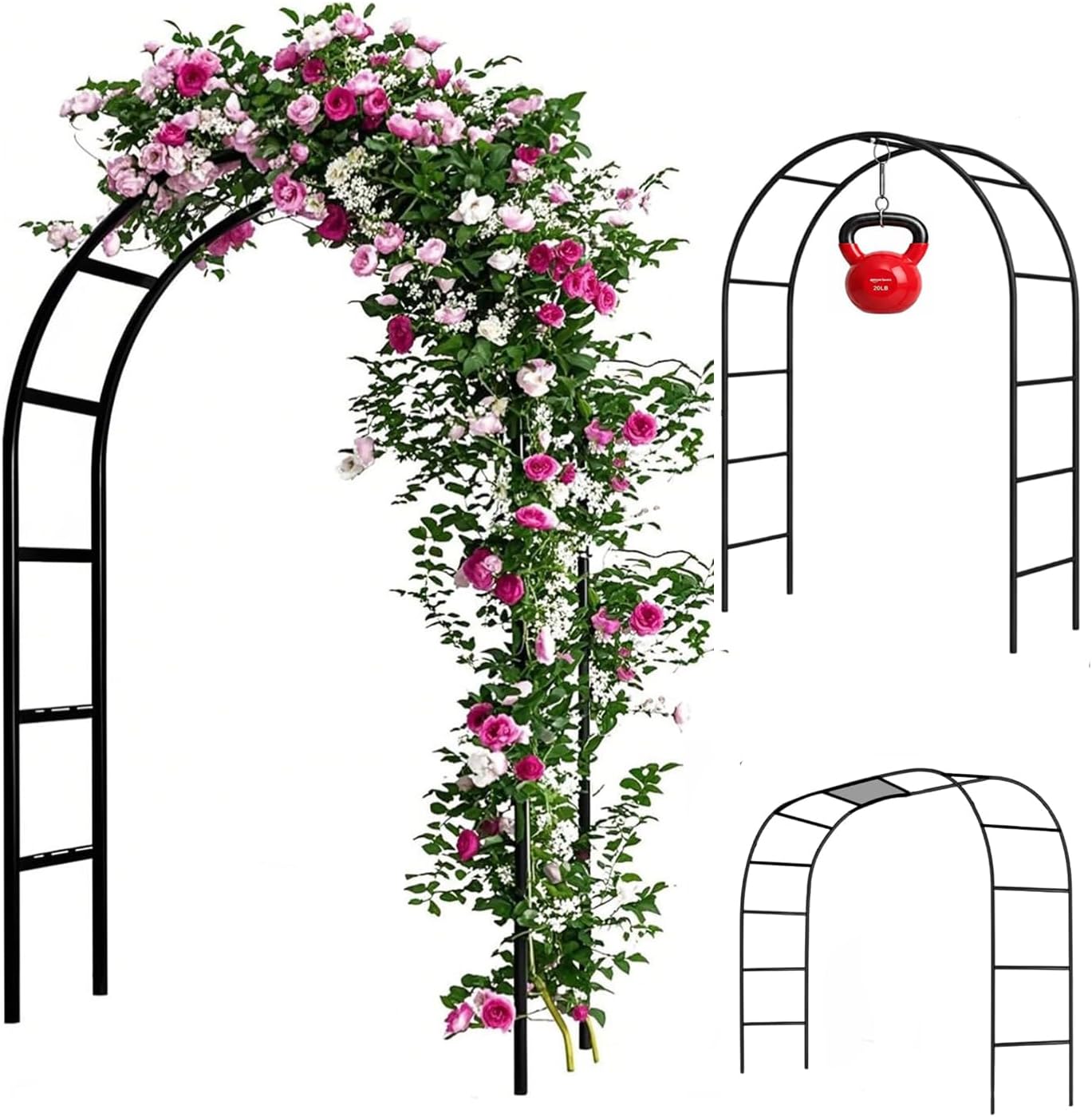
This Adorox garden arch is a straightforward metal arbor that gives climbing roses, clematis, vines, or seasonal decorations a neat vertical framework. It arrives as sectional metal pieces with a powder-coated finish and assembles in simple steps to create a single arched entrance or focal point for a walkway, garden bed, or event backdrop. The open-frame design lets plants weave through the bars and provides height without blocking sightlines, while the powder coating helps resist rust in typical outdoor conditions. Because it is relatively lightweight and sectional, it is easy for two people to position and plant around, and it is also simple to dress with string lights or fabric for celebrations. Expect to secure it into the ground or use anchors before loading with heavy mature vines, since the slim metal sections will perform best when planted with lighter to moderate climbers rather than very heavy, established growth. Assembly is convenient but may require basic tools and a second person to steady the arch while tightening connections.
Best for: Buyers who want an attractive, easy-to-install arch to add vertical interest and support for climbing plants or seasonal decor, and who prefer a straightforward product with visible user feedback to inform the choice.
Less Ideal for: Gardeners seeking a heavy-duty permanent arbor to bear large mature vines or climbing shrubs should look for a sturdier, commercial-grade structure with integrated anchoring.
- Simple sectional design that is easy to assemble and position
- Powder-coated metal finish improves resistance to outdoor corrosion
- Open-arch framework allows vines and flowers to weave naturally and creates visual height
- Lightweight enough for two people to handle and decorative enough for events or pathways
- Relatively lightweight construction needs anchoring before supporting heavy, mature vines
- No built-in ground stakes or heavy bases included for long-term high-wind stability
Verdict: A lightweight, powder-coated metal arch that quickly creates a decorative entry or plant support for garden paths and small to moderate climbers.
Choosing the Right Trellis for Bougainvillea: Key Factors to Consider
Load-Bearing Strength
Bougainvillea develop thick, woody canes that exert significant downward and outward force as they mature. A trellis must resist bending and sagging under that weight or the plant will pull fasteners loose and lose its trained form. Look for robust cross members, welded or mechanically fastened joints, and materials rated for structural use rather than thin decorative lattice.
Stronger trellises reduce the frequency of re-anchoring and make it easier to train large flowering sections into display positions. If you plan to grow a bougainvillea against a wall or as an espalier, prioritize load-bearing strength above purely aesthetic considerations.
Corrosion and Weather Resistance
Bougainvillea are typically grown outdoors and will expose supports to sun, rain, and salt in coastal areas. Metal trellises should have coatings or be made of alloys that resist rust and pitting. Powder-coated steel, galvanization, or stainless-steel fittings extend service life. Timber options need decay-resistant species or preservative treatments and should be detailed to shed water at joints.
Choosing materials matched to your climate lowers long-term maintenance and prevents structural failure from corrosion. Consider how finish and joinery will age where you garden and whether periodic touch-ups or protective oiling will be practical.
Anchoring and Attachment Options
How you secure a trellis matters as much as its raw strength. Wall-mounted trellises need robust anchors rated for masonry or siding, while freestanding units require ground stakes, footings, or concrete anchors for stability. Adjustable attachment points allow you to change vine tension as the plant grows.
Plan the anchoring method at installation so the trellis can withstand wind, vine weight, and pruning activity. Inadequate anchoring is the most common cause of trellis failure with heavy bougainvillea.
Training Accessibility
Bougainvillea benefit from routine pruning and selective thinning to promote blooms and manage size. A trellis that provides access points, open spacing, and places to tie canes makes seasonal maintenance faster and safer. Dense lattice with tiny gaps can trap stems and interfere with pruning.
Choose a design that balances support with clearance so you can reach interior branches and secure new growth without fighting the structure. Removable panels or modular sections speed repairs and reconfiguration as the vine matures.
Size and Modular Scalability
Bougainvillea can grow very large over years, so pick a trellis sized for the mature plant rather than current growth. Modular or extendable trellises let you add height or width later without replacing the whole support. If planting near a fence or wall, measure the eventual canopy and choose a trellis that provides full coverage for bloom display.
Oversizing slightly reduces stress on joints and spreads load across more attachment points. If space is limited, opt for a design that guides growth vertically to keep the footprint small.
Maintenance and Repairability
Consider how easy it will be to touch up finishes, replace a damaged section, or tighten anchors. Welded single-piece frames are strong but harder to repair in the field, whereas bolted or panelized systems let you swap parts. Finishes that show scratches quickly will need more frequent upkeep in busy garden areas.
A trellis that is easy to service extends its effective life and reduces the need for full replacement when weather or garden activity causes damage.
Best Trellis Styles for Different Garden Sites
Certain trellis styles align better with specific planting locations. Flat wall-mounted panels work well for espaliered bougainvillea where a building face can take most of the load. Arching or arched pergola-style supports suit doorway or pathway accents and let vines cascade for dramatic draping. Freestanding A-frame or obelisk designs are helpful when you need a focal point away from walls, but they must be properly staked.
Think about how the trellis will interact with surrounding structures, sun exposure, and the mature canopy. A style that looks right when the plant is small might be overwhelmed by a mature bougainvillea if you do not allow for expansion.
- Wall panels concentrate load on anchors and are ideal for espalier training
- Arches provide flowing bloom drape over paths and entrances
- Freestanding frames create focal points but need solid ground anchoring
Materials Comparison in Practical Terms
Metal trellises offer high strength in slim profiles and are generally best for supporting heavy, woody bougainvillea canes. Powder-coating or galvanization improves longevity in wet climates. Thin decorative metal may be attractive but can bend under load.
Wood provides a softer look and can be readily repaired or customized on site. Choose rot-resistant species or pressure-treated lumber and detail joints to avoid water retention. Synthetic materials give low upkeep and consistent performance but should be rated for outdoor structural use rather than only decorative applications.
- Powder-coated steel balances strength and finish life in many gardens
- Pressure-treated or naturally durable woods blend with planting but need detailing
- High-quality composites resist decay and are low-maintenance
Placement and Preparation Before Installing
Plan placement with the mature plant in mind. Allow enough clearance from walls, gutters, and walkways for bougainvillea to be pruned and for blooms to be visible. Mark out anchor points and check for buried utilities before you dig or drill.
Prepare the planting area so roots will not interfere with footings and so you can access anchors for tightening. If attaching to a building, verify the substrate and use appropriate anchors for masonry, brick, or timber framing.
- Allow extra space for future canopy spread
- Check structural substrate for suitable anchor points
- Plan access for seasonal pruning and tie-backs
Training Techniques for Heavier Bougainvillea
Start training bougainvillea onto a trellis early so canes grow along intended paths rather than fighting the structure later. Use soft ties and renew them as stems thicken. Anchor the main scaffold canes first, then weave lateral growth across the support.
For heavier branches, provide secondary ties and occasional supplemental clips to keep the weight distributed. Remove interior growth that crowds the support to improve air circulation and reduce fungal risk.
- Tie main canes first, then train laterals gradually
- Use removable soft ties to avoid girdling
- Prune interior growth to maintain airflow and reduce weight
Seasonal Care and Winter Considerations
In colder climates bougainvillea are often grown in pots and moved or hardened-off for winter, which changes trellis needs. If you expect to shift plants seasonally, choose a portable or easily detachable trellis system. In mild climates leave supports in place but inspect fastenings after storms.
Before winter storms or high winds, check anchors and retie any loose canes. Remove deadwood to lower wind-exposed sail area and reduce strain on the trellis during heavy weather.
- Portable trellises suit potted bougainvillea moved for frost protection
- Secure anchors ahead of storm seasons
- Prune dead or weak wood to lower wind load
How We Chose the Best Trellis for Bougainvillea
We prioritized selection filters that reflect how bougainvillea behave in the garden and what gardeners need to keep them controlled and flowering. Key evaluation criteria were load-bearing strength for mature woody canes, corrosion and weather resistance for outdoor exposure, attachment and anchoring options for walls or freestanding installs, ease of training and access for pruning, and overall longevity with low maintenance. Products were screened for appropriate materials and construction that handle the weight and abrasion of woody stems and thorny branches. We excluded lightweight decorative panels unsuited to sustained vine loads and indoor-only structures that lack outdoor finishes. Stability tests emphasized anchoring versatility rather than temporary setups. We also favored trellises with straightforward installation and access points that make seasonal pruning and tie-in simple. The resulting list reflects trellises that meet practical garden demands for bougainvillea rather than purely decorative pieces. Each pick performs well across the core dimensions gardeners told us matter: strength, rust resistance, anchoring flexibility, and long-term serviceability.
FAQ
What trellis height is best for bougainvillea?
Aim for a trellis taller than the plant's current height to accommodate growth; many gardeners choose supports at least 6 to 8 feet for vigorous varieties. Taller or modular options let you add height later as canes mature.
Can bougainvillea be trained on a freestanding trellis?
Yes, but freestanding trellises must be strongly anchored because the plant's weight and wind exposure can topple lightweight frames. Use ground stakes, concrete footings, or tie-backs to nearby structures for stability.
Is wood or metal better for an outdoor bougainvillea trellis?
Metal usually offers higher strength in a slimmer profile and is less prone to rot, while wood provides a traditional look and is easier to customize. Match the material to your climate, maintenance willingness, and aesthetic preference.
How should I attach a trellis to a brick or stucco wall?
Use anchors rated for masonry and fastenings long enough to reach solid substrate. Ensure the attachment system allows slight movement and does not trap water against the wall to prevent moisture problems.
How do I prevent a bougainvillea from pulling a trellis loose?
Distribute load across multiple anchors, secure main scaffold canes near the strongest attachment points, and check fastenings periodically. Choosing a trellis with good load-bearing construction reduces the chance of fastener failure.
Can trellises be painted or refinished after installation?
Yes, many metal and wood trellises can be repainted or refinished to refresh protection and appearance. Prepare surfaces by removing rust or loose finish and use outdoor-grade coatings suited to the material.
Final Verdict
For bougainvillea, prioritize a trellis that combines true structural strength with weather-resistant finishes and secure anchoring. Decide whether you need a wall-mounted panel, a freestanding frame, or a modular system based on site constraints and how large the vine will grow. Focus on strong joints, corrosion protection, and training access when choosing among options. Balancing those tradeoffs will keep your bougainvillea healthy, easy to maintain, and spectacular in bloom for years.
