

Note: This article contains affiliate links. If you click on these links and make a purchase, I may earn a small commission at no extra cost to you. This helps support my research and content. Read my full affiliate disclosure here.
Starting seeds successfully is one of the highest-value tasks in a small garden. The right seed starting tray controls moisture, offers consistent drainage, and makes it easier to monitor early growth so seedlings develop strong roots instead of damping off. This guide covers seven top-rated seed starting trays shortlisted for small-space gardens and patios, highlighting the features that matter in everyday use. We evaluate trays for drainage, material durability, heat and light compatibility, and ease of transplanting so you can pick the tray that fits your setup and growing rhythm. Read on to see which tray types suit your planting plan and how we judged them.
Top Picks at a Glance
| Best Overall The best all-around choice for most situations | Gardzen 10‑Pack 40‑Cell Seed Starter Trays with Dome and Base |  |
| Best Quality Built to a higher standard if you want something more solid | Bootstrap Farmer 5-Pack 1020 Seed Starter Trays (No Drain Holes) |  |
| Best Value The sweet spot between price and what you get | Gardzen 5-Pack 40-Cell Seed Starter Tray Kits with Vented Domes and Bases |  |
| Best Budget The cheapest option that still gets the job done reliably | The Hydroponic City 36-Pack 6-Cell Seed Starter Trays with Plant Stakes |  |
| Highest Rated A top-rated pick with lots of positive feedback | RooTrimmer 1020 Flat Seed Starter Trays (10 Pack) |  |
| Most Popular A crowd favorite that many people choose with confidence | Burpee SuperSeed 36-Cell Reusable Silicone Seed Starting Tray |  |
| Best Seller A high-volume bestseller chosen again and again | Burpee SuperSeed Extra-Large 8-Cell Windowsill Seed Starting Tray |  |
Gardzen 10‑Pack 40‑Cell Seed Starter Trays with Dome and Base

| Unit Count | 10 Count |
|---|---|
| Number of Pieces | 10 |
| Size | 40-Cell Black 10-Pack |
| Material Type | Plastic |
| Other Special Features of the Product | Drainage Hole |
The Gardzen 10‑pack seed starter set gives you ten complete 40‑cell trays with matching bases and clear domes so you can start a lot of seedlings at once. Each insert holds 40 individual cells with about 1.4 inch depth to reduce root crowding, and the domes include two adjustable vents to control humidity and airflow as seedlings develop. The kits stack neatly in the base tray to capture runoff through the built‑in drain hole, which helps keep benches and tables dry and makes bottom watering straightforward. Made of molded plastic, the trays are lightweight and durable for repeated seasons and work well with a heating mat for early starts. You get labels and small tools in the kit for organization. Limitations are the plastic construction, which can become brittle with long sun exposure, and the set is sized for flats rather than individual pots so it is less convenient for growers who need larger root volume early on.
Best for: Gardeners who want a reliable, ready‑to‑use seed starting system to produce many seedlings quickly and value adjustable humidity control and organized staging.
Less Ideal for: Growers who need heavy‑duty, UV‑stable commercial trays or those who want larger individual cells for long‑term container growth should look elsewhere.
- Ten complete 40‑cell kits let you start large numbers of seedlings at once
- Clear dome with adjustable vents lets you fine‑tune humidity and airflow
- Base tray with drainage hole collects runoff and supports bottom watering
- Includes labels and simple tools to keep trays organized during sowing
- Plastic may degrade over years of outdoor sun exposure
- Tray cell size is modest so transplants may need earlier repotting into larger containers
Verdict: This 10‑pack 40‑cell starter set is a practical choice for growers who want to start many seedlings reliably with adjustable ventilation and simple drainable bases.
Bootstrap Farmer 5-Pack 1020 Seed Starter Trays (No Drain Holes)

| Material Type | Plastic |
|---|---|
| Other Special Features of the Product | No Drainage Holes |
| Unit Count | 5 Count |
| Indoor Outdoor Usage | Outdoor |
| Capacity | 35 pounds |
These Bootstrap Farmer 1020 trays are built for growers who run a busy propagation bench and prefer bottom watering. The set includes five opaque, solid-bottom trays sized to nest 1020 inserts or hold standard 3.3 inch pots, so you can keep media and water separated for consistent moisture without mess. Made from tough, BPA-free polypropylene, the trays resist warping and are labeled as manufactured in the USA to withstand repeated use in greenhouse racks. The lack of drain holes is the standout feature: it lets you set up tray-in-tray or capillary mat systems and blocks light to reduce algae during germination. That design does mean you cannot use them for top-draining setups unless you drill holes or pair them with a perforated insert. They are shallow at 2.5 inches, which is ideal for seedlings and microgreens but not for larger transplants. Overall these trays favor growers focused on reliability, repeatable bottom-watering workflows, and heavier-duty, long-lasting gear rather than casual, single-season use.
Best for: Growers who run frequent seed-starting cycles and prioritize reliable, bottom-watering workflows and durable equipment for a productive bench.
Less Ideal for: Casual gardeners who want simple top-draining trays out of the box or anyone needing deeper trays for larger transplants.
- Solid-bottom design enables clean bottom-watering and reduces algae by blocking light
- Durable, food-safe polypropylene construction suited to repeated greenhouse use
- Fits standard 1020 cell trays and 3.3 inch pots so it integrates with common propagation systems
- Five-pack provides enough trays for staging multiple batches or continuous propagation
- No factory drain holes limits use to bottom-watering or requires modification for top drainage
- Shallow 2.5 inch depth is not suitable for larger seedlings or deep-rooted starts
Verdict: Choose these heavy-duty, solid-bottom 1020 trays when you need reliable, bottom-watering seed propagation that stands up to repeated greenhouse use.
Gardzen 5-Pack 40-Cell Seed Starter Tray Kits with Vented Domes and Bases

| Unit Count | 5 Count |
|---|---|
| Included Components | Tray, Base, Humidity Dome |
| Material Type | Plastic |
| Other Special Features of the Product | Drainage Hole, Vented Dome |
| Plant or Animal Product Type | seed |
These Gardzen kits provide a complete, budget-friendly setup for starting seeds and propagating cuttings. Each kit includes a 40-cell insert tray, a base to catch drainage, and a clear dome with two adjustable vents so you can control humidity and airflow during germination. The plastic construction is lightweight and durable for repeated seasons, and the integrated drainage holes help prevent waterlogging while keeping surfaces clean. Typical use is straightforward: fill cells with seed mix, place the insert in the base, set the dome, and adjust vents as seedlings emerge; domes also work on a heating mat for earlier starts. The main limitations are basic materials and a simple design that lacks rigid stacking features for heavy greenhouse racks, and the trays are single-level so they occupy bench space when in use. Overall this kit is a practical, no-frills solution that simplifies seed starting for hobby gardeners who want consistent humidity control and tidy drainage without specialist equipment.
Best for: Home gardeners who want a practical, ready-to-use seed starting system that controls humidity and reduces mess while maximizing seed counts per tray.
Less Ideal for: Commercial growers or anyone needing heavy-duty, stackable nursery trays or multi-tier propagation systems.
- Complete kit with tray, base and clear dome for immediate use
- Adjustable vents let you manage humidity and airflow during germination
- Drainage holes and base collect runoff to prevent overwatering and mess
- Generous 40 cells per tray reduce root crowding for healthier seedlings
- Lightweight plastic is durable enough for repeated seasonal use
- Basic plastic construction is not reinforced for heavy stacking or commercial benches
- Single-level trays require bench space and do not nest compactly when in use
Verdict: A simple, all-in-one 5-pack seed tray kit that gives home gardeners reliable humidity control and tidy drainage to start lots of seedlings efficiently.
The Hydroponic City 36-Pack 6-Cell Seed Starter Trays with Plant Stakes

| Unit Count | 36 Count |
|---|---|
| Set Name | 36 Trays (216 Cells) |
| Material Type | Plastic |
| Other Special Features of the Product | Drainage Hole |
| Indoor Outdoor Usage | Indoor |
These seed starter trays provide a low-cost, practical way to start many seedlings indoors. The set includes 36 six-cell trays (216 cells total) and a few plant stakes for labeling, so you can organize large batches of flower, herb, succulent, or vegetable seeds. Each cell is designed with roughly 1.5 inch square by 2.25 inch depth to encourage root development and the trays have drainage slits to help avoid overwatering. Made of unfinished plastic, they are lightweight and reusable across seasons, making them a simple option for hobby growers and community gardens. Because they are tabletop style and sized like common 6-cell inserts, they fit standard seed-starting workflows and trays. Limitations are the basic plastic construction which can warp under high heat and the set includes only five stakes for 36 trays, so you may want additional labels and a humidity dome if you need more precise germination control.
Best for: Budget-focused gardeners who want to start many seedlings at once and prefer a straightforward, reusable tray system for indoor germination.
Less Ideal for: Growers who need heavy-duty commercial trays, integrated humidity domes, or precise temperature control should consider more advanced systems.
- Large quantity: 36 trays (216 cells) lets you start many varieties or large batches at once.
- Reusable plastic construction supports multiple seasons of use when handled carefully.
- Drainage slits in each tray reduce risk of overwatering and promote healthier seedlings.
- Cell depth designed to encourage root development for stronger transplants.
- Basic unfinished plastic may warp or crack if exposed to high heat or rough handling.
- Only five plant stakes included, so additional labeling supplies are usually needed.
Verdict: If you need an economical, high-volume starter solution for indoor seedlings, this 36-pack delivers reusable trays and built-in drainage to get many plants off to a good start.
RooTrimmer 1020 Flat Seed Starter Trays (10 Pack)

| Unit Count | 10 Count |
|---|---|
| Material Type | Plastic |
| Other Special Features of the Product | No Drainage Hole |
| Indoor Outdoor Usage | Indoor, Outdoor |
| Capacity | 8.03 liters |
These RooTrimmer 1020 flat seed starter trays are a straightforward, no-frills option for starting seedlings and growing microgreens. Sold as a 10-pack of BPA-free plastic trays, each tray is a standard 1020 footprint that holds a shallow layer of soil or growing medium and is rated for indoor or outdoor use. The trays have no built-in drainage, which makes them good for microgreens, wheatgrass, or bottom-watering setups and prevents messy leaks when moving flats. Because they are single-level, they are easy to stack or store and light enough to reposition on shelves or benches. Practical strengths include durable-feeling plastic and a consistent tray size that fits common greenhouse benches and domes. Important limitations are the lack of drainage for direct top-watering and the shallow 2.1-inch depth, which limits use with larger seedlings or deeper potting mixes. For growers who need rigid, repeatable flats for propagation and bottom-watering routines, these trays deliver reliable performance; gardeners wanting individual cell trays or integrated drainage will need a different style.
Best for: Growers who prioritize dependable, repeatable seed starting and use bottom-watering or microgreen methods and want trays that are easy to move and store.
Less Ideal for: Gardeners who prefer individual cell trays, rely on frequent top-watering, or need deeper containers for larger seedlings.
- Standard 1020 footprint fits common seedling domes and greenhouse benches
- BPA-free plastic construction that withstands repeated use
- Sold in a 10-pack for consistent batches and easy replacement
- No-drain design makes bottom-watering and microgreens tidy and spill-free
- No drainage holes restrict top-watering and can trap excess moisture
- Shallow depth not suitable for larger transplants or deep root development
Verdict: If you want reliable, uniform 1020 flats for seed starting and bottom-watering microgreens, this 10-pack gives consistent, durable trays you can reuse season after season.
Burpee SuperSeed 36-Cell Reusable Silicone Seed Starting Tray
| Unit Count | 36 Count |
|---|---|
| Material Type | Silicone |
| Other Special Features of the Product | Drainage Hole, Reusable |
| Indoor Outdoor Usage | Indoor |
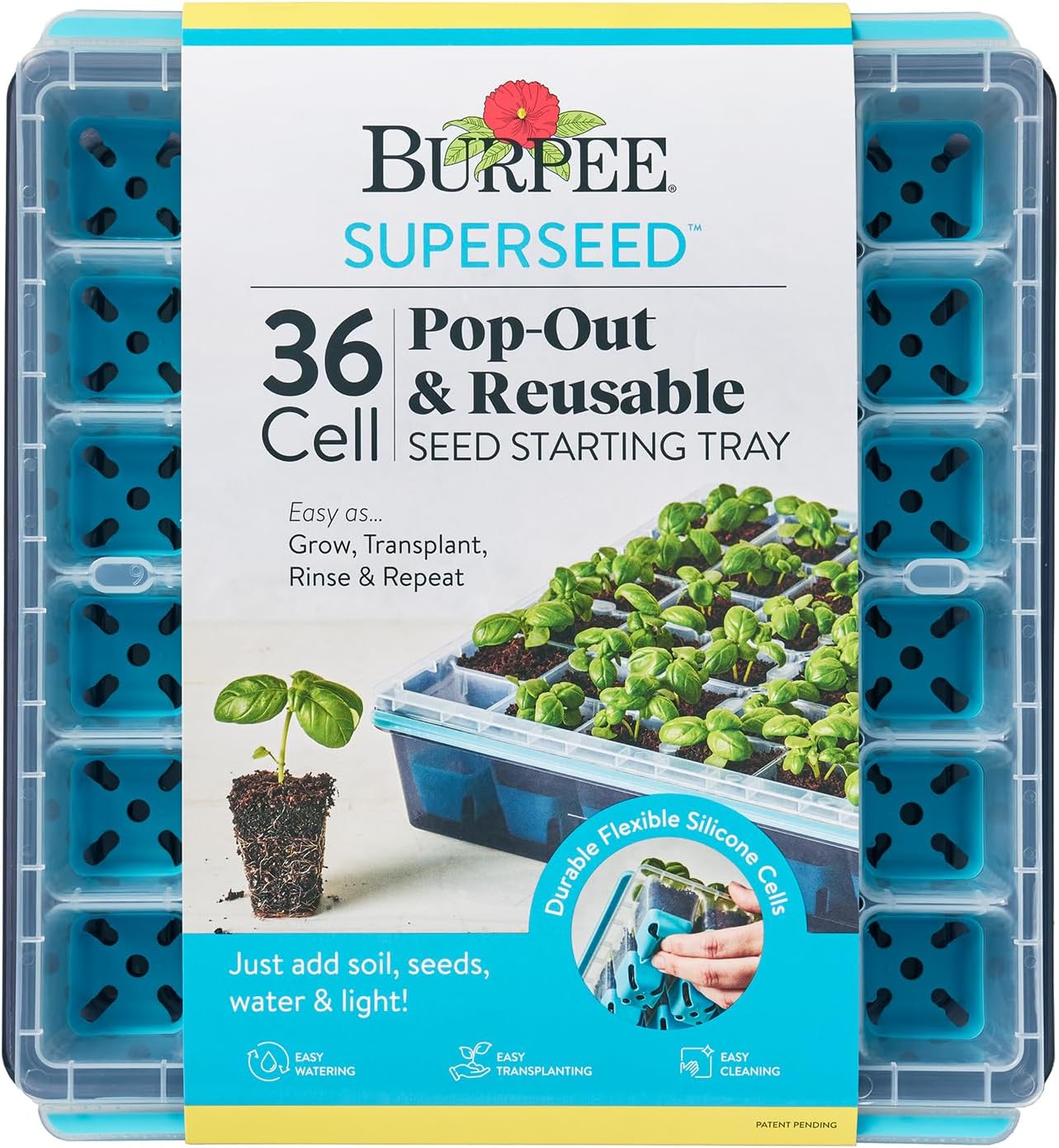
The Burpee SuperSeed 36-cell tray is designed to simplify indoor seed starting for herbs, flowers and vegetables. You fill each silicone cell with seed-starting mix, sow seeds, and use the raised reservoir and deep channels to manage excess water while the molded corner slots improve drainage and aeration. The soft, food-grade silicone cells flex so seedlings can be popped out with minimal root disturbance for transplanting. Labeled rows and included Plant-o-Gram make it easier to keep varieties organized. In practice the tray is lightweight, easy to lift by the side handles and dishwasher-safe on the top rack, which speeds cleanup between seasons. Limitations to note are that the tray is intended for indoor use only and the silicone material does not provide rigid support the way plastic cells do, so very top-heavy transplants may need extra handling. For gardeners focused on reliable germination and gentle transplanting, this tray streamlines the starting-to-potting workflow.
Best for: Gardeners who want a dependable, low-stress way to start multiple varieties indoors and value gentle transplanting and easy cleanup.
Less Ideal for: People who need heavy-duty outdoor trays or rigid cell structure for large transplants should consider sturdier plastic or individual pots instead.
- Flexible food-grade silicone cells allow seedlings to pop out with minimal root disturbance
- Built-in drainage slots and deep reservoir channels reduce overwatering and spillage
- 36 individually labeled cells and Plant-o-Gram help keep multiple varieties organized
- Top-rack dishwasher safe for easy cleaning and seasonal reuse
- Designed for indoor use only and not suitable as a heavy-duty outdoor planter
- Silicone cells are not rigid, which can make handling larger or top-heavy seedlings trickier
Verdict: Choose this tray if you want a reusable, silicone seed-starting system that protects roots and makes transplanting easier.
Burpee SuperSeed Extra-Large 8-Cell Windowsill Seed Starting Tray

| Material Type | Silicone |
|---|---|
| Unit Count | 8 Count |
| Capacity | 2.18 liters |
| Mounting Type | Window Mount |
| Indoor Outdoor Usage | Indoor |
The Burpee SuperSeed 8XL seed starting tray is a compact windowsill system for germinating herbs, flowers and vegetables. Soft food-grade silicone cells cradle seedlings and flex so you can pop young plants out with minimal root disturbance, which makes transplanting easier. The tray is built with molded corner drainage slots and deep channels that draw excess water away from the cells while a raised perimeter keeps spills contained, and side handles let you lift and pour off excess moisture without dumping seedlings. Rows are labeled for seed identification and the included Plant-o-Gram helps organize multiple varieties. Because the tray is reusable and top-shelf dishwasher safe it is low maintenance for gardeners who prefer reliable, repeatable results. The extra-large cell size gives room for deeper-rooted starts like tomatoes and peppers but also means fewer cells per tray if you want to start large numbers of small-seed varieties. Overall this is a user-friendly, risk-reducing option for indoor seed starting on a windowsill or countertop.
Best for: Buyers who want a low-stress, dependable indoor seed-starting system for windowsill or countertop use and value easy transplanting and simple maintenance.
Less Ideal for: Growers who need to start large batches of tiny-seeded plants at once or who prefer rigid plastic multi-cell flats for higher density seeding.
- Flexible food-grade silicone cells that pop out to reduce transplant shock
- Built-in drainage slots and deep watering channels to manage excess moisture
- Extra-large cells accommodate deep-rooted seedlings like tomatoes and peppers
- Top-shelf dishwasher safe and reusable for easy cleaning and seasonal storage
- Only eight extra-large cells per tray limits how many small-seed varieties you can start at once
Verdict: Choose this tray if you want a low-maintenance, windowsill-ready seed starter that protects seedlings during transplanting.
Choosing the Right Seed Starting Tray: Key Factors to Consider
Drainage and Water Management
Proper drainage prevents waterlogged seed starting mix and reduces the risk of damping off, a common fungal problem in seedlings. Look for trays with multiple drainage holes per cell or a design that allows excess water to flow away from roots. Some trays pair with inserts or domes to retain humidity while still offering drainage channels. In practice, consistent drainage reduces the need for constant monitoring and helps seedlings develop healthy root systems.
Consider whether you will bottom-water or mist from above. Trays that accept a removable insert or have a separate reservoir make bottom-watering easier and minimize disturbance to tiny roots. If you use a heat mat, ensure the tray's drainage design does not trap moisture against the mat, which could shorten mat life or create uneven warming.
Cell Size and Spacing
Cell dimensions determine what seeds you can start together and how long seedlings can stay in the tray before transplanting. Smaller cells conserve space and potting mix for tiny seeds and microgreens, while larger cells let brassicas and tomato seedlings grow longer without root binding. Choose a tray with cell volume that fits your crop plan and transplant schedule.
Spacing also affects airflow around seedlings. Trays with clearly separated cells and adequate distance between stems reduce humidity pockets and encourage sturdier stems. If you plan to over-winter transplants or pot up in stages, pick trays with a variety of cell sizes or modular systems that let you move seedlings into larger cells without removing them from the tray base.
Material and Construction
Durable materials stand up to repeated use, exposure to watering, fertilizers, and sunlight from grow lights. Rigid plastics resist warping and make handling wet seedlings easier. Biodegradable options can be planted directly into the ground or pots, reducing transplant shock, but they sometimes degrade too quickly when repeatedly watered before transplanting.
Pay attention to the finish and join quality. Smooth cell walls let roots slide out cleanly during transplanting, while rough or thin plastic can snag roots and damage seedlings. If you expect to reuse trays for several seasons, choose thicker construction and UV-stable materials that will hold up under greenhouse lights and outdoor storage.
Compatibility With Heat Mats and Grow Lights
Many gardeners use heat mats and overhead grow lights to speed germination and encourage compact, vigorous seedlings. Check that trays sit stably on heat mats and that domes or lids do not trap excessive heat. Some trays are designed with flat bases for even heat transfer, while others include a separate reservoir that can interfere with mat contact.
Light compatibility matters for clearance and reflectivity. Low-profile trays fit under fixed grow light rigs, and some colored bases help reflect light back into cells. If you plan extended indoor germination, select trays that work well with your existing lighting and heating setup to avoid replacing equipment or rigging unstable solutions.
Ease of Transplanting and Handling
How easily seedlings come out of cells affects survival and labor time. Trays with tapered cells and smooth interior walls make it easier to push seedlings out by the root ball, while those with perforated bottoms or plug-style inserts let you lift seedlings with minimal root disturbance. Consider whether you want to transplant seedlings directly with biodegradable pots still attached or remove them from modular plugs.
Ergonomics matters when moving trays full of wet mix. A sturdy rim, integrated handles, or a rigid base help prevent spills. Also think about cleaning between seasons; trays that disassemble or have simple shapes are easier to sanitize to reduce disease carryover.
Cover and Humidity Control
A clear dome or cover can speed germination by trapping moisture and warmth, but too much humidity encourages fungal issues. Covers with adjustable vents give you control over air exchange as seedlings emerge. Transparent lids that lock in place make stacking and transport easier while preserving humidity.
Consider whether you need a cover that pairs with a specific tray footprint. Universal domes are convenient but may not seal well on every base, reducing their humidity management effectiveness. If you start a lot of different crops, a flexible cover system with vents or a removable top works best to balance germination speed and disease prevention.
Tray Types and When to Use Them
Seed starting trays come in a few common forms: single-cell flats, multi-cell plug trays, and deeper nursery-style flats. Single-cell and plug trays are ideal for small-space gardeners who need orderly seedlings that are easy to transplant. Deeper flats work well when you intend to pot up seedlings into larger containers before planting out.
Match the tray type to your timeline. If you have limited bench space and plan to transplant quickly into larger containers, use smaller plug trays. If you want seedlings to remain in the same container longer, choose larger cells or deeper flats to give root systems room.
- Plug trays: good for early-stage germination and organized transplanting
- Deeper flats: suitable when you will pot up gradually or overwinter seedlings
- Single-cell options: useful for crops that do not like root disturbance
Using Trays With Limited Space
Small-space gardeners can stack trays vertically for germination, but avoid stacking while plants need light and airflow. Use narrow shelving or a rolling cart with adjustable shelves to keep trays at the correct distance from lights. Choose compact trays with small footprint cells to maximize the number of seedlings per shelf.
When space is tight, stagger germination so you do not overwhelm your light and heat resources. Sow in waves and pot up a few seedlings at a time to make best use of bench space and reduce crowding when seedlings need higher light levels.
- Stack only during the initial germination phase if using domes
- Use narrow shelving and shallow trays for multi-level setups
- Stagger sowing dates to manage space and light demand
Cleaning and Sanitation Best Practices
Sanitation reduces the risk of fungal disease and pest issues that can wipe out young seedlings. After each season, remove potting mix, scrub trays with a brush, and rinse thoroughly. For deeper sanitation, soak trays in a mild bleach solution or horticultural disinfectant following manufacturer guidance.
Allow trays to dry completely before storing. Damaged or cracked trays should be retired to avoid harboring pathogens. Good rotation and cleaning extend the useful life of trays and protect future seedlings.
- Remove soil and debris promptly after use
- Use a mild disinfectant for occasional deep cleaning
- Store dry in a cool, ventilated area away from direct sun
Eco-Friendly Options and Disposal
Biodegradable pots and peat-based inserts are convenient because you can plant them directly into the garden, reducing transplant shock. However, they may break down if kept continuously wet for long periods and may not hold together during handling. Consider coir or paper-based inserts which tend to have more structural integrity when damp.
Recycled or durable reusable trays reduce waste over multiple seasons. If you choose disposable inserts, compost intact and untreated biodegradable materials when possible and recycle rigid plastics according to local guidelines to reduce environmental impact.
- Biodegradable plugs reduce transplant disturbance
- Reusable rigid trays reduce long-term waste
- Compost untreated biodegradable pots when possible
Adapting Trays to Different Crops
Different crops have different root and timing needs. Leafy greens and herbs usually do fine in small cells and transplant quickly, while solanaceous crops like tomatoes prefer larger cells to develop stronger root systems before setting out. Plan your sowing schedule and pick tray cell sizes that allow seedlings to grow to a suitable transplant size.
If you start many crop types at once, consider modular systems with interchangeable inserts so you can use appropriate cell sizes without buying separate bases for each type of seed.
- Small cells for quick-growing greens and herbs
- Medium to large cells for tomatoes, peppers, and brassicas
- Modular inserts help mix crop types efficiently
How We Chose the Best Seed Starting Tray
We evaluated candidates that are purpose-built for germinating vegetable, herb, and flower seeds in confined garden spaces and patios. Selection focused on factors that directly affect seedling health and user convenience: drainage design and water management, material durability and reuse potential, cell size and spacing for common seed types, compatibility with heat mats and grow lights, and how easily seedlings can be removed and transplanted. We prioritized trays that perform well across several growing conditions rather than those optimized for a single niche. Our process excluded generic shallow trays without individual cells and items intended only for hydroponic systems or large commercial propagation racks. We also excluded trays made from untested or extremely fragile materials that would not survive a single season of normal garden use. The final list highlights solutions that combine predictable moisture control, practical cell geometry, and construction robust enough for repeated reuse.
FAQ
How often should I water seedlings in a tray?
It depends on the mix and environment. Many gardeners bottom-water every few days so the medium stays evenly moist without saturation. Check cells daily and water from the top if the surface feels dry or when seedlings show early stress.
Can I reuse seed starting trays year after year?
Often you can, provided you clean and sanitize them between uses. Rigid trays typically last multiple seasons; biodegradable inserts usually do not. Inspect trays for cracks or warped areas before reuse.
When should I remove the humidity dome?
Remove or vent the dome once most seeds have sprouted and true leaves begin to form. Gradually increase ventilation over several days to acclimate seedlings and reduce humidity to prevent fungal problems.
Are deeper cells always better for seedlings?
Deeper cells give roots more room and can delay transplanting, but they use more potting mix and bench space. Choose depth based on how long you plan to keep seedlings in the tray before potting up or planting out.
Do trays need a specific potting mix?
Use a fine, well-draining seed-starting mix formulated for germination. Regular garden soil is too heavy and holds excess moisture. The right mix supports air exchange and quick root penetration for strong starts.
Final Verdict
Choose a seed starting tray that matches your crop mix and timing rather than chasing the fanciest feature. Prioritize reliable drainage, appropriate cell volume for the seedlings you raise, and a construction that will survive the number of seasons you expect to use it. Consider how the tray will fit with your heat mats and lights and whether you prefer reusable plastics or biodegradable plugs. Balancing these tradeoffs will help you start more seedlings with less stress and labor. Focus on the drainage and transplanting characteristics that fit your workflow, and you will have healthier transplants ready for the garden when the time comes.
