

Note: This article contains affiliate links. If you click on these links and make a purchase, I may earn a small commission at no extra cost to you. This helps support my research and content. Read my full affiliate disclosure here.
If you have a shady yard, patio edge, or beneath trees, the right shade tolerant ground cover transforms bare soil into an attractive, living carpet that resists erosion and chokes out weeds. Picking the wrong species wastes time and leaves you with thin patches or plants that struggle to spread. This guide covers seven shortlisted options suited to low- and part-shade situations across gardens and landscapes. We focus on how well each option establishes in low light, how it spreads and competes with weeds, and what typical maintenance you should expect. Read on for practical notes that make choosing easier and for the evaluation criteria used to select these top picks.
Top Picks at a Glance
| Best Overall The best all-around choice for most situations | Florida Foliage Dwarf Mondo Grass (10 live plants) |  |
| Best Quality Built to a higher standard if you want something more solid | Liriope spicata live plants, 18-count (3-inch pots) |  |
| Best Value The sweet spot between price and what you get | Outsidepride Perennial White MiniClover Seed (1 lb) |  |
| Best Budget The cheapest option that still gets the job done reliably | Outsidepride Irish Moss (Sagina subulata) Ground Cover Seeds, 5000 count |  |
| Highest Rated A top-rated pick with lots of positive feedback | Loseedsoo Wild Ginger (Asarum canadense) Seeds — 30+ Perennial Woodland Groundcover |  |
| Most Popular A crowd favorite that many people choose with confidence | Pennington Smart Seed Dense Shade Grass Seed Mix, 7 lb |  |
| Best Seller A high-volume bestseller chosen again and again | Outsidepride Dichondra Repens Ground Cover Seeds, 1 lb |  |
Florida Foliage Dwarf Mondo Grass (10 live plants)

| USDA Hardiness Zone | 3 |
|---|---|
| Expected Plant Height | 6 inches |
| Soil Type | Sandy Soil |
| Moisture Needs | Regular Watering |
| Indoor Outdoor Usage | Outdoor |
Dwarf Mondo Grass is a compact, slow-growing ground cover prized for forming a dense carpet of dark green foliage that works well in shaded border beds and under trees. Sold as a 10-plant bundle, these live plants are typically spaced in groups or rows to fill gaps between pavers, edge walkways, or create low-maintenance borders. The variety tolerates full shade to partial sun, stays evergreen, and requires regular watering during establishment. Practical strengths include its dense habit for erosion control on gentle slopes and the minimal trimming it needs once established. Because it is slow growing and stays about 6 inches tall, it reduces frequent maintenance and stays neat around paths. Limitations are that it prefers sandy soil and regular moisture during establishment, so it may need extra watering in heavy clay or very dry sites, and results depend on proper planting and aftercare since plants arrive small and must be given time to fill in.
Best for: Gardeners who want a low-maintenance, shade-tolerant evergreen ground cover to edge paths, fill between pavers, or create tidy borders without frequent trimming.
Less Ideal for: Those needing rapid coverage of large areas or gardeners with very dry, compacted clay soils who cannot provide supplemental moisture during establishment.
- Shade tolerant and evergreen for year-round ground cover
- Dense, low-growing habit that forms a neat carpet and helps control minor erosion
- Low-maintenance once established due to slow growth and minimal trimming
- Sold in a 10-plant pack suitable for filling small beds or edging walkways
- Requires regular watering during establishment and prefers sandy, well-draining soil
- Slow spread means it can take time to fully fill larger areas
Verdict: A durable, low-growing evergreen ground cover that excels in shady spots and creates a tidy, low-maintenance carpet with minimal upkeep.
Liriope spicata live plants, 18-count (3-inch pots)

| Indoor Outdoor Usage | Outdoor |
|---|---|
| Sunlight Exposure | Shade |
| USDA Hardiness Zone | 6-10 |
| Unit Count | 18 Count |
| Moisture Needs | Low To Medium |
These trays deliver 18 healthy Liriope spicata plants in 3-inch pots for transplanting into garden beds and borders. Liriope spicata is used as a low, spreading groundcover that forms dense, grasslike clumps about 5 inches high, which suppress weeds and provides year-round dark green foliage. It is hardy in USDA zones 6 to 10 and performs well in shade to partial shade, making it a reliable choice for under trees and narrow borders in zone 7. The plants are drought tolerant once established and need only low to medium moisture, though regular watering while roots develop helps establishment. Practical benefits include minimal ongoing maintenance, no mowing, and good adaptability to well-draining soils. Limitations are that the small 3-inch pots require careful transplanting and spacing to achieve full coverage, and these are plants rather than plugs or sod so initial labor and watering are needed to knit them into a uniform mat.
Best for: Gardeners in zone 7 who want a dependable, low-maintenance shaded groundcover and prefer buying established plants to seed-starting. Ideal for homeowners who value long-term reliability and reduced seasonal upkeep.
Less Ideal for: Those who need instant, full-coverage turf-like matting or want a no-planting option; not the best choice if you cannot water and tend new transplants for the first few weeks.
- Sold as 18 healthy individual plants ready to transplant for quick establishment
- Shade and partial-shade tolerance suited to under-tree and border planting
- Drought tolerant after establishment which reduces long-term watering needs
- Year-round foliage provides continuous groundcover and weed suppression
- Plants come in small 3-inch pots so you must transplant and space them for full coverage
- Initial period requires regular watering and care until root systems establish
Verdict: A reliable, low-growing shade-tolerant groundcover for zone 7 gardeners who want durable, low-maintenance planting from ready-to-transplant plants.
Outsidepride Perennial White MiniClover Seed (1 lb)

| Indoor Outdoor Usage | Outdoor |
|---|---|
| Other Special Features of the Product | Drought Tolerant |
| Expected Blooming Period | Summer |
| Moisture Needs | Moderate Watering |
Outsidepride Perennial White MiniClover is a micro clover seed intended as a low‑maintenance ground cover or lawn mix‑in. It is typically used for overseeding bare patches, creating a low-mow lawn alternative, stabilizing slopes or pathways, and improving soil nitrogen naturally. Notable features include very small leaves and stoloniferous growth that allow it to form a dense mat, low watering needs once established, and a short summer flowering period that attracts pollinators if left unmowed. Practical benefits are reduced mowing and irrigation, improved soil fertility through nitrogen fixation, and rapid establishment when sown at recommended rates. Limitations to consider are its preference for full sun to partial sun rather than deep shade, a modest one‑month bloom period if mowed regularly, and that it will reach only a few inches tall so it does not replace taller shade-tolerant groundcovers. For shaded areas this clover can work at garden edges or spots with filtered light, but it is not the best choice for densely shaded understories where true shade specialists perform better.
Best for: Gardeners who want a low‑maintenance, eco‑friendly ground cover or lawn mix‑in that reduces mowing and fertilizing and works well in sunny to partly shaded spots.
Less Ideal for: People seeking a groundcover for deep shade or for taller, year‑round ornamental coverage should consider shade‑specialist plants instead.
- Drought tolerant once established, reducing watering needs
- Fixes atmospheric nitrogen to improve soil fertility naturally
- Very small leaves and stolons create a dense, low-mow ground cover
- Suitable for erosion control on slopes and quick establishment of bare areas
- Not well suited to deep, heavily shaded areas and performs best in sun or partial sun
- Short seasonal flowering window if regularly mowed
Verdict: Choose this micro clover if you want an easy, low‑mow ground cover that improves soil naturally and cuts maintenance in sun or partly shaded areas.
Outsidepride Irish Moss (Sagina subulata) Ground Cover Seeds, 5000 count

| Expected Blooming Period | Spring to Fall |
|---|---|
| Sunlight Exposure | Partial Sun |
| USDA Hardiness Zone | 4 |
| Moisture Needs | Moderate Watering |
| Unit Count | 5000 Count |
Outsidepride Irish Moss seeds are intended to establish a dense, low carpet of green that fills gaps between stepping stones, edges pathways, and acts as a lawn alternative in cooler, moist sites. You surface-sow the fine seeds in spring on well-drained but consistently moist soil and keep them damp while they germinate; the company rates coverage at roughly 100 sq ft for the 5,000-count pack. Notable features are the plant's very low height (1–2 inches), tolerance for partial shade, and small white spring blooms that add subtle texture to rock gardens and borders. In practice this makes Irish Moss a good choice where soils stay cool and slightly wet rather than bone dry, and where foot traffic is light. Limitations are that it needs regular moisture during establishment and performs poorly in heavy foot traffic or hot, fully exposed sites; germination and coverage can be uneven if sowing depth or moisture is inconsistent. For gardeners with shaded, damp patches who want a soft, low-maintenance carpet, Irish Moss delivers attractive, resilient ground cover once established.
Best for: Gardeners with shaded or consistently damp patches who want a low-growing, decorative ground cover that stabilizes soil and softens pathways; buyers who prefer a perennial, low-maintenance lawn alternative and are prepared to keep soil moist while plants establish.
Less Ideal for: People needing a hardwearing surface for frequent walking or play, or those with very dry, hot sunny sites that do not retain moisture.
- Creates a dense, mat-forming carpet ideal for filling gaps between pavers and edging pathways
- Perennial and cold-hardy across a wide USDA range, returning year after year
- Tolerates partial shade and prefers consistently moist, well-drained soils suited to wet-ground spots
- Small white flowers in late spring to early summer add seasonal interest without raising height
- Requires steady moisture during germination and establishment to achieve full coverage
- Not suited to heavy foot traffic or very hot, fully exposed locations
Verdict: Choose these Irish Moss seeds if you want a low, shade-tolerant ground cover that establishes a soft, moisture-friendly carpet for pathways and rock gardens.
Loseedsoo Wild Ginger (Asarum canadense) Seeds — 30+ Perennial Woodland Groundcover

| Botanical Name | Asarum canadense |
|---|---|
| Plant Type | Perennial |
| Light | Partial Shade to Full Shade |
| Unit Count | 1 Count |
These Loseedsoo wild ginger seeds provide a straightforward way to establish Asarum canadense as a durable, shade-tolerant groundcover. The packet includes 30+ seeds intended for partial to full shade planting in rich, moist, well-drained soil. Gardeners typically sow the seeds shallowly, keep the medium consistently moist, and often cold-stratify the seed first to improve germination because seedlings can be slow to appear. Once established, wild ginger forms heart-shaped foliage that spreads gradually to suppress weeds and fill shady borders beneath trees. Notable features are its native provenance, perennial habit, and distinctive low flowers hidden under the leaves. Practical benefits are low long-term maintenance and good performance where many sun-loving plants fail. Important limitations are the slow and sometimes erratic germination from seed and the need for consistent moisture during establishment, so results require patience and some initial care.
Best for: Gardeners who need a reliable, low-maintenance native groundcover for shaded areas and are willing to give seeds careful moisture and time to establish.
Less Ideal for: People who need instant coverage or a guaranteed quick result should choose plugs or established plants instead.
- Shade-adapted perennial suitable for partial to full shade sites
- Provides low, spreading heart-shaped foliage that creates a natural woodland groundcover
- Native species that fits well in shaded borders, beneath trees, and naturalized landscapes
- Includes 30+ seeds, allowing coverage of multiple small planting spots or patches
- Seeds germinate slowly and may require cold stratification and patient care
- Establishment needs consistently moist, rich soil during the early growth period
Verdict: A good choice for gardeners seeking a long-term, shade-loving native groundcover when they can commit to patient seed sowing and moist establishment.
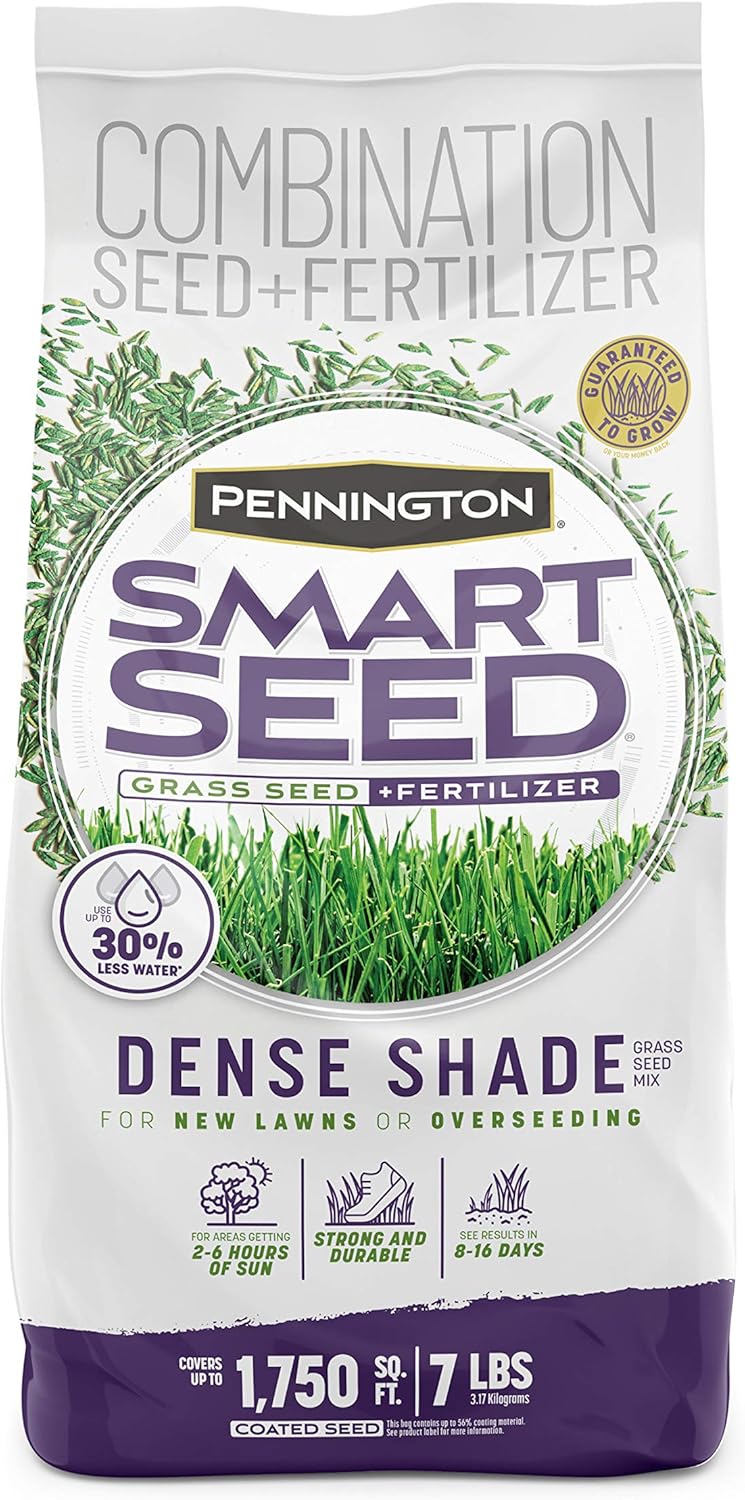
Pennington Smart Seed Dense Shade Grass Seed Mix, 7 lb
| Sunlight Exposure | 2-6 Hours |
|---|---|
| USDA Hardiness Zone | 1-12 |
| Moisture Needs | Moderate Watering |
| Included Components | Pennington Smart Seed Dense Shade Grass Mix Bag 7 lb |
Pennington Smart Seed Dense Shade is a grass seed mix designed specifically for low-light lawn areas. It combines tall fescue, fine fescue and perennial ryegrass with a lightly fertilizer-enhanced seed coat so seedings often germinate and green up quickly. Use it to overseed thin shady patches or to start a new lawn in spots that get only 2 to 6 hours of sun; the manufacturer recommends spring or fall planting and daily shallow watering until seedlings reach about 3 inches. Notable features include coverage guidance (up to 1,750 sq ft for overseeding), a built-in starter fertilizer that speeds establishment, and breeding aimed at improved drought tolerance once established. In practice this means faster visible results and a lawn that can need less water over time compared with ordinary seed. Limitations are typical for shade mixes: success still depends on good seed-to-soil contact, consistent moisture during germination, and realistic expectations in very dense shade or under trees where roots and competition reduce success rates.
Best for: Homeowners who need a practical, proven lawn seed to repair or overseed shady patches and who prefer solutions with built-in fertilizer and research-backed genetics.
Less Ideal for: People seeking an immediate, no-maintenance ground cover for deep, tree-rooted shade or those wanting non-grass ornamental groundcovers that tolerate full shade.
- Formulated for low-light areas that receive 2 to 6 hours of sun
- Seed coat includes starter fertilizer to speed germination and greening
- Mix of tall fescue, fine fescue and perennial ryegrass for durability
- Designed for improved drought tolerance once established
- Requires daily moisture during germination which demands ongoing attention
- Performance can be limited in extremely dense shade or heavy root competition
Verdict: Choose this seed mix when you want a research-backed, fertilizer-coated grass seed that establishes faster and performs better in moderate shade.
Outsidepride Dichondra Repens Ground Cover Seeds, 1 lb

| Sunlight Exposure | Partial Sun |
|---|---|
| Expected Planting Period | Spring |
| USDA Hardiness Zone | 8 |
| Moisture Needs | Moderate Watering |
| Material Features | GMO Free, Heirloom |
These Outsidepride Dichondra Repens seeds grow into a dense, low-maintenance mat of round silvery leaves that works well as a lawn alternative or slope cover in warm, sunny landscapes. You sow the seeds in prepared loam soil in spring, keep soil evenly moist for germination, and the plants establish quickly to fill bare spots and reduce weeding. Notable features include heirloom, GMO-free seed and suitability for USDA zones 8 to 11, plus tolerance for heat and moderate drought once established. In practice this makes Dichondra a good choice for sunny garden beds, low-traffic lawns, containers and erosion-prone slopes where a soft underfoot surface is desired. Expect only slight winter browning in cooler spells and limited tolerance for heavy foot traffic. Because it prefers partial to full sun in warm regions, it is not a drop-in replacement for cool-season turf in northern climates. Seed comes in a bulk 1 pound package, so plan spacing and overseeding accordingly to avoid waste.
Best for: Gardeners in warm climates who want a low-maintenance, attractive lawn alternative or slope cover that establishes quickly and reduces upkeep.
Less Ideal for: Homeowners needing a durable, high-traffic turf replacement in cool-season regions or buyers who require a year-round green lawn in climates below USDA zone 8.
- Creates a dense, low-growing carpet that fills bare spots and suppresses weeds
- Heat and moderate drought tolerant once established, suitable for USDA zones 8–11
- Heirloom, GMO-free seed in a bulk 1 pound package for larger areas
- Good for erosion control, slopes, containers and hanging baskets
- Not suited to high-traffic lawn areas or cool northern climates
- May brown slightly in winter and requires replanting or repair in colder freezes
Verdict: Choose these Dichondra seeds if you want a low-maintenance, heat-tolerant ground cover that quickly establishes a soft, weed-suppressing carpet in sunny warm-climate gardens.
Choosing the Right Shade Tolerant Ground Cover: Key Factors to Consider
Actual Light Conditions
Shade is not a single condition. Some areas get deep, year-round shade beneath dense evergreens while others receive dappled light or bright indirect morning sun. Understand the specific hours and intensity of light in the planting area before choosing a ground cover.
Plants labeled shade tolerant may prefer bright shade or light dappled sun; those that survive in near-darkness are rarer. Matching plant preferences to the actual light environment prevents chronic thinning and reduces the need for replacement or supplemental planting.
Soil Type and Drainage
Soil texture and moisture strongly influence long-term success. Many shade-loving ground covers prefer rich, well-draining loam, while some tolerate heavier clay or naturally moist soils under trees. Test or feel the soil and note whether water puddles after rain.
If drainage is poor, prioritize species tolerant of damp conditions. Conversely, for sandy, fast-draining sites, select covers that can handle lower moisture. Amending the soil or creating raised planting beds can change suitability but adds labor and cost.
Competition From Trees and Roots
Established trees and shrubs create root competition for water and nutrients. Ground covers that are shallow-rooted or that establish quickly will better tolerate the intense belowground competition in tree wells and near trunks.
Plan planting zones away from the tightest root plates when possible and consider planting in rings or mulched islands to reduce direct root competition. Accept that some covers will remain thin right at the base of large trees and plan complementary mulched areas if dense planting is impossible.
Spread Habit and Control
Different ground covers spread in distinct ways: by runners, rhizomes, clumping stems, or seed. Runner and rhizome spread can fill an area quickly but sometimes escape into adjacent beds or lawns. Clumping species are less invasive but take longer to cover ground.
Decide whether you want aggressive coverage or a more restrained, contained plant. Where borders matter, use root barriers or physical edging. For naturalized areas, faster spreaders reduce weed pressure but may require periodic containment.
Maintenance Time and Tasks
Consider how much time you can commit. Some covers require annual pruning or thinning to keep tidy, seasonal clean-up of dead foliage, or regular division to maintain vigor. Others are nearly carefree once established, needing only occasional trimming.
Also factor seasonal debris from trees, which can smother low-growing plants. Choosing plants that tolerate leaf litter or that can be easily brushed off simplifies care. Maintenance expectations should match the gardener's available time and willingness to perform periodic tasks.
Wildlife and Environmental Benefits
Beyond aesthetics, ground covers can provide habitat, nectar, or shelter for pollinators and small wildlife. Native or wildlife-friendly species often support more biodiversity and can be better adapted to local shade conditions.
Balancing ecological benefits with aesthetic and maintenance goals helps you pick a cover that suits both garden function and local ecosystem needs. Consider whether attracting pollinators or providing winter cover matters for your site.
Planting Strategy for Shady Areas
Prep determines success. Clear competing weeds and loosen the topsoil before planting, and incorporate organic matter where the soil is compacted or poor. For very compacted shade under trees, avoid deep tilling near major roots; instead, topdress with compost and use small augering holes for plant roots.
Space plants according to their mature spread rather than initial pot size. This prevents overcrowding and reduces early pruning. Mulch lightly to conserve moisture but keep a small mulch-free collar at the crown to prevent rot.
- Plant in groups for quicker visual impact and better weed suppression.
- Water new plantings regularly until established, then reduce frequency according to the species' needs.
- Avoid heavy fertilization in the first year; it can favor weeds and encourage weak, leggy growth.
Managing Leaf Litter and Debris
Leaf fall can smother low ground covers if allowed to build up. Instead of complete removal, thin the litter with a gentle rake to let light through. Many shade-tolerant species prefer a light, intermittent layer of decomposing leaves as it mimics a natural forest floor.
For species that struggle with heavy litter, plan seasonal clean-up after autumn leaf drop. Hand tools and gentle leaf blowers on low power keep damage to plants minimal.
- Compost collected leaves rather than hauling them away to return nutrients to the garden.
- Use a mulching mower on surrounding turf to reduce whole-leaf piles that migrate into beds.
Watering and Mulch Practices
Shade areas can dry out surprisingly quickly under tree canopies because roots outcompete shallow plants. Water deeply but infrequently to encourage deeper rooting. For many shade-tolerant covers, establishing a consistent watering schedule during the first season prevents failure.
Mulch helps retain moisture and moderates soil temperature, but too thick a layer can hold excessive moisture and cause crown rot. Apply a thin layer of organic mulch and refresh annually, keeping it away from plant crowns.
- Check soil moisture before watering; the top few inches should be slightly cool and moist, not saturated.
- Install soaker hoses for efficient, low-disturbance watering in larger shade beds.
Combining Ground Cover with Shade-Tolerant Perennials
Layering ground covers with taller shade-tolerant perennials adds visual interest and reduces the appearance of uniform mats. Use ground cover to hold soil while taller foliage provides season-long structure and flowers.
When mixing, match water and soil preferences. Group plants with similar maintenance schedules to simplify care and avoid competition that leaves some species suppressed.
- Stagger bloom times for continuous seasonal interest.
- Leave enough space for perennials to mature without being overwhelmed by more aggressive covers.
Dealing with Problem Areas and Thin Patches
Thin or bare patches often indicate light, water, or soil fertility issues rather than plant failure alone. Test these variables and amend as needed before replanting. In stubborn spots, a more robust or moisture-loving shade cover may be required.
Repairing patches is easiest in spring or early fall when soil temperatures encourage root growth. Prepare the planting area by loosening soil, adding compost, and ensuring consistent watering during establishment.
- Use small plugs or rooted cuttings for faster gap repair than sowing seed.
- Edge the repaired area to limit spread of more aggressive neighbors while the new plants get established.
How We Chose the Best Shade Tolerant Ground Cover
We evaluated candidates using criteria that reflect how these plants behave in a real garden setting. Primary filters included proven shade tolerance across varying dense canopy and dappled light situations, and establishment speed, meaning how quickly a planting fills bare patches. We assessed maintenance needs such as trimming, deadheading, and seasonal clean-up, plus water requirements once established. Ground-holding traits like root structure, erosion control, and ability to suppress weeds were judged because they matter for slopes and high-traffic shade. Disease and pest resilience in shaded microclimates was considered to avoid selections that need frequent intervention. We excluded species that require full sun, invasive plants that are banned or highly aggressive in many regions, and ornamental choices that perform poorly in true deep shade. Final selections balanced low maintenance, ground coverage rate, and ecological fit for shady beds, patios, and under trees. The scoring focused on measurable, gardener-relevant dimensions: light tolerance, spread rate, maintenance burden, water needs, and durability under shade stresses.
FAQ
Can ground cover survive under mature tree canopies?
Often yes, but success depends on the tree species, root competition, and available light. Choose plants noted for deep shade tolerance and plant slightly away from the densest root plate when possible.
How long before ground cover fills in bare areas?
It depends on the species and spread habit. Fast-spreading runners can cover small areas within a single season, while clumping or slower species may take two to three seasons to create full coverage.
Will ground cover damage tree roots or harm trees?
Most low-growing covers do not harm mature trees. The main concern is competition for water and nutrients. Avoid planting deeply around trunks and do not add excessive soil over root collars.
How do I stop an aggressive ground cover from overtaking other beds?
Physical barriers, regular edging, and scheduled pruning or division help contain vigorous spreaders. Choosing less aggressive species in tight garden beds also reduces the need for control.
Do shade ground covers need much fertilizer?
Usually no. Most shade-tolerant covers perform well with modest soil fertility. A light annual topdressing of compost is often sufficient unless a soil test indicates a deficiency.
Can I plant ground cover on a slope under trees?
Yes. Choose species with a good root-holding habit and dense spread to prevent erosion. Planting in staggered rows and adding light mulch can improve early establishment and stabilize the soil.
Final Verdict
Choose a shade tolerant ground cover by prioritizing how much light the site actually receives, the plant's spread habit, and ongoing maintenance requirements. Fast spreaders suppress weeds quickly but may need periodic control, while clumpers are neater but take longer to fill in. Balance water needs and root competition from nearby trees when selecting a species. With the right match to site conditions and a modest establishment routine, a shade-tolerant ground cover can deliver long-lasting, low-maintenance green in even the most stubborn shady spots.
