

Note: This article contains affiliate links. If you click on these links and make a purchase, I may earn a small commission at no extra cost to you. This helps support my research and content. Read my full affiliate disclosure here.
If you work in tight garden beds, on small woodworking projects, or need a compact saw for pruning and trim work, the right small hand saw makes those cuts safer and neater. This guide focuses on small hand saws built for cutting wood and explains how they perform in real outdoor and workshop situations. We shortlisted six top options that suit confined spaces and light-to-medium cutting tasks. Read on for the decision factors we used, including blade durability and ergonomics, plus clear guidance to pick the right saw for your typical tasks.
Top Picks at a Glance
| Best Overall The best all-around choice for most situations | SUIZAN Ryoba 7" Double-Edge Japanese Pull Saw |  |
| Best Quality Built to a higher standard if you want something more solid | SUIZAN 5" Flush Cut Japanese Pull Saw |  |
| Best Value The sweet spot between price and what you get | WFOEJEJ 6" Japanese Double-Edge Pull Saw (SK5 Blade) |  |
| Best Budget The cheapest option that still gets the job done reliably | EXTYQWC 6" Ryoba Japanese Pull Saw, Double-Edge SK5 Blade |  |
| Highest Rated A top-rated pick with lots of positive feedback | Magicbox 2-Piece Japanese Hand Saw Set (SK5 Steel) |  |
| Most Popular A crowd favorite that many people choose with confidence | RUITOOL 6" Japanese Ryoba Double-Edge Pull Saw |  |
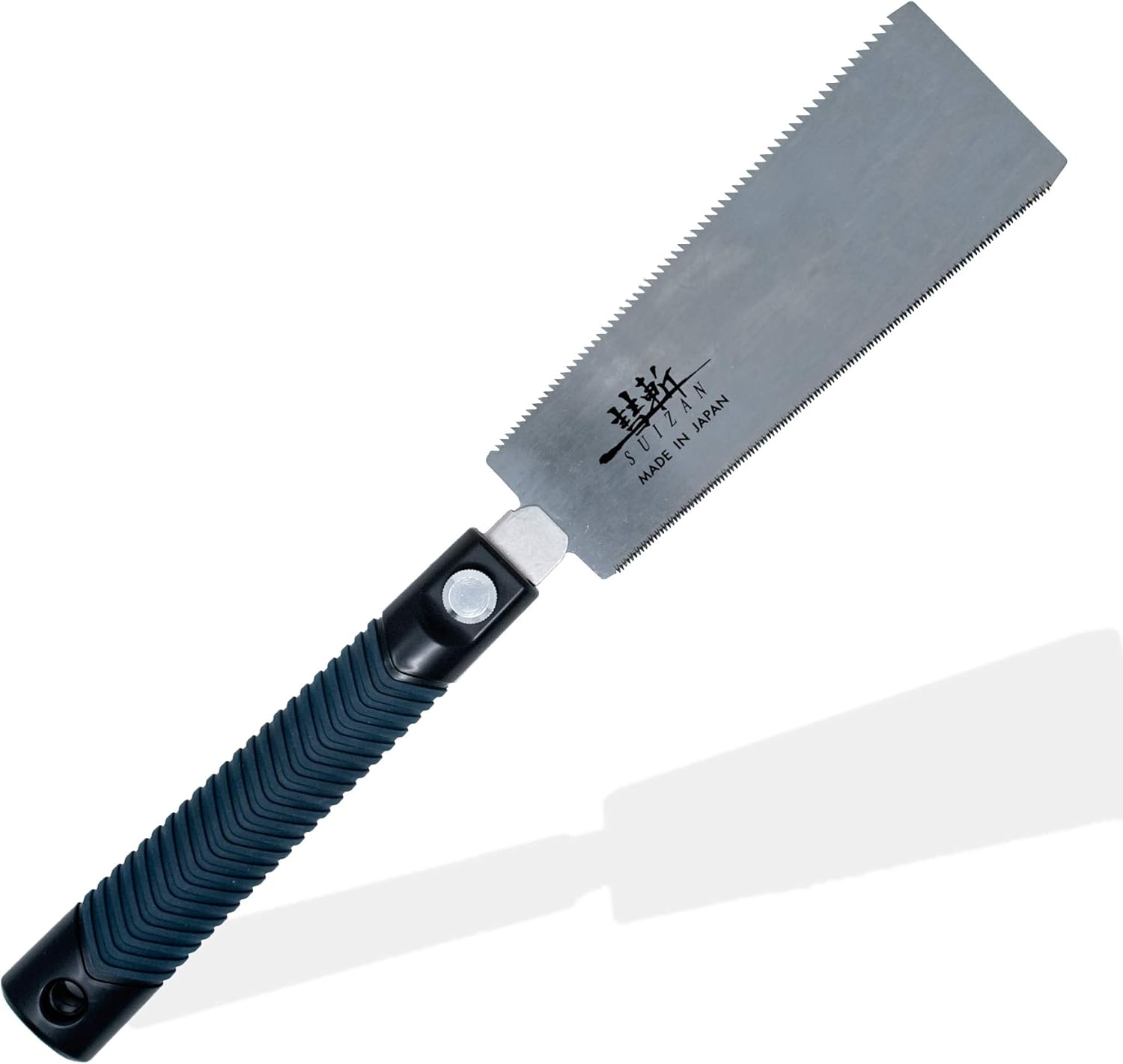
SUIZAN Ryoba 7" Double-Edge Japanese Pull Saw
| Blade Material | Japanese Steel |
|---|---|
| Blade Length | 7 inches |
| Blade Thickness | 0.02" (0.5mm) |
| TPI | 19 (crosscut) / 7-11 (rip) |
| Handle Material | Elastomer |
The SUIZAN 7" Ryoba is a compact Japanese pull saw built for clean, controlled cuts on small woodworking tasks. It has a double-edged blade with coarser rip teeth on one side and fine 19 TPI crosscut teeth on the other, so you can switch between ripping and crosscutting without changing tools. The blade is very thin (0.02"), which produces a narrow kerf and helps preserve material when cutting joinery, trim, moldings, and small furniture parts. Because it cuts on the pull stroke, the saw tracks accurately and requires less force than a Western push saw, which reduces user fatigue during longer sessions. Practical touches include a non-slip elastomer handle for a secure grip and a simple, tool-free blade-change using the handle screw. Limits to note are the short 7" blade length, which is ideal for detail work but not for long rip cuts or large stock, and the thin blade is more delicate than thicker saws so it will need replacement if used aggressively on nails or very hard materials.
Best for: Buyers who want an accurate, low-effort hand saw for small to medium woodworking tasks like trim, joinery, and DIY furniture details and prefer a tool that balances precision and everyday usability.
Less Ideal for: Woodworkers who routinely cut large boards, long ripping tasks, or frequently encounter metal in stock should choose a longer or heavier-duty saw instead.
- Double-edge Ryoba blade provides both rip and fine crosscut teeth for versatile cuts
- Very thin 0.02" blade and narrow kerf for precise, waste-minimizing joinery and trim work
- Sharp Japanese steel blade made for clean, smooth cuts with less effort using the pull stroke
- Elastomer non-slip handle and simple tool-free blade replacement for comfortable, practical use
- 7" blade length limits use on long rips or large stock
- Thin blade is more fragile and may wear faster if used on dirty or nail-containing wood
Verdict: Choose this compact Ryoba if you need a precise, low-effort pull saw for fine joinery and trim where a narrow kerf and clean finish matter most.
SUIZAN 5" Flush Cut Japanese Pull Saw

| Blade Material | Japanese Steel |
|---|---|
| Blade Length | 5 inches |
| TPI | 17 & 25 |
| Blade Thickness | 0.012" (0.3mm) |
| Handle Material | Wood |
The SUIZAN 5" flush cut pull saw is built for precise, low-effort trimming tasks where a clean, close-to-surface cut matters. It uses a thin 0.012" Japanese steel blade with no set teeth so you can trim dowels, plugs, tenons, and molding flush without scratching the surrounding wood. The blade is double-edged with 17 TPI for hardwood and 25 TPI for softwood, letting you switch between finer and coarser cutting depending on the material. Because it cuts on the pull stroke and has a flexible blade, it reaches into tight spots that larger saws cannot and leaves a narrow kerf that minimizes waste. The beech handle is compact and comfortable for controlled work but the blade is fixed and not replaceable, so heavy abuse or long-term wear will eventually require replacing the whole tool. This saw is not intended for ripping large boards or heavy-duty demolition, but for finish work and small hobby or professional projects it delivers razor-sharp, controllable cuts.
Best for: Woodworkers and hobbyists who prioritize precision finish work and need a small saw for trimming dowels, plugs, molding, and fine crosscuts in tight spaces.
Less Ideal for: Users who need a general-purpose saw for long rip cuts, structural cutting, or frequent heavy-duty work should choose a larger or replaceable-blade saw instead.
- Very thin 0.012" blade produces a narrow kerf and smooth finish
- Double-edged teeth (17 TPI and 25 TPI) suit both hardwood and softwood
- No-set teeth allow flush trimming of dowels and plugs without surface marring
- Pull-stroke design and flexible blade make accurate cuts in tight spaces
- Blade is fixed to the handle and not replaceable
- Not suitable for heavy ripping or large-scale cutting tasks
Verdict: Choose this compact flush-cut Japanese pull saw when you need razor-sharp, controllable trimming and clean flush cuts in tight or detailed woodworking tasks.
WFOEJEJ 6" Japanese Double-Edge Pull Saw (SK5 Blade)

| Blade Material | Sk5, steel |
|---|---|
| Blade Length | 6 inches |
| Number of Teeth | 168 |
| Power Source | Hand Powered |
This 6-inch Japanese pull saw is built for precision woodworking and small-scale trim work. The SK5 steel blade has two edges — a 14 TPI side for faster stock removal and a 17 TPI side for finer, smoother cuts — so you can switch between rough cuts and detail work without changing tools. The thin, flexible blade lets you make close flush cuts on dowels, tenons, and protruding trim, while the pull-stroke design keeps the blade under tension for accurate, controlled cutting. A soft, non-slip plastic handle improves grip and reduces hand fatigue during repetitive use. Because the blade is compact and flexible, it excels in tight spaces and for furniture repair, craft projects, and joinery, but it is not meant for heavy demolition or cutting very large sections quickly. For someone who values a small, versatile hand saw for everyday woodworking and finishing tasks this model delivers practical control and useful dual-tooth options at a very small footprint.
Best for: A homeowner or hobbyist who needs a compact, precise saw for furniture repair, joinery, and detail woodworking and prefers tools that save time by combining multiple cutting functions.
Less Ideal for: Professional carpenters or users who regularly cut large boards or need a heavy-duty saw for demolition should choose a larger or specialized tool instead.
- Double-edge SK5 blade (14/17 TPI) provides both faster cuts and finer finishing without swapping tools
- Thin, flexible blade enables near-flush trimming of dowels and tenons
- Pull-stroke design improves control by keeping the blade under tension
- Soft, non-slip handle increases comfort and reduces hand fatigue during repetitive use
- Short 6-inch blade is unsuitable for large rip cuts or heavy-duty demolition
- Plastic handle may feel less premium than wood or molded rubber alternatives
Verdict: Buy this if you want a small, easy-to-control pull saw that handles both quick stock removal and fine finishing in tight woodworking and repair tasks.
EXTYQWC 6" Ryoba Japanese Pull Saw, Double-Edge SK5 Blade

| Blade Material | SK5 high-carbon steel |
|---|---|
| Number of Teeth | 168 |
| Power Source | manual |
| Blade Shape | Rectangular |
This 6-inch Ryoba pull saw is a straightforward, no-frills tool for small woodworking and trimming tasks. It has a double-edged SK5 high-carbon steel blade with a 17 TPI side for finer cuts and an 11 TPI side for quicker removal in softwood, so you can switch between precision joinery and faster crosscuts without swapping tools. The thin, flexible blade cuts on the pull stroke for better control and is useful for flush trimming dowels, plugs and small protrusions near a work surface. Triple-ground, hardened teeth help the blade stay sharp and remove material efficiently, while the compact length makes it easy to use in tight spaces and for furniture repair. Expect a capable budget option: it offers the core benefits of Japanese saw geometry at an affordable level, but the short blade limits long rip cuts and the basic alloy-steel handle may feel less ergonomic during extended use. For occasional DIY, craft and joinery work this is a practical small saw; serious woodworkers who need longer cuts or premium handles may want to upgrade.
Best for: Buyers looking for an inexpensive, versatile small hand saw for DIY, furniture repair, crafts and detailed joinery who prioritize control and compactness over long cutting capacity.
Less Ideal for: Woodworkers who regularly need to rip long boards, perform heavy-duty framing, or who want a premium ergonomic handle should consider a longer or higher-end saw instead.
- Double-edge Ryoba design offers both 17 TPI for fine cuts and 11 TPI for faster cuts in one blade
- Flexible SK5 high-carbon steel blade suitable for flush trimming and tight joinery
- Triple-ground, hardened teeth improve cutting efficiency and edge life
- Compact 6-inch length is easy to maneuver in tight spaces and for furniture repair
- Short blade is not suited for long rip cuts or breaking down large boards
- Alloy-steel handle is basic and may be less comfortable during prolonged work
Verdict: A budget-friendly 6-inch Ryoba pull saw that delivers precise flush trimming and versatile fine-or-fast cuts for small woodworking and repair jobs.
Magicbox 2-Piece Japanese Hand Saw Set (SK5 Steel)

| Blade Material | Carbon Steel |
|---|---|
| Handle Material | Wood |
| Unit Count | 2 Count |
| Power Source | hand powered |
| Surface Recommendation | Wood |
This Magicbox set pairs a double-edge Japanese pull saw (11/17 TPI) with a pointed fine-tooth detail saw to cover most small woodworking tasks. The SK5 carbon steel blades are heat-treated for durability and the fine tooth geometry produces clean, low-tear cuts in hardwoods, softwoods, plywood and bamboo. Both saws use pull-cutting action, which gives better control and requires less downward force than Western push saws, making them well suited for precise trim work, joinery and furniture repairs. Ergonomic beechwood handles feel comfortable for extended use and included blade covers protect the teeth during storage or transport. The package is compact and practical for hobbyists or pros who need reliable, clean cutting without power tools. Limitations are that the set does not include replaceable blades or a larger saw for heavy rough cutting, so it is best used for small to medium tasks rather than demolition or thick timbers.
Best for: Buyers who prioritize dependable, precise hand tools for small to medium woodworking projects and value clean, controllable pull cuts over power tools.
Less Ideal for: People needing a single large saw for heavy rough cutting or those who prefer replaceable-blade systems for long-term maintenance.
- SK5 carbon steel blades are heat treated for strength and longer edge life
- Double-edge saw offers 11 and 17 TPI for efficient rip and cross cuts
- Pointed fine-tooth saw reaches tight spaces and handles detailed trimming
- Ergonomic wooden handles provide comfortable control during pull cuts
- Includes blade covers and a case for safe storage and transport
- Blades are not listed as replaceable, limiting long-term renewability
- Not intended for heavy demolition or cutting very thick timbers
Verdict: A compact, dependable two-saw Japanese set that delivers precise, controlled pull cuts for small woodworking and trim work.
RUITOOL 6" Japanese Ryoba Double-Edge Pull Saw

| Blade Material | SK5 steel |
|---|---|
| Blade Length | 6 inches |
| Number of Teeth | 14 & 17 TPI |
| Handle Material | Beechwood |
| Power Source | Hand Powered |
The RUITOOL 6" Ryoba pull saw is a compact Japanese-style handsaw designed for precise woodworking and flush cuts. It uses a thin, flexible SK5 high-carbon steel blade that cuts on the pull stroke, which helps control the cut and reduces tear-out on finish work. The blade has two tooth patterns—17 TPI on one edge for finer work and 14 TPI on the other for faster cuts—so you can switch between crosscut-style and rip-style cutting without changing tools. The beechwood handle is simple and comfortable for short sessions and the hardened three-edge teeth stay sharp and clear chips efficiently. Its small blade length and lightweight construction make it easy to maneuver in tight spaces and excellent for trim, small branches, dovetails, and flush trimming. Limitations are its short 6" blade, which means it is not suited to long rip cuts or heavy pruning, and the wooden handle offers less ergonomic cushioning than modern rubberized grips. For buyers who value controlled, accurate small cuts, this saw performs well; those needing longer reach or heavy-duty cutting will need a larger saw.
Best for: Buyers who need a precise, easy-to-control small handsaw for finish carpentry, trim work, and tight-space cutting and who prioritize reliable performance backed by broad user approval.
Less Ideal for: People who regularly cut large boards, long rip cuts, or heavy branches should choose a larger saw designed for high-volume or heavy-duty cutting.
- Flexible ultra-thin SK5 high-carbon steel blade for clean, low-tear cuts
- Double-edge 14/17 TPI provides both faster and finer cutting options without blade changes
- Hardened three-edge tooth geometry for improved sharpness and chip removal
- Compact 6" blade is easy to control in tight spaces and for flush trimming
- Lightweight and simple beechwood handle suitable for short precision tasks
- 6-inch blade length limits speed and efficiency on long or large crosscuts
- Plain wooden handle lacks ergonomic cushioning for extended use
Verdict: Choose this compact Ryoba pull saw if you want a small, accurate handsaw that delivers controlled, low-tear finish cuts in wood.
Choosing the Right Small Hand Saw for Cutting Wood: Key Factors to Consider
Blade Material and Heat Treatment
Blade composition affects how long a small hand saw stays sharp and resists bending. High-carbon steel or tempered stainless variants hold an edge better when you are cutting across grain or pruning slightly damp branches. Proper heat treatment reduces the risk of chips and micro-fractures that appear after repeated use.
For gardeners and hobbyists, a blade that can be resharpened occasionally extends the tool's life. Pay attention to whether the blade is replaceable, since that can be a more sustainable choice than replacing the entire saw when the teeth dull.
Tooth Geometry and TPI
Tooth shape and teeth-per-inch (TPI) determine how aggressively a saw cuts and how clean the finish will be. Coarse teeth with low TPI remove material quickly and are useful for pruning or rough cuts in green wood. Fine-toothed blades give smoother finishes on trim and small carpentry tasks but require more strokes and slower feeds.
Consider the primary tasks you will use the saw for. A medium TPI or hybrid tooth pattern often offers the best compromise for general-purpose outdoor and workshop use, giving acceptable speed without producing ragged edges.
Handle Design and Grip
Small hand saws are used in cramped positions where control is more important than brute force. A handle shaped to fit your palm and provide a secure non-slip grip reduces wrist fatigue and improves cut accuracy. Look for handles with ergonomic contours and materials that maintain grip when wet or sweaty.
The distance between the handle and the blade influences leverage. A short, well-positioned handle gives more control for precise cuts, while slightly longer handles can increase stroke length for faster cutting. Choose a balance that suits the tasks you perform most often.
Blade Length and Kerf
Blade length limits the maximum cut depth and stroke reach. Small hand saws typically have shorter blades to fit tight spaces, but that means multiple passes may be needed for thicker work. The kerf, or thickness of material removed per stroke, affects effort and finish. Thin-kerf blades require less force and leave less waste, but they can wiggle in the cut if not well supported.
Match blade length to the typical material you cut. For occasional light pruning or trim work, very short blades work well. For small carpentry or thicker branches, choose the longer end of the small-saw range.
Portability, Storage, and Protection
Small saws are often carried in tool belts, garden bags, or pockets, so a compact footprint and blade protection matter. Scabbards, folding designs, or locking mechanisms keep the blade covered during transport and reduce the chance of accidental cuts. A protected blade also stays cleaner and lasts longer when stored outdoors.
Consider how you will carry the saw while moving around the yard. A light saw with a secure sheath is more likely to be at hand when a quick trim is needed.
Maintenance and Replaceable Parts
Routine maintenance such as cleaning resin, removing sap, and occasional sharpening keeps a small hand saw cutting well. Some saws offer replaceable blades or replaceable teeth sections, which simplifies long-term upkeep. Others require resharpening with files, which is a useful skill but adds time to maintenance.
Check whether replacement parts and common sharpening supplies are readily available. A saw that is easy to service will remain reliable for years and reduce waste compared with disposable options.
Best Uses Around the Garden
Small hand saws shine in tasks where precision and access matter more than raw cutting power. Use them for pruning small branches, trimming root-bound potting wood, shaping wooden edging, and cutting small lumber or dowels for garden projects. Their short blades let you reach into tight spots without disturbing surrounding plants.
For occasional heavier pruning, pair a small hand saw with pruning loppers so you can match the tool to the cut. In workshop situations, these saws are ideal for fine joinery and trimming parts to fit, where a full-size saw would be unwieldy.
- Pruning small branches and deadwood
- Trimming lumber for raised beds and planters
- Shaping wooden edging and small trim
- On-site touch-ups for garden structures
Folding Vs Fixed-Blade Options
Folding saws add safety and portability because the blade tucks away when not in use. They are convenient for carrying while hiking or moving through dense garden plantings. However, folding mechanisms can introduce a little flex compared with fixed-blade designs, which may reduce control on very precise cuts.
Fixed-blade small saws typically offer a stiffer, more predictable cutting action and often accept longer blades. If you keep your saw in a shed and prioritize absolute control, a fixed pattern might be preferable. Choose folding designs with robust locks to minimize blade play when open.
- Folding: best for portability and casual garden use
- Fixed: better stiffness and consistent tooth engagement
Maintaining Cutting Performance
After use, clean sap and debris from the blade with a solvent or cloth to prevent gumming that dulls teeth. Lightly oil the blade to reduce corrosion if you store the saw outside or in a damp shed. Regularly inspect teeth for chips and file or sharpen as needed to restore a crisp cutting edge.
If your saw has a replaceable blade, swap it when sharpening no longer returns clean performance. Store the saw in a dry, shielded space and keep the cutting edge covered to extend its service life.
- Wipe sap and resin from the blade after each session
- Light oiling prevents rust during off-season storage
- Sharpen or replace blades when cuts become ragged
Using a Small Hand Saw Safely
Position your body for stable control and keep the workpiece secured with a clamp or between your knees. Small saws can kick or snag if the blade binds, so avoid forcing the tool; let the teeth do the cutting. Wear eye protection to guard against chips and gloves if you need extra grip protection.
When changing blades or folding the saw, maintain awareness of sharp edges and engage any locks fully. Keep bystanders at a safe distance when working overhead or on ladders.
- Secure the workpiece before cutting
- Use steady, even strokes rather than heavy force
- Keep fingers clear of the blade path
When to Choose a Different Tool
Small hand saws are not intended for large-diameter branches or heavy timbers. If you routinely cut thick branches, a pruning saw with a longer blade, loppers, or a powered saw will be faster and less tiring. For very fine joinery where a razor-smooth finish is required, a backsaw or fine-tooth panel saw may be a better match.
Assess the regular tasks in your garden. If you need both delicate trimming and occasional heavy cuts, it is practical to own a compact saw for precision plus a secondary tool for larger work.
- Use other tools for branches thicker than the small saw blade length
- Choose specialized saws for ultra-smooth joinery finishes
How We Chose the Best Small Hand Saw for Cutting Wood
We selected saws based on criteria that matter to gardeners and hobby woodworkers who need a compact cutting tool. Blade durability and tooth geometry were prioritized because a small saw must retain a sharp edge for frequent, short cuts in green and seasoned wood. Cutting speed and efficiency were measured conceptually by tooth pattern and kerf size, which affect how quickly a saw moves through wood and how much effort it takes. Handle ergonomics and grip comfort were included since small saws are often used in awkward positions and for extended tasks. Portability and storage options matter for outdoor use, so we favored compact designs that are easy to carry and protect. Safety features such as blade guards or secure locking mechanisms were also considered. We excluded full-size crosscut and rip saws inappropriate for the confined cutting scenarios described in the scope. We also filtered out tools designed primarily for metal, plastic, or masonry work. The final picks reflect a balance of sharp blade geometry, reliable materials, comfortable handling, compact footprint, and practical safety features that gardeners and hobbyists rely on day to day.
FAQ
What blade length is best for a small hand saw used in gardening?
Blade length depends on access and material thickness. Short blades (8 to 12 inches) are easiest to maneuver in tight spaces and around plants. If you sometimes need to cut thicker branches, choose a small saw at the longer end of that range.
Can small hand saws cut both green and dry wood effectively?
Many small hand saws handle both green and dry wood, but tooth geometry matters. Coarser teeth cut green wood more quickly, while finer teeth give neater edges on dry lumber. You may prefer a hybrid tooth pattern for mixed tasks.
How should I store a small hand saw to prevent rust and damage?
Store the saw in a dry place with the blade covered or folded. Wipe sap off after use and apply a light coating of oil before long-term storage to prevent corrosion and keep teeth in good condition.
Is a folding small hand saw less durable than a fixed-blade version?
Folding saws can be just as durable if they use a robust locking mechanism and quality materials. Fixed blades typically offer greater stiffness and may feel more stable for precision cuts, but modern folding designs are adequate for most garden tasks.
How often should I sharpen a small hand saw?
Frequency depends on use. For occasional garden work, once or twice a season may be enough. If you use the saw daily, inspect teeth regularly and sharpen when cuts start to require noticeably more effort or leave splintered edges.
Final Verdict
When picking a small hand saw for cutting wood, prioritize blade durability, tooth geometry, and handle ergonomics to match the kinds of cuts you do most often. Expect tradeoffs between portability and stiffness: folding designs are easier to carry while fixed blades typically give firmer control. Maintain the blade with regular cleaning and sharpening, and pair the saw with larger cutting tools when diameter or speed demands increase. With those priorities in mind, you can choose a compact saw that stays reliable for years.
