

Note: This article contains affiliate links. If you click on these links and make a purchase, I may earn a small commission at no extra cost to you. This helps support my research and content. Read my full affiliate disclosure here.
If you want a compact structure that gives seedlings, tender perennials, or a balcony garden a more controlled microclimate, a small walk in greenhouse is a sensible investment. These smaller structures save space while extending the season, protecting plants from wind and pests, and concentrating warmth and humidity where it helps most. Choosing the right one affects how easy it is to install, how plants respond to heat and moisture, and how long the structure lasts. This guide highlights seven shortlisted small walk in greenhouses that fit tight yards, patios, and balconies. We evaluate each option on practical criteria gardeners care about, including frame strength, covering durability, ventilation, and ease of assembly. Read on to find which features matter most for your situation before the product list below.
Top Picks at a Glance
| Best Overall The best all-around choice for most situations | Ohuhu 4-Tier Walk-In Greenhouse with 11 Shelves (PE Cover, Metal Frame) |  |
| Best Quality Built to a higher standard if you want something more solid | Aoxun 6×8 ft Wooden Walk-In Greenhouse with Polycarbonate Panels |  |
| Best Value The sweet spot between price and what you get | Greengro Small Walk-In Greenhouse with PE Cover and Zippered Door |  |
| Best Budget The cheapest option that still gets the job done reliably | heyfurni Walk-In Greenhouse with 6 Shelves and PE Cover |  |
| Highest Rated A top-rated pick with lots of positive feedback | Velway Walk-In Portable Greenhouse with 12 Shelves |  |
| Most Popular A crowd favorite that many people choose with confidence | Pure Garden Walk-In Greenhouse, 56 x 56 x 76 inch |  |
| Best Seller A high-volume bestseller chosen again and again | EAGLE PEAK 8×6 Pop-Up Walk-In Greenhouse |  |
Ohuhu 4-Tier Walk-In Greenhouse with 11 Shelves (PE Cover, Metal Frame)

| Size | 4 Tier 11 Shelves |
|---|---|
| Cover Material | Green PE |
| Frame Material | Metal |
| Number Of Vents | 3 |
| Closure Type | Zipper |
This Ohuhu walk-in greenhouse is designed as a small, portable growing space for seedlings and potted plants. It assembles without tools using metal poles and connectors and is covered in a PE sheet that blocks UV and sheds water while admitting light. The interior layout places 11 shelves around three sides so you can organize trays, pots and seedling flats vertically to maximize limited space. Ventilation is handled by a roll-up zippered door and three mesh windows that help control airflow and keep out pests. Anchoring stakes and guy ropes improve stability in breezy conditions, and the cover and powder-coated tubes aim to resist corrosion. Expect easy seasonal use and quick setup, but keep in mind this is a lightweight, temporary structure best suited to sheltered spots rather than permanent heavy-duty protection in very high winds or heavy snow. The greenhouse is a practical, space-efficient option for hobby gardeners who want more control over microclimates without committing to a large permanent structure.
Best for: Gardeners who want an affordable, space-efficient portable greenhouse to start seedlings, organize potted plants, and extend the growing season in a backyard or patio.
Less Ideal for: Those needing a permanent or heavy-duty greenhouse for large plants, year-round shelter in exposed sites, or snow-bearing conditions should consider sturdier framed alternatives.
- High shelf count (11) lets you grow many seedlings and small pots in a compact footprint
- Tool-free assembly with simple metal connectors makes setup fast
- PE cover offers UV protection and water resistance while admitting light
- Roll-up zippered door and three mesh windows provide adjustable ventilation and pest control
- Lightweight design is not intended for prolonged exposure to heavy snow or very strong winds
- Shelves support moderate loads only (manufacturer lists per-shelf capacity), so large heavy pots may be unsuitable
Verdict: A compact, easy-to-assemble walk-in greenhouse that maximizes growing space with 11 shelves for hobby gardeners seeking an affordable all-around solution.
Aoxun 6×8 ft Wooden Walk-In Greenhouse with Polycarbonate Panels

| Cover Material | Polycarbonate (PC) |
|---|---|
| Frame Material | Wood |
| Number Of Vents | 2 |
| Indoor Outdoor Usage | Outdoor |
This 6×8 ft Aoxun wooden greenhouse is designed as a compact, performance-focused shelter for seedlings, vegetables, and potted plants. The cedar frame offers insect resistance and dimensional stability while the multi-layer polycarbonate panels transmit light evenly and block harmful UV. It is set up as a walk-in unit with a lockable door, two vents and an adjustable roof vent that can open up to 45 degrees to improve airflow and temperature control. Practical touches include heavy-duty hanging hooks rated for about 55 lb, anchoring stakes and expansion bolts for wind and snow support, and pre-sized panels to simplify assembly. Expect useful year-round extension of the growing season and safer light exposure for young plants, though assembly requires careful handling of heavy parts and proper anchoring in windy sites. The greenhouse provides good ventilation and light management for a small backyard while keeping a relatively compact footprint.
Best for: Buyers who want a compact, performance-oriented walk-in greenhouse to extend the growing season and optimize light and ventilation for vegetables and seedlings in a backyard setting.
Less Ideal for: People who need a larger commercial greenhouse or who prefer an ultra-light, portable pop-up structure for occasional use.
- Cedar wood frame offers natural insect resistance and dimensional stability for outdoor use
- Multi-layer polycarbonate panels deliver even light diffusion while filtering UV
- Adjustable roof vent plus two vents improve airflow and help control temperature
- Includes heavy-duty hanging hooks and anchoring hardware for secure installation
- Assembly involves heavy components and requires careful handling and time
- Structural performance depends on correct anchoring for strong winds and snow
Verdict: A solid small walk-in greenhouse for backyard growers who prioritize durable wood construction, UV-filtering polycarbonate glazing, and good ventilation control.
Greengro Small Walk-In Greenhouse with PE Cover and Zippered Door
| Cover Material | Polyethylene (PE) |
|---|---|
| Frame Material | Metal |
| Closure Type | Zipper |
| Nominal Wall Thickness | 16 millimeters |
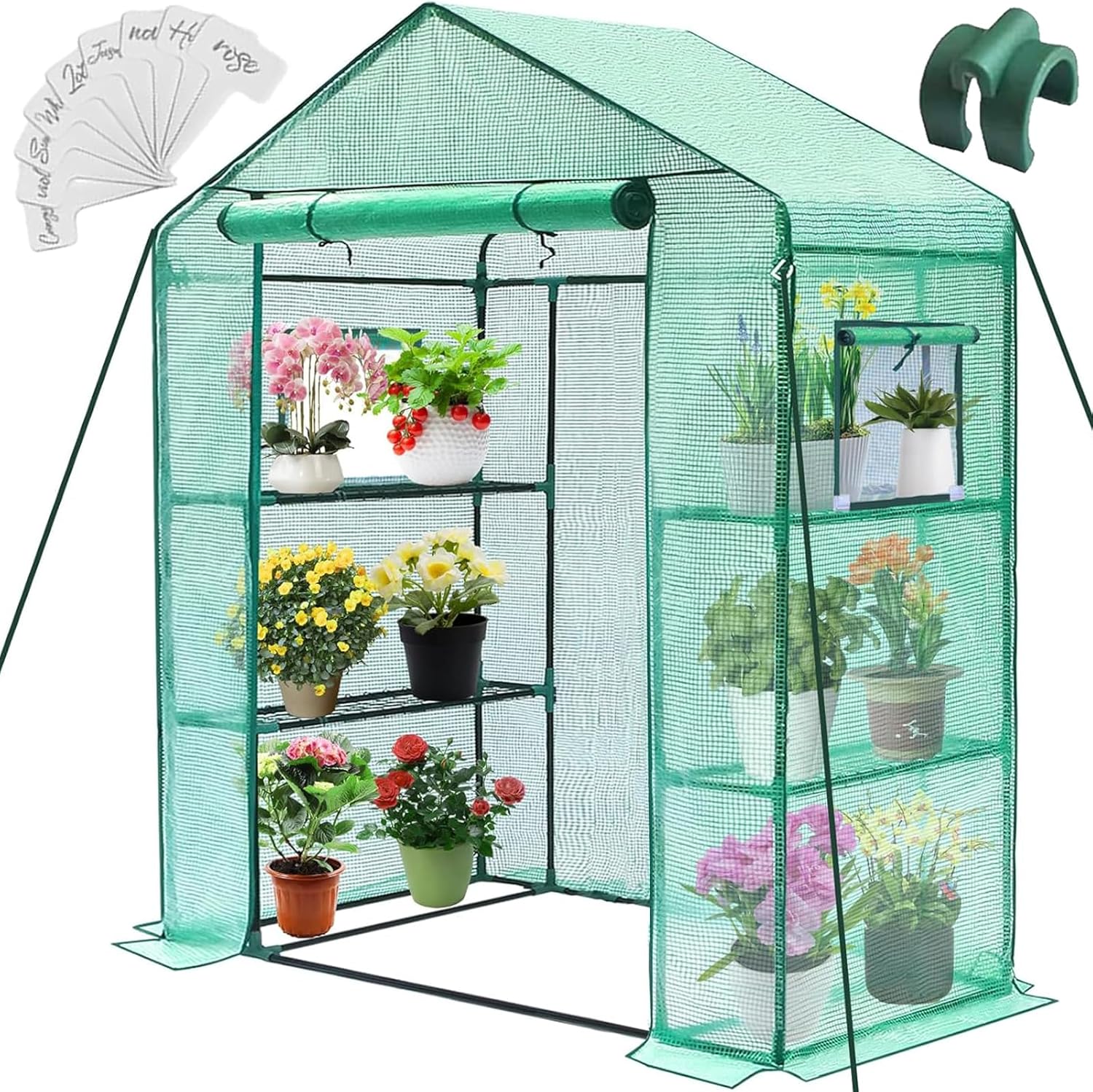
This Greengro small walk-in greenhouse creates a sheltered microclimate for potted plants, seedlings and herbs by combining a metal framework with a thick PE cover and zippered access. It is typically used on a patio, balcony or in a backyard to extend the growing season, shield plants from wind and rain, and keep pests out. Notable features include screened ventilation windows, a roll-up zippered door, four internal shelves for staging pots, and guy ropes with ground stakes for added stability. Practical benefits are straightforward setup without tools, portability for repositioning, and weather-resistant protection that lets you start seeds earlier or overwinter tender plants. Important limitations are its small footprint and modest shelf weight capacity, so it is best for small to medium pots rather than heavy planters, and the lightweight frame and cover remain less durable than rigid greenhouse structures in long-term, high-wind exposure.
Best for: Buyers who want an efficient, moveable solution to protect and organize several small to medium potted plants and seedlings without investing in a permanent structure.
Less Ideal for: Gardeners who need a long-term, heavy-duty greenhouse for large pots, full-size vegetables, or locations regularly exposed to very strong winds should consider sturdier, permanent options.
- Thick polyethylene cover with reinforced edging offers waterproofing and UV reduction
- Zippered roll-up door and screened windows provide ventilation and easy access
- Tool-free assembly and detachable design for quick setup and relocation
- Integrated shelves create organized vertical growing space for multiple pots
- Small size limits capacity to small and medium pots and seed trays
- Lightweight frame and cover are not as long-lasting as permanent rigid greenhouses
Verdict: A compact, easy-to-assemble micro greenhouse that protects and organizes small to medium potted plants while staying portable and budget friendly.
heyfurni Walk-In Greenhouse with 6 Shelves and PE Cover

| Number of Doors | 1 |
|---|---|
| Closure Type | Zipper |
| Cover Material | Polyethylene (PE) |
| Frame Material | Metal |
| Weight Capacity | Maximum weight: 17.6 pounds |
This compact walk-in greenhouse gives budget-focused gardeners a sheltered, organized spot to start seedlings and protect potted plants. It assembles from powder-coated metal tubing and a UV-resistant polyethylene cover, and the roll-up zippered door plus two velcro side windows let you control ventilation without dismantling the unit. Inside are six wired shelves (three per side) rated to hold light pots or seed trays, and the manufacturer supplies ground pegs, ropes and nylon cable ties to stabilize the frame. Practical benefits include earlier starts and frost protection for tomatoes, peppers and other tender plants, a small-footprint footprint that fits patios or balconies, and the ability to remove shelves to fit taller plants. Expect modest durability compared with heavier glass or polycarbonate greenhouses: the PE cover and lightweight frame are economical but need careful anchoring and occasional retightening of pipe joints. Assembly is straightforward but works best with a rubber mallet and two people. For seasonal use and small gardens this greenhouse stretches a limited budget into usable growing space.
Best for: Gardeners on a tight budget who want an inexpensive, compact walk-in greenhouse for starting seedlings, protecting tender plants and organizing pots on a patio, balcony or small backyard.
Less Ideal for: People who need a permanent, heavy-duty greenhouse for year-round production or to accommodate large, heavy containers should choose a sturdier polycarbonate or framed glass option.
- UV-resistant PE cover provides basic weather protection and extends the growing season
- Zippered roll-up door and side windows offer easy access and ventilation control
- Six wired shelves keep pots and seed trays organized and usable immediately out of the box
- Includes ground pegs, ropes and nylon ties to improve stability in wind
- Lightweight frame and PE cover are less robust than rigid polycarbonate or glass and require careful anchoring
- Shelves have a low per-shelf weight capacity so heavy planters need alternative support
Verdict: If you want an affordable, space-efficient walk-in greenhouse to start seedlings and shelter small pots, this model delivers useful protection and shelving for a low cost.
Velway Walk-In Portable Greenhouse with 12 Shelves

| Cover Material | Polyethylene (PE) |
|---|---|
| Frame Material | Alloy Steel |
| Number of Doors | 1 |
| Number Of Vents | 1 |
| Indoor Outdoor Usage | Indoor, Outdoor |
This Velway walk-in greenhouse is built to give reliable, no-fuss plant protection for small backyard gardens. It assembles without tools using snap connectors and a zip-on 130g PE mesh cover, and the electro-coated iron frame helps resist rust for season-to-season use. The unit is large enough to step inside for watering and pruning while the 12 mesh shelves organize pots, trays, and tools; each shelf is rated to hold about 22 lb so it supports typical seedling flats and medium pots. Ventilation is practical: two mesh side windows plus a roll-up zippered door let you create crossflow on warm days to avoid overheating. Anchoring options include four wind ropes, four stakes, and a 4-inch skirt you can weigh down, which helps keep the structure steady in gusts. Expect straightforward benefits for extending the growing season and protecting tender plants from light frost. Important limitations are that the PE cover and plastic connectors are best for moderate weather and the shelter should be taken down or extra-anchored for heavy snow or very strong winds.
Best for: Gardeners who prioritize a dependable, low-maintenance shelter for starting seedlings and protecting small plants through spring and fall, and who want something that stands up to regular outdoor use.
Less Ideal for: Those needing a heavy-duty, permanent greenhouse for year-round use in harsh winter climates or for large plants that require rigid, load-bearing structures.
- Tool-less click-together assembly with zip-on cover for fast setup
- Electro-coated iron frame resists rust for longer outdoor life
- Twelve mesh shelves provide organized storage and each supports up to 22 lb
- Mesh cover with UV protection and roll-up door plus two vents for good airflow
- Includes wind ropes, stakes, and a weigh-down skirt for improved anchoring
- PE mesh cover and plastic connectors are not intended for heavy snow loads or prolonged severe weather
- Relatively lightweight overall so it still needs extra anchoring on exposed sites
Verdict: Choose this greenhouse if you want an easy-to-assemble, rust-resistant walk-in shelter that reliably extends the growing season for seedlings and small container plants.
Pure Garden Walk-In Greenhouse, 56 x 56 x 76 inch

| Shelves | 8 |
|---|---|
| Frame material | Steel |
| Cover material | PVC |
| Includes | Stakes, guy lines, zip ties |
The Pure Garden walk-in greenhouse is a compact, budget-friendly shelter that creates a protected microclimate for seedlings, herbs, and small potted vegetables. It uses a powder-coated steel frame with eight removable shelves that zip-tie to the frame for stable storage of trays and pots, and a clear PVC cover that shields plants from light frost and pests while letting light through. Setup requires no tools and includes stakes and guy lines to anchor the structure outdoors; the cover rolls up for ventilation and access. In practice this greenhouse works well for starting transplants, overwintering tender perennials in mild climates, or organizing multiple small containers in a tight footprint. Limitations to expect are the thin PVC cover and lightweight frame, which make it less durable in strong wind or heavy snow, and modest headroom that restricts tall plants. Assembly is straightforward but may require periodic re-tensioning of the cover and zip ties to maintain stability over a season.
Best for: Gardeners who want an affordable, space-efficient greenhouse to start seedlings, overwinter small perennials, or organize multiple pots on a patio or small backyard and who value easy setup and visible social proof of performance.
Less Ideal for: Growers needing a heavy-duty, permanent greenhouse for year-round production or for locations exposed to strong storms or significant snowfall should consider a sturdier, framed alternative.
- Eight shelving levels maximize space for seedlings and small pots in a compact footprint
- Tool-free assembly with included stakes and guy lines simplifies setup
- Clear PVC cover provides frost protection and pest barrier while allowing light transmission
- Lightweight steel frame and thin PVC cover are vulnerable in high winds or heavy snow
- Modest interior height limits use with taller plants or large potting projects
Verdict: A compact, easy-to-assemble walk-in greenhouse that gives small-space gardeners an inexpensive way to protect and organize seedlings and potted plants.
EAGLE PEAK 8×6 Pop-Up Walk-In Greenhouse

| Size | 8×6 |
|---|---|
| Cover Material | Polyethylene (PE) |
| Frame Material | Alloy Steel |
| Number of Doors | 1 |
| Number Of Vents | 2 |
The EAGLE PEAK 8×6 pop-up greenhouse is a walk-in shelter aimed at extending the growing season and protecting plants from frost and light weather. Its preassembled alloy-steel frame uses extra steel reinforcement and a patented PeakPush center lock so one person can set it up quickly without tools. The PE cover is water-resistant and UV-filtering to help retain warmth and humidity, while the roll-up zippered door and mesh vents let you manage airflow and pest access. It includes stakes and guy ropes for added stability and a ground skirt you can weight down for windy conditions. Practical benefits include ample interior space for shelving or multiple pots, straightforward seasonal use for seed starting or fall protection, and replaceable covers or frames if components wear. Important limitations are that pop-up greenhouses are not engineered for heavy snow loads or sustained high winds so you will need to clear snow and add extra anchoring or weights during storms, and the PE cover will age faster than rigid glazing in strong sun over many seasons.
Best for: Gardeners who want an easy-to-assemble, walk-in greenhouse to start seeds, protect pots, and extend the growing season with minimal setup time and hands-on maintenance.
Less Ideal for: People needing a permanent, year-round structure for heavy snow loads or high-wind exposed sites should choose a rigid-glazed or anchored greenhouse instead.
- One-person, tool-free setup with patented center lock for fast assembly.
- Sturdy alloy-steel frame reinforced for better stability than typical pop-ups.
- Water-resistant, UV-filtering PE cover that traps warmth for season extension.
- Zippered roll-up door and mesh vents for adjustable ventilation and pest control.
- Not built to withstand heavy snow or severe winds without additional reinforcement.
- PE cover will wear faster than rigid glazing and may need replacement after prolonged sun exposure.
Verdict: Buy this if you want a roomy, one-person pop-up greenhouse that balances easy setup with a stronger steel frame for reliable seasonal protection.
Choosing the Right Small Walk in Greenhouse: Key Factors to Consider
Frame Strength and Stability
A greenhouse frame must resist wind, snow load, and repeated opening and closing of doors. Stronger frames use thicker metal or reinforced connectors that reduce flexing when wind gusts hit the sides. In a small walk in greenhouse, stability matters because there is less dead weight holding the structure down; a flimsy frame can deform and tear the covering faster.
Anchoring options are also part of frame performance. Look for models that offer ground stakes, base rails, or bolt-on feet so the unit can be fixed to soil, decking, or a concrete pad. Proper anchoring reduces wear at connection points and keeps airflow predictable, which is critical for maintaining consistent temperatures and protecting plants during storms.
Covering Material and UV Resistance
The covering controls light diffusion, heat retention, and weather protection. Polyethylene films are lightweight and inexpensive but can degrade from UV exposure and develop punctures. Multi-wall polycarbonate panels offer better insulation, long-term UV protection, and more resistance to abrasion, but they add weight and sometimes cost.
Consider how the covering handles condensation, too. Materials with internal ribs or textures can trap water and cause drip damage to plants underneath, while clearer panels may let more light through but offer less insulation. For small walk in greenhouses, a balance of light transmission, thermal performance, and expected lifespan should guide your choice.
Ventilation and Temperature Control
Small structures heat and humidify quickly, so ventilation is essential to prevent overheating, fungal disease, and stressed plants. Good models provide multiple vents, roll-up door panels, or window openings positioned for cross-flow. Passive vents are adequate for many gardeners, but in hot climates or on south-facing sites you may need larger vent areas or the option to add an exhaust fan.
Also think about how easy it is to adjust vents while working inside. A system that allows incremental opening helps you fine-tune temperature and humidity as sunlight and outdoor conditions change during the day.
Usable Interior Layout
Square footage alone does not equal usable growing area. Shelving, bench height, door swing, and the placement of supports affect how many pots and how much bench space you can use. A narrow walkway with deep benches may limit access; removable shelves or fold-down benches increase flexibility.
Consider the tallest plants you expect to grow and whether the roof height and peak allow for vertical growth or hanging baskets. For small walk in greenhouses, modular shelving that can be rearranged makes a small footprint much more productive.
Ease of Assembly and Maintenance
Gardeners often install these structures without professional help, so clear instructions and simple connectors save time and frustration. Models with numbered parts, snap-fit connections, or pre-assembled sections speed installation and reduce the chance of mistakes that shorten lifespan.
Maintenance matters too. Covers that can be replaced separately from the frame, access panels for cleaning, and materials that resist mold and algae cut long-term upkeep. Think about how you will take the unit down or re-cover it if you move or want to change the setup.
Portability and Site Compatibility
A small walk in greenhouse is frequently chosen for limited spaces or temporary setups, so consider how easy it is to relocate. Lightweight frames that break down into manageable sections are better for renters or gardeners who change layouts seasonally. However, greater portability often means lighter materials, which can reduce durability.
Also evaluate the intended site: is it exposed to prevailing winds, shaded by trees, or on a deck that limits anchoring options? Match the greenhouse footprint and anchoring method to your specific site constraints to avoid unexpected repairs or poor plant performance.
Sizing for Small Spaces and Microclimates
Measure the planting and access needs before choosing a small walk in greenhouse. Think about bench widths, door clearances, and how many trays or pots you need to move around comfortably. A slightly deeper footprint can make a big difference for shelving layout even if the overall area is modest.
Also consider the microclimate created by the structure. In cold locations a tight-fitting cover with good insulation reduces nighttime heat loss. In hot, sunny spots a greenhouse with greater vent area or the ability to shade will protect plants from heat stress.
- Check door and walkway clearances for moving benches or wheelbarrows.
- Match interior height to the tallest plants you expect to cultivate.
- Allow space for airflow paths to prevent stagnant pockets of humid air.
Anchoring Methods and Foundation Options
Anchoring affects stability and longevity. Soft-soil installations typically use heavy-duty ground stakes or auger anchors, while decking or concrete requires bolt-on base plates. Some small greenhouses include a base rail that raises the frame slightly and offers better attachment points.
A simple gravel or paver foundation improves drainage and reduces ground moisture entering the shelter. For semi-permanent setups consider a low raised bed or timber frame foundation to stabilize the structure and protect the lower cover edge from abrasion.
- Use ground anchors in exposed locations to reduce uplift risk.
- Install a low perimeter base to protect the cover edge from wear.
- Consider a concrete or paver pad for a more permanent, level base.
Ventilation Upgrades and Automatic Openers
For gardeners who cannot monitor temperatures hourly, automatic vent openers are useful accessories. These devices expand with heat to open vents and contract as things cool. They provide passive climate control without electricity and reduce the risk of heat stress on sunny days.
If automatic options are not desired, maximize manual venting by choosing models with multiple accessible vents and roll-up door sections. Combining passive vents at different heights encourages natural convection and helps remove humid air.
- Automatic openers add convenience and protect plants from sudden heat spikes.
- High and low vents promote better airflow and reduce condensation.
- Portable fans can assist airflow in taller small greenhouses when needed.
Cover Replacement and Seasonal Care
Plan for eventual cover replacement. A covering that can be removed in sections or replaced without disassembling the entire frame saves time and cost. Inspect edges and attachment points each season for wear and seam separation and address small tears before they grow.
Seasonal care also includes cleaning to prevent algae and fungal buildup. Use mild soap and a soft brush for most covers and avoid harsh chemicals that degrade UV coatings. Remove heavy snow promptly to avoid undue stress on the frame unless the design is rated for snow load.
- Store spare cover panels or repair patches for quick fixes.
- Clean covers gently each spring to maintain light transmission.
- Remove snow from the roof to prevent sagging and stress at connectors.
Optimizing Internal Layout for Productivity
Make the most of limited square footage with vertical shelving, hanging baskets, and narrow mobile benches. Group plants with similar light and humidity needs together to simplify watering and ventilation adjustments. Place heat-loving plants higher in the structure if using passive heat stratification.
Consider removable benches or fold-down work surfaces so you can change the internal configuration based on season and plant type. A flexible layout extends the range of crops you can grow successfully in a small walk in greenhouse.
- Use tall shelving along the sides and a clear central aisle for access.
- Rotate crop placement seasonally to optimize light exposure.
- Reserve space for a small potting zone or tool storage to keep the area tidy.
How We Chose the Best Small Walk in Greenhouse
We prioritized attributes that directly affect plant health, installation time, and long-term durability in small walk in greenhouses. Primary evaluation criteria included frame strength and stability under wind loads, covering material durability and UV resistance, ventilation options and passive airflow control, and ease of assembly plus clear instructions. We also assessed usable interior space relative to footprint, shelving and mounting flexibility, and how each design handles condensation and humidity management. We excluded very large greenhouse systems, temporary pop-up covers that lack a framed walk-in entrance, and any units clearly designed only for single-tier seed trays. Online user feedback and installation reports were used to cross-check ease-of-assembly claims and common failure points. The final short list favors designs that balance sturdiness and space efficiency rather than models that trade durability for ultra-low weight. Scoring focused on measurable, gardener-relevant dimensions such as structural materials, cover thickness, vent area, and assembly complexity rather than brand reputation alone.
FAQ
Will a small walk in greenhouse keep plants warm enough in winter?
A small walk in greenhouse provides a microclimate that reduces frost risk and preserves daytime heat, but winter performance depends on cover insulation, site exposure, and local minimum temperatures. In cold climates you may need supplemental heat or frost cloth for extended freezes.
How much ventilation does a small greenhouse need?
Ventilation needs vary with sunlight and ambient temperature, but multiple vents or a roll-up door are usually sufficient for controlling heat and humidity in a small unit. In very hot locations consider additional passive vent area or a small fan to prevent overheating.
Can I install a small walk in greenhouse on a deck or patio?
Yes, many models can be anchored to decks or patios using base plates or bolt-on feet, but you must ensure the surface can accept anchors and that water drainage will not damage the deck. A raised base or tray beneath the greenhouse helps protect decking materials.
How long do greenhouse covers typically last?
Cover lifespan depends on material and sun exposure. Thicker polycarbonate panels can last many years with proper maintenance, while polyethylene films often need replacement every few seasons. UV protection and regular cleaning extend service life.
Are automatic vent openers worth it for a small greenhouse?
Automatic vent openers are often a valuable convenience because they respond to temperature changes without electricity, reducing the chance of heat stress. For gardeners who are away during hot days they can be particularly helpful.
What maintenance does a small walk in greenhouse require?
Routine maintenance includes checking and tightening frame connections, inspecting cover attachment points, cleaning the interior and exterior to reduce algae, and removing snow or debris from the roof. Address small tears or loose fittings promptly to avoid larger failures.
Final Verdict
A small walk in greenhouse is a practical choice when you need extension of the growing season, pest protection, or a controlled space for seedlings and tender plants. Prioritize frame strength and a durable cover if you expect exposure to wind or intense sun, and choose ventilation features that match your local climate to avoid overheating. Balance portability with durability depending on whether you will move the structure or leave it in place. Focus on interior layout and accessibility so the space is productive for the plants you grow. With the right tradeoffs, a compact walk-in greenhouse can significantly increase your planting options and season length.
