

Note: This article contains affiliate links. If you click on these links and make a purchase, I may earn a small commission at no extra cost to you. This helps support my research and content. Read my full affiliate disclosure here.
Picking the right soil amendment for hydrangeas matters because these shrubs are especially responsive to soil chemistry and moisture. The right amendment can improve bloom color intensity, increase flower size, and help plants hold steady through dry spells or heavy rains. This guide reviews seven top soil amendments for hydrangeas that are commonly recommended for garden use. We shortlisted amendments that influence soil pH, nutrient availability, and moisture dynamics, and we evaluated them on measurable garden-relevant criteria. Read on to see the factors we measured and which amendment traits gardeners prioritize when trying to get the best hydrangea performance.
Top Picks at a Glance
| Best Overall The best all-around choice for most situations | Espoma Organic Soil Acidifier, Granules (6 lb) – Pack of 2 |  |
| Best Quality Built to a higher standard if you want something more solid | Espoma Organic Soil Acidifier, 30 lb |  |
| Best Value The sweet spot between price and what you get | True Organic Prilled Sulfur — Prilled Elemental Sulfur Granules, 5 lb |  |
| Best Budget The cheapest option that still gets the job done reliably | True Organic Soil Acidifier, Granular — 6 lb |  |
| Highest Rated A top-rated pick with lots of positive feedback | Lawn Synergy Soil Acidifier Elemental Sulfur (18 lb) |  |
| Most Popular A crowd favorite that many people choose with confidence | Jobe's Organics Granular Soil Acidifier, 6 lb |  |
| Best Seller A high-volume bestseller chosen again and again | Farmer's Secret Soil Revitalizer Organic Liquid Compost (32 oz) |  |
Espoma Organic Soil Acidifier, Granules (6 lb) – Pack of 2

| Item Form | Granules |
|---|---|
| Specific Uses For Product | Soil Conditioning |
| Coverage | Medium |
| Target Species | Hydrangeas, Blueberries |
Espoma Organic Soil Acidifier is a granular amendment designed to lower soil pH and encourage blue blooms on acid-loving plants such as hydrangeas and blueberries. You spread the granules around the drip line, water them in, and repeat at roughly 60-day intervals until the desired acidity or bloom color appears. The formula contains elemental sulfur and gypsum and is approved for organic gardening, so it fits into an organic care routine without synthetic inputs. In practice it is easy to use for gardeners who test pH and adjust gradually rather than making large sudden changes. The medium coverage per bag and the 6 lb size in this two-pack make it convenient for small to medium beds or several container groups. Limitations are that results take time and depend on existing soil buffering, so persistent monitoring and repeat applications are necessary; it is not a quick fix for already alkaline soils and should be kept away from children and pets as directed.
Best for: A cautious gardener who prefers organic products and wants to lower soil pH gradually to influence hydrangea bloom color or support acid-loving shrubs in small to medium planting areas.
Less Ideal for: Gardeners needing an immediate pH change for large landscapes or those who want to treat edible food crops with the same product should consider alternatives designed for rapid correction or labeled for food plants.
- Organic formulation approved for organic gardening
- Contains elemental sulfur for effective pH reduction
- Granular form is simple to apply around the drip line and water in
- Pack of two 6 lb bags provides enough product for multiple small beds or containers
- Acts slowly and requires repeat applications and pH monitoring
- Not intended for use on food crops and must be kept away from children and pets
Verdict: Choose this organic granular acidifier if you want a simple, slow-release way to lower pH and encourage blue hydrangea blooms while staying within organic gardening practices.
Espoma Organic Soil Acidifier, 30 lb

| Unit Count | 480 Ounce |
|---|---|
| Item Type Name | Espoma UL30 Organic Soil Acidifier Fertilizer, 30 lb |
| Included Components | Fertilizer |
| Manufacturer | Espoma |
Espoma Organic Soil Acidifier is a pelletized, elemental sulfur-based amendment designed to lower soil pH for acid-loving plants like hydrangeas and blueberries. It is applied by spreading around the root zone or across beds and watering in; the package gives straightforward application rates for new plants, established plants, containers, and per-100 sq. ft. for gradual pH changes. The product is approved for organic gardening and avoids aluminum sulfate, so it is a safer choice for repeated use to achieve bluer hydrangea blooms. Practical benefits include clear instructions for different plant situations, a large 30 lb bag that covers significant area, and pellet form that is easy to handle and spread. Important limitations are that pH changes are gradual and may require repeat applications every 60 days, and it can irritate skin and eyes so gloves and a mask are recommended. Expect to monitor soil pH and plant response rather than seeing instant color shifts.
Best for: Gardeners who want a reliable, organic method to lower soil pH for blue hydrangeas and other acid-loving plants and who are willing to test and follow repeated applications for gradual results.
Less Ideal for: People who need instant pH shifts or a one-time quick fix for blooms or those unwilling to use protective gear when handling fertilizers.
- Pelletized elemental sulfur formula specifically formulated to lower soil pH for acid-loving plants
- Clear application rates for pots, individual plants, and per 100 sq. ft. make dosing straightforward
- Approved for organic gardening so it fits organic production and home organic beds
- Large 30 lb bag covers a lot of ground for repeated seasonal applications
- pH adjustment is gradual and requires repeat applications over months to see full effect
- Can cause irritation on contact so protective gear is needed when handling
Verdict: Use this organic, pelletized sulfur amendment if you want a safe, repeatable way to lower soil pH and intensify blue hydrangea blooms over time.
True Organic Prilled Sulfur — Prilled Elemental Sulfur Granules, 5 lb

| Item Form | Granules |
|---|---|
| Specific Uses For Product | Agriculture, Gardening |
| Coverage | Medium |
| Unit Count | 80 Ounce |
| Target Species | Plants |
True Organic Prilled Sulfur is a granular elemental sulfur product intended to acidify soil and improve nutrient availability for in-ground gardens. It is typically broadcast or worked into soil one to two weeks before planting to gradually lower pH and support better flowering and fruiting. The prilled form makes it easy to spread evenly over beds, and a 5 lb bag advertises coverage up to about 1,333 sq. ft., which suits larger blueberry patches or multiple planting areas. Because it is pure elemental sulfur, results are gradual and best for long-term pH adjustment rather than an immediate fix. The product is made with organic inputs and is presented for gardening and agricultural use, which may appeal to buyers avoiding synthetic acidifiers. Important practical limits are that you must test soil pH first and calculate application rates carefully to avoid over-acidifying, and it does not provide nutrients beyond its pH effect, so plan a complementary fertilizer program for blueberry-specific needs.
Best for: Gardeners who test soil and want a conservative, organic-compatible way to lower pH for acid-loving plants like blueberries and are comfortable planning applications ahead of planting.
Less Ideal for: People needing rapid pH change immediately before harvest or those who want an all-in-one fertilizer that also supplies macronutrients.
- Prilled granular form spreads evenly for straightforward application to beds
- Formulation is elemental sulfur, which reliably lowers soil pH over time
- 5 lb bag claims wide coverage suitable for multiple blueberry planting areas
- Made with organic inputs and presented for garden use
- Acts slowly so it is not a quick pH correction
- Contains only sulfur and does not supply other nutrients blueberries need
Verdict: A practical organic-compatible sulfur granule for gardeners who plan ahead to safely acidify soil for blueberries and other acid-loving plants.
True Organic Soil Acidifier, Granular — 6 lb

| Item Form | Granules |
|---|---|
| Unit Count | 96 Ounce |
| Included Components | 100% Made in the USA with Organic Inputs |
| Ingredients | Gypsum and Elemental Sulfur |
True Organic Soil Acidifier is a granular mix of gypsum and elemental sulfur made to lower garden soil pH and improve conditions for acid-loving plants. You apply it to in-ground beds or around established shrubs to shift pH gradually, which can help hydrangeas produce bluer blooms and improve nutrient uptake for azaleas and blueberries. The product is formulated from organic farm-grade inputs and is intended for regular garden use rather than rapid, extreme pH changes. Practical benefits include safer, natural ingredients compared with synthetic acidifiers and easy broadcast application from a 6 lb bag that covers a moderate area. Limitations are that measurable pH change takes time and depends on existing soil buffering, so you should test soil before treating and expect to reapply seasonally for maintenance. Also the directions are not detailed on the package so beginners should consult soil test guidance to avoid over-application.
Best for: Gardeners who want an affordable, organic way to lower soil pH for in-ground hydrangeas and other acid-loving shrubs and are willing to test soil and apply periodically.
Less Ideal for: Those who need rapid pH correction, precise dosing instructions on-package, or who prefer liquid treatments for container plants.
- Uses organic inputs rather than synthetic chemicals
- Granular form is easy to broadcast and mix into beds
- Formulated to support acid-loving plants like hydrangeas and blueberries
- Contains elemental sulfur for effective long-term acidification
- No detailed application rates or timing printed in product details
- pH change is gradual and soil tests are needed to gauge effectiveness
Verdict: A budget-friendly organic granular acidifier that gently lowers soil pH to help ground-planted hydrangeas and other acid-loving shrubs thrive.
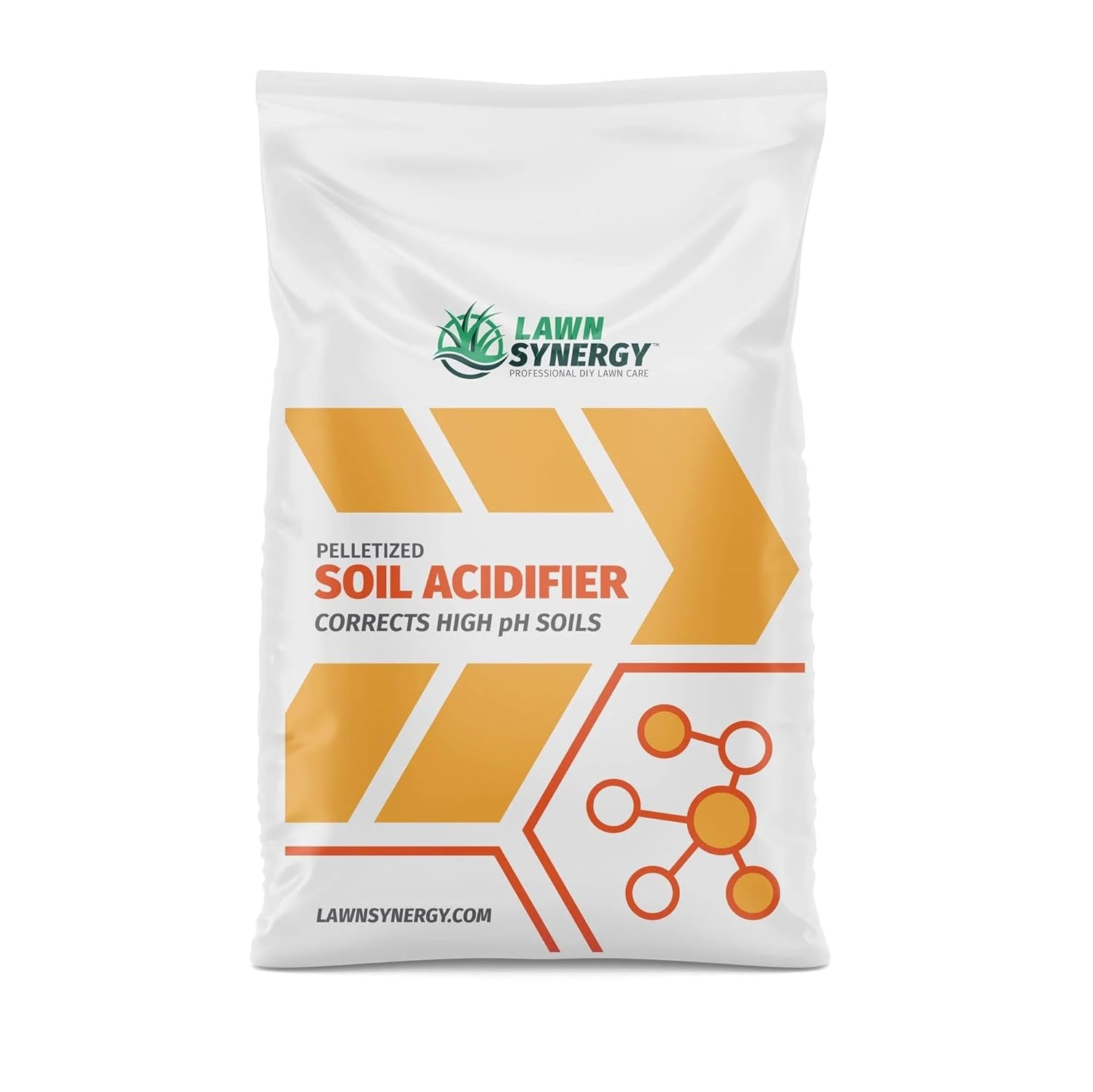
Lawn Synergy Soil Acidifier Elemental Sulfur (18 lb)
| Item Form | Granules |
|---|---|
| Coverage | 1800 sq.ft. |
| Target Species | lawns, hydrangeas, blueberry bushes |
| Ingredients | Elemental Sulfur 90% |
This 18 lb bag of Lawn Synergy Soil Acidifier is 90% elemental sulfur in granule form designed to lower soil pH for acid-loving plants. You spread it across the planting area or mix into the root zone to progressively acidify the soil; the label lists a coverage of about 1800 sq. ft. and the high sulfur content means it acts reliably where pH reduction is needed. For blueberry growers the product creates the more acidic conditions these shrubs prefer, which helps nutrient availability and fruiting when used as part of a regular soil management plan. Application is simple and lends itself to broadcast spreading or spot treatment around plants; because it works through soil microbiology it produces steady pH change rather than an instant chemical shock. Limitations to expect are the need for proper pH testing before and after application and slower action in cool or poorly drained soils where conversion to sulfate is reduced. This is a straightforward, no-frills amendment for gardeners who want a dependable way to lower pH over time.
Best for: Gardeners who prioritize consistent, dependable pH correction for acid-loving crops and who plan treatments based on soil tests and seasonal timing.
Less Ideal for: People who need an immediate pH change or a multi-nutrient fertilizer solution; those seeking quick foliar fixes or rapid short-term results should consider alternatives.
- High elemental sulfur concentration (90%) for effective pH reduction.
- Granular form that is easy to distribute for broadcast or spot applications.
- Covers a large area per bag (listed coverage about 1800 sq. ft.).
- Formulation suited specifically for acid-loving plants such as blueberries and hydrangeas.
- Acts through soil biology so pH change can be gradual and slower in cool or poorly drained soils.
- Requires prior and follow-up soil pH testing to avoid over-application.
Verdict: A reliable, high-concentration elemental sulfur amendment for gardeners who need steady, test-driven soil acidification for blueberries.
Jobe's Organics Granular Soil Acidifier, 6 lb

| Item Form | Granules |
|---|---|
| Target Species | Hydrangeas and blueberries plants |
| Specific Uses For Product | Soil Conditioning, Plant Growth, Root Development |
| Unit Count | 96 Ounce |
| Derived from | Elemental Sulfur and Gypsum |
Jobe's Organics Granular Soil Acidifier is a sulfur-based granular amendment designed to lower soil pH and support acid-loving plants like blue hydrangeas and blueberries. You apply it at planting and reapply two to three times a year or about every eight weeks to maintain a more acidic root zone. The product is OMRI-listed and made from natural elemental sulfur and gypsum, so it is suitable for organic gardens and will slowly change soil acidity without burning roots when used as directed. Practical benefits include easy measuring and application, targeted action on the root zone to encourage blue flower coloration in hydrangeas, and reduced need for frequent liquid treatments. Important limitations are that pH change is gradual so results take weeks to months and a soil test is recommended beforehand to avoid overcorrection. The granules do not supply NPK nutrients, so you will still need a fertilizer if plants require additional nitrogen or phosphorus. Follow safety guidance to avoid inhalation and skin or eye contact during handling.
Best for: Gardeners who want a proven, organic way to acidify soil for blue hydrangeas and similar acid-loving plants and who prefer measured, low-risk treatments backed by broad user acceptance.
Less Ideal for: People needing immediate pH change or quick nutrient feeding for poor-growth plants, or those who prefer liquid pH adjusters for faster short-term results.
- OMRI-listed organic formula suitable for organic gardens
- Elemental sulfur-based granules specifically formulated to lower soil pH for acid-loving plants
- Easy granular application at planting and periodic reapplication
- Slow-release action reduces risk of burning roots when used as directed
- Works gradually so it can take weeks to shift pH and show blueing in hydrangeas
- Does not contain NPK nutrients so separate fertilization may be needed
Verdict: A practical organic granular acidifier that reliably lowers soil pH for blue hydrangeas when applied and maintained as directed.
Farmer's Secret Soil Revitalizer Organic Liquid Compost (32 oz)

| Item Form | Liquid |
|---|---|
| Specific Uses For Product | Organic |
| Application Method | spray/pour |
| Coverage | 32,000 square feet |
| Mixing Ratio | 1:128 |
Farmer's Secret Soil Revitalizer is a concentrated liquid amendment that uses activated humics to improve soil structure, stimulate microbial activity, and make nutrients more available to plants. It is mixed at 1 ounce per gallon of water and can be applied with a watering can, sprayer, irrigation system, or as a foliar feed for houseplants. For clay soils the product's humic-rich formula helps loosen compacted particles over time and supports biological activity that improves drainage and root penetration. It is OMRI listed and made from organic sources, so it is suitable for edible gardens and safe around children and pets when used as directed. The effects are gradual rather than immediate because it works by rebuilding soil biology rather than supplying fast-release NPK, so gardeners should expect cumulative improvement after several applications every 2 to 4 weeks. Coverage claims are high for the bottle size, so plan dosing carefully if treating a large lawn or landscape.
Best for: Gardeners who want a low-risk, soil-first approach to improve compacted or nutrient-poor soils and are willing to use a repeat feeding schedule to build long-term soil health.
Less Ideal for: People seeking rapid green-up or instant high-amount nutrient feeds for heavy-feeding annuals or lawns should consider a supplemental synthetic fertilizer instead.
- OMRI listed organic formula safe for edible gardens when diluted as directed
- Activated humics increase microbial activity and long-term soil structure improvement
- Versatile application options: watering can, sprayer, hose-end or irrigation
- Concentrated mixing ratio (1:128) stretches one bottle over many applications
- Not a fast-acting synthetic fertilizer so visible results take multiple applications
- Coverage per bottle may be optimistic for large yards, requiring multiple bottles for whole-lawn use
Verdict: Use this organic, humic-rich liquid if you want to rebuild clay soil biology and structure over time rather than chase quick fertilizer results.
Choosing the Right Soil Amendment for Hydrangeas: Key Factors to Consider
pH Control and Stability
Hydrangeas are uniquely sensitive to soil pH for bloom color and nutrient uptake. An amendment that reliably lowers or buffers pH will influence flower pigments and iron availability. Consider how quickly the amendment changes pH and whether its effect is transient or long lasting.
Rapid pH changers are useful when you need a quick correction, but they can require repeated applications. Slow-acting, buffering materials are better for ongoing stability and reduce the risk of overshooting the target pH.
Nutrient Release Timing
Different amendments supply nutrients at different rates. Some release a flush of nitrogen or other elements soon after application, while organic materials and coated products release nutrients over months. For hydrangeas, steady nutrient availability through the growing season helps maintain strong stems and abundant blooms without promoting excessive leafy growth at the expense of flowers.
Match the amendment's release pattern to your maintenance plan and feeding schedule. Slow-release options cut down on repeat feeding, while faster-release sources can correct a deficiency quickly when identified.
Moisture Management
Hydrangeas prefer consistently moist but not waterlogged soils. Amendments that improve moisture retention can be a big advantage in sandy soils or dry climates by holding water near roots. Conversely, in heavy clay or poorly drained sites, choose amendments that improve drainage and prevent root suffocation.
Think about the local soil texture and seasonal rainfall when choosing an amendment. Some materials both retain moisture and improve structure, offering a balance that suits many home landscapes.
Impact on Soil Structure and Organic Matter
Long-term hydrangea health benefits from amendments that build organic matter and friability in the root zone. Organic amendments feed soil biology, improve aggregation, and gradually increase nutrient-holding capacity. Mineral additives can alter texture and drainage but may not add organic carbon.
Consider whether you want short-term adjustments or a material that improves soil health over seasons. Adding organic matter also supports beneficial microbes that assist nutrient cycling for established shrubs.
Application Practicality
Ease of application matters because bulky or difficult-to-apply amendments remain unused. Look at how the amendment is applied: top-dressed and watered in, incorporated into planting holes, or mixed into potting media. Consider how often reapplication is needed and whether the process fits a typical garden routine.
Also evaluate safety, dust, and whether the material requires special tools or protective equipment. A gardener who needs low-lift, low-effort solutions will favor products that spread easily and integrate with routine mulching or soil preparation.
Compatibility With Existing Soil and Plants
An effective amendment for hydrangeas should not harm nearby plants or beneficial soil life. Some strong chemical pH adjusters or concentrated mineral amendments can temporarily impact microbes or adjacent plant roots. Think about how the amendment interacts with other plants in the bed and with lawn or ornamental borders.
If you manage mixed plantings, favor amendments with predictable, localized effects that are safe for companion plants and support a balanced soil ecosystem.
When to Test Soil and How Often
Testing soil pH and nutrient levels before applying any amendment is the most reliable way to match intervention to need. For established hydrangeas, test in spring before heavy growth and again every one to three years to track changes.
A simple pH test tells you whether you need acidifying or buffering amendments. If nutrient deficiencies are suspected, a basic soil nutrient test helps you choose an amendment that supplies the lacking elements without guessing.
- Test in several spots around the dripline for accurate averages
- Retest after major amendments to confirm the effect
- Calibrate timing with the plant's growth cycle, ideally in early spring
Practical Application Tips for Shrub Beds
When applying amendments around mature hydrangeas, avoid piling materials against trunks. Work amendments into the top few inches of soil within the root zone and then water to encourage movement to feeder roots.
For container-grown hydrangeas, mix amendments into fresh potting mix or top-dress with materials suited for containers to prevent compaction and maintain drainage.
- Spread evenly over the root zone rather than concentrated spots
- Lightly fork or rake to mix organic materials into the soil surface
- Water thoroughly after application to activate dissolution and microbial activity
Balancing Bloom Color Without Harming Growth
Many gardeners aim to shift bloom color through pH tweaks. Small, measured changes are safer than large swings. Gradual adjustments let you observe effects on bloom hue while preventing nutrient lock-up or micronutrient deficiencies.
If you need a color shift, combine pH-targeted amendments with regular monitoring rather than repeated high-dose treatments.
- Make gradual changes over months, not weeks
- Monitor leaf health as an early indicator of nutrient stress
- Consider complementary foliar treatments only as short-term fixes
Seasonal Scheduling and Reapplication
Match amendment choice to seasonal needs: incorporate organic matter in fall to improve winter soil biology, and apply pH modifiers or nutrient supplements in early spring when roots are active. Some materials require annual topping up, others work for several seasons.
Plan reapplication around plant vigor and soil test results rather than fixed calendar dates to avoid unnecessary treatments.
- Fall applications help soil microbes process organic inputs over winter
- Spring applications support bud set and bloom development
- Track effects so you can lengthen intervals when soil shows stability
Dealing With Specific Soil Types
Sandy soils need amendments that increase water-holding capacity and nutrient retention, whereas heavy clay benefits from materials that improve drainage and structure. Choose amendments that address the dominant limitation in your soil rather than a generic fix.
If you have mixed soil types across a landscape, consider spot-treating problem areas instead of treating an entire bed the same way.
- Sandy sites: emphasize organic matter and moisture-retentive materials
- Clay sites: add structure-improving amendments and avoid compaction
- Containers: use well-draining mixes with measured organic content
How We Chose the Best Soil Amendment for Hydrangeas
We selected amendments based on practical garden performance and measurable soil effects rather than brand reputation. We prioritized products and materials that demonstrably affect the key variables hydrangeas respond to: pH modification capability, nutrient release profile, moisture retention or drainage impact, long-term soil structure improvement, and ease of application for typical backyard gardeners. Our filters excluded materials that deliver only cosmetic surface changes, products requiring professional-only application, or amendments that introduce contaminants to landscape soil. We also excluded anything that only provides short-term foliar effects without altering root-zone chemistry. The evaluation focused on objective, scoreable dimensions: how much and how predictably an amendment shifts or stabilizes pH, the balance of available nutrients over weeks to months, the amendment's effect on soil moisture dynamics, how it changes soil structure or organic matter over time, and user-facing factors like application complexity and re-application frequency. These criteria reflect what gardeners need to know when choosing amendments for hydrangea vigor and bloom control.
FAQ
How quickly will a pH amendment change hydrangea bloom color?
It often takes several weeks to months for soil pH changes to affect bloom color because roots must take up altered nutrient forms and pigment production responds over time. Small, repeated adjustments produce observable shifts within a season, while dramatic changes may need longer and careful monitoring.
Can I use the same amendment in the ground and in containers?
Sometimes, but not always. Container mixes have different drainage and moisture characteristics, so choose amendments formulated or tested for containers to avoid compaction or poor aeration. Adjust application rates and monitor moisture more closely in pots.
Will adding organic matter affect soil pH?
Many organic materials have a mild effect on pH as they break down, but their primary benefit is improving structure and nutrient cycling. If you need a significant pH shift, use a targeted pH modifier in addition to organic matter and retest soil after application.
How much amendment should I apply around a mature hydrangea?
Application rates vary by material and soil test results, but a common approach is to spread amendments across the root zone rather than concentrate at the base. Use product or material-specific guidelines and err on the conservative side, retesting soil before repeating applications.
Are there risks to over-acidifying soil for hydrangeas?
Yes. Over-acidifying can lock up nutrients and stress roots, leading to poor growth even if bloom color changes. Make gradual adjustments, monitor leaf color and vigor, and retest soil pH to avoid overshooting the target range.
When is the best time of year to apply soil amendments for hydrangeas?
Early spring is usually best because roots are active and the plant can use added nutrients for bud and bloom development. Fall applications of organic matter are also effective for building soil health over the winter months.
Final Verdict
Choose an amendment that addresses the specific limitation in your soil: use pH-targeted materials when bloom color is the priority, moisture-managing amendments in dry or sandy sites, and organic inputs when improving long-term soil structure matters most. Prioritize predictable effects and ease of application so you can maintain steady soil conditions that hydrangeas prefer. Make changes gradually, verify with soil tests, and monitor plant response. Focusing on the few measurable criteria discussed here will let you pick an amendment that delivers the bloom size, color, and resilience you want without frequent corrective work.
